Plant Biotechnology Market Report: Trends, Forecast and Competitive Analysis to 2035

Key data points: The market size in 2035 = $123 billion, growth forecast = 8.3% annually for the next 9 years. Scroll below to get more insights. This market report covers trends, opportunities and forecasts in plant biotechnology market to 2035 by product type (crop protection & nutrition solutions products, biotech seeds/ traits, and synthetic biology enabled products), crop type (cereals & grains, oilseeds & pulses, fruits & vegetables, and others), end use (seed companies, agricultural input suppliers, the food & beverage industry, biofuel & biochemical companies, pharmaceutical & biopharma firms, and government & research institutes), and region (North America, Europe, Asia Pacific, and the Rest of the World)

Publisher: Lucintel Last Updated: July 2026
See Pricing

Download Sample Report

| ✨ New Download Sample report — Get instant insights! | ✨ New Download Sample report — Get instant insights!

Plant Biotechnology Market Report: Trends, Forecast and Competitive Analysis to 2035

Plant Biotechnology Market

The future of the global plant biotechnology market looks promising with opportunities in the seed company, agricultural input supplier, the food & beverage industry, biofuel & biochemical company, pharmaceutical & biopharma firm, and government & research institute markets. The global plant biotechnology market is expected to reach an estimated $123 billion by 2035 with a CAGR of 8.3% from 2026 to 2035. The major drivers for this market are the increasing demand for high yield crops, the rising focus on agricultural productivity enhancement, and the growing adoption of genetically improved plants.

  • Lucintel forecasts that, within the product type category, biotech seed/ trait is expected to witness the highest growth over the forecast period due to the increasing demand for advanced agricultural biotechnology.
  • Within the end use category, seed company is expected to witness the highest growth due to the rising adoption of improved seed technologies.
  • In terms of regions, North America will remain the largest region over the forecast period due to the growing need for enhanced crop productivity solutions.

Gain valuable insights for your business decisions with our comprehensive 150+ page report. Sample figures with some insights are shown below.
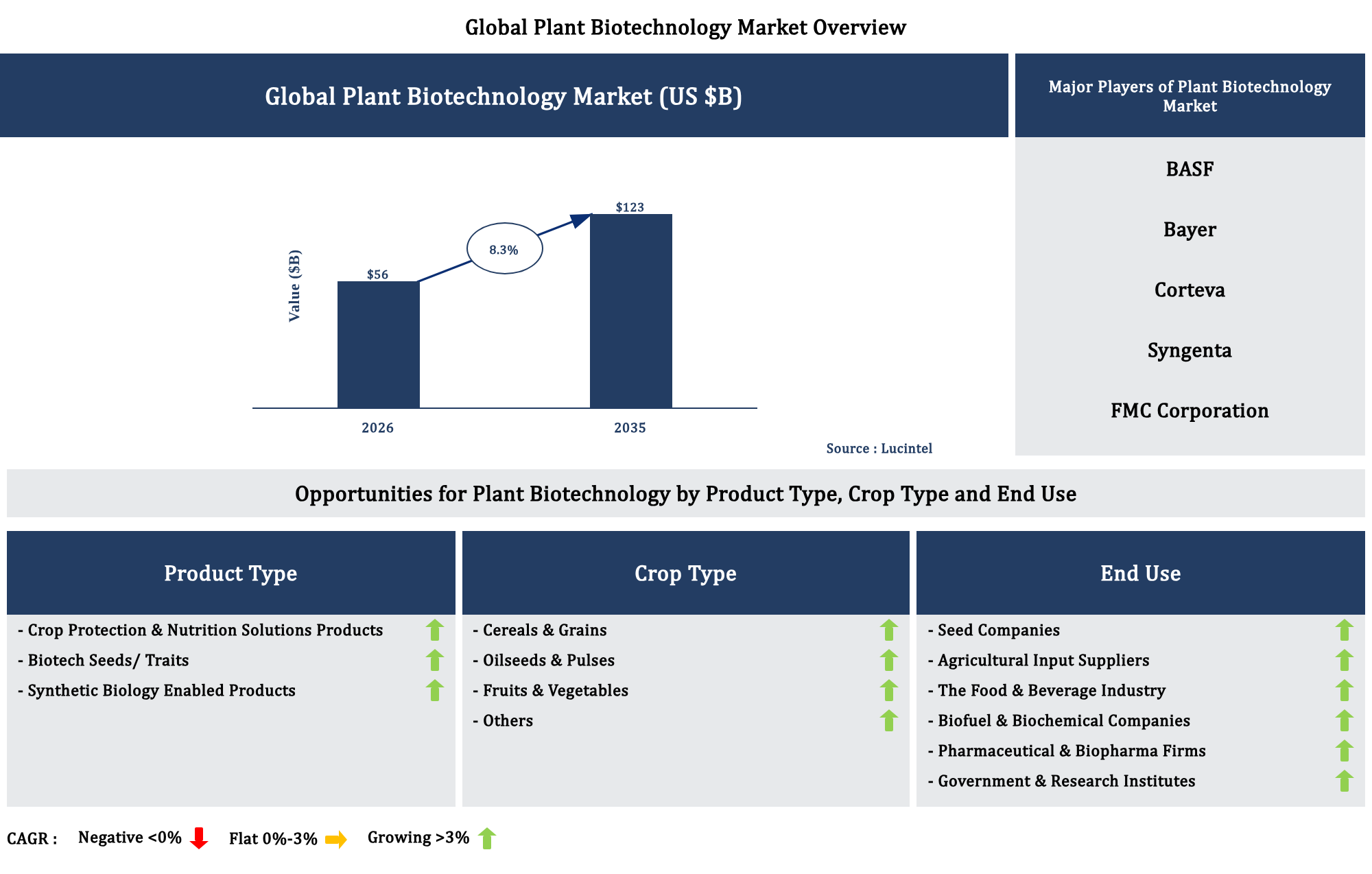
Plant Biotechnology Market

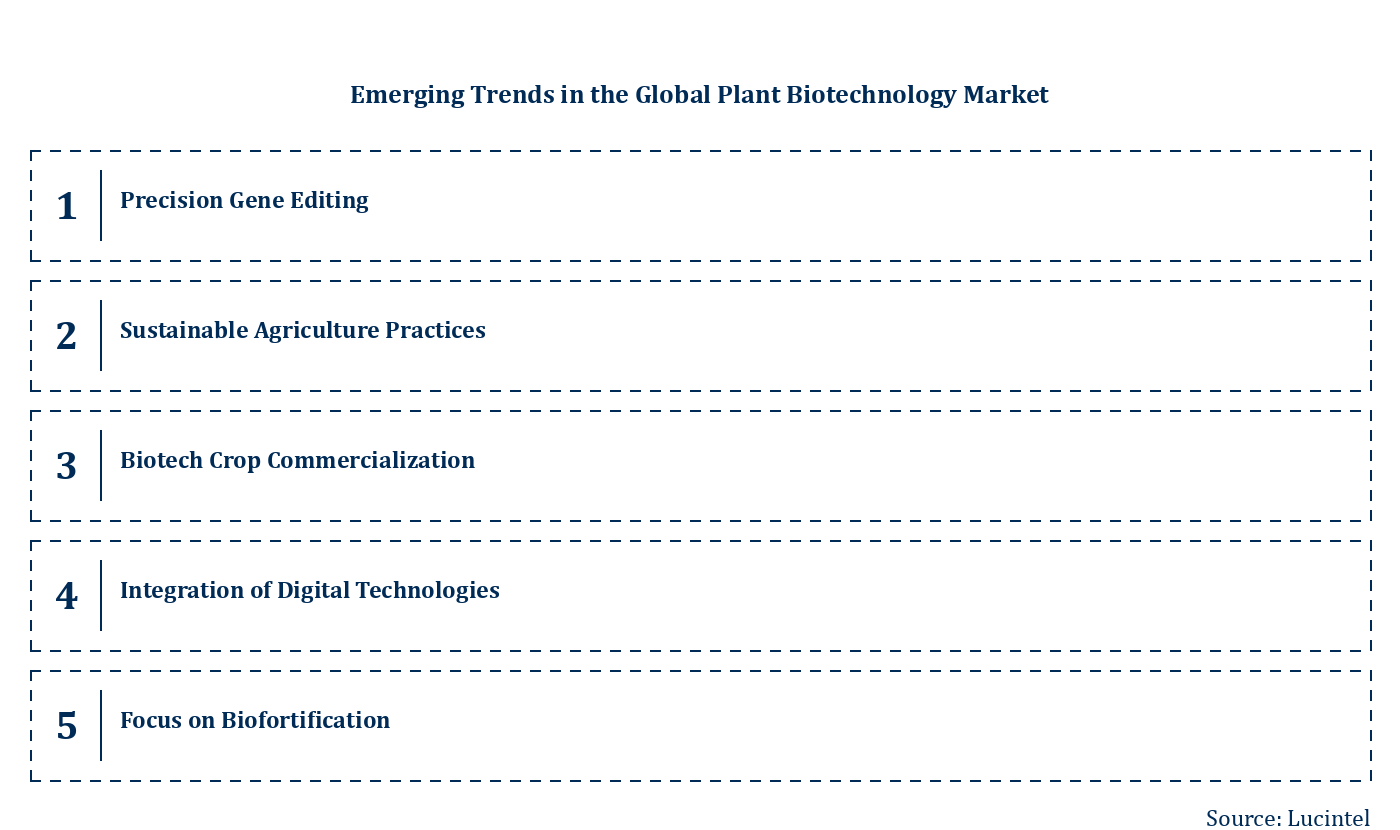
Emerging Trends in the Plant Biotechnology Market

The plant biotechnology market is experiencing rapid growth driven by technological advancements, increasing global food demand, and a focus on sustainable agriculture. Innovations in genetic engineering, genome editing, and bioprocessing are transforming how crops are developed and cultivated. These developments are not only improving crop yields and resistance but also addressing environmental challenges and food security concerns. As the market evolves, key trends are emerging that will shape its future trajectory, influencing stakeholders from farmers to biotech companies. Understanding these trends is essential for capitalizing on new opportunities and navigating the competitive landscape effectively.

  • Precision Gene Editing: Revolutionizing Crop Development : Precision gene editing tools like CRISPR-Cas9 enable targeted modifications in plant genomes, leading to faster development of high-yield, pest-resistant, and climate-resilient crops. This technology reduces development time and costs, allowing for more customized solutions to meet specific agricultural challenges. It also minimizes off-target effects, ensuring safer and more sustainable crop varieties. The adoption of gene editing is expected to accelerate innovation, making it a cornerstone of future plant biotech advancements.
  • Sustainable Agriculture Practices: Enhancing Crop Resilience : Sustainable practices are increasingly integrated into plant biotechnology to reduce environmental impact. Genetically modified crops with drought tolerance, nitrogen-use efficiency, and pest resistance help decrease reliance on chemical inputs and water resources. These innovations support climate adaptation and promote eco-friendly farming. The market is witnessing a shift towards crops that contribute to soil health and biodiversity, aligning with global sustainability goals. This trend is crucial for ensuring long-term food security amid climate change challenges.
  • Biotech Crop Commercialization: Expanding Market Reach : The commercialization of biotech crops is expanding across new regions, especially in emerging markets like Africa and Asia. Regulatory approvals and public acceptance are improving, facilitating wider adoption. Companies are focusing on developing crops tailored to local needs, such as rice and maize varieties with enhanced nutritional profiles. This trend boosts market growth, creates new revenue streams, and supports economic development in developing countries. It also encourages innovation in crop traits to address regional agricultural issues.
  • Integration of Digital Technologies: Data-Driven Crop Improvement : Digital tools such as AI, big data analytics, and remote sensing are increasingly integrated into plant biotech research. These technologies enable precise phenotyping, predictive modeling, and efficient breeding programs. They accelerate the development cycle and improve trait selection accuracy. Digital integration also facilitates better resource management and crop monitoring, leading to higher yields and reduced input costs. This trend is transforming traditional breeding into a more efficient, data-driven process, enhancing overall market competitiveness.
  • Focus on Biofortification: Addressing Nutritional Deficiencies : Biofortification involves developing crops with enhanced nutritional content, such as vitamin A-rich rice or iron-enriched beans. This trend aims to combat malnutrition and improve public health, especially in developing countries. Advances in genetic engineering and marker-assisted selection are making biofortified crops more accessible and affordable. The market for nutritionally enhanced crops is growing rapidly, driven by government initiatives and consumer demand for healthier food options. This focus on health benefits is expanding the scope and impact of plant biotechnology.

These emerging trends are collectively reshaping the plant biotechnology market by fostering innovation, promoting sustainability, expanding market access, and addressing global nutritional needs. They are driving a more resilient, efficient, and inclusive agricultural sector, positioning plant biotech as a vital component of future food security and environmental stewardship.
Plant Biotechnology Market by country

Recent Developments in the Plant Biotechnology Market

The plant biotechnology market is experiencing rapid growth driven by technological advancements, increasing demand for sustainable agriculture, and global food security concerns. Innovations in genetic engineering, CRISPR technology, and crop improvement are transforming agricultural practices worldwide. Governments and private sectors are investing heavily to develop resilient, high-yield crops. These developments are shaping a more sustainable and efficient agricultural landscape, addressing climate change impacts, and meeting the rising food demand. The following key opportunities highlight the market's evolving landscape and future potential.

  • Genetic Engineering Advancements: Expanding Crop Resilience and Yield: Genetic engineering techniques are enabling the development of crops resistant to pests, diseases, and environmental stresses. These innovations improve crop yields and reduce reliance on chemical pesticides, promoting sustainable farming. Enhanced traits like drought tolerance and nutrient efficiency are crucial for adapting to climate change. This growth opportunity is attracting investments from biotech firms and governments, fostering the development of next-generation crops that can meet global food security challenges and support farmers' economic stability.
  • CRISPR Technology in Crop Improvement: Precision Gene Editing for Better Crops: CRISPR technology is revolutionizing plant breeding by allowing precise modifications to plant genomes. This accelerates the development of superior crop varieties with desirable traits such as higher nutritional content, disease resistance, and stress tolerance. The technology reduces development time and costs, making it accessible for various crops. Its adoption is expected to significantly boost productivity and sustainability, attracting collaborations between research institutions and industry players, ultimately transforming agricultural practices and ensuring food security amid climate challenges.
  • Biotech Crops for Sustainable Agriculture: Reducing Chemical Inputs and Enhancing Productivity: The adoption of biotech crops like herbicide-tolerant and insect-resistant varieties is reducing the need for chemical pesticides and fertilizers. This shift promotes environmentally friendly farming practices, lowers production costs, and minimizes ecological impact. Biotech crops also contribute to higher yields and better resource utilization, supporting sustainable agriculture. Governments are incentivizing biotech crop adoption through policies and subsidies, which further accelerates market growth. This development is crucial for meeting the increasing global food demand while preserving natural resources.
  • Market Expansion in Emerging Economies: Unlocking New Growth Opportunities: Emerging economies in Asia, Africa, and Latin America are witnessing increased adoption of plant biotech solutions due to rising food security concerns and technological infrastructure development. These regions offer significant growth potential owing to large arable land, increasing investments, and supportive policies. Market expansion is driven by collaborations between local governments and multinational biotech firms, aiming to improve crop productivity and resilience. This growth enhances regional food security, boosts local economies, and diversifies the global plant biotechnology market, making it more inclusive and sustainable.
  • Regulatory Frameworks and Public Acceptance: Facilitating Market Growth and Innovation: Evolving regulatory landscapes are shaping the plant biotech market by establishing safety standards and approval processes. Clear regulations foster innovation, attract investments, and ensure consumer safety. Public acceptance remains a challenge, but increased awareness and education about biotech benefits are improving perceptions. Governments and industry stakeholders are working together to develop transparent policies that balance innovation with safety. These frameworks are essential for sustainable market growth, enabling the deployment of advanced biotech solutions to address global food security and environmental challenges.

The recent developments in plant biotechnology are significantly transforming the market by enhancing crop resilience, productivity, and sustainability. Advances like genetic engineering, CRISPR, and biotech crops are driving innovation and expanding opportunities across emerging economies. Supportive regulatory frameworks and increasing public acceptance further bolster growth prospects. Collectively, these developments are creating a more resilient, efficient, and sustainable agricultural sector, ultimately meeting the rising global food demand and addressing environmental challenges while opening new avenues for market expansion.

Strategic Growth Opportunities in the Plant Biotechnology Market

The plant biotechnology market is experiencing rapid growth driven by advancements in genetic engineering, increasing global food demand, and sustainable agriculture initiatives. Innovations in crop protection, yield enhancement, and climate resilience are opening new avenues for market expansion. Strategic investments and collaborations are further accelerating development. This dynamic landscape offers numerous opportunities for stakeholders to address food security challenges while promoting environmentally friendly solutions, ultimately shaping the future of agriculture and plant-based industries worldwide.

  • Crop Yield Enhancement Through Genetic Modification: Plant biotechnology enables the development of high-yield crop varieties by introducing desirable traits such as pest resistance, drought tolerance, and improved nutrient use efficiency. These innovations help farmers increase productivity, reduce crop losses, and meet rising food demands. Sub-segments like maize, rice, and wheat are primary beneficiaries, with biotech traits improving overall crop performance and sustainability.
  • Development of Climate-Resilient Crops: As climate change impacts intensify, there is a significant opportunity to develop crops that withstand extreme weather conditions such as drought, flooding, and heat stress. Biotechnology allows for the modification of plants to enhance resilience, ensuring stable food production in vulnerable regions. This approach supports global food security and reduces dependency on chemical inputs, fostering sustainable agricultural practices.
  • Adoption of Biopesticides and Biofertilizers: The shift towards eco-friendly pest and nutrient management solutions presents growth prospects for plant biotech companies. Biopesticides derived from genetically engineered microbes and biofertilizers improve crop health while minimizing environmental impact. These products are increasingly adopted in organic farming and integrated pest management systems, expanding market reach and promoting sustainable agriculture.
  • Expansion of Genetically Modified (GM) Crops in Emerging Markets: Emerging economies are increasingly adopting GM crops to boost food security and agricultural productivity. Regulatory approvals and decreasing costs of biotech seeds facilitate market penetration. Sub-segments like soybean, cotton, and canola are expanding rapidly, driven by government incentives and farmer demand for higher yields and pest resistance, creating substantial growth opportunities.
  • Integration of Precision Agriculture Technologies: Combining plant biotechnology with digital tools such as remote sensing, data analytics, and IoT devices enhances crop management efficiency. Precision agriculture enables targeted application of inputs, reduces waste, and maximizes yields. This integration supports sustainable farming practices and offers significant growth potential in developed and developing regions, transforming traditional agriculture into a more data-driven, efficient industry.

These growth opportunities are poised to significantly influence the plant biotechnology market by fostering innovation, sustainability, and productivity. They enable stakeholders to address global food security challenges while promoting environmentally responsible practices. As technological advancements continue, the market is expected to expand further, creating new avenues for investment, research, and development, ultimately shaping the future of sustainable agriculture worldwide.

Plant Biotechnology Market Drivers and Challenges

The plant biotechnology market is influenced by a complex interplay of technological advancements, economic factors, and regulatory frameworks. Innovations in genetic engineering, genome editing, and crop improvement are driving growth by enabling higher yields and pest resistance. Economic considerations such as increasing global food demand and the need for sustainable agriculture further propel market expansion. However, regulatory challenges related to biosafety, intellectual property rights, and public acceptance pose significant hurdles. Additionally, technological barriers like the high cost of research and development and limited access to advanced technologies in developing regions impact market dynamics. Understanding these drivers and challenges is essential for stakeholders aiming to capitalize on emerging opportunities while navigating potential risks.

The factors responsible for driving the plant biotechnology market include:

  • Technological Innovation: The rapid development of gene editing tools like CRISPR-Cas9 has revolutionized plant biotechnology. These technologies enable precise modifications to improve crop traits such as drought tolerance, pest resistance, and nutritional content. As research progresses, the cost of developing genetically modified crops decreases, making it more accessible to farmers and companies. This innovation accelerates product development cycles and opens new markets, fostering growth in the sector. Moreover, advancements in tissue culture and molecular diagnostics enhance the efficiency and accuracy of plant breeding, further fueling market expansion.
  • Rising Global Food Demand: The increasing population worldwide necessitates higher agricultural productivity to ensure food security. Plant biotechnology offers solutions to meet this demand by developing high-yield, resilient crops that can withstand environmental stresses. As arable land becomes scarce and climate change impacts agriculture, biotech crops provide a sustainable alternative to traditional farming methods. Governments and organizations are investing heavily in biotech research to address food security challenges, which significantly boosts market growth. This demand-driven environment encourages innovation and adoption of biotech crops across various regions.
  • Regulatory Support and Policy Frameworks: Governments and international agencies are increasingly recognizing the importance of plant biotechnology in ensuring food security and sustainable agriculture. Supportive policies, streamlined approval processes, and funding initiatives facilitate the development and commercialization of biotech crops. For instance, regulatory agencies in North America and parts of Europe have established clear guidelines for GMO approval, encouraging industry participation. Such frameworks reduce market uncertainties and attract investments, thereby accelerating market growth. Additionally, international collaborations and trade agreements promote the adoption of biotech crops across borders, expanding market reach.
  • Strategic Collaborations and Investments: Major biotech firms, agricultural companies, and research institutions are forming strategic alliances to leverage expertise and share risks. Investments in research and development are rising, driven by the potential for high returns and societal benefits. These collaborations facilitate the transfer of technology, enhance innovation, and expand product portfolios. Venture capital funding and government grants further support startup growth in plant biotech. Such strategic partnerships enable faster commercialization of new technologies and access to emerging markets, contributing significantly to overall market expansion.
  • Growing Awareness and Acceptance: Increasing awareness among farmers, consumers, and policymakers about the benefits of biotech crops is fostering acceptance. Educational campaigns, success stories, and scientific evidence demonstrate improved crop performance and environmental benefits. Consumer demand for healthier, pesticide-free foods also drives acceptance of biotech products. As public perception shifts positively, regulatory barriers diminish, and market penetration accelerates. This growing acceptance is crucial for the widespread adoption of plant biotechnology, especially in developing regions where food security is critical.

The challenges facing the plant biotechnology market include:

  • Regulatory and Biosafety Concerns: Stringent regulations and biosafety concerns remain significant barriers. Different countries have varying approval processes, often lengthy and costly, delaying product commercialization. Public apprehension about GMO safety and environmental impacts leads to bans or restrictions in certain regions, limiting market access. Regulatory uncertainty hampers investment and innovation, as companies face unpredictable approval timelines. Ensuring biosafety and gaining public trust require transparent risk assessments and effective communication, which can be resource-intensive and time-consuming, impacting overall market growth.
  • Intellectual Property and Patent Issues: Protecting innovations through patents is vital for market competitiveness. However, complex intellectual property rights and patent disputes can hinder technology transfer and collaboration. High licensing costs and legal battles may restrict access for smaller players and developing countries. This creates barriers to innovation and limits the dissemination of biotech solutions. Additionally, patent expirations and challenges to patent validity can introduce market uncertainties, affecting long-term investment strategies and slowing down the pace of technological advancement.
  • High Research and Development Costs: Developing new biotech crops involves substantial investment in research, field trials, and regulatory compliance. These costs can be prohibitive, especially for startups and smaller companies, limiting innovation to well-funded organizations. The lengthy development timelines increase financial risks, and failure rates are high. Limited access to funding and high operational costs slow down product development and commercialization. Consequently, the market may experience slower growth and reduced diversity of available biotech products, especially in emerging markets with limited financial resources.

The plant biotechnology market is driven by technological innovations, increasing food security needs, supportive policies, strategic collaborations, and growing acceptance. However, regulatory hurdles, intellectual property issues, and high R&D costs pose significant challenges. These factors collectively shape the market landscape, influencing the pace of growth and innovation. While opportunities abound, addressing regulatory and financial barriers is crucial for sustainable expansion. Overall, the market's future depends on balancing technological progress with effective policy frameworks and stakeholder engagement to realize the full potential of plant biotechnology.

List of Plant Biotechnology Market Companies

Companies in the market compete on the basis of product quality offered. Major players in this market focus on expanding their manufacturing facilities, R&D investments, infrastructural development, and leverage integration opportunities across the value chain. Through these strategies plant biotechnology market companies cater increasing demand, ensure competitive effectiveness, develop innovative products & technologies, reduce production costs, and expand their customer base. Some of the plant biotechnology market companies profiled in this report include-

  • BASF
  • Bayer
  • Corteva
  • Syngenta
  • FMC Corporation

Plant Biotechnology Market by Segment

The study includes a forecast for the global plant biotechnology market by product type, crop type, end use, and region.

  • Plant Biotechnology Market by Product Type [Value from 2019 to 2035]:
    • Crop Protection & Nutrition Solutions Products
    • Biotech Seeds/ Traits
    • Synthetic Biology Enabled Products
  • Plant Biotechnology Market by Crop Type [Value from 2019 to 2035]:
    • Cereals & Grains
    • Oilseeds & Pulses
    • Fruits & Vegetables
    • Others
  • Plant Biotechnology Market by End Use [Value from 2019 to 2035]:
    • Seed Companies
    • Agricultural Input Suppliers
    • The Food & Beverage Industry
    • Biofuel & Biochemical Companies
    • Pharmaceutical & Biopharma Firms
    • Government & Research Institutes
  • Plant Biotechnology Market by Region [Value ($B) from 2019 to 2035]:
    • North America
    • Europe
    • Asia Pacific
    • The Rest of the World

Country Wise Outlook for the Plant Biotechnology Market

The plant biotechnology market has experienced significant growth driven by technological advancements, increasing demand for sustainable agriculture, and government support worldwide. Countries are investing heavily in research and development to enhance crop yields, improve resistance to pests and diseases, and address climate change challenges. The market's evolution reflects a shift towards more innovative and eco-friendly solutions, with collaborations between public and private sectors accelerating progress. As global food security concerns rise, nations are adopting new biotechnological methods to meet the growing population's needs while minimizing environmental impact. The following summarizes recent developments in key countries.

  • United States: The US leads in plant biotechnology innovation, with substantial investments in genetically modified crops and CRISPR gene-editing technologies. Recent approvals include drought-tolerant corn and soybeans, boosting resilience to climate variability. The government and private sector collaborations have accelerated research, with a focus on sustainable practices and reducing chemical pesticide use. The US also emphasizes regulatory reforms to streamline biotech product approvals, fostering a more competitive market environment. Additionally, advancements in bioinformatics and data analytics are enhancing crop trait development.
  • China: China has rapidly expanded its plant biotechnology sector, focusing on food security and crop yield improvements. Recent developments include the commercialization of genetically modified rice and cotton, alongside breakthroughs in gene editing for pest resistance. The government has increased funding for biotech research, aiming to develop climate-resilient crops suitable for diverse Chinese agro-ecological zones. Regulatory frameworks are evolving to support innovation while ensuring safety. China is also investing in indigenous biotech startups and international collaborations to accelerate technological adoption and reduce reliance on imports.
  • Germany: Germany emphasizes sustainable agriculture through plant biotechnology, with a focus on environmental safety and regulatory compliance. Recent advancements include the development of biotech crops with enhanced nutrient content and resistance to environmental stresses. The country promotes research in plant molecular biology and bioinformatics, fostering innovations in crop improvement. Germany's strict regulatory environment influences market dynamics, but recent policy shifts aim to balance safety concerns with innovation. Public-private partnerships are active in developing eco-friendly biotech solutions, aligning with EU directives on sustainable farming practices.
  • India: India is increasingly adopting plant biotechnology to address food security and climate challenges. Recent developments include the approval of genetically modified cotton and brinjal (eggplant) with pest resistance traits. The government has launched initiatives to promote biotech research, including funding for indigenous seed development and biotech startups. Efforts are underway to develop drought-tolerant and nutrient-enriched crops suitable for Indian agro-climatic conditions. Regulatory processes are being streamlined to facilitate faster approval and commercialization. India’s focus remains on balancing innovation with safety and public acceptance.
  • Japan: Japan's plant biotechnology sector is characterized by precision breeding and sustainable agriculture initiatives. Recent advancements include the development of genetically edited rice and vegetables with improved nutritional profiles. The country invests heavily in research on plant molecular biology and gene editing technologies like CRISPR. Japan emphasizes safety and regulatory oversight, which influences market entry strategies. The government supports collaborations between academia and industry to develop eco-friendly biotech solutions. Japan is also exploring biotechnological approaches to reduce pesticide use and enhance crop resilience against climate change impacts, aligning with its sustainability goals.

Features of the Plant Biotechnology Market

  • Market Size Estimates: Plant biotechnology market size estimation in terms of value ($B).
  • Trend and Forecast Analysis: Market trends (2019 to 2025) and forecast (2026 to 2035) by various segments and regions.
  • Segmentation Analysis: Plant biotechnology market size by product type, crop type, end use, and region in terms of value ($B).
  • Regional Analysis: Plant biotechnology market breakdown by North America, Europe, Asia Pacific, and Rest of the World.
  • Growth Opportunities: Analysis of growth opportunities in different product types, crop types, end uses, and regions for the plant biotechnology market.
  • Strategic Analysis: This includes M&A, new product development, and competitive landscape of the plant biotechnology market.
  • Analysis of competitive intensity of the industry based on Porter’s Five Forces model.

Top 5 Companies

  • BASF
  • Bayer
  • Corteva
  • Syngenta
  • FMC Corporation

Table of Contents

1. Executive Summary

List of Figures

List of Tables

Table 6.1: Attractiveness Analysis for the Global Plant Biotechnology Market by End Use Table 6.2: Market Size and CAGR of Various End Use in the Global Plant Biotechnology Market (2019-2025) Table 6.3: Market Size and CAGR of Various End Use in the Global Plant Biotechnology Market (2026-2035) Table 6.4: Trends of Seed Companies in the Global Plant Biotechnology Market (2019-2025) Table 6.5: Forecast for Seed Companies in the Global Plant Biotechnology Market (2026-2035) Table 6.6: Trends of Agricultural Input Suppliers in the Global Plant Biotechnology Market (2019-2025) Table 6.7: Forecast for Agricultural Input Suppliers in the Global Plant Biotechnology Market (2026-2035) Table 6.8: Trends of The Food & Beverage Industry in the Global Plant Biotechnology Market (2019-2025) Table 6.9: Forecast for The Food & Beverage Industry in the Global Plant Biotechnology Market (2026-2035) Table 6.10: Trends of Biofuel & Biochemical Companies in the Global Plant Biotechnology Market (2019-2025) Table 6.11: Forecast for Biofuel & Biochemical Companies in the Global Plant Biotechnology Market (2026-2035) Table 6.12: Trends of Pharmaceutical & Biopharma Firms in the Global Plant Biotechnology Market (2019-2025) Table 6.13: Forecast for Pharmaceutical & Biopharma Firms in the Global Plant Biotechnology Market (2026-2035) Table 6.14: Trends of Government & Research Institutes in the Global Plant Biotechnology Market (2019-2025) Table 6.15: Forecast for Government & Research Institutes in the Global Plant Biotechnology Market (2026-2035)

Methodology

Lucintel has been in the business of market research and management consulting since 2000 and has published over 1000 market intelligence reports in various markets / applications and served over 1,000 clients worldwide. This study is a culmination of four months of full-time effort performed by Lucintel's analyst team. The analysts used the following sources for the creation and completion of this valuable report:

  • In-depth interviews of the major players in this market
  • Detailed secondary research from competitors' financial statements and published data
  • Extensive searches of published works, market, and database information pertaining to industry news, company press releases, and customer intentions
  • A compilation of the experiences, judgments, and insights of Lucintel's professionals, who have analyzed and tracked this market over the years.

Extensive research and interviews are conducted across the supply chain of this market to estimate market share, market size, trends, drivers, challenges, and forecasts. Below is a brief summary of the primary interviews that were conducted by job function for this report.

Lucintel's methodology for market research

Thus, Lucintel compiles vast amounts of data from numerous sources, validates the integrity of that data, and performs a comprehensive analysis. Lucintel then organizes the data, its findings, and insights into a concise report designed to support the strategic decision-making process. The figure below is a graphical representation of Lucintel's research process.

Primary interviews by job function

Buy Now

Choose a license that fits your team. Instant PDF delivery.

Market Report

1 User PDF

$4,850
Buy Now

Market Report

2-5 Users PDF

$6,700
Buy Now

Market Report

Corporate PDF

$8,850
Buy Now

Market Report

Global PDF

$10,000
Buy Now

Prices exclude taxes. Instant delivery. Custom licensing available on request.

Frequently Asked Questions

What is the plant biotechnology market size?
The global plant biotechnology market is expected to reach an estimated $123 billion by 2035.
What is the growth forecast for plant biotechnology market?
The global plant biotechnology market is expected to grow with a CAGR of 8.3% from 2026 to 2035.
What are the major drivers influencing the growth of the plant biotechnology market?
The major drivers for this market are the increasing demand for high yield crops, the rising focus on agricultural productivity enhancement, and the growing adoption of genetically improved plants.
What are the major segments for plant biotechnology market?
The future of the plant biotechnology market looks promising with opportunities in the seed company, agricultural input supplier, the food & beverage industry, biofuel & biochemical company, pharmaceutical & biopharma firm, and government & research institute markets.
Who are the key plant biotechnology market companies?

Some of the key plant biotechnology companies are as follows:

  • BASF
  • Bayer
  • Corteva
  • Syngenta
  • FMC Corporation
Which plant biotechnology market segment will be the largest in future?
Lucintel forecasts that, within the product type category, biotech seed/ trait is expected to witness the highest growth over the forecast period.
In plant biotechnology market, which region is expected to be the largest in next 9 years?
In terms of region, North America will remain the largest region over the forecast period.
Do we receive customization in this report?
Yes, Lucintel provides 10% customization without any additional cost.

Key Questions

  • What are some of the most promising, high-growth opportunities for the plant biotechnology market by product type (crop protection & nutrition solutions products, biotech seeds/ traits, and synthetic biology enabled products), crop type (cereals & grains, oilseeds & pulses, fruits & vegetables, and others), end use (seed companies, agricultural input suppliers, the food & beverage industry, biofuel & biochemical companies, pharmaceutical & biopharma firms, and government & research institutes), and region (North America, Europe, Asia Pacific, and the Rest of the World)?
  • Which segments will grow at a faster pace and why?
  • Which region will grow at a faster pace and why?
  • What are the key factors affecting market dynamics? What are the key challenges and business risks in this market?
  • What are the business risks and competitive threats in this market?
  • What are the emerging trends in this market and the reasons behind them?
  • What are some of the changing demands of customers in the market?
  • What are the new developments in the market? Which companies are leading these developments?
  • Who are the major players in this market? What strategic initiatives are key players pursuing for business growth?
  • What are some of the competing products in this market and how big of a threat do they pose for loss of market share by material or product substitution?
  • What M&A activity has occurred in the last 6 years and what has its impact been on the industry?
Why Choose Us

The Lucintel Advantage

Trusted partner for strategic intelligence and business growth

25+ Years Excellence

25+ Years Excellence

Quarter century of proven expertise in management consulting and market research across global markets.
Game-Changer Ideas

Game-Changer Ideas

Innovative strategies and actionable insights that help clients become the smartest in their industry.
Global Reach

Global Reach

Extensive coverage across 50+ industries and markets worldwide with localized expertise.
Start Your Growth Journey

Get Your Free
Market Intelligence
Briefing

Receive a complimentary market analysis tailored to your industry. Our analysts will identify key growth opportunities and competitive dynamics specific to your business.

Custom Market Snapshot

Market size, growth rate, and key trend analysis for your specific sector.

Competitive Landscape Overview

Top competitor positioning and market share analysis.

Growth Opportunity Identification

Strategic recommendations backed by data-driven insights.

Subscribe

Subscribe to our Newsletter

Get curated market intelligence and competitive moves straight to your inbox.

By subscribing, you agree to receive our monthly insights. Unsubscribe anytime.

Industry Trends Market Signals Opportunities Competitor Moves