
Report Feature
Plant-Based Seafood Market Trends and Forecast
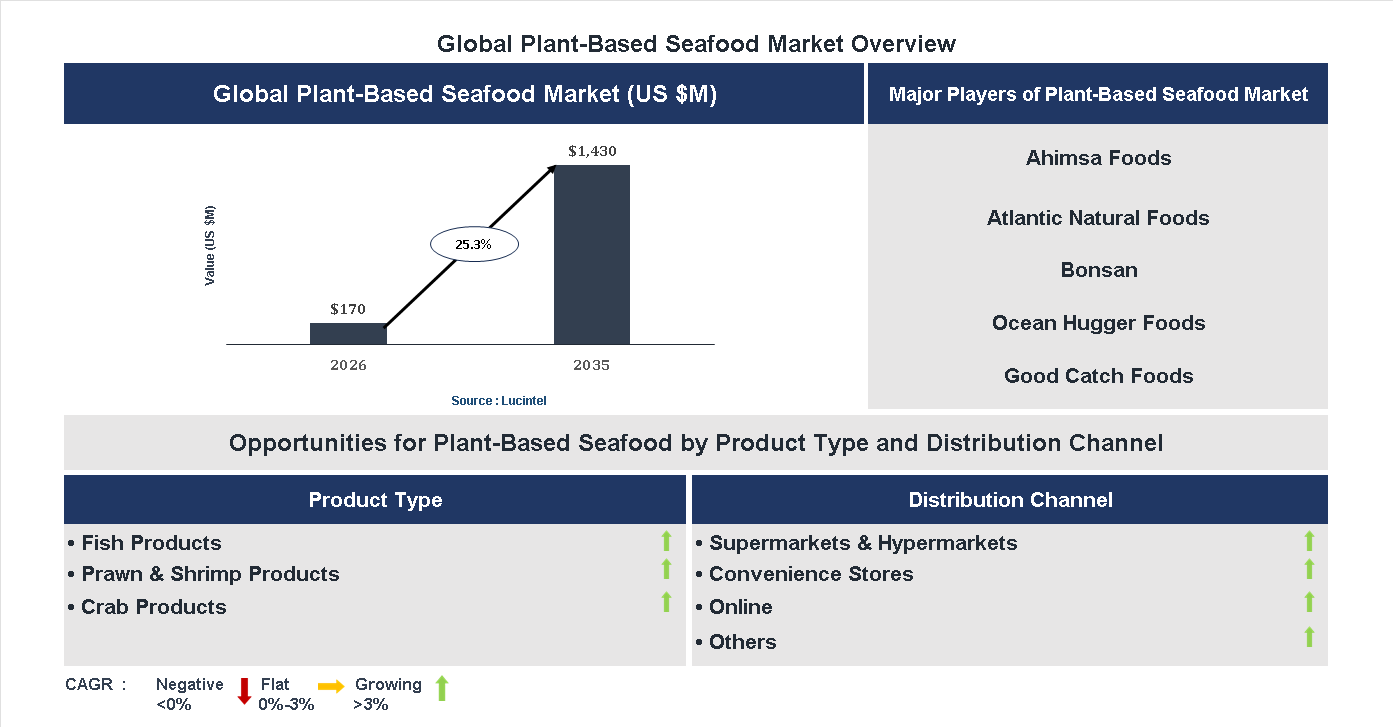
The future of the global plant-based seafood market looks promising with opportunities in the supermarket & hypermarket, convenience store, and online markets. The global plant-based seafood market is expected to reach an estimated $1,430 million by 2035 with a CAGR of 25.3% from 2026 to 2035. The major drivers for this market are the increasing demand for sustainable proteins, the rising consumer shift toward flexitarian diets, and the growing innovation in plant based seafood.• Lucintel forecasts that, within the product type category, fish product is expected to witness higher growth over the forecast period.
• Within the distribution channel category, supermarket & hypermarket is expected to witness the highest growth.
• In terms of region, North America is expected to witness the highest growth over the forecast period. Gain valuable insights for your business decisions with our comprehensive 150+ page report. Sample figures with some insights are shown below.
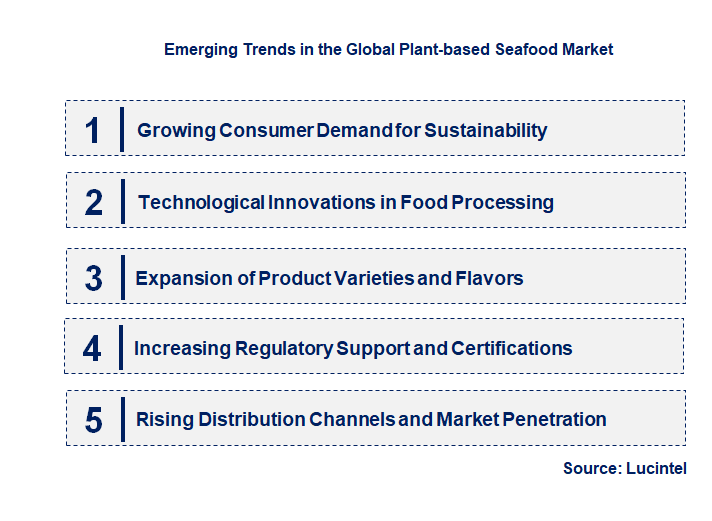
Emerging Trends in the Plant-Based Seafood Market
The plant-based seafood market is experiencing rapid growth driven by increasing consumer awareness of sustainability, health concerns, and ethical considerations. As environmental issues and animal welfare become more prominent, consumers are seeking alternative protein sources that are both nutritious and environmentally friendly. Innovations in food technology and changing dietary preferences are fueling the development of plant-based seafood products. This market is also influenced by regulatory support and the expansion of distribution channels, making plant-based seafood more accessible. These trends are collectively transforming the seafood industry, offering sustainable options that cater to evolving consumer demands and environmental imperatives.• Growing Consumer Demand for Sustainability: Increasing awareness of overfishing and ocean degradation is driving consumers to seek sustainable seafood options. Plant-based seafood offers an eco-friendly alternative that reduces pressure on marine ecosystems. This trend is supported by environmental campaigns and corporate sustainability commitments, encouraging consumers to make eco-conscious choices. As a result, brands are emphasizing transparency and sustainability credentials to attract environmentally aware customers, which is significantly expanding the market.
• Technological Innovations in Food Processing: Advances in food technology, such as cell-based and texturization techniques, are enabling the development of more realistic and appealing plant-based seafood products. These innovations improve texture, flavor, and nutritional profile, making plant-based options more comparable to traditional seafood. The adoption of novel ingredients and processing methods is also reducing costs and increasing scalability, thus broadening product availability and consumer acceptance.
• Expansion of Product Varieties and Flavors: The market is witnessing a diversification of plant-based seafood products, including fish fillets, shrimp, tuna, and crab alternatives. Companies are experimenting with flavors and ingredients to mimic the taste and texture of various seafood types. This variety caters to diverse consumer preferences and dietary needs, encouraging more people to incorporate plant-based seafood into their diets. The expansion of product lines is also driving retail and foodservice adoption, further fueling market growth.
• Increasing Regulatory Support and Certifications: Governments and regulatory bodies are implementing policies and standards to promote plant-based foods, including seafood alternatives. Certifications related to sustainability, organic ingredients, and health benefits are gaining importance, helping consumers make informed choices. Regulatory support facilitates market entry for new products and encourages investment in research and development, thereby accelerating innovation and consumer trust in plant-based seafood options.
• Rising Distribution Channels and Market Penetration: The expansion of online retail, specialty stores, and foodservice outlets is making plant-based seafood more accessible to consumers. E-commerce platforms enable direct-to-consumer sales, increasing market reach. Additionally, collaborations with restaurants and fast-food chains are introducing plant-based seafood to a broader audience. This increased distribution and visibility are crucial for market penetration, driving sales and encouraging mainstream adoption of plant-based seafood products. These trends are collectively reshaping the plant-based seafood market by promoting sustainability, technological advancement, product diversity, regulatory support, and expanded distribution. They are fostering a more innovative, accessible, and environmentally responsible industry that aligns with modern consumer values and global sustainability goals.
Recent Development in the Plant-Based Seafood Market
The plant-based seafood market is experiencing rapid growth driven by increasing consumer awareness of health, environmental sustainability, and animal welfare. Innovations in plant-based ingredients and expanding product varieties are attracting a broader customer base. Market players are investing heavily in research and development to improve taste, texture, and nutritional value. The shift towards sustainable consumption patterns is also fueling demand. These developments are reshaping the seafood industry landscape, creating new opportunities for brands and investors alike, and contributing to a more sustainable food future.• Growing Consumer Demand for Sustainable Alternatives: The increasing awareness of environmental issues and health benefits is driving consumers toward plant-based seafood options. This shift is expanding the market as more people seek sustainable, cruelty-free, and healthier protein sources. Companies are responding by developing innovative products that mimic traditional seafood, which enhances consumer acceptance and boosts sales. The trend is expected to continue, significantly impacting seafood consumption patterns and encouraging industry-wide sustainability initiatives.
• Innovation in Plant-Based Ingredients and Technologies: Advances in plant-based ingredients and processing technologies are improving product quality, taste, and texture. New formulations using pea protein, seaweed, and other natural ingredients are making plant-based seafood more appealing. These innovations are reducing production costs and increasing scalability, enabling brands to offer a wider variety of products. As technology evolves, the market will see more realistic and nutritious options, attracting a broader consumer base and increasing market penetration.
• Expansion of Product Varieties and Market Reach: Companies are diversifying their product portfolios to include fish fillets, shrimp, and other seafood analogs. This expansion caters to different consumer preferences and culinary uses, broadening market appeal. Additionally, brands are entering new geographic regions, including emerging markets, to capitalize on rising demand. The increased availability and variety are making plant-based seafood more accessible, encouraging trial and adoption among traditional seafood consumers and health-conscious buyers.
• Strategic Partnerships And Investments: Major food corporations and startups are forming strategic alliances to accelerate product development and distribution. Investments in R&D and marketing are boosting brand visibility and consumer trust. These collaborations facilitate access to advanced technologies and supply chains, ensuring product quality and scalability. The influx of capital and partnerships is fueling innovation, expanding market presence, and driving competitive dynamics, ultimately supporting the growth and mainstream acceptance of plant-based seafood products.
• Regulatory Support and Sustainability Initiatives: Governments and industry bodies are implementing policies and standards favoring plant-based foods. Certification programs and sustainability labels are enhancing consumer confidence and product credibility. These initiatives promote environmentally friendly practices and support market growth. Regulatory support reduces barriers to entry, encourages innovation, and fosters consumer trust, which collectively accelerate market expansion. The focus on sustainability aligns with global climate goals, positioning plant-based seafood as a key component of future food systems. The overall impact of these developments is a rapidly expanding market characterized by innovation, increased consumer acceptance, and broader geographic reach. These factors are driving growth, attracting investments, and fostering sustainable practices within the seafood industry. As a result, the plant-based seafood market is poised to become a significant segment of the global alternative protein landscape, shaping future food consumption trends and environmental strategies.
Strategic Growth Opportunities in the Plant-Based Seafood Market
The plant-based seafood market is experiencing rapid growth driven by increasing consumer awareness of health, sustainability, and ethical concerns. Innovations in plant-based ingredients and expanding product varieties are attracting a broader customer base. Market players are investing in research and development to improve taste, texture, and nutritional value. Strategic partnerships and marketing efforts are further fueling adoption across retail and foodservice sectors. This evolving landscape presents significant opportunities for companies to capture market share and meet the rising demand for sustainable, plant-based seafood options.• Growing Consumer Demand for Sustainable and Ethical Seafood Alternatives: Increasing awareness of overfishing and ocean pollution is driving consumers toward plant-based seafood options. People seek sustainable, cruelty-free products that reduce environmental impact. This shift is supported by rising vegan and flexitarian populations, prompting brands to develop innovative, eco-friendly seafood substitutes. As consumers prioritize health and environmental concerns, the market for plant-based seafood is poised for substantial expansion, creating opportunities for new product development and market penetration.
• Innovation in Plant-Based Ingredients Enhancing Seafood Texture and Flavor: Advances in plant protein technology are enabling the creation of seafood analogs with improved taste, texture, and nutritional profiles. Companies are utilizing ingredients like pea protein, seaweed, and konjac to mimic the sensory experience of traditional seafood. These innovations are crucial for consumer acceptance and repeat purchase. Continuous R&D efforts are expected to lead to more authentic, appealing products, opening avenues for premium offerings and expanding the market’s reach across various culinary applications.
• Expansion of Product Offerings Across Retail and Foodservice Channels: Retailers and foodservice providers are increasingly incorporating plant-based seafood into their menus and shelves to meet consumer demand. This includes ready-to-eat meals, frozen products, and fresh seafood alternatives. Strategic collaborations with restaurants and supermarkets are boosting product visibility and accessibility. As distribution channels expand, consumer awareness and adoption are likely to grow, fostering a broader acceptance of plant-based seafood and encouraging innovation in product formats and packaging.
• Increasing Investment and Strategic Partnerships in the Market: Major food companies, startups, and investors are channeling funds into plant-based seafood ventures to accelerate product development and market entry. Strategic alliances with technology providers and supply chain partners are enhancing production efficiency and scalability. These investments facilitate innovation, marketing, and distribution efforts, enabling brands to compete effectively. The influx of capital and partnerships is expected to drive market growth, diversify product portfolios, and establish a competitive landscape that benefits consumers through more choices and improved quality.
• Rising Regulatory Support and Sustainability Initiatives Promoting Market Growth: Governments and industry bodies are implementing policies and standards favoring sustainable food production, including plant-based alternatives. Initiatives promoting environmental conservation and responsible sourcing are encouraging manufacturers to innovate and expand their offerings. Certification programs and eco-labels are building consumer trust and confidence. Such regulatory support and sustainability commitments are likely to accelerate market adoption, foster innovation, and create a favorable environment for long-term growth in the plant-based seafood sector. The overall impact of these opportunities is set to significantly accelerate the growth trajectory of the plant-based seafood market. By addressing consumer preferences, technological advancements, strategic collaborations, and supportive policies, the market is poised for robust expansion. This evolution will not only meet rising demand but also promote sustainability and health-conscious choices, shaping a resilient and innovative industry landscape with long-term growth potential.
Plant-Based Seafood Market Driver and Challenges
The plant-based seafood market is influenced by a variety of technological, economic, and regulatory factors that shape its growth trajectory. Advances in food technology and sustainable practices are driving innovation and consumer acceptance. Economic factors such as rising health consciousness and environmental concerns are increasing demand for plant-based alternatives. Regulatory frameworks and government initiatives aimed at promoting sustainable food sources also play a crucial role. However, the market faces challenges including high production costs, consumer skepticism, and regulatory hurdles that could impede growth. Understanding these drivers and challenges is essential for stakeholders to navigate the evolving landscape effectively. The factors responsible for driving the plant-based seafood market include:• Technological Innovation: The development of advanced food processing techniques has enabled the creation of more realistic and appealing plant-based seafood products. Innovations such as cell-based and fermentation technologies improve texture, flavor, and nutritional content, making these products more attractive to consumers. As technology continues to evolve, production costs decrease, and product variety expands, further fueling market growth. Companies investing in R&D are gaining competitive advantages, and consumer acceptance is increasing as products become more similar to traditional seafood. This technological progress is crucial for scaling production and meeting rising demand sustainably.
• Rising Health and Wellness Trends: Consumers are increasingly prioritizing health and wellness, seeking nutritious, low-fat, and cholesterol-free alternatives to traditional seafood. Plant-based seafood offers benefits such as high protein content, omega-3 fatty acids, and absence of contaminants like mercury. The growing awareness of the health risks associated with conventional seafood consumption, including overfishing and pollution, is driving consumers toward plant-based options. This trend is particularly prominent among younger demographics and health-conscious consumers, contributing significantly to market expansion. As awareness spreads, demand for healthier seafood alternatives is expected to continue rising.
• Environmental Sustainability Concerns: The environmental impact of traditional fishing and aquaculture practices has led consumers and regulators to favor sustainable alternatives. Plant-based seafood significantly reduces overfishing, habitat destruction, and carbon emissions associated with seafood production. Governments and environmental organizations are promoting plant-based diets as part of climate change mitigation strategies. This shift aligns with consumer values of sustainability and ethical consumption, boosting market growth. Companies emphasizing eco-friendly practices and transparent sourcing are gaining consumer trust and loyalty, further propelling the market forward.
• Increasing Consumer Awareness and Acceptance: Education campaigns and social media influence have increased awareness about the benefits of plant-based seafood. As consumers become more familiar with plant-based diets, acceptance levels rise, especially among Millennials and Gen Z. The availability of plant-based seafood in mainstream retail outlets and restaurants enhances accessibility and visibility. Positive reviews, celebrity endorsements, and culinary innovations are also contributing to changing perceptions. This increased acceptance is vital for market expansion, encouraging more producers to enter the space and diversify product offerings to meet evolving consumer preferences.
• Growing Investment and Strategic Partnerships: Investment from venture capitalists, food giants, and startups is fueling innovation and scaling production capacities. Strategic partnerships between plant-based companies and seafood brands facilitate product development, distribution, and marketing. Funding supports R&D efforts to improve product quality and diversify offerings, while collaborations help penetrate new markets. This influx of capital and partnerships accelerates market growth, enhances competitiveness, and fosters innovation. As investment continues to flow, the market is poised for rapid expansion, driven by a collaborative ecosystem focused on sustainable and appealing plant-based seafood solutions. The challenges facing the plant-based seafood market include:
• High Production Costs: Developing plant-based seafood involves complex processes such as ingredient sourcing, formulation, and processing, which can be costly. Advanced technologies like cell-based cultivation and fermentation require significant capital investment and specialized expertise. These high costs translate into higher retail prices, potentially limiting consumer adoption, especially in price-sensitive markets. Additionally, scaling production to meet increasing demand while maintaining quality and sustainability adds financial pressure. Overcoming cost barriers is essential for making plant-based seafood more accessible and competitive with traditional seafood options.
• Consumer Skepticism and Taste Preferences: Despite growing awareness, some consumers remain skeptical about the taste, texture, and nutritional value of plant-based seafood. Concerns about authenticity and naturalness can hinder acceptance. Additionally, traditional seafood consumers may be resistant to switching due to taste preferences or cultural factors. Overcoming skepticism requires continuous product innovation, transparent marketing, and education to demonstrate comparable quality and benefits. Addressing these perceptions is critical for expanding the customer base and ensuring sustained market growth.
• Regulatory and Labeling Challenges: The plant-based seafood industry faces regulatory uncertainties regarding product classification, safety standards, and labeling requirements. Lack of clear guidelines can delay product approvals and market entry. Mislabeling or misleading claims may lead to legal issues and consumer mistrust. Regulatory bodies are also scrutinizing health claims and ingredient disclosures, which can complicate marketing strategies. Navigating these regulatory landscapes requires significant legal expertise and compliance efforts, potentially increasing costs and slowing innovation. Clear, consistent regulations are vital for fostering industry growth and consumer confidence. The plant-based seafood market is driven by technological advancements, health and sustainability trends, and increasing consumer acceptance, all supported by strategic investments. However, high production costs, consumer skepticism, and regulatory hurdles pose significant challenges. These factors collectively influence the market’s growth potential, requiring stakeholders to innovate, educate, and adapt to regulatory environments. The overall impact suggests a promising yet complex landscape, where continued innovation and strategic navigation of challenges will determine long-term success and market expansion.
List of Plant-Based Seafood Companies
Companies in the market compete on the basis of product quality offered. Major players in this market focus on expanding their manufacturing facilities, R&D investments, infrastructural development, and leverage integration opportunities across the value chain. With these strategies plant-based seafood companies cater increasing demand, ensure competitive effectiveness, develop innovative products & technologies, reduce production costs, and expand their customer base. Some of the plant-based seafood companies profiled in this report include-• Ahimsa Foods
• Atlantic Natural Foods
• Bonsan
• Ocean Hugger Foods
• Good Catch Foods
• Impossible Foods Inc.
• Sophie’s Kitchen Inc.
• New Wave Foods
• Gardein
• Quorn
Plant-Based Seafood Market by Segment
The study includes a forecast for the global plant-based seafood market by product type, distribution channel, and region.Plant-Based Seafood Market by Product Type [Value from 2019 to 2035]:
• Fish Products
• Prawn & Shrimp Products
• Crab Products
Plant-Based Seafood Market by Distribution Channel [Value from 2019 to 2035]:
• Supermarkets & Hypermarkets
• Convenience Stores
• Online
• Others
Plant-Based Seafood Market by Region [Value from 2019 to 2035]:
• North America
• Europe
• Asia Pacific
• The Rest of the World
Country Wise Outlook for the Plant-Based Seafood Market
The plant-based seafood market has experienced rapid growth driven by increasing consumer awareness of health, sustainability, and animal welfare issues. Innovations in product formulations, expanding distribution channels, and rising demand for alternative proteins have propelled this sector forward. Governments and private companies are investing heavily to develop more realistic and nutritious plant-based seafood options. As the market matures, key players are focusing on product diversification, technological advancements, and strategic partnerships to capture a larger share. This evolving landscape reflects a global shift towards sustainable and ethical food choices, with each major economy contributing uniquely to the markets development.• United States: The US market has seen significant innovation with new product launches and increased retail presence. Major brands are investing in R&D to improve taste and texture, making plant-based seafood more appealing. Consumer awareness campaigns and partnerships with restaurants have boosted adoption. The government’s focus on sustainability initiatives has also supported market growth, alongside rising vegan and flexitarian populations. E-commerce platforms are expanding their offerings, making plant-based seafood more accessible nationwide. Overall, the US remains a leader in product development and market expansion in this sector.
• China: China’s market is rapidly expanding due to rising health consciousness and environmental concerns. Local companies are developing affordable, culturally relevant plant-based seafood options, especially targeting traditional dishes. The government’s support for plant-based foods and sustainable agriculture has facilitated growth. Urban middle-class consumers are increasingly adopting plant-based diets, boosting demand. Strategic collaborations with international brands are also helping to improve product quality and variety. The market is characterized by a focus on affordability and local flavor, positioning China as a key growth driver in the global plant-based seafood industry.
• Germany: Germany’s market is driven by a strong consumer focus on sustainability and animal welfare. Innovative startups and established food companies are launching new plant-based seafood products, emphasizing organic and eco-friendly ingredients. Retail chains are expanding their plant-based sections, making these products more accessible. Consumer education campaigns about environmental impacts are in increasing demand. Germany’s regulatory environment supports innovation, and collaborations with research institutions are fostering technological advancements. The market is also seeing a rise in premium, gourmet plant-based seafood options, catering to health-conscious and environmentally aware consumers.
• India: The Indian market is emerging with a focus on affordability and traditional flavors. Local startups are developing plant-based seafood that aligns with regional tastes, such as spiced fish alternatives. The growing middle class and youth demographic are driving demand for sustainable and healthy food options. Government initiatives promoting plant-based diets and sustainable agriculture are supportive. Market players are exploring partnerships with local fishermen and farmers to ensure supply chain sustainability. The market remains nascent but shows promising growth potential, especially in coastal regions where seafood is a dietary staple.
• Japan: Japan’s market is characterized by a high level of technological innovation and consumer interest in sustainability. Companies are developing plant-based seafood that mimics traditional Japanese products like sushi and tempura. The focus on high-quality, realistic textures and flavors is a key trend. Retail and foodservice sectors are actively promoting plant-based options, supported by government sustainability goals. Collaborations with culinary experts are enhancing product appeal. The market is also driven by a strong cultural emphasis on seafood and environmental conservation, making Japan a significant player in the development of premium plant-based seafood products.

Features of the Global Plant-Based Seafood Market
Market Size Estimates: Plant-based seafood market size estimation in terms of value ($M). Trend and Forecast Analysis: Market trends (2019 to 2025) and forecast (2026 to 2035) by various segments and regions. Segmentation Analysis: Plant-based seafood market size by product type, distribution channel, and region in terms of value ($M). Regional Analysis: Plant-based seafood market breakdown by North America, Europe, Asia Pacific, and Rest of the World. Growth Opportunities: Analysis of growth opportunities in different product types, distribution channels, and regions for the plant-based seafood market. Strategic Analysis: This includes M&A, new product development, and competitive landscape of the plant-based seafood market. Analysis of competitive intensity of the industry based on Porter’s Five Forces model.
FAQ
Q1. What is the plant-based seafood market size? Answer: The global plant-based seafood market is expected to reach an estimated $1,430 million by 2035. Q2. What is the growth forecast for plant-based seafood market? Answer: The global plant-based seafood market is expected to grow with a CAGR of 25.3% from 2026 to 2035. Q3. What are the major drivers influencing the growth of the plant-based seafood market? Answer: The major drivers for this market are the increasing demand for sustainable proteins, the rising consumer shift toward flexitarian diets, and the growing innovation in plant based seafood. Q4. What are the major segments for plant-based seafood market? Answer: The future of the plant-based seafood market looks promising with opportunities in the supermarket & hypermarket, convenience store, and online markets. Q5. Who are the key plant-based seafood market companies? Answer: Some of the key plant-based seafood companies are as follows:• Ahimsa Foods
• Atlantic Natural Foods
• Bonsan
• Ocean Hugger Foods
• Good Catch Foods
• Impossible Foods Inc.
• Sophie’s Kitchen Inc.
• New Wave Foods
• Gardein
• Quorn Q6. Which plant-based seafood market segment will be the largest in future? Answer: Lucintel forecasts that, within the product type category, fish product is expected to witness higher growth over the forecast period. Q7. In plant-based seafood market, which region is expected to be the largest in next 5 years? Answer: In terms of region, North America is expected to witness the highest growth over the forecast period. Q8. Do we receive customization in this report? Answer: Yes, Lucintel provides 10% customization without any additional cost.
Table of Contents
List of Figures
List of Tables
Methodology
- In-depth interviews of the major players in this market
- Detailed secondary research from competitors’ financial statements and published data
- Extensive searches of published works, market, and database information pertaining to industry news, company press releases, and customer intentions
- A compilation of the experiences, judgments, and insights of Lucintel’s professionals, who have analyzed and tracked this market over the years.


Buy Now
Choose a license that fits your team. Instant PDF delivery.
Prices exclude taxes. Instant delivery. Custom licensing available on request.
Key Questions
- • What are some of the most promising, high-growth opportunities for the plant-based seafood market by product type (fish products, prawn & shrimp products, and crab products), distribution channel (supermarkets & hypermarkets, convenience stores, online, and others), and region (North America, Europe, Asia Pacific, and the Rest of the World)?
- • Which segments will grow at a faster pace and why?
- • Which region will grow at a faster pace and why?
- • What are the key factors affecting market dynamics? What are the key challenges and business risks in this market?
- • What are the business risks and competitive threats in this market?
- • What are the emerging trends in this market and the reasons behind them?
- • What are some of the changing demands of customers in the market?
- • What are the new developments in the market? Which companies are leading these developments?
- • Who are the major players in this market? What strategic initiatives are key players pursuing for business growth?
- • What are some of the competing products in this market and how big of a threat do they pose for loss of market share by material or product substitution?
- • What M&A activity has occurred in the last 7 years and what has its impact been on the industry? For any questions related to Plant-Based Seafood Market, Plant-Based Seafood Market Size, Plant-Based Seafood Market Growth, Plant-Based Seafood Market Analysis, Plant-Based Seafood Market Report, Plant-Based Seafood Market Share, Plant-Based Seafood Market Trends, Plant-Based Seafood Market Forecast, Plant-Based Seafood Companies, write Lucintel analyst at email: helpdesk@lucintel.com. We will be glad to get back to you soon.


