
Report Feature
Plant-based Flavor Market Trends and Forecast
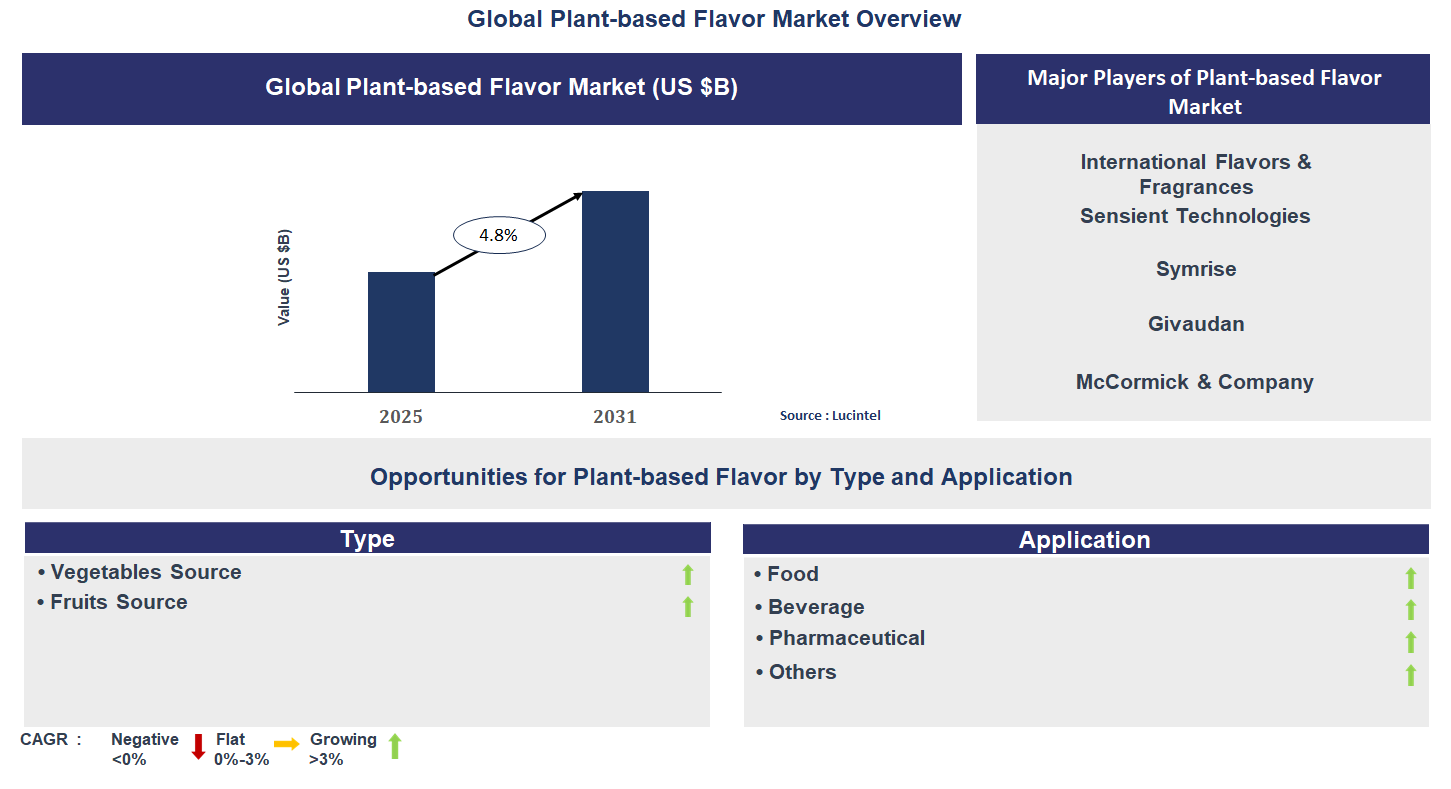
The future of the global plant-based flavor market looks promising with opportunities in the food, beverage, and pharmaceutical markets. The global plant-based flavor market is expected to grow with a CAGR of 4.8% from 2025 to 2031. The major drivers for this market are the increasing demand for healthy options, the rising interest in sustainable ingredients, and the growing preference for natural flavors.• Lucintel forecasts that, within the type category, fruits source is expected to witness higher growth over the forecast period.
• Within the application category, food is expected to witness the highest growth.
• In terms of region, APAC is expected to witness the highest growth over the forecast period. Gain valuable insights for your business decisions with our comprehensive 150+ page report. Sample figures with some insights are shown below.
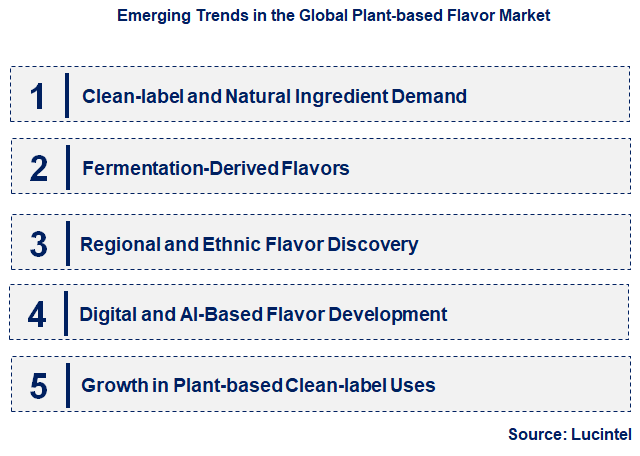
Emerging Trends in the Plant-based Flavor Market
The plant-based flavor market is being transformed by trends that mirror consumer values for authenticity, health, and sustainability. Biotechnology advancements in fermentation and extraction processes allow for cleaner and more natural flavors. Digital flavor creation and personalized eating experiences are on the rise. Greater collaboration along supply chains facilitates innovation in plant blends and allergen-free formulations. All these trends come together to create greater product variety, effectiveness, and consumer attraction, propelling growth and competitive distinction within the plant-based flavors market.• Clean-label and Natural Ingredient Demand: Consumers more and more demand plant-based flavoring derived from recognizable, organic, and non-GMO sources. This trend forces manufacturers to steer clear of synthetic additives, emphasize transparency, and incorporate ethically sourced botanicas, building product trust and marketability.
• Fermentation-Derived Flavors: Advances in biotechnology have accelerated the application of fermentation for manufacturing natural, complex flavor chemicals that replicate animal-derived flavors. The process promotes sustainability by minimizing resource utilization and allows for scalable, repeatable flavor manufacturing.
• Regional and Ethnic Flavor Discovery: Flavor creators are adding local herbs, spices, and vegetables to suit regional taste and ethnic preferences, driving market diversity and consumer connection with plant-based foods based on known flavors.
• Digital and AI-Based Flavor Development: Alignment of digital technologies and artificial intelligence speeds up flavor formulation design, testing, and optimization. Data-driven insights uncover consumer trends and optimize innovation cycles for better flavor effectiveness and market relevance.
• Growth in Plant-based Clean-label Uses: Plant-based flavors are fast gaining entry into segments such as dairy substitutes, meat substitutes, snack foods, and beverages through drivers such as clean-label behavior and dietary patterns. This is leading to new product innovation and increased consumer options. These trends are profoundly reshaping the way plant-based flavors are developed, marketed, and consumed, driving market growth and promoting sustainable food systems.
Recent Development in the Plant-based Flavor Market
Recent market trends within the plant-based flavor industry emphasize developments within flavor extraction, process formulation, and food application in response to consumer health and sustainability demands. The creation of new technologies and collaborations between food manufacturers and flavor houses have rapidly improved the introduction of natural, multifunctional plant-based flavors. Natural ingredient-friendly regulatory environments further support these advancements. Overall, these developments present market leaders with opportunities for product differentiation based on taste, clean-label status, and cultural adaptation.• Adopting New Flavor Extraction Technologies: Emerging techniques like supercritical CO2 extraction and enzymatic processes improve the purity and quality of plant-based flavors, providing more natural and effective flavor profiles.
• Growth of Fermentation-based Flavor Production: Greater application of fermentation technology creates rich savory and umami flavors mimicking meat and dairy, providing sustainable and scalable solutions adopted by manufacturers.
• Strategic Partnerships and Collaborations: Flavor companies are joining forces with plant food businesses and ingredient providers to drive innovation, enhance flavor portfolios, and support customized solutions that cater to market needs.
• Emphasis on Sustainable and Ethical Sourcing: Sourcing plant ingredients ethically is gaining importance as consumers look for assurances of sustainability, fair trade, and traceability, which in turn enhance brand loyalty.
• Powdered Plant-Based Flavors: Growth Expansion: Powdered plant-based flavors have become more popular because of their long shelf life, ease of use in food production, and application to protein blends, soups, sauces, and snacks that facilitate industrial scaling. All these advances together enhance the quality, authenticity, and access of plant-based flavors, driving the consumer experience and growth of the market.
Strategic Growth Opportunities in the Plant-based Flavor Market
The plant-based flavor market offers strong growth opportunities through expanding uses, technology advancements, and consumer demands for natural-tasting experiences. Focusing on major product categories and delivery forms maximizes penetration in the market. Growth into new markets, through clean-label consumer trends, and application-specific development of flavors increases competitive leverage. These growth strategies provide channels through which companies can leverage changing dietary trends and regulation support to drive sustainable business expansion.• Dairy Alternatives: Creating creamy and buttery plant-based taste profiles designed specifically for vegan cheese, yogurt, and milk substitutes can tap into the increasing dairy replacement market.
• Meat Substitutes: Umami, smoky, and savory taste formulations revive classic meat flavor profiles that help drive consumer acceptance of plant protein in burgers, sausages, and nuggets.
• Snack Foods: Flavor creativity in plant-based snack foods like chips, bars, and nuts inspires consumers with bold, clean-label versions made with herbs, spices, and fruit extracts.
• Beverages: Plant-based flavors that complement protein shakes, smoothies, and ready-to-drink health drinks fuel increasing demand for functional and sustainable beverage options.
• Culinary and Ready Meals: Tailored flavor combinations for soups, sauces, and ready-to-consume meals increase convenience and authenticity in taste, enabling the widespread acceptance of plant-based diets. Concentrating on these uses enables companies to tie innovation to demand in the market, increasing reach and supporting plant-based flavor market growth.
Plant-based Flavor Market Driver and Challenges
The plant-based flavor market is defined by a range of technological, economic, and regulatory drivers that drive demand and innovation. Increasing consumer health awareness, green concerns, and eating patterns fuel adoption. Improvements in flavor technology and supply chain openness add to product propositions. Yet, the high cost of production, the complexity of the supply chain, and inconsistent regulatory environments across geographies pose threats. Sustained growth and competitive advantage in the changing market require responding to these threats while building on the drivers. The factors responsible for driving the plant-based flavor market include: 1. Increasing Awareness of Health and Wellness: Consumers increasingly demand natural, plant-based alternatives that are deemed healthier and do not contain synthetic additives, fueling flavor demand. 2. Eco-Sustainability Needs: Efforts to minimize carbon footprints and resource consumption lead to adoption of plant-based flavors favoring sustainable food production. 3. Technological Improvements: Advances in extraction, fermentation, and AI facilitate the production of authentic, scalable, and affordable plant-based flavors. 4. Regulatory Support for Clean-label Products: Industry-friendly policies and labeling regulations instill trust and support natural ingredient use, leading to market confidence. 5. Growing Vegan and Flexitarian Consumer Base: Increasing consumer base adopting plant-based diets expands the market for varied and authentic flavor solutions. Challenges in the plant-based flavor market are: 1. High Raw Material and Production Cost: Certain plant-based ingredients and advanced processing technologies contribute to increased costs, affecting pricing strategies. 2. Supply Chain Restraints: Procurement of sustainable and high-quality plant ingredients proves to be difficult because of seasonal demands and geographical restrictions. 3. Regulatory Regional Variations: Different regulations on flavor ingredients and labeling complicate worldwide product launches and compliance activities. The combination of drivers and challenges results in a dynamic market environment, in which innovation and sustainability are critical. Whilst growth is driven by consumer demand and technological advancements, cost and regulatory issues need to be managed strategically. In total, these drive a competitive and dynamic plant-based flavor market with considerable potential for growth and diversification.List of Plant-based Flavor Companies
Companies in the market compete on the basis of product quality offered. Major players in this market focus on expanding their manufacturing facilities, R&D investments, infrastructural development, and leverage integration opportunities across the value chain. With these strategies plant-based flavor companies cater increasing demand, ensure competitive effectiveness, develop innovative products & technologies, reduce production costs, and expand their customer base. Some of the plant-based flavor companies profiled in this report include-• International Flavors & Fragrances
• Sensient Technologies
• Symrise
• Givaudan
• McCormick & Company
• Takasago International
• Kerry Group
• Dohler Group
• The Edlong
• Innova Flavors
Plant-based Flavor Market by Segment
The study includes a forecast for the global plant-based flavor market by type, application, and region.Plant-based Flavor Market by Type [Value from 2019 to 2031]:
• Vegetables Source
• Fruits Source
Plant-based Flavor Market by Application [Value from 2019 to 2031]:
• Food
• Beverage
• Pharmaceutical
• Others
Plant-based Flavor Market by Region [Value from 2019 to 2031]:
• North America
• Europe
• Asia Pacific
• The Rest of the World
Country Wise Outlook for the Plant-based Flavor Market
The plant-based flavor industry is growing aggressively because consumers increasingly are demanding natural, wholesome, and sustainable food. Rising adoption of vegan, vegetarian, and flexitarian diets across the world is pushing the demand for plant-based flavors capable of mimicking conventional meat, dairy, and egg flavors. Advances in technology in flavor extraction, fermentation, and formulation are making it possible to develop clean-label, allergen-free, and true-tasting products. Market players are turning their attention to regional taste preferences and innovation to win over diverse consumer bases.• United States: The US plant-based flavor market is fueled by an expanding universe of plant-based food companies addressing health-driven and ecologically conscious consumers. There is high demand for dairy, meat, and savory-mimetic flavors, particularly in cheese alternative, protein bar, and frozen dessert categories. Innovations involve fermentation-derived and botanical-originating flavors with increased authenticity and clean-label offerings. US market leaders invest in scalable botanical blends and natural concentrations, and regulatory support for labeling natural products spurs innovation.
• China: In China, high urbanization, growing disposable incomes, and heightened health benefits awareness have driven demand for plant-based diets and flavors. The market witnesses increasing use of plant-based flavors for meat alternatives, snacks, and beverages. Modern plant-based innovations such as umami-based and fermented flavor profiles are combined with conventional flavor expectations. Regulatory support towards natural and sustainable ingredients fuels market growth. Flavor houses in regions concentrate on tailor-made herbal, spice, and vegetable-based ingredients in order to answer local palates, stretching the market coverage of plant-based flavor products.
• Germany: Germany is a leader in plant-based flavor development in Europe, led by strong consumer demand for natural and sustainable foodstuffs. The trend focuses on substituting meat and dairy flavors with plant-based substitutes such as algae, mushrooms, and spices that provide savory, umami, and smoky flavor profiles. Strict EU food safety standards and openness measures instill consumers faith, stimulating use of natural herbs and vegetable-derived flavors. Partnerships between flavor houses and food manufacturers enable launches in vegan cheese, meat alternatives, and ready meals, supporting consistent market expansion.
• India: Indias plant-based flavor market is growing with increasing health-consciousness, vegetarian consumer groups, and greater availability of plant-based food offerings. Urban consumers are becoming increasingly interested in dairy alternative, snack, and beverage flavors. Indian traditional flavors such as spices, herbs, and regional botanical extracts add depth to the flavor profile, making products stand out. Government emphasis on food safety and promotion of clean-label foods facilitates market acceptance. E-commerce and online marketing platforms facilitate small and medium businesses marketing innovative plant-based flavors with varied cultural appeal.
• Japan: Japan witnesses more adoption of plant-based flavors in traditional foods as well as fusion foods, inspired by the customers desire for health, sustainability, and longevity. Trending flavor profiles consist of seaweed, algae, vegetable fermentation extracts, and fruit-derived powders applied in confectionery, beverages, and meat alternatives. The market is driven by a robust food technology base and favorable regulatory culture encouraging the use of natural ingredients. Collaboration among flavor producers and food companies facilitates ongoing innovation and market penetration.

Features of the Global Plant-based Flavor Market
Market Size Estimates: Plant-based flavor market size estimation in terms of value ($B). Trend and Forecast Analysis: Market trends (2019 to 2024) and forecast (2025 to 2031) by various segments and regions. Segmentation Analysis: Plant-based flavor market size by type, application, and region in terms of value ($B). Regional Analysis: Plant-based flavor market breakdown by North America, Europe, Asia Pacific, and Rest of the World. Growth Opportunities: Analysis of growth opportunities in different types, applications, and regions for the plant-based flavor market. Strategic Analysis: This includes M&A, new product development, and competitive landscape of the plant-based flavor market. Analysis of competitive intensity of the industry based on Porter’s Five Forces model.
FAQ
Q1. What is the growth forecast for plant-based flavor market? Answer: The global plant-based flavor market is expected to grow with a CAGR of 4.8% from 2025 to 2031. Q2. What are the major drivers influencing the growth of the plant-based flavor market? Answer: The major drivers for this market are the increasing demand for healthy options, the rising interest in sustainable ingredients, and the growing preference for natural flavors. Q3. What are the major segments for plant-based flavor market? Answer: The future of the plant-based flavor market looks promising with opportunities in the food, beverage, and pharmaceutical markets. Q4. Who are the key plant-based flavor market companies? Answer: Some of the key plant-based flavor companies are as follows:• International Flavors & Fragrances
• Sensient Technologies
• Symrise
• Givaudan
• McCormick & Company
• Takasago International
• Kerry Group
• Dohler Group
• The Edlong
• Innova Flavors Q5. Which plant-based flavor market segment will be the largest in future? Answer: Lucintel forecasts that, within the type category, fruits source is expected to witness higher growth over the forecast period. Q6. In plant-based flavor market, which region is expected to be the largest in next 5 years? Answer: In terms of region, APAC is expected to witness the highest growth over the forecast period. Q7. Do we receive customization in this report? Answer: Yes, Lucintel provides 10% customization without any additional cost.
Table of Contents
List of Figures
List of Tables
Methodology
- In-depth interviews of the major players in this market
- Detailed secondary research from competitors’ financial statements and published data
- Extensive searches of published works, market, and database information pertaining to industry news, company press releases, and customer intentions
- A compilation of the experiences, judgments, and insights of Lucintel’s professionals, who have analyzed and tracked this market over the years.


Buy Now
Choose a license that fits your team. Instant PDF delivery.
Prices exclude taxes. Instant delivery. Custom licensing available on request.
Key Questions
- • What are some of the most promising, high-growth opportunities for the plant-based flavor market by type (vegetables source and fruits source), application (food, beverage, pharmaceutical, and others), and region (North America, Europe, Asia Pacific, and the Rest of the World)?
- • Which segments will grow at a faster pace and why?
- • Which region will grow at a faster pace and why?
- • What are the key factors affecting market dynamics? What are the key challenges and business risks in this market?
- • What are the business risks and competitive threats in this market?
- • What are the emerging trends in this market and the reasons behind them?
- • What are some of the changing demands of customers in the market?
- • What are the new developments in the market? Which companies are leading these developments?
- • Who are the major players in this market? What strategic initiatives are key players pursuing for business growth?
- • What are some of the competing products in this market and how big of a threat do they pose for loss of market share by material or product substitution?
- • What M&A activity has occurred in the last 5 years and what has its impact been on the industry? For any questions related to Plant-based Flavor Market, Plant-based Flavor Market Size, Plant-based Flavor Market Growth, Plant-based Flavor Market Analysis, Plant-based Flavor Market Report, Plant-based Flavor Market Share, Plant-based Flavor Market Trends, Plant-based Flavor Market Forecast, Plant-based Flavor Companies, write Lucintel analyst at email: helpdesk@lucintel.com. We will be glad to get back to you soon.


