
Report Feature
Pediatric Mask Market Trends and Forecast
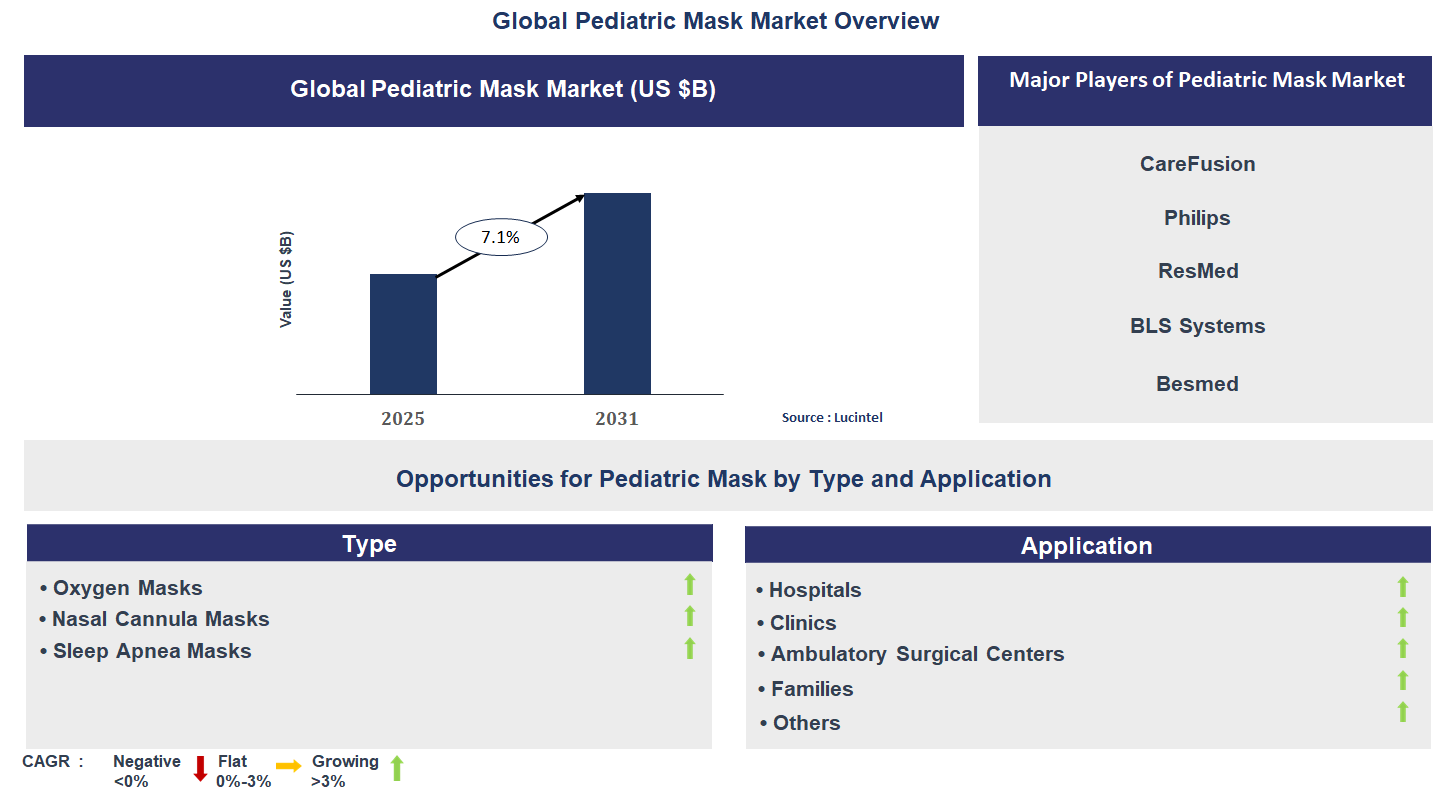
The future of the global pediatric mask market looks promising with opportunities in the oxygen mask, nasal cannula mask, and sleep apnea mask markets. The global pediatric mask market is expected to grow with a CAGR of 7.1% from 2025 to 2031. The major drivers for this market are the increasing prevalence of pediatric respiratory illnesses, the rising awareness of infection control measures, and the growing demand for safe masks for children.• Lucintel forecasts that, within the application category, hospital is expected to witness the highest growth over the forecast period.
• Within the type category, oxygen mask is expected to witness the highest growth.
• In terms of region, APAC is expected to witness the highest growth over the forecast period. Gain valuable insights for your business decisions with our comprehensive 150+ page report. Sample figures with some insights are shown below.
Emerging Trends in the Pediatric Mask Market
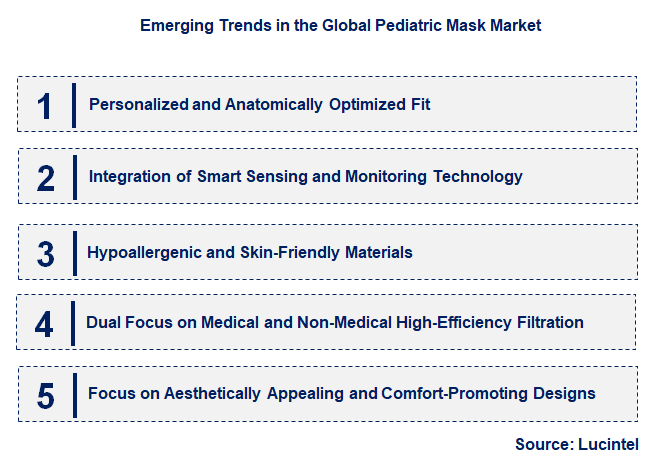
The pediatric mask market is in its transitional phase, shifting from mere barrier protection to adopting sophisticated technology, specialized designs, and patient comfort. The transition is being necessitated by the intersection of heightened medical awareness of pediatric respiratory well-being, the long-term effect of global pandemics, and parents need for safe, comfortable, and effective protection for their offspring. New trends represent a key transition towards innovation that fulfills pediatric patients specific anatomical and psychological requirements, facilitating more compliance with both therapeutic and prophylactic use of masks.• Personalized and Anatomically Optimized Fit: The old one-size-fits-all mode is being quickly replaced by masks manufactured especially for different pediatric age categories—neonatal, infant, and child—that take into account the distinct shapes of a childs face. The movement includes the use of 3D scanning, printing, and sophisticated material molding technologies in order to produce personalized-fit non-invasive ventilation (NIV) and sleep apnea masks. An accurate, anatomically optimal fit is critical since an inadequate seal not only detracts from the therapeutic effectiveness of oxygen or positive pressure ventilation but also causes discomfort, skin irritation, and poor compliance.
• Integration of Smart Sensing and Monitoring Technology: One important trend is the inclusion of small, non-invasive sensors in pediatric masks, specifically those utilized for NIV and CPAP. The smart masks aim to wirelessly monitor key parameters like oxygen saturation, respiratory rate, exhalation volume, and integrity of the mask seal in real time. Its effect is groundbreaking, allowing the clinician to remotely monitor a childs respiratory status and treatment efficacy, which is priceless in hospital and home care environments alike.
• Hypoallergenic and Skin-Friendly Materials: To combat issues of skin breakdown, allergic reactions, and discomfort commonly associated with prolonged mask use in children, there is a strong market movement toward ultra-soft, biocompatible, and hypoallergenic materials. Manufacturers are prioritizing medical-grade silicone, soft gel polymers, and latex-free components in mask cushions and headgear. The impact of this trend is directly tied to improved patient comfort and compliance.
• Dual Focus on Medical and Non-Medical High-Efficiency Filtration: The market is seeing a growth in both high-filtration medical respirators and non-medical pediatric face masks for general public health and pollution protection. To medical application, it provides advanced safety against airborne pathogens in hospitals. To the non-medical market, it addresses parental worries about air pollution and winter illnesses. This two-pronged approach expands the markets audience, uniforms higher quality filtration among product lines, and enables new consumer segments stimulated by increased environmental and public health consciousness, transforming high-efficiency filtration from a specialty to a mass-market standard.
• Focus on Aesthetically Appealing and Comfort-Promoting Designs: Acknowledging that childrens compliance is largely driven by psychological issues, there is a strong movement to make masks less frightening and more attractive. This entails the use of vivid colors, interesting patterns, and cartoon faces in the mask design, and the creation of lighter-weight designs and less noise-generating delivery systems (for respiratory equipment). The effect is a marked increase in patient acceptance and compliance with wearing the mask. These new trends are radically transforming the pediatric mask market by changing the product from a functional need to a patient-focused medical device. Material innovation and customization are forcing improved therapeutic performance and comfort, solving the specific issues of pediatric anatomy and skin sensitivity. At the same time, the incorporation of smart technology is updating care through real-time monitoring and improving safety, especially as home healthcare is increasing. Finally, emphasis on cosmetic design is key to enhancing patient compliance. Together, these trends are producing a very specialized, high-tech, consumer-conscious market aimed at optimizing both clinical results and child well-being.
Recent Development in the Pediatric Mask Market
The pediatric mask market is seeing increasing pace of innovation, driven primarily by the increased sensitivity towards respiratory well-being and the ongoing requirement of customized medical solutions for pediatric care. These new developments are intended to address the age-old issues of low patient compliance, inconvenient fit, and inadequate fit of masks for the heterogenous and sensitive pediatric anatomy across neonates to adolescents. The industry is shifting towards products that are not just clinically successful but also easy to use and highly customized.• Introduction of Ultra-Lightweight and Low-Profile CPAP/BIPAP Masks: One of the most significant recent trends is the availability of pediatric CPAP and BiPAP masks with minimalist, ultra-lightweight designs and low facial profiles. These masks frequently employ soft nasal pillows or low-contact cushions rather than typical full-face interfaces.
• Greater Use of 3D Printing and Digital Scanning for Customization: One key technology is growing use of 3D printing, together with digital facial scanning, to develop tailored pediatric respiratory masks. This technology enables quick, on-demand production of masks that are shaped specifically to a childs individual facial shape.
• Incorporation of Antiviral and Antimicrobial Coatings/Materials: Manufacturers are now introducing antiviral and antimicrobial agents into the materials or coatings of disposable and reusable pediatric masks, including the filtration media and the outer fabric layer.
• Scented or Themed Anesthesia and Procedure Masks: One of the highlights of the clinical segment is the development of mildly fruit-scented or colorfully themed (e.g., cartoon character) anesthesia and procedural masks for kids. These are generally applied for short procedures or for the induction portion of general anesthesia.
• General Pediatric Use Filtration Market: This trend is a reflection of increasing public health, particularly in highly populated and industrialized areas. The innovation offers parents convenient, high-efficiency solutions to protect childrens respiratory health from airborne irritants outside of the medical environment, thus creating a strong consumer market segment focused on preventive health and daily outdoor protection. These advances are fully influencing the market for pediatric masks by increasing requirements for patient care and product design. The emphasis on customization and material innovation is enhancing clinical effectiveness and long-term adherence, especially in chronic respiratory disease.
Strategic Growth Opportunities in the Pediatric Mask Market
Strategic expansion in the pediatric mask market is more and more based on recognizing and seizing niche opportunities outside general protective use. These opportunities take advantage of current technological capabilities and meet high-value clinical and preventative requirements. The strategic plan is to move from a one-product commodity business to a segmented, specialized market providing high-margin solutions for resolving chronic health conditions, specialized procedures, and ongoing environmental hazards.• Home-Based Sleep Apnea and CPAP Therapy: The increase in awareness and diagnosis of Pediatric Obstructive Sleep Apnea (POSA) is a major growth opportunity. These highly comfortable, secure, and custom-fit CPAP and BiPAP masks are required by this application. Market expansion is fueled by demand for lighter, smaller interfaces to fit a childs active sleep, with durable solutions that can be easily integrated into telemedicine monitoring, commanding premium prices, and securing recurring revenue through replacement parts.
• Specialized Neonatal/Infant Respiratory Support: The creation of highly specialized, ultra-soft masks for non-invasive ventilation (e.g., CPAP, NIPPV) for preterm infants and neonates is a leading clinical growth area. It demands materials with extreme biocompatibility and high-precision manufacturing to avoid facial trauma and minimize leak. This segment is high-value, hospital procurement and clinical effectiveness-driven, with emphasis on cutting-edge fluid dynamics and low-volume designs.
• Air Pollution and Seasonal Allergen Protection: With worsening air quality internationally, particularly in Asia and some regions of the US, business is brisk for high-efficiency, daily-wear masks aimed at particulate matter (PM2.5) and pollen. This market is defined by high-volume direct consumer sales away from the clinical environment. Success will depend on the balance of affordability, excellent filtration performance, and attractive aesthetics/comfort features to fuel daily mass-market uptake and repeat consumer purchases.
• High-Compliance Nebulizer/Inhaler Therapy: Several current nebulizer mask systems result in low adherence because of discomfort, poor fit, or psychological resistance in children. An enormous growth potential is in creating masks that are nearly transparent, softer, and have fun interfaces (e.g., embedded lights or sounds) to make therapy more interactive. This maximizes the effectiveness of medication delivery, opening a premium segment that is favored by parents and pediatricians who need assured at-home treatment solutions.
• Pediatric Dental and Surgical Procedure Use: The demand for safe, effective delivery of gas (anesthesia, conscious sedation) during minor surgical and dental treatment is a high-value, stable market. Specialized masks are required that provide an ideal gas seal while providing the clinician with required access to the patients face/mouth. Innovation in this case is centered around new materials that reduce odor, transparent body construction for visibility, and low-profile designs to improve clinician ease-of-use and patient safety during the procedure. These strategic expansion prospects are turning the pediatric mask industry into a niche safety category and an advanced medical device industry. Segmenting the market according to application—transitioning from overall protection to targeted therapy (sleep, neonatology) and disease prevention (pollution)—businesses can achieve greater value, guarantee more stable revenues, and sponsor research focused on advanced materials and child-oriented design.
Pediatric Mask Market Driver and Challenges
The principal drivers and barriers encompass a range of technological, economic, and regulatory considerations. The dynamics of the market are extremely sophisticated, ranging from the global burden of pediatric respiratory disease to the psychology of getting a young child to wear a mask consistently and correctly. To succeed within this environment, one must perform concurrent innovation both in product performance and in user compliance strategy. The factors responsible for driving the pediatric mask market include: 1. Increasing Global Incidence of Pediatric Respiratory Disease: The rising prevalence of chronic diseases such as asthma, allergy, and the seasonal threat of viral illnesses (e.g., RSV, flu) strongly propels the market for all categories of pediatric respiratory products. This driver keeps the market going by demanding both preventative masks and therapeutic ones (inhalers, nebulizers), guaranteeing constant, non-episodic need for high-quality, clinical-grade items for controlling long-term patient health. 2. Globalizing Air Pollution and Allergen Issues: Air pollution deterioration in large cities across the globe, together with longer-lasting and more severe allergen seasons (pollen), has made everyday use of protective masks for kids become the new norm. This transition from occasional to regular use is a huge volume driver for the mass market. It compels producers to focus on comfort, usability, and high filtration performance versus PM2.5 and airborne particles, in effect, building a new, large, preventative consumer segment. 3. Increased Post-Pandemic Parental Acuteness and Readiness: The global attention to respiratory hygiene in the wake of recent health epidemics has made parents institutionally more aware and prepared. This is a strong economic stimulant, as parents are now comfortable spending money on higher-quality, more expensive, specialized masks (e.g., N95 equivalents, quality nebulizer systems) instead of opting for mere surgical masks. This raises the level of accepted product quality and stimulates demand for premium segments of the market. 4. Material Science Technological Advances: Advances in nanofiber technology, electrostatic charging methods, and biodegradable polymers are essential drivers. Such advances enable producers to create masks that provide equal levels of superior filtration efficiency and much reduced breathing resistance at the same time. The outcome is increased clinical and protective performance without compromising comfort, answering head-on the safety vs. compliance trade-off, which is one key buying determinant. 5. Facilitative and Transparent Regulatory Frameworks: The introduction of more precise, transparent regulatory requirements for pediatric respiratory equipment (such as the EUs CE mark or US FDA pediatric policies) is a market driver. These systems facilitate product safety and performance, establishing vital confidence among clinicians and consumers. This transparency minimizes risk for manufacturers, promotes investment in compliant products, and eliminates low-quality, non-compliant product filtering, cementing the professional segments of the market. Challenges in the pediatric mask market are: 1. Ensuring Consistent Child Compliance and Adherence: The greatest behavioral challenge is breaking through a childs psychological resistance, unease, and inability to achieve a good fit, especially for chronic or long-term use (e.g., CPAP). Poor compliance directly equates to treatment failure or ineffectual protection. This challenge requires that manufacturers heavily invest in user-centered design, aesthetics, and behavioral tools to render mask-wearing innocuous and even enjoyable. 2. Achieving Universal and Effective Anatomical Fit: Kids faces change immensely by age, ethnicity, and development level, making "one-size-fits-all" or even "three-size" solutions ineffective for optimal seal. Designing a mask that consistently seals without creating pressure points or irritation is technically challenging. When proper fit does not come through, filtration and therapeutic effectiveness are compromised, presenting an ongoing challenge that demands costly, data-driven R&D into anthropometrics and material flexibility. 3. Supply Chain Volatility and Raw Material Cost: High-grade pediatric masks need specialized materials like medical-grade silicone for sealing, high-performance filter media, and certified hypoallergenic textiles. Global supply chain fluctuations and commodity price volatility typically affect these materials, and such uncertainty makes it difficult for manufacturers to deal with slimmed-down margins, planning, and the possibility of increasing end-consumer prices, which may affect adoption, particularly in price-conscious emerging markets. The pediatric mask industry is presently a period of dynamic tension. The strong, systemic drivers—global pollution, parental demand, and chronic disease—ensure ongoing market growth and technology innovation. The distinctive challenges of child compliance, fit, and supply stability serve as important constrainers. Success in the future market will be determined by firms that are able to successfully exploit technological drivers to solve the fit and adherence challenges and turn fundamental protection into effective, personalized, and comfortable pediatric health product.List of Pediatric Mask Companies
Companies in the market compete on the basis of product quality offered. Major players in this market focus on expanding their manufacturing facilities, R&D investments, infrastructural development, and leverage integration opportunities across the value chain. With these strategies pediatric mask companies cater increasing demand, ensure competitive effectiveness, develop innovative products & technologies, reduce production costs, and expand their customer base. Some of the pediatric mask companies profiled in this report include-• CareFusion
• Philips
• ResMed
• BLS Systems
• Besmed
• Flexicare Medical
• Fisher & Paykel Healthcare
• Ambu
• AMECO Technology
• HSINER
Pediatric Mask Market by Segment
The study includes a forecast for the global pediatric mask market by type, application, and region.Pediatric Mask Market by Type [Value from 2019 to 2031]:
• Oxygen Masks
• Nasal Cannula Masks
• Sleep Apnea Masks
Pediatric Mask Market by Application [Value from 2019 to 2031]:
• Hospitals
• Clinics
• Ambulatory Surgical Centers
• Families
• Others
Pediatric Mask Market by Region [Value from 2019 to 2031]:
• North America
• Europe
• Asia Pacific
• The Rest of the World
Country Wise Outlook for the Pediatric Mask Market
The pediatric mask market has dramatically shifted from simple medical necessities to advanced devices due to increased global awareness of respiratory health among children. This is driven by the increasing incidence of pediatric respiratory diseases such as asthma and sleep apnea, as well as the ongoing demand for infection control within healthcare and for non-invasive respiratory therapy.• United States: The US market is dominated by a robust focus on regulatory-compliant, high-quality pediatric masks, especially for sleep apnea and critical care treatment. The major breakthroughs involve the launch of next-generation non-invasive ventilation (NIV) masks with more comfortable, hypoallergenic materials and superior seal technology to ensure better long-term patient compliance.
• China: The pediatric mask market in China is growing rapidly, fueled by rising healthcare spending, growing hospital infrastructure, and greater public concern over air quality and infection prevention. The recent trends have a two-fold emphasis: augmenting the domestic capacity for high-volume disposable surgical and pollution masks and, at the same time, importing or indigenous development of specialty medical masks. The market is experiencing a high demand for children-friendly designs, with a propensity to incorporate attractive colors and cartoon prints, in order to enhance childrens acceptance of wearing them.
• Germany: The German market, being a key part of the European healthcare industry, focuses on precision engineering, safety, and high clinical standards in pediatric masks. Advanced materials are developments to work towards, including particular grades of silicone that are latex-free and medical-grade, intended to reduce allergic reactions and skin irritation, which is aligned with strict European Union medical device regulations. One of the notable trends is the ongoing enhancement in ergonomic design for respiratory and anesthetic masks to provide a secure seal during complicated procedures and long-term use, capturing the nations concern with better patient outcomes in hospital and specialty clinic environments.
• India: Indias pediatric mask market is fueled by the high incidence of respiratory diseases among children and increasing public and private healthcare investment. Recent trends focus on boosting domestic production of low-cost, good-quality oxygen and aerosol masks to address the huge demand, particularly in tier-2 and tier-3 cities. Government initiatives to upgrade NICUs and PICUs are fueling institutional purchasing of pediatric-sized respiratory equipment.
• Japan: The market in Japan is dominated by a long tradition of high prevalence of mask wearing, fueled by cultural considerations, strong awareness of airborne disease, and widespread air pollution in cities.

Features of the Global Pediatric Mask Market
Market Size Estimates: Pediatric mask market size estimation in terms of value ($B). Trend and Forecast Analysis: Market trends (2019 to 2024) and forecast (2025 to 2031) by various segments and regions. Segmentation Analysis: Pediatric mask market size by type, application, and region in terms of value ($B). Regional Analysis: Pediatric mask market breakdown by North America, Europe, Asia Pacific, and Rest of the World. Growth Opportunities: Analysis of growth opportunities in different types, applications, and regions for the pediatric mask market. Strategic Analysis: This includes M&A, new product development, and competitive landscape of the pediatric mask market. Analysis of competitive intensity of the industry based on Porter’s Five Forces model.
FAQ
Q1. What is the growth forecast for pediatric mask market? Answer: The global pediatric mask market is expected to grow with a CAGR of 7.1% from 2025 to 2031. Q2. What are the major drivers influencing the growth of the pediatric mask market? Answer: The major drivers for this market are the increasing prevalence of pediatric respiratory illnesses, the rising awareness of infection control measures, and the growing demand for safe masks for children. Q3. What are the major segments for pediatric mask market? Answer: The future of the pediatric mask market looks promising with opportunities in the oxygen mask, nasal cannula mask, and sleep apnea mask markets. Q4. Who are the key pediatric mask market companies? Answer: Some of the key pediatric mask companies are as follows:• CareFusion
• Philips
• ResMed
• BLS Systems
• Besmed
• Flexicare Medical
• Fisher & Paykel Healthcare
• Ambu
• AMECO Technology
• HSINER Q5. Which pediatric mask market segment will be the largest in future? Answer: Lucintel forecasts that, within the application category, hospital is expected to witness the highest growth over the forecast period. Q6. In pediatric mask market, which region is expected to be the largest in next 5 years? Answer: In terms of region, APAC is expected to witness the highest growth over the forecast period. Q7. Do we receive customization in this report? Answer: Yes, Lucintel provides 10% customization without any additional cost.
List of Figures
List of Tables
Methodology
- In-depth interviews of the major players in this market
- Detailed secondary research from competitors’ financial statements and published data
- Extensive searches of published works, market, and database information pertaining to industry news, company press releases, and customer intentions
- A compilation of the experiences, judgments, and insights of Lucintel’s professionals, who have analyzed and tracked this market over the years.


Buy Now
Choose a license that fits your team. Instant PDF delivery.
Prices exclude taxes. Instant delivery. Custom licensing available on request.
Key Questions
- • What are some of the most promising, high-growth opportunities for the pediatric mask market by type (oxygen masks, nasal cannula masks, and sleep apnea masks), application (hospitals, clinics, ambulatory surgical centers, families, and others), and region (North America, Europe, Asia Pacific, and the Rest of the World)?
- • Which segments will grow at a faster pace and why?
- • Which region will grow at a faster pace and why?
- • What are the key factors affecting market dynamics? What are the key challenges and business risks in this market?
- • What are the business risks and competitive threats in this market?
- • What are the emerging trends in this market and the reasons behind them?
- • What are some of the changing demands of customers in the market?
- • What are the new developments in the market? Which companies are leading these developments?
- • Who are the major players in this market? What strategic initiatives are key players pursuing for business growth?
- • What are some of the competing products in this market and how big of a threat do they pose for loss of market share by material or product substitution?
- • What M&A activity has occurred in the last 5 years and what has its impact been on the industry? For any questions related to Pediatric Mask Market, Pediatric Mask Market Size, Pediatric Mask Market Growth, Pediatric Mask Market Analysis, Pediatric Mask Market Report, Pediatric Mask Market Share, Pediatric Mask Market Trends, Pediatric Mask Market Forecast, Pediatric Mask Companies, write Lucintel analyst at email: helpdesk@lucintel.com. We will be glad to get back to you soon.


