
Report Feature
Night Vision Device Market Trends and Forecast
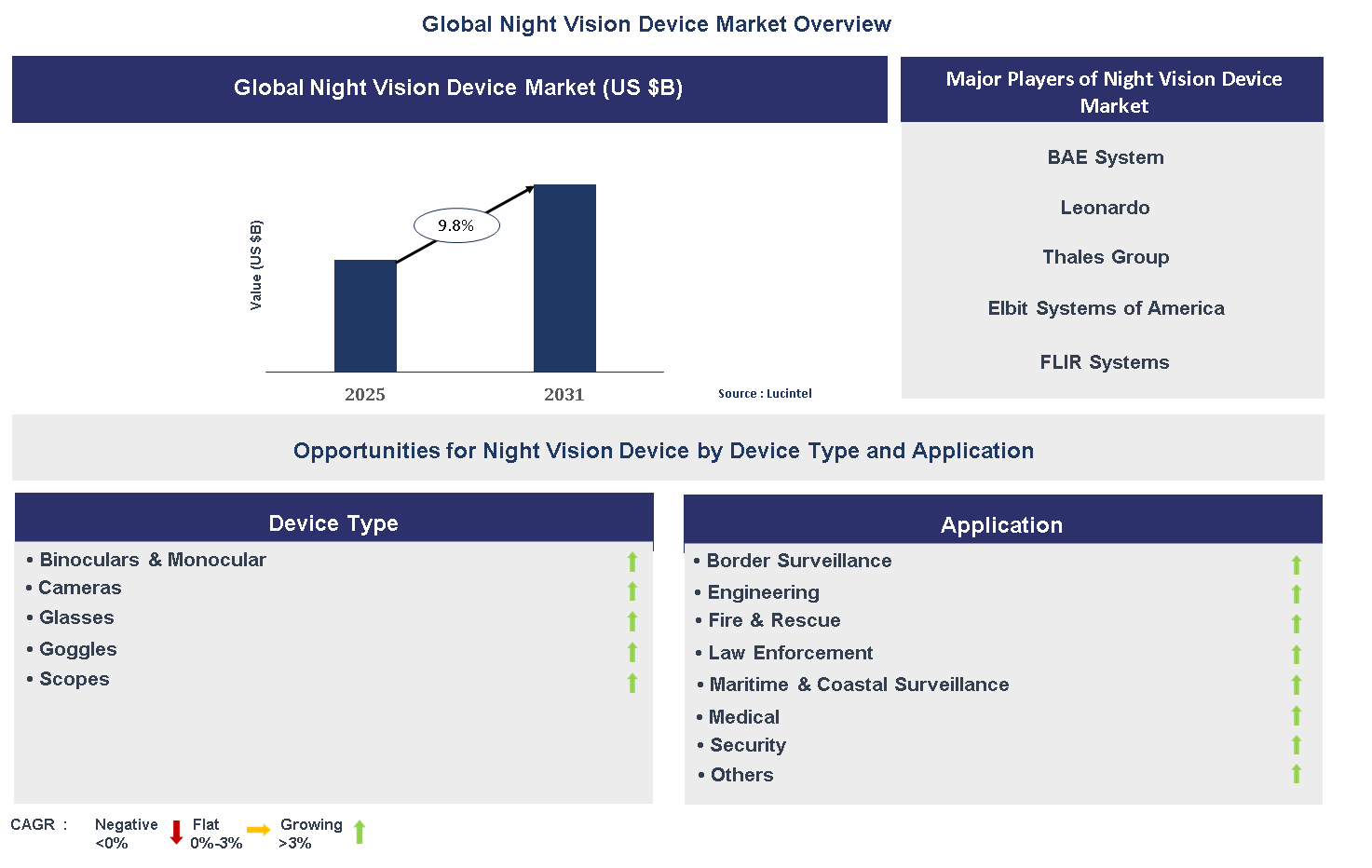
The future of the global night vision device market looks promising with opportunities in the border surveillance, engineering, fire & rescue, law enforcement, maritime & coastal surveillance, medical, and security markets. The global night vision device market is expected to grow with a CAGR of 9.8% from 2025 to 2031. The major drivers for this market are the increasing demand for advanced surveillance equipment, the rising use of night vision in defense, and the growing adoption of thermal imaging technologies.• Lucintel forecasts that, within the device type category, goggle is expected to witness the highest growth over the forecast period.
• Within the application category, border surveillance is expected to witness the highest growth.
• In terms of region, North America is expected to witness the highest growth over the forecast period. Gain valuable insights for your business decisions with our comprehensive 150+ page report. Sample figures with some insights are shown below.
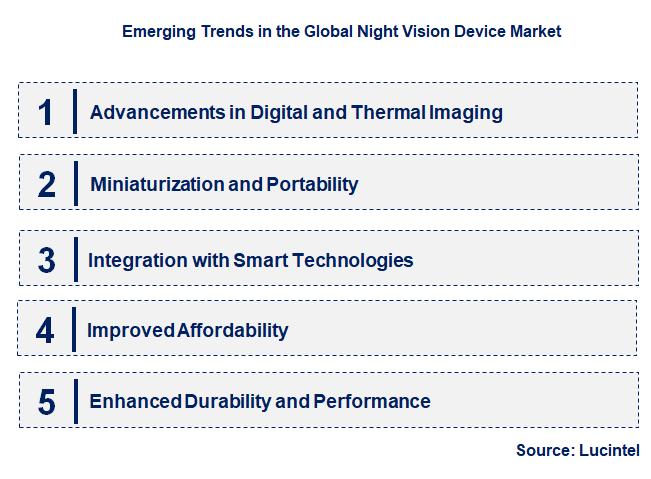
Emerging Trends in the Night Vision Device Market
The night vision device market is rapidly evolving with emerging trends in technology and application. These trends are driven by technological advancements, consumer needs, and the increasing demand for security solutions. The next-generation devices offer greater clarity, affordability, and portability, enabling expanded usage across various industries.• Advancements in Digital and Thermal Imaging: Digital night vision technology is evolving with improved image clarity and enhanced resolution. Coupled with advancements in thermal imaging, these technologies allow users to detect objects in total darkness with high precision. Military, security, and outdoor industries benefit most from these advancements, driving demand for more advanced systems.
• Miniaturization and Portability: There is a growing trend toward more compact and portable night vision devices. Lightweight monoculars and binoculars with enhanced features are gaining popularity, especially among outdoor enthusiasts. Miniaturization makes these devices more user-friendly and applicable in a wider range of situations, from tactical operations to recreational activities like camping and hiking.
• Integration with Smart Technologies: Integration of night vision devices with other smart technologies, such as smartphones, GPS, and augmented reality, is a key trend. This allows users to access real-time data and live video streams through connected devices, enhancing both professional surveillance and consumer experiences, especially for security applications.
• Improved Affordability: As the technology matures, night vision devices are becoming more affordable for consumers. The reduction in production costs for digital sensors and thermal cameras is helping to bring high-quality night vision devices to a broader market. This trend is expected to expand the consumer market beyond traditional defense and law enforcement sectors.
• Enhanced Durability and Performance: Night vision devices are now being built with improved durability, making them more resistant to harsh environments. Innovations like waterproofing, shockproofing, and better temperature tolerance make devices more reliable for use in extreme conditions, which is particularly valuable for military, search and rescue, and outdoor applications. Emerging trends such as digital and thermal imaging advancements, miniaturization, smart technology integration, affordability, and improved durability are significantly reshaping the night vision device market. These developments enhance both the functionality and accessibility of night vision devices, expanding their application across military, security, and consumer markets.
Recent Development in the Night Vision Device Market
The night vision device market has witnessed several key developments in recent years, driven by advancements in technology and growing demand across multiple sectors. These developments have made night vision more accessible, versatile, and efficient, catering to a broader range of consumer and professional needs.• Advancement in Digital Night Vision Technology: Digital night vision technology has evolved significantly, offering superior image quality, better resolution, and increased functionality. This shift allows for clearer and more detailed images in low-light environments, making it ideal for military, security, and outdoor activities. It also allows for easier integration with other digital devices.
• Increased Use of Thermal Imaging: Thermal imaging technology has become more advanced and widely used, especially in military and security applications. The ability to detect heat signatures has expanded the range of use for night vision devices, from surveillance in dark environments to search-and-rescue operations. Its affordability has also spurred growth in consumer markets.
• Improved Battery Life and Power Efficiency: Night vision devices have seen improvements in battery life, with many models now offering extended use on a single charge. This advancement, paired with more energy-efficient components, enhances the usability of devices in the field, reducing the need for frequent recharging or battery replacement in critical situations.
• Customization for Specific Applications: Manufacturers are increasingly offering customizable night vision devices that can be tailored for specific applications, such as wildlife observation, security surveillance, and military operations. This trend provides users with enhanced functionality suited to their needs, whether it’s higher zoom capabilities, infrared ranges, or specific mounting options.
• Integration with Drones and Robotics: Night vision devices are increasingly being integrated with drones and robotic systems, providing enhanced visibility during nighttime operations. This integration is particularly useful in surveillance, reconnaissance, and search-and-rescue missions, where drones and robots can access hard-to-reach areas and provide live video feeds to operators. Key developments like advancements in digital and thermal imaging, improved battery life, and the integration of night vision with drones are significantly impacting the night vision device market. These innovations are expanding the application of night vision devices across various industries, from defense and law enforcement to outdoor recreation and consumer security.
Strategic Growth Opportunities in the Night Vision Device Market
The night vision device market presents numerous growth opportunities, driven by demand across a variety of sectors, including defense, security, law enforcement, and consumer applications. With technological advancements making these devices more affordable and efficient, several key opportunities are emerging for businesses to expand their market reach.• Consumer Security and Surveillance: As smart home security becomes more popular, there is a growing opportunity for night vision devices to be integrated into consumer surveillance systems. Devices such as security cameras and doorbell cameras that offer night vision features are increasingly sought after, making them a key growth area in the residential security market.
• Military and Defense Applications: The military sector continues to be a major driver of growth for night vision devices. With ongoing technological advancements, the demand for more advanced thermal imaging and digital devices for surveillance, navigation, and reconnaissance is expected to rise. Governments and defense contractors are investing heavily in next-gen night vision technology.
• Wildlife Observation and Research: There is an increasing demand for night vision devices in wildlife research and observation. The growing interest in ecotourism, combined with advancements in affordability and portability, presents opportunities in both professional research and consumer-level outdoor activities, such as night wildlife photography and bird watching.
• Search and Rescue Operations: Night vision devices have proven to be invaluable in search and rescue operations, especially in low-visibility or hazardous environments. With the growing focus on disaster relief and emergency response, there is an expanding market for high-quality night vision devices in humanitarian missions and rescue teams.
• Drone and Robotics Integration: The integration of night vision technology with drones and robotic systems is creating new opportunities in various industries, including surveillance, agriculture, and environmental monitoring. This growing market offers a chance for manufacturers to create specialized solutions for nighttime drone operations. Growth opportunities in the night vision device market are centered around applications in consumer security, defense, wildlife observation, search and rescue, and drone integration. As technology continues to improve and costs decrease, the demand for night vision devices will likely expand, offering lucrative opportunities for businesses in both professional and consumer markets.
Night Vision Device Market Driver and Challenges
The night vision device market is influenced by several key drivers, including technological advancements, increased demand for security solutions, and the expansion of consumer applications. However, the market also faces challenges related to high costs, technological limitations, and regulatory concerns. Understanding these drivers and challenges is essential for navigating the market. The factors responsible for driving the night vision device market include: 1. Technological Advancements in Imaging: Advancements in digital and thermal imaging technologies have significantly improved the performance and affordability of night vision devices. These improvements allow for clearer, more detailed images in low-light environments, increasing the appeal of these devices in both professional and consumer markets. 2. Growing Demand for Security and Surveillance: The increasing focus on home and public security, driven by concerns over crime and personal safety, is fueling demand for night vision devices. Surveillance cameras with night vision capabilities are becoming essential tools for law enforcement, security companies, and homeowners. 3. Military and Defense Investments: The defense sector continues to be a major driver of growth, with governments and defense contractors investing in advanced night vision technology for surveillance, reconnaissance, and navigation. As global security concerns rise, defense budgets are allocating more funds toward cutting-edge night vision equipment. 4. Affordability and Consumer Adoption: With falling prices for night vision components, including thermal and infrared sensors, more affordable models are entering the market. This has led to greater consumer adoption, particularly for outdoor enthusiasts, hunters, and recreational users looking for reliable devices at a lower price point. 5. Integration with Other Technologies: Night vision devices are increasingly being integrated with other technologies like drones, robotics, and AI for enhanced functionality. This opens up new market opportunities in sectors such as surveillance, search-and-rescue, and environmental monitoring. Challenges in the night vision device market are: 1. High Costs of Advanced Devices: High-end night vision devices, especially those with thermal imaging and advanced sensors, remain expensive. This limits their adoption in price-sensitive markets and restricts growth in certain consumer segments. 2. Regulatory and Privacy Concerns: With the proliferation of night vision technology, especially in consumer applications, there are increasing concerns about privacy and surveillance. Governments and regulatory bodies may impose stricter controls on the use of such devices, especially in public spaces. 3. Competition and Market Fragmentation: The night vision device market is highly fragmented, with numerous companies offering varying levels of quality and price points. This intense competition can make it difficult for companies to differentiate themselves and maintain market share. Technological advancements, increased demand for security, and military investments are major drivers of the night vision device market. However, challenges such as high costs, regulatory concerns, and market fragmentation could hinder growth. Manufacturers must focus on cost-effective, compliant, and innovative solutions to navigate these challenges and capitalize on market opportunities.List of Night Vision Device Companies
Companies in the market compete on the basis of product quality offered. Major players in this market focus on expanding their manufacturing facilities, R&D investments, infrastructural development, and leverage integration opportunities across the value chain. With these strategies night vision device companies cater increasing demand, ensure competitive effectiveness, develop innovative products & technologies, reduce production costs, and expand their customer base. Some of the night vision device companies profiled in this report include-• BAE System
• Leonardo
• Thales Group
• Elbit Systems of America
• FLIR Systems
• Night Vision Devices
• N-Vision Optics
• Safran Vectronix
• Adams Industries
• Excelitas Technologies Corp.
Night Vision Device Market by Segment
The study includes a forecast for the global night vision device market by device type, application, and region.Night Vision Device Market by Device Type [Value from 2019 to 2031]:
• Binoculars & Monocular
• Cameras
• Glasses
• Goggles
• Scopes
Night Vision Device Market by Application [Value from 2019 to 2031]:
• Border Surveillance
• Engineering
• Fire & Rescue
• Law Enforcement
• Maritime & Coastal Surveillance
• Medical
• Security
• Others
Night Vision Device Market by Region [Value from 2019 to 2031]:
• North America
• Europe
• Asia Pacific
• The Rest of the World
Country Wise Outlook for the Night Vision Device Market
The night vision device market has seen significant developments in recent years, with innovations in image quality, portability, and affordability. These advancements are driven by demand across various sectors, including defense, law enforcement, and consumer applications. The United States, China, Germany, India, and Japan are leading markets, each with unique technological, economic, and regulatory factors shaping their respective industries.• United States: In the U.S., the night vision market has flourished due to increased defense and law enforcement applications. Advances in digital night vision technology and thermal imaging have improved performance. Consumer demand for high-quality night vision devices for outdoor activities like hunting and surveillance is also growing, spurred by advancements in lightweight, portable, and affordable models.
• China: China has emerged as a major player in the night vision market, driven by technological advancements and increasing demand from both military and civilian sectors. Local companies are innovating with cost-effective night vision devices, particularly in thermal imaging and infrared technology. The growing emphasis on security and surveillance is further driving market expansion in China.
• Germany: Germanys night vision device market is influenced by the country’s emphasis on precision engineering and high-quality manufacturing. With strong demand from defense, law enforcement, and outdoor enthusiasts, German companies are focusing on developing advanced night vision systems with superior clarity and durability. Theres also a growing market for high-resolution thermal imaging devices for both professional and consumer use.
• India: In India, the night vision device market is expanding rapidly due to increased investments in defense and security infrastructure. The country is seeing heightened interest in both thermal imaging and digital night vision devices, with applications in military surveillance, border control, and even wildlife protection. Additionally, consumer demand for outdoor adventure gear is driving growth in the segment.
• Japan: Japan is focusing on developing cutting-edge night vision technologies, particularly in the consumer market. Japanese companies are creating compact, high-performance devices that cater to both professional use in security and surveillance, as well as for recreational activities. Integration of night vision technology with other smart security devices is a key trend, making these devices more versatile and user-friendly.

Features of the Global Night Vision Device Market
Market Size Estimates: Night vision device market size estimation in terms of value ($B). Trend and Forecast Analysis: Market trends (2019 to 2024) and forecast (2025 to 2031) by various segments and regions. Segmentation Analysis: Night vision device market size by device type, application, and region in terms of value ($B). Regional Analysis: Night vision device market breakdown by North America, Europe, Asia Pacific, and Rest of the World. Growth Opportunities: Analysis of growth opportunities in different device types, applications, and regions for the night vision device market. Strategic Analysis: This includes M&A, new product development, and competitive landscape of the night vision device market. Analysis of competitive intensity of the industry based on Porter’s Five Forces model.
FAQ
Q1. What is the growth forecast for night vision device market? Answer: The global night vision device market is expected to grow with a CAGR of 9.8% from 2025 to 2031. Q2. What are the major drivers influencing the growth of the night vision device market? Answer: The major drivers for this market are the increasing demand for advanced surveillance equipment, the rising use of night vision in defense, and the growing adoption of thermal imaging technologies. Q3. What are the major segments for night vision device market? Answer: The future of the night vision device market looks promising with opportunities in the border surveillance, engineering, fire & rescue, law enforcement, maritime & coastal surveillance, medical, and security markets. Q4. Who are the key night vision device market companies? Answer: Some of the key night vision device companies are as follows:• BAE System
• Leonardo
• Thales Group
• Elbit Systems of America
• FLIR Systems
• Night Vision Devices
• N-Vision Optics
• Safran Vectronix
• Adams Industries
• Excelitas Technologies Corp. Q5. Which night vision device market segment will be the largest in future? Answer: Lucintel forecasts that, within the device type category, goggle is expected to witness the highest growth over the forecast period. Q6. In night vision device market, which region is expected to be the largest in next 5 years? Answer: In terms of region, North America is expected to witness the highest growth over the forecast period. Q7. Do we receive customization in this report? Answer: Yes, Lucintel provides 10% customization without any additional cost.
Table of Contents
List of Figures
List of Tables
Methodology
- In-depth interviews of the major players in this market
- Detailed secondary research from competitors’ financial statements and published data
- Extensive searches of published works, market, and database information pertaining to industry news, company press releases, and customer intentions
- A compilation of the experiences, judgments, and insights of Lucintel’s professionals, who have analyzed and tracked this market over the years.


Buy Now
Choose a license that fits your team. Instant PDF delivery.
Prices exclude taxes. Instant delivery. Custom licensing available on request.
Key Questions
- • What are some of the most promising, high-growth opportunities for the night vision device market by device type (binoculars & monocular, cameras, glasses, goggles, and scopes), application (border surveillance, engineering, fire & rescue, law enforcement, maritime & coastal surveillance, medical, security, and others), and region (North America, Europe, Asia Pacific, and the Rest of the World)?
- • Which segments will grow at a faster pace and why?
- • Which region will grow at a faster pace and why?
- • What are the key factors affecting market dynamics? What are the key challenges and business risks in this market?
- • What are the business risks and competitive threats in this market?
- • What are the emerging trends in this market and the reasons behind them?
- • What are some of the changing demands of customers in the market?
- • What are the new developments in the market? Which companies are leading these developments?
- • Who are the major players in this market? What strategic initiatives are key players pursuing for business growth?
- • What are some of the competing products in this market and how big of a threat do they pose for loss of market share by material or product substitution?
- • What M&A activity has occurred in the last 5 years and what has its impact been on the industry? For any questions related to Night Vision Device Market, Night Vision Device Market Size, Night Vision Device Market Growth, Night Vision Device Market Analysis, Night Vision Device Market Report, Night Vision Device Market Share, Night Vision Device Market Trends, Night Vision Device Market Forecast, Night Vision Device Companies, write Lucintel analyst at email: helpdesk@lucintel.com. We will be glad to get back to you soon.


