
Report Feature
Marine Satellite Compass Market Trends and Forecast
The technologies in the marine satellite compass market have significantly changed over the recent past, shifting from previous single-antenna-based technologies to advanced multi-antenna configurations. For instance, the adoption of four-antenna systems has replaced dual-antenna systems, improving signal reception, accuracy, and system reliability, with higher precision for marine navigation purposes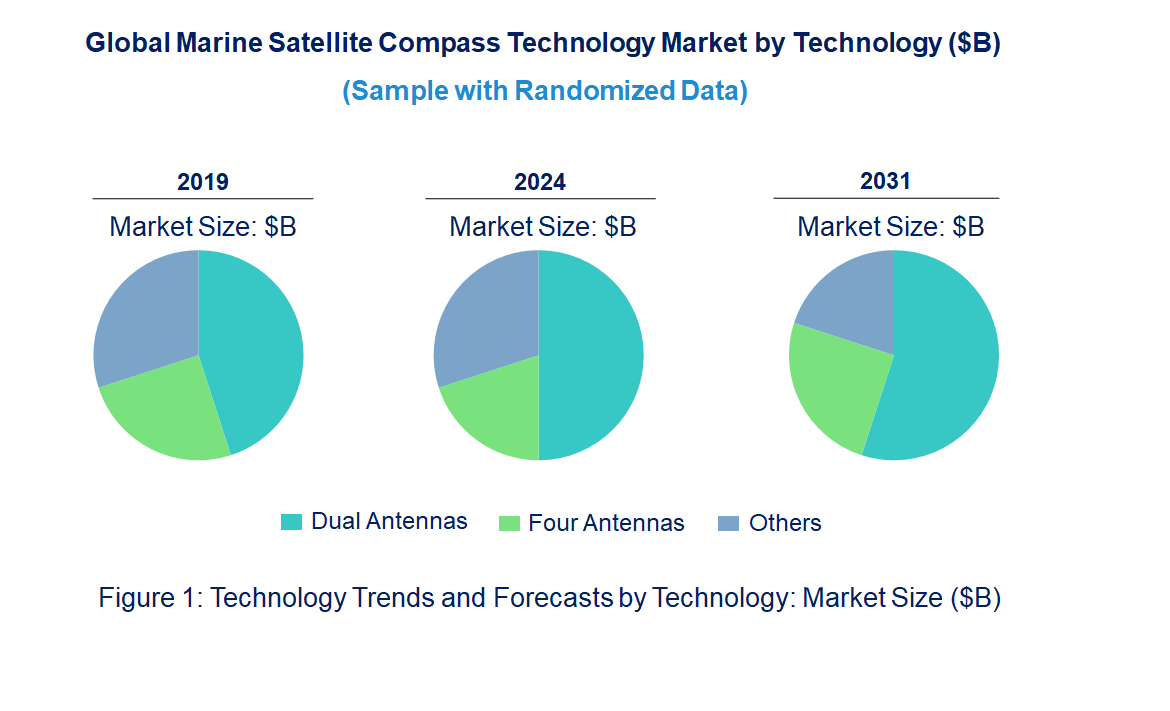
Emerging Trends in the Marine Satellite Compass Market
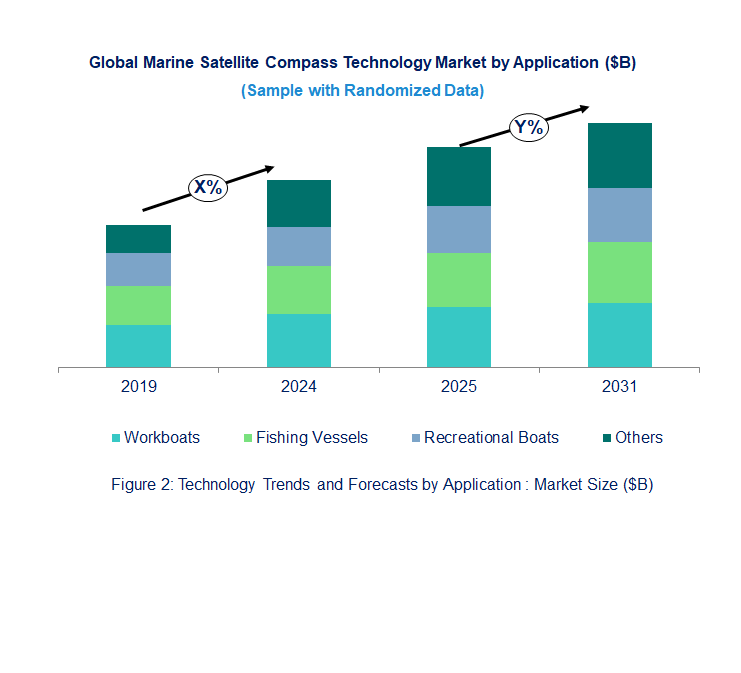
The marine satellite compass market is growing rapidly due to advancements in satellite communication, coupled with the increasing demand for better accuracy and reliability in navigation systems. Below are key emerging trends reshaping the market:• Evolution to Multi-Antenna Systems: The shift from dual-antenna systems to four-antenna configurations is the latest trend. This change enhances accuracy, reliability, and performance in complex marine environments, where precise positioning is crucial.
• Integration with GPS and Other Navigation Technologies: The growing integration between marine satellite compasses and GPS, AIS, and radar systems is becoming more common. Such integration provides more comprehensive navigation solutions, allowing vessels to operate more safely and efficiently.
• Miniaturization and Price Reduction: Smaller and lighter satellite compass systems are entering the market. These compact solutions operate with high performance at lower prices, making them suitable for various marine applications, from small recreational boats to large commercial vessels.
• Increased Demand for Autonomous Navigation Systems: The growth of autonomous and unmanned vessels has created a high demand for satellite compass systems that provide precise and reliable navigation without human intervention. This trend is driving technological innovations focused on automation and accuracy.
• Cloud Connectivity and Data Sharing: Cloud-based solutions and real-time data sharing are gaining market acceptance in the Marine Satellite Compass Market. This technology allows for the monitoring and management of fleets from remote locations, promoting better decision-making for vessel owners and operators. The trends in technological advancements are reshaping the marine satellite compass market, increasing the need for greater accuracy, efficiency, and accessibility. Multi-antenna systems, navigation technologies, and the demand for autonomous systems reflect the need for smarter, more reliable solutions in the maritime industry.
Marine Satellite Compass Market : Industry Potential, Technological Development, and Compliance Considerations
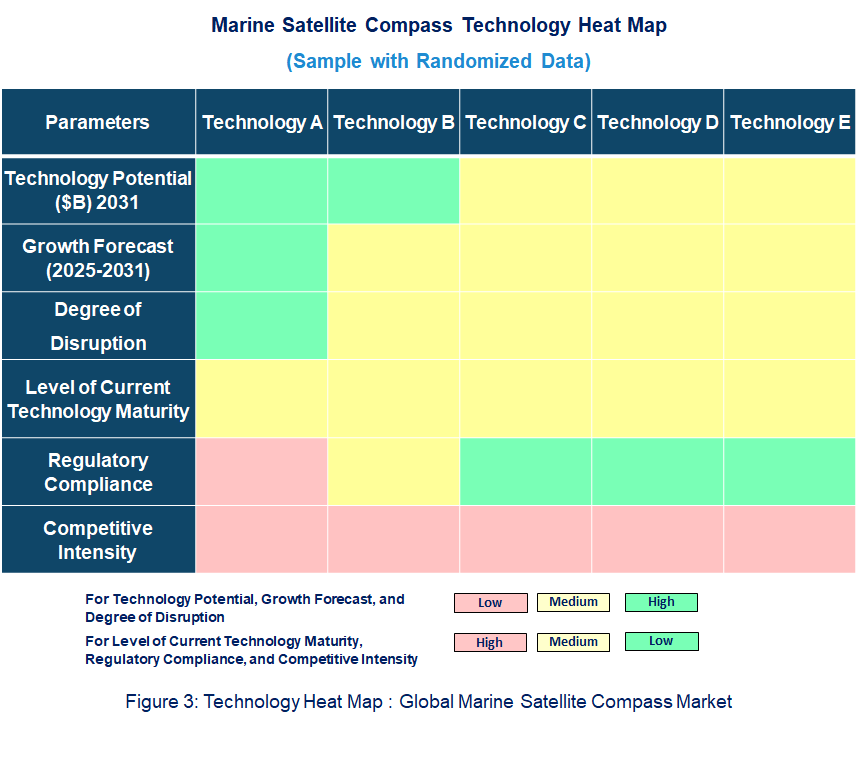
The marine satellite compass market leverages advanced satellite-based positioning and navigation systems to enhance maritime navigation and safety. It combines high-precision technology with global satellite data and inertial navigation systems to determine course and position in real time.• Technology Potential: The potential of marine satellite compass technology is significant, with advancements in navigational precision, autonomy, and safety. With improvements in satellite constellations and GPS-based systems, these compasses can support more accurate and reliable navigation, even in challenging environments such as polar waters or dense urban waters.
• Degree of Disruption: This technology has the potential to disrupt conventional marine navigation methods by incorporating real-time data and automation. It enables smarter ships and fully autonomous vessels, reducing human error and improving operational efficiency.
• Level of Current Technology Maturity: The technology is relatively mature and is widely used in military, commercial, and recreational vessels. However, progress in satellite technology and miniaturization continues to enhance the precision and affordability of the system.
• Regulatory Compliance: The technology must comply with stringent standards set by the International Maritime Organization (IMO) and regional maritime authorities to meet safety, reliability, and operational guidelines. Therefore, marine satellite compass technology holds transformative potential, offering precise navigation within the framework of maritime regulations.
Recent Technological development in Marine Satellite Compass Market by Key Players
Furuno, Garmin, SI-TEX, ComNav, Koden Electronics, Simrad, Japan Radio Company, Advanced Navigation, Japan Marina Co., Ltd., and Kongsberg Maritime are some of the companies innovating and adapting to new requirements in the marine satellite compass market. These companies are using new technologies to improve the accuracy, functionality, and affordability of their products.• Furuno: Furuno has recently launched cutting-edge multi-antenna satellite compass systems for commercial and recreational vessels. These systems offer exceptional performance in challenging maritime environments, driven by the increasing demand for high-precision navigation.
• Garmin: Garmin has launched more affordable, high-performance satellite compasses. The company’s latest innovations focus on integrating these compasses with Garmin’s larger marine electronics ecosystem, enabling seamless navigation and operational control.
• SI-TEX: SI-TEX introduces advanced satellite compasses designed to integrate with AIS and GPS technologies to enhance situational awareness and positioning accuracy. This integration improves product reliability in both commercial and recreational marine applications.
• ComNav: ComNav leads in research and development for more compact and affordable satellite compass systems. These systems help reduce costs for both professional and recreational boaters, featuring user-friendly interfaces and improved GPS integration.
• Koden Electronics: Koden is working to improve its satellite compass technology to make its marine navigation systems more accurate and reliable, especially for commercial shipping and large vessel operations.
• Simrad: Simrad is integrating satellite compass technologies with its high-end radar and chartplotter systems to provide vessels with more accurate and reliable positioning data. This integration enhances the overall navigation performance of its products.
• Japan Radio Company: Japan Radio Company has developed a range of satellite compasses designed for various maritime applications, with a focus on improving system robustness and durability in harsh ocean environments.
• Advanced Navigation: Advanced Navigation has expanded its portfolio with smaller, more affordable satellite compass solutions, making high-precision navigation accessible to a broader range of customers, including recreational boat owners.
• Japan Marina Co., Ltd.: Japan Marina Co. has focused on combining satellite compass technology with smart marina systems. Their products provide real-time data to both marina operators and boat owners to improve operational efficiency.
• Kongsberg Maritime: Kongsberg Maritime is integrating satellite compass systems with its dynamic positioning technologies, offering high-precision positioning for offshore and subsea operations. The company’s innovations focus on improving operational safety and efficiency in marine industries.
Marine Satellite Compass Market Driver and Challenges
The marine satellite compass market is influenced by a set of drivers and challenges that impact its growth trajectory. Market players need to overcome several challenges to sustain success. The factors driving the marine satellite compass market include:• Increased Demand for Precision Navigation: The demand for more precise and reliable navigation systems in the maritime industry is rising due to safety regulations and technological advancements. This demand has led to the need for higher-performance satellite compass systems.
• Growth in Autonomous Maritime Operations: As autonomous vessels and unmanned systems gain momentum, there is an increased need for reliable, automated satellite navigation solutions that operate without human intervention. This trend presents new opportunities for innovation.
• Technological Advancements in Multi-Antenna Systems: The move toward multi-antenna configurations has created opportunities for better signal reception and positioning accuracy, providing a competitive edge for companies offering these advanced technologies.
• Commercial and Recreational Marine Sector: The increasing popularity of recreational boating and the growing number of commercial ships are driving the demand for commercial satellite compass systems capable of addressing diverse operational needs. Challenges in the marine satellite compass market include:
• High-Cost Advanced Systems: More complex solutions, such as advanced multi-antenna systems, generally offer better performance. However, their high cost may prevent low-cost operators and small consumers from adopting them. Smaller mariners can opt for more affordable alternatives.
• Technological Complexity and Integration: The complexity of integrating satellite compass systems with other maritime technologies, such as radar, GPS, and AIS, is a challenge. Companies must bridge technological gaps to ensure seamless operation across different systems.
• Environmental and Weather Challenges: Harsh marine environments, extreme weather conditions, and signal interference can affect the reliability and accuracy of satellite compasses. Companies must develop solutions to address these issues and maintain performance. The growth in demand for accurate navigation systems, innovations in autonomous vessel technologies, and improvements in multi-antenna systems are shaping the marine satellite compass market. However, this growth comes with challenges that must be overcome through research and development, ensuring that systems integrate seamlessly into the environment while minimizing complexity. Continuous efforts will further enhance growth within this market, expanding its applications in other sectors of the maritime industry.
List of Marine Satellite Compass Companies
Companies in the market compete on the basis of product quality offered. Major players in this market focus on expanding their manufacturing facilities, R&D investments, infrastructural development, and leverage integration opportunities across the value chain. With these strategies marine satellite compass companies cater increasing demand, ensure competitive effectiveness, develop innovative products & technologies, reduce production costs, and expand their customer base. Some of the marine satellite compass companies profiled in this report includes.• Furuno
• Garmin
• Si-Tex
• Comnav
• Koden Electronics
• Simrad
Marine Satellite Compass Market by Technology
• Technology Readiness by Technology Type: Dual-antenna systems are mature and ready for widespread commercial use, serving key applications in navigation and offshore operations. Four-antenna technology is evolving, ideal for specialized high-precision applications, but comes with higher costs. Emerging technologies like multi-frequency systems are in the early adoption phases, offering future potential for autonomous shipping. Each technology complies with regulatory standards, with dual antennas leading in market readiness, while four-antenna and other solutions are advancing in niche markets.
• Disruption Potential: Dual and four-antenna systems present significant disruption potential by improving navigation accuracy and reducing signal interference. Dual antennas provide redundancy, while four-antenna systems offer even greater precision, particularly in challenging marine environments. This technology could replace traditional methods, offering more robust, interference-resistant solutions. Emerging technologies such as multi-frequency or phased-array antennas may further disrupt the market, offering real-time performance and expanded operational capabilities for maritime navigation.
• Competitive Intensity and Regulatory Compliance: Dual-antenna systems are the most widely adopted, creating intense competition for marine satellite compass established players. Four-antenna systems are niche but growing, offering competition in high-precision applications. Other technologies, such as hybrid solutions, face competition from both new and traditional players. All technologies must comply with regulations that ensure safety and reliability; international standards such as those set by the IMO guide system approvals and operations, adding complexity but driving market adoption.
Marine Satellite Compass Market Trend and Forecast by Technology [Value from 2019 to 2031]:
• Dual Antennas
• Four Antennas
• Others
Marine Satellite Compass Market Trend and Forecast by Application [Value from 2019 to 2031]:
• Workboats
• Fishing Vessels
• Recreational Boats
• Others
Marine Satellite Compass Market by Region [Value from 2019 to 2031]:
• North America
• Europe
• Asia Pacific
• The Rest of the World
• Latest Developments and Innovations in the Marine Satellite Compass Technologies
• Companies / Ecosystems
• Strategic Opportunities by Technology Type
Features of the Global Marine Satellite Compass Market
Market Size Estimates: Marine satellite compass market size estimation in terms of ($B). Trend and Forecast Analysis: Market trends (2019 to 2024) and forecast (2025 to 2031) by various segments and regions. Segmentation Analysis: Technology trends in the global marine satellite compass market size by various segments, such as application and technology in terms of value and volume shipments. Regional Analysis: Technology trends in the global marine satellite compass market breakdown by North America, Europe, Asia Pacific, and the Rest of the World. Growth Opportunities: Analysis of growth opportunities in different application, technologies, and regions for technology trends in the global marine satellite compass market. Strategic Analysis: This includes M&A, new product development, and competitive landscape for technology trends in the global marine satellite compass market. Analysis of competitive intensity of the industry based on Porter’s Five Forces model.Table of Contents
Methodology
- In-depth interviews of the major players in this market
- Detailed secondary research from competitors’ financial statements and published data
- Extensive searches of published works, market, and database information pertaining to industry news, company press releases, and customer intentions
- A compilation of the experiences, judgments, and insights of Lucintel’s professionals, who have analyzed and tracked this market over the years.


Buy Now
Choose a license that fits your team. Instant PDF delivery.
Prices exclude taxes. Instant delivery. Custom licensing available on request.
Key Questions
- • What are some of the most promising potential, high-growth opportunities for the technology trends in the global marine satellite compass market by technology (dual antennas, four antennas, and others), application (workboats, fishing vessels, recreational boats, and others), and region (North America, Europe, Asia Pacific, and the Rest of the World)?
- • Which technology segments will grow at a faster pace and why?
- • Which regions will grow at a faster pace and why?
- • What are the key factors affecting dynamics of different technology? What are the drivers and challenges of these technologies in the global marine satellite compass market?
- • What are the business risks and threats to the technology trends in the global marine satellite compass market?
- • What are the emerging trends in these technologies in the global marine satellite compass market and the reasons behind them?
- • Which technologies have potential of disruption in this market?
- • What are the new developments in the technology trends in the global marine satellite compass market? Which companies are leading these developments?
- • Who are the major players in technology trends in the global marine satellite compass market? What strategic initiatives are being implemented by key players for business growth?
- • What are strategic growth opportunities in this marine satellite compass technology space?
- • What M & A activities did take place in the last five years in technology trends in the global marine satellite compass market?


