
Report Feature
Indoor Karting Market Trends and Forecast
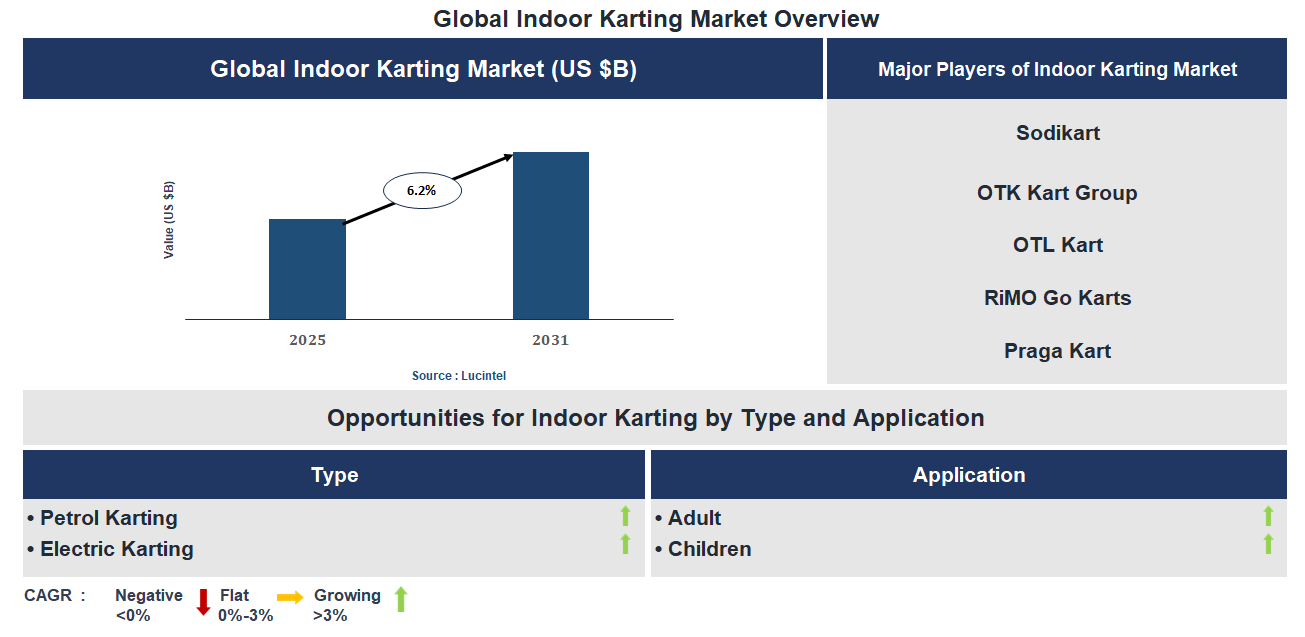
The future of the global indoor karting market looks promising with opportunities in the petrol karting and electric karting markets. The global indoor karting market is expected to grow with a CAGR of 6.2% from 2025 to 2031. The major drivers for this market are the increasing popularity of family entertainment centers, the rising demand for unique leisure activities, and the growing interest in competitive kart racing.• Lucintel forecasts that, within the application category, children is expected to witness higher growth over the forecast period.
• Within the type category, electric karting is expected to witness higher growth.
• In terms of region, APAC is expected to witness the highest growth over the forecast period. Gain valuable insights for your business decisions with our comprehensive 150+ page report. Sample figures with some insights are shown below.
Emerging Trends in the Indoor Karting Market
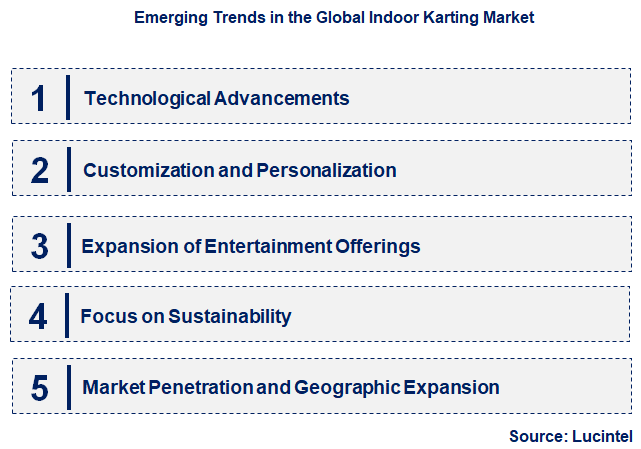
The indoor karting market is experiencing rapid growth driven by increasing consumer demand for entertainment and recreational activities, technological advancements, and a shift towards experiential leisure. As urbanization continues and outdoor space limitations grow, indoor venues are becoming more popular for their convenience and safety. Additionally, innovations in electric kart technology and immersive experiences are transforming the market landscape. These developments are attracting a broader demographic, including families, corporate groups, and thrill-seekers. The markets evolution reflects a broader trend toward personalized, high-tech entertainment options that cater to diverse customer preferences, ultimately reshaping how indoor recreational activities are perceived and consumed.• Technological Advancements: Integration of electric karts and advanced safety features is revolutionizing the market. Electric karts offer eco-friendly, quieter, and more efficient operations, reducing emissions and operational costs. Enhanced safety technology, including collision avoidance systems and improved track design, increases customer confidence and safety. These innovations attract environmentally conscious consumers and enable longer operational hours. The adoption of digital scoring, virtual reality, and augmented reality experiences further enhances customer engagement, making indoor karting more immersive and appealing to tech-savvy audiences. This trend is driving market growth and setting new industry standards.
• Customization and Personalization: The market is shifting towards tailored experiences to meet diverse customer preferences. Customizable track layouts, branding options, and personalized packages for events and corporate outings are becoming common. This trend allows operators to differentiate themselves and attract niche markets. Personalization extends to digital experiences, such as mobile apps for booking, tracking performance, and social sharing, enhancing customer engagement. By offering unique, memorable experiences, indoor karting venues can foster customer loyalty and increase repeat business. This focus on customization is reshaping the competitive landscape and elevating customer expectations.
• Expansion of Entertainment Offerings: Indoor karting venues are increasingly integrating additional entertainment options to create comprehensive recreational hubs. These include arcades, virtual reality zones, dining facilities, and event spaces. Such diversification attracts a wider audience, from families to corporate clients seeking team-building activities. The multi-faceted approach enhances revenue streams and encourages longer visits. This trend reflects a strategic move to position indoor karting as part of a broader entertainment ecosystem, making venues more attractive and competitive. It also helps venues adapt to changing consumer preferences for all-in-one entertainment experiences.
• Focus on Sustainability: Environmental concerns are prompting market players to adopt sustainable practices. The use of electric karts reduces carbon emissions, while energy-efficient lighting and eco-friendly building materials minimize environmental impact. Some venues are implementing waste reduction and recycling programs. These initiatives appeal to environmentally conscious consumers and align with global sustainability goals. Emphasizing sustainability not only enhances brand reputation but also reduces operational costs over time. This trend is shaping the market by encouraging greener practices and appealing to a growing demographic that values eco-friendly entertainment options.
• Market Penetration and Geographic Expansion: Companies are expanding their presence into emerging markets and underserved regions. This includes opening new venues in urban centers and developing countries where recreational infrastructure is growing. Strategic partnerships and franchising models facilitate rapid expansion. This trend broadens the market base and increases accessibility for a wider audience. It also fosters local economic development and creates new employment opportunities. As indoor karting becomes more mainstream globally, this expansion is crucial for capturing market share and establishing brand dominance in diverse geographic locations. In summary, these trends are collectively transforming the indoor karting market by making it more innovative, customer-centric, sustainable, and globally accessible. The integration of advanced technology, personalized experiences, diversified entertainment options, eco-friendly practices, and strategic expansion is redefining the industry landscape. These developments are not only enhancing customer satisfaction and loyalty but also driving significant growth and competitiveness, ensuring the market remains dynamic and future-ready.
Recent Development in the Indoor Karting Market
The indoor karting market has experienced significant growth driven by increasing urbanization, rising entertainment preferences, and technological advancements. As consumers seek unique recreational activities, indoor karting facilities are expanding globally, offering safer and more innovative experiences. The markets evolution is also influenced by the integration of advanced technology, sustainability initiatives, and strategic partnerships. These developments are shaping the competitive landscape and consumer engagement, making indoor karting a prominent segment in the entertainment industry. Understanding these key trends is essential for stakeholders aiming to capitalize on emerging opportunities and navigate the dynamic market environment.• Technological Integration: Adoption of electric karts and advanced safety features has enhanced the customer experience and operational efficiency, attracting a broader demographic and reducing environmental impact.
• Expansion in Emerging Markets: Growth in regions like Asia-Pacific and Latin America is driven by rising disposable incomes and urban development, opening new revenue streams and increasing market reach.
• Strategic Partnerships and Collaborations: Companies are forming alliances with entertainment venues, sports brands, and technology providers to diversify offerings and enhance brand visibility, boosting market competitiveness.
• Focus on Sustainability: Implementation of eco-friendly practices, such as electric karts and energy-efficient facilities, aligns with global environmental goals and appeals to environmentally conscious consumers.
• Digital and Online Engagement: The rise of online booking platforms, mobile apps, and social media marketing has improved customer engagement, streamlined operations, and expanded market penetration. These developments are collectively transforming the indoor karting market by increasing accessibility, enhancing customer experiences, and promoting sustainable practices. As a result, the market is experiencing accelerated growth, greater innovation, and heightened competition, positioning indoor karting as a key player in the entertainment and recreation industry.
Strategic Growth Opportunities in the Indoor Karting Market
The indoor karting market is experiencing rapid expansion driven by increasing demand for recreational activities, technological advancements, and a growing youth demographic seeking thrilling experiences. As entertainment preferences shift towards more immersive and accessible options, key applications within this market are poised for significant growth. These opportunities are shaping the future landscape of indoor karting, offering innovative experiences and expanding market reach. Stakeholders are focusing on strategic investments, technological integration, and new venue development to capitalize on these trends. Understanding these growth opportunities is essential for industry players aiming to strengthen their market position and meet evolving consumer expectations.• Entertainment & Leisure: The rising popularity of indoor karting as a recreational activity boosts demand for entertainment venues, attracting a broad demographic including families, corporate groups, and thrill-seekers. This growth enhances revenue streams and encourages venue expansion, fostering a vibrant entertainment ecosystem.
• Sports & Competitive Events: The increasing adoption of indoor karting for competitive racing and tournaments elevates its status as a serious motorsport platform. This development attracts sponsorships, media coverage, and professional racers, elevating the market’s profile and creating new revenue opportunities.
• Corporate & Team Building: Indoor karting is increasingly used for corporate events and team-building activities due to its engaging and team-oriented nature. This trend drives demand for customized experiences, boosting revenue from corporate clients and fostering long-term business relationships.
• Education & Training: The integration of indoor karting into educational programs and driver training enhances skill development and safety awareness. This application expands market reach into schools and training centers, promoting safer driving practices and attracting new customer segments.
• Technology & Innovation: Advancements in electric karts, virtual reality integration, and data analytics are transforming the indoor karting experience. These innovations improve performance, safety, and customer engagement, positioning the market for sustained growth and technological leadership. In summary, these key growth opportunities are significantly impacting the indoor karting market by diversifying applications, attracting new customer segments, and fostering innovation. They are driving revenue growth, expanding market reach, and establishing indoor karting as a versatile entertainment and sporting platform. As these opportunities evolve, the market is expected to experience continued expansion and increased competitiveness.
Indoor Karting Market Driver and Challenges
The factors responsible for driving the indoor karting market include technological advancements, increasing entertainment preferences, urbanization, and rising disposable incomes. These elements collectively foster growth by enhancing customer experiences, expanding market reach, and encouraging new business models. However, the market also faces challenges such as high operational costs, safety concerns, and regulatory hurdles that could impede expansion. Understanding these drivers and challenges is essential for stakeholders to strategize effectively and capitalize on emerging opportunities while mitigating risks. The factors responsible for driving the indoor karting market include:• Technological Innovations: The integration of advanced electric engines, improved safety features, and digital booking systems enhances customer experience and operational efficiency. These innovations reduce environmental impact and maintenance costs, making indoor karting more attractive to consumers and operators alike. As technology continues to evolve, the market benefits from increased safety, better performance, and streamlined management, which collectively drive growth and competitiveness.
• Rising Entertainment and Leisure Demand: Growing consumer interest in experiential entertainment options, especially among millennials and Gen Z, fuels demand for indoor karting. This trend is driven by a desire for unique, adrenaline-pumping activities that offer social engagement and memorable experiences. As entertainment preferences shift away from traditional options, indoor karting establishments are expanding rapidly to meet this demand, contributing significantly to market expansion.
• Urbanization and Infrastructure Development: Rapid urban growth creates a dense customer base seeking accessible recreational activities. Indoor karting venues are often located in urban centers, providing convenient entertainment options for city dwellers. Infrastructure development and increased investment in urban entertainment complexes further support market growth by making indoor karting more accessible and appealing to a broader demographic.
• Rising Disposable Incomes: An increase in disposable income levels, particularly in emerging economies, enables more consumers to spend on leisure activities like indoor karting. This financial capability encourages frequent visits and higher spending per customer, boosting revenue for operators. As income levels continue to rise globally, the market is expected to see sustained growth driven by increased affordability and consumer spending power. The challenges facing this indoor karting market include:
• High Operational and Maintenance Costs: Running indoor karting facilities involves significant expenses, including high-quality safety equipment, maintenance of electric karts, and facility upkeep. These costs can be prohibitive for new entrants and may limit expansion for existing operators. Additionally, fluctuations in energy prices and equipment upgrades can impact profitability, making cost management a critical challenge for sustainable growth.
• Safety and Liability Concerns: Ensuring customer safety is paramount, and incidents or accidents can lead to legal liabilities and damage to reputation. Strict safety regulations and the need for comprehensive insurance policies increase operational complexity and costs. Managing safety protocols effectively is essential to prevent accidents, which can otherwise hinder market growth and deter potential customers.
• Regulatory and Licensing Barriers: Different regions have varying regulations concerning indoor entertainment venues, safety standards, and environmental compliance. Navigating these regulatory landscapes can be complex and time-consuming, delaying project implementation and increasing costs. Compliance with licensing requirements is essential but can pose significant hurdles, especially for international operators seeking to expand into new markets. The indoor karting market is poised for continued growth driven by technological advancements, changing consumer preferences, urban development, and rising incomes. However, high operational costs, safety concerns, and regulatory challenges present notable hurdles that could restrain expansion. Stakeholders must focus on innovation, safety, and regulatory compliance to capitalize on opportunities and sustain long-term growth. Overall, the markets future depends on balancing these drivers and challenges effectively to foster a safe, innovative, and accessible entertainment environment.
List of Indoor Karting Companies
Companies in the market compete on the basis of product quality offered. Major players in this market focus on expanding their manufacturing facilities, R&D investments, infrastructural development, and leverage integration opportunities across the value chain. With these strategies indoor karting companies cater increasing demand, ensure competitive effectiveness, develop innovative products & technologies, reduce production costs, and expand their customer base. Some of the indoor karting companies profiled in this report include-• Sodikart
• OTK Kart Group
• OTL Kart
• RiMO Go Karts
• Praga Kart
• Shenzhen Explorer Kart
• Biz Karts
Indoor Karting Market by Segment
The study includes a forecast for the global indoor karting market by type, application, and region.Indoor Karting Market by Type [Value from 2019 to 2031]:
• Petrol Karting
• Electric Karting
Indoor Karting Market by Application [Value from 2019 to 2031]:
• Adult
• Children
Indoor Karting Market by Region [Value from 2019 to 2031]:
• North America
• Europe
• Asia Pacific
• The Rest of the World
Country Wise Outlook for the Indoor Karting Market
The indoor karting market has experienced significant growth driven by increasing demand for recreational activities, technological advancements, and expanding entertainment options worldwide. As consumers seek unique experiences, regions are innovating to enhance customer engagement and operational efficiency. The markets evolution reflects a shift towards more immersive and technologically integrated entertainment solutions, with key players investing in new facilities and advanced karts. This dynamic landscape varies across countries, influenced by local preferences, economic factors, and infrastructure development. Understanding these regional developments provides insight into the global trajectory of the indoor karting industry and its future potential.• United States: The US indoor karting market has seen rapid expansion, driven by a rising interest in experiential entertainment and technological upgrades. Major players are investing in high-speed electric karts and immersive racing experiences, attracting a broader demographic, including families and corporate groups. The market benefits from strong infrastructure and a culture of recreational innovation, with new facilities opening in urban and suburban areas. Additionally, safety standards and eco-friendly electric karts are gaining prominence, aligning with environmental concerns. The US market is also witnessing increased adoption of digital booking systems and augmented reality features to enhance customer engagement.
• China: Chinas indoor karting industry is experiencing robust growth, fueled by urbanization and a burgeoning middle class seeking entertainment options. New facilities are emerging in major cities, integrating advanced electric karts and themed racing environments. The government’s focus on entertainment infrastructure and investment in leisure sectors further boosts market expansion. Chinese companies are adopting innovative marketing strategies, including social media campaigns and esports collaborations, to attract younger audiences. Moreover, the integration of virtual reality and augmented reality technologies is becoming more prevalent, offering immersive experiences that appeal to tech-savvy consumers.
• Germany: The German indoor karting market is characterized by a focus on quality, safety, and sustainability. Many facilities emphasize eco-friendly electric karts and energy-efficient operations, aligning with the country’s environmental policies. The market is mature, with established players offering high-performance karts and sophisticated racing tracks. Germany also sees a trend towards corporate team-building events and competitive racing leagues, fostering community engagement. Innovations include the use of advanced telemetry systems for performance tracking and virtual racing competitions. The market continues to evolve with a focus on premium experiences and technological integration.
• India: The Indian indoor karting market is rapidly expanding, driven by increasing urbanization and a growing youth population seeking entertainment options. New facilities are emerging in metropolitan areas, offering affordable and accessible racing experiences. The industry is witnessing a shift towards electric karts, supported by government initiatives promoting clean energy. Entrepreneurs are adopting innovative marketing strategies, including social media promotions and tie-ups with entertainment hubs. The market also benefits from rising disposable incomes and a desire for adventure sports, leading to increased investments in state-of-the-art tracks and technology-driven experiences. The sector is poised for significant growth in the coming years.
• Japan: Japan’s indoor karting market is marked by technological innovation and a focus on safety and precision. Facilities often incorporate cutting-edge electric karts and sophisticated racing simulators, appealing to both casual racers and enthusiasts. The market benefits from a strong culture of motorsports and a high level of technological literacy. Many venues host competitive leagues and events, fostering a vibrant racing community. Additionally, Japan is exploring augmented reality and virtual reality integrations to enhance the racing experience. The industry emphasizes safety standards and environmental sustainability, with a growing number of eco-friendly facilities. Overall, Japan’s market continues to innovate and expand within a highly developed entertainment landscape.

Features of the Global Indoor Karting Market
Market Size Estimates: Indoor karting market size estimation in terms of value ($B). Trend and Forecast Analysis: Market trends (2019 to 2024) and forecast (2025 to 2031) by various segments and regions. Segmentation Analysis: Indoor karting market size by type, application, and region in terms of value ($B). Regional Analysis: Indoor karting market breakdown by North America, Europe, Asia Pacific, and Rest of the World. Growth Opportunities: Analysis of growth opportunities in different types, applications, and regions for the indoor karting market. Strategic Analysis: This includes M&A, new product development, and competitive landscape of the indoor karting market. Analysis of competitive intensity of the industry based on Porter’s Five Forces model.
FAQ
Q1. What is the growth forecast for indoor karting market? Answer: The global indoor karting market is expected to grow with a CAGR of 6.2% from 2025 to 2031. Q2. What are the major drivers influencing the growth of the indoor karting market? Answer: The major drivers for this market are the increasing popularity of family entertainment centers, the rising demand for unique leisure activities, and the growing interest in competitive kart racing. Q3. What are the major segments for indoor karting market? Answer: The future of the indoor karting market looks promising with opportunities in the petrol karting and electric karting markets. Q4. Who are the key indoor karting market companies? Answer: Some of the key indoor karting companies are as follows:• Sodikart
• OTK Kart Group
• OTL Kart
• RiMO Go Karts
• Praga Kart
• Shenzhen Explorer Kart
• Biz Karts Q5. Which indoor karting market segment will be the largest in future? Answer: Lucintel forecasts that, within the application category, children is expected to witness higher growth over the forecast period. Q6. In indoor karting market, which region is expected to be the largest in next 5 years? Answer: In terms of region, APAC is expected to witness the highest growth over the forecast period. Q7. Do we receive customization in this report? Answer: Yes, Lucintel provides 10% customization without any additional cost.
Table of Contents
List of Figures
List of Tables
Methodology
- In-depth interviews of the major players in this market
- Detailed secondary research from competitors’ financial statements and published data
- Extensive searches of published works, market, and database information pertaining to industry news, company press releases, and customer intentions
- A compilation of the experiences, judgments, and insights of Lucintel’s professionals, who have analyzed and tracked this market over the years.


Buy Now
Choose a license that fits your team. Instant PDF delivery.
Prices exclude taxes. Instant delivery. Custom licensing available on request.
Key Questions
- • What are some of the most promising, high-growth opportunities for the indoor karting market by type (petrol karting and electric karting), application (adult and children), and region (North America, Europe, Asia Pacific, and the Rest of the World)?
- • Which segments will grow at a faster pace and why?
- • Which region will grow at a faster pace and why?
- • What are the key factors affecting market dynamics? What are the key challenges and business risks in this market?
- • What are the business risks and competitive threats in this market?
- • What are the emerging trends in this market and the reasons behind them?
- • What are some of the changing demands of customers in the market?
- • What are the new developments in the market? Which companies are leading these developments?
- • Who are the major players in this market? What strategic initiatives are key players pursuing for business growth?
- • What are some of the competing products in this market and how big of a threat do they pose for loss of market share by material or product substitution?
- • What M&A activity has occurred in the last 5 years and what has its impact been on the industry? For any questions related to Indoor Karting Market, Indoor Karting Market Size, Indoor Karting Market Growth, Indoor Karting Market Analysis, Indoor Karting Market Report, Indoor Karting Market Share, Indoor Karting Market Trends, Indoor Karting Market Forecast, Indoor Karting Companies, write Lucintel analyst at email: helpdesk@lucintel.com. We will be glad to get back to you soon.


