
Report Feature
Green Airport Trends and Forecast
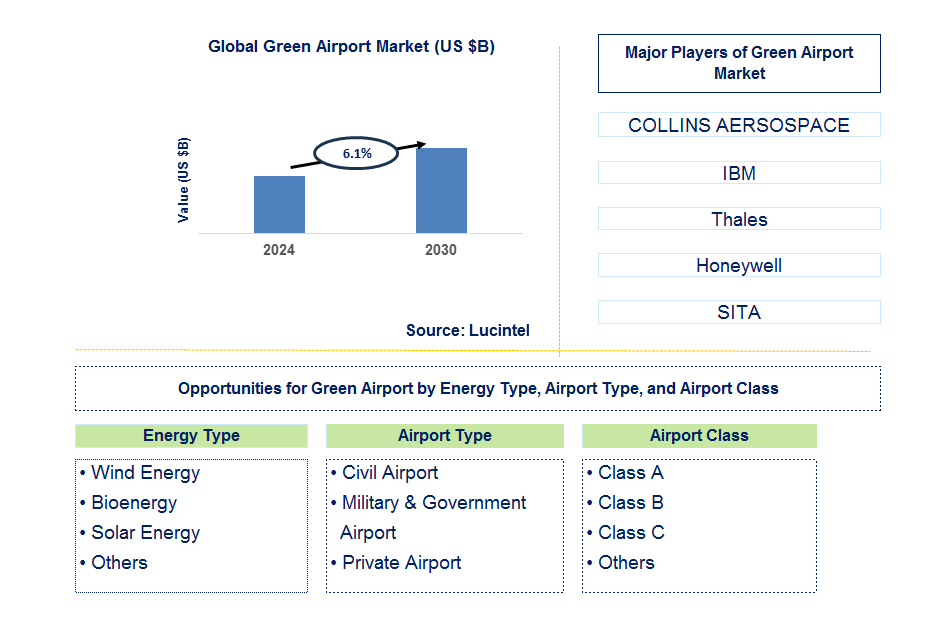
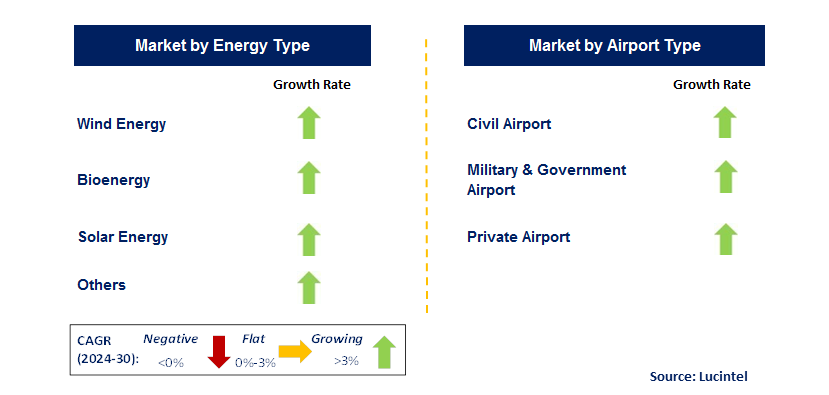
The future of the global green airport market looks promising with opportunities in the civil airport, military & government airport, and private airport markets. The global green airport market is expected to grow with a CAGR of 6.1% from 2024 to 2030. The major drivers for this market are high use of renewable energy source in airport, growing modernization of existing airports and developments in commercial aviation, and stringent environmental regulations.• Lucintel forecasts that, within the energy type category, solar energy is expected to witness the highest growth over the forecast period.
• Within the airport category, civil airport will remain the largest segment as it is affordable to implement green technologies like renewable energy and energy effiecient buildings.
• In terms of regions, North America is expected to witness the highest growth over the forecast period due to rapidly growing airport infrastructure in region. Gain valuable insights for your business decisions with our comprehensive 150+ page report.
Emerging Trends in the Green Airport Market
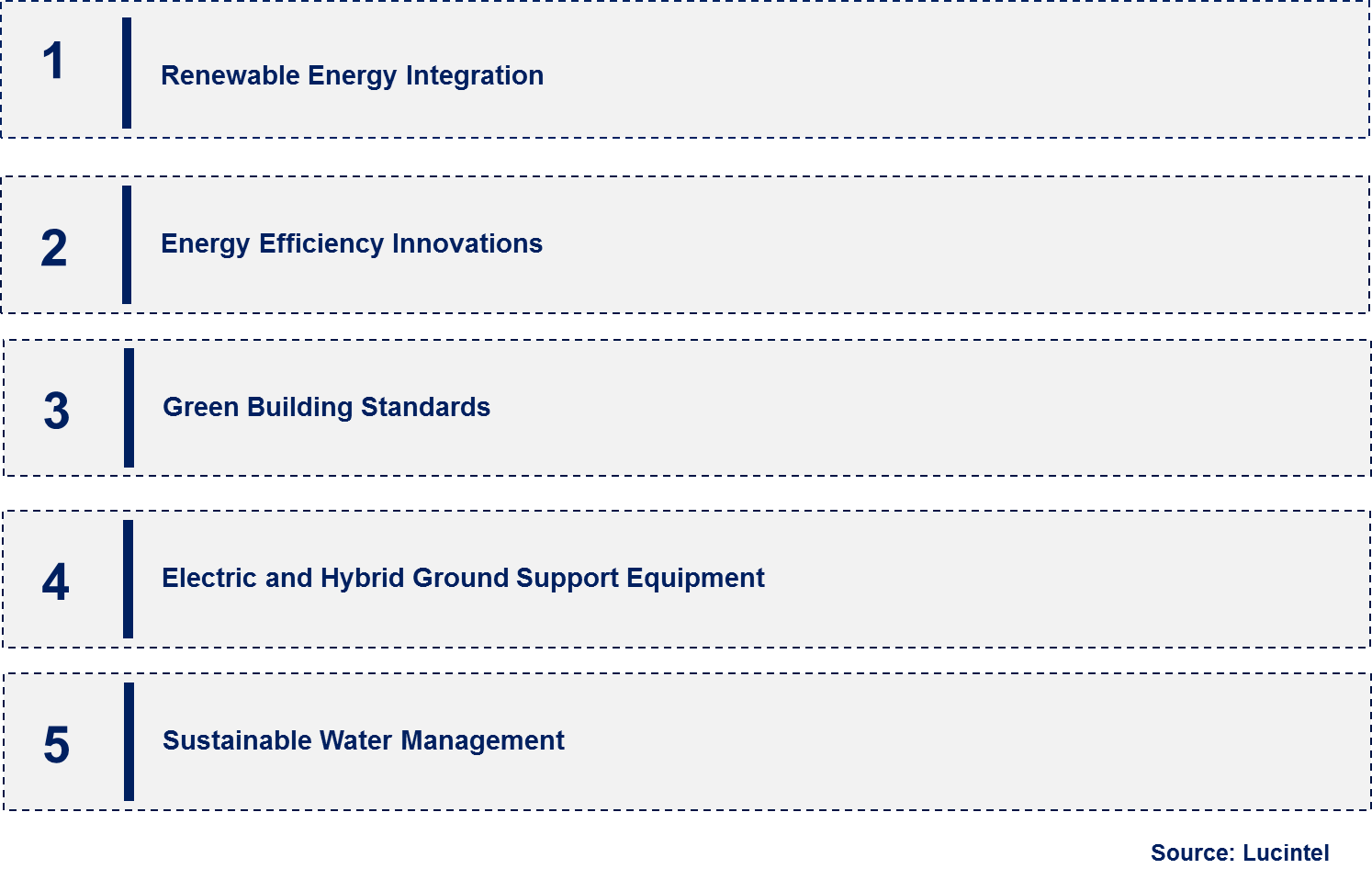
Emerging trends in the green airport market are shaping its future applications and market dynamics:• Renewable Energy Integration: Solar and wind power, as some of the renewable energy sources, are quickly being embraced by most airports. This trend reduces reliance on fossil fuels, leading to lower operational costs while contributing to sustainability.
• Energy Efficiency Innovations: The focus on energy-efficient technologies continues to grow. These innovations include LED lighting, smart building systems, and high-performance HVAC systems, making significant energy savings possible alongside reduced carbon emissions.
• Green Building Standards: Airports are gradually adopting green building certifications such as LEED or BREEAM. Such standards guide the design and construction of environmentally friendly structures, resulting in low environmental impacts concerning resource utilization.
• Electric and Hybrid Ground Support Equipment: Currently, most airports have started using electric or hybrid ground support vehicles. By doing so, they help reduce greenhouse gas emissions and operational noise, creating a greener airport environment.
• Sustainable Water Management: There is improved water conservation and recycling system implementation, increased rainwater harvesting, greywater recycling, and efficient water use, hence reducing consumption rates and lessening environmental impacts at the airports. These trends change airport operations, enable sustainability, and establish new benchmarks for green practices within the aviation industry.
Recent Developments in the Green Airport Market
Ongoing innovations and advancements in various sectors of the green airport market have been highlighted by recent developments:• Solar Projects: Airports such as Los Angeles International Airport (LAX) and Chengdu Tianfu International are investing in a number of massive solar installations. These schemes considerably reduce greenhouse gas emissions while supplying a significant fraction of the total energy required at airports.
• Sustainable Terminal Designs: For example, Frankfurt Airport has introduced new terminal designs that emphasize energy efficiency with elements like high-performance insulation, smart lighting, and natural ventilation systems, all aimed at curbing excessive energy consumption.
• Electrical Ground Support Equipment: The use of electric ground support equipment is increasing. Traditional fuel-powered vehicles at LAX and other airports have been replaced by electric ones, leading to lower emissions and operational costs.
• Certification for Sustainable Buildings: Airports seek certifications, including LEED or BREEAM, which ensure environmentally friendly construction, thereby giving rise to sustainable facilities' construction and operations.
• Water Conservation Systems: Green airports have adopted advanced water conservation systems that include rainwater harvesting and greywater recycling. These schemes help reduce water consumption and ensure sustainable water usage. The green airport concept is developing rapidly because the aviation industry is seeking ways to mitigate its negative environmental impacts and adopt greener strategies. Current developments in this sector focus on increasing environmental performance, enabling energy efficiency improvements, and meeting global climate change targets.
Strategic Growth Opportunities for Green Airport Market
Some key strategic growth opportunities for this market include:• Renewable Energy System Expansion: Investing in renewable energy systems such as solar power and wind power offers airports opportunities to reduce their dependence on non-renewable sources of energy. This expansion enhances the security of energy supply while lowering operating costs.
• Green Infrastructure Development: There is a need to develop green infrastructure, including constructing energy-efficient terminals and providing sustainable transportation networks that can increase operational efficiency while reducing ecological footprints.
• Application of Smart Technologies to Green Airports: The use of smart technologies, such as IoT-based building management systems and energy management solutions, has provided opportunities to optimize resource consumption, resulting in higher sustainability levels for these airports.
• Improving Water Management Practices: By using advanced water management practices such as rainwater harvesting and greywater recycling, significant savings can be achieved, leading to improved environmental performance.
• Adopting Electric and Hybrid Vehicles: The switch to electric and hybrid ground support vehicles is an opportunity to cut emissions and operational noise. This transition supports the larger goal of reducing the airport's carbon footprint. Other potential sources of growth within the green airport market include expanding renewable energy systems, developing green infrastructure, applying smart technologies, improving water management practices, and adopting electric and hybrid vehicles for ground support. These opportunities promote sustainability, enhanced efficiency, and environmental goals in airport operations.
Green Airport Market Driver and Challenges
Technological advancements, regulatory requirements, and environmental concerns are drivers that will shape the green airport market. The factors responsible for driving the green airport market include:• Technological Innovations: Green practices in airports are driven by developments in renewable energies, such as contemporary solar panels and sustainable building designs, like those installed at Santa Monica Airport, along with electric-powered ground service equipment.
• Regulatory Support and Incentives: Adoption of green technologies is promoted through government regulations on sustainable practices, such as tax credits for renewable energy projects.
• Growing Environmental Awareness: Rising public awareness and corporate responsibility regarding the environment have led to increased demand for sustainable airport operations. Airports are also introducing eco-friendly measures and technologies.
• Cost Savings and Efficiency: Deploying energy-saving mechanisms alongside hydropower stations results in significant long-term cost reductions; minimizing energy consumption during an organization’s operations reduces its costs.
• Corporate Sustainability Goals: Airports align their environmental objectives with those set by airlines and other stakeholders, who want them to have sustainability goals. Meeting these goals boosts the image of an airport while supporting broader environmental objectives. Challenges in the green airport market include:
• High Initial Costs: High initial investments required for green technologies and infrastructure can hinder widespread adoption. Elements such as solar installations, energy-efficient equipment, and green building certification may impose cost constraints.
• Complex Regulatory Compliance: Navigating complex and changing regulatory requirements related to green practices is challenging. It requires significant resources and expertise to ensure compliance with local, national, and international standards.
• Integration with Existing Systems: New sustainable technologies are often difficult to integrate into existing airport infrastructure. Challenges include retrofitting old systems and managing transitions; compatibility with legacy systems is often problematic. Technological innovations, regulatory support, environmental awareness, cost savings, and corporate sustainability goals are key drivers of the green airport market. High initial costs, complex regulatory compliance, and integration with existing systems are among the challenges faced by the industry. Addressing these drivers and challenges will be essential for furthering sustainability in the airport sector.
List of Green Airport Companies
Companies in the market compete on the basis of product quality offered. Major players in this market focus on expanding their manufacturing facilities, R&D investments, infrastructural development, and leverage integration opportunities across the value chain. With these strategies green airport companies cater increasing demand, ensure competitive effectiveness, develop innovative products & technologies, reduce production costs, and expand their customer base. Some of the green airport companies profiled in this report include-• COLLINS AERSOSPACE
• IBM
• Thales
• Honeywell
• SITA
Green Airport by Segment
The study includes a forecast for the global green airport by energy type, airport type, airport class, and region.Green Airport Market by Energy Type [Analysis by Value from 2018 to 2030]:
• Wind Energy
• Bioenergy
• Solar Energy
• Others
Green Airport Market by Airport Type [Analysis by Value from 2018 to 2030]:
• Civil Airport
• Military & Government Airport
• Private Airport
Green Airport Market by Airport Class [Analysis by Value from 2018 to 2030]:
• Class A
• Class B
• Class C
• Others
Green Airport Market by Region [Shipment Analysis by Value from 2018 to 2030]:
• North America
• Europe
• Asia Pacific
• The Rest of the World
Country Wise Outlook for the Green Airport Market
Major players in the market are expanding their operations and forming strategic partnerships to strengthen their positions. Below are recent developments by major green airport producers in key regions: the USA, EU, China, India, Japan, and Germany.• United States: In the United States, solar-powered systems and green building certifications have become priorities, resulting in large investments by airports in sustainable infrastructures like Los Angeles International Airport’s ambitious sustainability program, which focuses on net-zero emissions and integrating electric ground support equipment.
• China: Eco-friendly airports, like Chengdu Tianfu International Airport, have incorporated solar-powered systems within their facilities, including water conservation technologies. Other areas of concern include air quality improvement measures and waste management systems aimed at enhancing airport sustainability.
• Germany: In Germany, most airports, such as Frankfurt Airport, have started implementing energy-efficient terminals and sustainable transport solutions. Additionally, renewable energy integration and green building standards are emphasized to reduce an airport's carbon footprint.
• India: For example, Delhi International Airport has embraced solar projects and waste-to-energy systems. India aims to improve air quality and decrease energy consumption through green certifications and sustainable practices in airport operations.
• Japan: At Tokyo Haneda Airport in Japan, technology has been integrated with energy-efficient infrastructure and water-saving initiatives. Progress is being made in sustainable airport designs and eco-friendly materials aimed at enhancing environmental performance and minimizing overall operational impacts.

Features of the Global Green Airport Market
Market Size Estimates: Green airport market size estimation in terms of value ($B). Trend and Forecast Analysis: Market trends (2018 to 2023) and forecast (2024 to 2030) by various segments and regions. Segmentation Analysis: Green airport market size by energy type, airport type, airport class, and region in terms of value ($B). Regional Analysis: Green airport market breakdown by North America, Europe, Asia Pacific, and Rest of the World. Growth Opportunities: Analysis of growth opportunities in different energy types, airport types, airport classes, and regions for the green airport market. Strategic Analysis: This includes M&A, new product development, and competitive landscape of the green airport market. Analysis of competitive intensity of the industry based on Porter’s Five Forces model.If you are looking to expand your business in this market or adjacent markets, then contact us. We have done hundreds of strategic consulting projects in market entry, opportunity screening, due diligence, supply chain analysis, M & A, and more.

FAQ
Q1. What is the growth forecast for green airport market? Answer: The global green airport market is expected to grow with a CAGR of 6.1% from 2024 to 2030. Q2. What are the major drivers influencing the growth of the green airport market? Answer: The major drivers for this market are high use of renewable energy source in airport, growing modernization of existing airports and developments in commercial aviation, and stringent environmental regulations. Q3. What are the major segments for green airport market? Answer: The future of the green airport market looks promising with opportunities in the civil airport, military & government airport, and private airport markets. Q4. Who are the key green airport market companies? Answer: Some of the key green airport companies are as follows:• COLLINS AERSOSPACE
• IBM
• Thales
• Honeywell
• SITA Q5. Which green airport market segment will be the largest in future? Answer: Lucintel forecasts that solar energy is expected to witness the highest growth over the forecast period. Q6. In green airport market, which region is expected to be the largest in next 5 years? Answer: North America is expected to witness highest growth over the forecast period due to rapidly growing airport infrastructure in region. Q7. Do we receive customization in this report? Answer: Yes, Lucintel provides 10% customization without any additional cost.
Table of Contents
Methodology
- In-depth interviews of the major players in this market
- Detailed secondary research from competitors’ financial statements and published data
- Extensive searches of published works, market, and database information pertaining to industry news, company press releases, and customer intentions
- A compilation of the experiences, judgments, and insights of Lucintel’s professionals, who have analyzed and tracked this market over the years.


Buy Now
Choose a license that fits your team. Instant PDF delivery.
Prices exclude taxes. Instant delivery. Custom licensing available on request.
Key Questions
- • What are some of the most promising, high-growth opportunities for the green airport market by energy type (wind energy, bioenergy, solar energy, and others), airport type (civil airport, military & government airport, and private airport), airport class (class a, class b, class c, and others), and region (North America, Europe, Asia Pacific, and the Rest of the World)?
- • Which segments will grow at a faster pace and why?
- • Which region will grow at a faster pace and why?
- • What are the key factors affecting market dynamics? What are the key challenges and business risks in this market?
- • What are the business risks and competitive threats in this market?
- • What are the emerging trends in this market and the reasons behind them?
- • What are some of the changing demands of customers in the market?
- • What are the new developments in the market? Which companies are leading these developments?
- • Who are the major players in this market? What strategic initiatives are key players pursuing for business growth?
- • What are some of the competing products in this market and how big of a threat do they pose for loss of market share by material or product substitution?
- • What M&A activity has occurred in the last 5 years and what has its impact been on the industry? For any questions related to green airport market, green airport market size, green airport market growth, green airport market analysis, green airport market report, green airport market share, green airport market trends, green airport market forecast, green airport companies, write Lucintel analyst at email: helpdesk@lucintel.com. We will be glad to get back to you soon.


