
Report Feature
Graphics Card Dock Market Trends and Forecast
The technologies in the graphics card dock market have seen many changes in recent years, from DisplayPort 1.2 to Thunderbolt 3 and 4 for faster data transmission and improved graphics performance. This transition has enabled higher bandwidth for high-definition displays and improved the dock’s compatibility with various devices, leading to better performance and more seamless user experiences. Additionally, there has been a shift from USB 3.0 to USB-C technology, offering better power delivery and higher speed transfer rates. This new technology supports graphics card docks that work with a larger selection of ultra-thin laptops, which have thinner profiles without sacrificing performance. Furthermore, PCIe 4.0 technology has emerged in the market, allowing improved speed and efficiency in operations, thereby contributing to enhanced graphics rendering capacities overall.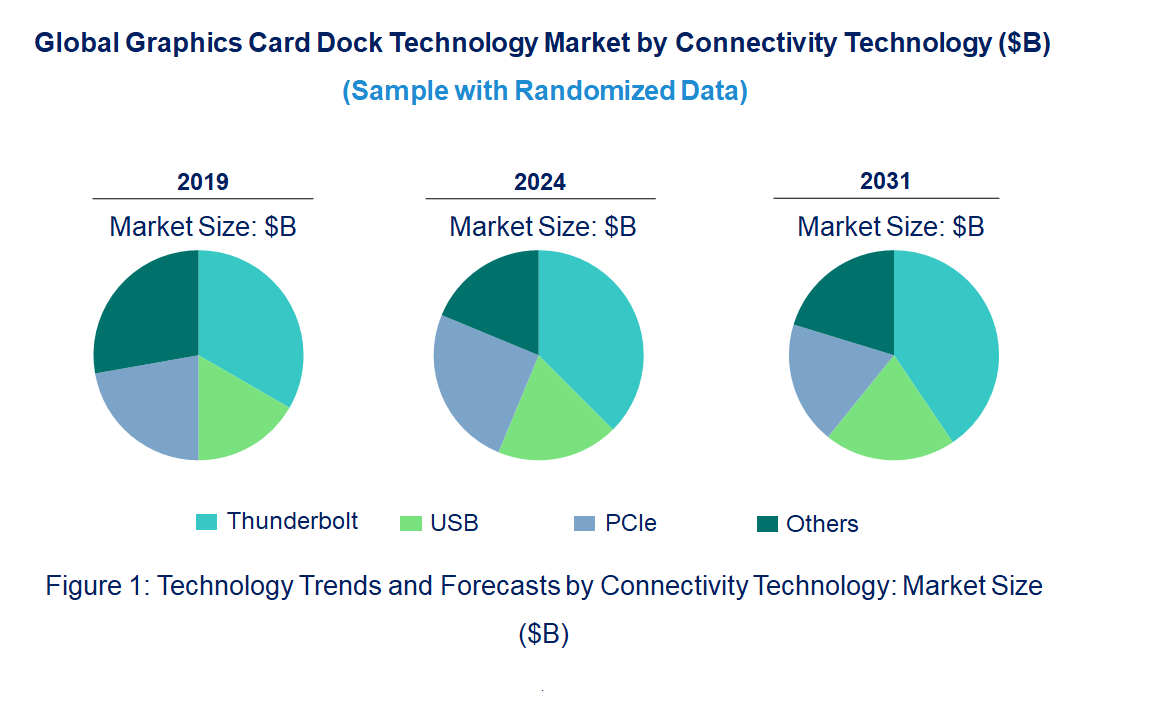
Emerging Trends in the Graphics Card Dock Market
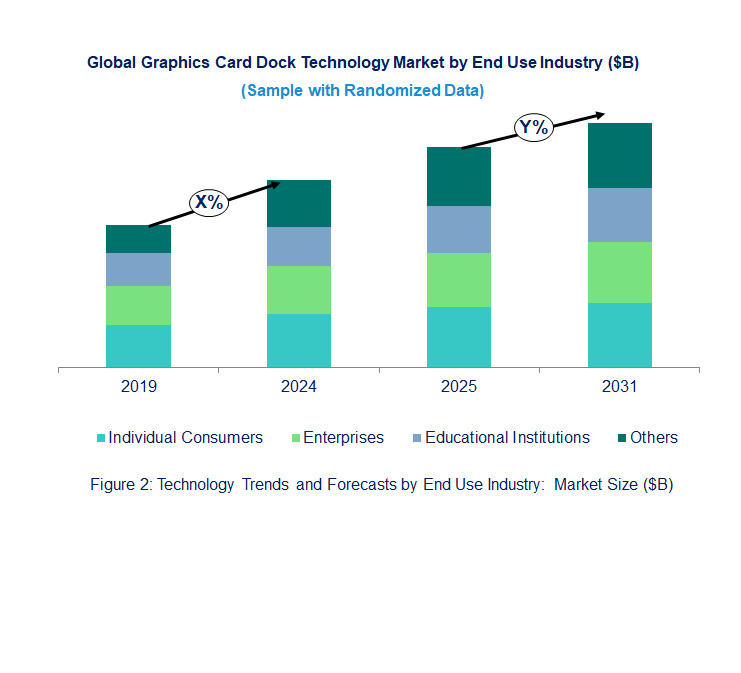
Several technological shifts are occurring in the graphics card dock market that impact consumer preferences and industry innovations. These trends are primarily driven by the demand for higher performance, versatility, and ease of use in different computing environments.• Thunderbolt 4 and USB-C Adoption: The growing adoption of Thunderbolt 4 and USB-C is a clear trend toward faster data transfer speeds and increased compatibility across multiple device platforms, from laptops to desktops. This trend has made docking stations more versatile and powerful, especially for high-resolution displays and gaming setups.
• Increased Demand for Multi-Display Support: As consumers demand greater multitasking capabilities, the need for docks that support multiple high-resolution displays is growing. Graphics card docks now feature better display ports and higher bandwidth, enabling multi-monitor setups with superior performance in gaming, design, and professional applications.
• Enterprise and Education Solutions: The demand for docking stations has increased in enterprise and education settings, driven by the adoption of remote work and hybrid office models. These docks allow users to easily connect a wide range of peripherals, making them indispensable in today’s work-from-home or study-from-home trends.
• Compact Form Factors with Increased Power: The move toward smaller, more portable graphics card docks without compromising performance has become very important. Compact designs that do not sacrifice power output allow consumers to enjoy graphics performance on the go without cumbersome setups.
• AI-Enhanced Performance and Smart Docking Features: The use of artificial intelligence within graphics card docks is becoming an emerging trend. Optimized performance, AI-powered power management capabilities, predictive maintenance, and streamlined intelligence make the process easier and more efficient. These technology trends are transforming the graphics card dock market by enhancing performance, portability, and user flexibility. The advancements in connectivity, multi-display support, and AI integration are making these devices essential for a wide range of end-users, from gamers to professionals.
Graphics Card Dock Market : Industry Potential, Technological Development, and Compliance Considerations
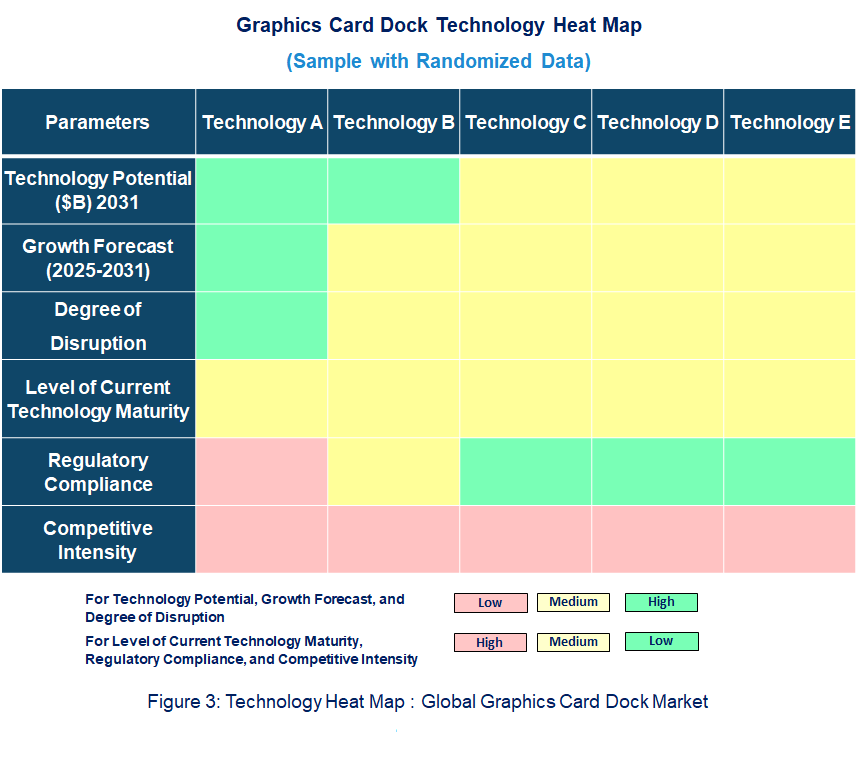
The graphics card dock market is evolving rapidly due to growing demands for high-performance computing, gaming, and professional applications. Connectivity technology has played a vital role, providing a seamless connection of an external GPU to various computing devices. This technology offers greater flexibility, better performance, and an improved user experience, especially for portable or compact systems.• Technology Potential: The potential of connectivity technology for graphics card docks is vast, driven by the increasing need for external GPU (eGPU) solutions in laptops, desktops, and gaming consoles. This technology allows for high-bandwidth data transfer rates like Thunderbolt 3/4 and USB4, with bandwidth capable of reaching up to 40 Gbps, enabling the industry to offer high-end performance GPUs. As bandwidth and power delivery continue to progress, these technologies will further revolutionize the marketplace by providing near-desktop-level GPU power for portability.
• Degree of Disruption: The degree of disruption is high because external graphics docking stations enable users to upgrade or replace GPUs without opening their devices. This change offers flexibility, customization, and scalability, especially for ultrabooks or compact PCs.
• Technology Maturity: The current technology maturity is relatively high, with established standards like Thunderbolt 3/4, but there are still challenges in optimizing power delivery, cooling, and cost.
• Regulatory Compliance: Regulatory compliance is mainly concerned with safety standards, electromagnetic compatibility, and environmental regulations, such as RoHS, to ensure that docks meet international quality and safety norms.
Recent Technological development in Graphics Card Dock Market by Key Players
There has been significant innovation and product development by key players in the graphics card dock market to enhance performance, user experience, and device compatibility. Companies are continually refining their offerings to meet the diverse demands of markets like high-resolution displays, gaming experiences, and workplace solutions.• ASUS: ASUS has recently launched several high-performance docks that integrate Thunderbolt 4 and PCIe technology, enhancing graphics performance for professional and gaming users. This innovative approach focuses on portability and compatibility with multiple devices.
• Dell: Dell’s docking stations have been upgraded with USB-C and Thunderbolt 3 interfaces, making them easy to integrate with Dell laptops and other devices. Their docks are designed for enterprise environments, offering power delivery and greater peripheral connectivity for remote work.
• HP Inc.: HP’s latest graphics card docks feature advanced multi-display support and high-speed data transfer for business professionals and creators. The company is focusing on the hybrid workspace trend with compact, high-powered solutions.
• Lenovo: Lenovo has been investing in AI-powered docking stations that optimize power usage and device performance, enhancing the overall user experience. Their latest products focus on business users who need efficient and versatile docking stations for hybrid work.
• Acer: Acer has made progress in designing compact docks that are ideal for high-end gaming. The integration of PCIe 4.0 and multi-monitor support targets gamers who seek powerful yet portable docking solutions.
• Razer Inc.: Razer, a market leader in gaming peripherals, includes highly optimized graphics card docks in its product line to enhance gaming performance. Products feature RGB lighting, customizable settings, and high-speed connectivity to ensure seamless gaming experiences.
• MSI (Micro-Star International): MSI’s graphics card docks provide high-performance solutions for gamers, focusing on PCIe and Thunderbolt 4 compatibility. These docks are designed to enhance gaming graphics and general performance.
• Gigabyte Technology: Gigabyte offers advanced Thunderbolt docking stations that enable high-performance graphics rendering. These docking stations are designed for fast data transfer and multi-display support for gamers and professional users.
• Sapphire Technology: Sapphire is innovating in the high-performance graphics space, specifically focusing on powerful, portable graphics docks for gaming and professional content creators.
• EVGA Corporation: EVGA’s focus on high-end graphics cards is reflected in its docking stations, which emphasize PCIe slots and support for multiple GPUs, helping enthusiasts and professionals build multi-GPU setups. Recent developments by key industry players indicate a drive toward enhancing performance, increasing compatibility, and meeting the diverse needs of end-users. With the continued integration of Thunderbolt 4, USB-C, and PCIe technologies, these companies are reshaping the market landscape.
Graphics Card Dock Market Driver and Challenges
Several drivers and challenges are shaping the graphics card dock market. High-performance computing is growing in demand, and technological advancements have pushed the world to adapt to remote work. However, issues such as compatibility and higher prices for advanced models persist. The factors responsible for driving the graphics card dock market include:• Increase in Remote Work and Hybrid Environments: The demand for reliable and high-performance graphics card docks has surged due to the remote work trend. Enterprises and educational institutions need versatile docking solutions that facilitate efficient work-from-home setups. This has expanded the market for high-quality, multi-display docks.
• High-Speed Connectivity Advancements: The trend toward Thunderbolt 4 and USB-C connectivity has led to the need for faster and more efficient docks. With higher bandwidth, users can connect multiple displays and peripherals, which enhances both gaming and professional performance.
• Growth in Gaming and Creative Content Creation: The demand for high-performance gaming PCs and workstations for content creators is the driving factor behind the need for advanced graphics card docks. These docks allow users to tap into the full capabilities of their GPUs, enabling them to support multiple screens and extreme performance.
• Compact and Portable Designs: The demand for portability has resulted in the creation of even more compact but powerful docking stations. These designs appeal to people with limited desk space and also attract professionals and gamers. Challenges in the graphics card dock market include:
• High Price Points for Advanced Models: One of the key challenges in the graphics card dock market is the high cost of advanced docks. These docks feature the latest technologies, such as PCIe 4.0, Thunderbolt 4, and multi-display support, making them inaccessible to some customers.
• Device Compatibility Issues: Despite advances in standardization, compatibility issues can still arise when connecting docks to different laptops, desktops, or peripherals. This remains a challenge for manufacturers trying to provide seamless integration across various device ecosystems.
• Lack of Knowledge About Docking Solutions: Many consumers still do not know the advantages of using a dedicated graphics card dock. This could limit the growth of the market. There is a need to educate potential users on the benefits of these products for expanding market penetration. These drivers and challenges are heavily influencing the graphics card dock market. Opportunities in gaming, remote work, and portability are driving growth, but challenges such as high prices and compatibility issues need to be addressed for broader market adoption.
List of Graphics Card Dock Companies
Companies in the market compete based on product quality offered. Major players in this market focus on expanding their manufacturing facilities, R&D investments, infrastructural development, and leverage integration opportunities across the value chain. With these strategies graphics card dock companies cater to increasing demand, ensure competitive effectiveness, develop innovative products & technologies, reduce production costs, and expand their customer base. Some of the graphics card dock companies profiled in this report include.• ASUS
• Dell
• HP Inc.
• Lenovo
• Acer
• Razer Inc.
Graphics Card Dock Market by Technology
• Technology Readiness by Type: PCIe is the most mature technology for high-performance external graphics card docks, offering stable, robust solutions for desktop setups. Thunderbolt is highly advanced in terms of performance and versatility, though its cost and complexity target premium markets. USB technologies, particularly with USB 4.0, are becoming more ready for mainstream external GPU applications, though they still trail Thunderbolt in bandwidth. DisplayPort over USB-C is an exciting technology that can be applied in mid-range external graphics configurations, but it is still limited by bandwidth. Regulatory compliance and its applications in consumer, enterprise, and gaming sectors are continuously evolving due to the growing competitive landscape.
• Competitive Intensity and Regulatory Compliance: The graphics card dock market has high competitive intensity, with Thunderbolt, USB, PCIe, and other technologies competing. Thunderbolt competes with USB technologies and PCIe, with Intel and Apple pushing for faster standards. USB 4.0 seems to be an alternative to Thunderbolt, offering a lower-cost option, though it lags in bandwidth. PCIe is essential for performance but is limited by physical space in docks. Regulatory compliance affects all these technologies, but global safety and interoperability standards are the most critical for power delivery and data integrity, creating competitive pressure that shapes the market.
• Disruption Potential of Various Technologies: Thunderbolt, USB, PCIe, and other technologies have significant disruption potential in the graphics card dock market. Thunderbolt offers high-speed data transfer and power delivery, enabling powerful external GPU setups with minimal latency, ideal for laptops and compact systems. USB, while more widespread and economical, is now finding its way with USB 4.0 to support external GPUs with mid-range performance. PCIe excels in internal graphics performance, though external docks with PCIe can deliver desktop-level performance in tight physical spaces. Other technologies, such as DisplayPort over USB-C, show promise. Market disruption varies with cost, performance, and convenience, as these technologies compete across different segments.
Graphics Card Dock Market Trend and Forecast by Connectivity Technology [Value from 2019 to 2031]:
• Thunderbolt
• USB
• PCIe
• Others
Graphics Card Dock Market Trend and Forecast by End Use [Value from 2019 to 2031]:
• Individual Consumers
• Enterprises
• Educational Institutions
• Others
Graphics Card Dock Market by Region [Value from 2019 to 2031]:
• North America
• Europe
• Asia Pacific
• The Rest of the World
• Latest Developments and Innovations in the Graphics Card Dock Technologies
• Companies / Ecosystems
• Strategic Opportunities by Technology Type
Features of the Global Graphics Card Dock Market
Market Size Estimates: Graphics card dock market size estimation in terms of ($B). Trend and Forecast Analysis: Market trends (2019 to 2024) and forecast (2025 to 2031) by various segments and regions. Segmentation Analysis: Technology trends in the global graphics card dock market size by various segments, such as end use and connectivity technology in terms of value and volume shipments. Regional Analysis: Technology trends in the global graphics card dock market breakdown by North America, Europe, Asia Pacific, and the Rest of the World. Growth Opportunities: Analysis of growth opportunities in different end uses, connectivity technologies, and regions for technology trends in the global graphics card dock market. Strategic Analysis: This includes M&A, new product development, and competitive landscape for technology trends in the global graphics card dock market. Analysis of competitive intensity of the industry based on Porter’s Five Forces model.Table of Contents
Methodology
- In-depth interviews of the major players in this market
- Detailed secondary research from competitors’ financial statements and published data
- Extensive searches of published works, market, and database information pertaining to industry news, company press releases, and customer intentions
- A compilation of the experiences, judgments, and insights of Lucintel’s professionals, who have analyzed and tracked this market over the years.


Buy Now
Choose a license that fits your team. Instant PDF delivery.
Prices exclude taxes. Instant delivery. Custom licensing available on request.
Key Questions
- • What are some of the most promising potential, high-growth opportunities for the technology trends in the global graphics card dock market by connectivity technology (thunderbolt, usb, pcie, and others), end use (individual consumers, enterprises, educational institutions, and others), and region (North America, Europe, Asia Pacific, and the Rest of the World)?
- • Which technology segments will grow at a faster pace and why?
- • Which regions will grow at a faster pace and why?
- • What are the key factors affecting dynamics of different connectivity technology? What are the drivers and challenges of these connectivity technologies in the global graphics card dock market?
- • What are the business risks and threats to the technology trends in the global graphics card dock market?
- • What are the emerging trends in these connectivity technologies in the global graphics card dock market and the reasons behind them?
- • Which technologies have potential of disruption in this market?
- • What are the new developments in the technology trends in the global graphics card dock market? Which companies are leading these developments?
- • Who are the major players in technology trends in the global graphics card dock market? What strategic initiatives are being implemented by key players for business growth?
- • What are strategic growth opportunities in this graphics card dock technology space?
- • What M & A activities did take place in the last five years in technology trends in the global graphics card dock market?


