
Report Feature
Gas Sensors Market by Technology
The technologies in the gas sensors market have undergone significant changes in recent years, with a shift from traditional "electrochemical" sensor technology to more advanced and precise solutions such as "infrared" and "laser" sensor technologies. This change in trend is driven by the demand for higher sensitivity, faster speeds, and a wider spectrum of detection within industry applications, including environmental applications. This has increased interest in gas sensors, ranging from industrial safety to monitoring ambient conditions, requiring miniature and robust sensors that can be integrated into the components of internet of things systems and other smart devices.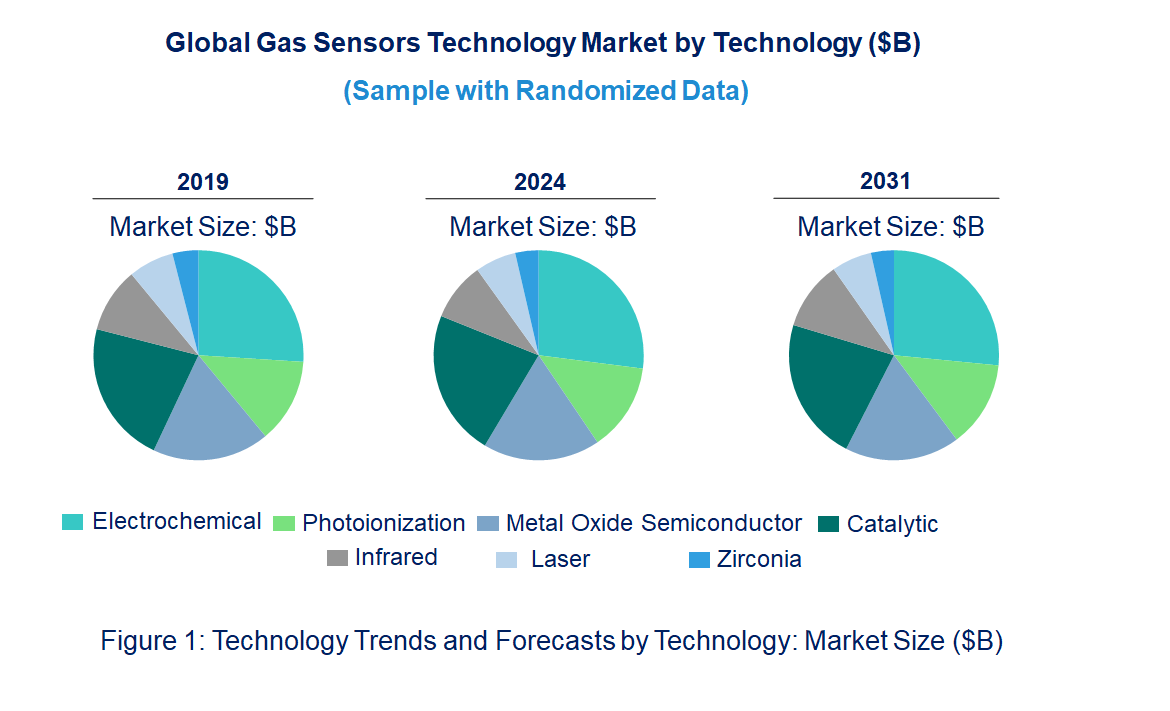
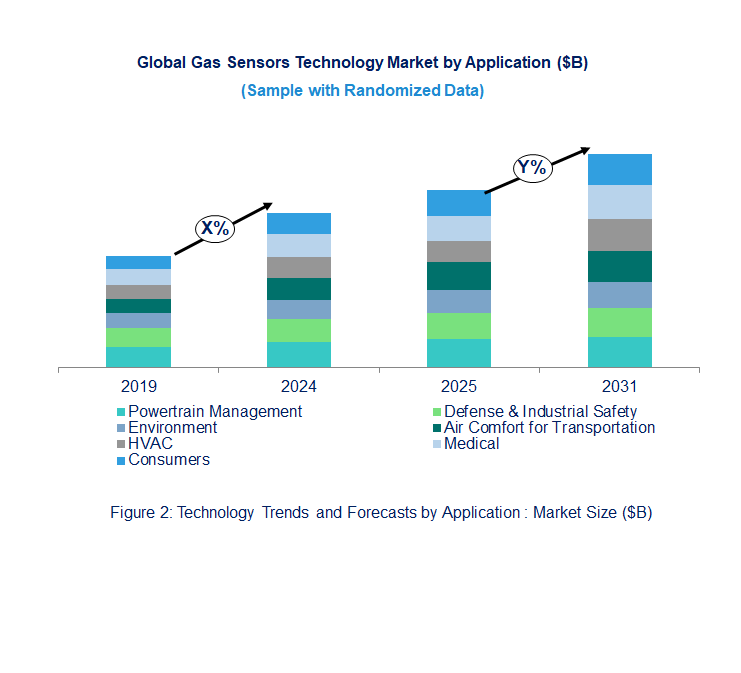
Emerging Trends in the Gas Sensors Market
Some key trends are shaping the future of the gas sensors market, including emerging technologies and evolving consumer demands. These trends are pushing manufacturers toward innovation, opening new areas of opportunity, and expanding the application scope across industries.• IoT in Gas Sensors: The growth of IoT is driving increased integration of gas sensors into smart systems for real-time monitoring, remote control, and predictive maintenance. Integration into smart systems is proving beneficial for applications in areas like HVAC, automotive, and industrial safety, enabling continuous data generation that can be read in real-time for proper decision-making.
• Highly Sensitive and Selective Sensors: With the growing need to detect low concentrations of gases accurately, improvements in selectivity and sensitivity in technologies like "Laser" and "Infrared" sensors are crucial. These sensors require high sensitivity and selectivity for safety, environmental monitoring, and healthcare applications.
• Miniaturization of Gas Sensors: The trend toward smaller, more compact gas sensors is making them more accessible and cost-effective for consumer and portable applications. Miniaturization is enabling the development of wearable gas sensors for health monitoring and portable devices for environmental testing, expanding their use across multiple industries.
• Shift Toward Non-Dispersive Infrared (NDIR) Sensors: NDIR technology is gaining traction as a reliable, long-lasting solution for detecting gases like CO2 and methane. These sensors offer low power consumption and high accuracy, making them ideal for environmental monitoring, industrial applications, and residential use, where consistent and accurate data is critical.
• Low-Cost, High-Volume Sensors: With the growing demand for gas sensors in mass-market applications such as consumer electronics and HVAC systems, the focus is on reducing production costs without compromising sensor quality. This trend is pushing the development of more affordable and scalable sensor solutions that are helping to expand the adoption of gas sensors in various sectors. These trends are reshaping the gas sensors market by expanding the range of applications, improving sensor capabilities, and making gas detection technologies more accessible and efficient across industries.
Gas Sensors Market : Industry Potential, Technological Development, and Compliance Considerations
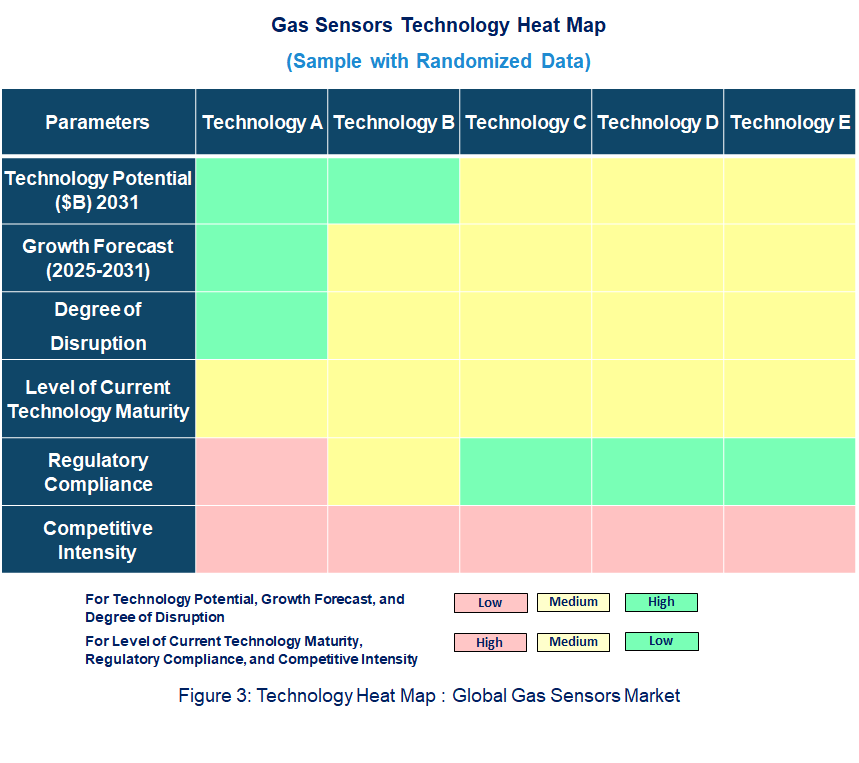
A huge scope is created in the gas sensors market across various industries, from automotive to healthcare to industrial safety and environmental monitoring. Such sensors detect gases including carbon dioxide, carbon monoxide, methane, and volatile organic compounds, providing essential data in real-time related to safety, air quality, and environmental protection.• Technology Potential: Increased concerns about air pollution and enforcement of tighter environmental regulations, stricter laws for industrial safety needs, along with advancements in sensor technology such as sensitive, low-consumption sensors with graphene and metal oxide semiconductor types—will increase the market’s potential. Integration with IoT capabilities enhances real-time data transmission for predictive maintenance, all factors that can boost potential in this market.
• Degree of Disruption: The level of disruption in the gas sensor market is moderate. Traditional sensor technologies are being supplemented or even substituted by newer, more precise solutions, such as photoionization and semiconductor-based sensors. These offer promises of higher sensitivity, faster response times, and lower power consumption.
• Current Technology Maturity: Gas sensor technology is quite mature in many applications (e.g., carbon monoxide detection). Advanced sensors for more complex gases, however, are still in their infancy, and some of these technologies are in the early stages of commercialization.
• Regulatory Compliance: Gas sensors must meet strict regulatory standards (e.g., IEC, UL, ATEX) to ensure safety and accuracy. Compliance is crucial in industries like oil and gas, healthcare, and manufacturing to mitigate risks and ensure reliable performance.
Recent Technological development in Gas Sensors Market by Key Players
Key players in the gas sensors market are innovating new products and strategic partnerships to expand market presence and respond to rising demand for accurate, reliable gas detection technologies. This indicates the industry’s efforts in advancing sensor technology and applications.• AerNos: AerNos is advancing significantly in the next-generation nano gas sensors, which are ultra-sensitive and consume low power. The company is focusing on integrating such sensors with IoT platforms, expanding the scope of their use into portable and wearable devices, as well as environmental monitoring applications.
• Air Liquide: Air Liquide launched new gas detection solutions for the industrial and medical sectors. Their sensors focus on enhancing the precision and reliability of detecting gases in challenging environments such as industrial plants, hospitals, and research facilities, thus ensuring safety and compliance with regulations.
• AKM: AKM has been developing its MOS sensor technology to meet the increasing demand for highly sensitive and fast-response sensors. Their MOS sensors are increasingly used in automotive safety systems and industrial monitoring, ensuring early detection of hazardous gases.
• AlphaMOS: AlphaMOS is a company that is making great strides in electronic nose technology. It manufactures sensors that mimic the human ability to smell and detect complex smells and VOCs. Some of the applications of its sensors include food and beverage quality control, air quality monitoring, and safety systems.
• AlphaSense: AlphaSense is focusing on enhancing its electrochemical sensor products, offering compact and accurate solutions for a variety of applications, including industrial safety and environmental monitoring. Their sensors are increasingly being used in gas leak detection systems in hazardous industrial environments.
• Amphenol: Amphenol is expanding its gas sensor portfolio with advanced NDIR and electrochemical technologies. Their sensors are increasingly used in automotive emissions monitoring and environmental safety applications, mainly due to the increasing demand for compliance with emissions standards and environmental protection.
• APIX: APIX is advancing its gas sensor technology with high-performance sensors designed for severe industrial environments. Their solutions are accurate and real-time for critical applications in power generation, oil and gas, and chemical manufacturing industries.
• Aryballe: Aryballe is revolutionizing the gas sensor industry with holographic sensor technology that detects complex odors and gases. This allows their sensors to be utilized in various industries, such as food safety, fragrance, and environmental monitoring, providing high-precision VOCs and compound detection.
• Bosch: Bosch is leading innovation in the gas sensor market with its development of highly reliable, compact sensors for automotive and consumer electronics applications. Their integration of gas sensors with smart technologies has expanded their use in connected devices and autonomous vehicles.
• Calyx: Calyx is advancing the development of infrared and catalytic gas sensor technologies. They aim to apply these in environmental monitoring and industrial safety. Improvement in sensor accuracy and lifespan helps meet the demand for reliable gas detection in remote and hazardous environments. These developments reflect ongoing efforts to improve sensor performance, expand the range of applications, and meet the growing demand for gas detection solutions across various industries.
Gas Sensors Market Driver and Challenges
The gas sensors market is driven by numerous factors, including technological advancements and regulatory pressures, along with growing consumer demand for improved safety and environmental monitoring. At the same time, challenges such as cost and sensor integration continue to shape market dynamics. The factors responsible for driving the gas sensors include: Environmental regulation and sustainability initiatives will create new pressures on air quality and emissions standards, leading to increased demand for advanced gas sensors. These regulations drive innovation among manufacturers to develop gas sensors that help industries comply with environmental standards while ensuring cleaner air.• Increasing Demand for Environmental and Industrial Safety: With the rising concern about air pollution, industrial hazards, and workplace safety, gas sensors are being used for continuous monitoring in urban areas, factories, and industrial sites. Thus, the demand for accurate and reliable sensors in such applications is driving the market’s growth. Technological Advances in Sensitivity Precision of Sensors: The advancements in higher sensitivity, accuracy, and faster response sensors are driving the market. Improvements in gas detection with technologies such as infrared, laser, and holographic sensors are pushing their usage into applications such as healthcare and defense.
• Consumer Awareness of Air Quality: Growing consumer awareness about air quality, particularly indoors, is fueling the demand for gas sensors in applications such as HVAC, smart homes, and personal safety devices. This trend is encouraging innovation in portable and cost-effective sensors for everyday use. Challenges in the gas sensors include:
• Higher Costs in Manufacturing and Calibration: Advanced gas sensors that include laser and infrared technology require significant production costs. This results in high costs due to recalibration, which could hinder their use in price-sensitive markets.
• Sensing Component Reliability and Maintainability: Typically, gas sensors have short lifespans, with requirements for maintenance and recalibration, sometimes necessitating component replacement in severe conditions. For industries that rely on continuous use of long-duration sensing functions, this can represent additional operating expenses.
• Complexity of Integration into Existing Systems: Integrating advanced gas sensor technologies with existing systems can be challenging, particularly in industries still using older sensor types. This complexity can slow the adoption of new technologies and increase costs for system upgrades. The following drivers and challenges describe how the dynamic nature of the gas sensors market is shaped by technological innovation and regulatory pressure, pushing it toward more cost-effective and durable solutions for adoption in larger sectors.
List of Gas Sensors Companies
Companies in the market compete based on product quality offered. Major players in this market focus on expanding their manufacturing facilities, R&D investments, infrastructural development, and leverage integration opportunities across the value chain. With these strategies gas sensors companies cater to increasing demand, ensure competitive effectiveness, develop innovative products & technologies, reduce production costs, and expand their customer base. Some of the gas sensors companies profiled in this report include.• Aernos
• Air Liquide
• Akm
• Alphamos
• Alphasense
• Amphenol
Gas Sensors Market by Technology
• Technology Readiness by Type in Gas Sensors Market: Technology readiness among different types of gas sensors varies significantly. Electrochemical sensors are highly mature and have been widely used for hazardous gas detection, especially in industrial and environmental monitoring applications. MOS sensors are also mature, with fast response times and versatility, and they are increasingly used in air quality and industrial gas detection. Catalytic sensors are effective in detecting combustible gases but are being overtaken by more advanced technologies like Infrared sensors, which are increasingly adopted for their accuracy in non-contact gas detection, especially in automotive and environmental applications. Laser-based sensors, such as Tunable Diode Laser Absorption Spectroscopy (TDLAS), are emerging technologies offering high precision for trace gas detection but require more complex systems and higher costs. Zirconia sensors, widely used for oxygen sensing in automotive and industrial markets, are also mature. Photoionization sensors are ready to monitor VOCs in any context. Holographic sensors, although promising for future applications in real-time, multi-gas sensing scenarios, are still under development. Competitive intensity is particularly high for established technologies like Electrochemical and Infrared, with increasing pressure from newer technologies like Laser and Holographic sensors. All sensor types continue to have critical regulatory compliance applications, with key applications spanning industrial safety, environmental monitoring, automotive emission control, and healthcare.
• Competitive Intensity and Regulatory Compliance in the Gas Sensors Market: The proliferation of diverse technologies catering to different applications and industries is driving competitive intensity in the gas sensor market. Electrochemical and MOS sensors are well-established and dominate in industrial safety, environmental monitoring, and HVAC systems. However, the competition is increasing with the emergence of new technologies such as Infrared and Laser sensors, which have higher accuracy and selectivity, especially in automotive and environmental compliance fields. In any form of sensor, regulatory compliance presents an ongoing challenge. Safety and emission-related standards are strict in industries such as oil and gas, manufacturing, and automobiles. Electrochemical and catalytic sensors must align with safety standards like ATEX and IECEx for explosive environments, while infrared and laser sensors must comply with environmental regulations concerning emissions and accuracy. Holographic sensors, although still developing, will have to meet changing regulations on precision and safety, especially in medical and environmental applications. In general, the market is highly competitive and regulated, with companies striving to innovate while adhering to safety and environmental standards.
• Disruption Potential of Gas Sensor Technologies: The disruption potential of various gas sensor technologies electrochemical, photoionization, metal oxide semiconductor (MOS), catalytic, infrared, laser, zirconia, holographic, and others lies in their ability to meet growing demands for precision, miniaturization, and connectivity. Electrochemical sensors are cost-effective and versatile for toxic gas detection but face competition from MOS sensors, which offer faster response times and broader applications in industrial settings. Catalytic sensors, although effective for flammable gases, are falling behind Infrared and Laser technologies, which offer contactless and more selective detection of greenhouse gases like CO2. Laser sensors, especially tunable diode lasers, have a high potential to disrupt trace gas analysis with their high sensitivity and selectivity. Emerging technologies such as holographic sensors and zirconia oxygen sensors will find their niche applications in air quality monitoring and automotive emissions, respectively. However, these technologies are still in development. The disruption caused by the integration of these technologies with IoT and wireless networks is further increased due to the rising demand for smarter and real-time monitoring solutions across industries.
Gas Sensors Market Trend and Forecast by Technology [Value from 2019 to 2031]:
• Electrochemical
• Photoionization
• Metal Oxide Semiconductor
• Catalytic
• Infrared
• Laser
• Zirconia
Gas Sensors Market Trend and Forecast by Application [Value from 2019 to 2031]:
• Powertrain Management
• Defense & Industrial Safety
• Environment
• Air Comfort for Transportation
• HVAC
• Medical
• Consumers
Gas Sensors Market by Region [Value from 2019 to 2031]:
• North America
• Europe
• Asia Pacific
• The Rest of the World
• Latest Developments and Innovations in the Gas Sensors Technologies
• Companies / Ecosystems
• Strategic Opportunities by Technology Type
Features of the Global Gas Sensors Market
Market Size Estimates: Gas sensors market size estimation in terms of ($B). Trend and Forecast Analysis: Market trends (2019 to 2024) and forecast (2025 to 2031) by various segments and regions. Segmentation Analysis: Technology trends in the global gas sensors market size by various segments, such as application and technology in terms of value and volume shipments. Regional Analysis: Technology trends in the global gas sensors market breakdown by North America, Europe, Asia Pacific, and the Rest of the World. Growth Opportunities: Analysis of growth opportunities in different applications, technologies, and regions for technology trends in the global gas sensors market. Strategic Analysis: This includes M&A, new product development, and competitive landscape for technology trends in the global gas sensors market. Analysis of competitive intensity of the industry based on Porter’s Five Forces model.Table of Contents
Methodology
- In-depth interviews of the major players in this market
- Detailed secondary research from competitors’ financial statements and published data
- Extensive searches of published works, market, and database information pertaining to industry news, company press releases, and customer intentions
- A compilation of the experiences, judgments, and insights of Lucintel’s professionals, who have analyzed and tracked this market over the years.


Buy Now
Choose a license that fits your team. Instant PDF delivery.
Prices exclude taxes. Instant delivery. Custom licensing available on request.
Key Questions
- • What are some of the most promising potential, high-growth opportunities for the technology trends in the global gas sensors market by technology (electrochemical, photoionization, metal oxide semiconductor, catalytic, infrared, laser, zirconia, holographic, and others), application (powertrain management, defense & industrial safety, environment, air comfort for transportation, hvac, medical, and consumers), and region (North America, Europe, Asia Pacific, and the Rest of the World)?
- • Which technology segments will grow at a faster pace and why?
- • Which regions will grow at a faster pace and why?
- • What are the key factors affecting the dynamics of different technologies? What are the drivers and challenges of these technologies in the global gas sensors market?
- • What are the business risks and threats to the technology trends in the global gas sensors market?
- • What are the emerging trends in these technologies in the global gas sensors market and the reasons behind them?
- • Which technologies have potential of disruption in this market?
- • What are the new developments in the technology trends in the global gas sensors market? Which companies are leading these developments?
- • Who are the major players in technology trends in the global gas sensors market? What strategic initiatives are being implemented by key players for business growth?
- • What are strategic growth opportunities in this gas sensors technology space?
- • What M & A activities did take place in the last five years in technology trends in the global gas sensors market?


