
Report Feature
Expanded Beam Fiber Optics Connectors Market Trends and Forecast
Technologies in the expanded beam fiber optics connectors market have transformed significantly over the past few years. The shift from single-mode fiber optic connectors to multi-mode fiber optic connectors is driven by the growing need for high-speed data transfer and the increasing adoption of cost-effective and flexible solutions across various industries, such as automotive, IT and telecom, and consumer electronics.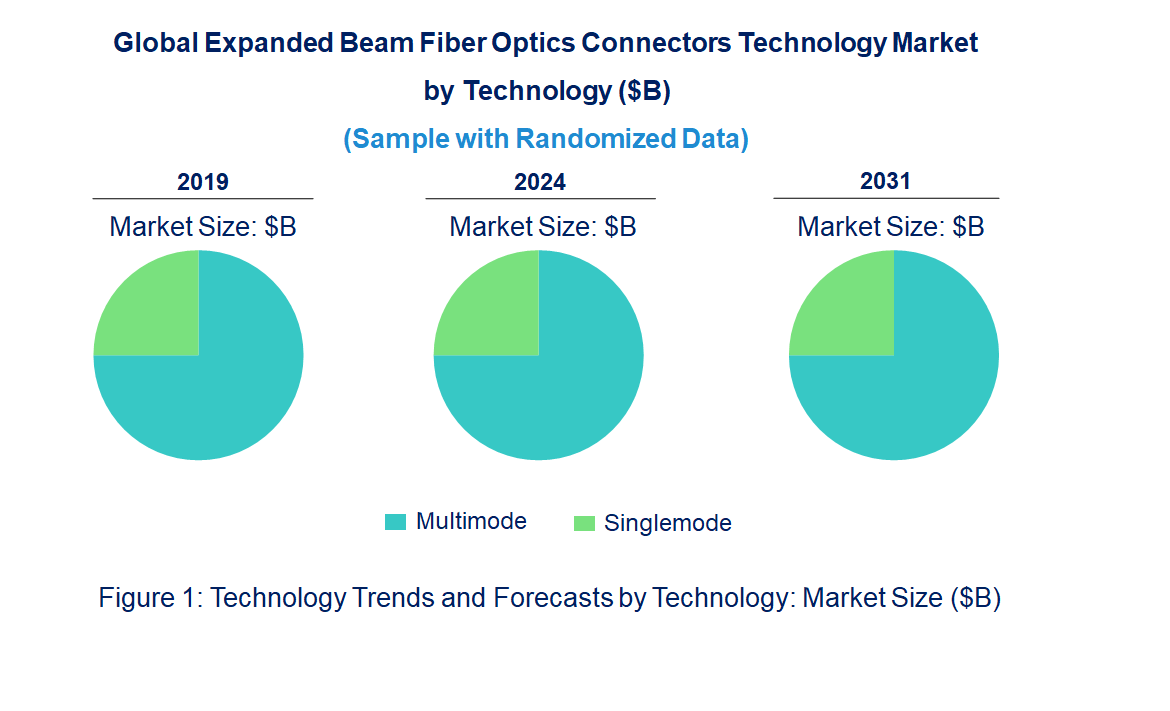
Emerging Trends in the Expanded Beam Fiber Optics Connectors Market
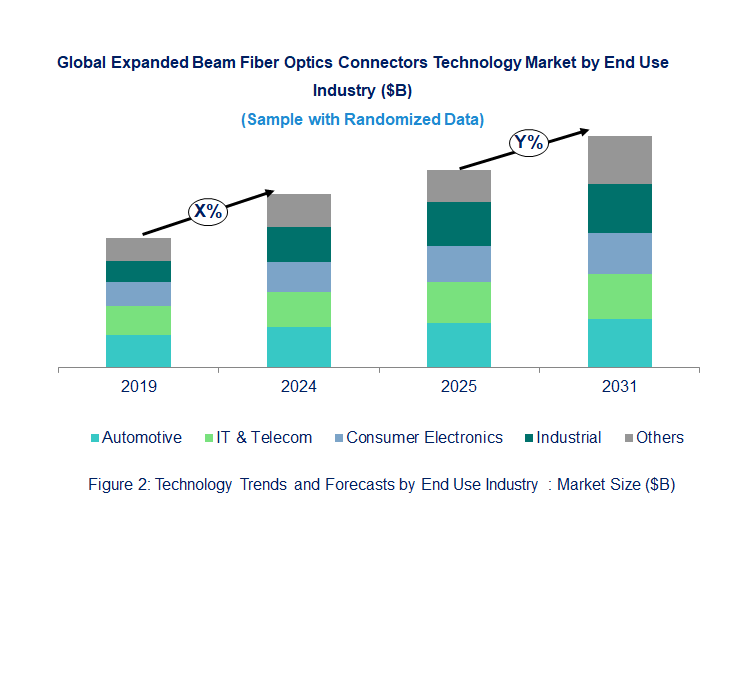
The expanded beam fiber optics connectors market has grown considerably due to several emerging trends. Below are the key trends driving growth in the market:• From Traditional Fiber Optics to Expanded Beam Technology: Expanded beam connectors are becoming popular because they offer higher tolerance and better resistance to dust and dirt. This shift is making fiber optic connectors more reliable in harsh environments, especially in industrial and automotive sectors where durability is crucial.
• Increased Adoption in Automotive and Consumer Electronics: The demand for high-speed data transmission and advanced communication systems in the automotive and consumer electronics industries is driving the demand for expanded beam fiber optic connectors. These connectors help meet the data transfer demands of modern vehicles and devices used by consumers, like smartphones and wearable tech.
• Fiber Optic Connectors with IoT and Smart Devices: As the Internet of Things (IoT) and smart devices grow, there is a huge demand for reliable and high-performance data transmission systems. Fiber optic connectors, particularly expanded beam connectors, are increasingly used in IoT infrastructure to ensure smooth data transfer with high speed.
• Miniaturization Focus: The growth trend toward miniaturization in both electronics and telecommunications is driving the development of very small, compact fiber-optic connectors. Expanded beam connectors, known for their intrinsic robustness and flexibility, are being adapted into even smaller devices without compromising performance.
• Multi-Channel Connectors: Another emerging trend is multi-channel expanded beam connectors. These connectors offer more bandwidth and the ability to process multiple signals simultaneously, which is important for high-performance applications in IT, telecom, and industrial markets. These technological trends are changing the expanded beam fiber optics connectors market by improving data transmission, enabling faster connections, and ensuring greater reliability across diverse industries, such as automotive, telecommunication, and consumer electronics.
Expanded Beam Fiber Optics Connectors Market : Industry Potential, Technological Development, and Compliance Considerations
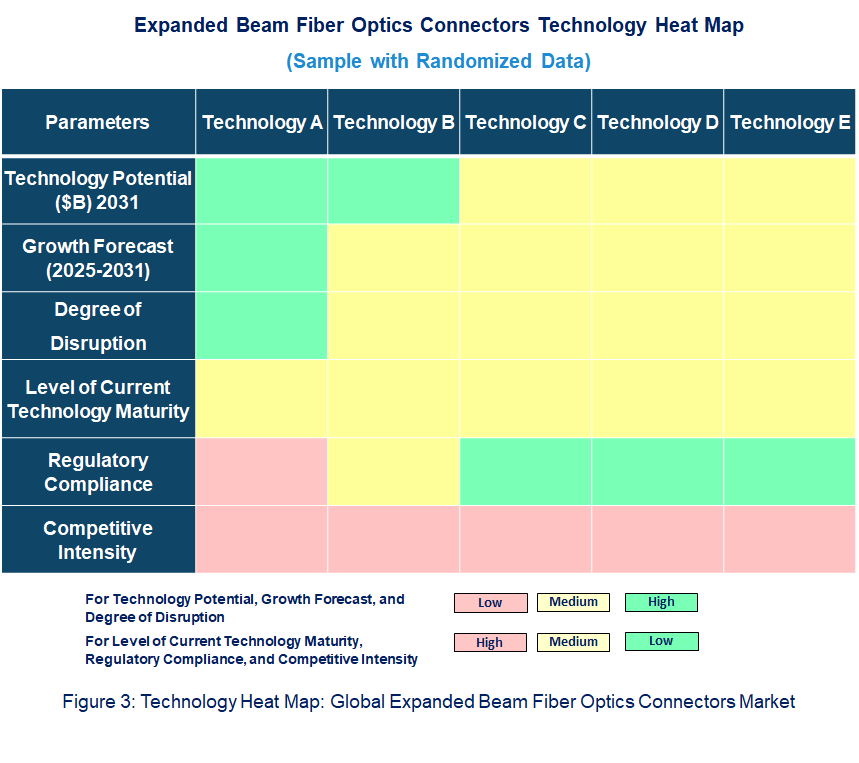
The expanded beam fiber optic connectors market is driven by the need for high-performance optical connections in telecommunications, data centers, military, and aerospace industries. These connectors use lenses to expand and focus light, offering better alignment tolerance and reduced signal loss compared to traditional fiber optic connectors.• Technology Potential: The expansion of beam fiber optic connectors has vast potential, particularly in high-speed data transmissions and challenging environment applications such as vibration, dirt, and moisture conditions. The advantages of enhanced reliability and longevity make this connector ideal for applications with high precision requirements and minimal signal degradation. Miniaturization and integration with other optical technologies, including WDM, further extend the reach of these potential applications.
• Degree of Disruption: Expanded beam fiber optic connectors have the potential to significantly disrupt traditional fiber connectors, especially in harsh environments. Their reduced risk of damaging fibers during connection and disconnection and improved performance in terms of alignment tolerance make them a favorable alternative in many industries. However, their higher cost and complexity may limit widespread adoption.
• Maturity Level of Current Technology: The technology is mature, and these connectors are commonly used in applications where rugged, high-reliability connections are required. Continued improvements in manufacturing techniques and cost reduction are necessary to make expanded beam connectors more accessible.
• Industry Standard Compliance: These connectors should meet industry standards such as MIL-STD and ISO certifications to ensure reliability and safety in defense, telecommunications, and data center applications.
Recent Technological development in Expanded Beam Fiber Optics Connectors Market by Key Players
The expanded beam fiber optics connectors market has seen numerous developments from leading companies that continue to improve their products and expand their presence. Some of the recent key developments include:• Fiber Systems: Fiber Systems has recently released new expanded beam connector products designed specifically for military and aerospace applications. These connectors are resistant to shock and vibration and perform well even in extreme environments, responding to the increasing demand for reliable connectors in these sectors
• Neutrik: Neutrik has extended its portfolio of optical fiber connectors with new high-performance expanded beam products. These connectors are now used in a wide range of applications, particularly in the live and broadcast industries, where durability and performance are essential.
• Radiall: Radiall has developed advanced multimode and single-mode expanded beam fiber optic connectors. The company focuses on enhancing the performance and integration of connectors in harsh environments, specifically for the defense and industrial markets to support complex data transmission requirements.
• Idil Fibers Optiques: Idil Fibers Optics has developed new expanded beam connectors suitable for the telecom and automotive markets. They are optimized to reduce signal loss in high-speed data transmission, ensuring improvements in communication performance.
• Bel Fuse: Bel Fuse has expanded its fiber optic solutions, now offering high-density compact expanded beam connectors. These products address the increasing demand for space-efficient solutions in high-bandwidth applications.
• Stran Technologies: Stran Technologies has developed a new line of environmental-resistant expanded beam connectors for industrial and automotive applications. These connectors can withstand extreme temperatures, vibrations, and other environmental stresses.
• Glenair: Glenair's expanded beam fiber optic connectors have been enhanced with better sealing for underwater and outdoor applications. The upgrade addresses the increased demand for fiber optic connectivity in harsh environmental conditions.
• Amphenol: Amphenol has launched new high-speed expanded beam connectors that provide lower insertion loss and higher reliability for high-performance systems. These products are used in industries such as IT and telecom, where low latency and high throughput are critical.
• 3M: 3M’s innovations in the expanded beam fiber optic connectors market focus on making connectors more efficient and adaptive for high-speed data applications. Their products are increasingly being adopted in telecom and consumer electronics markets, where data rates are rapidly increasing.
• QPC Fiber Optic: QPC Fiber Optic has recently introduced leading-edge fiber optic offerings, incorporating large beam connectors in industrial and military contexts. These connectors are designed to perform reliably in extreme environmental conditions, ensuring high reliability for mission-based operations. The successive innovations from key players are making expanded beam fiber optic connectors more versatile, durable, and efficient, helping meet the increasing demands for high-speed and reliable data transmission across industries such as telecommunications, automotive, and industrial sectors.
Expanded Beam Fiber Optics Connectors Market Driver and Challenges
The expanded beam fiber optics connectors market is driven by various factors, including technological advancements and increasing demand across multiple industries. However, several challenges could impact market growth. Below are the key drivers and challenges: The factors responsible for driving the expanded beam fiber optics connectors market include:• Growing Demand for High-Speed Data Transfer: The demand for high-speed internet and communication systems is rising, which is driving the need for advanced fiber optic connectors. Telecom, IT, and automotive industries require faster data transfer, making expanded beam connectors essential to meet these demands.
• Fiber Optics Technology: Advancements in fiber optics technology, such as the development of smaller, more efficient connectors, are opening new market opportunities. Expanded beam connectors capitalize on these advances to deliver better performance, particularly in high-bandwidth applications.
• High Growth in Automotive and Aerospace: Automotive and aerospace are sectors increasingly adopting expanded beam fiber optic connectors for their ruggedness and performance in harsh environments. This is a key factor driving high growth in this market, as more systems now require high-speed data transmission and reliability.
• Increased Usage of IoT and Smart Devices: Growth in the internet of things (IoT) sector is promoting the need for more connected devices, driving the demand for high-performance fiber optic connectors. Expanded beam technology is utilized in IoT devices for enhanced signal integrity and faster communication. Challenges in the expanded beam fiber optics connectors market are:
• High Cost of Advanced Fiber Optic Connectors: Manufacturing advanced expanded beam connectors can be expensive, making them less accessible in price-sensitive markets. Businesses looking to reduce costs may opt for traditional fiber optic connectors, slowing the adoption of expanded beam technology.
• Compatibility Issues with Legacy Systems: Integrating expanded beam fiber optic connectors with existing legacy systems can be challenging. This may delay the adoption of these connectors, especially in industries with established infrastructure.
• Competition from Other Connector Technologies: The fiber optic connectors market is highly competitive, with other technologies such as traditional single-mode and multi-mode connectors also being used. Expanded beam connectors face competition from these alternatives, which may limit their market penetration. It is observed that the rising demand for faster data transmission and the advancement of fiber optic technologies will drive the growth of the expanded beam fiber optics connectors market. However, high costs and compatibility issues with legacy systems must be addressed to expand the market base.
List of Expanded Beam Fiber Optics Connectors Companies
Companies in the market compete based on product quality offered. Major players in this market focus on expanding their manufacturing facilities, R&D investments, infrastructural development, and leverage integration opportunities across the value chain. With these strategies expanded beam fiber optics connectors companies cater to increasing demand, ensure competitive effectiveness, develop innovative products & technologies, reduce production costs, and expand their customer base. Some of the expanded beam fiber optics connectors companies profiled in this report include.• Fiber Systems
• Neutrik
• Radiall
• Idil Fibers Optiques
• Bel Fuse
• Stran Technologies
Expanded Beam Fiber Optics Connectors Market by Technology
• Different Technologies in the Expanded Beam Fiber Optics Connectors Market: Multimode and single-mode technologies have high disruption potential in the expanded beam fiber optics connectors market. Multimode connectors are used for short-distance communication in data centers and LANs, offering lower costs and easier installation. Single-mode connectors are crucial for long-distance, high-speed telecom and computing networks. The demand for speed and reliability in telecom, defense, and IT sectors will drive innovation to develop faster connectivity and signal integrity across various industry segments.
• Competitive Intensity and Regulatory Compliance of Diverse Technologies in the Expanded Beam Fiber Optics Connectors Market: The market is competitive, with higher competition due to the affordability and wide usage of multimode connectors in short-range applications. Single-mode connectors, though facing less competition, are more critical for telecom infrastructure. Both technologies must comply with IEC 61753 performance standards, RoHS environmental standards, and ISO/IEC manufacturing standards to ensure reliability and competitiveness in the market.
• Technology Readiness by Technology Type in the Expanded Beam Fiber Optics Connectors Market: Multimode connectors are well-established and widely applied in data centers and LANs, ready for large-scale deployment. Single-mode connectors are mature and essential for long-distance telecom and high-speed networks, ensuring signal integrity. Competitive intensity is higher in multimode connectors due to their broader usage, while single-mode connectors serve more specialized applications. Both technologies meet regulatory standards, ensuring performance, safety, and environmental compliance in telecom and IT sectors.
Expanded Beam Fiber Optics Connectors Market Trend and Forecast by Technology [Value from 2019 to 2031]:
• Multimode
• Singlemode
Expanded Beam Fiber Optics Connectors Market Trend and Forecast by End Use Industry [Value from 2019 to 2031]:
• Automotive
• IT & Telecom
• Consumer Electronics
• Industrial
• Others
Expanded Beam Fiber Optics Connectors Market by Region [Value from 2019 to 2031]:
• North America
• Europe
• Asia Pacific
• The Rest of the World
• Latest Developments and Innovations in the Expanded Beam Fiber Optics Connectors Technologies
• Companies / Ecosystems
• Strategic Opportunities by Technology Type
Features of the Global Expanded Beam Fiber Optics Connectors Market
Market Size Estimates: Expanded beam fiber optics connectors market size estimation in terms of ($B). Trend and Forecast Analysis: Market trends (2019 to 2024) and forecast (2025 to 2031) by various segments and regions. Segmentation Analysis: Technology trends in the global expanded beam fiber optics connectors market size by various segments, such as end use industry and technology in terms of value and volume shipments. Regional Analysis: Technology trends in the global expanded beam fiber optics connectors market breakdown by North America, Europe, Asia Pacific, and the Rest of the World. Growth Opportunities: Analysis of growth opportunities in different end use industries, technologies, and regions for technology trends in the global expanded beam fiber optics connectors market. Strategic Analysis: This includes M&A, new product development, and competitive landscape for technology trends in the global expanded beam fiber optics connectors market. Analysis of competitive intensity of the industry based on Porter’s Five Forces model.Table of Contents
Methodology
- In-depth interviews of the major players in this market
- Detailed secondary research from competitors’ financial statements and published data
- Extensive searches of published works, market, and database information pertaining to industry news, company press releases, and customer intentions
- A compilation of the experiences, judgments, and insights of Lucintel’s professionals, who have analyzed and tracked this market over the years.


Buy Now
Choose a license that fits your team. Instant PDF delivery.
Prices exclude taxes. Instant delivery. Custom licensing available on request.
Key Questions
- • What are some of the most promising potential, high-growth opportunities for the technology trends in the global expanded beam fiber optics connectors market by technology (multimode and singlemode), end use industry (automotive, it & telecom, consumer electronics, industrial, and others), and region (North America, Europe, Asia Pacific, and the Rest of the World)?
- • Which technology segments will grow at a faster pace and why?
- • Which regions will grow at a faster pace and why?
- • What are the key factors affecting dynamics of different technology? What are the drivers and challenges of these technologies in the global expanded beam fiber optics connectors market?
- • What are the business risks and threats to the technology trends in the global expanded beam fiber optics connectors market?
- • What are the emerging trends in these technologies in the global expanded beam fiber optics connectors market and the reasons behind them?
- • Which technologies have potential of disruption in this market?
- • What are the new developments in the technology trends in the global expanded beam fiber optics connectors market? Which companies are leading these developments?
- • Who are the major players in technology trends in the global expanded beam fiber optics connectors market? What strategic initiatives are being implemented by key players for business growth?
- • What are strategic growth opportunities in this expanded beam fiber optics connectors technology space?
- • What M & A activities did take place in the last five years in technology trends in the global expanded beam fiber optics connectors market?


