Enzyme Market Report: Trends, Forecast and Competitive Analysis to 2035

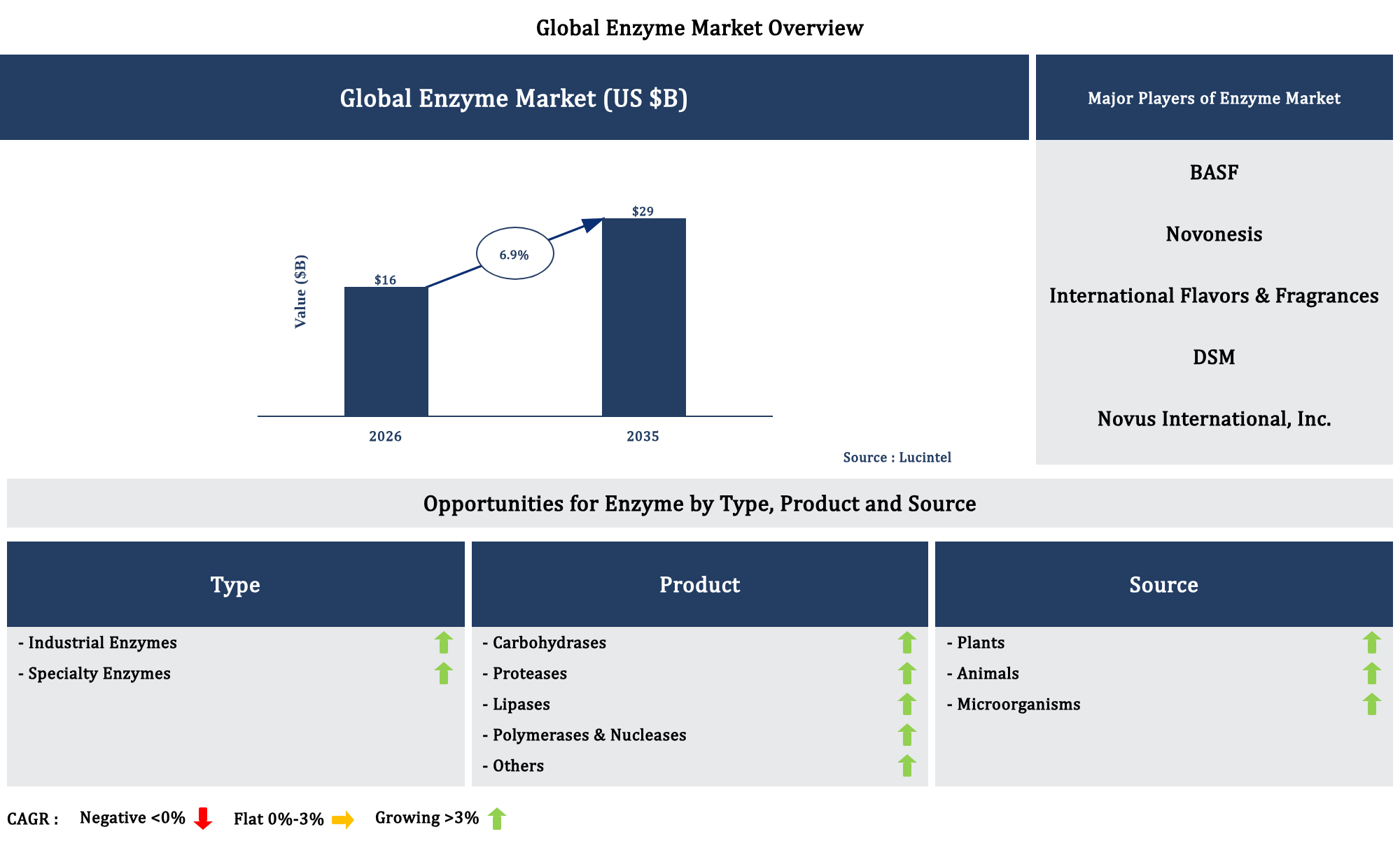
Key data points: The market size in 2035 = $29 billion, growth forecast = 6.9% annually for the next 8 years. Scroll below to get more insights. This market report covers trends, opportunities and forecasts in enzyme market to 2035 by type (industrial enzymes and specialty enzymes), product (carbohydrases, proteases, lipases, polymerases & nucleases, and others), source (plants, animals, and microorganisms), and region (North America, Europe, Asia Pacific, and the Rest of the World)

Publisher: Lucintel Last Updated: July 2026
See Pricing

Download Sample Report

| ✨ New Download Sample report — Get instant insights! | ✨ New Download Sample report — Get instant insights!

Enzyme Market Report: Trends, Forecast and Competitive Analysis to 2035

Enzyme Market

The future of the global enzyme market looks promising with opportunities in the carbohydrase, protease, lipase, and polymerase & nuclease markets. The global enzyme market is expected to reach an estimated $29 billion by 2035 with a CAGR of 6.9% from 2026 to 2035. The major drivers for this market are the increasing demand in the food processing industry, the rising use of pharmaceutical products, and the growing adoption of biofuel production.

  • Lucintel forecasts that, within the type category, specialty enzymes are expected to witness higher growth over the forecast period due to high specificity, efficiency, and expanding biotech applications, which drive specialty enzyme growth.
  • Within the product category, carbohydrase is expected to witness the highest growth due to growing demand in food, beverages, and biofuel production.
  • In terms of regions, North America is expected to witness the highest growth over the forecast period due to the advanced biotechnology sector and strong industrial applications.

Gain valuable insights for your business decisions with our comprehensive 150+ page report. Sample figures with some insights are shown below.
Enzyme Market

Emerging Trends in the Enzyme Market

The enzyme market is experiencing rapid growth driven by increasing applications across various industries such as healthcare, food processing, and biofuels. As consumer preferences shift towards sustainable and natural products, companies are investing in research and development to discover novel enzymes. Additionally, regulatory changes and technological improvements are facilitating market expansion. The integration of enzymes into diverse sectors is creating new opportunities and challenges, prompting stakeholders to adapt quickly. These developments are fundamentally transforming the enzyme landscape, making it more dynamic and competitive. Understanding these emerging trends is crucial for businesses aiming to capitalize on future growth and innovation in this evolving market.

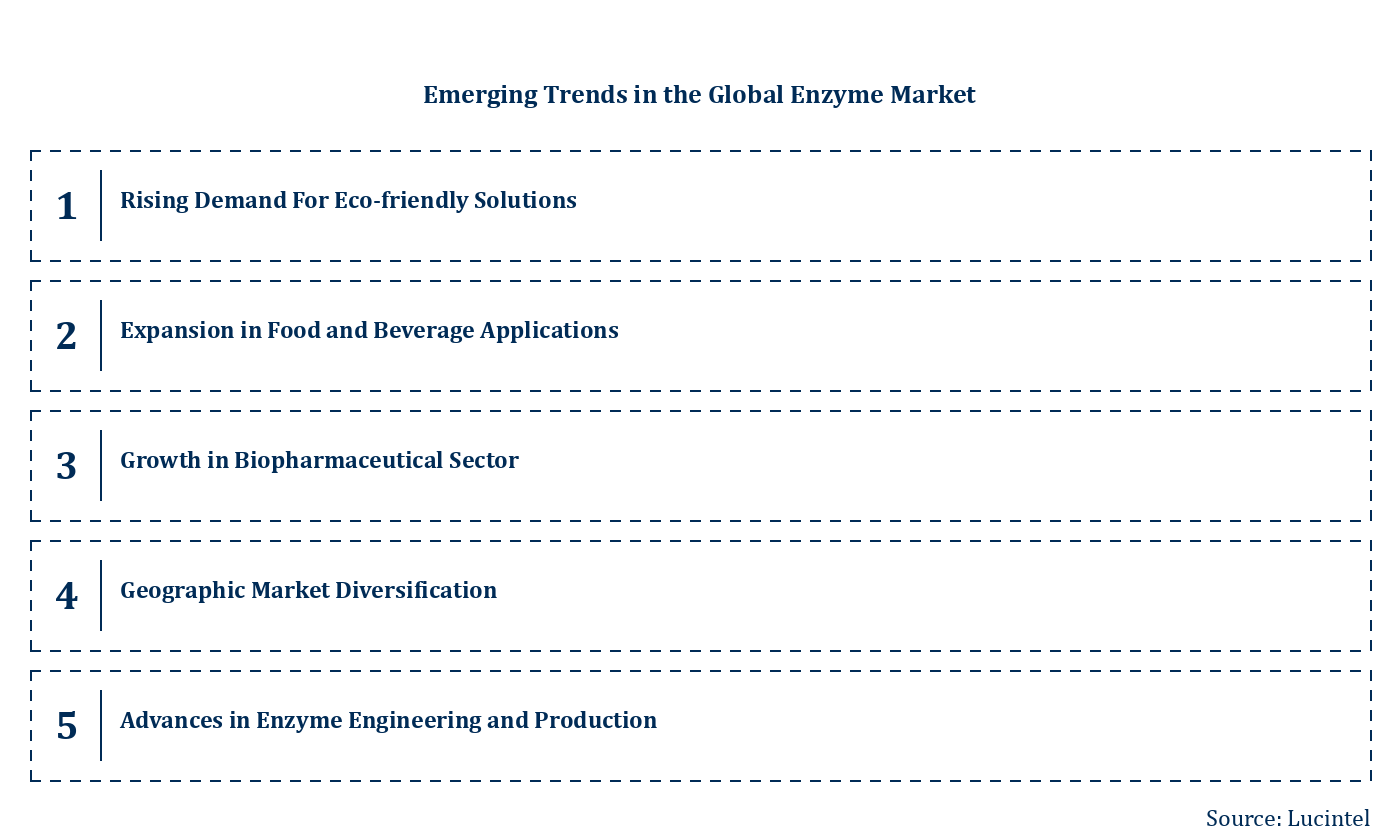
  • Rising Demand for Eco-Friendly Solutions: Increasing environmental awareness is driving demand for natural, biodegradable enzymes. Industries are seeking sustainable alternatives to chemical processes, leading to higher adoption of enzymes in cleaning products, textiles, and waste management. This trend supports eco-conscious manufacturing and reduces ecological footprints, encouraging companies to innovate with enzyme-based solutions that are both effective and environmentally friendly.
  • Expansion in Food and Beverage Applications: The food industry is increasingly utilizing enzymes to improve product quality, shelf life, and processing efficiency. Enzymes like amylases, proteases, and lipases are used in baking, brewing, dairy, and meat processing. This expansion is driven by consumer demand for natural ingredients and clean-label products, prompting food manufacturers to incorporate enzymes as essential processing aids, thereby boosting market growth.
  • Growth in Biopharmaceutical Sector: The pharmaceutical industry is leveraging enzymes for drug development, diagnostics, and biocatalysis. Enzymes are crucial in producing biopharmaceuticals, gene editing, and personalized medicine. The rising prevalence of chronic diseases and the shift towards biologics are fueling this demand. This trend is fostering innovation in enzyme engineering and expanding the market’s scope within healthcare.
  • Geographic Market Diversification: Emerging markets in Asia-Pacific, Latin America, and Africa are witnessing increased enzyme adoption due to expanding industrialization and rising disposable incomes. These regions offer significant growth opportunities as local industries adopt enzyme-based solutions to meet global standards. Market players are establishing regional manufacturing and distribution centers to capitalize on this diversification, which enhances global market resilience and growth potential.
  • Advances in Enzyme Engineering and Production: Innovations in enzyme modification and production techniques are creating more robust, efficient, and cost-effective enzymes. Techniques like protein engineering and fermentation optimization are enabling tailored enzymes for specific industrial needs. This progress reduces costs, improves performance, and broadens application possibilities, thereby accelerating market expansion and enabling new industrial uses.

These emerging trends are reshaping the enzyme market by fostering sustainable practices, expanding application areas, and driving technological innovation. They are making the market more versatile, competitive, and aligned with global sustainability goals, ultimately paving the way for continued growth and diversification.
Enzyme Market by country

Recent Developments in the Enzyme Market

The enzyme market has experienced significant growth driven by advancements in biotechnology, increasing demand across industries, and innovations in enzyme applications. These developments are transforming sectors such as healthcare, food processing, and environmental management. As research progresses, new enzyme types and production methods are emerging, creating opportunities for market expansion. The integration of sustainable practices and technological innovations is further fueling growth, making the enzyme market a dynamic and promising sector with broad implications for various industries worldwide.

  • Growing Demand for Enzymes in Healthcare: The increasing use of enzymes in diagnostics, therapeutics, and personalized medicine is expanding the healthcare sector. Enzymes like proteases and lipases are vital in drug formulation and enzyme replacement therapies. This demand is driven by rising chronic diseases and aging populations, leading to significant market growth. The development of enzyme-based treatments and diagnostics is improving patient outcomes and reducing healthcare costs, positioning the enzyme market as a crucial component of modern medicine.
  • Innovations in Enzyme Production Technologies: Advances in fermentation, recombinant DNA technology, and bioprocessing are enhancing enzyme production efficiency and scalability. These innovations reduce costs and enable the development of novel enzymes with specific functionalities. Improved production methods also support sustainable practices by minimizing waste and energy consumption. As a result, more diverse enzyme applications are emerging across industries, boosting market competitiveness and opening new avenues for research and commercial use.
  • Expansion of Enzymes in Food and Beverage Industry: Enzymes are increasingly used to improve food quality, shelf life, and processing efficiency. Applications include baking, brewing, dairy, and fruit juice production. The demand for natural and clean-label products further drives enzyme adoption. Innovations in enzyme formulations allow for tailored solutions that meet consumer preferences and regulatory standards. This expansion enhances product quality, reduces processing time, and supports industry growth, making enzymes indispensable in modern food manufacturing.
  • Environmental and Industrial Applications: Enzymes are playing a vital role in environmental management, such as waste treatment, bioremediation, and biofuel production. Their ability to catalyze eco-friendly processes reduces reliance on harsh chemicals and lowers environmental impact. Industrial applications include textile processing, paper manufacturing, and detergent formulations. The shift towards sustainable practices and stricter environmental regulations is propelling enzyme use in these sectors, fostering market growth and promoting eco-conscious industrial development.
  • Rising Investment in R&D and Market Expansion: Increased funding from private and public sectors is accelerating enzyme research and development. This investment leads to the discovery of novel enzymes and improved production techniques. Market expansion is also driven by strategic collaborations, mergers, and acquisitions among key players. The focus on developing enzymes for niche applications and emerging markets enhances competitiveness. Overall, these investments are fueling innovation, expanding market reach, and ensuring long-term growth prospects for the enzyme industry.

The overall impact of these developments is a robust, innovative enzyme market that is expanding across multiple industries. Enhanced production technologies, new applications, and sustainable practices are driving growth, increasing market competitiveness, and fostering global adoption. These opportunities are positioning the enzyme market as a key player in advancing healthcare, food safety, and environmental sustainability, ensuring continued evolution and market resilience.

Strategic Growth Opportunities in the Enzyme Market

The enzyme market is experiencing rapid expansion driven by diverse industrial applications, technological advancements, and increasing demand for sustainable solutions. As industries such as healthcare, food processing, and biofuels seek innovative enzyme-based products, market players are exploring new growth avenues. Strategic investments, research, and collaborations are vital to capitalize on emerging opportunities. This dynamic landscape offers significant potential for market expansion, driven by the need for efficient, eco-friendly, and cost-effective enzyme solutions across various sectors.

  • Expanding Applications in Healthcare and Diagnostics: The growing use of enzymes in diagnostics, therapeutics, and personalized medicine presents substantial growth opportunities. Enzymes are increasingly employed in enzyme replacement therapies, biosensors, and drug development, driven by advancements in biotechnology. Rising prevalence of chronic diseases and the demand for rapid, accurate diagnostic tools further fuel this expansion. Companies investing in enzyme innovation for healthcare are poised to capture a significant share of this lucrative segment, fostering overall market growth.
  • Rising Demand for Enzymes in Food and Beverage Industry: The food and beverage sector is a major consumer of enzymes, utilizing them to improve product quality, shelf life, and processing efficiency. Growing consumer preference for natural and clean-label products boosts demand for enzyme-based solutions. Applications include baking, dairy, brewing, and fruit processing. Innovations in enzyme formulations that enhance flavor, texture, and nutritional content are expected to drive market growth, supported by increasing food industry investments and regulatory approvals favoring enzyme use.
  • Increasing Adoption of Enzymes in Biofuel Production: The shift toward renewable energy sources has heightened interest in enzymes for biofuel production, especially ethanol and biodiesel. Enzymes such as cellulases and amylases facilitate biomass breakdown, making biofuel manufacturing more efficient and cost-effective. Government incentives and environmental policies promote biofuel adoption, creating a favorable environment for enzyme suppliers. Continuous research to improve enzyme stability and activity under industrial conditions further accelerates this growth, positioning enzymes as critical components in sustainable energy solutions.
  • Technological Innovations Enhancing Enzyme Efficiency: Advances in enzyme engineering, immobilization, and fermentation technologies are improving enzyme performance and stability. These innovations enable enzymes to operate under harsh industrial conditions, reducing costs and increasing yields. The development of tailored enzymes for specific applications enhances process efficiency across sectors. Investment in R&D and collaboration between academia and industry are crucial for driving these technological breakthroughs, ultimately expanding the market’s scope and enabling new applications.
  • Growing Focus on Sustainable and Eco-Friendly Solutions: Increasing environmental awareness and regulatory pressures are pushing industries toward greener alternatives. Enzymes, being biodegradable and energy-efficient, are ideal for sustainable manufacturing processes. Their use reduces reliance on harsh chemicals and lowers energy consumption. Governments and organizations are promoting enzyme-based solutions through incentives and standards. This focus on sustainability is expected to significantly boost enzyme demand across multiple industries, fostering innovation and market expansion aligned with global environmental goals.

The overall impact of these opportunities is a robust, diversified enzyme market poised for substantial growth. Strategic focus on innovation, application expansion, and sustainability will enable industry players to capitalize on emerging trends. As demand continues to rise across sectors, the market is set to become more competitive and technologically advanced, supporting sustainable development and economic growth worldwide.

Enzyme Market Drivers and Challenges

The enzyme market is influenced by a variety of technological, economic, and regulatory factors that shape its growth trajectory. Advances in biotechnology and enzyme engineering have led to the development of more efficient and specialized enzymes, expanding their applications across industries such as healthcare, food and beverage, and biofuels. Economic factors like increasing demand for sustainable and eco-friendly solutions drive market expansion, while regulatory frameworks ensure safety and quality standards. However, challenges such as high R&D costs, stringent regulations, and market competition pose hurdles. Understanding these drivers and challenges is essential for stakeholders to navigate the evolving landscape and capitalize on emerging opportunities.

The factors responsible for driving the enzyme market include:

  • Technological Innovation: The rapid advancement in enzyme engineering and biotechnology has enabled the development of highly specific and efficient enzymes. These innovations improve process efficiencies, reduce costs, and open new application avenues in industries like pharmaceuticals, food processing, and biofuels. Continuous R&D investments foster product diversification and customization, boosting market growth. Additionally, innovations in enzyme immobilization and stabilization techniques enhance enzyme longevity and reusability, further driving adoption. The integration of artificial intelligence and machine learning accelerates enzyme discovery, making the process faster and more cost-effective, thus supporting sustained market expansion.
  • Increasing Demand for Sustainable Solutions: Growing environmental concerns and the shift towards eco-friendly processes significantly propel the enzyme market. Enzymes facilitate greener manufacturing by reducing the need for harsh chemicals, lowering energy consumption, and minimizing waste. Industries such as detergents, textiles, and paper are increasingly adopting enzymes to meet sustainability goals and regulatory requirements. The rising consumer preference for natural and organic products also fuels demand for enzyme-based solutions in food and beverages. Governments worldwide are promoting sustainable practices through incentives and regulations, further encouraging industries to incorporate enzymes, thereby expanding market opportunities.
  • Expanding Applications Across Industries: The versatility of enzymes allows their application across diverse sectors, including healthcare, agriculture, food processing, and bioenergy. In healthcare, enzymes are vital in diagnostics and therapeutics, while in agriculture, they improve crop yields and soil health. The food industry benefits from enzymes in baking, brewing, and dairy processing, enhancing product quality and efficiency. The biofuel sector relies on enzymes for biomass conversion, supporting renewable energy initiatives. This broad applicability not only diversifies revenue streams but also stabilizes market growth against sector-specific fluctuations, making enzymes indispensable across multiple industries.
  • Growing Investment and Collaborations: Increased investments from private and public sectors in enzyme research and development bolster market growth. Strategic collaborations between biotech firms, academic institutions, and industry players facilitate innovation and commercialization of new enzyme technologies. Funding from government agencies supports research initiatives aimed at developing enzymes for niche applications, such as waste management and pharmaceuticals. These partnerships accelerate product development cycles and reduce time-to-market, providing competitive advantages. Moreover, venture capital investments and grants encourage startups and established companies to explore novel enzyme solutions, fostering a dynamic and expanding market landscape.
  • Rising Consumer Awareness and Regulatory Support: Heightened consumer awareness regarding health, wellness, and environmental sustainability influences market dynamics. Demand for natural, enzyme-based products in food, cosmetics, and cleaning products is increasing. Regulatory agencies worldwide are establishing standards and approvals that ensure enzyme safety and efficacy, instilling consumer confidence. These regulations also encourage manufacturers to adopt enzyme-based processes to meet compliance and sustainability targets. The supportive regulatory environment, combined with consumer preferences, drives market expansion by incentivizing innovation and adoption of enzyme technologies across various sectors.

The challenges facing the enzyme market include:

  • High R&D and Production Costs: Developing novel enzymes requires significant investment in research, advanced laboratory infrastructure, and skilled personnel. The high costs associated with enzyme discovery, optimization, and scale-up can hinder entry for small and medium-sized enterprises. Additionally, maintaining consistent enzyme quality during large-scale production poses technical challenges, increasing manufacturing expenses. These financial barriers may limit innovation and slow down market growth, especially in emerging regions with limited funding. Overcoming these costs requires strategic partnerships and technological advancements to improve cost-efficiency, which can be time-consuming and resource-intensive.
  • Stringent Regulatory Frameworks: The enzyme industry faces complex regulatory requirements related to safety, environmental impact, and labeling standards. Navigating these regulations involves extensive testing, documentation, and compliance procedures, which can delay product launches and increase costs. Variations in regulations across different countries create additional hurdles for global market expansion. Non-compliance risks include product recalls, legal penalties, and damage to brand reputation. As regulatory bodies tighten standards to ensure consumer safety, companies must invest heavily in compliance measures, potentially limiting innovation and market agility.
  • Market Competition and Patent Expirations: The enzyme market is highly competitive, with numerous players vying for market share. Patent expirations lead to increased generic enzyme availability, intensifying price competition and reducing profit margins. Companies must continuously innovate to differentiate their products, which involves substantial R&D investments. Additionally, the entry of low-cost manufacturers from emerging economies increases price pressures and market saturation. This competitive landscape challenges established players to maintain their market position while balancing innovation, cost management, and regulatory compliance, which can impact overall market stability and growth prospects.

The enzyme market is driven by technological advancements, sustainability trends, diverse applications, strategic investments, and regulatory support. However, high R&D costs, regulatory complexities, and intense competition pose significant challenges. These factors collectively influence market dynamics, requiring stakeholders to innovate continuously, optimize costs, and navigate regulatory landscapes effectively. The interplay of these drivers and challenges will shape the future growth trajectory of the enzyme industry, emphasizing the need for strategic planning and collaboration to capitalize on emerging opportunities while mitigating risks.

List of Enzyme Market Companies

Companies in the market compete on the basis of product quality offered. Major players in this market focus on expanding their manufacturing facilities, R&D investments, infrastructural development, and leverage integration opportunities across the value chain. Through these strategies enzyme market companies cater increasing demand, ensure competitive effectiveness, develop innovative products & technologies, reduce production costs, and expand their customer base. Some of the enzyme market companies profiled in this report include-

  • BASF
  • Novonesis
  • International Flavors & Fragrances
  • DSM
  • Novus International, Inc.
  • Associated British Foods plc
  • Kerry
  • Advanced Enzyme Technologies
  • Amano Enzyme Inc.
  • Adisseo

Enzyme Market by Segment

The study includes a forecast for the global enzyme market by type, product, source, and region.

  • Enzyme Market by Type [Value from 2019 to 2035]:
    • Industrial Enzymes
    • Specialty Enzymes
  • Enzyme Market by Product [Value from 2019 to 2035]:
    • Carbohydrases
    • Proteases
    • Lipases
    • Polymerases & Nucleases
    • Others
  • Enzyme Market by Source [Value from 2019 to 2035]:
    • Plants
    • Animals
    • Microorganisms
  • Enzyme Market by Region [Value ($B) from 2019 to 2035]:
    • North America
    • Europe
    • Asia Pacific
    • The Rest of the World

Country Wise Outlook for the Enzyme Market

The enzyme market has experienced significant growth driven by advancements in biotechnology, increasing demand across various industries such as healthcare, food processing, and environmental management. Innovations in enzyme engineering and sustainable practices have further accelerated market expansion. Countries are investing heavily in research and development to enhance enzyme efficiency and diversify applications. Regulatory support and rising awareness of eco-friendly solutions are also contributing to this trend. As the global economy recovers and industries seek sustainable alternatives, the enzyme market is poised for continued growth with regional variations reflecting technological adoption and industrial needs.

  • United States: The US enzyme market has seen rapid growth due to technological innovations and increased adoption in healthcare, food, and biofuel sectors. Leading biotech firms are investing in enzyme research, resulting in improved enzyme stability and specificity. Regulatory agencies support sustainable practices, boosting enzyme applications. The rise of personalized medicine and enzyme-based diagnostics further propels market expansion. Additionally, collaborations between academia and industry are fostering new enzyme technologies, making the US a key player in global enzyme development.
  • China: China’s enzyme market is expanding swiftly, driven by government initiatives promoting biotechnology and sustainable agriculture. The country is investing heavily in enzyme research to improve food processing, animal feed, and environmental remediation. Local companies are increasing production capacity to meet domestic demand and export needs. Technological advancements and cost-effective manufacturing have made enzymes more accessible. The Chinese government’s focus on green development and bio-based industries is expected to sustain growth, positioning China as a major global enzyme market contributor.
  • Germany: Germany’s enzyme market benefits from its strong pharmaceutical, chemical, and food industries. The country emphasizes innovation and high-quality enzyme production, supported by robust research institutions. Germany is a leader in enzyme engineering, developing enzymes with enhanced performance for industrial applications. Sustainability and eco-friendly processes are prioritized, aligning with European Union regulations. The market is also driven by increasing demand for enzyme-based solutions in waste management and renewable energy sectors. Germany’s focus on technological advancement and environmental standards continues to foster market growth.
  • India: India’s enzyme market is witnessing rapid expansion due to rising demand in food processing, textiles, and pharmaceuticals. The government’s initiatives to promote biotechnology and rural development are encouraging enzyme adoption. Local manufacturers are expanding production capacities and focusing on cost-effective enzyme solutions. The growing awareness of sustainable practices and organic products is boosting enzyme use in agriculture and food industries. Additionally, collaborations with international firms are facilitating technology transfer and innovation. Overall, India’s enzyme market is poised for substantial growth, supported by a large agricultural base and increasing industrialization.
  • Japan: Japan’s enzyme market is characterized by advanced research and high-quality enzyme production, primarily serving pharmaceutical, cosmetic, and food sectors. The country emphasizes innovation, with significant investments in enzyme engineering and biotechnological research. Japan’s aging population drives demand for enzyme-based diagnostics and therapeutics. The country also focuses on environmentally friendly processes, promoting enzymes for waste treatment and renewable energy. Strategic collaborations between academia and industry foster technological advancements. Japan’s strong regulatory framework and focus on sustainability ensure steady growth, maintaining its position as a key player in the global enzyme market.

Features of the Enzyme Market

  • Market Size Estimates: Enzyme market size estimation in terms of value ($B).
  • Trend and Forecast Analysis: Market trends (2019 to 2025) and forecast (2026 to 2035) by various segments and regions.
  • Segmentation Analysis: Enzyme market size by type, product, source, and region in terms of value ($B).
  • Regional Analysis: Enzyme market breakdown by North America, Europe, Asia Pacific, and Rest of the World.
  • Growth Opportunities: Analysis of growth opportunities in different types, products, sources, and regions for the enzyme market.
  • Strategic Analysis: This includes M&A, new product development, and competitive landscape of the enzyme market.
  • Analysis of competitive intensity of the industry based on Porter’s Five Forces model.

Top 5 Companies

  • BASF
  • Novonesis
  • International Flavors & Fragrances
  • DSM
  • Novus International, Inc.

Table of Contents

1. Executive Summary
14.1 Competitive Analysis Overview

List of Figures

List of Tables

Methodology

Lucintel has been in the business of market research and management consulting since 2000 and has published over 1000 market intelligence reports in various markets / applications and served over 1,000 clients worldwide. This study is a culmination of four months of full-time effort performed by Lucintel's analyst team. The analysts used the following sources for the creation and completion of this valuable report:

  • In-depth interviews of the major players in this market
  • Detailed secondary research from competitors' financial statements and published data
  • Extensive searches of published works, market, and database information pertaining to industry news, company press releases, and customer intentions
  • A compilation of the experiences, judgments, and insights of Lucintel's professionals, who have analyzed and tracked this market over the years.

Extensive research and interviews are conducted across the supply chain of this market to estimate market share, market size, trends, drivers, challenges, and forecasts. Below is a brief summary of the primary interviews that were conducted by job function for this report.

Lucintel's methodology for market research

Thus, Lucintel compiles vast amounts of data from numerous sources, validates the integrity of that data, and performs a comprehensive analysis. Lucintel then organizes the data, its findings, and insights into a concise report designed to support the strategic decision-making process. The figure below is a graphical representation of Lucintel's research process.

Primary interviews by job function

Buy Now

Choose a license that fits your team. Instant PDF delivery.

Market Report

1 User PDF

$4,850
Buy Now

Market Report

2-5 Users PDF

$6,700
Buy Now

Market Report

Corporate PDF

$8,850
Buy Now

Market Report

Global PDF

$10,000
Buy Now

Prices exclude taxes. Instant delivery. Custom licensing available on request.

Frequently Asked Questions

What is the enzyme market size?
The global enzyme market is expected to reach an estimated $29 billion by 2035.
What is the growth forecast for enzyme market?
The global enzyme market is expected to grow with a CAGR of 6.9% from 2026 to 2035.
What are the major drivers influencing the growth of the enzyme market?
The major drivers for this market are the increasing demand in food processing industry, the rising use in pharmaceutical products, and the growing adoption in biofuel production.
What are the major segments for enzyme market?
The future of the enzyme market looks promising with opportunities in the carbohydrase, protease, lipase, and polymerase & nuclease markets.
Who are the key enzyme market companies?

Some of the key enzyme companies are as follows:

  • BASF
  • Novonesis
  • International Flavors & Fragrances
  • DSM
  • Novus International, Inc.
  • Associated British Foods plc
  • Kerry
  • Advanced Enzyme Technologies
  • Amano Enzyme Inc.
  • Adisseo
Which enzyme market segment will be the largest in future?
Lucintel forecasts that, within the type category, specialty enzyme is expected to witness higher growth over the forecast period.
In enzyme market, which region is expected to be the largest in next 8 years?
In terms of region, North America is expected to witness the highest growth over the forecast period.
Do we receive customization in this report?
Yes, Lucintel provides 10% customization without any additional cost.

Key Questions

  • What are some of the most promising, high-growth opportunities for the enzyme market by type (industrial enzymes and specialty enzymes), product (carbohydrases, proteases, lipases, polymerases & nucleases, and others), source (plants, animals, and microorganisms), and region (North America, Europe, Asia Pacific, and the Rest of the World)?
  • Which segments will grow at a faster pace and why?
  • Which region will grow at a faster pace and why?
  • What are the key factors affecting market dynamics? What are the key challenges and business risks in this market?
  • What are the business risks and competitive threats in this market?
  • What are the emerging trends in this market and the reasons behind them?
  • What are some of the changing demands of customers in the market?
  • What are the new developments in the market? Which companies are leading these developments?
  • Who are the major players in this market? What strategic initiatives are key players pursuing for business growth?
  • What are some of the competing products in this market and how big of a threat do they pose for loss of market share by material or product substitution?
  • What M&A activity has occurred in the last 5 years and what has its impact been on the industry?
Why Choose Us

The Lucintel Advantage

Trusted partner for strategic intelligence and business growth

25+ Years Excellence

25+ Years Excellence

Quarter century of proven expertise in management consulting and market research across global markets.
Game-Changer Ideas

Game-Changer Ideas

Innovative strategies and actionable insights that help clients become the smartest in their industry.
Global Reach

Global Reach

Extensive coverage across 50+ industries and markets worldwide with localized expertise.
Start Your Growth Journey

Get Your Free
Market Intelligence
Briefing

Receive a complimentary market analysis tailored to your industry. Our analysts will identify key growth opportunities and competitive dynamics specific to your business.

Custom Market Snapshot

Market size, growth rate, and key trend analysis for your specific sector.

Competitive Landscape Overview

Top competitor positioning and market share analysis.

Growth Opportunity Identification

Strategic recommendations backed by data-driven insights.

Subscribe

Subscribe to our Newsletter

Get curated market intelligence and competitive moves straight to your inbox.

By subscribing, you agree to receive our monthly insights. Unsubscribe anytime.

Industry Trends Market Signals Opportunities Competitor Moves