
Report Feature
Electronic Manipulators Market Trends and Forecast
The technologies present in electronic manipulators technology have also witnessed significant improvement in recent years. Initially, this was done from the era of old, manual-operated manipulators to the cutting-edge fully automated robotic manipulators incorporated with AI and machine learning. This aspect encompasses developments such as a precision-controlled robotic arm along with more enhanced dexterous mechanisms and real-time feedback. New technologies are related to integration with IoT devices, with smooth human-machine interface and improved energy efficiency. These developments support better performance, accuracy, and adaptability in manufacturing, healthcare, and logistics applications.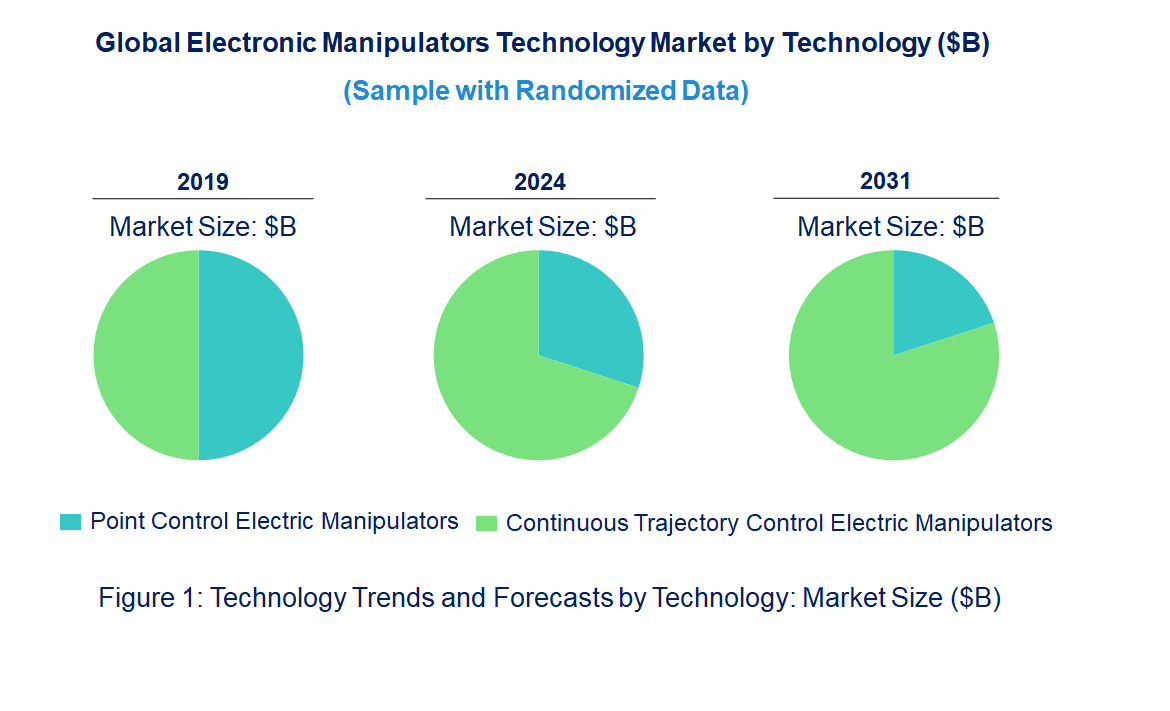
Emerging Trends in the Electronic Manipulators Market
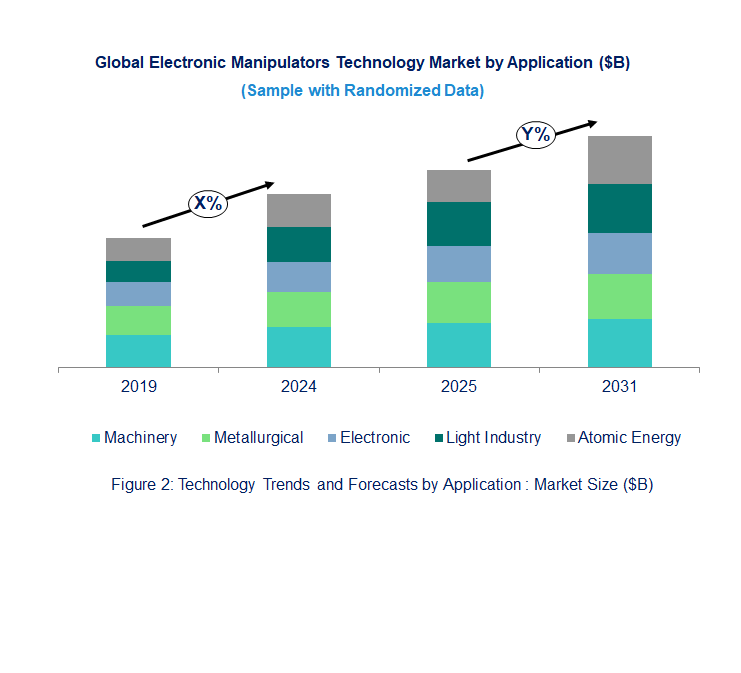
The market of electronic manipulator technology is being greatly transformed through the infusion of advanced robotics, AI, and IoT solutions. It has been inspired by industry-wide needs for precision, high degrees of automation, and cost-efficiency alongside adaptation and other benefits across such sectors as manufacturing, health, and logistics. A more efficient, intelligent, and collaborative system would dictate the course of its future. Important Trends• Integration with AI and Machine Learning: Modern electronic manipulators use more AI and machine learning algorithms. The system will then change itself to adjust to tasks or changes in the environment with zero human intervention. It brings along efficiency in the decisions and changes during manufacturing and assembling on the line.
• HMI Enhanced: Collaborative manipulators are designed with advanced sensors and interactive interfaces, allowing for safer and more efficient cooperation between humans and machines. This reduces the chances of accidents while maximizing productivity in environments such as factories and research labs.
• Precision Control and Dexterity Improvements: Technologies are progressing to provide manipulators with more accuracy and dexterity to execute complex tasks. This is critical in industries such as electronics assembly, healthcare, and aerospace, where accuracy must be at its best to facilitate complex operations.
• IoT and Remote Monitoring Integration: IoT connectivity is now being added to electronic manipulators to provide real-time monitoring and remote control. This would help in predictive maintenance, troubleshooting, and optimizing operations, which in turn would increase efficiency and minimize downtime in all industries.
• Energy Efficiency and Sustainability Focus: The energy-efficient design for electronic manipulators is gaining focus, along with eco-friendly materials and advanced energy-saving technologies. This is an indicator of the focus on sustainability initiatives and minimizing operational costs and environmental impact across industrial and commercial applications. These emerging trends in electronic manipulators are pushing the evolution of automation, precision, and efficiency across multiple sectors. The integration of AI, human-machine collaboration, IoT, and eco-friendly technologies is transforming traditional operations into smarter, more adaptable, and cost-effective systems. As these technologies continue to advance, they are reshaping manufacturing, healthcare, logistics, and other critical industries worldwide, ensuring better performance, sustainability, and safety.
Electronic Manipulators Market : Industry Potential, Technological Development, and Compliance Considerations
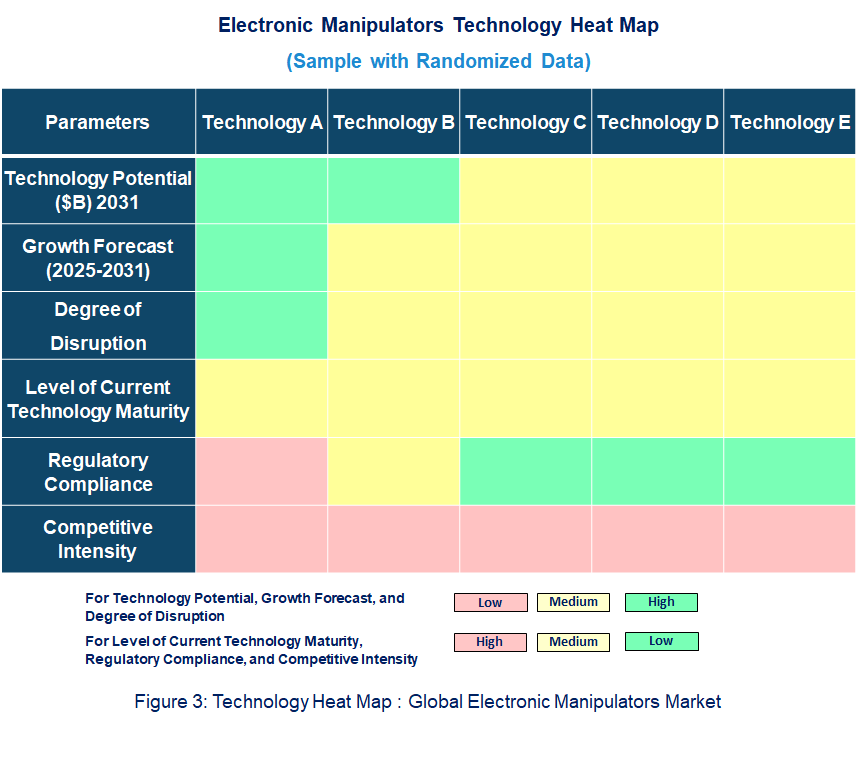
Electronic manipulators are increasingly becoming a core component in industries requiring precision, speed, and efficiency. Their integration into manufacturing, logistics, healthcare, and research environments highlights their growing significance. With advancements in AI, robotics, and sensor technology, these manipulators are transforming traditional operations into highly automated, adaptable, and cost-effective systems.• Technology Potential: The potential of electronic manipulators to enhance productivity, reduce operational costs, and improve safety in a wide range of sectors is huge. They are capable of doing complex tasks with high accuracy, ensuring quality control and consistency. Integration with AI and machine learning allows for real-time adaptability, making these systems capable of handling dynamic and unpredictable environments.
• Degree of Disruption: These technologies are disrupting traditional manual operations as they replace human labor with automation, thereby improving speed and efficiency. In industries such as manufacturing, healthcare, and logistics, electronic manipulators allow for higher throughput, a reduction in errors, and improved safety. Collaborative models further allow for seamless interaction between humans and machines to maximize operational effectiveness.
• Current Technology Maturity Level: Current electronic manipulators are very mature and are extensively deployed in various industries. The solutions include advanced robotic arms, sensors, and AI-driven control systems. Continuous developments in dexterity, integration, and HMI interfaces ensure that there is an improvement in performance and adaptability.
• Regulatory Compliance: Electronic manipulators follow the strictest safety and environmental standards, including ISO 10218 for robotic safety and RoHS for material compliance. These will ensure the safety of workers, environmental protection, and operational efficiency in industrial and commercial applications.
Recent Technological development in Electronic Manipulators Market by Key Players
The electronic manipulators technology market is developing rapidly due to the fact that many companies from various industries invest in automation, precision, and ergonomic solutions. The main drivers of innovation in robotic arms, lifting systems, and collaborative manipulators are the demand for higher efficiency, cost savings, and operational safety. In this market, leading players are using AI, robotics, and sensor integration to enhance functionality, adaptability, and overall performance.• Scaglia Scaglia has introduced advanced electronic manipulators in the direction of heavy-duty applications. Their solutions stress on durability and precision for customized systems in manufacturing and assembly lines that reduce the labor cost and enhance the productivity in industrial sectors.
• Movomech Movomech is still innovating with an ergonomic lifting and manipulation system and electric and pneumatic technology. The manipulators guarantee safe, customizable solutions in assembly lines, which remove the physical strain from workers and ensure high-speed operation.
• DALMEC DALMEC focuses on high-load manipulators that combine advanced mechanical and electronic integration. Their manipulators are designed for heavy industrial use, optimizing material handling operations while ensuring worker safety and process efficiency.
• Colombo Filippetti Colombo Filippetti’s developments in electronic manipulators emphasize precision and adaptability in assembly and manufacturing lines. Their technologies integrate robotic arms with intelligent control systems for seamless operations and superior performance.
• Ingersoll-Rand Ingersoll-Rand has developed advanced robotic lifting manipulators with improved pneumatic and electric systems. Their solutions are very strong and designed for industries with high load capacity and material handling efficiency.
• MANIBO MANIBO is on customized electronic manipulators for assembly lines and material handling. Its intelligent control system ensures flexibility, speed, and lower operation downtime.
• Piab Piab has introduced advanced vacuum-based manipulators that utilize their suction technologies. Their electronic manipulators enhance material handling, ensuring quick, precise, and safe operations in factories and logistics centers.
• PRONOMIC PRONOMIC specializes in ergonomic manipulator systems with customized solutions for industrial environments. Their designs are to improve the safety of operators while maintaining smooth material handling and lifting operations.
• VACU-LIFT Transportsysteme GmbH VACU-LIFT provides advanced vacuum lifting manipulators with high efficiency in warehouse and factory operations. Their products combine speed, adaptability, and safety in transport and handling of materials to enhance the processes.
• Römheld Römheld combines electronic manipulators with robust mechanical systems to provide customized industrial manufacturing lines. Their technologies tend to focus on precision, stability, and adaptability to optimize overall performance and productivity. Recent developments in electronic manipulators by leading companies reflect a trend toward increased customization, AI integration, and advanced material handling technologies. Innovations focus on scalability, efficiency, and safety, transforming assembly lines, logistics, and manufacturing operations. Such advancements ensure cost-effective, eco-friendly, and adaptable solutions across various industrial sectors.
Electronic Manipulators Market Driver and Challenges
The electronic manipulators technology market is growing at a lightning pace due to the automation, precision, and efficiency demands of various industries in manufacturing, healthcare, logistics, and research. Even though these technologies have enormous scope for growth and operational enhancement, integration complexity and high costs remain challenges.• Increasing Demand for Automation: Industries are investing more in automation for increased productivity, fewer errors, and decreased manual work. Investments in robotic arms and high-handling systems are increasing as there is an increased demand for electronic manipulators to perform repetitive operations at a very high speed with high accuracy.
• AI and Machine Learning: AI-driven manipulators optimize operations by adapting to changes in real time and by making intelligent decisions. Thus, efficiency improves, less downtime occurs, and a smarter assembly line with minimal human intervention ensures faster error-free production.
• Emphasis on Ergonomics and Worker Safety: There is a growing emphasis on ergonomic manipulator solutions that protect worker health. Collaborative manipulators designed with advanced sensors and safety controls reduce physical strain and prevent workplace injuries, promoting safer industrial environments.
• Customization and Scalability Requirements: Companies prefer customizable and scalable electronic manipulator solutions that adapt to varying production sizes and facility layouts. Modular designs and tailored technologies provide flexibility, ensuring cost efficiency and operational effectiveness.
• Sustainability and Energy Efficiency Initiatives: Sustainable designs, along with energy-efficient technologies, have gained importance to minimize environmental impacts. Companies are focusing on manufacturers that offer the use of eco-friendly materials and energy-saving controls compatible with international standards of sustainability. Challenges
• Precision and Control Limitations: Electronic manipulators are designed to handle delicate or intricate tasks, but achieving the desired level of precision and control can be challenging. Inaccurate movements or limited feedback mechanisms may result in improper handling, especially in environments requiring high levels of dexterity, such as in medical or microelectronics applications.
• System Complexity and Maintenance: The advanced technology behind electronic manipulators often involves complex mechanical and software systems. Ensuring smooth operation requires regular maintenance and calibration, which can be costly and time-consuming. Additionally, as these systems become more sophisticated, the potential for technical issues and the need for specialized repairs also increase. Growth opportunities through electronic manipulators driven by automation, AI integration, ergonomic solutions, scalability, and an eco-friendly design shape this market. Such trends lead towards increased efficiency, safety, and sustainability for industries, thus driving higher productivity and lower costs, besides better operational flexibility to face the integration and cost-effectiveness challenges.
List of Electronic Manipulators Companies
Companies in the market compete based on product quality offered. Major players in this market focus on expanding their manufacturing facilities, R&D investments, infrastructural development, and leverage integration opportunities across the value chain. With these strategies electronic manipulators companies cater to increasing demand, ensure competitive effectiveness, develop innovative products & technologies, reduce production costs, and expand their customer base. Some of the electronic manipulators companies profiled in this report include.• Scaglia
• Movomech
• Dalmec
• Colombo Filippetti
• Ingersoll-Rand
• Manibo
Electronic Manipulators Market by Technology
• Disruption Potential of Various Technologies: Point control electric manipulators and continuous trajectory control electric manipulators have significant disruption potential in industrial automation. Point Control is simple, cost-effective, and can be used for simple tasks; however, Continuous Trajectory Control allows for smoother, more precise, and complex motion control. Continuous trajectory control provides superior performance in applications demanding high-speed, intricate, and accurate movements than point control solutions. These technologies replace labor costs and operational errors with automated systems. Their integration with AI and advanced sensors boosts adaptability and intelligence. The collaborative model allows for seamless human-machine interaction without compromising safety. The two technologies have scalability as they adapt to the dynamic needs of manufacturing and logistics. Continuous trajectory control offers superior performance in sectors requiring high dexterity, such as electronics and aerospace. Point Control is still within an affordable range and accessible for smaller operations with less complicated processes. All these technologies recombine the workflows, efficiency, and speed to disrupt traditional assembly lines. The cost, performance, and precision combine for a scalable solution that builds industry-specific productivity, flexibility, and operational efficiency.
• Competition Intensity and Legal Compliance: Electronic manipulators are experiencing tremendous competition because of advances in robotics technology. Point control solutions are cost-effective, but are challenged by the higher performance capabilities of continuous trajectory control. Continuous trajectory control systems offer more precision and flexibility but require more sophisticated engineering, which increases the cost. Compliance with safety and performance standards, such as ISO 10218 and CE regulations, remains critical for both technologies. Point control systems typically meet minimum safety requirements. However, continuous trajectory control must follow stricter standards because its operational complexity is higher. In the market, there is a rivalry between manufacturers who offer the most cost-effective options against those that provide leading-edge performance. Major manufacturers pursue certifications and green technology for RoHS and other environmental compliance. In continuous trajectory control, collaborative designs for human-machine safety features take center stage, ensuring strict compliance with industrial safety standards. Companies also differentiate their offerings with customization options and integration flexibility. Overall, competition drives continuous innovation, ensuring better safety, performance, and environmental compliance across industrial sectors.
• Technology Readiness by Technology Type and Key Applications: Laser point control electric manipulators are well-established, cost-effective solutions primarily suited for simple assembly and material handling tasks. Their ease of integration makes them ideal for small to medium-scale manufacturing facilities. They are best suited for applications where fast, repetitive tasks with little customization are needed, with high cost-effectiveness. In contrast, continuous trajectory control electric manipulators are advanced and ready to be applied in complex production environments that need high-speed, precise operations. These manipulators are often applied in aerospace, electronics, and automotive assembly lines, which require intricate movements and smooth trajectory control. They include AI-driven motion planning and sensor integration, ensuring adaptability and operational efficiency. Continuous trajectory control manipulators offer real-time performance adjustments, ensuring optimized workflows and reduced downtime. Their readiness includes advanced interfaces for human-machine collaboration, ensuring safety compliance. Both technologies continue to improve with ongoing research and development, prioritizing eco-friendly design and energy efficiency. Their applications across industrial, healthcare, and electronics sectors highlight versatility and scalability in manufacturing and logistics operations.
Electronic Manipulators Market Trend and Forecast by Technology [Value from 2019 to 2031]:
• Point Control Electric Manipulators
• Continuous Trajectory Control Electric Manipulators
Electronic Manipulators Market Trend and Forecast by Application [Value from 2019 to 2031]:
• Machinery
• Metallurgical
• Electronic
• Light Industry
• Atomic Energy
Electronic Manipulators Market by Region [Value from 2019 to 2031]:
• North America
• Europe
• Asia Pacific
• The Rest of the World
• Latest Developments and Innovations in the Electronic Manipulators Technologies
• Companies / Ecosystems
• Strategic Opportunities by Technology Type
Features of the Global Electronic Manipulators Market
Market Size Estimates: Electronic manipulators market size estimation in terms of ($B). Trend and Forecast Analysis: Market trends (2019 to 2024) and forecast (2025 to 2031) by various segments and regions. Segmentation Analysis: Technology trends in the global electronic manipulators market size by various segments, such as application and technology in terms of value and volume shipments. Regional Analysis: Technology trends in the global electronic manipulators market breakdown by North America, Europe, Asia Pacific, and the Rest of the World. Growth Opportunities: Analysis of growth opportunities in different application, technologies, and regions for technology trends in the global electronic manipulators market. Strategic Analysis: This includes M&A, new product development, and competitive landscape for technology trends in the global electronic manipulators market. Analysis of competitive intensity of the industry based on Porter’s Five Forces model.Table of Contents
Methodology
- In-depth interviews of the major players in this market
- Detailed secondary research from competitors’ financial statements and published data
- Extensive searches of published works, market, and database information pertaining to industry news, company press releases, and customer intentions
- A compilation of the experiences, judgments, and insights of Lucintel’s professionals, who have analyzed and tracked this market over the years.


Buy Now
Choose a license that fits your team. Instant PDF delivery.
Prices exclude taxes. Instant delivery. Custom licensing available on request.
Key Questions
- • What are some of the most promising potential, high-growth opportunities for the technology trends in the global electronic manipulators market by technology (point control electric manipulators and continuous trajectory control electric manipulators), application (machinery, metallurgical, electronic, light industry, and atomic energy), and region (North America, Europe, Asia Pacific, and the Rest of the World)?
- • Which technology segments will grow at a faster pace and why?
- • Which regions will grow at a faster pace and why?
- • What are the key factors affecting dynamics of different technology? What are the drivers and challenges of these technologies in the global electronic manipulators market?
- • What are the business risks and threats to the technology trends in the global electronic manipulators market?
- • What are the emerging trends in these technologies in the global electronic manipulators market and the reasons behind them?
- • Which technologies have potential of disruption in this market?
- • What are the new developments in the technology trends in the global electronic manipulators market? Which companies are leading these developments?
- • Who are the major players in technology trends in the global electronic manipulators market? What strategic initiatives are being implemented by key players for business growth?
- • What are strategic growth opportunities in this electronic manipulators technology space?
- • What M & A activities did take place in the last five years in technology trends in the global electronic manipulators market?


