
Report Feature
Digital TV SoC Market Trends and Forecast
The technologies in digital TV SoC have changed significantly over the last few years, from traditional silicon-based designs with limited integration to advanced AI-enabled chipsets supporting 8K resolution, HDR, and real-time streaming capabilities. From fixed-function hardware to flexible, programmable architectures, it has enabled greater efficiency, lower power consumption, and enhanced user experiences. Furthermore, the adoption of advanced semiconductor nodes and the integration of machine learning accelerators has dramatically changed the landscape of digital TV SoC technology.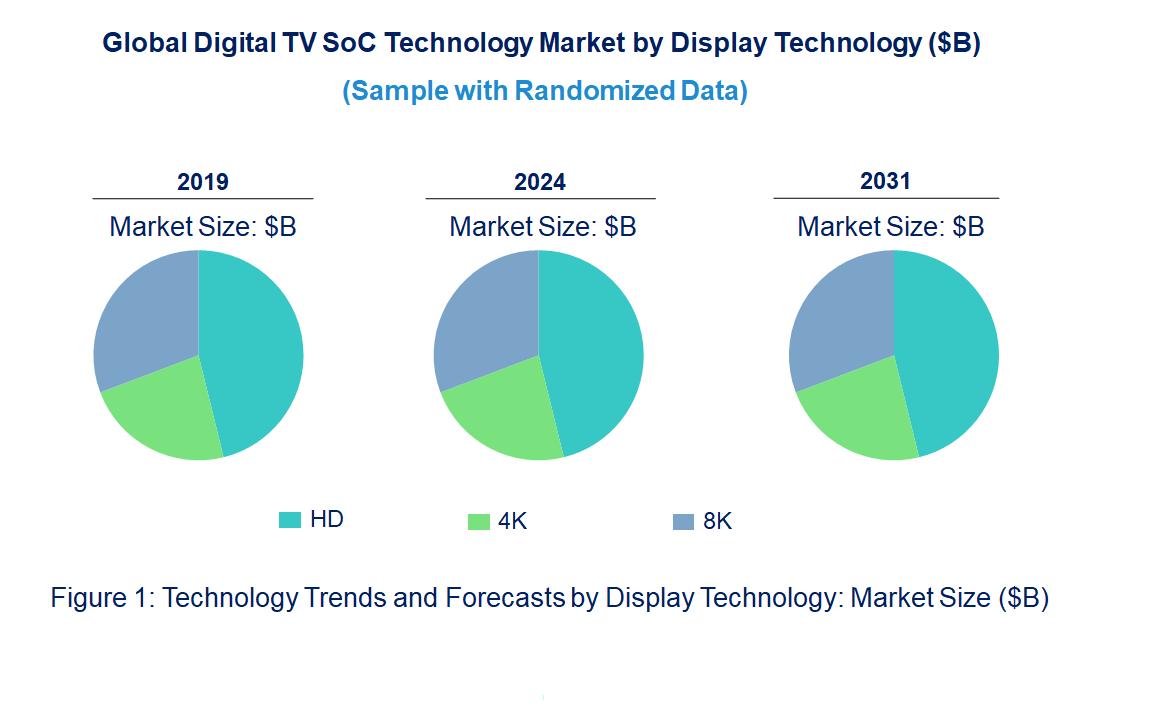
Emerging Trends in the Digital TV SoC Market
The digital TV system-on-chip technology has been rapidly changing at a pace that is being powered by AI and semiconductor breakthroughs, as well as consumer trends for high-quality, engaging immersive viewing. This is now changing the face of design for digital TVs, creating more capabilities but also attending to energy efficiency and connectivity concerns. Below, we take some key emerging trends that change this landscape: Key Trends in Digital TV SoC Technology:• AI-Enabled SoCs: AI is being integrated into Digital TV SoCs to enhance features like real-time image upscaling, content recommendation, and voice recognition. AI processors within the SoCs analyze and optimize content delivery, creating a more personalized and efficient user experience.
• Support for Advanced Resolutions and HDR: With the growing demand for high-definition visuals from the consumer, SoCs support 8K and more, HDR10+, and Dolby Vision. These offer colors that are richer, deeper contrasts, and sharper images than ever before, and are redefining what one can expect in visual quality.
• Connectivity Options are Further Enhanced: SoCs nowadays come with Wi-Fi 6, 5G, and HDMI 2.1 interfaces for seamless connectivity for streaming, gaming, and content sharing. The latency is reduced, and the bandwidth is improved, creating an integrated viewing ecosystem.
• Energy-Efficient Designs: The demand for sustainability has given rise to SoCs that incorporate superior power management techniques. Utilizing smaller semiconductor nodes and low-power design methodologies, these chips save energy without trading off performance.
• Gaming-Centric Features Integration: With more TVs acting as gaming centers, SoCs have started to add functionalities such as VRR, low latency modes, and support for cloud gaming platforms. This trend brings traditional TVs closer to dedicated gaming stations. Digital TV SoC technology reflects the overall trend toward smarter, more connected, and greener devices. The integration of AI, support for leading-edge resolutions, and improvement in connectivity and gaming capabilities redefine the role of TVs in modern households. As these trends continue to mature, they will further transform consumer experiences and set new benchmarks for digital entertainment.
Digital TV SoC Market : Industry Potential, Technological Development, and Compliance Considerations
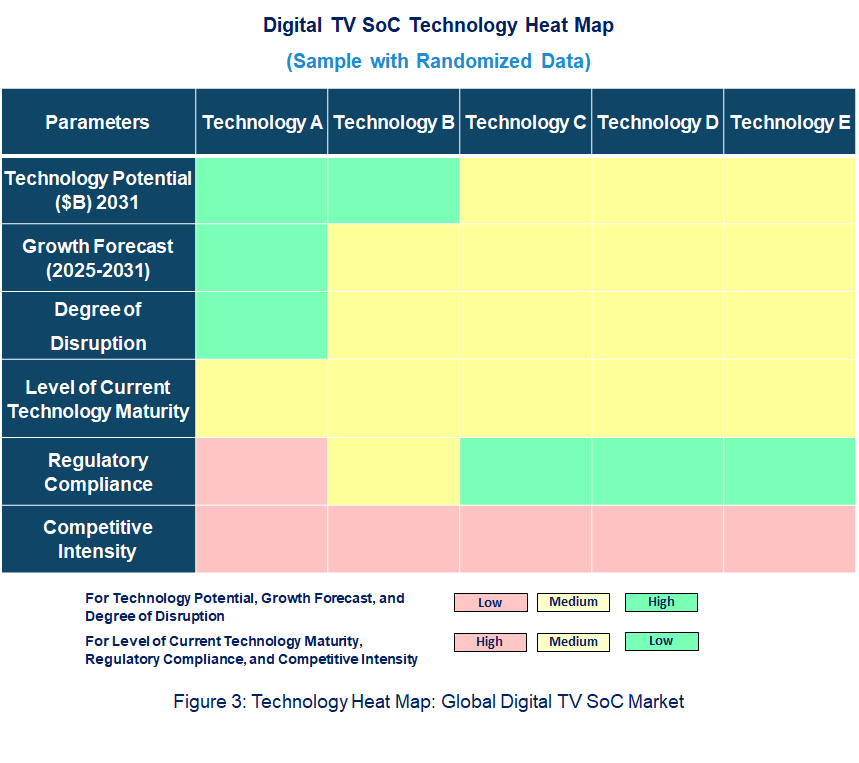
Analysis of Potential and Maturity of Digital TV SoC Technology Digital TV SoC technology is indeed at the forefront of modifying modern-day television experiences; it facilitates seamless integration with multiple functions. Its range of capabilities extends to fields such as enhanced visual quality, smart features, and low-power design. Below is an evaluation of its potential, disruptive capabilities, maturity, and regulatory considerations.• Technological Potential: The potential of Digital TV SoCs lies in their consolidating processing power, connectivity, as well as multimedia features within a single chip. As such, they can go up to ultra-high resolutions, AI-powered content optimization, and seamless content streaming, making digital TV smart, multifunctional apparatuses.
• Degree of Disruption: This technology is very disruptive, mainly because it changes the role from simple display devices to intelligent platforms for entertainment, gaming, and connectivity. Its deployment with AI, IoT, and cloud technologies has rendered older architectures obsolete by way of creating new ecosystems.
• Current Technology Maturity Level: Digital TV SoC technology is moderately mature. It has advanced solutions supporting 8K and AI functionalities, but improvements in semiconductor processes and AI-driven optimizations are on the go.
• Regulatory Compliance Digital TV SoCs have wireless connectivity and data processing capabilities. The integration must therefore adhere to spectrum use, cybersecurity, and environmental standards. Safety, data privacy, and global market acceptance are guaranteed by such compliance.
Recent Technological development in Digital TV SoC Market by Key Players
The digital TV System-on-Chip (SoC) technology industry is experiencing rapid development as major players in the industry are innovating and responding to changing consumer needs. From AI-powered features integration to connectivity and energy efficiency, these players are transforming the digital television landscape. Below, we outline recent developments from major industry players and their influence. Key Developments:• Changhong Group: Changhong adopted AI-enabled SoCs for smarter TVs with advanced image processing, voice recognition, and content recommendation. Such innovations bring users closer to their ideal experience in viewing and smart home integration.
• TCL Technology: TCL has focused on SoCs that support 8K resolution and Quantum Dot technology. It improves the quality of the picture while using less energy, thereby aligning with the goal of sustainability.
• Konka: Konka's most recent TVs feature SoCs designed to work at peak gaming and entertainment efficiency, low-latency modes, and cloud gaming support for all emerging gaming fans.
• Haier Group: Haier is now adding the SoCs of its sets to make it easier to interface between various IoT-enabled devices without a hitch. Haier TV is now also becoming the nerve center for a smart home.
• Westinghouse Digital: Westinghouse has presented low-cost SoCs as well, targeting HDR features and smart streaming in reasonably priced TVs, thus improving access.
• LG Electronics: LG is not changing with SoCs that involve advanced AI processors for real-time improvement of content and OLED optimization while raising the bar on image quality.
• Seiki Digital: Seiki is on a drive for compact, energy-friendly SoCs, bringing top-quality video and smart technologies to portable and secondary TVs.
• Hisense Group: Hisense has adopted SoCs with AI-driven scene recognition, dynamically adjusting settings to offer optimal viewing in any environment.
• Panasonic Corporation: Panasonic applies its SoCs in professional-grade displays to achieve the finest reliability and picture fidelity, catering to the commercial as well as high-end consumer markets.
• Sharp Corporation: Sharp has utilized SoCs with sophisticated upscaling algorithms to upscale lower resolutions into high-quality content while maintaining quality at different input levels. These are the continued innovations in digital TV SoC technology, where leading companies focus on various needs in the market, such as integration of AI, improvement of gaming performance, and sustainable designs. Collectively, these innovations redefine television experiences around the globe.
Digital TV SoC Market Driver and Challenges
The rapid evolution of the digital TV SoC technology market is driven by advancements in AI, connectivity, and consumer demand for better immersive viewing experiences. While this growth comes with considerable challenges, such as high development costs and regulatory hurdles. Below, we analyze some of the key drivers shaping the market. The factors responsible for driving the digital TV SoC market include:• Growing Demand for Smart TVs: A key factor is the trend towards smart TVs with AI-enabled features and streaming capabilities. Digital TV SoCs are very crucial for bringing these features together to give seamless user experiences and propel consumer adoption in the world.
• Advancements in SoC Technology: The advent of semiconductor technology is making smaller nodes and more powerful processing, thus enabling the SoCs to support 8K resolution, HDR, and gaming features. All these advancements ensure better performance, energy efficiency, and new market opportunities.
• OTT Platform Becoming More Popular: The trend of using over-the-top (OTT) streaming platforms has made demands for TVs with high-speed connectivity and real-time processing. SoC manufacturers need to innovate to cater to these demands. Key Challenges
• High R&D Costs: Advanced SoCs demand huge investments in terms of R&D and manufacturing. This can be a hurdle for smaller players and start-ups in the market.
• Regulatory and Environmental Compliance: SoCs have to be designed in such a manner that they comply with some strict regulations related to wireless connectivity, data privacy, and energy efficiency. Non-compliance may delay product launches and increase operational costs. The interplay of drivers and challenges in the digital TV SoC market is creating innovation but erecting barriers to market entry. This is forcing the already established players to adopt sustainable practices, improve features, and provide for growing consumer demands for smarter and more connected televisions.
List of Digital TV SoC Companies
Companies in the market compete based on product quality offered. Major players in this market focus on expanding their manufacturing facilities, R&D investments, infrastructural development, and leverage integration opportunities across the value chain. With these strategies digital TV SoC companies cater to increasing demand, ensure competitive effectiveness, develop innovative products & technologies, reduce production costs, and expand their customer base. Some of the digital TV SoC companies profiled in this report include.• Changhong Group
• TCL Technology
• Konka
• Haier Group
• Westinghouse Digital
• LG Electronics
Digital TV SoC Market by Technology
• Technology Readiness and Applications: HD technology is completely mature and dominates mass-market TVs, ideal for broadcasting and budget-friendly viewing. 4K is highly advanced and widely used in streaming, gaming, and professional content creation, offering high-quality visuals for mainstream applications. 8K, though still in the early adoption phase, is gaining traction for niche markets such as large-screen displays, medical imaging, and luxury home theaters. With content availability and hardware catching up, 8K is poised for gradual integration into mainstream applications but will require advancements in bandwidth and storage technologies for broader adoption.
• Competitive Intensity and Regulatory Compliance: The digital TV Soc competition in the HD, 4K, and 8K space is extremely high, with differentiation happening through features such as HDR and AI enhancements. The dominance of HD is still high in budget segments, while 4K leads the premium market, and 8K is slowly emerging as a luxury product. Regulation compliance is also a significant challenge, such as in terms of energy efficiency and data privacy laws for smart TVs. Moreover, connectivity standards like HDMI 2.1 are important for supporting higher resolutions and driving industry-wide innovation to remain competitive while complying with regulations globally.
• Disruption Potential of HD, 4K, and 8K Technologies: HD, 4K, and 8K are stages of evolution in display resolutions. While HD was used to revolutionize television into clearer visuals compared to standard definition, 4K brought four times the pixel density of an HD display for ultra-crisp images and a huge pickup in adoption within streaming and gaming. The latest is 8K, for the most detailed and immersed experience, especially for a large screen or cinematic output. However, its disruption potential is currently limited by high production costs, limited native content, and hardware requirements. As content creation and streaming platforms gradually adopt higher resolutions, the gap between 4K and 8K will narrow, significantly reshaping viewing experiences and pushing technology adoption.
Digital TV SoC Market Trend and Forecast by Display Technology [Value from 2019 to 2031]:
• HD
• 4K
• 8K
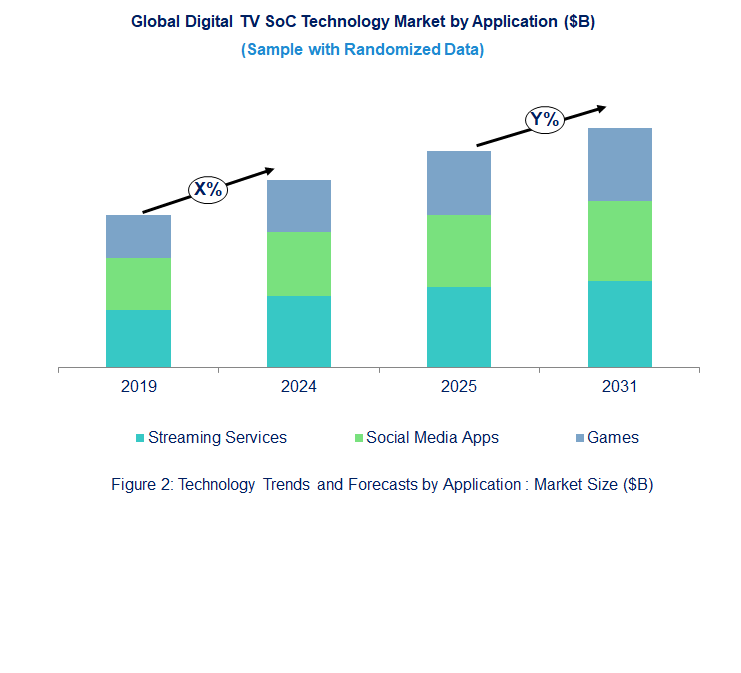
Digital TV SoC Market Trend and Forecast by Application [Value from 2019 to 2031]:
• Streaming Services
• Social Media Apps
• Games
Digital TV SoC Market by Region [Value from 2019 to 2031]:
• North America
• Europe
• Asia Pacific
• The Rest of the World
• Latest Developments and Innovations in the Digital TV SoC Technologies
• Companies / Ecosystems
• Strategic Opportunities by Technology Type
Features of the Global Digital TV SoC Market
Market Size Estimates: Digital TV SoC market size estimation in terms of ($B). Trend and Forecast Analysis: Market trends (2019 to 2024) and forecast (2025 to 2031) by various segments and regions. Segmentation Analysis: Technology trends in the global digital TV SoC market size by various segments, such as application and display technology in terms of value and volume shipments. Regional Analysis: Technology trends in the global digital TV SoC market breakdown by North America, Europe, Asia Pacific, and the Rest of the World. Growth Opportunities: Analysis of growth opportunities in different application, display technologies, and regions for technology trends in the global digital TV SoC market. Strategic Analysis: This includes M&A, new product development, and competitive landscape for technology trends in the global digital TV SoC market. Analysis of competitive intensity of the industry based on Porter’s Five Forces model.Table of Contents
Methodology
- In-depth interviews of the major players in this market
- Detailed secondary research from competitors’ financial statements and published data
- Extensive searches of published works, market, and database information pertaining to industry news, company press releases, and customer intentions
- A compilation of the experiences, judgments, and insights of Lucintel’s professionals, who have analyzed and tracked this market over the years.


Buy Now
Choose a license that fits your team. Instant PDF delivery.
Prices exclude taxes. Instant delivery. Custom licensing available on request.
Key Questions
- • What are some of the most promising potential, high-growth opportunities for the technology trends in the global digital tv soc market by display technology (hd, 4k, and 8k), application (streaming services, social media apps, and games), and region (North America, Europe, Asia Pacific, and the Rest of the World)?
- • Which technology segments will grow at a faster pace and why?
- • Which regions will grow at a faster pace and why?
- • What are the key factors affecting dynamics of different display technology? What are the drivers and challenges of these display technologies in the global digital TV SoC market?
- • What are the business risks and threats to the technology trends in the global digital TV SoC market?
- • What are the emerging trends in these display technologies in the global digital TV SoC market and the reasons behind them?
- • Which technologies have potential of disruption in this market?
- • What are the new developments in the technology trends in the global digital TV SoC market? Which companies are leading these developments?
- • Who are the major players in technology trends in the global digital TV SoC market? What strategic initiatives are being implemented by key players for business growth?
- • What are strategic growth opportunities in this digital TV SoC technology space?
- • What M & A activities did take place in the last five years in technology trends in the global digital TV SoC market?


