Chemical Storage Tank Market Report: Trends, Forecast and Competitive Analysis to 2035

Key data points: The market size in 2035 = $7,882 million, growth forecast = 3.7% annually for the next 8 years. Scroll below to get more insights. This market report covers trends, opportunities and forecasts in chemical storage tank market to 2035 by material type (plastic tanks, metal tanks, FRP tanks, and others), installation type (above ground tanks and under ground tanks), application (industrial chemicals, fuel, and others), end use (petrochemical, paper & pulp, food & beverage, pharmaceutical, and others), and region (North America, Europe, Asia Pacific, and the Rest of the World)

Publisher: Lucintel Last Updated: July 2026
See Pricing

Download Sample Report

| ✨ New Download Sample report — Get instant insights! | ✨ New Download Sample report — Get instant insights!

Chemical Storage Tank Market Report: Trends, Forecast and Competitive Analysis to 2035

Chemical Storage Tank Market

The future of the global chemical storage tank market looks promising with opportunities in the petrochemical, paper & pulp, food & beverage, and pharmaceutical markets. The global chemical storage tank market is expected to reach an estimated $7,882 million by 2035 with a CAGR of 3.7% from 2026 to 2035. The major drivers for this market are the increasing adoption of corrosion-resistant storage tank materials, the rising need for safe hazardous chemical storage solutions, and the growing pharmaceutical & food processing chemical storage applications.

  • Lucintel forecasts that, within the material type category, plastic tank is expected to witness the highest growth over the forecast period due to the increasing demand for corrosion resistant storage solutions.
  • Within the end use category, petrochemical is expected to witness the highest growth due to the rising petrochemical production and industrial capacity expansion.
  • In terms of regions, APAC is expected to witness the highest growth over the forecast period due to the rapid industrialization and expanding chemical manufacturing base.

Gain valuable insights for your business decisions with our comprehensive 150+ page report. Sample figures with some insights are shown below.
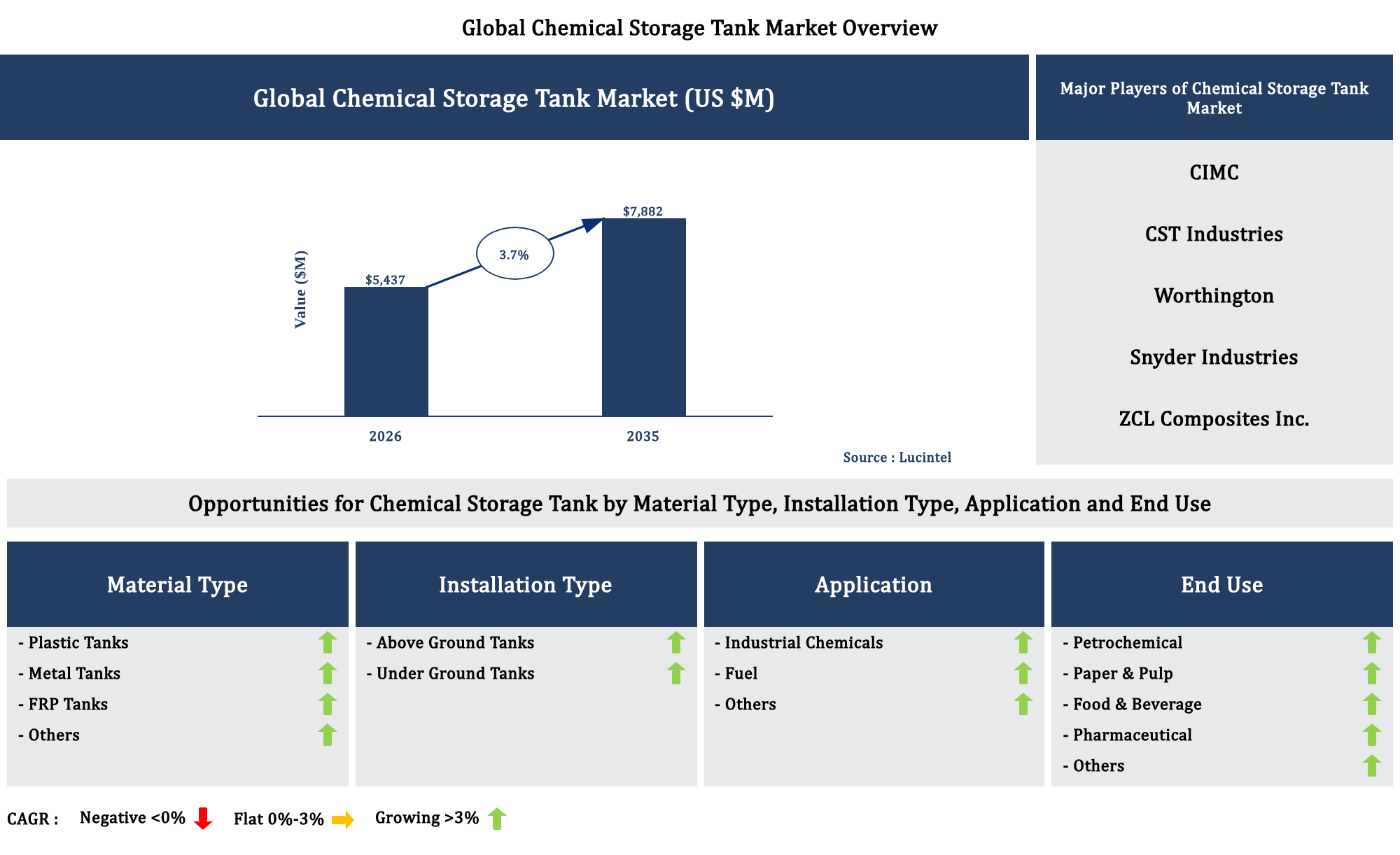
Chemical Storage Tank Market

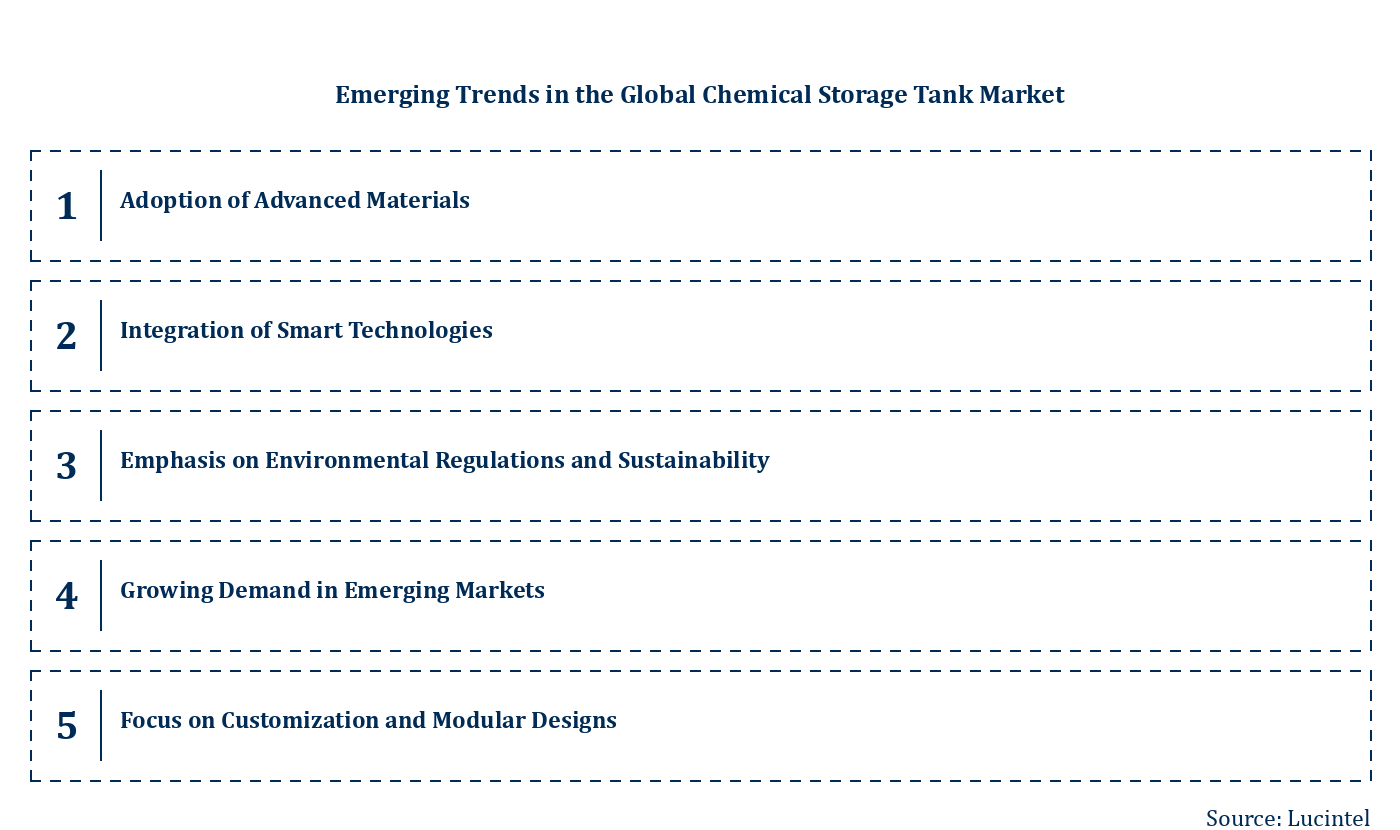
Emerging Trends in the Chemical Storage Tank Market

The chemical storage tank market is experiencing rapid evolution driven by technological advancements, environmental regulations, and increasing global demand for chemical storage solutions. As industries such as pharmaceuticals, agriculture, and manufacturing expand, the need for safe, efficient, and sustainable storage options grows. Innovations in materials, automation, and environmental compliance are shaping the future landscape of this market. Companies are investing in smarter, more durable, and eco-friendly tanks to meet regulatory standards and operational efficiency. These developments are not only enhancing safety and environmental sustainability but also creating new opportunities for market growth and competitiveness.

  • Adoption of Advanced Materials: The market is shifting towards the use of high-performance materials like composites and thermoplastics that offer superior chemical resistance and durability. These materials extend the lifespan of storage tanks, reduce maintenance costs, and improve safety standards. Their lightweight nature also facilitates easier installation and transportation, making them attractive for various industries. As environmental concerns grow, manufacturers are focusing on eco-friendly materials that minimize ecological impact, further driving innovation in tank construction.
  • Integration of Smart Technologies: The incorporation of IoT and sensor-based systems into chemical storage tanks is transforming the industry. These smart tanks enable real-time monitoring of parameters such as temperature, pressure, and chemical levels, ensuring optimal storage conditions and early detection of leaks or failures. This technological integration enhances safety, reduces downtime, and improves inventory management. As automation becomes more prevalent, the market is witnessing increased demand for intelligent solutions that promote operational efficiency and regulatory compliance.
  • Emphasis on Environmental Regulations and Sustainability: Stricter environmental laws are compelling companies to adopt eco-friendly storage solutions. This trend includes the development of tanks with features like secondary containment, leak-proof designs, and materials that prevent chemical leaching. Sustainability initiatives also promote the use of recyclable and biodegradable materials. These measures help companies reduce environmental impact, avoid penalties, and meet corporate social responsibility goals, thereby influencing product design and market offerings significantly.
  • Growing Demand in Emerging Markets: Rapid industrialization and urbanization in regions such as Asia-Pacific, Latin America, and Africa are fueling the demand for chemical storage tanks. These markets require scalable, cost-effective, and durable storage solutions to support expanding manufacturing, agriculture, and infrastructure projects. Local manufacturers are increasingly adopting global standards, and international companies are expanding their presence to capitalize on emerging opportunities. This trend is broadening the market scope and fostering regional innovation and competition.
  • Focus on Customization and Modular Designs: The market is witnessing a shift towards customizable and modular tank solutions tailored to specific industry needs. Modular tanks offer flexibility, ease of installation, and scalability, making them suitable for diverse applications. Customization ensures compliance with industry-specific standards and safety requirements. This trend allows companies to optimize space, improve safety, and reduce costs, thereby enhancing customer satisfaction and expanding market options. The demand for tailored solutions is expected to grow as industries seek more efficient and adaptable storage options.

These trends are collectively reshaping the chemical storage tank market by promoting safer, more sustainable, and technologically advanced solutions. They are enabling companies to meet evolving regulatory standards, improve operational efficiency, and expand into emerging markets, ultimately driving growth and innovation in the industry.
Chemical Storage Tank Market by country

Recent Developments in the Chemical Storage Tank Market

The chemical storage tank market is experiencing rapid growth driven by increasing industrialization, stringent safety regulations, and the need for efficient storage solutions across various sectors. Innovations in materials and design are enhancing safety and environmental compliance. The expansion of chemical manufacturing industries globally is fueling demand for specialized tanks. Additionally, technological advancements are improving tank durability and monitoring capabilities. These developments are shaping the future landscape of chemical storage, offering new opportunities for manufacturers and stakeholders to meet evolving industry needs.

  • Growing Demand for Safe Chemical Storage: The rise in chemical manufacturing and processing industries worldwide has increased the need for reliable storage solutions. Regulatory standards mandate safety and environmental protection, prompting investments in advanced tanks. This growth opportunity is driving innovation in tank design, materials, and monitoring systems, ultimately reducing risks and ensuring compliance. As industries expand, the market for specialized, safety-compliant tanks is expected to grow significantly, creating new avenues for manufacturers and suppliers.
  • Adoption of Advanced Materials for Durability: The development of corrosion-resistant and lightweight materials such as composites and high-grade plastics is transforming tank manufacturing. These materials enhance durability, reduce maintenance costs, and improve safety. The adoption of such advanced materials allows tanks to withstand harsh chemical environments and extreme conditions, expanding their application scope. This trend is expected to continue, leading to increased market share for innovative material solutions and improved overall performance of chemical storage tanks.
  • Integration of Smart Monitoring Technologies: The incorporation of IoT-enabled sensors and real-time monitoring systems into chemical storage tanks is revolutionizing asset management. These technologies enable early detection of leaks, corrosion, or structural issues, minimizing environmental and safety risks. The ability to remotely monitor tank conditions improves operational efficiency and compliance with safety standards. As digital transformation accelerates, the market for smart tank solutions is poised for substantial growth, offering enhanced safety and operational insights.
  • Expansion Into Emerging Markets: Rapid industrialization in regions such as Asia-Pacific and the Middle East is creating substantial opportunities for chemical storage tank providers. Growing chemical industries, infrastructure development, and supportive government policies are driving demand. Local manufacturers are also investing in advanced storage solutions to meet international safety standards. This expansion into emerging markets is diversifying the market landscape, increasing competition, and fostering innovation to cater to diverse regional needs and regulations.
  • Focus on Environmental Sustainability and Regulations: Increasing environmental concerns and stricter regulations are pushing the industry toward eco-friendly tank designs and materials. Innovations include tanks with improved insulation, leak-proof features, and recyclable components. Companies are investing in sustainable manufacturing practices to reduce carbon footprints. This focus on environmental compliance is shaping product development, encouraging the adoption of greener solutions, and opening new markets for sustainable storage options, ultimately aligning industry growth with global sustainability goals.

These developments are significantly impacting the chemical storage tank market by enhancing safety, durability, and environmental compliance. They are driving innovation, expanding market reach into emerging regions, and integrating digital technologies. As a result, the market is poised for sustained growth, with increased competitiveness and a focus on sustainable, efficient storage solutions that meet evolving industry standards and customer demands.

Strategic Growth Opportunities in the Chemical Storage Tank Market

The chemical storage tank market is experiencing significant growth driven by expanding industrial applications, stringent safety regulations, and increasing demand for efficient storage solutions. Innovations in materials and design are enhancing safety and environmental compliance, while emerging markets present new opportunities. Companies are focusing on sustainable and cost-effective tank solutions to meet diverse industry needs. This evolving landscape offers substantial potential for market players to capitalize on technological advancements and expanding global industrialization.

  • Growing Demand for Specialized Chemical Storage Tanks in The Pharmaceutical and Food Industries: The pharmaceutical and food sectors require high-quality, contamination-free storage solutions. Increasing production capacities and strict regulatory standards are driving demand for tanks made from advanced, food-grade, and corrosion-resistant materials. Customizable tank designs and enhanced safety features are becoming essential to meet industry-specific needs, creating opportunities for manufacturers to innovate and expand their product offerings in these sectors.
  • Adoption of Advanced Materials and Coatings for Improved Safety and Durability: The shift towards using corrosion-resistant, lightweight, and environmentally friendly materials such as composites and advanced polymers is transforming the market. These materials extend tank lifespan, reduce maintenance costs, and improve safety standards. Innovative coatings provide additional protection against chemical reactions and environmental factors, enabling tanks to withstand harsh conditions. This trend opens avenues for research and development, fostering the creation of more durable, sustainable storage solutions.
  • Increasing Focus on Environmental Regulations and Safety Standards: Governments and regulatory bodies are imposing stricter safety and environmental compliance requirements. This drives the adoption of tanks with features like secondary containment, leak detection, and fire-resistant materials. Companies are investing in compliance-driven innovations to meet these standards, which enhances market credibility and reduces liability. The emphasis on safety and environmental protection is expected to boost demand for compliant, high-performance storage tanks across industries.
  • Expansion of Industrial Sectors Such as Chemicals, Oil & Gas, and Water Treatment: Rapid industrialization in emerging economies and ongoing infrastructure projects are fueling demand for large-scale chemical storage solutions. The chemical, oil & gas, and water treatment sectors require robust, scalable tanks for storing hazardous and non-hazardous chemicals. Market growth is supported by investments in infrastructure, increased production capacities, and the need for efficient storage and handling of chemicals, creating significant opportunities for manufacturers to cater to these expanding sectors.
  • Technological Innovations in Tank Design and Automation for Enhanced Efficiency: The integration of automation, IoT, and smart monitoring systems is revolutionizing chemical storage tanks. Features like real-time leak detection, remote monitoring, and automated filling and emptying improve operational efficiency and safety. These innovations reduce downtime, prevent accidents, and optimize storage management. As industries seek smarter solutions, the adoption of advanced tank technologies is expected to accelerate, offering manufacturers a competitive edge and opening new revenue streams.

The overall market landscape is poised for substantial growth as these opportunities align with industry needs for safer, more efficient, and sustainable chemical storage solutions. Companies that innovate and adapt to regulatory and technological changes will be well-positioned to capitalize on this expanding market.

Chemical Storage Tank Market Drivers and Challenges

The chemical storage tank market is influenced by a variety of technological, economic, and regulatory factors that shape its growth and development. Advances in materials and manufacturing processes drive innovation, while economic trends such as industrial expansion and infrastructure investments fuel demand. Regulatory frameworks concerning safety, environmental protection, and standards also significantly impact market dynamics. Additionally, global shifts towards sustainable practices and the adoption of new technologies present both opportunities and challenges. Understanding these drivers and challenges is essential for stakeholders to navigate the evolving landscape effectively and capitalize on emerging trends.

The factors responsible for driving the chemical storage tank market include:

  • Technological Innovation: The development of advanced materials like corrosion-resistant composites and high-strength steels enhances tank durability and safety. Automation and monitoring technologies improve operational efficiency and safety compliance, reducing downtime and maintenance costs. These innovations enable companies to meet stringent safety standards and adapt to diverse storage needs, thereby expanding market opportunities. As technology continues to evolve, the market benefits from increased reliability, reduced environmental risks, and the ability to store a wider range of chemicals, fostering growth and competitiveness.
  • Industrial Expansion: Rapid growth in industries such as chemicals, pharmaceuticals, and oil & gas significantly boosts demand for storage solutions. As these sectors expand geographically and in scale, the need for large, reliable storage tanks increases. Infrastructure development projects, especially in emerging economies, further contribute to this trend. The rise in chemical production and the need for safe storage of hazardous and non-hazardous chemicals directly impact market growth, creating a robust demand for innovative and customized tank solutions tailored to specific industrial requirements.
  • Regulatory Compliance and Safety Standards: Stringent safety regulations and environmental standards compel companies to adopt safer storage practices. Governments and international bodies enforce compliance through certifications and safety protocols, which often require upgrading existing storage facilities or constructing new compliant tanks. This regulatory environment drives market growth by encouraging investment in safer, more durable storage solutions. Companies that proactively adapt to these standards can avoid penalties, reduce liabilities, and enhance their reputation, thus fostering a competitive advantage in the market.
  • Environmental Sustainability Initiatives: Growing emphasis on reducing environmental impact influences the market by promoting the adoption of eco-friendly storage solutions. Regulations favor tanks with features like leak-proof designs, corrosion resistance, and recyclability. The push for sustainable practices encourages innovation in tank materials and design, leading to the development of environmentally friendly storage options. This trend not only aligns with global sustainability goals but also opens new market segments focused on green storage solutions, thereby expanding the overall market scope.
  • Market Diversification and Customization: Increasing demand for specialized storage tanks tailored to specific chemicals and industrial processes drives market diversification. Customization options such as size, shape, material, and safety features enable companies to meet unique client needs. This flexibility enhances market competitiveness and opens opportunities in niche segments like hazardous chemical storage, food-grade tanks, and high-temperature applications. As industries seek more tailored solutions, manufacturers are investing in R&D to develop innovative, versatile tanks, fueling market growth and diversification.

The challenges facing the chemical storage tank market include:

  • Fluctuating Raw Material Prices: The market heavily depends on raw materials like steel, plastics, and composites, which are subject to price volatility due to global supply chain disruptions, geopolitical tensions, and fluctuating demand. Rising raw material costs increase manufacturing expenses, potentially leading to higher product prices and reduced profit margins. Companies may face difficulties in maintaining competitive pricing while ensuring quality and safety standards. Managing supply chain risks and securing cost-effective sourcing are critical challenges that can impact overall market stability and growth prospects.
  • Stringent Regulatory Environment: While regulations promote safety and environmental protection, they also pose compliance challenges for manufacturers and users. Navigating complex, evolving standards requires significant investment in testing, certification, and process adjustments. Non-compliance can result in penalties, legal liabilities, and damage to reputation. Smaller players may struggle to meet these requirements due to limited resources, leading to market consolidation. The regulatory landscape demands continuous adaptation, which can slow innovation and increase operational costs, thereby affecting market expansion.
  • Technological Barriers and High Capital Investment: Implementing advanced storage solutions often involves substantial capital expenditure for research, development, and manufacturing upgrades. High costs can deter smaller companies from adopting new technologies, leading to market fragmentation. Additionally, integrating innovative features like automation and real-time monitoring requires technical expertise and infrastructure investments. Overcoming these barriers is essential for technological advancement but remains a significant challenge, potentially limiting the pace of innovation and market growth in certain regions or segments.

The chemical storage tank market is shaped by technological advancements, industrial growth, regulatory compliance, environmental initiatives, and customization demands. While these drivers foster innovation and expansion, challenges such as raw material price fluctuations, regulatory complexities, and high capital requirements pose risks. Overall, the market's future depends on how effectively stakeholders can leverage technological progress and adapt to regulatory and economic challenges, ensuring sustainable growth and competitiveness in a dynamic environment.

List of Chemical Storage Tank Market Companies

Companies in the market compete on the basis of product quality offered. Major players in this market focus on expanding their manufacturing facilities, R&D investments, infrastructural development, and leverage integration opportunities across the value chain. Through these strategies chemical storage tank market companies cater increasing demand, ensure competitive effectiveness, develop innovative products & technologies, reduce production costs, and expand their customer base. Some of the chemical storage tank market companies profiled in this report include-

  • CIMC
  • CST Industries
  • Worthington
  • Snyder Industries
  • ZCL Composites Inc.

Chemical Storage Tank Market by Segment

The study includes a forecast for the global chemical storage tank market by material type, installation type, application, end use, and region.

  • Chemical Storage Tank Market by Material Type [Value from 2019 to 2035]:
    • Plastic Tanks
    • Metal Tanks
    • FRP Tanks
    • Others
  • Chemical Storage Tank Market by Installation Type [Value from 2019 to 2035]:
    • Above Ground Tanks
    • Under Ground Tanks
  • Chemical Storage Tank Market by Application [Value from 2019 to 2035]:
    • Industrial Chemicals
    • Fuel
    • Others
  • Chemical Storage Tank Market by End Use [Value from 2019 to 2035]:
    • Petrochemical
    • Paper & Pulp
    • Food & Beverage
    • Pharmaceutical
    • Others
  • Chemical Storage Tank Market by Region [Value from 2019 to 2035]:
    • North America
    • Europe
    • Asia Pacific
    • The Rest of the World

Country Wise Outlook for the Chemical Storage Tank Market

The chemical storage tank market is experiencing rapid growth driven by increasing industrialization, stringent safety regulations, and the need for efficient storage solutions across various sectors. Technological advancements, environmental considerations, and expanding infrastructure are shaping the landscape in key regions. Countries are investing in innovative materials, automation, and sustainable practices to meet safety standards and operational efficiency. The market's evolution reflects a focus on safety, durability, and environmental impact, with regional variations influenced by industrial activity and regulatory frameworks. Here is a regional overview of recent developments in the United States, China, Germany, India, and Japan.

  • United States: The U.S. market is witnessing increased adoption of corrosion-resistant and environmentally friendly storage tanks. Innovations in automation and monitoring systems enhance safety and efficiency. Regulatory agencies are enforcing stricter standards, prompting manufacturers to develop compliant solutions. The shale gas industry and chemical manufacturing sectors are significant drivers, leading to increased demand for large-capacity tanks and customized storage options. Additionally, the focus on sustainable materials and leak prevention is gaining momentum, supporting market growth.
  • China: China is experiencing rapid expansion in chemical production, fueling demand for advanced storage tanks. The market benefits from government initiatives promoting industrial safety and environmental protection. Local manufacturers are investing in high-quality, durable tanks with corrosion resistance and thermal stability. The adoption of automation and smart monitoring systems is increasing, improving safety and operational efficiency. The growth of the petrochemical and pharmaceutical sectors further boosts market demand. China’s focus on sustainable and eco-friendly tank solutions is also emerging as a key trend.
  • Germany: Germany's market is characterized by high safety standards and technological innovation. The emphasis on quality and durability leads to the adoption of advanced materials such as fiber-reinforced plastics and stainless steel. The country’s strict regulations on chemical storage safety and environmental impact drive innovation in leak-proof and corrosion-resistant tanks. Germany is also a leader in integrating digital monitoring and automation systems to enhance safety and maintenance. The chemical and pharmaceutical industries are primary consumers, with a growing interest in sustainable and recyclable tank solutions.
  • India: The Indian market is expanding due to increasing industrial activity, especially in chemicals, pharmaceuticals, and oil & gas sectors. There is a rising demand for large-capacity tanks that can withstand diverse environmental conditions. The government’s focus on infrastructure development and industrial safety regulations is encouraging investments in modern storage solutions. Local manufacturers are adopting advanced materials and automation to meet safety standards. The trend toward eco-friendly and corrosion-resistant tanks is gaining traction, driven by environmental concerns and regulatory compliance. The market is poised for significant growth in the coming years.
  • Japan: Japan’s market emphasizes safety, durability, and innovation. The country’s strict safety regulations and focus on disaster resilience influence tank design and materials. There is a growing adoption of corrosion-resistant and lightweight composite tanks. Japan is also investing in smart monitoring and automation technologies to prevent leaks and ensure safety. The chemical, electronics, and pharmaceutical sectors are key markets, with a focus on sustainable and environmentally friendly storage solutions. The integration of digital technologies and advanced materials continues to drive market development, aligning with Japan’s commitment to safety and environmental sustainability.

Features of the Chemical Storage Tank Market

  • Market Size Estimates: Chemical storage tank market size estimation in terms of value ($M).
  • Trend and Forecast Analysis: Market trends (2019 to 2025) and forecast (2026 to 2035) by various segments and regions.
  • Segmentation Analysis: Chemical storage tank market size by various segments, such as by material type, installation type, application, end use, and region in terms of value ($M).
  • Regional Analysis: Chemical storage tank market breakdown by North America, Europe, Asia Pacific, and Rest of the World.
  • Growth Opportunities: Analysis of growth opportunities in different material type, installation type, application, end use, and regions for the chemical storage tank market.
  • Strategic Analysis: This includes M&A, new product development, and competitive landscape of the chemical storage tank market.
  • Analysis of competitive intensity of the industry based on Porter’s Five Forces model.

Top 5 Companies

  • CIMC
  • CST Industries
  • Worthington
  • Snyder Industries
  • ZCL Composites Inc.

Table of Contents

1. Executive Summary

List of Figures

List of Tables

Methodology

Lucintel has been in the business of market research and management consulting since 2000 and has published over 1000 market intelligence reports in various markets / applications and served over 1,000 clients worldwide. This study is a culmination of four months of full-time effort performed by Lucintel's analyst team. The analysts used the following sources for the creation and completion of this valuable report:

  • In-depth interviews of the major players in this market
  • Detailed secondary research from competitors' financial statements and published data
  • Extensive searches of published works, market, and database information pertaining to industry news, company press releases, and customer intentions
  • A compilation of the experiences, judgments, and insights of Lucintel's professionals, who have analyzed and tracked this market over the years.

Extensive research and interviews are conducted across the supply chain of this market to estimate market share, market size, trends, drivers, challenges, and forecasts. Below is a brief summary of the primary interviews that were conducted by job function for this report.

Lucintel's methodology for market research

Thus, Lucintel compiles vast amounts of data from numerous sources, validates the integrity of that data, and performs a comprehensive analysis. Lucintel then organizes the data, its findings, and insights into a concise report designed to support the strategic decision-making process. The figure below is a graphical representation of Lucintel's research process.

Primary interviews by job function

Buy Now

Choose a license that fits your team. Instant PDF delivery.

Market Report

1 User PDF

$4,850
Buy Now

Market Report

2-5 Users PDF

$6,700
Buy Now

Market Report

Corporate PDF

$8,850
Buy Now

Market Report

Global PDF

$10,000
Buy Now

Prices exclude taxes. Instant delivery. Custom licensing available on request.

Frequently Asked Questions

What is the chemical storage tank market size?
The global chemical storage tank market is expected to reach an estimated $7882 million by 2035.
What is the growth forecast for chemical storage tank market?
The global chemical storage tank market is expected to grow with a CAGR of 3.7% from 2026 to 2035.
What are the major drivers influencing the growth of the chemical storage tank market?
The major drivers for this market are the increasing adoption of corrosion-resistant storage tank materials, the rising need for safe hazardous chemical storage solutions, and the growing pharmaceutical & food processing chemical storage applications.
What are the major segments for chemical storage tank market?
The future of the chemical storage tank market looks promising with opportunities in the petrochemical, paper & pulp, food & beverage, and pharmaceutical markets.
Who are the key chemical storage tank market companies?

Some of the key chemical storage tank companies are as follows:

  • CIMC
  • CST Industries
  • Worthington
  • Snyder Industries
  • ZCL Composites Inc.
Which chemical storage tank market segment will be the largest in future?
Lucintel forecasts that, within the material type category, plastic tank is expected to witness the highest growth over the forecast period.
In chemical storage tank market, which region is expected to be the largest in next 8 years?
In terms of region, APAC is expected to witness the highest growth over the forecast period.
Do we receive customization in this report?
Yes, Lucintel provides 10% customization without any additional cost.

Key Questions

  • What are some of the most promising, high-growth opportunities for the chemical storage tank market by material type (plastic tanks, metal tanks, FRP tanks, and others), installation type (above ground tanks and under ground tanks), application (industrial chemicals, fuel, and others), end use (petrochemical, paper & pulp, food & beverage, pharmaceutical, and others), and region (North America, Europe, Asia Pacific, and the Rest of the World)?
  • Which segments will grow at a faster pace and why?
  • Which region will grow at a faster pace and why?
  • What are the key factors affecting market dynamics? What are the key challenges and business risks in this market?
  • What are the business risks and competitive threats in this market?
  • What are the emerging trends in this market and the reasons behind them?
  • What are some of the changing demands of customers in the market?
  • What are the new developments in the market? Which companies are leading these developments?
  • Who are the major players in this market? What strategic initiatives are key players pursuing for business growth?
  • What are some of the competing products in this market and how big of a threat do they pose for loss of market share by material or product substitution?
  • What M&A activity has occurred in the last 5 years and what has its impact been on the industry?
Why Choose Us

The Lucintel Advantage

Trusted partner for strategic intelligence and business growth

25+ Years Excellence

25+ Years Excellence

Quarter century of proven expertise in management consulting and market research across global markets.
Game-Changer Ideas

Game-Changer Ideas

Innovative strategies and actionable insights that help clients become the smartest in their industry.
Global Reach

Global Reach

Extensive coverage across 50+ industries and markets worldwide with localized expertise.
Start Your Growth Journey

Get Your Free
Market Intelligence
Briefing

Receive a complimentary market analysis tailored to your industry. Our analysts will identify key growth opportunities and competitive dynamics specific to your business.

Custom Market Snapshot

Market size, growth rate, and key trend analysis for your specific sector.

Competitive Landscape Overview

Top competitor positioning and market share analysis.

Growth Opportunity Identification

Strategic recommendations backed by data-driven insights.

Subscribe

Subscribe to our Newsletter

Get curated market intelligence and competitive moves straight to your inbox.

By subscribing, you agree to receive our monthly insights. Unsubscribe anytime.

Industry Trends Market Signals Opportunities Competitor Moves