
Market Report · July 20, 2026

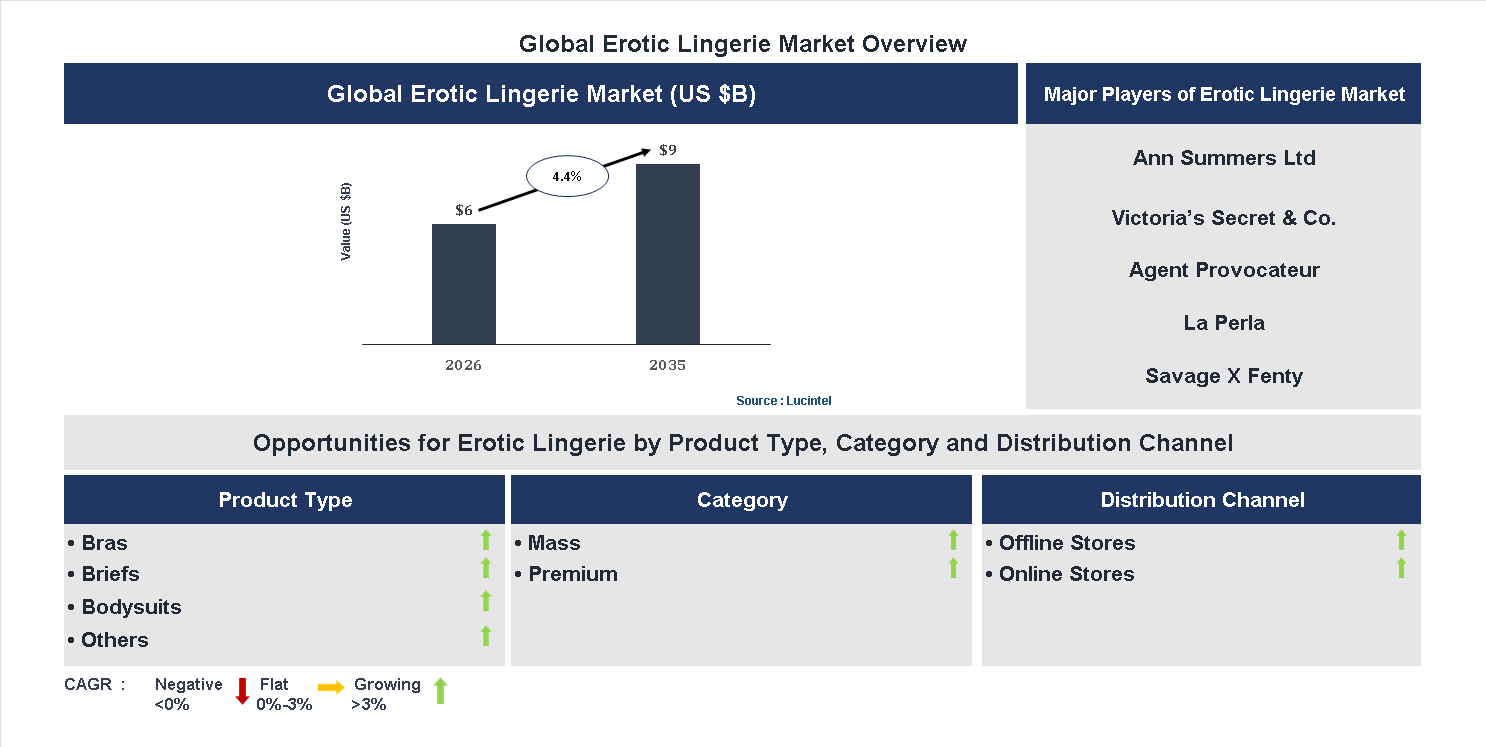
Key data points: The market size in 2035 = $9 billion, growth forecast = 4.4% annually for the next 8 years. Scroll below to get more insights. This market report covers trends, opportunities and forecasts in erotic lingerie market to 2035 by product type (bras, briefs, bodysuits, and others), category (mass and premium), distribution channel (offline stores and online stores), and region (North America, Europe, Asia Pacific, and the Rest of the World)
We'll send your sample report shortly.
• Lucintel forecasts that, within the product type category, bra is expected to witness the highest growth over the forecast period.
• Within the distribution channel category, offline store is expected to witness higher growth.
• In terms of region, APAC is expected to witness the highest growth over the forecast period. Gain valuable insights for your business decisions with our comprehensive 150+ page report. Sample figures with some insights are shown below.
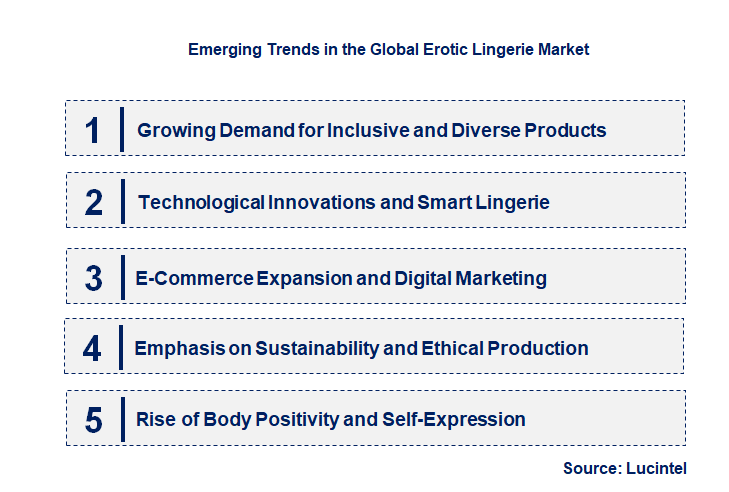
• Growing Demand for Inclusive and Diverse Products: Consumers now seek lingerie that caters to all body types, genders, and preferences. Brands are expanding their size ranges, offering gender-neutral options, and embracing diversity in marketing campaigns. This inclusivity enhances customer satisfaction and broadens market appeal, fostering brand loyalty among previously underserved demographics. The trend promotes a more accepting and empowering environment, encouraging innovation in product design and marketing strategies to reflect diverse consumer needs.
• Technological Innovations and Smart Lingerie: Advancements in fabric technology, wearable electronics, and customization tools are revolutionizing the market. Smart lingerie with features like health monitoring, temperature regulation, or enhanced comfort is gaining popularity. These innovations provide added value, improve user experience, and open new revenue streams. The integration of technology also allows brands to offer personalized products, track consumer preferences, and develop targeted marketing campaigns, thereby increasing engagement and differentiation in a competitive landscape.
• E-commerce Expansion and Digital Marketing: The shift towards online shopping has significantly increased market accessibility and convenience. Digital marketing strategies, including social media influencers, virtual try-ons, and augmented reality, are enhancing customer engagement. E-commerce platforms enable brands to reach a global audience, gather valuable consumer data, and offer personalized shopping experiences. This trend reduces reliance on traditional retail channels, lowers costs, and accelerates product launches, making the market more agile and consumer-centric.
• Emphasis on Sustainability and Ethical Production: Consumers are increasingly prioritizing eco-friendly materials, ethical manufacturing practices, and transparent supply chains. Brands adopting sustainable practices are gaining a competitive edge, appealing to environmentally conscious buyers. This trend encourages innovation in eco-friendly fabrics, recyclable packaging, and fair labor practices. As sustainability becomes a key purchasing criterion, companies are investing in green technologies and certifications, reshaping industry standards and fostering long-term growth.
• Rise of Body Positivity and Self-Expression: The market is shifting from traditional ideals of beauty towards celebrating individual identity and self-expression. Brands are promoting body positivity through inclusive campaigns and products designed for comfort and confidence. This trend empowers consumers to embrace their uniqueness, leading to increased demand for customizable, comfortable, and expressive lingerie. It also influences marketing narratives, fostering a more authentic and relatable brand image that resonates with modern consumers. These trends are collectively reshaping the Erotic Lingerie Market by fostering inclusivity, integrating technology, expanding digital reach, emphasizing sustainability, and promoting self-expression. These developments are driving innovation, broadening consumer engagement, and creating new growth opportunities, ultimately leading to a more dynamic, responsible, and consumer-focused industry.
• Market Expansion Through E-commerce: The rise of online shopping platforms has significantly increased accessibility to erotic lingerie, allowing brands to reach a global audience. E-commerce provides convenience, discreet purchasing options, and a broader product range, attracting new customers and boosting sales. Digital marketing strategies, including social media and influencer collaborations, further enhance visibility. This growth in online retail channels is crucial for market expansion, especially in regions with limited physical retail options, making erotic lingerie more mainstream and accessible.
• Innovation in Product Design and Materials: Advances in fabric technology and design have led to more comfortable, durable, and aesthetically appealing products. Incorporating sustainable and skin-friendly materials appeals to eco-conscious consumers, while innovative designs cater to diverse preferences. Customization options and inclusive sizing are also gaining popularity, enhancing customer satisfaction. These innovations not only improve product quality but also differentiate brands in a competitive market, encouraging repeat purchases and attracting a broader demographic.
• Growing Focus on Inclusivity and Diversity: The market is shifting towards more inclusive offerings that cater to all body types, genders, and sexual orientations. Brands are expanding size ranges, introducing gender-neutral designs, and celebrating diverse aesthetics. This inclusivity broadens the consumer base and fosters brand loyalty. Emphasizing diversity in marketing campaigns enhances brand reputation and aligns with social progress. As a result, the market becomes more welcoming, encouraging more consumers to explore and purchase erotic lingerie, thereby expanding overall market size.
• Strategic Collaborations and Brand Partnerships: Collaborations between lingerie brands and celebrities, influencers, or fashion designers are boosting brand visibility and credibility. These partnerships generate buzz, attract new customer segments, and create exclusive product lines. Co-branding efforts often lead to innovative collections that appeal to niche markets, increasing sales and market penetration. Such strategic alliances also facilitate entry into new markets and demographics, strengthening brand positioning and accelerating industry growth.
• Adoption of Sustainable and Ethical Practices: Consumers are increasingly prioritizing sustainability and ethical production in their purchasing decisions. Brands adopting eco-friendly materials, transparent supply chains, and fair labor practices are gaining a competitive edge. This shift encourages industry-wide sustainability initiatives, reducing environmental impact and enhancing brand reputation. Ethical practices resonate with socially conscious consumers, fostering loyalty and long-term growth. As sustainability becomes a key differentiator, it is shaping the future trajectory of the erotic lingerie market. The overall impact of these developments is a more inclusive, innovative, and accessible market that caters to diverse consumer needs. Enhanced online presence, product innovation, and ethical practices are driving growth, expanding customer bases, and increasing competitiveness. These opportunities are transforming the erotic lingerie industry into a more dynamic, sustainable, and consumer-centric sector, promising continued expansion and evolution in the coming years.
• Expansion into Emerging Markets: The erotic lingerie market is poised for substantial growth in developing regions where increasing disposable incomes and changing cultural perceptions are driving demand. Companies are investing in localized marketing strategies and distribution channels to tap into these expanding consumer bases. This expansion offers opportunities for market penetration, brand recognition, and revenue growth, especially as social acceptance continues to evolve and online shopping becomes more prevalent.
• Integration of Sustainable and Eco-Friendly Materials: Consumers are increasingly prioritizing sustainability in their purchasing decisions. Incorporating eco-friendly fabrics and ethical manufacturing practices into erotic lingerie products can differentiate brands and appeal to environmentally conscious buyers. This trend encourages innovation in sustainable textiles and transparent supply chains, opening avenues for premium pricing and brand loyalty. As awareness grows, sustainable lingerie is expected to become a significant segment within the market.
• Development of Technologically Advanced Products: The integration of smart textiles, moisture-wicking fabrics, and temperature regulation features enhances comfort and functionality. These innovations cater to consumers seeking both aesthetic appeal and practical benefits. Companies investing in wearable technology and innovative materials can create unique product offerings, attracting tech-savvy and performance-oriented customers. This technological advancement is expected to boost product differentiation and market share.
• Growth Through Online Retail and Direct-to-Consumer Channels: The shift towards e-commerce has revolutionized how consumers purchase erotic lingerie, offering privacy, convenience, and a broader product selection. Brands leveraging online platforms can reach a global audience, reduce overhead costs, and gather valuable customer data for targeted marketing. Developing strong digital presence and personalized shopping experiences will be crucial for capturing market share and fostering customer loyalty in this rapidly expanding digital landscape.
• Customization and Personalized Product Offerings: Consumers increasingly seek unique, tailored lingerie that reflects their individual preferences and identities. Brands offering customization options—such as size, color, design, and packaging—can enhance customer engagement and satisfaction. This trend encourages brands to adopt flexible manufacturing processes and digital tools for personalization. As demand for bespoke products grows, companies that excel in customization will gain competitive advantage and foster long-term customer relationships. The overall growth opportunities in the erotic lingerie market are set to reshape industry dynamics, fostering innovation, expanding geographic reach, and emphasizing sustainability and personalization. These developments will enable brands to meet evolving consumer preferences, increase market penetration, and sustain long-term profitability in a competitive landscape.
• Technological Advancements: The integration of innovative fabrics, seamless designs, and smart textiles enhances product appeal and comfort, attracting a broader consumer base. E-commerce platforms facilitate discreet purchasing, expanding reach beyond traditional retail channels. Virtual fitting rooms and augmented reality tools improve online shopping experiences, increasing customer satisfaction and reducing return rates. These technological innovations enable brands to differentiate themselves and meet evolving consumer expectations, fueling market growth.
• Changing Consumer Attitudes: Societal shifts toward body positivity and sexual empowerment have led to increased acceptance of erotic lingerie as a form of self-expression and confidence. Younger demographics are more open to exploring intimate apparel, driving demand for diverse styles and inclusive sizing. This cultural transformation encourages brands to develop more inclusive and innovative product lines, thereby expanding market size and consumer engagement.
• Rising Disposable Income: Economic growth in key regions has resulted in higher disposable incomes, allowing consumers to spend more on luxury and niche products like erotic lingerie. This increased purchasing power enables consumers to explore premium and designer options, boosting sales. As income levels continue to rise, the market is expected to see sustained demand for high-quality, fashionable, and exclusive products.
• Evolving Marketing Strategies: Brands are leveraging social media influencers, targeted digital advertising, and experiential marketing to reach niche audiences effectively. These strategies create personalized shopping experiences and foster brand loyalty. The use of discreet packaging and online-only sales channels also caters to privacy concerns, encouraging more consumers to purchase erotic lingerie confidently. Innovative marketing approaches are vital for capturing and retaining market share in a competitive landscape. The challenges in the Erotic Lingerie Market are:
• Regulatory and Cultural Barriers: Varying regulations regarding advertising, packaging, and sales restrict marketing efforts in certain regions. Cultural sensitivities and social taboos can limit market penetration and consumer acceptance, especially in conservative societies. Navigating these diverse regulatory environments requires careful compliance and localized strategies, which can increase operational costs and complexity.
• Privacy and Data Security Concerns: As online sales grow, protecting customer data becomes critical. Breaches or mishandling of sensitive personal information can damage brand reputation and lead to legal repercussions. Ensuring robust cybersecurity measures and transparent privacy policies is essential but can be costly and technically challenging, especially for smaller players.
• Market Saturation and Competition: The increasing number of brands and product offerings intensifies competition, leading to price wars and reduced profit margins. Differentiating products and maintaining brand loyalty becomes more difficult in a crowded marketplace. Companies must innovate continuously and invest in marketing to sustain growth, which can strain resources and impact profitability. In summary, the Erotic Lingerie Market is shaped by rapid technological innovations, shifting societal attitudes, and economic growth, which collectively drive demand. However, regulatory hurdles, privacy concerns, and intense competition pose significant challenges. These factors require industry players to adopt adaptive strategies, balancing innovation with compliance and customer trust. Overall, the markets future growth hinges on navigating these drivers and challenges effectively, offering opportunities for brands that can innovate and resonate with evolving consumer values.
• Ann Summers Ltd
• Victoria’s Secret & Co.
• Agent Provocateur
• La Perla
• Savage X Fenty
• Bluebella
• Adore Me
• Honey Birdette
• Fleur du Mal
• Coco de Mer
• Bras
• Briefs
• Bodysuits
• Others
• Mass
• Premium
• Offline Stores
• Online Stores
• North America
• Europe
• Asia Pacific
• The Rest of the World
• United States: The U.S. market has seen a surge in online sales, with brands focusing on inclusive sizing and body positivity campaigns. Innovations in fabric technology and sustainable materials are gaining popularity, alongside increased marketing through social media influencers. The demand for luxury and designer lingerie has also grown, reflecting consumers desire for premium products. Additionally, there is a rising trend in discreet packaging and privacy-focused shopping experiences.
• China: China’s erotic lingerie market is expanding rapidly, driven by increasing urbanization and changing attitudes toward sexuality. E-commerce platforms dominate sales, with local brands gaining prominence through social media marketing. Innovations include smart lingerie with embedded technology and customizable designs. The market also benefits from a growing middle class with higher disposable incomes, leading to increased demand for premium and fashionable products.
• Germany: The German market emphasizes quality, comfort, and sustainability. Consumers are increasingly interested in eco-friendly materials and ethical production practices. There is a notable rise in boutique stores and online platforms offering personalized fitting services. The market also sees a shift toward more diverse and inclusive product ranges, catering to different body types and preferences. Regulatory standards for product safety and transparency are also strengthening.
• India: The Indian erotic lingerie market is experiencing rapid growth due to changing social norms and increased awareness of personal wellness. E-commerce sales are expanding, with brands offering affordable yet stylish options. There is a rising demand for size inclusivity and culturally sensitive designs. Local brands are innovating with traditional motifs blended with modern aesthetics. The market is also witnessing increased investment in marketing campaigns targeting young, urban consumers.
• Japan: Japan’s market is characterized by a focus on comfort, functionality, and discreetness. Technological innovations such as moisture-wicking fabrics and seamless designs are popular. The market is also influenced by a strong culture of privacy and subtlety, leading to demand for discreet packaging and low-profile products. There is a growing interest in luxury and designer lingerie, with collaborations between fashion brands and lingerie manufacturers. The industry is also exploring sustainable practices to appeal to environmentally conscious consumers.


• Ann Summers Ltd
• Victoria’s Secret & Co.
• Agent Provocateur
• La Perla
• Savage X Fenty
• Bluebella
• Adore Me
• Honey Birdette
• Fleur du Mal
• Coco de Mer Q6. Which erotic lingerie market segment will be the largest in future? Answer: Lucintel forecasts that, within the product type category, bra is expected to witness the highest growth over the forecast period. Q7. In erotic lingerie market, which region is expected to be the largest in next 5 years? Answer: In terms of region, APAC is expected to witness the highest growth over the forecast period. Q8. Do we receive customization in this report? Answer: Yes, Lucintel provides 10% customization without any additional cost.


Choose a license that fits your team. Instant PDF delivery.
Prices exclude taxes. Instant delivery. Custom licensing available on request.
Market Report · July 20, 2026
Market Report · July 15, 2026
Market Report · July 15, 2026
Trusted partner for strategic intelligence and business growth


Receive a complimentary market analysis tailored to your industry. Our analysts will identify key growth opportunities and competitive dynamics specific to your business.

Market size, growth rate, and key trend analysis for your specific sector.

Top competitor positioning and market share analysis.

Strategic recommendations backed by data-driven insights.
Get curated market intelligence and competitive moves straight to your inbox.
By subscribing, you agree to receive our monthly insights. Unsubscribe anytime.
Receive a complimentary market analysis tailored to your industry. Our analysts will identify key growth opportunities and competitive dynamics specific to your business.
Market size, growth rate, and key trend analysis for your specific sector.
Top competitor positioning and market share analysis.
Strategic recommendations backed by data-driven insights.
Get curated market intelligence, emerging trends, and competitive moves straight to your inbox each month.
By subscribing, you agree to receive our monthly insights. Unsubscribe anytime.
We'll send your sample report shortly.