
Market Report · July 22, 2026

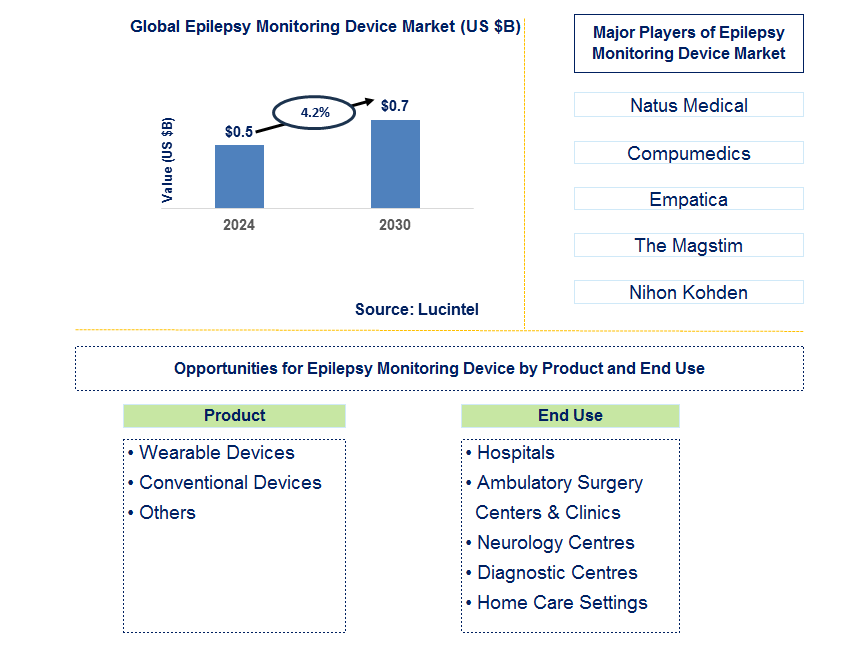
Key data points: The market size in 2030 = $0.7 billion, growth forecast = 4.2% annually for the next 6 years. Scroll below to get more insights. This market report covers trends, opportunities, and forecasts in the global epilepsy monitoring device market to 2030 by product (wearable devices, conventional devices, and others), end use (hospitals, ambulatory surgery centers & clinics, neurology centers, diagnostic centers, and home care settings), and region (North America, Europe, Asia Pacific, and the Rest of the World)
We'll send your sample report shortly.
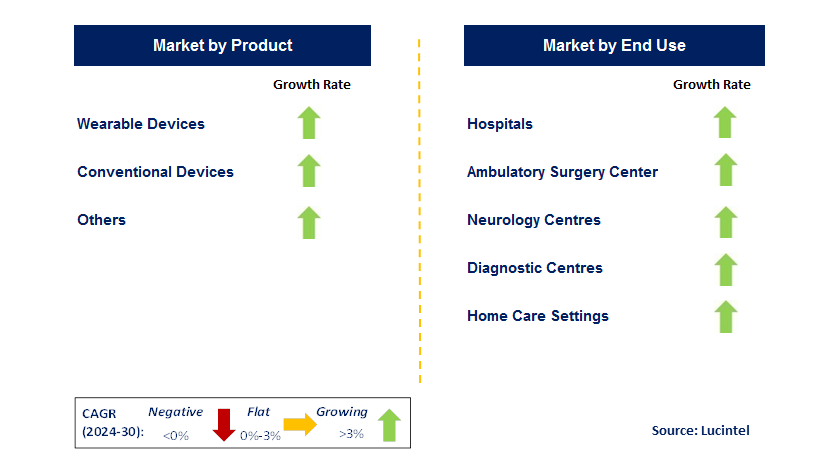
• Lucintel forecasts that, within the product category, wearable devices are expected to witness the highest growth over the forecast period due to the growing demand among users for an efficient and non-intrusive means of keeping track of and gathering data on seizure activity.
• In the end-use category, hospitals will remain the largest segment due to the increasing preference for epilepsy monitors in this field, helping trained medical professionals provide better patient care and offering additional benefits for identifying and treating neuromuscular illnesses.
• In terms of region, APAC is expected to witness the highest growth over the forecast period due to the growing demand for home-based epilepsy devices and the existence of a major customer base in the region. Gain valuable insights for your business decisions with our comprehensive 150+ page report.
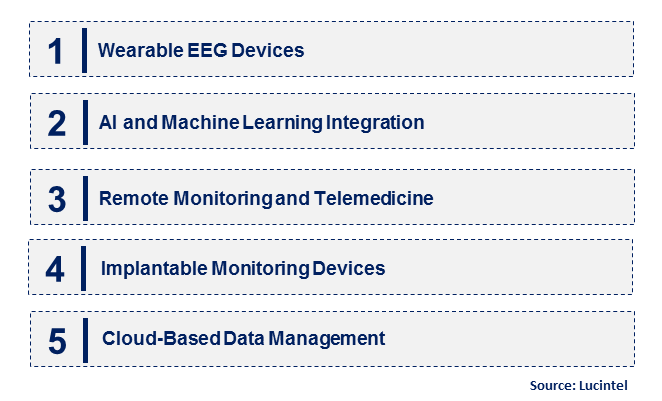
• Wearable EEG Devices: One of the key trends is the development of more advanced wearable EEG tools that can continuously monitor brain activity, thereby improving seizure detection and management. These new tools are becoming more practical through enhanced comfort, longer battery life, and wireless data transmission.
• AI and Machine Learning Integration: The integration of AI and machine learning technologies into epilepsy monitoring devices is on the rise. These technologies empower better seizure prediction, automated data analysis, and personalized treatment plans, thus promoting overall patient care and device effectiveness.
• Remote Monitoring and Telemedicine: Remote monitoring and telemedicine are increasingly being incorporated into epilepsy care. Devices that allow for the collection of remote data enhance access to care for patients in rural or underserved regions.
• Implantable Monitoring Devices: Implantable monitoring devices are increasingly being used. These devices allow for long-term follow-up on brain activity with little need for patient intervention, providing rich information on seizure patterns and response to treatment over time.
• Cloud-Based Data Management: Cloud-based data management systems have become common for storing and analyzing epilepsy monitoring data. By ensuring ease of access to patients’ medical records, these systems facilitate a collaborative care approach and improve security issues related to data handling.
• Enhanced Patient Usability: New medical gadgets have been designed to improve patient usability, incorporating features like intuitive interfaces and easy-to-handle designs. Ensuring that a device is highly usable by patients is essential for effective adherence during monitoring.
• Global Expansion and Market Accessibility: The global expansion of epilepsy monitoring technology has led to market growth. Additionally, there have been efforts to make the technology more affordable, enabling access for people living in developing countries and allowing them to benefit from advanced global treatment solutions. These trends are transforming the epilepsy monitoring device market by adding functions within devices, increasing access to help, and improving patient outcomes. Furthermore, advancements in technology coupled with innovative approaches have resulted in increased market growth due to transformations in how epilepsy is managed.
• Introduction of Advanced Wearable EEG Devices: New wearable EEG devices have been introduced to the market with improved accuracy and comfort. These devices allow continuous real-time monitoring of brain activity, thus enabling better seizure detection and management. They include longer battery life and wireless data transmission, increasing convenience for patients.
• FDA Approvals for New Devices: The FDA has recently endorsed new epilepsy monitoring products, thereby increasing options for patients. These devices feature advanced technologies that enhance their functionality, contributing to more effective seizure monitoring and patient care.
• Integration of AI and Machine Learning: The incorporation of AI and machine learning in epilepsy monitors helps analysts identify seizures earlier. With these innovations, automated detection of seizure patterns can be achieved along with personalized treatment advice, making them efficient during treatment.
• Development of Remote Monitoring Solutions: Remote monitoring solutions have become popular as they enable constant data collection and remote consultations. They offer improved access to care, thereby contributing to better epilepsy management, particularly among people living in remote or underserved regions.
• Advancements in Implantable Devices: Implantable recording systems now require minimal patient intervention while providing long-term recordings. This makes them highly informative for seizure identification and understanding responses to therapy over time.
• Cloud-Based Data Management Systems: Cloud-based systems for data management and analysis are becoming increasingly common. These systems ensure that medical records of patients remain confidentially stored while being accessible to all stakeholders, facilitating efficacy within the field of epilepsy management.
• Focus on Enhancing Usability: Current devices place more emphasis on user-friendliness through intuitive interfaces and designs. Better usability is vital for promoting drug adherence among patients and ensuring effective health monitoring, ultimately contributing to improved health outcomes. These developments are driving the growth of the epilepsy monitoring device market by enhancing device performance, broadening treatment options, and improving patient experience. Technological innovations and data management are reshaping epilepsy care.
• Expansion into Emerging Markets: There is extensive room for growth in developing markets where access to epilepsy care is becoming easier. The provision of cost-effective, adaptable monitoring solutions can cater to the needs of underserved populations while increasing reach into new markets.
• Integration with Digital Health Platforms: Data on epileptic conditions can be integrated into digital health platforms and e-health records, making it possible to manage the condition better, thus improving treatment outcomes. This integration will enhance planning for treatment and enable regular checks on patients.
• Advances in Personalized Treatment: Advanced monitoring tools have enabled the development of personalized treatment solutions, creating new revenue opportunities for stakeholders, including providers of epilepsy monitoring devices. Customizing care based on individual data and seizure patterns could lead to better results, thereby fostering potential growth.
• Growing Telemedicine Applications: The emergence of telemedicine means that remote consultation services and telemonitoring have become possible. The availability of devices that facilitate the collection of patient information remotely allows people to receive services wherever they are, making management easier.
• Patient-Centric Innovations: Developing medical devices that focus on patient comfort and ease of use can stimulate market growth. Innovations that increase simplicity and integrate into daily life are more likely to improve patient satisfaction and adherence. These strategic opportunities for growth have expanded access to care in the epilepsy monitoring device market, improved data management, and supported personalized treatment. Seizing these opportunities may drive wider adoption and better management of epilepsy.
• Technological Advances: Advanced wearable EEGs incorporating AI have made technological innovations a key engine driving growth within this segment. This technology helps manage seizures by ensuring timely information on seizures is available through real-time surveillance, leading to better prognosis and management.
• Rising Prevalence of Epilepsy: As awareness about epilepsy continues to grow alongside the diagnosis of the condition, there will be increasing demand for sophisticated monitors. This has prompted the need for advanced monitoring tools due to increased awareness and diagnosis rates of this disease.
• Telemedicine Expansion: The expansion of telemedicine is boosting sales globally, particularly in developing countries (e.g., Indian) where access to healthcare facilities is poor or non-existent. Providers who offer electronic collection systems from remotely located patients enable monitoring even when a stroke occurs while one is still on their farm three miles away from the nearest health center. They also facilitate remote consultation services without the need for physical meetings with physicians, improving access to healthcare, especially in rural areas where distances between doctors’ clinics range from several kilometers to hundreds of kilometers.
• Personalized Medicine: Advances in personalized medicine have created opportunities for epilepsy monitoring designed specifically for individual patients. Individualized data and treatment plans are important because they tend to be associated with greater clinical benefits, thereby closing potential gaps in the care management of seizures.
• Healthcare Initiatives’ Backing: Governmental and healthcare initiatives aimed at addressing long-term illnesses are driving market growth. The development and adoption of advanced epilepsy monitoring devices can also be credited to investments in healthcare infrastructure and technology. Challenges in the epilepsy monitoring device market include:
• The Cost of the Devices is Prohibitive: The widespread use of advanced epilepsy monitoring devices can be hampered by their high cost. In less developed areas, access may be limited due to the high prices of these devices or poverty experienced by patients.
• Obstacles with Regulations: Navigating regulatory requirements and securing new device approvals may pose difficulties. Additionally, differences in regulations across regions could affect market entry as well as the availability of devices.
• Limited Insurance Coverage: This can hinder market expansion for epilepsy monitoring devices. Poor reimbursement policies might deny patients access to advanced monitoring solutions, thereby lowering their overall rates of acceptance. Market growth and innovation are driven by factors such as technological advancements and increasing prevalence rates. Nevertheless, issues like cost, regulation, and insurance must be tackled to ensure wider accessibility in the market and sustained growth.
• Natus Medical
• Compumedics
• Empatica
• The Magstim
• Nihon Kohden
• Medtronic
• Masimo
• Boston Scientific
• Drägerwerk
• Wearable Devices
• Conventional Devices
• Others
• Hospitals
• Ambulatory Surgery Centers & Clinics
• Neurology Centers
• Diagnostic Centers
• Home Care Settings
• North America
• Europe
• Asia Pacific
• The Rest of the World
• United States: In America, more sophisticated wearable EEG monitors and implantable devices are some of the notable breakthroughs realized within the epilepsy monitoring device market. There is a continuous innovation process to develop seizure-detecting devices with greater accuracy and longer battery life, ensuring consistent tracking over long time spans. In addition, the integration of AI and machine learning algorithms into these systems improves their data analysis and prediction capabilities. Furthermore, new devices approved by the FDA contribute to prevention while increasing public awareness about the management of epilepsy.
• China: Technological advances, alongside improved health infrastructure, explain why China has experienced enormous growth in its epilepsy monitoring device market. New arrivals present affordable wearable EEG tools and remote monitoring machines that suit every patient’s needs. In addition to enhancing accessibility to these gadgets, domestic manufacturers focus on features such as cloud-based analytics and real-time data transmission. Therefore, extensive investments in healthcare technology by the government contribute to the rapid expansion of epilepsy monitoring solutions across China.
• Germany: Germany leads globally in terms of sales for epilepsy monitoring devices, significantly advancing technology for such instruments alongside clinical applications. Recently released high-resolution EEG systems and extended lifespans for existing implants are among the key achievements so far. Although German companies also address patient comfort through innovative design features and user-friendly interfaces, promoting research and development or cooperation between tech firms and medical centers catalyzes innovation while improving treatment outcomes for epileptic patients.
• India: India's increasing awareness and improved technological environment explain why it is experiencing continued growth in its epilepsy monitoring market. Recent advancements include the introduction of affordable monitoring solutions for the large patient population. These devices are more accurate and user-friendly, addressing limited healthcare resources. Current initiatives by authorities to improve the management of chronic conditions have created opportunities for increased adoption of epilepsy monitoring technologies among people living in India.
• Japan: Japan is advancing in the epilepsy monitoring device market with a focus on cutting-edge technology and precision. New products released in the market have improved seizure detection capabilities and created integrated data management systems. Research conducted by Japanese firms aims to enhance the accuracy and reliability of these devices through wearable sensors and AI-driven analytics. Owing to high demand for advanced healthcare solutions and strong government backing for scientific research, the market has been progressing.


• Natus Medical
• Compumedics
• Empatica
• The Magstim
• Nihon Kohden
• Medtronic
• Masimo
• Boston Scientific
• Drägerwerk Q6. Which epilepsy monitoring device market segment will be the largest in future? Answer: Lucintel forecasts that wearable device is expected to witness highest growth over the forecast period due to its growing demand among users to obtain an efficient and non-intrusive means of keeping track of and gathering data on seizure activity. Q7. In epilepsy monitoring device market, which region is expected to be the largest in next 5 years? Answer: APAC is expected to witness highest growth over the forecast period due to growing population's demand for home-based epilepsy devices and existence of major customer base in the region. Q.8 Do we receive customization in this report? Answer: Yes, Lucintel provides 10% customization without any additional cost.


Choose a license that fits your team. Instant PDF delivery.
Prices exclude taxes. Instant delivery. Custom licensing available on request.
Market Report · July 22, 2026
Market Report · July 22, 2026
Market Report · July 22, 2026
Trusted partner for strategic intelligence and business growth


Receive a complimentary market analysis tailored to your industry. Our analysts will identify key growth opportunities and competitive dynamics specific to your business.

Market size, growth rate, and key trend analysis for your specific sector.

Top competitor positioning and market share analysis.

Strategic recommendations backed by data-driven insights.
Get curated market intelligence and competitive moves straight to your inbox.
By subscribing, you agree to receive our monthly insights. Unsubscribe anytime.
Receive a complimentary market analysis tailored to your industry. Our analysts will identify key growth opportunities and competitive dynamics specific to your business.
Market size, growth rate, and key trend analysis for your specific sector.
Top competitor positioning and market share analysis.
Strategic recommendations backed by data-driven insights.
Get curated market intelligence, emerging trends, and competitive moves straight to your inbox each month.
By subscribing, you agree to receive our monthly insights. Unsubscribe anytime.
We'll send your sample report shortly.