
Market Report · July 22, 2026

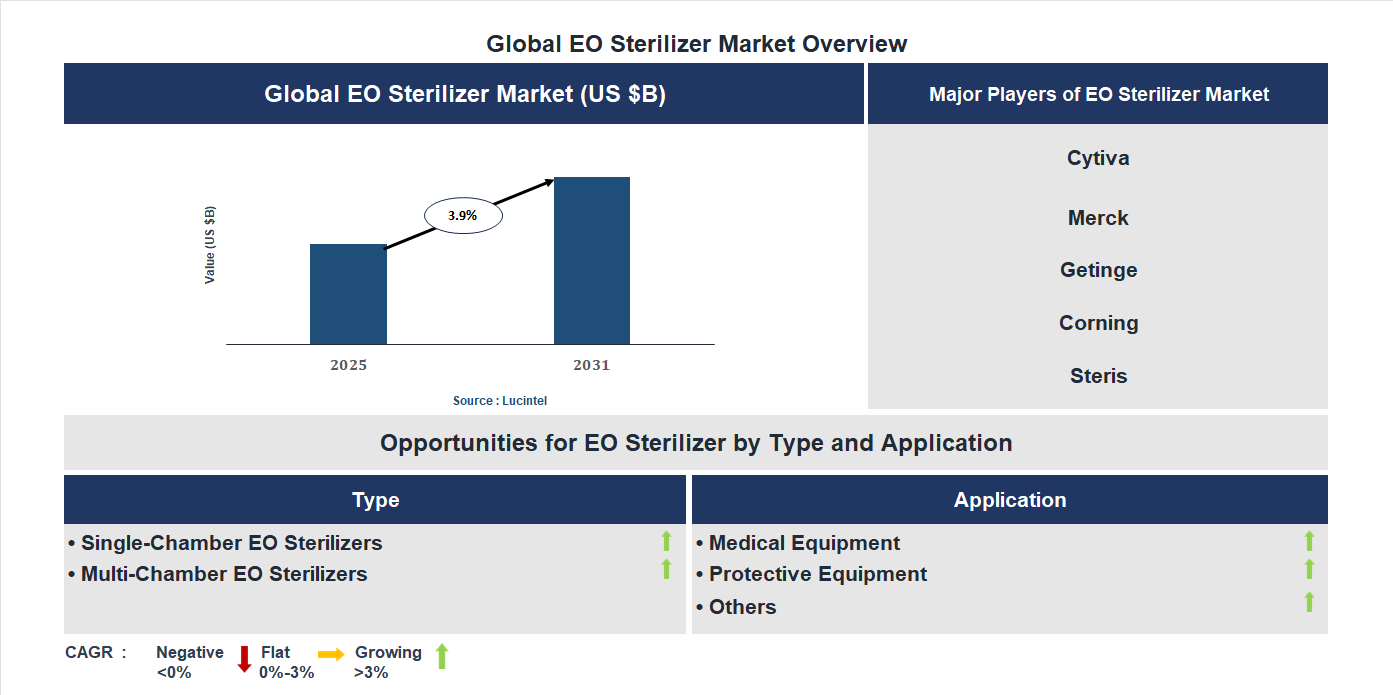
Key data points: The growth forecast = 3.9% annually for the next 7 years. Scroll below to get more insights. This market report covers trends, opportunities and forecasts in EO sterilizer market to 2031 by type (single-chamber EO sterilizers and multi-chamber EO sterilizers), application (medical equipment, protective equipment, and others), and region (North America, Europe, Asia Pacific, and the Rest of the World)
We'll send your sample report shortly.
• Lucintel forecasts that, within the type category, multi-chamber EO sterilizer is expected to witness higher growth over the forecast period.
• Within the application category, protective equipment is expected to witness higher growth.
• In terms of region, APAC is expected to witness the highest growth over the forecast period. Gain valuable insights for your business decisions with our comprehensive 150+ page report. Sample figures with some insights are shown below.
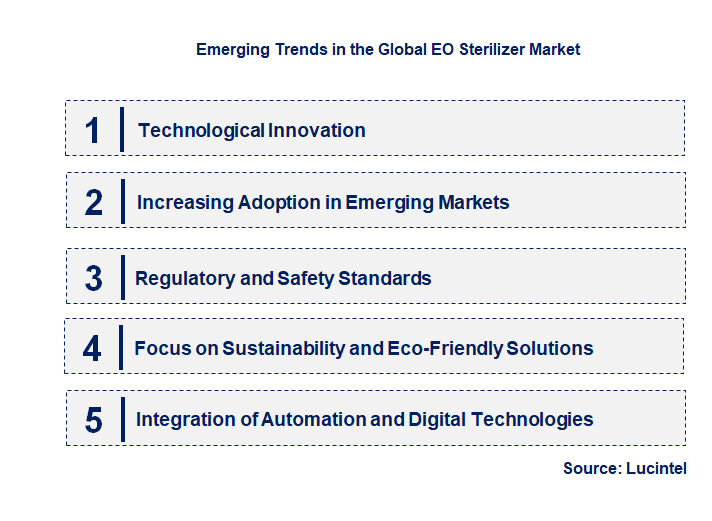
• Technological Innovation: Development of advanced sterilization methods such as low-temperature sterilizers and eco-friendly gases. These innovations improve sterilization efficacy while reducing environmental impact, making processes safer and more sustainable. The integration of IoT and automation enhances operational efficiency, reduces human error, and allows real-time monitoring, which is vital for compliance and safety. As technology evolves, manufacturers are focusing on creating more compact, energy-efficient, and user-friendly sterilizers, broadening their application scope across various healthcare settings.
• Increasing Adoption in Emerging Markets: Growing healthcare infrastructure and rising awareness of infection control are driving demand in regions like Asia-Pacific and Latin America. These markets are witnessing increased investments in healthcare facilities, which require reliable sterilization solutions. Local manufacturers are also entering the market, offering cost-effective EO sterilizers tailored to regional needs. This trend expands the market footprint, fosters competition, and accelerates the adoption of sterilization technologies in areas previously underserved, ultimately improving healthcare standards globally.
• Regulatory and Safety Standards: Stricter regulations and standards for sterilization processes are compelling manufacturers to innovate and comply. Governments and health organizations are implementing rigorous guidelines to ensure safety, efficacy, and environmental sustainability. This trend encourages the development of sterilizers that meet these standards, such as those with reduced residuals and emissions. Compliance not only ensures market access but also enhances consumer trust and safety, prompting continuous improvement and innovation within the industry.
• Focus on Sustainability and Eco-Friendly Solutions: Environmental concerns are prompting a shift towards greener sterilization options. Manufacturers are exploring alternative gases, energy-efficient systems, and waste reduction techniques. Eco-friendly sterilizers minimize harmful emissions and residuals, aligning with global sustainability goals. This trend appeals to environmentally conscious consumers and healthcare providers seeking sustainable practices, thereby influencing product development and market positioning. The emphasis on sustainability is also driven by regulatory pressures and the desire to reduce the carbon footprint of sterilization processes.
• Integration of Automation and Digital Technologies: The adoption of automation, AI, and IoT in sterilization processes enhances precision, efficiency, and traceability. Automated systems reduce human intervention, lowering the risk of contamination and errors. Digital technologies enable real-time data collection, predictive maintenance, and compliance documentation, streamlining operations. This integration improves sterilizer performance, reduces downtime, and ensures consistent sterilization quality. As digital transformation accelerates, the market is witnessing a shift towards smart sterilization solutions that offer better control, safety, and operational insights, ultimately elevating standards across healthcare facilities. In summary, these emerging trends are fundamentally reshaping the EO sterilizer market by fostering innovation, expanding reach into new regions, ensuring compliance with evolving standards, emphasizing sustainability, and integrating advanced digital technologies. These developments are driving growth, improving safety, and enhancing the overall efficiency of sterilization processes, positioning the market for sustained future expansion.
• Technological Innovations: Development of more energy-efficient and environmentally friendly EO sterilizers has improved sterilization efficacy while reducing harmful emissions, boosting adoption among healthcare providers and manufacturers.
• Regulatory Approvals and Standards: Stricter regulations and updated standards for sterilization processes have driven manufacturers to innovate and comply, ensuring safer and more reliable sterilization methods.
• Market Expansion in Emerging Economies: Increasing healthcare infrastructure investments in regions like Asia-Pacific and Latin America have expanded the market, offering new growth opportunities for EO sterilizer providers.
• Integration of Automation and Digital Technologies: Incorporation of automation, IoT, and digital monitoring systems has enhanced sterilizer performance, operational efficiency, and compliance tracking, appealing to modern healthcare facilities.
• Focus on Sustainability and Eco-Friendly Solutions: Rising demand for sustainable sterilization options has led to the development of eco-friendly EO sterilizers that minimize environmental impact, aligning with global sustainability goals. In summary, these developments are significantly impacting the EO sterilizer market by enhancing product efficiency, expanding market reach, ensuring regulatory compliance, and promoting sustainability. The industry is poised for continued growth driven by technological advancements and increasing global healthcare needs.
• Expanding Sterilization Needs: The healthcare sectors increasing focus on infection control and sterilization of surgical instruments and medical devices drives demand for advanced EO sterilizers. Hospitals and clinics seek reliable, fast, and eco-friendly sterilization solutions, creating opportunities for market players to innovate and capture a larger share of this expanding segment.
• Pharmaceutical Manufacturing: The pharmaceutical industry requires stringent sterilization processes to ensure the safety and efficacy of drugs and biologics. The adoption of EO sterilizers helps meet regulatory standards, reduce contamination risks, and improve production efficiency, thereby boosting market growth in pharmaceutical applications.
• Food Industry: The food sector is increasingly adopting EO sterilization to eliminate pathogens and extend the shelf life of food products. This application offers significant growth potential as consumers demand safer, longer-lasting food items, prompting manufacturers to invest in advanced sterilization technologies.
• Laboratory and Research Facilities: Research laboratories require reliable sterilization methods for sensitive equipment and materials. The demand for EO sterilizers that offer precise, contamination-free sterilization is rising, opening avenues for specialized solutions tailored to research needs.
• Veterinary and Animal Care: The veterinary sector is adopting EO sterilization to prevent infections in animal surgeries and clinics. Growing awareness of zoonotic diseases and the need for sterile environments are creating new opportunities for market expansion in veterinary applications. In summary, these growth opportunities across key applications are significantly impacting the EO sterilizer market by driving innovation, expanding market reach, and meeting the increasing global demand for safe, efficient sterilization solutions. As industries prioritize infection control and regulatory compliance, market players are poised to benefit from sustained growth and technological advancements.
• Technological Innovation: The continuous development of advanced EO sterilization systems enhances efficiency, safety, and compatibility with diverse medical devices. Innovations such as automation and real-time monitoring improve process reliability, reducing sterilization cycle times and ensuring compliance with strict standards. These technological advancements attract healthcare providers seeking reliable sterilization solutions, thereby expanding market reach. Moreover, integration with digital health systems facilitates better process control and traceability, further boosting adoption. As technology evolves, the market benefits from increased product differentiation and improved user experience, driving overall growth.
• Growing Healthcare Infrastructure: The expansion of healthcare facilities worldwide, especially in emerging economies, significantly increases the demand for sterilization equipment. Hospitals, clinics, and surgical centers require reliable sterilization methods to prevent infections and ensure patient safety. The rising prevalence of surgeries and medical procedures amplifies the need for effective sterilization solutions like EO sterilizers. Governments investing in healthcare infrastructure and initiatives to improve sanitation standards further stimulate market growth. This trend is particularly prominent in developing regions, where modernization of healthcare facilities is accelerating, creating a robust demand for EO sterilization systems.
• Stringent Regulatory Standards: Increasingly strict regulations governing sterilization processes and medical device safety standards drive the adoption of EO sterilizers. Regulatory bodies such as the FDA and EMA mandate validated sterilization procedures to ensure patient safety and product efficacy. Compliance with these standards compels healthcare providers and manufacturers to invest in reliable sterilization equipment. Additionally, evolving guidelines for environmental safety and worker protection influence product design and operational protocols. Companies that innovate to meet or exceed regulatory requirements gain a competitive edge, fostering market growth and ensuring long-term sustainability.
• Rising Pharmaceutical and Medical Device Markets: The expanding pharmaceutical industry and the growing demand for medical devices globally are key drivers. EO sterilization is essential for sterilizing heat-sensitive products, making it indispensable in pharmaceutical manufacturing and medical device production. As these sectors grow, so does the need for efficient sterilization solutions that ensure product safety without compromising integrity. The increasing prevalence of chronic diseases and the rise in minimally invasive surgeries further boost demand. This synergy between industry growth and sterilization needs sustains a positive outlook for the EO sterilizer market, encouraging innovation and investment.
• Environmental and Safety Concerns: The use of ethylene oxide raises environmental and safety issues due to its toxic and carcinogenic nature. Regulatory agencies impose strict guidelines on emissions and worker safety, which can increase operational costs and complicate compliance. Companies must invest in advanced emission control systems and safety protocols, impacting profitability. Additionally, public awareness about environmental impacts influences market dynamics, prompting a shift towards greener sterilization alternatives. Balancing regulatory compliance with operational efficiency remains a challenge, but addressing these concerns is crucial for sustainable market growth and maintaining stakeholder trust. The challenges facing this EO sterilizer market include:
• Regulatory Hurdles: Navigating complex and evolving regulations related to EO sterilization presents significant challenges. Compliance requires substantial investment in validation, documentation, and quality assurance processes, which can be time-consuming and costly. Variations across regions further complicate market entry and expansion strategies. Non-compliance risks include legal penalties, product recalls, and damage to reputation. Staying abreast of changing standards demands continuous monitoring and adaptation, which can strain resources, especially for smaller players. Overcoming these hurdles is essential for sustained growth and market competitiveness.
• Environmental Impact and Safety Risks: Ethylene oxides toxicity and carcinogenic potential pose environmental and occupational health risks. Strict emission controls and safety protocols increase operational costs and require specialized infrastructure. Managing waste and emissions to meet regulatory standards is complex and costly, potentially limiting market growth. Public concern over environmental impact can lead to stricter regulations, further complicating compliance. Companies must invest in emission reduction technologies and safety training, which can be resource-intensive. Addressing these issues is vital for ensuring sustainable operations and maintaining stakeholder confidence.
• High Operational and Maintenance Costs: The sophisticated nature of EO sterilizers entails significant capital investment and ongoing operational expenses. Maintenance, calibration, and validation processes are resource-intensive, impacting profitability, especially for smaller healthcare providers. Additionally, the need for trained personnel to operate and maintain these systems adds to costs. Fluctuations in raw material prices and technological upgrades can further strain budgets. These financial barriers may hinder adoption in cost-sensitive markets, limiting growth potential. Overcoming cost-related challenges requires innovation in design and operational efficiency to make EO sterilization more accessible and affordable. In summary, the EO sterilizer market is driven by technological advancements, expanding healthcare infrastructure, regulatory compliance, and industry growth. However, environmental concerns, regulatory complexities, and high operational costs pose significant challenges. These factors collectively influence market dynamics, requiring stakeholders to innovate and adapt strategically. While growth prospects remain promising, addressing environmental and regulatory issues is crucial for sustainable development. The markets future will depend on balancing technological progress with safety, environmental responsibility, and cost-effectiveness, ensuring long-term viability and competitiveness.
• Cytiva
• Merck
• Getinge
• Corning
• Steris
• Tuttnauer
• Andersen Sterilizers
• Single-Chamber EO Sterilizers
• Multi-Chamber EO Sterilizers
• Medical Equipment
• Protective Equipment
• Others
• North America
• Europe
• Asia Pacific
• The Rest of the World
• United States: The US market has seen increased adoption of eco-friendly EO sterilizers with reduced chemical emissions, driven by stringent environmental regulations. Innovations in automation and real-time monitoring systems have improved sterilization efficacy and safety. The healthcare sectors focus on infection control and regulatory compliance has further boosted demand. Additionally, the rise of pharmaceutical manufacturing and biotech industries has expanded market opportunities. The US also emphasizes sustainable sterilization practices, encouraging the development of energy-efficient and low-toxicity solutions.
• China: China’s EO sterilizer market is rapidly expanding due to the growth of healthcare infrastructure and pharmaceutical manufacturing. The government’s focus on improving healthcare standards and increasing investments in medical device sterilization facilities has accelerated market growth. Local manufacturers are adopting advanced sterilization technologies to meet international quality standards. The market also benefits from rising exports of sterilized medical devices. Efforts to reduce environmental impact and improve safety protocols are leading to the adoption of more sustainable sterilization methods.
• Germany: Germany’s market is characterized by high-quality standards and strict regulatory frameworks, which drive demand for reliable and compliant EO sterilizers. The country’s focus on innovation has led to the development of advanced sterilization systems with enhanced safety features and energy efficiency. The pharmaceutical and medical device sectors are key drivers, with a strong emphasis on sustainability and environmental safety. Germany also invests in research and development to improve sterilization processes, aligning with European Union regulations and standards.
• India: The Indian EO sterilizer market is witnessing rapid growth due to expanding healthcare infrastructure and increasing pharmaceutical manufacturing activities. The government’s initiatives to improve healthcare access and quality are fueling demand. Local manufacturers are adopting cost-effective and efficient sterilization solutions to cater to domestic needs. The market is also driven by rising awareness of infection control and regulatory compliance. Additionally, the growth of medical tourism and the export of sterilized medical devices are contributing to market expansion.
• Japan: Japan’s market is characterized by advanced technology adoption and strict regulatory standards. The focus on precision, safety, and environmental sustainability has led to the development of innovative EO sterilization systems. The healthcare and pharmaceutical sectors are primary drivers, with a strong emphasis on quality control and safety. Japan invests heavily in R&D to improve sterilization efficiency and reduce environmental impact. The market also benefits from the aging populations healthcare needs, prompting the adoption of more sophisticated sterilization solutions to ensure safety and compliance.


• Cytiva
• Merck
• Getinge
• Corning
• Steris
• Tuttnauer
• Andersen Sterilizers Q5. Which EO sterilizer market segment will be the largest in future? Answer: Lucintel forecasts that, within the type category, multi-chamber EO sterilizer is expected to witness higher growth over the forecast period. Q6. In EO sterilizer market, which region is expected to be the largest in next 5 years? Answer: In terms of region, APAC is expected to witness the highest growth over the forecast period. Q7. Do we receive customization in this report? Answer: Yes, Lucintel provides 10% customization without any additional cost.


Choose a license that fits your team. Instant PDF delivery.
Prices exclude taxes. Instant delivery. Custom licensing available on request.
Market Report · July 22, 2026
Market Report · July 22, 2026
Market Report · July 22, 2026
Trusted partner for strategic intelligence and business growth


Receive a complimentary market analysis tailored to your industry. Our analysts will identify key growth opportunities and competitive dynamics specific to your business.

Market size, growth rate, and key trend analysis for your specific sector.

Top competitor positioning and market share analysis.

Strategic recommendations backed by data-driven insights.
Get curated market intelligence and competitive moves straight to your inbox.
By subscribing, you agree to receive our monthly insights. Unsubscribe anytime.
Receive a complimentary market analysis tailored to your industry. Our analysts will identify key growth opportunities and competitive dynamics specific to your business.
Market size, growth rate, and key trend analysis for your specific sector.
Top competitor positioning and market share analysis.
Strategic recommendations backed by data-driven insights.
Get curated market intelligence, emerging trends, and competitive moves straight to your inbox each month.
By subscribing, you agree to receive our monthly insights. Unsubscribe anytime.
We'll send your sample report shortly.