
Market Report · July 29, 2026

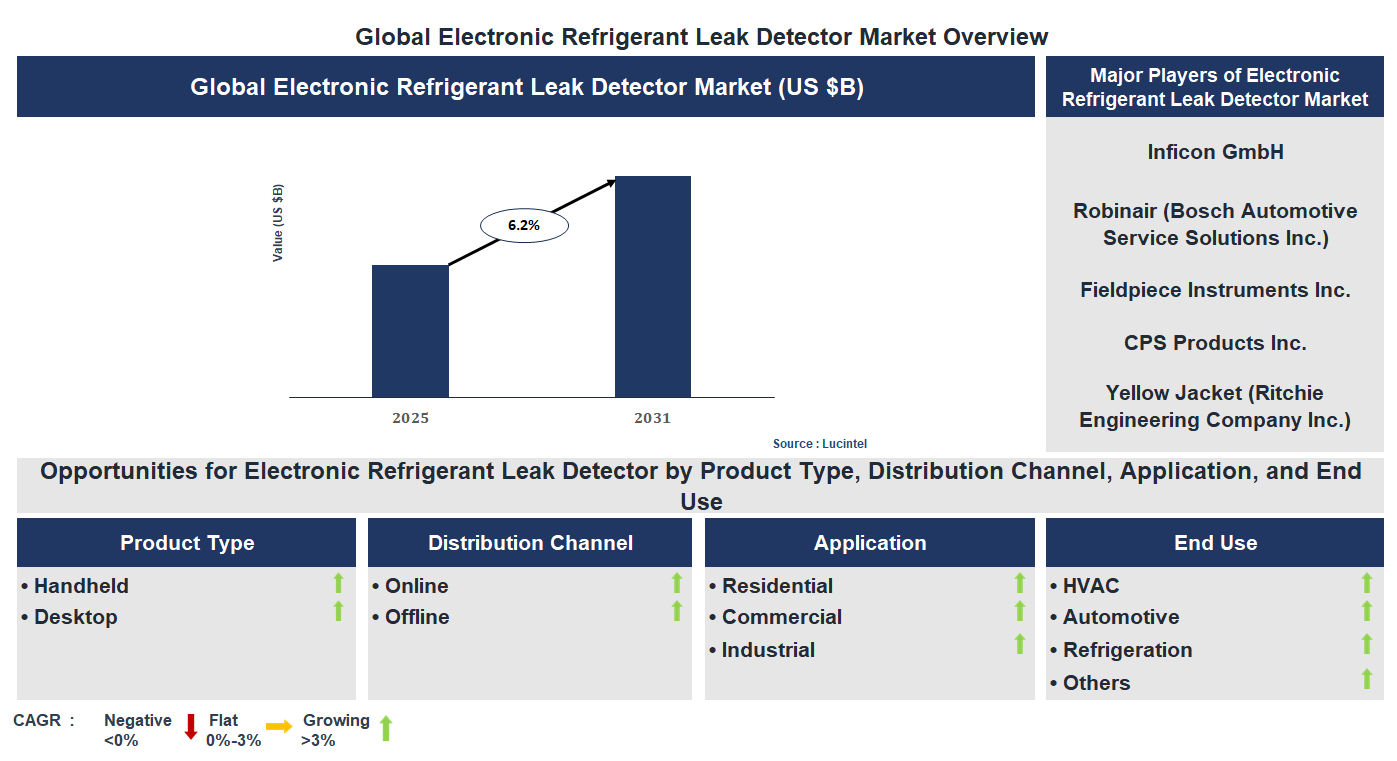
Key data points: The growth forecast = 6.2% annually for the next 7 years. Scroll below to get more insights. This market report covers trends, opportunities and forecasts in electronic refrigerant leak detector market to 2031 by product type (handheld and desktop), distribution channel (online and offline), application (residential, commercial, and industrial), end use (HVAC, automotive, refrigeration, and others), and region (North America, Europe, Asia Pacific, and the Rest of the World)
We'll send your sample report shortly.
• Lucintel forecasts that, within the product type category, handheld is expected to witness higher growth over the forecast period.
• Within the end use category, HVAC is expected to witness the highest growth.
• In terms of region, North America is expected to witness the highest growth over the forecast period. Gain valuable insights for your business decisions with our comprehensive 150+ page report. Sample figures with some insights are shown below.
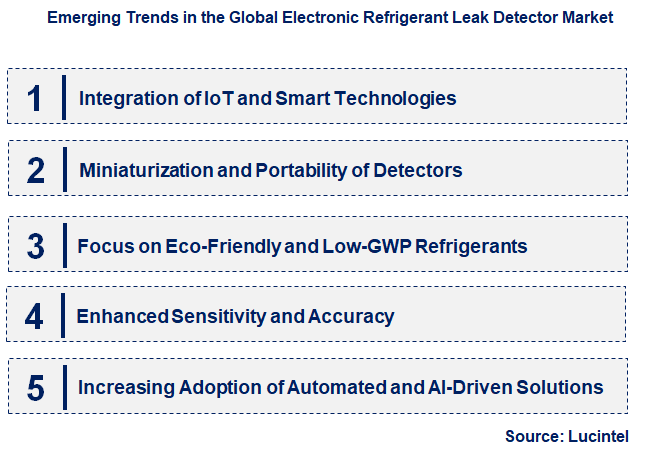
• Integration of IoT and Smart Technologies: The adoption of Internet of Things (IoT) and smart sensors is revolutionizing leak detection by enabling real-time monitoring and remote diagnostics. These advanced systems provide continuous data collection, early leak detection, and automated alerts, reducing downtime and maintenance costs. IoT integration enhances operational efficiency and safety, especially in large or complex refrigeration systems. This trend is driven by the need for more proactive maintenance strategies and the increasing digitalization of industrial processes, making leak detection more accurate, efficient, and accessible.
• Miniaturization and Portability of Detectors: The development of compact, lightweight, and portable leak detectors is a significant trend. These devices allow technicians to perform quick, on-the-spot inspections without cumbersome equipment. Miniaturized detectors improve accessibility in tight or hard-to-reach spaces and facilitate faster diagnostics, reducing system downtime. This trend is driven by the demand for user-friendly tools that enhance field operations, especially in commercial and residential settings. As technology advances, portable detectors are becoming more sophisticated, offering higher sensitivity and multi-gas detection capabilities.
• Focus on Eco-Friendly and Low-GWP Refrigerants: With increasing environmental regulations, there is a shift towards detecting leaks of eco-friendly refrigerants with low Global Warming Potential (GWP). Market players are developing detectors specifically calibrated for newer refrigerants like HFOs and natural gases. This trend ensures compliance with international standards and helps companies reduce their carbon footprint. The focus on eco-friendly refrigerants is also driving innovation in detection technology, making devices more versatile and capable of handling a broader range of gases, thus supporting sustainable practices in the industry.
• Enhanced Sensitivity and Accuracy: Advances in sensor technology are leading to detectors with higher sensitivity and greater accuracy. These improvements enable early detection of even minor leaks, preventing refrigerant loss and environmental harm. Enhanced sensors also reduce false alarms, increasing reliability and user confidence. This trend is crucial for industries aiming to meet strict regulatory standards and maintain system integrity. As sensor technology continues to evolve, leak detectors are becoming more precise, offering better performance in diverse environmental conditions and complex system configurations.
• Increasing Adoption of Automated and AI-Driven Solutions: The integration of artificial intelligence (AI) and automation in leak detection systems is gaining momentum. AI algorithms analyze data patterns to predict potential leaks before they occur, enabling preventive maintenance. Automated systems can perform continuous monitoring without human intervention, improving safety and efficiency. This trend is driven by the need for smarter, more predictive maintenance strategies and the desire to minimize operational disruptions. AI-driven solutions are transforming leak detection from reactive to proactive, significantly enhancing reliability and reducing costs across various sectors. In summary, these emerging trends are fundamentally reshaping the electronic refrigerant leak detector market by making detection more precise, efficient, and environmentally conscious. The integration of smart technologies, miniaturization, eco-friendly focus, sensor advancements, and AI-driven solutions are collectively driving innovation, improving safety standards, and supporting sustainable practices. As these trends continue to evolve, they will enable industry stakeholders to optimize maintenance processes, ensure regulatory compliance, and reduce environmental impact, ultimately leading to a more resilient and forward-looking market landscape.
• Technological Innovation: Development of smart leak detectors with digital displays and wireless connectivity has enhanced detection accuracy and user convenience, leading to faster maintenance responses and reduced refrigerant wastage.
• Regulatory Stringency: Stricter environmental regulations globally have mandated regular leak detection and repair, boosting demand for reliable electronic leak detectors and encouraging industry growth.
• Market Expansion in Emerging Regions: Increasing refrigeration needs in developing countries, coupled with rising awareness of environmental impacts, have expanded market opportunities and driven regional growth.
• Integration with IoT: Incorporation of Internet of Things (IoT) technology allows real-time monitoring and remote leak detection, improving efficiency and reducing operational costs for large-scale refrigeration systems.
• Product Innovation and Diversification: Companies are launching portable, user-friendly, and multi-functional leak detectors, catering to diverse industry needs and expanding market reach. These developments are collectively enhancing the market by improving detection efficiency, ensuring regulatory compliance, and expanding application scope. The market is becoming more competitive, innovative, and aligned with sustainability goals, which is expected to sustain its growth trajectory in the coming years.
• HVAC Industry: Expansion of smart and energy-efficient systems is boosting demand for leak detectors, ensuring optimal performance and compliance with environmental standards. This growth enhances safety, reduces energy consumption, and minimizes refrigerant loss, leading to cost savings and regulatory adherence.
• Automotive Sector: Increasing adoption of refrigerant leak detection in vehicles improves safety and environmental compliance. This opportunity supports the development of portable, compact detectors tailored for automotive maintenance, reducing emissions and enhancing vehicle safety standards.
• Industrial Applications: Growing industrial refrigeration and manufacturing processes require precise leak detection to prevent refrigerant loss and environmental hazards. Advanced detectors enable real-time monitoring, reducing downtime and operational costs while ensuring regulatory compliance.
• Commercial Refrigeration: The rise of supermarkets, cold storage, and food processing facilities drives demand for reliable leak detection solutions. These detectors help prevent product spoilage, reduce refrigerant waste, and ensure compliance with environmental regulations.
• Residential Sector: Increasing adoption of smart home systems and eco-friendly appliances creates a market for user-friendly leak detectors. These devices promote safety, energy efficiency, and environmental sustainability in residential settings. In summary, these growth opportunities are significantly impacting the electronic refrigerant leak detector market by expanding its application scope, driving technological innovation, and fostering regulatory compliance. As demand intensifies across sectors, the market is poised for sustained growth, with manufacturers focusing on developing more efficient, portable, and intelligent detection solutions to meet evolving needs.
• Technological Innovation: The continuous development of more sensitive, accurate, and user-friendly leak detection devices has significantly expanded market potential. Innovations such as wireless connectivity and portable designs improve operational efficiency, making leak detection faster and more reliable. These advancements meet the increasing demand for precise maintenance in refrigeration and HVAC systems, fostering market growth. As technology evolves, manufacturers can offer enhanced features, attracting a broader customer base and opening new application avenues.
• Stringent Environmental Regulations: Governments worldwide are implementing strict regulations to reduce greenhouse gas emissions and prevent refrigerant leaks. These policies compel industries to adopt advanced leak detection solutions to ensure compliance. The rising focus on environmental sustainability and the phase-out of high-GWP refrigerants drive demand for effective leak detection systems. This regulatory landscape encourages innovation and adoption, positioning the market for sustained growth as companies seek to meet legal standards and avoid penalties.
• Growing Adoption in Commercial and Industrial Sectors: The expansion of refrigeration, HVAC, and air conditioning systems across commercial and industrial sectors fuels demand for leak detection solutions. As these sectors prioritize energy efficiency and system reliability, the need for regular leak monitoring increases. The integration of leak detectors into routine maintenance enhances operational safety and reduces refrigerant wastage, leading to cost savings. This trend supports market expansion, especially in developing regions where infrastructure development is accelerating.
• Increasing Focus on Preventive Maintenance: The shift from reactive to preventive maintenance practices in refrigeration and HVAC systems is a major driver. Leak detectors enable early identification of refrigerant leaks, preventing system failures and reducing downtime. This proactive approach minimizes repair costs and environmental impact, making leak detection an essential component of maintenance strategies. As companies aim to optimize operational efficiency, the demand for reliable leak detection solutions continues to grow, bolstering market prospects. The challenges facing this electronic refrigerant leak detector market include:-
• High Equipment Costs: The advanced technology incorporated into modern refrigerant leak detectors often results in high purchase and maintenance costs. Small and medium-sized enterprises may find these expenses prohibitive, limiting widespread adoption. Additionally, the need for specialized training to operate sophisticated devices can further increase overall costs, hindering market growth in price-sensitive regions. Overcoming cost barriers is essential for broader market penetration and increased adoption.
• Technological Complexity and Skill Gap: The increasing sophistication of leak detection devices requires specialized knowledge for proper operation and maintenance. A lack of skilled technicians can lead to improper usage, reducing device effectiveness and reliability. This technological complexity poses a barrier, especially in regions with limited technical expertise. Addressing this challenge involves investing in training and education, which can slow down market expansion if not managed effectively.
• Regulatory Compliance and Standardization Challenges: Variations in regulations across different regions create complexities for manufacturers and users. Ensuring compliance with diverse standards can increase product development costs and delay market entry. Additionally, the lack of universal standards for leak detection devices hampers interoperability and market acceptance. Navigating these regulatory landscapes requires significant effort and resources, potentially restraining growth in certain markets. In summary, the electronic refrigerant leak detector market is driven by technological advancements, environmental regulations, sectoral adoption, and maintenance trends. However, high costs, technological complexity, and regulatory hurdles pose significant challenges. These factors collectively influence market dynamics, requiring stakeholders to innovate, adapt, and invest strategically. The overall impact suggests a promising growth trajectory, provided that challenges are effectively managed through technological improvements, cost reduction strategies, and regulatory harmonization.
• Inficon GmbH
• Robinair (Bosch Automotive Service Solutions Inc.)
• Fieldpiece Instruments Inc.
• CPS Products Inc.
• Yellow Jacket (Ritchie Engineering Company Inc.)
• Elitech Technology Inc.
• Testo SE & Co. KGaA
• Bacharach Inc.
• Mastercool Inc.
• T
• Handheld
• Desktop
• Online
• Offline
• Residential
• Commercial
• Industrial
• HVAC
• Automotive
• Refrigeration
• Others
• North America
• Europe
• Asia Pacific
• The Rest of the World
• United States: The US market has seen rapid adoption of advanced leak detection technologies, driven by stringent environmental regulations and a focus on energy efficiency. Major players are investing in smart, portable detectors with digital interfaces, enhancing accuracy and ease of use. The government’s push for eco-friendly refrigerants has further boosted demand, alongside increased HVAC system installations in commercial and residential sectors. Additionally, the rise in retrofitting older systems with eco-friendly refrigerants has created new opportunities for leak detection solutions.
• China: China’s market is expanding swiftly due to rapid urbanization and industrial growth, which increase the demand for refrigeration and air conditioning systems. The government’s emphasis on environmental protection and energy conservation has led to stricter regulations, encouraging the adoption of advanced leak detectors. Local manufacturers are innovating to offer cost-effective solutions, while international companies are expanding their presence. The growth in cold chain logistics and refrigeration for food safety also contributes significantly to market expansion, with a focus on portable and easy-to-use devices.
• Germany: Germany’s market is characterized by high technological innovation and strict compliance with European environmental standards. The focus on sustainable refrigeration solutions has driven demand for highly sensitive and reliable leak detectors. The country’s strong HVAC and refrigeration sectors are adopting smart detection systems integrated with IoT for real-time monitoring. Additionally, Germany’s emphasis on reducing carbon footprints and promoting green technologies has led to increased investments in advanced leak detection equipment, especially for industrial applications and retrofitting existing systems.
• India: India’s market is witnessing rapid growth due to expanding urban infrastructure, increasing refrigeration needs, and rising awareness of environmental issues. The government’s initiatives to promote energy efficiency and phase out high-GWP refrigerants are fueling demand for sophisticated leak detection solutions. Local manufacturers are offering affordable, portable detectors suitable for widespread use in small-scale industries and residential applications. The growth of cold chain logistics for food and pharmaceuticals further boosts the market, with a focus on user-friendly devices that can operate in diverse climatic conditions.
• Japan: Japan’s market is driven by technological innovation and stringent safety standards. The country emphasizes eco-friendly refrigerants and energy-efficient systems, leading to increased adoption of advanced leak detection technologies. Japanese companies are developing highly precise, compact detectors with integrated diagnostics and IoT connectivity for industrial and commercial use. The focus on sustainability and safety regulations has also spurred investments in research and development, resulting in innovative solutions that cater to the needs of Japan’s mature HVAC and refrigeration markets.


• Inficon GmbH
• Robinair (Bosch Automotive Service Solutions Inc.)
• Fieldpiece Instruments Inc.
• CPS Products Inc.
• Yellow Jacket (Ritchie Engineering Company Inc.)
• Elitech Technology Inc.
• Testo SE & Co. KGaA
• Bacharach Inc.
• Mastercool Inc.
• TIF Instruments Inc. Q5. Which electronic refrigerant leak detector market segment will be the largest in future? Answer: Lucintel forecasts that, within the product type category, handheld is expected to witness higher growth over the forecast period. Q6. In electronic refrigerant leak detector market, which region is expected to be the largest in next 5 years? Answer: In terms of region, North America is expected to witness the highest growth over the forecast period. Q7. Do we receive customization in this report? Answer: Yes, Lucintel provides 10% customization without any additional cost.


Choose a license that fits your team. Instant PDF delivery.
Prices exclude taxes. Instant delivery. Custom licensing available on request.
Market Report · July 29, 2026
Market Report · July 20, 2026
Market Report · July 20, 2026
Trusted partner for strategic intelligence and business growth


Receive a complimentary market analysis tailored to your industry. Our analysts will identify key growth opportunities and competitive dynamics specific to your business.

Market size, growth rate, and key trend analysis for your specific sector.

Top competitor positioning and market share analysis.

Strategic recommendations backed by data-driven insights.
Get curated market intelligence and competitive moves straight to your inbox.
By subscribing, you agree to receive our monthly insights. Unsubscribe anytime.
Receive a complimentary market analysis tailored to your industry. Our analysts will identify key growth opportunities and competitive dynamics specific to your business.
Market size, growth rate, and key trend analysis for your specific sector.
Top competitor positioning and market share analysis.
Strategic recommendations backed by data-driven insights.
Get curated market intelligence, emerging trends, and competitive moves straight to your inbox each month.
By subscribing, you agree to receive our monthly insights. Unsubscribe anytime.
We'll send your sample report shortly.