
Market Report · July 29, 2026

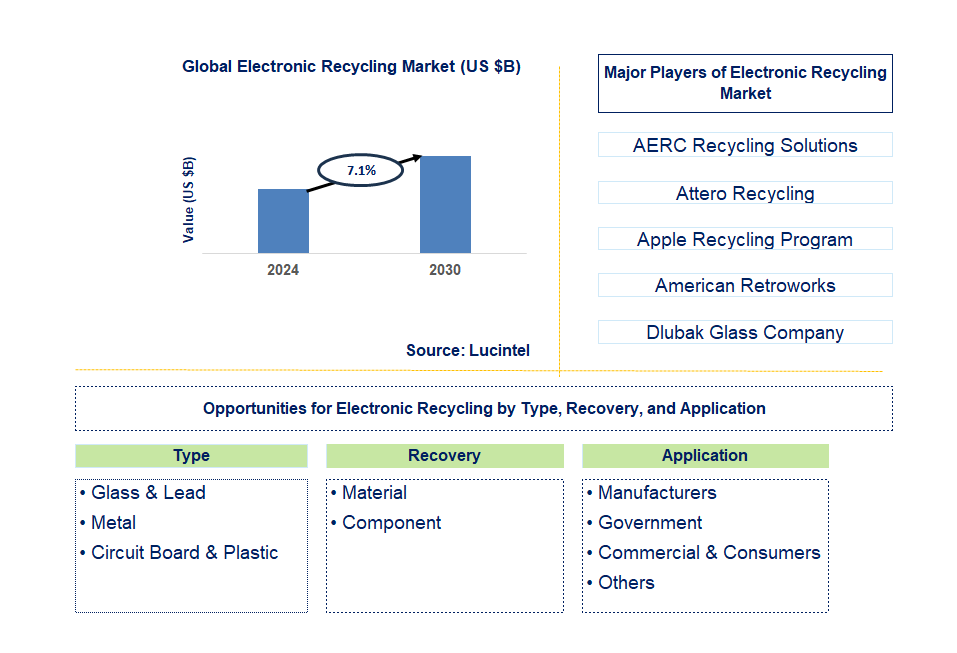
Key data points: The growth forecast = 7.1% annually for the next 6 years. Scroll below to get more insights. This market report covers trends, opportunities, and forecasts in the global electronic recycling market to 2030 by type (glass & lead, metal, and circuit board & plastic), recovery (material and component), application (manufacturers, government, commercial & consumers, and others), and region (North America, Europe, Asia Pacific, and the Rest of the World)
We'll send your sample report shortly.
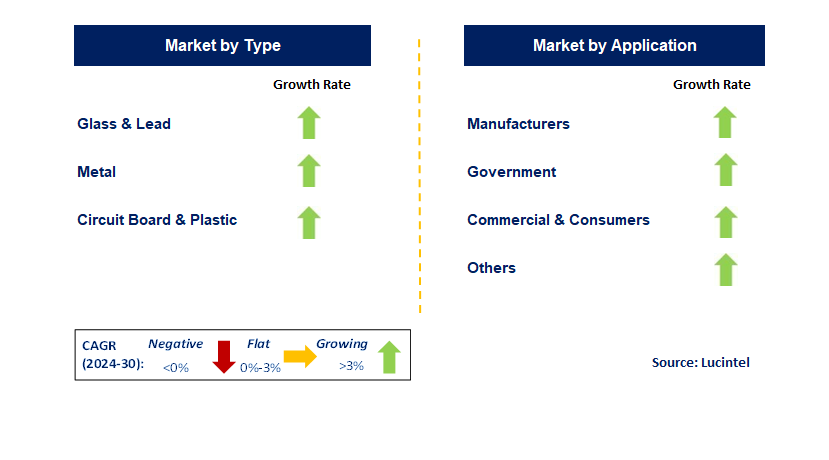
• Lucintel forecasts that, within the type category, metal is expected to witness fastest growth over the forecast period because of most common materials used in electronic products, and they can be easily recycled and reused.
• In terms of regions, APAC is expected to witness highest growth over the forecast period due to rapid economic growth, increasing demand for electronic products, and rising consumer spending in this region. Gain valuable insight for your business decisions with our comprehensive 150+ page report
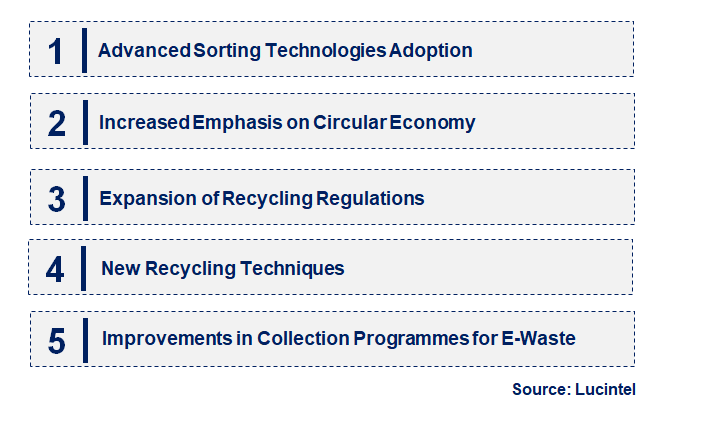
• Advanced Sorting Technologies Adoption: New sorting technologies are making e-waste processing more efficient. Automated systems and AI-driven sorting lines help recover valuables with less contamination, hence increasing overall recycling efficiency.
• Increased Emphasis on Circular Economy: An increased emphasis is being placed on implementing circular economy principles, where materials are recycled and reused to reduce waste. This trend encourages sustainability in practice and minimizes the environmental effects related to electronic products.
• Expansion of Recycling Regulations: Increasingly, new regulations cover most parts of the world, and EPR legislation is part of this trend. This legislation holds manufacturers responsible for the lifecycle of a product, which includes end-of-life management, involving recycling and disposal.
• New Recycling Techniques: Hydrometallurgical techniques and bioleaching are some of the new methods being tried for recycling. Generally, these methods are more effective and friendlier to the environment compared to conventional methods and offer better recoveries.
• Improvements in Collection Programs for E-Waste: Designing better collection programs for e-waste will aid in recovering more electronic equipment. Such initiatives include easily accessible collection points and even incentivized schemes for recycling to encourage responsible disposal. These trends are restructuring the electronic recycling market by lending efficiency, sustainability, and regulatory changes. They contribute to an effective and ecologically correct methodology for electronic waste management.
• Advanced Sorting Technologies: Advanced sorting technologies, such as automation and AI, have immensely upgraded the efficiency of e-waste recycling. Such technologies enhance material recovery and reduce processing costs.
• Strengthened Legislation: New and revised legislation is enacted to raise the management and recycling rates of e-waste. These regulations focus on promoting producer responsibility and setting higher targets for recycling.
• Recycling Infrastructure Expansion: In terms of recycling infrastructure, investments continue to rise, with new facilities being established and a surge in processing capacity. This expansion will support the effective handling and recycling of rising volumes of e-waste.
• Increasing Public Awareness Campaigns: Public awareness campaigns educate consumers on proper e-waste disposal and recycling. Such campaigns aim to change participation in recycling programs, thereby drastically reducing informal processing of e-waste.
• Innovations in Recycling Methods: New recycling methodologies, including hydrometallurgical and bioleaching techniques, are under development for more efficient extraction of recoverable materials from e-waste. These innovations are expected to provide more environmentally friendly and quicker recycling processes. These developments are furthering the cause of the electronic recycling market through technological advancements, regulatory frameworks, and public engagement. They will lead to better recycling processes and improved sustainability in handling electronic waste.
• Consumer Electronics: In the recycling of consumer electronic products, such as smartphones and laptops, tremendous growth opportunities are possible. Advances in sorting and recycling technologies improve recovery and reduce electronic waste.
• IT and Telecommunications: Growth opportunities for the IT and telecommunications sectors arise through the recycling of servers, networking equipment, and telecommunications devices. Better processes for recycling can handle significant volumes of equipment and recover valuable components.
• Automotive Electronics: Besides the growing interest in electric vehicles, new developments in automotive electronics also create interesting recycling opportunities. Innovations in recycling techniques enable the processing of new electronic components and contribute to a sustainable approach to automotive e-waste management.
• Industrial Electronics: Waste from industrial machinery and control systems can be considered an emerging growth opportunity. Newer technologies in recycling can handle complicated electronic waste for the recovery of valuable materials from industrial equipment.
• Healthcare Electronics: Specialized electronic waste recycling in the healthcare sector will involve medical devices and diagnostic equipment. Advances in recycling methods ensure the safe and efficient removal of sensitive electronic components. These emerging opportunities underscore the growing scope of electronic recycling within diverse industries. They spur innovation and enhance the effectiveness of recycling processes, contribute to sustainability, and facilitate resource recovery.
• Increasing E-Waste Generation: The growing volume of electronic waste propels the demand for efficient electronic waste recycling solutions. The more electronic devices there are, the greater the volume of e-waste that needs proper disposal and recycling.
• Environmental Regulations: Increased environmental regulations and standards create a demand for advanced recycling practices. Such regulations encourage better management of e-waste while promoting environmentally friendly recycling processes.
• Technological Advancement: Technological advances in recycling processes, such as automatic sorting and advanced recovery techniques, contribute to increased efficiency in recycling e-waste. Improved technology provides the foundation for effective material recovery and waste management.
• Growing Awareness of Environmental Damage: Increased public awareness about the environmental damage caused by e-waste leads to more responsible recycling behavior. Such awareness promotes participation in recycling schemes and aids in sustainable waste management.
• Expansion of Recycling Infrastructure: Increased investment and expansion of recycling infrastructure increase the capacity for handling and processing e-waste. Better facilities provide the necessary impetus for managing the continuously rising volume of electronic waste. Challenges in the electronic recycling market include:
• Informal Recycling Practices: Informal recycling practices create hazardous environmental and health problems in developing areas worldwide. Solutions need to consider enhanced regulation of formal recycling systems.
• E-Waste Complexity: Electronic waste consists of many diverse materials and components, making effective recycling quite difficult. Advanced technologies and specialized competencies are essential for handling and processing these complex electronic wastes.
• High Costs for Recycling: Advanced recycling technologies can be extremely costly to adopt and operate. This presents a potential problem for organizations and states with insufficient financial resources. Such constraints limit the feasibility of certain programs regarding their establishment and sustainability. Drivers and challenges in the electronic recycling market manifest their impact by influencing demand, shaping technological development, and altering regulatory frameworks. These factors must be addressed for progress to be made in recycling practices and for more sustainable electronic waste management outcomes.
• AERC Recycling Solutions
• Attero Recycling
• Apple Recycling Program
• American Retroworks
• Dlubak Glass Company
• Eco International
• Fortune Plastic & Metal
• MBA Polymers
• Sims Metal Management Limited
• Panasonic
• Glass & Lead
• Metal
• Circuit Board & Plastic
• Material
• Component
• Manufacturers
• Government
• Commercial & Consumers
• Others
• North America
• Europe
• Asia Pacific
• The Rest of the World
• United States: The U.S. is focusing on advanced sorting technologies and automated recycling systems. New regulations are being introduced to improve the collection and recycling rates of WEEE. These regulations will also aim to reduce hazardous waste and promote circular economy practices.
• China: The state is improving the infrastructure of state-of-the-art facilities for e-waste recycling, alongside strict regulations for managing e-waste. This includes new investments in technology and enhancements in resource recovery efficiency from electronic devices.
• Germany: Germany is at the forefront of e-waste recycling due to its comprehensive waste management and extensive recycling infrastructure. Recent developments include the establishment of innovative recycling methods with highly efficient collection schemes to achieve high recycling rates and meet sustainability targets.
• India: The government has been working to expand the electronic recycling industry by introducing new schemes that improve recycling rates and reduce informal e-waste processing. Recent initiatives include the establishment of formal recycling facilities and raising public awareness about e-waste management.
• Japan: In Japan, e-waste recycling is enhanced by better collection and sorting technologies. Other socio-technological changes include the integration of environmentally friendly recycling processes and increased government support to reduce electronic waste and promote resource recovery.


• AERC Recycling Solutions
• Attero Recycling
• Apple Recycling Program
• American Retroworks
• Dlubak Glass Company
• Eco International
• Fortune Plastic & Metal
• MBA Polymers
• Sims Metal Management Limited
• Panasonic Q5. Which electronic recycling market segment will be the largest in future? Answer: Lucintel forecasts that metal is expected to witness largest segment over the forecast period because of most common materials used in electronic products, and they can be easily recycled and reused. Q6. In electronic recycling market, which region is expected to be the largest in next 5 years? Answer: In terms of regions, APAC is expected to witness highest growth over the forecast period due to rapid economic growth, increasing demand for electronic products, and rising consumer spending in this region. Q7. Do we receive customization in this report? Answer: Yes, Lucintel provides 10% customization without any additional cost.


Choose a license that fits your team. Instant PDF delivery.
Prices exclude taxes. Instant delivery. Custom licensing available on request.
Market Report · July 29, 2026
Market Report · July 20, 2026
Market Report · July 20, 2026
Trusted partner for strategic intelligence and business growth


Receive a complimentary market analysis tailored to your industry. Our analysts will identify key growth opportunities and competitive dynamics specific to your business.

Market size, growth rate, and key trend analysis for your specific sector.

Top competitor positioning and market share analysis.

Strategic recommendations backed by data-driven insights.
Get curated market intelligence and competitive moves straight to your inbox.
By subscribing, you agree to receive our monthly insights. Unsubscribe anytime.
Receive a complimentary market analysis tailored to your industry. Our analysts will identify key growth opportunities and competitive dynamics specific to your business.
Market size, growth rate, and key trend analysis for your specific sector.
Top competitor positioning and market share analysis.
Strategic recommendations backed by data-driven insights.
Get curated market intelligence, emerging trends, and competitive moves straight to your inbox each month.
By subscribing, you agree to receive our monthly insights. Unsubscribe anytime.
We'll send your sample report shortly.