
Market Report · May 18, 2026

This market report covers trends, opportunities, and forecasts in the global electronic package metal heat sink market to 2031 by technology (cu/diamond, al/sicp, al/sip (al30si70), cu-mo (cu30mo70), cu-w (cu20w80), and others), application (semiconductor laser, microwave power device, and semiconductor lighting device), and region (North America, Europe, Asia Pacific, and the Rest of the World)
We'll send your sample report shortly.
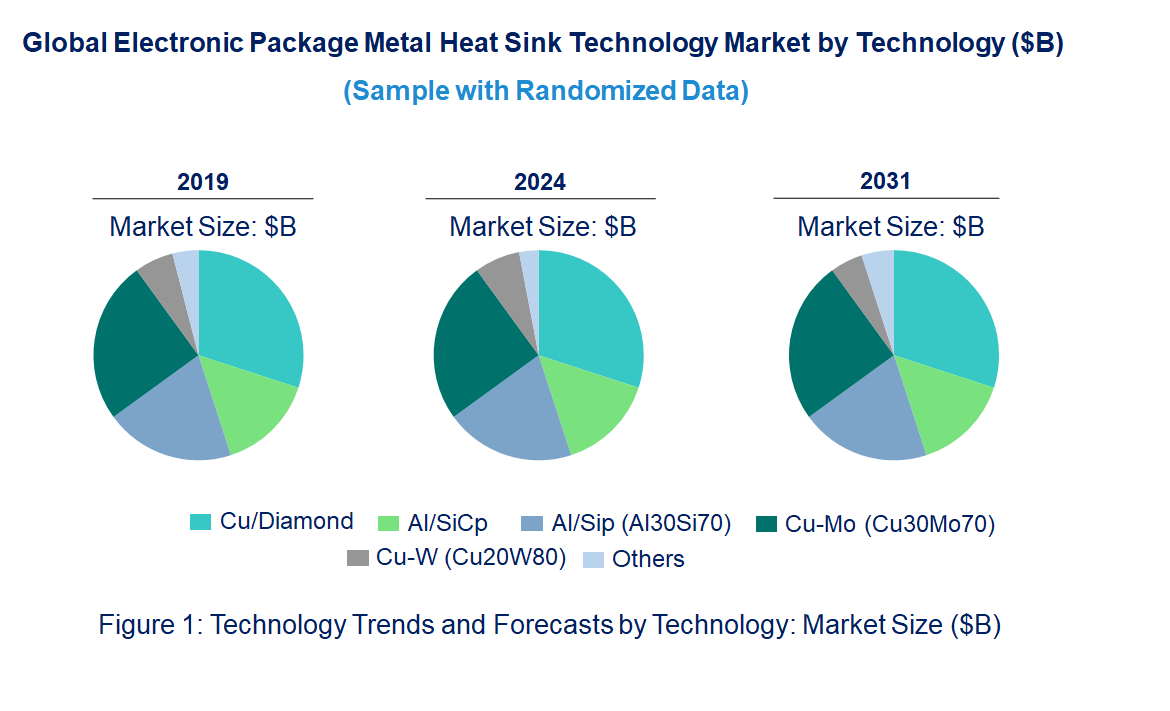
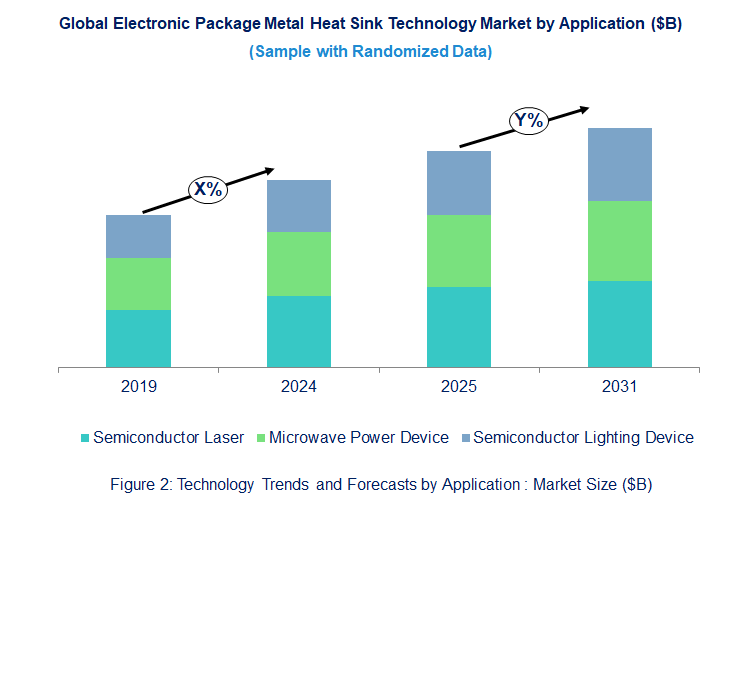
• High Thermal Conductivity Materials: High thermal conductivity materials like Cu/Diamond and Cu-Mo are being adopted at a high rate due to their better thermal conductivity for greater dissipation of heat in such intensive power applications like semiconductor lasers and microwave power devices.
• Composite Alloys: Al/SiCp (Aluminum/ Silicon Carbide Particulate) and Cu-W (Copper-Tungsten) alloys are increasingly being used. Compared to base composites, the superior thermal conductivity alongside the improved mechanical properties has made them preferable in applications requiring semiconductor lighting devices or high-power electronic packages.
• Thin, miniature heat sink designs. Because the devices are becoming thinner and smaller, there is an increase in demand for more compact yet efficient heat sink materials. This trend has inspired a new wave of innovation: thin-film heat sinks and nano-materials. End.
• Sustainability and Eco-friendly Materials: The market is becoming more favorable towards recyclable and sustainable materials. Companies are looking at options that are eco-friendly, including using alloys of aluminum and copper, which meet the needs of thermal management while also aligning with increasing environmental regulations and sustainability goals.
• To order, Companies increasingly realize that application-specific designs for semiconductor lasers, microwave power devices, and semiconductor lighting devices are needed. Custom-designed heat sinks for particular devices aid a better performance and lower the overall system cost. These needs directly relate to the special thermal requirements of an application. The emergent trends in the electronic package metal heat sink market are emerging because of demands for high thermal efficiency, miniaturization, and sustainability. The adoption of advanced materials along with application-specific solutions is redrawing the landscape and allows for better performance of various electronic and semiconductor applications.
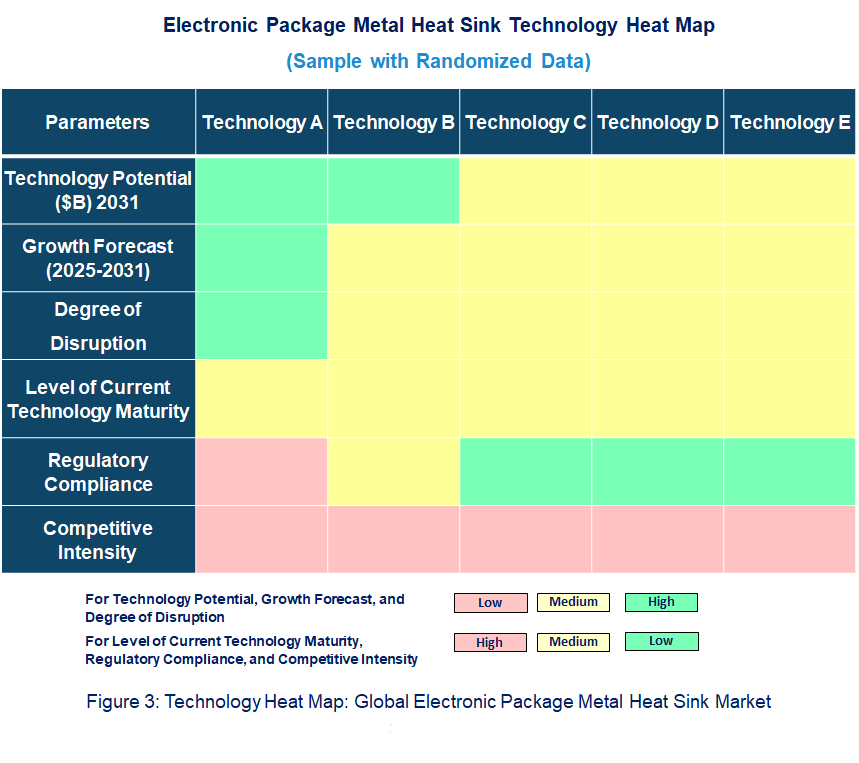
• Technology Potential: The potential for technological innovation in metal heat sink materials is high, with advancements placed on improving thermal conductivity, reducing weight, and optimizing heat dissipation efficiency. Materials such as copper, aluminum, and their alloys are being optimized, while new options like heat pipes, liquid cooling solutions, and composites are being explored to meet the evolving demands of modern electronics.
• Degree of Disruption: The degree of disruption in this market is moderate, with traditional materials such as aluminum and copper dominating the space. Emerging technologies, such as graphene-enhanced alloys and metal matrix composites, however, could significantly improve performance, allowing for the design of smaller and more efficient heat sinks for next-generation electronic devices.
• Current Technology Maturity Level: The traditional metal heat sink is mature and ubiquitous. The advanced materials - composites and liquid-cooled heat sinks - are in various stages of development and gaining popularity, but have not reached the level of mass adoption.
• Regulatory Compliance: Regulatory compliance is essential in this industry, especially concerning environmental and safety standards. With new materials emerging, the sustainability regulations of the product, including recyclability and resource sourcing, will be crucial for widespread adoption.
• Rogers: Rogers has introduced high-performance Cu/Diamond composite heat sinks, which offer superior thermal conductivity for high-power applications like microwave power devices and semiconductor lasers. This advancement enhances device reliability and reduces thermal stress, extending the operational lifespan of power electronics.
• Tecnisco: Tecnisco has developed Cu-Mo composite materials for heat sinks, designed to meet the rigorous thermal management demands of semiconductor lighting devices and high-power lasers. These composites have both high thermal conductivity and strength, making them ideal for high-performance, high-temperature environments.
• Citizen Electronics: Citizen launched Al/SiCp composite heat sinks, with excellent mechanical and thermal properties for the semiconductor lighting applications. Heat sinks are more efficient than aluminum due to optimized compact designs required nowadays in modern electronics.
• HOSO Metal: HOSO Metal is focused on Cu-W heat sinks that have the property of giving outstanding heat dissipation in demanding applications like microwave power devices. The material ensures low thermal resistance and therefore can support high-power operations for telecommunications and radar systems.
• Hermetic Solutions: Hermetic Solutions has developed its own custom ceramic heat sinks for semiconductor lasers and aerospace applications. These have enhanced thermal management and electrical insulation to improve the efficiency of laser diodes and other high-performance semiconductor devices.
• Element Six: Element Six is pushing the adoption of diamond-coated heat sinks, which have superior thermal conductivity. These are used primarily in semiconductor lasers and high-power devices, and it has improved thermal performance in achieving energy-efficient solutions in high-power electronics.
• XINLONG METAL ELECTRICAL: XINLONG has expanded the product family to include Cu/Diamond composite heat sinks, suitable for high-power semiconductor applications, providing excellent heat dissipation capabilities. This technology changes the playing field for industries needing high-efficiency thermal management.
• Heat Sinks Tungsten Molybdenum Science and Technology: This company specializes in Cu-Mo composites and Cu-W alloys, which are tailored for use in microwave power devices. Their products are known for high stability under extreme temperatures, making them suitable for critical applications in telecommunications and defense.
• Chengdu Eigen Material Technology: Chengdu Eigen has concentrated on Al/SiCp composites for semiconductor lighting devices. These materials provide a high-strength, low-weight solution for efficient heat dissipation in compact lighting systems.
• Luoyang Wochi: Luoyang Wochi produces ceramic-based heat sinks intended for use in laser diodes and other high-power components. These heat sinks combine excellent thermal conductivity with high electrical insulation, making them ideal for high-precision, high-temperature applications. This new development manifests the electronic package metal heat sink market that’s headed towards innovative and high-performance materials aimed at filling the increasing thermal management need of high-power and miniaturized devices. Innovations are stepping ahead in producing more dependable and energy-efficient electronics.
• Increased Power Density in Electronics: Electronics continue getting more powerful and compact. Increasing the number of devices on an IC chip demands advanced heat sinks that can manage higher power density. Materials like Cu/Diamond and Cu-Mo are crucial in managing heat dissipation in these high-performance applications.
• Shrinking of Electronics The tendency to make the products smaller necessitates that a thermal management system becomes highly efficient. The thin and light heat sinks made of composites, like Al/SiCp or Cu-W alloys, ensure an effective means of heat removal within compact electronics, such as in semiconductor lighting as well as microwave power.
• Semiconductor and Laser Applications: With semiconductor lasers, high-power LEDs, and other power-hungry components on the rise, there is an ever-growing need for more effective cooling solutions. In such applications, high-conductivity materials play a crucial role in avoiding overheating and maximizing the lifespan of devices.
• Technological Advancements in Material Science: The continued and ongoing research and innovations in material science provide new materials that are more efficient than conventional ones for heat sinks. Examples include Cu/Diamond composites and Cu-W alloys, which enhance thermal management and provide reliable and high-performance electronic devices. Challenges in the electronic package metal heat sink market are:
• High Production Costs of Advanced Materials: Advanced materials such as diamond composites and Cu-Mo alloys are associated with high production costs that could be a limiting factor in their adoption, especially within price-sensitive markets.
• Incompatibility and Integration Problems of Materials: There is also a problem of integrating advanced materials into existing electronic designs. Issues like thermal expansion mismatch and adhesion problems between two different materials make manufacturing difficult.
• Supply Chain and Material Availability: The availability of high-quality materials, especially for Cu/Diamond composites and graphene-based solutions, can be limited, affecting the stability of the supply chain and increasing production lead times. The drivers of technological advancement and the growing demand for high-performance, miniaturized devices are driving the electronic package metal heat sink market. However, high material costs, compatibility issues, and supply chain constraints must be addressed for continued growth and innovation in this market.
• Rogers
• Tecnisco
• Citizen Electronics
• HOSO Metal
• Hermetic Solutions
• Element Six
• Technology Readiness by Technology Type: Cu/Diamond is ready for high-end applications, but expensive. Al/SiCp and Al/Sip (Al30Si70) are mature and well-established. Cu-Mo and Cu-W have found their niches at high temperatures. Emerging materials like graphene are promising, but in research. Innovation and material adoption are pushed by competitive pressures and regulatory standards.
• Competitive Intensity and Regulatory Compliance: The market is competitive. Key players include Cu/Diamond, Al/SiCp, and Cu-W. The material system is dominated by Al-based materials due to cost considerations. The RoHS and REACH standards are crucial and have to be complied with, especially in the case of materials like Cu/Diamond. The driver of innovation is the combination of both thermal performance and environmental considerations.
• The Disruption Potential of Technologies for Electronic Package Metal Heat Sink Market: Cu/Diamond has the highest thermal conductivity for high-performance applications, but is expensive and hence less adopted. Al/SiCp and Al/Sip (Al30Si70) are used widely in consumer electronics due to good thermal performance coupled with low cost. Cu-Mo and Cu-W are suited for high-temperature applications but are difficult to manufacture. Graphene-based composites have been reported recently and may be promising, but are not yet ready to disrupt the market.
• Cu/Diamond
• Al/SiCp
• Al/Sip (Al30Si70)
• Cu-Mo (Cu30Mo70)
• Cu-W (Cu20W80)
• Others
• Semiconductor Laser
• Microwave Power Device
• Semiconductor Lighting Device
• North America
• Europe
• Asia Pacific
• The Rest of the World
• Latest Developments and Innovations in the Electronic Package Metal Heat Sink Technologies
• Companies / Ecosystems
• Strategic Opportunities by Technology Type


Choose a license that fits your team. Instant PDF delivery.
Prices exclude taxes. Instant delivery. Custom licensing available on request.
Market Report · May 18, 2026
Market Report · May 18, 2026
Market Report · May 18, 2026
Trusted partner for strategic intelligence and business growth


Receive a complimentary market analysis tailored to your industry. Our analysts will identify key growth opportunities and competitive dynamics specific to your business.

Market size, growth rate, and key trend analysis for your specific sector.

Top competitor positioning and market share analysis.

Strategic recommendations backed by data-driven insights.
Get curated market intelligence and competitive moves straight to your inbox.
By subscribing, you agree to receive our monthly insights. Unsubscribe anytime.
Receive a complimentary market analysis tailored to your industry. Our analysts will identify key growth opportunities and competitive dynamics specific to your business.
Market size, growth rate, and key trend analysis for your specific sector.
Top competitor positioning and market share analysis.
Strategic recommendations backed by data-driven insights.
Get curated market intelligence, emerging trends, and competitive moves straight to your inbox each month.
By subscribing, you agree to receive our monthly insights. Unsubscribe anytime.
We'll send your sample report shortly.