
Market Report · July 29, 2026

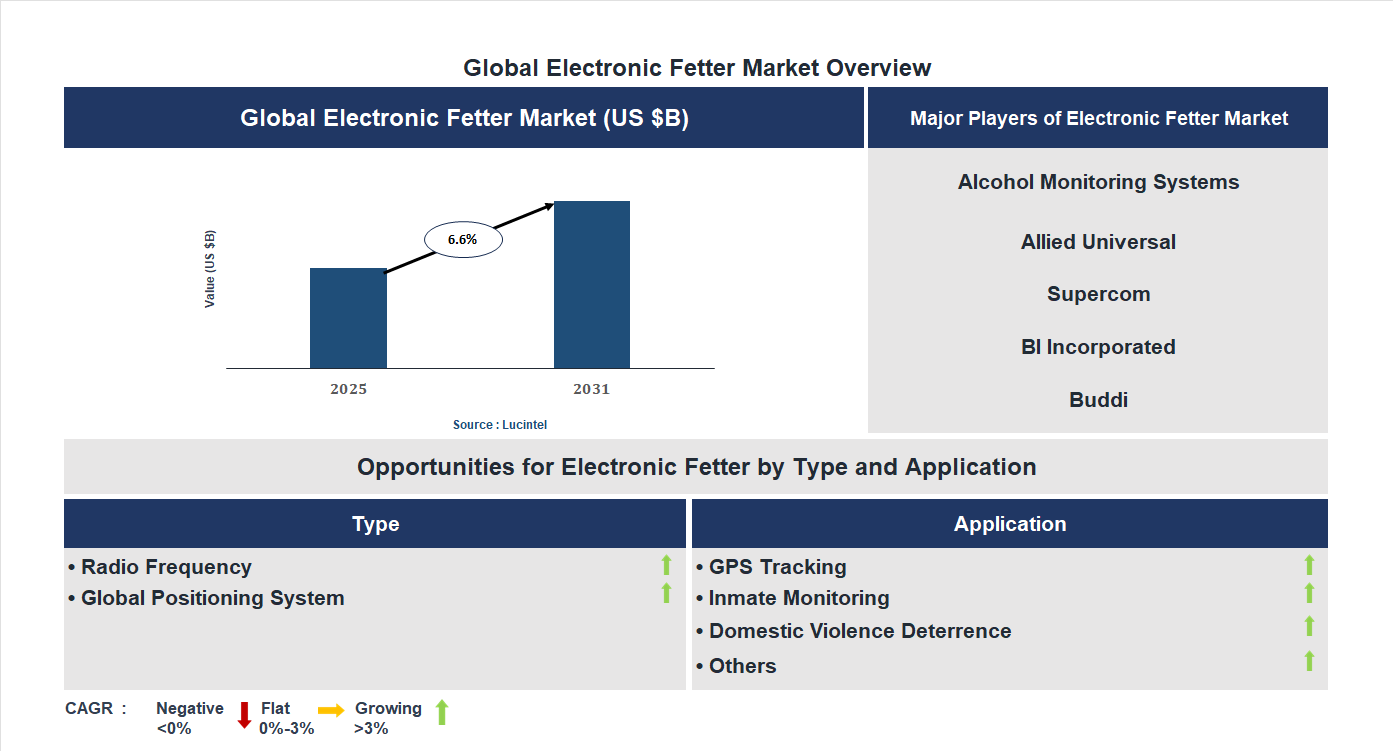
Key data points: The growth forecast = 6.6% annually for the next 7 years. Scroll below to get more insights. This market report covers trends, opportunities and forecasts in electronic fetter market to 2031 by type (radio frequency and global positioning system), application (GPS tracking, inmate monitoring, domestic violence deterrence, and others), and region (North America, Europe, Asia Pacific, and the Rest of the World)
We'll send your sample report shortly.
• Lucintel forecasts that, within the type category, global positioning system is expected to witness higher growth over the forecast period.
• Within the application category, GPS tracking is expected to witness the highest growth.
• In terms of region, APAC is expected to witness the highest growth over the forecast period. Gain valuable insights for your business decisions with our comprehensive 150+ page report. Sample figures with some insights are shown below.
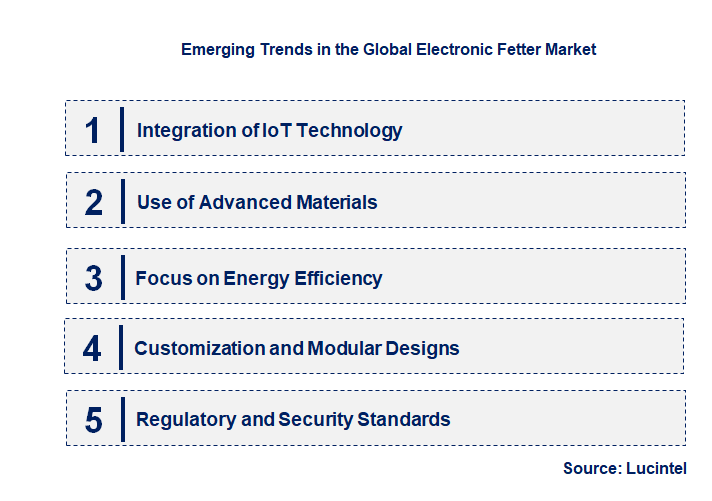
• Integration of IoT Technology: The incorporation of Internet of Things (IoT) enhances electronic fetters by enabling remote monitoring and control. IoT connectivity allows real-time data collection, predictive maintenance, and automated alerts, significantly improving security and operational efficiency. This trend is driven by the increasing adoption of smart security systems across industries, leading to more intelligent and responsive fencing solutions. The impact includes reduced labor costs, enhanced security management, and the ability to customize fencing parameters remotely, making IoT-enabled electronic fences a preferred choice for modern security infrastructure.
• Use of Advanced Materials: The development of durable, lightweight, and weather-resistant materials is transforming electronic fetters. Innovations include the use of composites, high-strength polymers, and corrosion-resistant metals, which extend product lifespan and reduce maintenance costs. These materials improve the overall performance of electronic fencing systems in harsh environments, making them suitable for diverse applications such as agriculture and border security. The impact is a broader market reach, increased reliability, and lower total cost of ownership, encouraging wider adoption across sectors.
• Focus on Energy Efficiency: As electronic fetters become more sophisticated, energy consumption remains a critical concern. Market players are investing in low-power electronics, energy harvesting technologies, and solar-powered systems to reduce operational costs and environmental impact. Energy-efficient designs enable longer deployment periods without frequent battery replacements, especially in remote locations. This trend enhances the sustainability of electronic fencing solutions and appeals to environmentally conscious consumers and organizations, ultimately expanding market penetration and supporting regulatory compliance.
• Customization and Modular Designs: The demand for tailored fencing solutions is driving the development of customizable and modular electronic fences. These systems can be easily adapted to specific security needs, site layouts, and operational requirements. Modular designs facilitate quick installation, upgrades, and maintenance, reducing downtime and costs. This trend allows providers to serve a wider range of clients, from small farms to large industrial complexes, fostering market growth. The impact includes increased customer satisfaction, flexibility in deployment, and the ability to incorporate future technological advancements seamlessly.
• Regulatory and Security Standards: Evolving regulations and security standards are shaping the development of electronic fetters. Governments and industry bodies are establishing stricter guidelines for safety, electromagnetic compatibility, and environmental impact. Compliance with these standards ensures product reliability and market acceptance. This trend encourages innovation to meet regulatory requirements, such as incorporating fail-safes and eco-friendly components. The impact is a more secure, compliant, and trustworthy market environment, which boosts consumer confidence and facilitates international trade and expansion. In summary, these emerging trends are collectively reshaping the electronic fetter market by making systems smarter, more durable, energy-efficient, customizable, and compliant with evolving standards. These developments are expanding application possibilities, reducing costs, and enhancing security effectiveness, thereby driving market growth and innovation in this competitive landscape.
• Technological Integration: Enhanced connectivity and IoT integration are enabling electronic fetters to offer remote access, real-time monitoring, and data analytics, improving security management and user convenience.
• Material Innovation: Development of durable, lightweight, and tamper-resistant materials has increased the lifespan and reliability of electronic fetters, making them suitable for diverse environments.
• Biometric Authentication: Incorporation of biometric features such as fingerprint and facial recognition has increased security levels, reducing unauthorized access and boosting user trust.
• Regulatory Compliance: Stricter security standards and regulations are driving manufacturers to develop compliant products, ensuring market growth and increased adoption in sensitive sectors.
• Market Expansion: Rising adoption in residential, commercial, and industrial sectors, along with emerging markets, has expanded the market scope, creating new revenue streams and competitive opportunities. These developments are collectively enhancing the efficiency, security, and versatility of electronic fetters, leading to increased adoption across multiple sectors. The market is becoming more competitive and innovative, with a focus on smart, secure, and user-friendly solutions, ultimately driving sustained growth and technological evolution.
• Enhanced Patient Monitoring and Safety: Electronic fetters are increasingly used in medical devices for patient monitoring, ensuring real-time data collection and improved safety. These systems enable non-invasive, continuous monitoring, reducing risks and improving patient outcomes. The integration of electronic fetters with wearable health devices offers personalized healthcare solutions, driving growth in telemedicine and remote diagnostics. As healthcare demands grow, the adoption of advanced electronic fetters will significantly impact patient care and medical device innovation.
• Manufacturing: Automation and Worker Safety: In manufacturing, electronic fetters facilitate automation by providing precise control and safety mechanisms for machinery and robotic systems. They help prevent accidents and ensure compliance with safety standards, thereby reducing downtime and enhancing productivity. The integration of electronic fetters with Industry 4.0 technologies supports smart factories, enabling seamless communication between machines and systems. This growth opportunity enhances operational efficiency and worker safety, transforming manufacturing processes.
• Electric Vehicles and Autonomous Driving: The automotive industry leverages electronic fetters for power management, safety systems, and autonomous vehicle functionalities. They are critical in ensuring reliable communication between sensors, control units, and actuators. As electric and autonomous vehicles become mainstream, the demand for robust electronic fetters increases, supporting vehicle safety, energy efficiency, and advanced driver-assistance systems. This trend is poised to revolutionize automotive safety and connectivity.
• Wearables and Smart Devices: The consumer electronics sector benefits from electronic fetters in developing compact, energy-efficient wearable devices and smart gadgets. These components enable enhanced connectivity, data security, and device interoperability. The growing adoption of IoT-enabled devices and smart home systems fuels demand for innovative electronic fetters that support miniaturization and high performance. This growth opportunity is driving innovation in consumer electronics, making devices more intelligent and user-friendly.
• Secure Communication and Surveillance: In defense applications, electronic fetters are vital for secure communication, surveillance, and electronic warfare systems. They provide reliable signal integrity and protection against cyber threats. The increasing need for advanced defense systems and cybersecurity measures presents significant growth opportunities for electronic fetters. Their deployment enhances national security, battlefield communication, and surveillance capabilities, making them indispensable in modern defense strategies. In summary, these growth opportunities across healthcare, manufacturing, automotive, consumer electronics, and defense are significantly impacting the electronic fetter market. They are driving technological innovation, expanding application scopes, and fostering market growth. As industries increasingly rely on electronic fetters for safety, connectivity, and automation, the market is poised for sustained expansion and strategic development.
• Technological Innovation: The rapid development of electronic components and materials has led to more efficient, durable, and lightweight fetters. Innovations such as advanced composites and miniaturization techniques enable manufacturers to produce high-performance products that meet the increasing demands of various industries, including automotive, aerospace, and consumer electronics. These technological advancements also facilitate integration with smart systems, expanding market applications, and driving growth.
• Growing Industrial Automation: The surge in industrial automation and robotics has increased the need for reliable electronic fetters that can withstand harsh environments and provide precise control. As industries aim for higher efficiency and safety, the demand for electronic fetters that can support automation systems has risen significantly. This trend is expected to continue, fueling market expansion across multiple sectors.
• Rising Adoption in Automotive Sector: The automotive industry is increasingly adopting electronic features for applications such as electric vehicles, driver assistance systems, and infotainment. The shift towards electric and autonomous vehicles necessitates advanced electronic components that ensure safety and performance. This growing adoption is a major driver, contributing to the market’s expansion as automakers seek reliable and compliant solutions.
• Increasing Focus on Safety and Regulatory Standards: Stringent safety regulations and standards across industries compel manufacturers to develop high-quality electronic fetters that meet compliance requirements. These standards drive innovation and quality improvements, fostering market growth. Additionally, regulatory pressures encourage the adoption of safer, more reliable electronic components, further propelling the market forward. The challenges facing this electronic fetter market include:-
• High Production Costs: Manufacturing electronic fetters involves complex processes and high-quality materials, which contribute to elevated production costs. These costs can limit market penetration, especially in price-sensitive regions or sectors. Additionally, ongoing research and development expenses to improve product performance add to the financial burden, potentially impacting profit margins and market competitiveness.
• Regulatory Compliance Complexities: Navigating diverse and evolving regulatory standards across different regions poses a significant challenge. Manufacturers must invest in compliance processes, certifications, and testing, which can delay product launches and increase costs. Non-compliance risks include legal penalties and damage to brand reputation, making regulatory adherence a critical yet challenging aspect of market operations.
• Technological Obsolescence: Rapid technological advancements can render existing electronic fetters obsolete quickly. Companies face the challenge of continuously innovating to stay competitive, which requires substantial investment in R&D. Failure to keep pace with technological changes can lead to loss of market share and reduced profitability, emphasizing the need for agile development strategies. In summary, the electronic fetter market is driven by technological innovations, industrial automation, automotive sector growth, and regulatory standards, which collectively foster expansion. However, high production costs, regulatory complexities, and rapid technological obsolescence present significant challenges. These factors collectively influence market dynamics, requiring stakeholders to adapt strategically. While growth opportunities are substantial, addressing these challenges is crucial for sustained success and competitive advantage in this evolving landscape.
• Alcohol Monitoring Systems
• Allied Universal
• Supercom
• BI Incorporated
• Buddi
• Securus Technologies
• Geosatis
• Synergye
• Track Group
• Guanwei Intelligent Technology
• Radio Frequency
• Global Positioning System
• GPS Tracking
• Inmate Monitoring
• Domestic Violence Deterrence
• Others
• North America
• Europe
• Asia Pacific
• The Rest of the World
• United States: The US market has seen rapid adoption of smart electronic fetters, driven by the security sector and smart city initiatives. Major companies are focusing on integrating biometric authentication and IoT connectivity to enhance security and user convenience. Regulatory standards are evolving to support these innovations, and there is a growing trend toward wireless and remote-controlled systems. The US government is also investing in research to develop more secure and tamper-proof electronic locking solutions, boosting market growth.
• China: China is experiencing substantial growth in the electronic fetter market, fueled by government initiatives to modernize security infrastructure and smart city projects. Local manufacturers are rapidly innovating, offering cost-effective and technologically advanced products. The market is characterized by a high adoption rate of IoT-enabled fetters, with a focus on integrating facial recognition and mobile app controls. Chinas emphasis on automation and security in public and private sectors is driving demand, making it a significant player in the global market.
• Germany: Germanys market is marked by a focus on high-quality, durable, and secure electronic fetters, primarily serving industrial and commercial sectors. The country emphasizes compliance with stringent European safety standards and incorporates advanced encryption technologies. German companies are investing in R&D to develop energy-efficient and environmentally friendly solutions. The integration of electronic sensors with building management systems and smart security networks is a key trend, supporting Germanys reputation for precision engineering and innovation.
• India: The Indian market is witnessing rapid growth due to increasing urbanization, smart city projects, and rising security concerns. Local manufacturers are expanding their product portfolios with affordable and technologically advanced electronic fetters. The adoption of IoT and mobile-based control systems is increasing, especially in residential, commercial, and government sectors. Government initiatives promoting digital infrastructure and security are further propelling market growth, with a focus on scalable and easy-to-install solutions suitable for diverse environments.
• Japan: Japans market is characterized by high technological adoption and a focus on security and reliability. Japanese companies are developing sophisticated electronic fetters with features like biometric access, remote monitoring, and integration with existing security systems. The emphasis on energy efficiency and durability aligns with Japans sustainability goals. The market is also driven by the need for secure access in critical infrastructure and high-end residential buildings, with innovations focusing on seamless integration with smart home and building automation systems.


• Alcohol Monitoring Systems
• Allied Universal
• Supercom
• BI Incorporated
• Buddi
• Securus Technologies
• Geosatis
• Synergye
• Track Group
• Guanwei Intelligent Technology Q5. Which electronic fetter market segment will be the largest in future? Answer: Lucintel forecasts that, within the type category, global positioning system is expected to witness higher growth over the forecast period. Q6. In electronic fetter market, which region is expected to be the largest in next 5 years? Answer: In terms of region, APAC is expected to witness the highest growth over the forecast period. Q7. Do we receive customization in this report? Answer: Yes, Lucintel provides 10% customization without any additional cost.


Choose a license that fits your team. Instant PDF delivery.
Prices exclude taxes. Instant delivery. Custom licensing available on request.
Market Report · July 29, 2026
Market Report · July 20, 2026
Market Report · July 20, 2026
Trusted partner for strategic intelligence and business growth


Receive a complimentary market analysis tailored to your industry. Our analysts will identify key growth opportunities and competitive dynamics specific to your business.

Market size, growth rate, and key trend analysis for your specific sector.

Top competitor positioning and market share analysis.

Strategic recommendations backed by data-driven insights.
Get curated market intelligence and competitive moves straight to your inbox.
By subscribing, you agree to receive our monthly insights. Unsubscribe anytime.
Receive a complimentary market analysis tailored to your industry. Our analysts will identify key growth opportunities and competitive dynamics specific to your business.
Market size, growth rate, and key trend analysis for your specific sector.
Top competitor positioning and market share analysis.
Strategic recommendations backed by data-driven insights.
Get curated market intelligence, emerging trends, and competitive moves straight to your inbox each month.
By subscribing, you agree to receive our monthly insights. Unsubscribe anytime.
We'll send your sample report shortly.