
Market Report · July 29, 2026

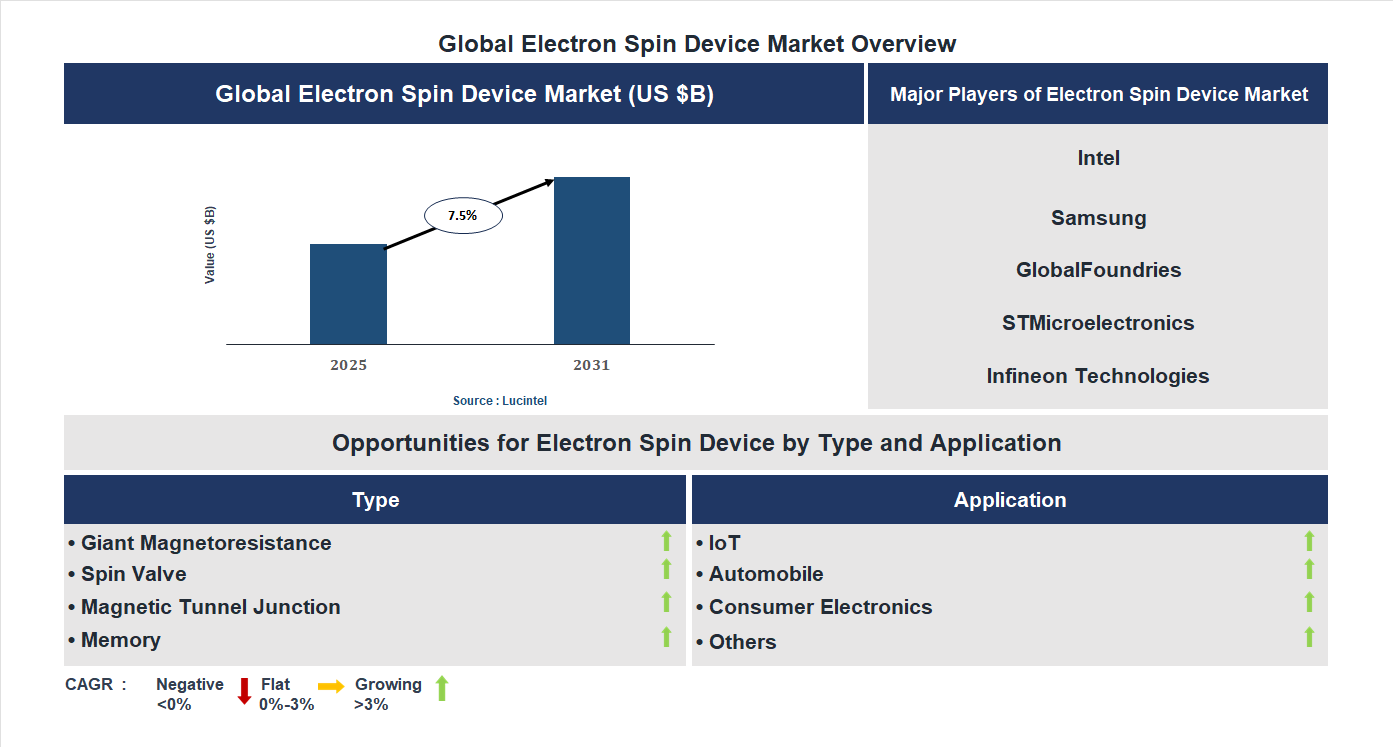
Key data points: The growth forecast = 7.5% annually for the next 6 years. Scroll below to get more insights. This market report covers trends, opportunities and forecasts in electron spin device market to 2031 by type (giant magnetoresistance, spin valve, magnetic tunnel junction, and memory), application (IoT, automobile, consumer electronics, and others), and region (North America, Europe, Asia Pacific, and the Rest of the World)
We'll send your sample report shortly.
• Lucintel forecasts that, within the type category, giant magnetoresistance is expected to witness the highest growth over the forecast period.
• Within the application category, consumer electronics is expected to witness the highest growth.
• In terms of region, APAC is expected to witness the highest growth over the forecast period. Gain valuable insights for your business decisions with our comprehensive 150+ page report. Sample figures with some insights are shown below.
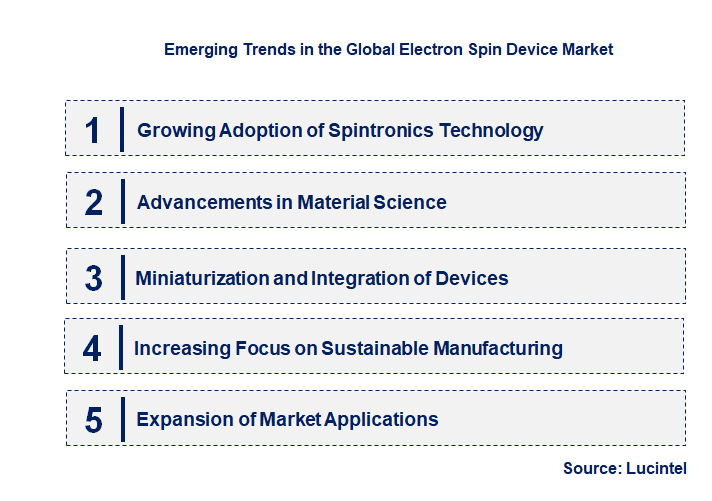
• Growing Adoption of Spintronics Technology: The increasing integration of spintronics in data storage, sensors, and quantum computing is propelling market growth. Spintronics offers advantages such as lower power consumption, faster processing speeds, and increased data density, making it attractive for next-generation electronic devices. This trend is encouraging manufacturers to invest in research and development to create more efficient and scalable electron spin devices, thereby expanding their application scope across various sectors.
• Advancements in Material Science: The development of new materials, such as topological insulators and two-dimensional materials like graphene, is enhancing the performance of electron spin devices. These materials exhibit unique spin properties that improve device efficiency, stability, and miniaturization. The integration of novel materials is enabling the creation of more robust and versatile devices, which are critical for applications in quantum computing, medical imaging, and advanced sensors.
• Miniaturization and Integration of Devices: The push toward smaller, more integrated electron spin devices is driven by the demand for compact electronics and IoT applications. Innovations in nanofabrication techniques allow for the production of ultra-small devices with high precision. This miniaturization facilitates the development of portable, energy-efficient gadgets and enhances the performance of existing systems, thereby opening new avenues for market expansion and technological innovation.
• Increasing Focus on Sustainable Manufacturing: Environmental concerns and regulatory pressures are prompting companies to adopt sustainable manufacturing practices in the electron spin device industry. This includes reducing hazardous materials, optimizing energy consumption, and recycling waste. Sustainable practices not only minimize environmental impact but also improve brand reputation and compliance, which are increasingly important for market competitiveness and long-term growth.
• Expansion of Market Applications: The scope of electron spin devices is broadening beyond traditional sectors to include emerging fields such as quantum information processing, biomedical devices, and advanced communication systems. This diversification is driven by the unique properties of spin-based devices, which enable new functionalities and performance levels. As applications diversify, the market is expected to see accelerated growth, attracting investments and fostering innovation across multiple industries. In summary, these trends are collectively reshaping the electron spin device market by fostering innovation, enhancing device performance, and expanding application horizons. They are driving market growth, encouraging sustainable practices, and positioning the industry at the forefront of next-generation electronic technology development.
• Technological Innovation: Development of high-precision spintronic devices has improved data processing speeds and energy efficiency, boosting market competitiveness and enabling new applications in quantum computing and advanced sensors.
• Strategic Collaborations: Partnerships between tech giants and research institutions have accelerated R&D efforts, leading to faster commercialization of electron spin devices and expanding their adoption across industries.
• Material Advancements: Introduction of novel materials such as topological insulators and 2D materials has enhanced device stability and performance, opening new avenues for market growth and application diversity.
• Market Expansion: Increasing adoption in sectors like healthcare, automotive, and consumer electronics has driven demand, resulting in geographical expansion and diversification of the market base.
• Regulatory and Standardization Efforts: Implementation of industry standards and regulatory frameworks has facilitated market trust, streamlined product development, and encouraged investment in electron spin technologies. These developments are collectively propelling the electron spin device market toward rapid growth, fostering innovation, expanding application areas, and attracting new investments. The market is becoming more competitive and dynamic, with technological and strategic advancements playing pivotal roles in shaping its future trajectory.
• Quantum Computing Applications: The demand for electron spin devices in quantum computing is rising due to their ability to serve as qubits, enabling faster and more secure data processing. This growth enhances computational power and paves the way for breakthroughs in cryptography and complex problem-solving, significantly impacting the tech industry.
• Medical Imaging and Diagnostics: Electron spin devices are increasingly used in advanced MRI and other imaging techniques, providing higher resolution and more accurate diagnostics. This application improves patient outcomes and drives innovation in healthcare technology, expanding market reach.
• Data Storage Solutions: The miniaturization and stability of electron spin devices are making them ideal for next-generation data storage, offering higher capacity and faster access speeds. This growth opportunity addresses the escalating data demands across industries, transforming storage technology.
• Spintronics and Sensor Technologies: The development of spintronic devices and sensors utilizing electron spin is creating new opportunities in electronics, automotive, and defense sectors. These devices offer enhanced sensitivity and energy efficiency, fostering innovation in various high-tech applications.
• Material and Device Innovation: Advances in materials such as topological insulators and 2D materials are improving electron spin device performance. This innovation accelerates the development of more efficient, durable, and scalable devices, broadening application possibilities. In summary, these growth opportunities are significantly impacting the electron spin device market by driving technological innovation, expanding application domains, and increasing market size. They enable the development of more powerful, efficient, and versatile devices, positioning the market for sustained growth and competitive advantage in the coming years.
• Technological Innovation: The rapid development of quantum technologies has propelled electron spin devices into the spotlight. These devices are fundamental for quantum computing, enabling qubit manipulation and readout with high precision. As research progresses, improvements in coherence times and scalability are making electron spin devices more viable for commercial applications. This technological momentum attracts investments and accelerates market growth, fostering new product development and expanding application areas across industries.
• Growing Demand for Quantum Computing: The surge in interest in quantum computing solutions is a major driver. Electron spin devices serve as critical components in quantum processors, offering advantages like stability and control at the atomic level. As industries such as pharmaceuticals, finance, and cybersecurity seek faster, more secure computing methods, the demand for reliable quantum hardware increases. This trend is expected to significantly boost market expansion, encouraging research and commercialization efforts worldwide.
• Expansion in Healthcare and Medical Imaging: Electron spin devices are increasingly used in medical diagnostics, particularly in magnetic resonance imaging (MRI) and other imaging techniques. Their ability to detect minute magnetic signals enhances imaging resolution and sensitivity. The rising prevalence of chronic diseases and the need for early diagnosis are driving investments in advanced medical technologies. This expanding application base not only broadens market scope but also stimulates innovation in device design and functionality.
• Increasing Investment and Funding: Governments, private investors, and research institutions are channeling substantial funds into electron spin technology development. This financial support accelerates research, reduces time-to-market for new devices, and fosters collaborations between academia and industry. The influx of capital also facilitates the scaling of manufacturing processes and commercialization efforts, thereby propelling market growth and technological maturity. The challenges in the electron spin device market are:
• High Manufacturing Costs: Producing electron spin devices involves sophisticated fabrication techniques, ultra-clean environments, and advanced materials, all of which contribute to high costs. These expenses can limit large-scale production and affordability, hindering widespread adoption. Overcoming cost barriers requires technological breakthroughs in manufacturing efficiency and material sourcing, which are still in development stages.
• Technological Complexity: Electron spin devices operate at the quantum level, requiring precise control of atomic states and environmental conditions. This complexity makes device design, fabrication, and operation challenging. Maintaining coherence and minimizing errors are ongoing technical hurdles. The steep learning curve and need for specialized expertise can slow down innovation and commercialization processes.
• Regulatory and Standardization Challenges: As quantum technologies advance, establishing regulatory frameworks and standards becomes critical. The lack of clear guidelines can delay product approvals and market entry. Additionally, concerns over data security, privacy, and ethical considerations related to quantum computing pose regulatory challenges. Navigating these evolving standards requires significant effort and collaboration among stakeholders, potentially slowing market growth. In summary, the electron spin device market is driven by rapid technological advancements, increasing demand for quantum computing, expanding medical applications, and substantial investment inflows. However, high manufacturing costs, technological complexity, and regulatory uncertainties present notable challenges. These factors collectively influence the pace and direction of market development. While opportunities for innovation and growth are substantial, addressing the challenges is crucial for sustainable expansion. Overall, the market's future will depend on how effectively stakeholders can leverage drivers while overcoming obstacles to realize the full potential of electron spin technology.
• Intel
• Samsung
• GlobalFoundries
• STMicroelectronics
• Infineon Technologies
• Micron Technology
• TDK
• Western Digital
• TSMC
• Sony
• Giant Magnetoresistance
• Spin Valve
• Magnetic Tunnel Junction
• Memory
• IoT
• Automobile
• Consumer Electronics
• Others
• North America
• Europe
• Asia Pacific
• The Rest of the World
• United States: The US market has seen rapid innovation with major tech companies investing in quantum computing and spintronics research. Federal funding initiatives support startups and academic institutions, leading to breakthroughs in device efficiency and miniaturization. The commercialization of electron spin devices is accelerating, especially in cybersecurity and data storage. Collaborations between industry and government agencies are fostering a robust ecosystem. Additionally, US-based companies are expanding their global footprint through strategic partnerships and acquisitions, driving market growth and technological leadership.
• China: China is heavily investing in electron spin device research, aiming to become a global leader in quantum technology. Government-backed programs focus on developing indigenous spintronics components for military, healthcare, and communication applications. Several domestic firms are advancing in material science and device fabrication, reducing reliance on imports. The country’s emphasis on innovation and infrastructure development has resulted in rapid prototyping and deployment of new devices. China’s strategic initiatives are positioning it as a key player in the global electron spin device market, with a focus on scalability and integration into existing systems.
• Germany: Germany’s market is characterized by strong industrial integration and emphasis on precision engineering. Leading research institutes and automotive companies are exploring electron spin devices for sensor technology, data security, and quantum computing applications. The country benefits from robust government support and EU funding programs aimed at technological innovation. German firms are focusing on sustainable manufacturing processes and improving device reliability. The market is also witnessing increased collaboration between academia and industry to develop commercially viable solutions, positioning Germany as a hub for high-quality, innovative electron spin devices.
• India: India is emerging as a significant player in the electron spin device market, driven by government initiatives like Make in India and Digital India. The focus is on developing indigenous research capabilities and reducing dependency on imports. Several startups and research institutions are working on novel materials and device architectures for quantum computing and secure communication. The country’s expanding tech ecosystem and increasing R&D investments are fostering innovation. While the market is still in its nascent stages, India’s strategic focus on skill development and infrastructure is expected to accelerate growth and adoption of electron spin technologies.
• Japan: Japan maintains a strong position in the electron spin device market through its advanced research infrastructure and technological expertise. Major corporations and universities are collaborating on quantum computing projects and spintronics applications. The government’s strategic initiatives support innovation in the electronics and information technology sectors. Japan emphasizes high-precision manufacturing and sustainable practices, ensuring high-quality device production. The market is also benefiting from international collaborations and investments in next-generation quantum technologies. Japan’s focus on integrating electron spin devices into consumer electronics and industrial applications continues to drive market expansion and technological progress.


• Intel
• Samsung
• GlobalFoundries
• STMicroelectronics
• Infineon Technologies
• Micron Technology
• TDK
• Western Digital
• TSMC
• Sony Q5. Which electron spin device market segment will be the largest in future? Answer: Lucintel forecasts that, within the type category, giant magnetoresistance is expected to witness the highest growth over the forecast period. Q6. In electron spin device market, which region is expected to be the largest in next 5 years? Answer: In terms of region, APAC is expected to witness the highest growth over the forecast period. Q7. Do we receive customization in this report? Answer: Yes, Lucintel provides 10% customization without any additional cost.


Choose a license that fits your team. Instant PDF delivery.
Prices exclude taxes. Instant delivery. Custom licensing available on request.
Market Report · July 29, 2026
Market Report · July 20, 2026
Market Report · July 20, 2026
Trusted partner for strategic intelligence and business growth


Receive a complimentary market analysis tailored to your industry. Our analysts will identify key growth opportunities and competitive dynamics specific to your business.

Market size, growth rate, and key trend analysis for your specific sector.

Top competitor positioning and market share analysis.

Strategic recommendations backed by data-driven insights.
Get curated market intelligence and competitive moves straight to your inbox.
By subscribing, you agree to receive our monthly insights. Unsubscribe anytime.
Receive a complimentary market analysis tailored to your industry. Our analysts will identify key growth opportunities and competitive dynamics specific to your business.
Market size, growth rate, and key trend analysis for your specific sector.
Top competitor positioning and market share analysis.
Strategic recommendations backed by data-driven insights.
Get curated market intelligence, emerging trends, and competitive moves straight to your inbox each month.
By subscribing, you agree to receive our monthly insights. Unsubscribe anytime.
We'll send your sample report shortly.