
Market Report · July 22, 2026

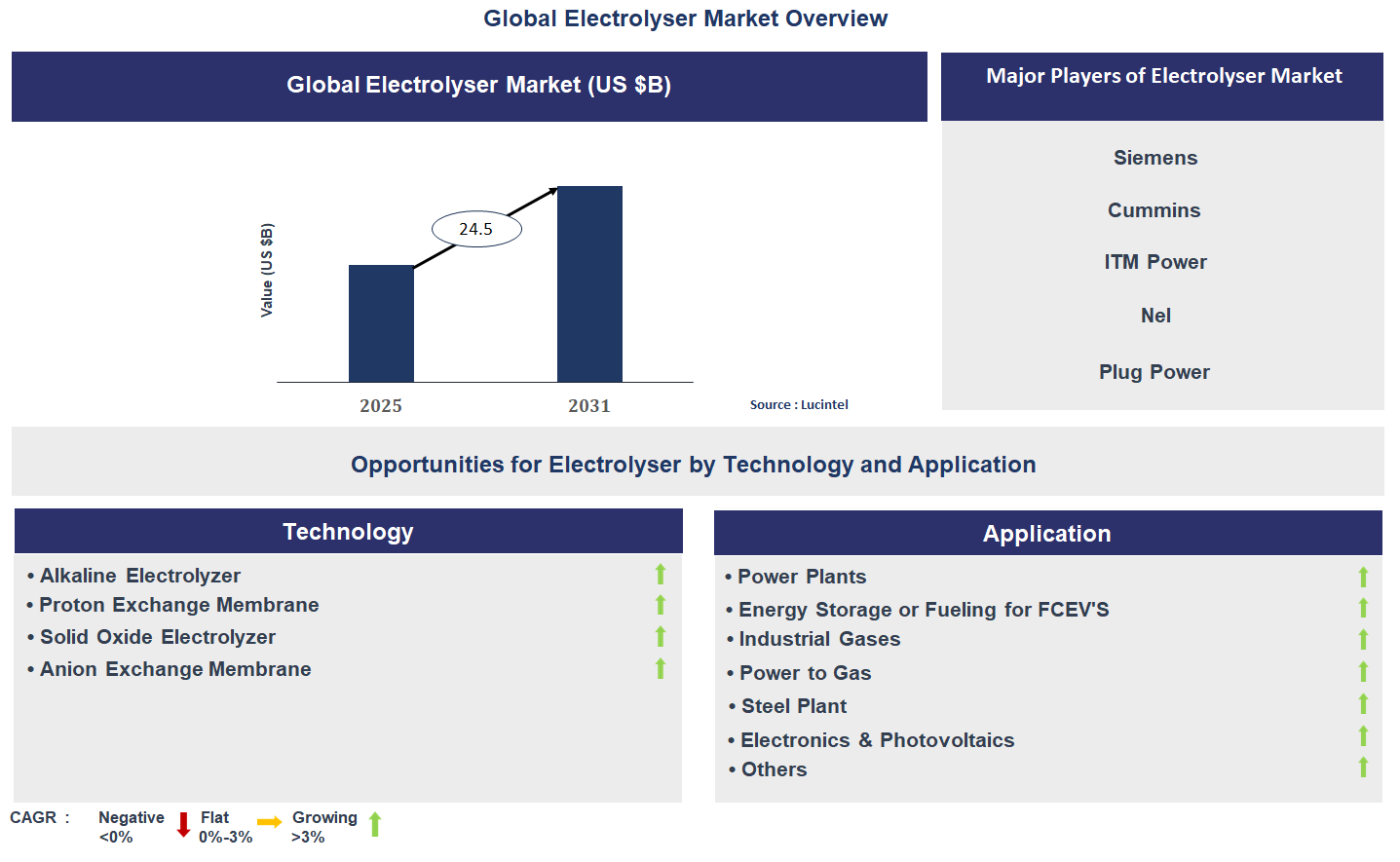
Key data points: The growth forecast = 24.5% annually for the next 7 years. Scroll below to get more insights. This market report covers trends, opportunities and forecasts in electrolyser market to 2031 by technology (alkaline electrolyzer, proton exchange membrane, solid oxide electrolyzer, and anion exchange membrane), application (power plants, energy storage or fueling for FCEVs, industrial gases, power to gas, steel plant, electronics & photovoltaics, and others), and region (North America, Europe, Asia Pacific, and the Rest of the World)
We'll send your sample report shortly.
• Lucintel forecasts that, within the technology category, alkaline electrolyzer is expected to witness the highest growth over the forecast period.
• Within the application category, power plant is expected to witness the highest growth.
• In terms of region, North America is expected to witness the highest growth over the forecast period. Gain valuable insights for your business decisions with our comprehensive 150+ page report. Sample figures with some insights are shown below.
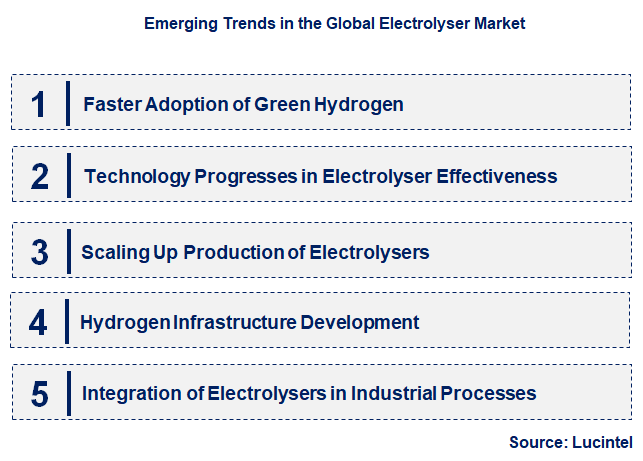
• Faster Adoption of Green Hydrogen: Green hydrogen, which is generated through water electrolysis based on renewable energy, is becoming increasingly popular as a fossil-free alternative. Governments are backing green hydrogen initiatives to lower carbon emissions and achieve climate targets. Electrolysers are critical in generating green hydrogen through renewable energy resources such as wind, solar power, and hydropower. As costs drop and efficiencies improve, green hydrogen will increase in uses for heavy industry, transportation, and power generation.
• Technology Progresses in Electrolyser Effectiveness: Efficiency of electrolyser is one of the most important drivers of market growth. Constant innovations, especially in PEM (Proton Exchange Membrane) and alkaline electrolysis technology, are increasing the efficiency and cost-effectiveness of electrolysers. New materials, better catalysts, and optimized working conditions are enhancing performance, allowing electrolyser systems to be run at higher capacity with less energy consumption. This improvement will be critical in lowering the cost of green hydrogen production, which will be vital in making hydrogen a viable energy source.
• Scaling Up Production of Electrolysers: With the increasing demand for hydrogen, scaling up production of electrolyser is becoming highly emphasized. Various companies are increasing their production capacity by adding more facilities to cater to the rising demand for electrolyser systems in bulk. This phenomenon is widely observed in nations such as Germany, China, and the United States, where state subsidies and collaboration with industries are promoting expansion. As production levels rise, economies of scale will continue to reduce the cost of electrolyses, making green hydrogen cheaper and more viable for a broad spectrum of uses.
• Hydrogen Infrastructure Development: In addition to improvement in electrolyses, development of hydrogen infrastructure is a key market trend. Investments are being made to create networks of hydrogen production, storage, and delivery, especially where ambitious hydrogen adoption goals exist. The growth of hydrogen hubs and transportation networks is necessary for the scaling up of hydrogen use in industries such as transportation and heavy industry. As the infrastructure grows, electrolyser manufacturers will be responsible for fulfilling increasing demand for clean hydrogen.
• Integration of Electrolysers in Industrial Processes: The trend is increasingly to integrate electrolysers in industrial processes to enable decarbonization. Steel, cement, and chemical industries are set to replace traditional methods of producing hydrogen from natural gas with green hydrogen, derived through electrolysis. Hydrogen is being produced on-site through the use of electrolysers to curb dependence on external supply networks and lower emissions. With industries embracing the technology, the demand for sophisticated electrolysers will increase, spurring further growth in the market. These trends reflect a great transition to sustainable, efficient, and large-scale production of hydrogen. Technological advancements, increasing the scale of production, and hydrogen infrastructure development are critical for sustained growth of the electrolyser market. The demand for electrolysis systems will be propelled by the drive towards green hydrogen in sectors like transportation, energy storage, and manufacturing. As these trends continue to develop, electrolysers will play an ever-growing role in meeting global climate objectives, encouraging clean energy solutions, and stimulating economic development in the hydrogen industry.
• Government Support and Investment: Governments worldwide are extending massive support to the electrolyser industry in the form of subsidies, tax credits, and R&D funding. For instance, the European Unions Green Deal and the U.S. Department of Energy (DOE) hydrogen program are driving the uptake of electrolyser technologies. Such state support is important to increase electrolyser production at scale, decrease costs, and hasten the shift to green hydrogen as a primary source of energy.
• Collaborations and Partnerships in Electrolyser Development: Collaborations among electrolyser makers, technology developers, and industrial actors have surged in a bid to improve electrolyser technologies. Joint ventures and partnerships are driving the creation of new electrolyser systems, with an emphasis on enhancing efficiency, scale production, and lowering costs. For example, German players such as Siemens Energy and Thyssenkrupp are collaborating with energy companies and utilities to create large-scale electrolyser projects.
• Electrolyser Design Innovations: New advancements in the design of electrolyzers are on the horizon, with the emphasis being placed on improving efficiency and minimizing the cost and size of electrolyser systems. New materials for the components in electrolyzers, including advanced catalysts, are being investigated by researchers to boost the efficiency of electrolysis processes. In addition, work is underway to enhance the modularity of electrolyser systems in order to make them more scalable and flexible for different applications.
• Large-Scale Electrolyser Projects: Several large-scale electrolyser projects have been initiated for the production of green hydrogen on an industrial scale. These projects seek to lower the cost of hydrogen production and establish it as competitively priced with traditional fossil fuels. Some of the examples are the proposals for big electrolyser factories in locations such as the Netherlands, Australia, and the Middle East, which are designed to produce hydrogen for use in multiple applications, including industrial processes, fueling vehicles, and energy storage. These projects represent a huge leap toward accomplishing international hydrogen production targets.
• Sustainable Electrolyser Production Focus: With the growing market for electrolyzers, emphasis is now placed on making electrolyzer production itself sustainable. This involves cleaner production practices and renewable power usage in the production process. Companies are seeking methods to minimize environmental degradation during electrolyser production so that the technology aligns with the sustainability and decarbonization principles. These advancements underscore the momentum gathering behind the electrolyser market as nations and sectors turn toward hydrogen as a central element of their decarbonization efforts. Government incentives, collaborations, design innovations, and multibillion-dollar projects are driving electrolyser technology into the mainstream. As these events evolve, the electrolyser market will continue to expand, assisting in positioning hydrogen as a central column of the worlds energy transformation.
• Green Hydrogen Production for Industrial Applications: The demand for green hydrogen in industrial applications such as steel production, chemical manufacturing, and refining is growing. Industries are increasingly seeking to replace traditional fossil fuels with green hydrogen to reduce carbon emissions. Electrolysers are at the forefront of this transition by providing a sustainable method to produce hydrogen using renewable electricity. As industries move toward decarbonization, the need for cost-effective, scalable electrolyser solutions is essential to meet these demands, creating significant growth opportunities.
• Energy Storage Systems and Grid Stability: Electrolysers are integral to energy storage systems, especially in the context of renewable energy like wind and solar, which are intermittent in nature. By converting excess renewable energy into hydrogen, electrolyser technology enables the storage of energy in the form of hydrogen, which can later be used to generate electricity when demand is high. This energy storage capacity improves grid stability and helps balance supply and demand.
• Transportation and Fuel Cell Applications: The transportation sector, especially in heavy-duty applications such as trucks, buses, and ships, is exploring green hydrogen as an alternative fuel to reduce reliance on diesel and gasoline. Electrolysers are crucial in producing hydrogen for fuel cell vehicles (FCVs), providing a clean alternative to internal combustion engines. As countries introduce stricter emission regulations and invest in hydrogen infrastructure, the demand for fuel cell vehicles and the hydrogen supply to support them will grow.
• Hydrogen for Power Generation: The use of hydrogen for power generation is another emerging opportunity for electrolysers. Hydrogen can be used directly in power plants or converted into ammonia or synthetic natural gas for use in existing infrastructure. This flexibility makes hydrogen a valuable energy source, particularly for balancing energy production in regions with variable renewable energy generation. The electrolyser market stands to benefit as governments and utilities scale up efforts to decarbonize the power sector and integrate hydrogen as a clean energy source.
• Decentralized Hydrogen Production for Localized Use: Decentralized hydrogen production is an emerging trend where electrolysers are deployed locally to produce hydrogen close to where it is needed, whether for industrial use, residential heating, or transportation refueling stations. This model reduces transportation and storage costs, making hydrogen more affordable and accessible. Electrolysers deployed in remote areas or in off-grid locations can also provide energy independence. The strategic growth opportunities outlined above highlight the critical role electrolysers will play in various sectors transitioning to a hydrogen-based economy. As industries, transportation, and power generation embrace hydrogen for its sustainability benefits, the electrolyser market is poised for expansion. From industrial applications to energy storage, transportation, and decentralized hydrogen production, the diverse use cases for electrolysers will drive technological innovation and scale.
• Siemens
• Cummins
• ITM Power
• Nel
• Plug Power
• John Cockerill Group
• Enapter
• Haldor Topsoe
• Bloom Energy Corporation
• thyssenkrupp
• Alkaline Electrolyzer
• Proton Exchange Membrane
• Solid Oxide Electrolyzer
• Anion Exchange Membrane
• Power Plants
• Energy Storage or Fueling for FCEVS
• Industrial Gases
• Power to Gas
• Steel Plant
• Electronics & Photovoltaics
• Others
• North America
• Europe
• Asia Pacific
• The Rest of the World
• United States: In the United States, current trends in the electrolyser market have been driven by massive government intervention and investment in green hydrogen technology. The U.S. Department of Energy (DOE) has invested heavily in hydrogen and fuel cell technology, including the large-scale production capacity for electrolyzers. Major players are trying to enhance the efficiency and cost of electrolyzers. This surge is a part of the overall clean energy plan that the Biden Administration presented in its climate action plan to have net-zero emissions by 2050. There are various large-scale initiatives, including those in California and Texas, to build hydrogen hubs.
• China: China remains a global leader in manufacturing and deploying electrolyzers, with a major focus on industrial-scale green hydrogen production. The Chinese governments drive towards hydrogen in its 14th Five-Year Plan has led to more money being spent on research and infrastructure growth in the electrolyser industry. Various domestic entities are at the forefront of developing electrolyser technology, with huge advancements in proton exchange membrane (PEM) electrolyser systems. Hydrogen-powered transportation and industrial applications are also gaining traction in China, with Beijing and Shanghai leading the charge with aggressive hydrogen adoption targets. The nation is aiming to become a world leader in green hydrogen.
• Germany: Germany has led the charge in embracing electrolyser technology, spurred by its aim for carbon neutrality by 2050. The government has focused on hydrogen technology with its National Hydrogen Strategy, investing billions of euros on encouraging green hydrogen production. Germany is concentrating on PEM electrolysers and solid oxide electrolysis (SOEC) technology. A number of projects, including giant electrolysis plants, are under development and backed by public-private partnerships. Germanys focus on hydrogen will decarbonize industries like steel-making and transport, making it the leading country in the European hydrogen economy.
• India: The electrolyser market in India is picking up as a part of Indias move towards a low-carbon energy era. The Indian government is encouraging hydrogen production under its National Hydrogen Mission, which targets the country becoming a green hydrogen hub for the world. Firms are investing in electrolyser technology development, with an eye to cutting costs and improving efficiency. Industrial clusters such as Gujarat and Tamil Nadu are establishing large-scale electrolyser installations, and interest in applying hydrogen for power, transportation, and heavy industry is growing. Indias interest in electrolyser technology is growing in line with its renewable energy ambitions.
• Japan: Japan has been investing in hydrogen technologies as a component of its vision for becoming carbon-neutral by the year 2050. The Hydrogen Roadmap of the Japanese government sets out to ramp up hydrogen production and utilization, with emphasis placed on the incorporation of hydrogen in transportation, energy storage, and industry. Major players such as Hitachi and Toshiba are making considerable progress toward the development of electrolyses, enhancing their efficiency and cutting costs. Japan is also working together with international partners toward a global hydrogen economy. Its investment in electrolyser technology stands to decarbonize its industrial base and feed into the regional hydrogen supply chain.


• Siemens
• Cummins
• ITM Power
• Nel
• Plug Power
• John Cockerill Group
• Enapter
• Haldor Topsoe
• Bloom Energy Corporation
• thyssenkrupp Q5. Which electrolyser market segment will be the largest in future? Answer: Lucintel forecasts that, within the technology category, alkaline electrolyzer is expected to witness the highest growth over the forecast period. Q6. In electrolyser market, which region is expected to be the largest in next 5 years? Answer: In terms of region, North America is expected to witness the highest growth over the forecast period. Q7. Do we receive customization in this report? Answer: Yes, Lucintel provides 10% customization without any additional cost.


Choose a license that fits your team. Instant PDF delivery.
Prices exclude taxes. Instant delivery. Custom licensing available on request.
Market Report · July 22, 2026
Market Report · July 22, 2026
Market Report · July 17, 2026
Trusted partner for strategic intelligence and business growth


Receive a complimentary market analysis tailored to your industry. Our analysts will identify key growth opportunities and competitive dynamics specific to your business.

Market size, growth rate, and key trend analysis for your specific sector.

Top competitor positioning and market share analysis.

Strategic recommendations backed by data-driven insights.
Get curated market intelligence and competitive moves straight to your inbox.
By subscribing, you agree to receive our monthly insights. Unsubscribe anytime.
Receive a complimentary market analysis tailored to your industry. Our analysts will identify key growth opportunities and competitive dynamics specific to your business.
Market size, growth rate, and key trend analysis for your specific sector.
Top competitor positioning and market share analysis.
Strategic recommendations backed by data-driven insights.
Get curated market intelligence, emerging trends, and competitive moves straight to your inbox each month.
By subscribing, you agree to receive our monthly insights. Unsubscribe anytime.
We'll send your sample report shortly.