
Market Report · July 31, 2026

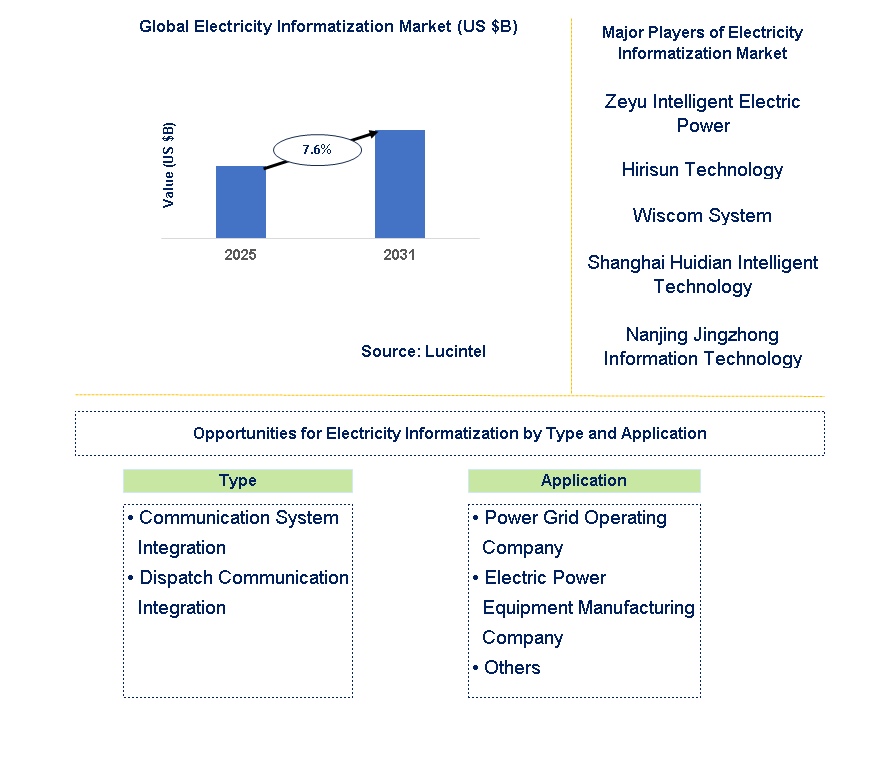
Key data points: The growth forecast = 7.6% annually for the next 7 years. Scroll below to get more insights. This market report covers Trends, opportunities and forecasts in electricity informatization market to 2031 by type (communication system integration and dispatch communication integration), application (power grid operating company, electric power equipment manufacturing company, and others), and region (North America, Europe, Asia Pacific, and the Rest of the World)
We'll send your sample report shortly.
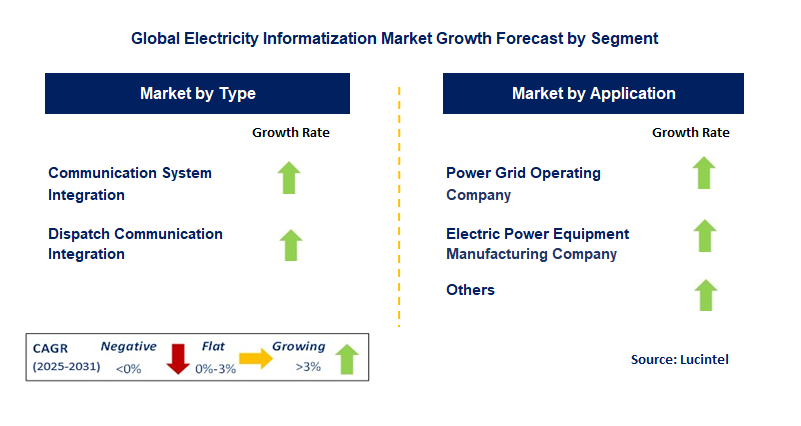
• Lucintel forecasts that, within the type category, communication system integration is expected to witness higher growth over the forecast period due to rising demand for seamless connectivity.
• Within the application category, power grid operating company is expected to witness higher growth.
• In terms of region, APAC is expected to witness the highest growth over the forecast period due to rapid infrastructure development in this region.
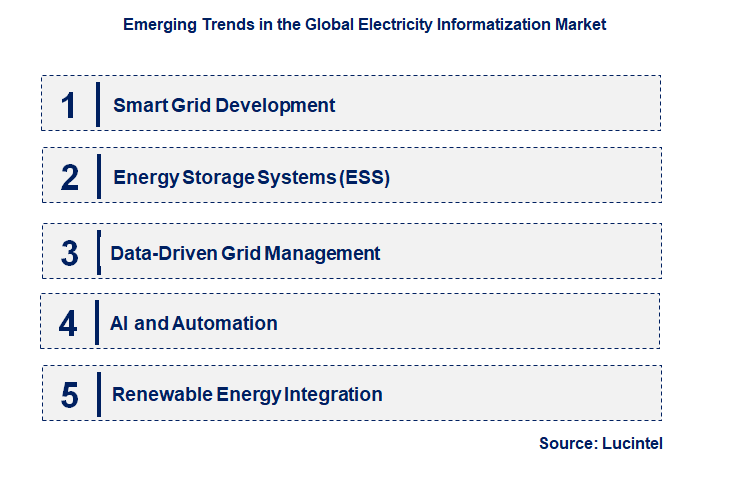
• Smart Grid Development: Smart grids are becoming a key trend as they enable two-way communication between utilities and consumers. This allows for better monitoring, more efficient energy usage, and the integration of renewable energy sources. Smart grids also facilitate advanced demand response, improving grid reliability and resilience.
• Energy Storage Systems (ESS): Energy storage systems are crucial for managing the intermittency of renewable energy. With the growing adoption of solar and wind energy, ESS helps store excess energy and release it when demand is high. This enhances grid stability and ensures a more reliable power supply.
• Data-Driven Grid Management: The use of big data analytics in grid management is gaining traction. By analyzing large volumes of data from sensors and smart meters, utilities can predict energy consumption patterns, detect faults, and optimize grid operations. This leads to better decision-making and improved operational efficiency.
• AI and Automation: Artificial intelligence (AI) and automation are transforming electricity informatization. AI algorithms help optimize grid performance, detect faults in real time, and predict energy demand. Automation enables quicker responses to changes in energy usage and improves the overall efficiency of grid operations.
• Renewable Energy Integration: With the global push toward sustainability, integrating renewable energy sources like solar, wind, and hydroelectric power into the grid is a growing trend. Smart grid technologies and energy storage solutions facilitate the smooth integration of these variable energy sources, reducing reliance on fossil fuels. These emerging trends are shaping the future of the electricity informatization market by improving grid efficiency, enabling renewable energy integration, and enhancing operational capabilities. As these technologies continue to evolve, they will play a significant role in building smarter, more sustainable energy systems worldwide.
• Smart Meter Rollouts: The widespread rollout of smart meters is one of the key developments in the electricity informatization market. These meters provide real-time data on energy consumption, enabling utilities to better manage load, improve billing accuracy, and offer more personalized energy-saving solutions to consumers.
• AI-Powered Grid Management Systems: Utilities are increasingly adopting AI-powered grid management systems to optimize the performance of power grids. These systems use predictive analytics to foresee potential disruptions, enhance load balancing, and prevent outages. AI is helping utilities improve overall grid resilience and reduce downtime.
• Renewable Energy Integration Technologies: Technologies that enable the smooth integration of renewable energy sources into the grid are seeing significant development. Advances in power electronics and smart inverters are helping stabilize the grid as renewable energy, such as solar and wind, becomes a larger part of the energy mix.
• Cybersecurity for Smart Grids: As grids become more digitalized, cybersecurity has become a critical focus. The increased vulnerability of interconnected systems to cyberattacks has led to the development of more robust security protocols to protect critical infrastructure from potential threats.
• Energy Storage and Microgrids: Energy storage systems, coupled with microgrid technologies, are gaining popularity. These solutions enable localized energy generation and storage, allowing for improved energy resilience, especially in remote or disaster-prone areas. Microgrids also help with the integration of renewable energy sources at a local level. These recent developments are significantly enhancing the efficiency, reliability, and sustainability of electricity systems. As smart technologies, AI, and energy storage solutions continue to advance, they will play a key role in modernizing energy infrastructure worldwide.
• Smart Grid and Smart Meter Expansion: The expansion of smart grid infrastructure and smart meter deployment represents a major growth opportunity. These technologies enable real-time data collection, improving grid management, energy efficiency, and enabling demand response programs. Smart meters also offer utilities and consumers better insights into energy consumption.
• Renewable Energy Integration Solutions: With the global shift toward renewable energy, there is a significant opportunity to develop technologies that facilitate the integration of solar, wind, and other renewable energy sources into the grid. Innovations such as smart inverters, energy storage systems, and flexible grid management platforms are essential to this transition.
• AI-Driven Grid Optimization: AI-driven solutions for grid optimization offer a promising growth area. These systems can improve the reliability, efficiency, and performance of electricity grids by predicting demand, identifying faults, and automating grid operations. The increasing reliance on data analytics makes AI an essential tool for future grid development.
• Energy Storage Systems (ESS): The demand for energy storage systems is rapidly growing as renewable energy adoption increases. ESS help smooth out the fluctuations in power supply from renewable sources and ensure a steady power flow. This market presents growth potential for companies involved in battery technologies and storage solutions.
• Cybersecurity Solutions for Smart Grids: As more critical infrastructure moves to digital platforms, the need for cybersecurity solutions for smart grids is expanding. The market for secure grid management systems, threat detection, and prevention tools is expected to grow as utilities invest in protecting their networks from cyber threats. These strategic growth opportunities are helping the electricity informatization market transition toward smarter, more sustainable, and secure energy systems. As technologies like smart grids, energy storage, and AI-driven analytics continue to evolve, they will play a significant role in shaping the future of global electricity infrastructure.
• Zeyu Intelligent Electric Power
• Hirisun Technology
• Wiscom System
• Shanghai Huidian Intelligent Technology
• Nanjing Jingzhong Information Technology
• NARI Technology
• Dongfang Electronics
• Guodian Nanjing Automation,
• Dongfang Electronics
• Zhi
• Communication System Integration
• Dispatch Communication Integration
• Power Grid Operating Company
• Electric Power Equipment Manufacturing Company
• Others
• North America
• Europe
• Asia Pacific
• The Rest of the World
• United States: The U.S. has made considerable strides in electricity informatization, with widespread adoption of smart meters, grid modernization, and advanced data analytics. These efforts are focused on improving grid resilience, enhancing demand response capabilities, and integrating renewable energy sources more efficiently. Regulatory support and large-scale infrastructure investments are pushing the development of smart grid technologies in urban and rural areas alike.
• China: China is leading in electricity informatization with a national strategy that focuses on smart grid deployment, renewable energy integration, and energy storage technologies. The government is investing heavily in digital technologies, such as smart meters and AI-driven grid management systems, to optimize power distribution and increase energy efficiency. China's push toward sustainability is driving innovation in both urban and rural electricity networks.
• Germany: Germany has been at the forefront of energy transition (Energiewende), with a strong focus on integrating renewable energy into the grid and reducing carbon emissions. In the electricity informatization sector, Germany is advancing smart grid technologies and digitalization to enhance grid stability. The country’s commitment to energy storage solutions and data-driven analytics is supporting a greener, more efficient energy infrastructure.
• India: India is rapidly adopting electricity informatization to address its growing energy demands and improve grid management. Smart grids, digital meters, and renewable energy integration are central to the country’s plans to modernize its power infrastructure. The government is also focusing on expanding electricity access to remote areas through digital technologies, which is enhancing efficiency and supporting sustainable energy solutions.
• Japan: Japan is focusing on upgrading its electricity infrastructure with cutting-edge digital technologies to ensure energy security and sustainability. The country is heavily investing in smart grid systems, electric vehicle charging networks, and energy management solutions. Japan’s efforts are aimed at improving grid efficiency, reducing dependency on fossil fuels, and integrating renewable energy sources more effectively.


• Zeyu Intelligent Electric Power
• Hirisun Technology
• Wiscom System
• Shanghai Huidian Intelligent Technology
• Nanjing Jingzhong Information Technology
• NARI Technology
• Dongfang Electronics
• Guodian Nanjing Automation,
• Dongfang Electronics
• Zhiyang Innovation Technology Q5. Which electricity informatization market segment will be the largest in future? Answer: Lucintel forecasts that, within the type category, communication system integration is expected to witness higher growth over the forecast period due to rising demand for seamless connectivity. Q6. In electricity informatization market, which region is expected to be the largest in next 5 years? Answer: In terms of region, APAC is expected to witness the highest growth over the forecast period due to rapid infrastructure development in this region. Q7. Do we receive customization in this report? Answer: Yes, Lucintel provides 10% customization without any additional cost.


Choose a license that fits your team. Instant PDF delivery.
Prices exclude taxes. Instant delivery. Custom licensing available on request.
Market Report · July 31, 2026
Market Report · July 31, 2026
Market Report · July 31, 2026
Trusted partner for strategic intelligence and business growth


Receive a complimentary market analysis tailored to your industry. Our analysts will identify key growth opportunities and competitive dynamics specific to your business.

Market size, growth rate, and key trend analysis for your specific sector.

Top competitor positioning and market share analysis.

Strategic recommendations backed by data-driven insights.
Get curated market intelligence and competitive moves straight to your inbox.
By subscribing, you agree to receive our monthly insights. Unsubscribe anytime.
Receive a complimentary market analysis tailored to your industry. Our analysts will identify key growth opportunities and competitive dynamics specific to your business.
Market size, growth rate, and key trend analysis for your specific sector.
Top competitor positioning and market share analysis.
Strategic recommendations backed by data-driven insights.
Get curated market intelligence, emerging trends, and competitive moves straight to your inbox each month.
By subscribing, you agree to receive our monthly insights. Unsubscribe anytime.
We'll send your sample report shortly.