
Report Feature
Electrical Bushing Market Trends and Forecast
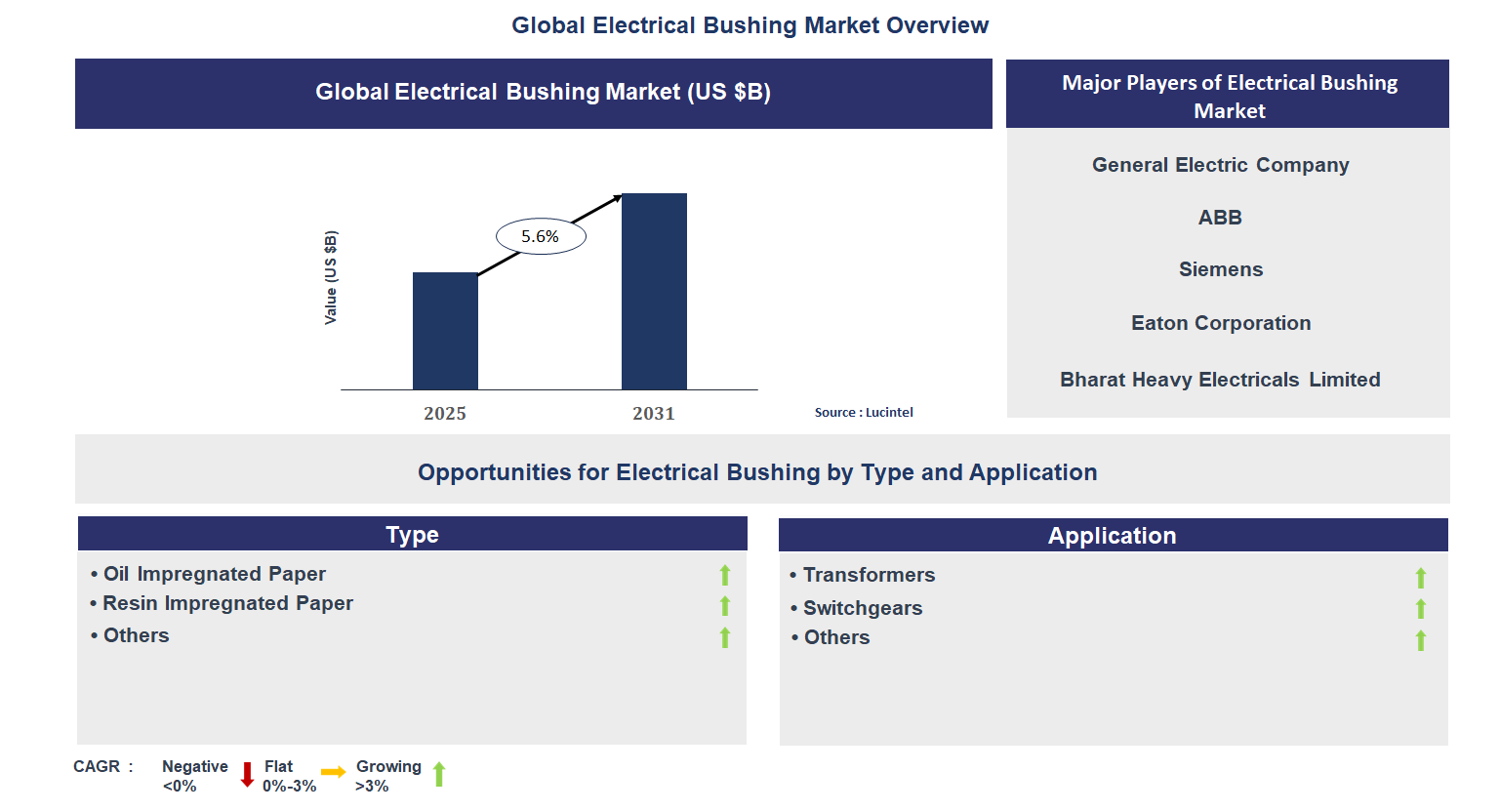
The future of the global electrical bushing market looks promising with opportunities in the transformer and switchgear markets. The global electrical bushing market is expected to grow with a CAGR of 5.6% from 2025 to 2031. The major drivers for this market are the increasing demand for electrical infrastructure upgrades, the rising investments in power transmission networks, and the growing need for reliable insulation solutions.• Lucintel forecasts that, within the type category, oil impregnated paper is expected to witness higher growth over the forecast period.
• Within the application category, transformer is expected to witness higher growth.
• In terms of region, APAC is expected to witness the highest growth over the forecast period. Gain valuable insights for your business decisions with our comprehensive 150+ page report. Sample figures with some insights are shown below.
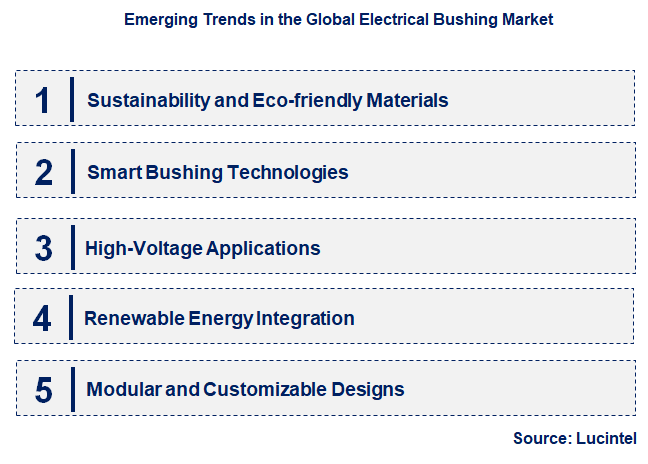
Emerging Trends in the Electrical Bushing Market
The electrical bushing market is undergoing transformative changes driven by several emerging trends. These trends reflect the growing demand for advanced solutions in power transmission and distribution, as well as the integration of renewable energy sources into national grids.• Sustainability and Eco-friendly Materials: There is an increasing shift towards using sustainable materials like composite bushings that reduce environmental impact and offer improved durability. These materials are also lightweight, which is beneficial for reducing transportation and installation costs in large-scale infrastructure projects.
• Smart Bushing Technologies: The integration of sensors and monitoring systems into electrical bushings is a growing trend. Smart bushings can detect issues such as temperature changes, overloading, and faults, offering real-time data that helps prevent system failures and optimize power distribution efficiency.
• High-Voltage Applications: As global power transmission networks expand and require more efficient components, the demand for high-voltage electrical bushings is rising. Manufacturers are focusing on designing bushings that can handle extreme voltage levels while ensuring safety, reliability, and minimal energy loss in transmission systems.
• Renewable Energy Integration: With the increasing focus on renewable energy sources like wind and solar, electrical bushings are being specifically designed to handle the fluctuating power demands and environmental conditions typical of renewable energy systems. These bushings ensure smooth power transfer and grid stability.
• Modular and Customizable Designs: There is a growing preference for modular and customizable electrical bushings. These flexible solutions allow for easier installation and maintenance in complex energy grids, especially in large-scale projects where adaptability is crucial to meet various operational requirements. Emerging trends such as the adoption of sustainable materials, integration with renewable energy systems, and the shift towards smart technologies are reshaping the electrical bushing market. Manufacturers are adapting to these trends by developing more efficient, durable, and adaptable products, making them essential components for modern power systems and infrastructure.
Recent Development in the Electrical Bushing Market
Several key developments in the electrical bushing market reflect the evolving demands of the power transmission, renewable energy, and smart grid sectors. These developments are setting the stage for future innovations in the electrical bushing industry.• Introduction of Composite Materials: The use of composite materials in electrical bushings has gained traction due to their excellent insulation properties and resistance to corrosion. These materials are becoming the preferred choice in high-voltage applications, as they offer longer lifespans and better performance compared to traditional metal-based bushings.
• Smart Bushing Sensors: The integration of sensors into electrical bushings is enabling real-time monitoring of voltage, temperature, and other parameters. These smart bushings help prevent potential failures by providing early warning signs, allowing for proactive maintenance and improved grid reliability.
• High-Voltage Bushing Innovations: As power grids expand to accommodate growing energy demands, the development of advanced high-voltage bushings is crucial. These bushings are designed to withstand extreme electrical stresses while maintaining high levels of safety and reliability in critical infrastructure.
• Advances in Renewable Energy Applications: With the rise of renewable energy sources, electrical bushings are being designed specifically for wind and solar energy systems. These bushings need to be highly reliable and efficient, handling fluctuations in energy supply and ensuring smooth integration with power grids.
• Customization for Large-Scale Infrastructure Projects: The trend toward modular and customizable electrical bushings is growing. Manufacturers are offering solutions that can be tailored to specific energy requirements, allowing for easy integration into large-scale power transmission and distribution systems. Key developments such as the introduction of composite materials, smart technologies, and high-voltage innovations are significantly impacting the electrical bushing market. These advancements are helping meet the evolving demands of modern power grids, renewable energy systems, and infrastructure projects, enhancing efficiency, safety, and reliability in electrical systems.
Strategic Growth Opportunities in the Electrical Bushing Market
The electrical bushing market presents several strategic growth opportunities across key applications, driven by expanding power networks, renewable energy integration, and the increasing adoption of smart grid technologies. These opportunities enable manufacturers to offer tailored solutions for diverse energy needs.• Renewable Energy Systems: The growth of renewable energy sources such as wind and solar creates a significant opportunity for electrical bushing manufacturers. These systems require specialized bushings that can handle fluctuating power outputs and operate efficiently in varying environmental conditions, ensuring grid stability.
• Smart Grid Development: The rise of smart grids presents a growth opportunity for electrical bushings integrated with sensor technologies. These smart bushings allow for real-time monitoring of grid performance, enabling improved energy distribution, predictive maintenance, and reduced operational costs.
• High-Voltage Power Transmission: As power transmission networks expand to meet growing demand, there is an increasing need for high-voltage bushings that can maintain performance and reliability under extreme conditions. Manufacturers can capitalize on this demand by producing bushings that ensure safe and efficient high-voltage transmission.
• Industrial Applications: The industrial sector’s demand for reliable and efficient power systems presents an opportunity for electrical bushing manufacturers. Custom solutions tailored to industrial environments, such as large-scale manufacturing plants and high-voltage industrial applications, will be in high demand.
• Emerging Markets: Emerging markets, particularly in Asia and Africa, are expanding their power grids and infrastructure. These regions offer significant growth opportunities for affordable and reliable electrical bushings, as the demand for efficient power distribution systems increases. Strategic growth opportunities in renewable energy, smart grids, and emerging markets are creating a dynamic landscape for the electrical bushing market. Manufacturers who can innovate and provide tailored solutions for these growing sectors will be well-positioned to capture market share and contribute to the evolution of global power infrastructure.
Electrical Bushing Market Driver and Challenges
The electrical bushing market is influenced by various drivers and challenges that impact its growth and development. Technological innovations, increased demand for renewable energy, and regulatory factors are some of the key drivers, while challenges like material costs and market competition also play a significant role. The factors responsible for driving the electrical bushing market include: 1. Technological Advancements: Innovations in materials, such as composite bushings, and the integration of smart sensors are driving the market. These advancements enhance the performance, durability, and efficiency of electrical bushings, making them suitable for modern power systems. 2. Growth in Renewable Energy: The rising adoption of renewable energy sources is a key driver for the electrical bushing market. As renewable energy systems like wind and solar become more prevalent, there is a growing need for specialized bushings designed for fluctuating energy supplies and harsh environments. 3. Expansion of Power Transmission Networks: The demand for reliable and high-performance electrical bushings is growing due to the expansion of global power transmission networks. As countries modernize and expand their energy grids, high-quality bushings are essential for maintaining system reliability. 4. Focus on Safety and Efficiency: The increasing focus on energy efficiency and system safety is driving the demand for electrical bushings that can prevent faults and improve power distribution efficiency. This is particularly important in industrial and commercial sectors that require high-quality electrical components. 5. Smart Grid Development: The adoption of smart grid technologies is creating demand for intelligent electrical bushings that can monitor key parameters in real time. These bushings help improve grid performance and reduce operational costs by providing data-driven insights. Challenges in the electrical bushing market are: 1. Material Costs: The rising costs of raw materials, particularly for high-performance composite materials, can challenge manufacturers. Balancing cost-effectiveness with the need for high-quality materials is an ongoing challenge in the electrical bushing market. 2. Regulatory Compliance: Manufacturers must comply with stringent regulations regarding safety, quality, and environmental impact. Adapting to these regulations while maintaining cost efficiency presents a challenge for companies in the electrical bushing market. 3. Intense Market Competition: The global market for electrical bushings is highly competitive, with numerous manufacturers vying for market share. Companies must continuously innovate to differentiate their products and meet the growing demand for specialized solutions. The electrical bushing market is driven by technological advancements, renewable energy growth, and the expansion of power grids, but faces challenges such as rising material costs, regulatory pressures, and intense competition. Addressing these drivers and challenges will be key for manufacturers to stay competitive and capitalize on emerging opportunities in the market.List of Electrical Bushing Companies
Companies in the market compete on the basis of product quality offered. Major players in this market focus on expanding their manufacturing facilities, R&D investments, infrastructural development, and leverage integration opportunities across the value chain. With these strategies electrical bushing companies cater increasing demand, ensure competitive effectiveness, develop innovative products & technologies, reduce production costs, and expand their customer base. Some of the electrical bushing companies profiled in this report include-• General Electric Company
• ABB
• Siemens
• Eaton Corporation
• Bharat Heavy Electricals Limited
• Nexans
• GAMMA Insulator Company
Electrical Bushing Market by Segment
The study includes a forecast for the global electrical bushing market by type, application, and region.Electrical Bushing Market by Type [Value from 2019 to 2031]:
• Oil Impregnated Paper
• Resin Impregnated Paper
• Others
Electrical Bushing Market by Application [Value from 2019 to 2031]:
• Transformers
• Switchgears
• Others
Electrical Bushing Market by Region [Value from 2019 to 2031]:
• North America
• Europe
• Asia Pacific
• The Rest of the World
Country Wise Outlook for the Electrical Bushing Market
The electrical bushing market is witnessing significant advancements as industries demand more efficient, durable, and sustainable electrical components. These developments are driven by increasing power infrastructure projects, growing renewable energy adoption, and the modernization of power grids. Key markets such as the United States, China, Germany, India, and Japan are leading these changes with innovations in materials, designs, and technologies.• United States: In the U.S., the electrical bushing market is advancing with a focus on smart grid integration and sustainable materials. The country’s shift toward renewable energy sources has led to innovations in bushing designs, such as composite bushings, which offer better insulation and reliability. The development of smart bushings, equipped with sensors to monitor performance, is driving the need for more advanced electrical components.
• China: China continues to be a dominant force in the global electrical bushing market, with a significant expansion in manufacturing capacities. The country’s growing power transmission and distribution networks require reliable and cost-effective bushings. Manufacturers in China are investing in advanced technologies to produce bushings that can withstand the challenges posed by high-voltage applications and extreme environmental conditions.
• Germany: Germanys electrical bushing market is characterized by high standards of quality and precision engineering. With an emphasis on durable and high-performance materials, such as ceramic and composite bushings, German manufacturers are producing bushings that are highly reliable in both high-voltage and renewable energy applications. The growing integration of renewable energy sources is driving demand for advanced bushings that ensure long-term performance.
• India: India is experiencing a surge in electrical bushing demand as the country invests heavily in expanding its power grid and renewable energy projects. As the nation modernizes its power infrastructure, the need for high-quality, cost-effective bushings is growing. Manufacturers are focusing on producing bushings that can handle high-voltage, ensuring efficiency and safety in transmission and distribution networks.
• Japan: In Japan, the electrical bushing market is driven by innovations in materials and advanced engineering. With a strong focus on renewable energy integration, Japan’s manufacturers are producing bushings designed for both high voltage and renewable energy systems. These bushings are equipped with smart technologies to monitor and enhance the performance of electrical systems, contributing to energy efficiency and system reliability.

Features of the Global Electrical Bushing Market
Market Size Estimates: Electrical bushing market size estimation in terms of value ($B). Trend and Forecast Analysis: Market trends (2019 to 2024) and forecast (2025 to 2031) by various segments and regions. Segmentation Analysis: Electrical bushing market size by type, application, and region in terms of value ($B). Regional Analysis: Electrical bushing market breakdown by North America, Europe, Asia Pacific, and Rest of the World. Growth Opportunities: Analysis of growth opportunities in different types, applications, and regions for the electrical bushing market. Strategic Analysis: This includes M&A, new product development, and competitive landscape of the electrical bushing market. Analysis of competitive intensity of the industry based on Porter’s Five Forces model.
FAQ
Q1. What is the growth forecast for electrical bushing market? Answer: The global electrical bushing market is expected to grow with a CAGR of 5.6% from 2025 to 2031. Q2. What are the major drivers influencing the growth of the electrical bushing market? Answer: The major drivers for this market are the increasing demand for electrical infrastructure upgrades, the rising investments in power transmission networks, and the growing need for reliable insulation solutions. Q3. What are the major segments for electrical bushing market? Answer: The future of the electrical bushing market looks promising with opportunities in the transformer and switchgear markets. Q4. Who are the key electrical bushing market companies? Answer: Some of the key electrical bushing companies are as follows:• General Electric Company
• ABB
• Siemens
• Eaton Corporation
• Bharat Heavy Electricals Limited
• Nexans
• GAMMA Insulator Company Q5. Which electrical bushing market segment will be the largest in future? Answer: Lucintel forecasts that, within the type category, oil impregnated paper is expected to witness higher growth over the forecast period. Q6. In electrical bushing market, which region is expected to be the largest in next 5 years? Answer: In terms of region, APAC is expected to witness the highest growth over the forecast period. Q7. Do we receive customization in this report? Answer: Yes, Lucintel provides 10% customization without any additional cost.
Table of Contents
List of Figures
List of Tables
Methodology
- In-depth interviews of the major players in this market
- Detailed secondary research from competitors’ financial statements and published data
- Extensive searches of published works, market, and database information pertaining to industry news, company press releases, and customer intentions
- A compilation of the experiences, judgments, and insights of Lucintel’s professionals, who have analyzed and tracked this market over the years.


Buy Now
Choose a license that fits your team. Instant PDF delivery.
Prices exclude taxes. Instant delivery. Custom licensing available on request.
Key Questions
- • What are some of the most promising, high-growth opportunities for the electrical bushing market by type (oil impregnated paper, resin impregnated paper, and others), application (transformers, switchgears, and others), and region (North America, Europe, Asia Pacific, and the Rest of the World)?
- • Which segments will grow at a faster pace and why?
- • Which region will grow at a faster pace and why?
- • What are the key factors affecting market dynamics? What are the key challenges and business risks in this market?
- • What are the business risks and competitive threats in this market?
- • What are the emerging trends in this market and the reasons behind them?
- • What are some of the changing demands of customers in the market?
- • What are the new developments in the market? Which companies are leading these developments?
- • Who are the major players in this market? What strategic initiatives are key players pursuing for business growth?
- • What are some of the competing products in this market and how big of a threat do they pose for loss of market share by material or product substitution?
- • What M&A activity has occurred in the last 5 years and what has its impact been on the industry? For any questions related to Electrical Bushing Market, Electrical Bushing Market Size, Electrical Bushing Market Growth, Electrical Bushing Market Analysis, Electrical Bushing Market Report, Electrical Bushing Market Share, Electrical Bushing Market Trends, Electrical Bushing Market Forecast, Electrical Bushing Companies, write Lucintel analyst at email: helpdesk@lucintel.com. We will be glad to get back to you soon.


