
Market Report · July 22, 2026

Key data points: The market size in 2035 = $1,285 million, growth forecast = 4.2% annually for the next 8 years. Scroll below to get more insights. This market report covers trends, opportunities and forecasts in electric yarn and fabric market to 2035 by application (PCB, sleeves, axle, and others), end use (computers/peripherals, communication, consumer electronics, industrial electronics, automotive, military/aerospace, and others), and region (North America, Europe, Asia Pacific, and the Rest of the World)
We'll send your sample report shortly.
• Lucintel forecasts that, within the application category, PCB is expected to witness the highest growth over the forecast period.
• Within the end use category, consumer electronic is expected to witness the highest growth.
• In terms of region, APAC is expected to witness the highest growth over the forecast period.
Gain valuable insights for your business decisions with our comprehensive 150+ page report. Sample figures with some insights are shown below.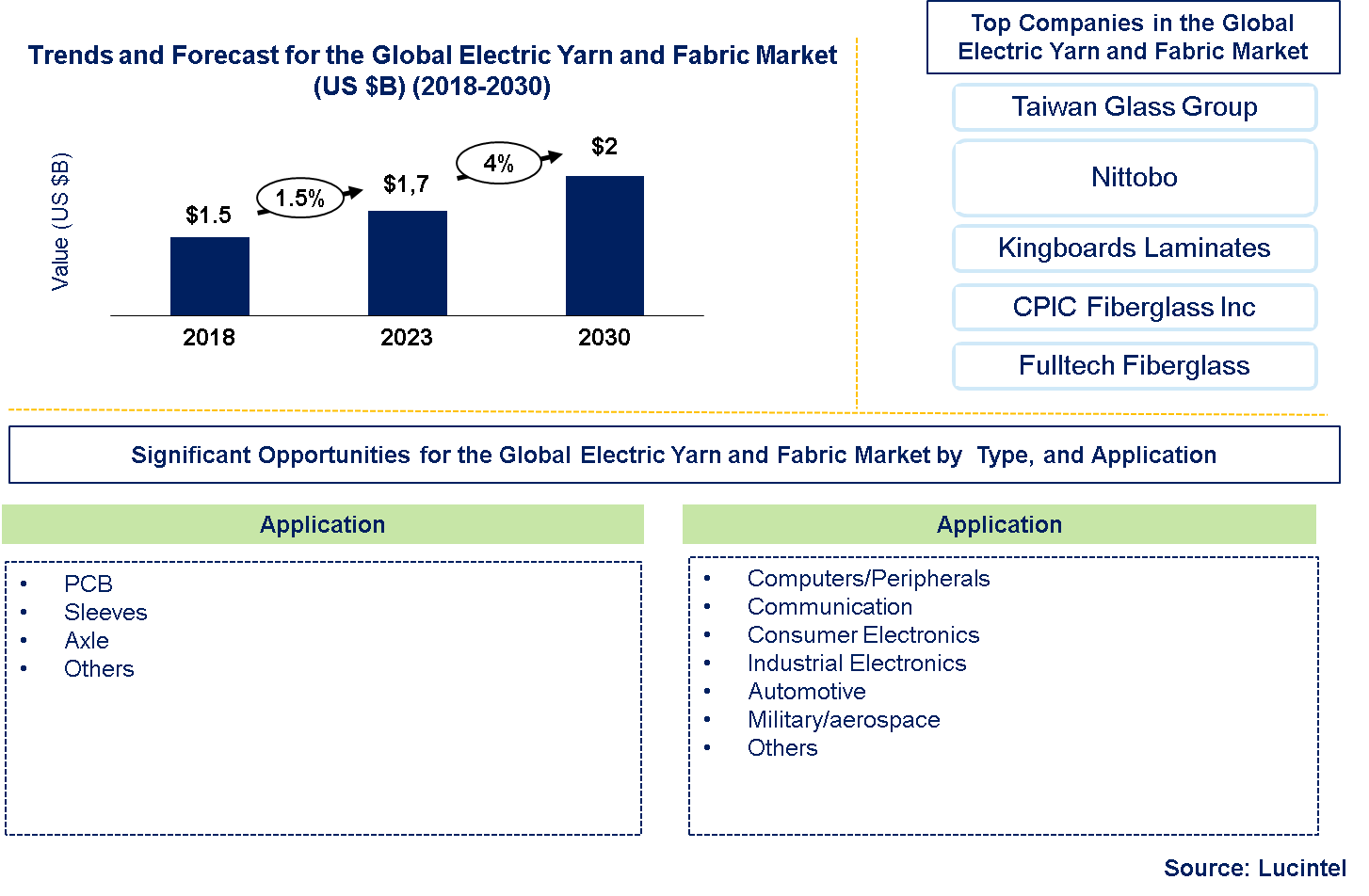
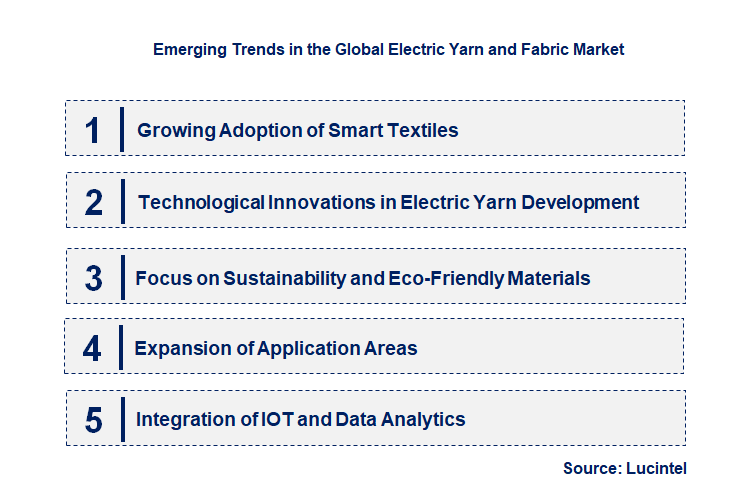
• Growing Adoption of Smart Textiles: The demand for smart textiles is rising as consumers and industries seek fabrics that offer added functionalities such as conductivity, sensing, and energy storage. These textiles enable applications like wearable health monitors, interactive clothing, and adaptive fashion. Advances in electric yarn technology allow for seamless integration of electronics into fabrics, making them more comfortable and durable. This trend is driven by increasing awareness of health and fitness, as well as the need for innovative solutions in healthcare and sports. The adoption of smart textiles is expected to significantly expand market size and diversify product offerings.
• Technological Innovations in Electric Yarn Development: Continuous innovations in electric yarn manufacturing are enhancing performance, flexibility, and cost-effectiveness. New materials such as conductive polymers, carbon nanotubes, and graphene are being incorporated to improve conductivity and durability. These advancements enable the production of lightweight, washable, and highly responsive fabrics suitable for various applications. The development of multifunctional yarns that combine electrical, thermal, and mechanical properties is opening new avenues for product development. Such innovations are crucial for meeting the evolving demands of end-users and maintaining competitive advantage in the market.
• Focus on Sustainability and Eco-Friendly Materials: Environmental concerns are prompting manufacturers to develop sustainable electric yarns and fabrics. This includes using biodegradable, recyclable, and non-toxic materials to reduce ecological impact. Innovations in bio-based conductive materials and eco-friendly manufacturing processes are gaining traction. The market is witnessing a shift towards sustainable sourcing and production practices, aligning with global efforts to combat climate change. This trend not only appeals to environmentally conscious consumers but also helps companies meet regulatory standards. The emphasis on sustainability is shaping product development and influencing consumer purchasing decisions.
• Expansion of Application Areas: Electric yarns and fabrics are increasingly being adopted across diverse sectors beyond fashion and sports, including healthcare, military, automotive, and industrial sectors. In healthcare, they enable wearable sensors for patient monitoring and rehabilitation. In automotive and industrial applications, they contribute to smart interiors and safety systems. Military applications include flexible, conductive textiles for communication and camouflage. This broadening of application areas is driven by the versatility and adaptability of electric textiles, which can be customized for specific needs. The expansion is expected to accelerate market growth and foster cross-sector innovation.
• Integration of IoT and Data Analytics: The convergence of electric textiles with Internet of Things (IoT) technology is creating intelligent, connected products. These textiles can collect, transmit, and analyze data in real-time, enabling applications like remote health monitoring, environmental sensing, and adaptive clothing. The integration enhances user experience and provides valuable insights for manufacturers and end-users. Advances in data analytics and wireless communication are facilitating seamless connectivity. This trend is transforming electric yarns from simple conductive materials into integral components of smart, data-driven systems, thereby expanding their functionality and market potential.
• Growing Adoption of Smart Textiles: The integration of electronic components into yarns and fabrics is creating new applications in healthcare, sports, and fashion, boosting market growth.
• Advancements in Conductive Fibers: Innovations in conductive materials are enabling more durable, flexible, and cost-effective fabrics, expanding their use in wearable technology and industrial applications.
• Rising Demand for Sustainable Solutions: Eco-friendly yarns and fabrics with embedded electronics are gaining popularity, driven by environmental concerns and regulatory pressures.
• Expansion of IoT-Enabled Textiles: The incorporation of IoT technology into fabrics is facilitating real-time data collection and connectivity, opening avenues in smart clothing and industrial monitoring.
• Increased Investments and Collaborations: Strategic partnerships and funding are accelerating research and commercialization of electric yarns and fabrics, fostering market competitiveness and innovation.
• Expansion into Healthcare for Smart Medical Textiles: Electric yarns and fabrics are increasingly used in healthcare for developing smart bandages, wearable health monitors, and therapeutic textiles. These products enable real-time health monitoring, drug delivery, and enhanced patient care. The integration of conductive fibers with sensors and wireless technology offers significant growth potential, especially in personalized medicine and remote patient monitoring. This trend is expected to drive demand and innovation in medical textiles, opening new revenue streams for industry players.
• Growing Adoption in Fashion and Wearable Technology: The fashion industry is adopting electric yarns and fabrics to create interactive clothing, accessories, and sportswear. These textiles incorporate lighting, heating, and sensory features, enhancing user experience and functionality. Consumer interest in smart wearables and connected apparel is boosting market growth. Fashion brands are collaborating with tech companies to develop innovative products, expanding market reach. This convergence of fashion and technology is expected to propel the electric fabric market into mainstream consumer markets.
• Integration with IoT and Smart Home Devices: Electric yarns and fabrics are increasingly integrated into IoT ecosystems and smart home applications. They enable the development of responsive curtains, furniture, and clothing that can control lighting, temperature, or security systems. The seamless connectivity and energy efficiency of these textiles make them attractive for innovative home automation solutions. As IoT adoption accelerates, the demand for conductive textiles in smart environments is poised to grow, creating new opportunities for manufacturers and technology providers.
• Expansion in Industrial and Automotive Applications: Electric yarns and fabrics are being adopted in industrial settings for sensing, safety, and automation. In automotive manufacturing, they are used in seat heating, interior lighting, and sensor integration for vehicle safety systems. These textiles offer durability, flexibility, and conductivity, making them suitable for harsh environments. The increasing focus on smart manufacturing and connected vehicles is expected to drive demand, fostering innovation and expanding the application scope of electric textiles in industrial sectors.
• Development of Sustainable and Eco-Friendly Conductive Materials: The market is witnessing a shift towards sustainable, biodegradable, and eco-friendly conductive fibers to address environmental concerns. Innovations in bio-based polymers and recycled materials are enabling the production of environmentally responsible electric yarns and fabrics. This trend aligns with global sustainability goals and appeals to eco-conscious consumers. The development of green conductive textiles is expected to open new markets, reduce environmental impact, and enhance brand reputation for manufacturers committed to sustainability.
• Technological Advancements: The development of smart textiles incorporating electronic components has revolutionized the market. Innovations in conductive fibers, sensors, and integration techniques enable the production of high-performance, interactive fabrics. These advancements meet the rising consumer demand for wearable technology, healthcare monitoring, and enhanced safety features. As technology continues to evolve, manufacturers can create more sophisticated and durable electric yarns and fabrics, expanding their applications across various sectors such as sports, healthcare, and fashion. This ongoing innovation drives market growth by opening new avenues for product development and differentiation.
• Growing Demand for Smart Textiles: Increasing consumer awareness and preference for functional and connected clothing are fueling the demand for electric yarns and fabrics. The integration of electronics into textiles offers benefits like health monitoring, fitness tracking, and environmental sensing. The rise of wearable devices and IoT integration further boosts this demand, especially in healthcare, sports, and military applications. As consumers seek more personalized and technologically advanced products, manufacturers are motivated to develop innovative electric textiles, thereby expanding market opportunities and driving revenue growth.
• Expansion in Healthcare and Medical Applications: The healthcare sector is a significant driver for electric yarns and fabrics due to their potential in remote health monitoring, smart bandages, and medical textiles. These fabrics can incorporate sensors to track vital signs, detect infections, or deliver medication, improving patient care and treatment outcomes. The increasing prevalence of chronic diseases and the aging population worldwide further accelerates demand. Investments in R&D and supportive regulatory frameworks are facilitating the adoption of electric textiles in medical applications, making healthcare a key growth segment within the market.
• Rising Investment and R&D Activities: Major companies and startups are investing heavily in research and development to enhance the properties and functionalities of electric yarns and fabrics. These investments aim to improve durability, conductivity, and comfort, making the products more viable for commercial use. R&D efforts also focus on cost reduction and scalable manufacturing processes, which are crucial for market expansion. Increased funding and innovation collaborations are expected to accelerate product launches and technological breakthroughs, thereby fueling overall market growth.
• High Production Costs: Manufacturing electric yarns and fabrics involves complex processes, specialized materials, and advanced machinery, leading to high production costs. These costs can hinder price competitiveness and limit adoption, especially among small and medium-sized enterprises. Additionally, maintaining quality and consistency in electronic integration adds to manufacturing expenses. As a result, high costs may restrict market penetration and slow down the overall growth, particularly in price-sensitive regions.
• Regulatory and Standardization Challenges: The integration of electronics into textiles raises concerns related to safety, durability, and environmental impact. Lack of standardized regulations and certification processes complicates product development and market entry. Regulatory hurdles can delay product launches and increase compliance costs, deterring innovation and investment. Ensuring compliance with international standards is essential for global expansion, but the current regulatory landscape remains fragmented and evolving, posing significant challenges for manufacturers.
• Technological Complexities and Durability Issues: Developing electric yarns and fabrics that are both highly functional and durable remains a challenge. Electronic components must withstand washing, wear and tear, and environmental conditions without losing performance. Achieving seamless integration of electronics into textiles while maintaining flexibility and comfort is complex. These technological hurdles can limit product reliability and consumer acceptance, impeding widespread adoption and market growth.
• Taiwan Glass Group
• Nitto Boseki Co. Ltd.
• Kingboard Laminates Holding Ltd.
• CPIC
• Nan Ya Plastic
• Fulltech Fiber Glass Corporation
• CYC Composites
• Taishan Fiberglass Inc.
• AGY Holding Corporation
• Grace Fabric Technology Co. Ltd.
• PCB
• Sleeves
• Axle
• Others
• Computers/Peripherals
• Communication
• Consumer Electronics
• Industrial Electronics
• Automotive
• Military/Aerospace
• Others
• North America
• Europe
• Asia Pacific
• The Rest of the World
• United States: The U.S. market has seen significant advancements in smart textile integration, with major companies developing conductive yarns for wearable health devices. Investment in R&D is high, focusing on durability and eco-friendly materials. The adoption of electric fabrics in sportswear and medical applications is increasing, supported by strong consumer demand and technological innovation. Regulatory support for sustainable practices is also influencing product development, making the U.S. a leader in smart textile innovation.
• China: China remains the largest producer and consumer of electric yarn and fabrics, with rapid technological advancements and mass production capabilities. The focus is on cost-effective manufacturing and expanding applications in fashion, sports, and healthcare sectors. Government initiatives promote innovation and sustainability, leading to increased use of recycled and eco-friendly materials. The market is characterized by a surge in domestic brands and collaborations with international firms to enhance product quality and technological capabilities.
• Germany: Germany‘s market emphasizes high-quality, durable, and sustainable electric textiles, driven by strict EU regulations and consumer preferences. Innovations in conductive fibers for automotive and industrial applications are prominent. The country invests heavily in research collaborations between academia and industry to develop cutting-edge smart fabrics. Germany‘s focus on sustainability and precision engineering positions it as a key player in high-performance electric yarns and fabrics.
• India: The Indian market is witnessing rapid growth due to increasing demand for affordable smart textiles in healthcare, sports, and fashion. Local manufacturers are adopting innovative technologies to produce cost-effective electric yarns. Government initiatives promoting Make in India and sustainable manufacturing are encouraging domestic R&D. The expanding middle class and rising awareness of wearable technology are fueling market growth, with startups and established firms exploring new applications.
• Japan: Japan continues to lead in technological innovation, with a focus on integrating electric yarns into advanced wearable devices and robotics. The country emphasizes high-performance, lightweight, and energy-efficient fabrics. Collaborations between tech firms and textile manufacturers are common, fostering the development of multifunctional smart textiles. Japan‘s commitment to sustainability and precision engineering ensures the market remains at the forefront of electric fabric innovation, catering to both domestic and international markets.


• Taiwan Glass Group
• Nitto Boseki Co. Ltd.
• Kingboard Laminates Holding Ltd.
• CPIC
• Nan Ya Plastic
• Fulltech Fiber Glass Corporation
• CYC Composites
• Taishan Fiberglass Inc.
• AGY Holding Corporation
• Grace Fabric Technology Co. Ltd.
Q6. Which electric yarn and fabric market segment will be the largest in future?

Choose a license that fits your team. Instant PDF delivery.
Prices exclude taxes. Instant delivery. Custom licensing available on request.
Market Report · July 22, 2026
Market Report · July 22, 2026
Market Report · July 22, 2026
Trusted partner for strategic intelligence and business growth


Receive a complimentary market analysis tailored to your industry. Our analysts will identify key growth opportunities and competitive dynamics specific to your business.

Market size, growth rate, and key trend analysis for your specific sector.

Top competitor positioning and market share analysis.

Strategic recommendations backed by data-driven insights.
Get curated market intelligence and competitive moves straight to your inbox.
By subscribing, you agree to receive our monthly insights. Unsubscribe anytime.
Receive a complimentary market analysis tailored to your industry. Our analysts will identify key growth opportunities and competitive dynamics specific to your business.
Market size, growth rate, and key trend analysis for your specific sector.
Top competitor positioning and market share analysis.
Strategic recommendations backed by data-driven insights.
Get curated market intelligence, emerging trends, and competitive moves straight to your inbox each month.
By subscribing, you agree to receive our monthly insights. Unsubscribe anytime.
We'll send your sample report shortly.