
Report Feature
Electric Walking Treadmill Market Trends and Forecast
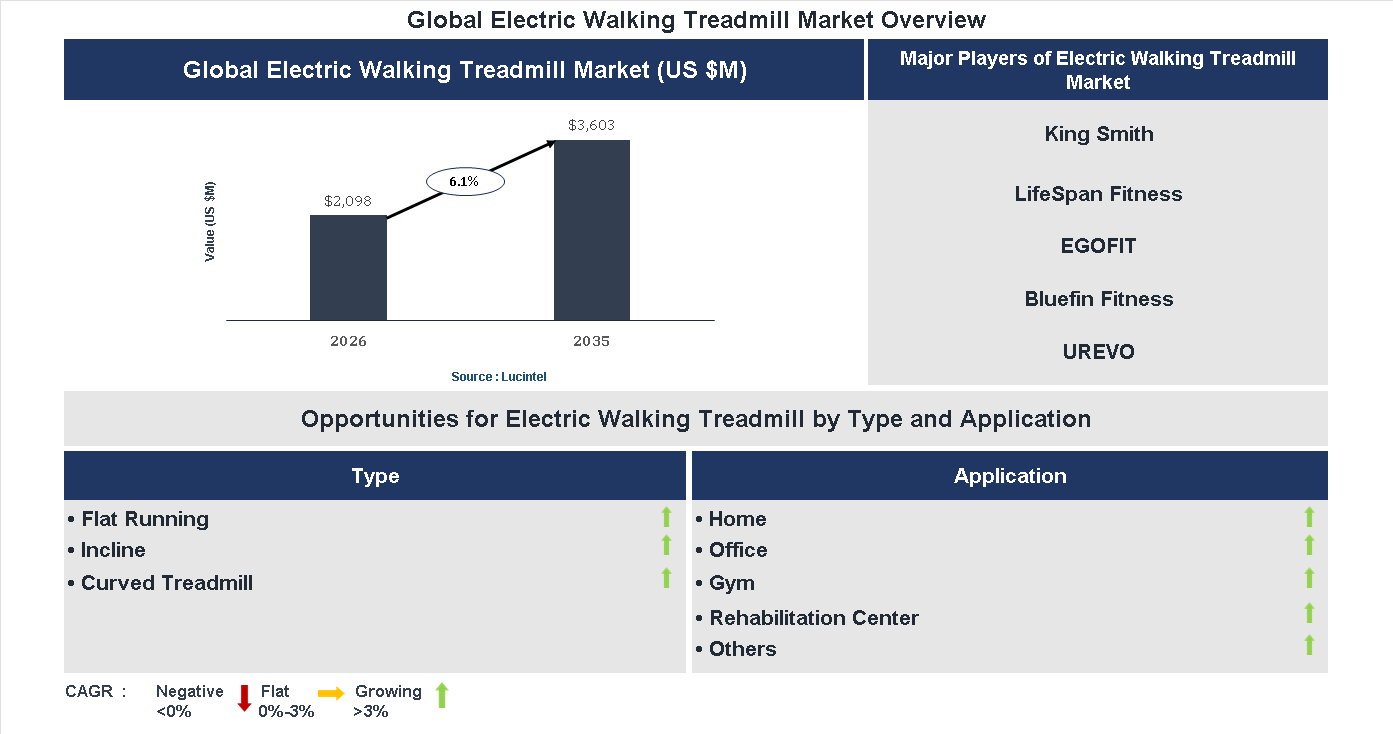
The future of the global electric walking treadmill market looks promising with opportunities in the home, office, gym, and rehabilitation center markets. The global electric walking treadmill market is expected to reach an estimated $3,603.0 million by 2035 with a CAGR of 6.1% from 2026 to 2035. The major drivers for this market are the increasing demand for at-home workouts, the rising popularity of fitness tech devices, and the growing awareness of health benefits.• Lucintel forecasts that, within the type category, curved treadmill is expected to witness the highest growth over the forecast period.
• Within the application category, home is expected to witness the highest growth.
• In terms of region, APAC is expected to witness the highest growth over the forecast period. Gain valuable insights for your business decisions with our comprehensive 150+ page report. Sample figures with some insights are shown below.
Emerging Trends in the Electric Walking Treadmill Market
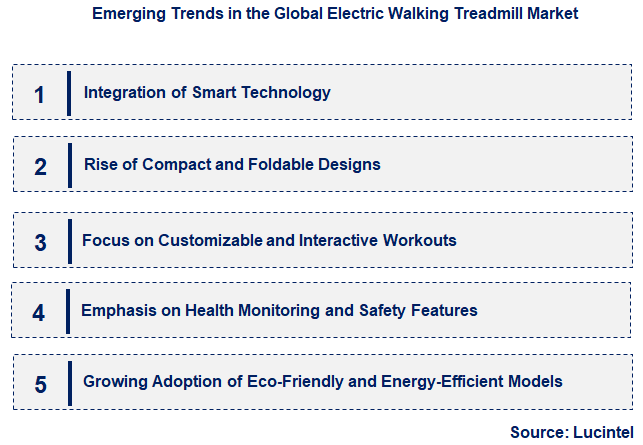
The electric walking treadmill market is experiencing rapid growth driven by increasing health consciousness, technological advancements, and a shift towards home fitness solutions. As consumers seek convenient, effective ways to incorporate physical activity into their daily routines, manufacturers are innovating to meet these demands. The market is also influenced by rising urbanization, a focus on wellness, and the integration of smart features. These developments are transforming the landscape, making treadmills more accessible, customizable, and connected. Understanding these emerging trends is essential for stakeholders aiming to capitalize on the evolving preferences and technological opportunities within this competitive market.• Integration of Smart Technology: The adoption of IoT-enabled features allows users to connect their treadmills with mobile apps, track progress, and customize workouts. This enhances user engagement and motivation, providing real-time feedback and personalized training programs. Smart technology also facilitates remote monitoring and maintenance, reducing downtime and improving user experience. As consumers increasingly seek connected fitness solutions, manufacturers are investing heavily in developing intelligent treadmills that offer seamless integration with other devices and platforms, thereby elevating the overall market standard.
• Rise of Compact and Foldable Designs: Space constraints in urban homes have driven demand for compact, foldable treadmills that are easy to store. These models offer portability without compromising on features, making them ideal for small living spaces. The trend towards minimalist design and multifunctionality is also influencing product development, with manufacturers focusing on lightweight yet durable materials. This shift not only broadens the customer base but also encourages more frequent use, contributing to increased market penetration and growth in residential segments.
• Focus on Customizable and Interactive Workouts: Consumers are seeking personalized fitness experiences, prompting manufacturers to develop treadmills with adjustable settings, virtual running environments, and interactive screens. These features make workouts more engaging and adaptable to individual fitness levels. The incorporation of virtual reality and gamification further motivates users by providing immersive experiences. This trend enhances user satisfaction, encourages consistent exercise routines, and attracts a broader demographic, including tech-savvy younger consumers, thereby expanding market reach.
• Emphasis on Health Monitoring and Safety Features: Advanced sensors and health tracking capabilities, such as heart rate monitors, step counters, and fatigue detection, are becoming standard. These features enable users to monitor their health metrics in real-time, promoting safer exercise practices. Additionally, safety features like emergency stop buttons and cushioning systems reduce injury risks. The integration of health monitoring not only appeals to health-conscious consumers but also aligns with the growing trend of preventive healthcare, positioning smart treadmills as essential wellness devices and driving market growth.
• Growing Adoption of Eco-Friendly and Energy-Efficient Models: Sustainability concerns are influencing product development, with manufacturers designing energy-efficient treadmills that consume less power and incorporate eco-friendly materials. Features like automatic shut-off, regenerative braking, and low-noise operation appeal to environmentally conscious consumers. This trend reflects a broader shift towards sustainable living and corporate responsibility, encouraging brands to innovate in eco-friendly design. As consumers prioritize sustainability, eco-friendly treadmills are gaining popularity, opening new market segments and fostering long-term industry growth. These emerging trends are collectively reshaping the electric walking treadmill market by making products more connected, space-efficient, personalized, safe, and sustainable. This evolution is expanding market opportunities, attracting diverse consumer segments, and setting new standards for innovation and user experience in the fitness industry.
Recent Development in the Electric Walking Treadmill Market
The electric walking treadmill market is experiencing rapid growth driven by increasing health consciousness, technological advancements, and a surge in home fitness solutions. Consumers seek convenient, efficient ways to stay active amid busy lifestyles and pandemic-related restrictions. Innovations in design, connectivity, and user experience are transforming the market landscape. This report highlights five key developments shaping the future of electric walking treadmills, emphasizing their potential to redefine fitness routines and market dynamics.• Technological Integration: Enhanced connectivity and smart features are revolutionizing treadmills by enabling personalized workouts, real-time tracking, and remote coaching, which improve user engagement and motivation. These innovations attract tech-savvy consumers and expand market reach, fostering a more interactive fitness experience. The integration of AI and IoT devices is expected to boost sales and customer satisfaction, making treadmills more adaptable to individual needs and preferences.
• Rise of Compact and Foldable Designs: The demand for space-saving, portable treadmills is increasing as urban living spaces shrink. Manufacturers are developing compact, foldable models that fit easily into small homes or apartments, broadening accessibility. These designs appeal to a wider demographic, including apartment dwellers and those with limited space, thereby expanding the market. The convenience of storage and mobility enhances user adoption and encourages regular exercise routines.
• Focus on Safety and User Comfort: Innovations aimed at improving safety features, such as automatic shut-off, cushioned decks, and user-friendly interfaces, are gaining prominence. These enhancements reduce injury risks and improve overall comfort, encouraging more consistent use among diverse age groups. Enhanced safety measures build consumer confidence, especially among older adults, and foster long-term loyalty. This focus on safety and comfort is critical for market growth and customer retention.
• Expansion of Online Sales Channels: The shift toward e-commerce platforms has significantly increased access to a broader customer base. Online channels offer detailed product information, reviews, and competitive pricing, influencing purchasing decisions. Direct-to-consumer models also enable brands to build stronger relationships with customers and gather valuable feedback. The expansion of online sales is expected to accelerate market penetration, especially in regions with limited physical retail infrastructure, boosting overall sales volume.
• Sustainability and Eco-Friendly Features: Growing environmental awareness is prompting manufacturers to incorporate energy-efficient motors, eco-friendly materials, and sustainable manufacturing practices. These features appeal to environmentally conscious consumers and differentiate products in a competitive market. The emphasis on sustainability not only enhances brand reputation but also aligns with global efforts to reduce carbon footprints. Adoption of green technologies is likely to drive innovation and market expansion in the coming years. These developments are significantly transforming the electric walking treadmill market by enhancing user experience, expanding accessibility, and promoting sustainability. Technological advancements, innovative designs, and strategic online expansion are driving increased consumer engagement and market penetration. As these trends continue, the market is poised for sustained growth, attracting diverse customer segments and fostering innovation. Overall, these developments are creating a more dynamic, competitive, and environmentally conscious industry landscape.
Strategic Growth Opportunities in the Electric Walking Treadmill Market
The electric walking treadmill market is experiencing rapid expansion driven by increasing health awareness, technological advancements, and a rising demand for home fitness solutions. Consumers seek versatile, space-efficient, and user-friendly equipment to support active lifestyles. Manufacturers are innovating with smart features, connectivity, and customizable programs to meet diverse needs. This growth presents significant opportunities for market players to capture new customer segments, expand geographically, and enhance product offerings, ultimately transforming the fitness industry landscape and promoting healthier living worldwide.• Growing Adoption of Smart Treadmills with Connectivity Features: The integration of IoT and smart technology in treadmills allows users to access personalized workout plans, track progress, and connect with fitness communities. This enhances user engagement and motivation, driving demand for advanced models. Manufacturers are focusing on developing connected devices with real-time data sharing, virtual coaching, and immersive experiences, which appeal to tech-savvy consumers seeking convenience and customization in their fitness routines.
• Increasing Demand for Compact and Foldable Treadmills for Home Use: Space constraints in urban residences have led to a surge in demand for compact, foldable treadmills that can be easily stored when not in use. These models offer portability without compromising functionality, making them ideal for small apartments and shared spaces. Innovations in lightweight materials and foldable designs are making home workouts more accessible, encouraging more consumers to invest in personal fitness equipment, thereby expanding the market.
• Rising Focus on Personalized and Interactive Workout Programs: Consumers are seeking tailored fitness experiences that cater to individual goals and preferences. Interactive treadmills equipped with touchscreen displays, virtual environments, and customizable workout settings provide engaging and motivating exercise sessions. This trend enhances user satisfaction and retention, prompting manufacturers to develop more sophisticated, user-centric features that differentiate their products and meet the growing demand for immersive fitness solutions.
• Expansion of Market in Emerging Economies: Rapid urbanization, increasing disposable incomes, and rising health consciousness are fueling the adoption of electric walking treadmills in developing regions. Manufacturers are targeting these markets through affordable pricing, localized marketing, and product customization. The expansion into emerging economies offers significant growth potential, enabling companies to tap into a broader customer base and establish a strong presence in the global fitness equipment industry.
• Integration of Artificial Intelligence for Enhanced User Experience: AI-powered treadmills analyze user data to optimize workout intensity, suggest improvements, and prevent injuries. These intelligent systems adapt to individual performance levels, providing real-time feedback and motivation. The adoption of AI enhances personalization, safety, and efficiency, making treadmills more appealing to serious fitness enthusiasts and beginners alike. Continued innovation in AI technology is expected to drive market growth by offering smarter, more intuitive exercise solutions. The overall impact of these opportunities is set to significantly accelerate market growth, foster innovation, and broaden consumer access. As manufacturers leverage technological advancements and evolving consumer preferences, the electric walking treadmill market will become more competitive, diverse, and aligned with health and wellness trends worldwide. This evolution will ultimately promote healthier lifestyles and expand the industry’s global footprint.
Electric Walking Treadmill Market Driver and Challenges
The electric walking treadmill market is influenced by a variety of technological, economic, and regulatory factors that shape its growth and development. Advances in fitness technology, increasing health consciousness among consumers, and supportive government policies are key drivers. Conversely, challenges such as high product costs, safety concerns, and regulatory restrictions pose significant hurdles. Understanding these drivers and challenges is essential for stakeholders to navigate the market effectively and capitalize on emerging opportunities. As the market evolves, balancing innovation with safety and affordability will be crucial for sustained growth and market penetration. The factors responsible for driving the electric walking treadmill market include:-• Technological Innovation: The rapid development of smart treadmill features, such as AI integration, personalized workout programs, and connectivity with health apps, enhances user experience and attracts a broader customer base. These innovations improve product appeal, increase functionality, and foster customer loyalty, thereby driving market growth. Manufacturers investing in R&D are able to differentiate their offerings, stay competitive, and meet evolving consumer expectations, which significantly propels market expansion.
• Rising Health Awareness: Increasing awareness about fitness and wellness, especially post-pandemic, has led consumers to seek convenient and effective ways to stay active at home. Electric walking treadmills offer a practical solution for daily exercise, encouraging regular physical activity. This trend is supported by a surge in health-conscious demographics, including working professionals and older adults, fueling demand and expanding the market.
• Urbanization and Space Constraints: Rapid urbanization has resulted in limited living spaces, making compact and space-efficient fitness equipment more desirable. Electric walking treadmills, with their foldable designs and space-saving features, cater to this need. The convenience of home workouts without the need for large gym memberships further boosts sales, especially in densely populated urban areas.
• Economic Growth and Disposable Income: Growing disposable incomes in emerging economies enable consumers to invest in premium fitness equipment like electric walking treadmills. As economies develop, the affordability and accessibility of such products increase, leading to higher adoption rates. This economic upliftment broadens the market scope beyond traditional regions, fostering global growth. The challenges in the electric walking treadmill market are:
• High Product Costs: The advanced features and technological integrations in electric walking treadmills often result in high manufacturing costs, which translate into elevated retail prices. This can limit accessibility for price-sensitive consumers and restrict market penetration in developing regions. Additionally, the cost of maintenance and repairs can deter potential buyers, impacting overall sales and growth prospects.
• Safety and Reliability Concerns: Despite technological advancements, safety remains a critical concern. Incidents related to malfunctioning or improper use can lead to injuries, raising liability issues for manufacturers. Ensuring product reliability and incorporating safety features increases production costs but is essential to gain consumer trust and comply with regulatory standards, which can slow market expansion.
• Regulatory and Certification Barriers: The fitness equipment industry faces stringent safety and quality regulations across different regions. Obtaining necessary certifications can be time-consuming and costly, delaying product launches and increasing compliance expenses. Variations in regulatory standards also pose challenges for manufacturers aiming for global market penetration, potentially hindering rapid growth. A comprehensive understanding of these drivers and challenges reveals that technological advancements and health trends are propelling the electric walking treadmill market forward. However, high costs, safety issues, and regulatory hurdles must be addressed to sustain growth. Strategic innovation, cost management, and compliance will be vital for market players to capitalize on emerging opportunities and mitigate risks, ensuring long-term success in this evolving industry.
List of Electric Walking Treadmill Companies
Companies in the market compete on the basis of product quality offered. Major players in this market focus on expanding their manufacturing facilities, R&D investments, infrastructural development, and leverage integration opportunities across the value chain. With these strategies electric walking treadmill companies cater increasing demand, ensure competitive effectiveness, develop innovative products & technologies, reduce production costs, and expand their customer base. Some of the electric walking treadmill companies profiled in this report include-• King Smith
• LifeSpan Fitness
• EGOFIT
• Bluefin Fitness
• UREVO
• Goplus
• Sunny Health & Fitness
• CITYSPORTS
• RHYTHM FUN
• DeerRun
Electric Walking Treadmill Market by Segment
The study includes a forecast for the global electric walking treadmill market by type, application, and region.Electric Walking Treadmill Market by Type [Value from 2019 to 2035]:
• Flat Running
• Incline
• Curved Treadmill
Electric Walking Treadmill Market by Application [Value from 2019 to 2035]:
• Home
• Office
• Gym
• Rehabilitation Center
• Others
Electric Walking Treadmill Market by Region [Value from 2019 to 2035]:
• North America
• Europe
• Asia Pacific
• The Rest of the World
Country Wise Outlook for the Electric Walking Treadmill Market
The electric walking treadmill market has experienced significant growth driven by increasing health consciousness, technological innovations, and the rising adoption of fitness equipment worldwide. As consumers seek convenient ways to stay active, manufacturers are focusing on advanced features, connectivity, and user-friendly designs. The market dynamics vary across regions, influenced by economic factors, lifestyle trends, and government initiatives promoting health and wellness. Recent developments reflect a shift towards smarter, more efficient, and customizable treadmills, catering to diverse consumer needs. These trends are shaping the future landscape of the electric walking treadmill industry, with notable advancements in product offerings and market strategies across key countries.• United States: United States, the market has seen a surge in smart treadmill models with integrated health tracking and connectivity features, driven by a health-conscious population and technological innovation. The adoption of subscription-based fitness services and home gym setups has further boosted sales, especially during the pandemic. Manufacturers are focusing on compact, space-saving designs suitable for urban homes, alongside enhanced safety features and user experience improvements.
• China: China’s market is rapidly expanding due to increasing urbanization and rising disposable incomes. Local brands are gaining ground by offering affordable, feature-rich treadmills tailored to the growing middle class. The government’s emphasis on health promotion and fitness infrastructure development has also contributed to market growth. Innovations include AI-powered customization and integration with popular fitness apps, making products more appealing to tech-savvy consumers.
• Germany: Germany’s market is characterized by a focus on high-quality, durable, and energy-efficient treadmills, reflecting the country’s emphasis on engineering excellence and sustainability. The demand for premium products with advanced safety features and ergonomic designs is high. Additionally, there is a growing trend towards connected fitness solutions, with consumers seeking personalized workout experiences through digital platforms and virtual coaching.
• India: India’s market is witnessing rapid growth due to increasing awareness of health issues and a rising middle class seeking affordable fitness solutions. Local manufacturers are expanding their product portfolios with budget-friendly, feature-rich treadmills. The market is also driven by the proliferation of online sales channels and fitness apps, which enhance consumer engagement. Government initiatives promoting fitness and wellness are further supporting market expansion.
• Japan: Japan’s market is mature, with a focus on innovative, space-efficient, and energy-saving treadmill models. Consumers prefer products with advanced features such as incline adjustments, heart rate monitoring, and connectivity options. The aging population is influencing demand for user-friendly and low-impact exercise equipment. Companies are investing in R&D to develop smarter, more personalized fitness solutions that cater to diverse age groups and health needs.

Features of the Global Electric Walking Treadmill Market
Market Size Estimates: Electric walking treadmill market size estimation in terms of value ($M). Trend and Forecast Analysis: Market trends (2019 to 2025) and forecast (2026 to 2035) by various segments and regions. Segmentation Analysis: Electric walking treadmill market size by type, application, and region in terms of value ($M). Regional Analysis: Electric walking treadmill market breakdown by North America, Europe, Asia Pacific, and Rest of the World. Growth Opportunities: Analysis of growth opportunities in different types, applications, and regions for the electric walking treadmill market. Strategic Analysis: This includes M&A, new product development, and competitive landscape of the electric walking treadmill market. Analysis of competitive intensity of the industry based on Porter’s Five Forces model.
FAQ
Q1. What is the electric walking treadmill market size? Answer: The global electric walking treadmill market is expected to reach an estimated $3,603.0 million by 2035. Q2. What is the growth forecast for electric walking treadmill market? Answer: The global electric walking treadmill market is expected to grow with a CAGR of 6.1% from 2026 to 2035. Q3. What are the major drivers influencing the growth of the electric walking treadmill market? Answer: The major drivers for this market are the increasing demand for at-home workouts, the rising popularity of fitness tech devices, and the growing awareness of health benefits. Q4. What are the major segments for electric walking treadmill market? Answer: The future of the electric walking treadmill market looks promising with opportunities in the home, office, gym, and rehabilitation center markets. Q5. Who are the key electric walking treadmill market companies? Answer: Some of the key electric walking treadmill companies are as follows:• King Smith
• LifeSpan Fitness
• EGOFIT
• Bluefin Fitness
• UREVO
• Goplus
• Sunny Health & Fitness
• CITYSPORTS
• RHYTHM FUN
• DeerRun Q6. Which electric walking treadmill market segment will be the largest in future? Answer: Lucintel forecasts that, within the type category, curved treadmill is expected to witness the highest growth over the forecast period. Q7. In electric walking treadmill market, which region is expected to be the largest in next 5 years? Answer: In terms of region, APAC is expected to witness the highest growth over the forecast period. Q8. Do we receive customization in this report? Answer: Yes, Lucintel provides 10% customization without any additional cost.
Table of Contents
List of Figures
List of Tables
Methodology
- In-depth interviews of the major players in this market
- Detailed secondary research from competitors’ financial statements and published data
- Extensive searches of published works, market, and database information pertaining to industry news, company press releases, and customer intentions
- A compilation of the experiences, judgments, and insights of Lucintel’s professionals, who have analyzed and tracked this market over the years.


Buy Now
Choose a license that fits your team. Instant PDF delivery.
Prices exclude taxes. Instant delivery. Custom licensing available on request.
Key Questions
- • What are some of the most promising, high-growth opportunities for the electric walking treadmill market by type (flat running, incline, and curved treadmill), application (home, office, gym, rehabilitation center, and others), and region (North America, Europe, Asia Pacific, and the Rest of the World)?
- • Which segments will grow at a faster pace and why?
- • Which region will grow at a faster pace and why?
- • What are the key factors affecting market dynamics? What are the key challenges and business risks in this market?
- • What are the business risks and competitive threats in this market?
- • What are the emerging trends in this market and the reasons behind them?
- • What are some of the changing demands of customers in the market?
- • What are the new developments in the market? Which companies are leading these developments?
- • Who are the major players in this market? What strategic initiatives are key players pursuing for business growth?
- • What are some of the competing products in this market and how big of a threat do they pose for loss of market share by material or product substitution?
- • What M&A activity has occurred in the last 7 years and what has its impact been on the industry? For any questions related to Electric Walking Treadmill Market, Electric Walking Treadmill Market Size, Electric Walking Treadmill Market Growth, Electric Walking Treadmill Market Analysis, Electric Walking Treadmill Market Report, Electric Walking Treadmill Market Share, Electric Walking Treadmill Market Trends, Electric Walking Treadmill Market Forecast, Electric Walking Treadmill Companies, write Lucintel analyst at email: helpdesk@lucintel.com. We will be glad to get back to you soon.


