
Market Report · May 18, 2026

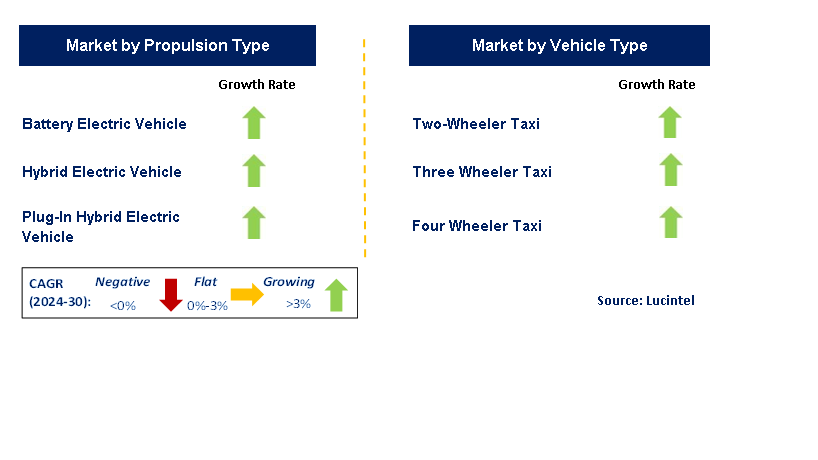
Key data points: The growth forecast = 11.3% annually for the next 6 years. Scroll below to get more insights. This market report covers trends, opportunities, and forecasts in the global electric vehicle taxi market to 2030 by propulsion type (battery electric vehicle, hybrid electric vehicle, and plug-in hybrid electric vehicle), vehicle type (two-wheeler taxi, three wheeler taxi, and four wheeler taxi), and region (North America, Europe, Asia Pacific, and the Rest of the World)
We'll send your sample report shortly.
• Lucintel forecasts that, within the propulsion type category, battery electric vehicles will remain the largest segment due to their ease of use and lower after-sales expenses.
• In terms of regions, APAC will remain the largest region over the forecast period due to the high rate of electric vehicle adoption in the area and rising taxi fleet demand in the region. Gain valuable insights for your business decisions with our comprehensive 150+ page report.

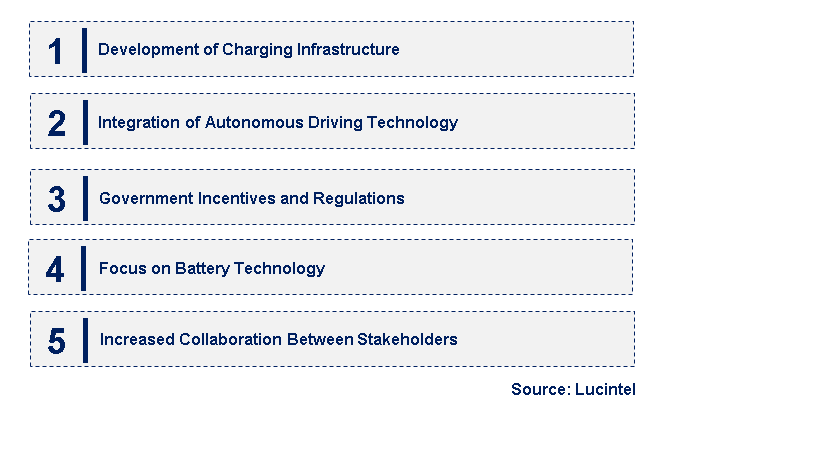
• Development of Charging Infrastructure: The development of charging infrastructure is crucial for the growth of the electric vehicle taxi market. Efforts to build sophisticated charging systems, as well as to deploy public charging facilities, are on the rise as a solution to range limitations and downtime. Developing this infrastructure is key to encouraging the use of electric taxis by ensuring their operability in cities.
• Integration of Autonomous Driving Technology: The integration of autonomous driving technology has become a key trend in the electric taxi market. Companies are working on self-driving taxis to improve operations and reduce costs. With further development of AI and sensor technologies, unmanned electric taxi services will become safer and more efficient.
• Government Incentives and Regulations: The use of electric taxis can greatly benefit from government incentives and regulations. Voucher schemes, tax exemptions, and carbon credit trading are pushing taxi fleet owners to adopt electric vehicles. Legal frameworks are also being developed to facilitate the establishment and operation of electric taxis within public transport systems.
• Focus on Battery Technology: Battery technology improvements are one of the most significant trends affecting the efficiency and pricing of electric vehicle taxis. These include batteries that charge faster, operate over longer ranges, and feature improved power density, which enhances the potential for electric taxis. Improving battery technologies is essential for increasing the viability of electric taxis.
• Increased Collaboration Between Stakeholders: The surge in collaboration among all players involved in electric taxi systems—such as governments, car manufacturers, and technology companies—is driving the growth of the electric vehicle taxi market. These synergies and collaborations aim to develop new technologies, build up the charging infrastructure, and create integrated services for e-taxi operations. Developments such as improved charging facilities, the inclusion of autonomous cars, government incentives, advancements in battery technology, and growing partnerships are influencing the electric vehicle taxi market. These factors are spurring innovation, enhancing operational efficiency, and promoting the need for electric taxis.
• Growth of Charging Infrastructure: Significant investments are being made to increase the availability of charging infrastructure for electric taxis. The development of fast-charging networks and increased access to public charging stations is helping to solve the problem of range anxiety, thereby enhancing the operation of electric taxis.
• Launch of Driverless Electric Taxis: Autonomous driving technology is making its way into electric taxis, with several companies deploying self-driving taxi fleets. This development aims to reduce operational costs by minimizing the need for human resources, while advancements in AI and sensor technologies are contributing to safer operations.
• Government Policies and Incentives: Different countries have implemented policies and offered subsidies to encourage the use of electric taxis. More taxi operators are adopting electric vehicles due to subsidies, tax exemptions, and targets for reducing greenhouse gas emissions, which explains the market's growth.
• Battery Technology Improvements: Advancements in battery technology are enhancing the performance and cost-effectiveness of electric taxis. Focus areas include battery range, recharge times, and energy capacity, all of which contribute to better functionality in commercial operations.
• Collaborations and Partnerships: Increased collaboration between automobile manufacturers, technology providers, and government bodies has helped develop the electric-powered taxi industry. These partnerships aim to create new technologies, advance charging infrastructure, and integrate electric taxis into urban transport networks. The increased availability of charging stations, advancements in the electric taxi industry, autonomous driving technology, government policies supporting electric vehicles, new battery developments, and joint efforts are all driving the growth of electric vehicle taxis and encouraging their widespread implementation in cities.
• Emerging Market Growth: Emerging economies, especially in Asia and Latin America, offer the most opportunities for expansion. As cities grow and pollution control policies create a need for electric taxis, the market for electric taxis is growing rapidly. By entering new markets and forming partnerships in active markets, revenue can be increased.
• Expansion of Charging Facilities: One key area of growth lies in the development of charging infrastructure. The establishment of fast-charging systems, coupled with the creation of more public charging points, enhances the efficiency of electric taxi operations and mitigates range anxiety, thus encouraging usage.
• Adoption of Autonomous Driving Technologies: The rise of autonomous driving technology is a key growth opportunity in the electric taxi market. Self-driving electric taxis can improve service efficiency by reducing labor costs, making them more competitive in the market.
• Technology Providers' Partnerships: Establishing partnerships with technology providers to access advanced battery technology, telematics, and other systems will help grow the market. The collaboration will lead to the availability of more efficient and cost-effective electric taxis, making them more appealing to operators.
• Government and Policy Engagement: Collaborating with government agencies and participating in policy-making can create favorable conditions for market growth. Advocating for laws, subsidies, and other incentives will accelerate the adoption of electric taxis and contribute to market expansion. The development of the electric vehicle taxi market is characterized by strategic expansion opportunities, including entering emerging markets, building charging stations, implementing autonomous systems, forming partnerships with technology providers, and promoting supportive government policies. These opportunities can help expand market reach and gain a competitive edge.
• Government Incentives and Policies: Government subsidies and favorable policies are promoting the adoption of electric taxis. In addition, well-set emission targets encourage taxi operators to adopt electric vehicles, leading to faster market growth.
• Technological Advancements: Advancements in battery technology, power systems, and autonomous features are improving the viability and appeal of electric taxis. Improvements in range, charging time, and overall performance are driving the market forward.
• Environmental Concerns: Growing concern over environmental issues, along with the need to improve urban air quality, is driving the demand for electric taxis. The market for electric vehicles is expanding as cities seek environmentally friendly transportation solutions.
• Urbanization and Congestion: Urbanization and traffic congestion are driving the need for more efficient urban transport systems. Electric taxis offer a cleaner alternative to internal combustion engine vehicles and contribute to solving urban mobility challenges.
• Economic Benefits: Reduced operational costs are encouraging taxi operators to switch to electric vehicles. Financial incentives also help make electric taxis more attractive by lowering operational expenses. Challenges:
• High Initial Costs: The high upfront costs, including the purchase price of electric vehicles and charging infrastructure, may hinder adoption. These costs can be particularly burdensome in price-sensitive markets.
• Charging Infrastructure Limitations: Inadequate charging infrastructure may undermine the efficiency of electric taxis. Shortages of charging units and slow charging speeds create barriers to fleet operations.
• Range Anxiety: Range anxiety, or the fear of running out of battery power, remains a challenge for electric taxi operators. Despite improvements in battery technology, many drivers still lack confidence in the range capabilities of electric taxis. The factors driving the growth of the electric vehicle taxi market include government subsidies, technological progress, environmental concerns, urbanization, and economic incentives. However, challenges such as high initial costs, limited charging infrastructure, and range anxiety must be addressed to ensure continued growth. These factors highlight both opportunities and obstacles in the market.
• A to Z Universal Solutions
• Blu-Smart Mobility
• Connexxion
• OLA Group
• Travel Electric BV
• Battery Electric Vehicle
• Hybrid Electric Vehicle
• Plug-In Hybrid Electric Vehicle
• Two-Wheeler Taxi
• Three Wheeler Taxi
• Four Wheeler Taxi
• North America
• Europe
• Asia Pacific
• The Rest of the World
• USA: In the United States, the electric vehicle taxi market is growing due to encouraging policies at both the federal and state levels. In cities like New York and San Francisco, an increasing number of electric taxis are emerging, driven by investments in charging infrastructure. Collaborations between taxi companies and electric vehicle manufacturers are improving fast-charging capabilities and reducing idle times.
• China: In China, e-taxi systems have advanced significantly, supported by government policies and incentives. In cities like Beijing and Shanghai, local governments have introduced regulations that promote electric vehicle use in taxis, such as offering subsidies and creating dedicated lanes for electric taxis. Autonomous electric vehicles are also emerging, thanks to advancements in AI and V2X (Vehicle-to-Everything) technology.
• Germany: Germany is undergoing a transition driven by the adoption of electric taxis in urban centers as part of a broader effort to create sustainable mobility systems. In cities like Berlin and Frankfurt, electric taxi programs are expanding, supported by government subsidies and investments in charging infrastructure. Efforts are underway to integrate electric taxis into existing transportation networks and improve the distribution of charging stations to meet growing demand.
• India: In India, electric taxis are still in their early stages but show great growth potential. In cities like Delhi and Bangalore, the government is initiating projects to deploy electric taxis as part of pollution control efforts. Collaborations between local governments and private taxi operators are helping to build more charging stations to support electric taxi operations.
• Japan: Japan is making strides in the electric vehicle taxi market with a focus on technology and innovation. Tokyo is leading the way, with electric taxis supported by government initiatives and advancements in battery technology. Japan is also exploring hydrogen fuel cell taxis as part of its efforts to expand green transportation options.


• A to Z Universal Solutions
• Blu-Smart Mobility
• Connexxion
• OLA Group
• Travel Electric BV Q5. Which electric vehicle taxi market segment will be the largest in future? Answer: Lucintel forecasts that battery electric vehicle will remain the largest segment due to their ease of use and lower after-sales expenses. Q6. In electric vehicle taxi market, which region is expected to be the largest in next 5 years? Answer: In terms of regions, APAC will remain the largest region over the forecast period due to high rate of electric vehicle adoption in the area and rising taxi fleet demand in the region. Q7. Do we receive customization in this report? Answer: Yes, Lucintel provides 10% customization without any additional cost.


Choose a license that fits your team. Instant PDF delivery.
Prices exclude taxes. Instant delivery. Custom licensing available on request.
Market Report · May 18, 2026
Market Report · May 18, 2026
Market Report · May 18, 2026
Trusted partner for strategic intelligence and business growth


Receive a complimentary market analysis tailored to your industry. Our analysts will identify key growth opportunities and competitive dynamics specific to your business.

Market size, growth rate, and key trend analysis for your specific sector.

Top competitor positioning and market share analysis.

Strategic recommendations backed by data-driven insights.
Get curated market intelligence and competitive moves straight to your inbox.
By subscribing, you agree to receive our monthly insights. Unsubscribe anytime.
Receive a complimentary market analysis tailored to your industry. Our analysts will identify key growth opportunities and competitive dynamics specific to your business.
Market size, growth rate, and key trend analysis for your specific sector.
Top competitor positioning and market share analysis.
Strategic recommendations backed by data-driven insights.
Get curated market intelligence, emerging trends, and competitive moves straight to your inbox each month.
By subscribing, you agree to receive our monthly insights. Unsubscribe anytime.
We'll send your sample report shortly.