
Market Report · May 18, 2026

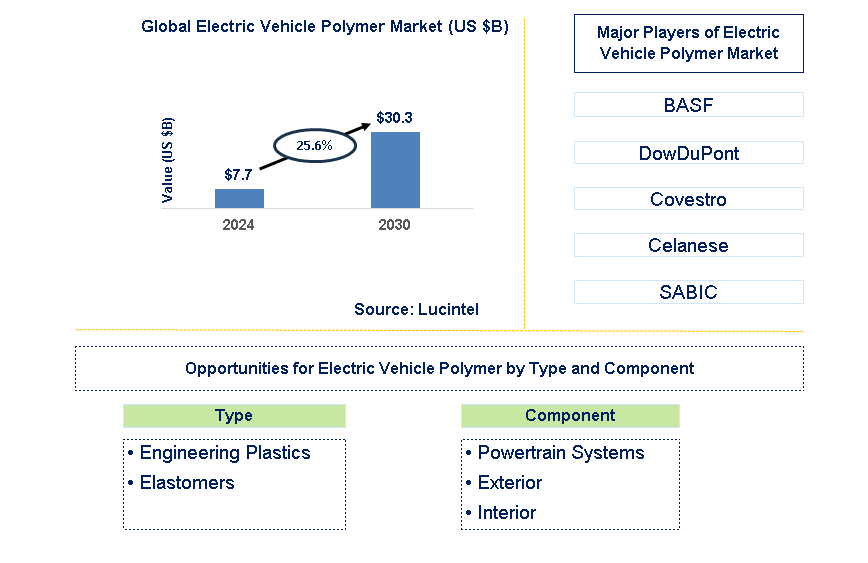
Key data points: The market size in 2030 = $30.3 billion, growth forecast = 25.6% annually for the next 6 years. Scroll below to get more insights. This market report covers trends, opportunities, and forecasts in the global electric vehicle polymer market to 2030 by type (engineering plastics and elastomers), component (powertrain system, exterior, and interior), and region (North America, Europe, Asia Pacific, and the Rest of the World)
We'll send your sample report shortly.
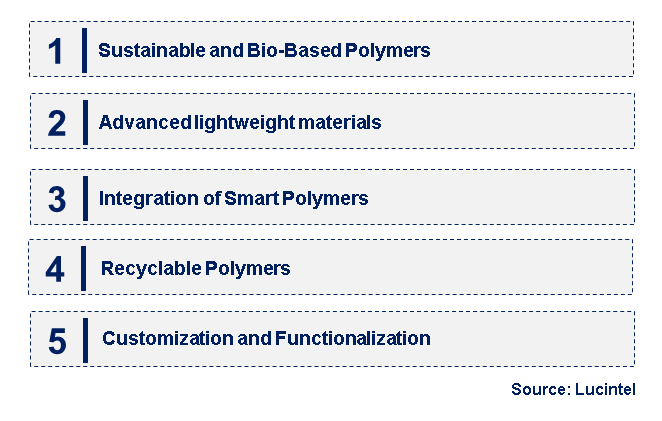
• Sustainable and Bio-Based Polymers: Electric vehicle manufacturers have a rising need for sustainable and bio-based polymers. These environmentally friendly materials will help meet global sustainability goals in the automotive industry, thereby attracting manufacturers.
• Advanced Lightweight Materials: The trend toward lightweight polymers is accelerating, as manufacturers seek to achieve higher efficiencies and better vehicle performance. Lighter materials help increase range and lower energy consumption—an important factor in enhancing competitiveness for electric vehicles.
• Integration of Smart Polymers: One significant trend is the integration of smart polymers with sensing capabilities that monitor real-time temperature, stress, and other conditions affecting the functionality of electric vehicles, thus improving safety and reliability.
• Recyclable Polymers: Growing pressure for recycling has mandated the automotive industry to develop recyclable polymers for ease of recycling, supporting the circular economy and waste reduction.
• Customization and Functionalization: The demand for customized and functionalized polymers has driven manufacturers to search for specially designed polymer blends that meet performance-specific criteria, such as improved thermal stability and chemical resistance for use in electric vehicles. These emerging trends are redefining the electric vehicle polymer marketplace, infusing innovation and sustainability while improving performance. These developments will shape the future of electric mobility within the automotive industry.
• Lightweight Materials Demand: Increased use of lightweight polymers, such as polypropylene and polycarbonate, to enhance vehicle efficiency.
• Battery Innovations: Development of solid-state batteries utilizing advanced polymer electrolytes for improved safety and energy density.
• Sustainability Focus: Growing interest in biodegradable and recyclable polymers to minimize environmental impact.
• High-Performance Polymers: Rising demand for polymers capable of withstanding extreme conditions, essential for insulation and connectors.
• Strategic Collaborations: Partnerships between automotive and polymer industries to foster R&D for next-gen materials.
• Regulatory Incentives: Government support promoting advanced materials in EV production through policies and funding.
• Emerging Market Growth: Expansion of polymer demand in developing economies as electric vehicle adoption increases. Overall, the electric vehicle polymer market is set for significant growth, driven by innovation and a commitment to sustainable practices.
• Battery Housing and Components: The adoption of lightweight and tough polymer materials in battery housings is rising. This results in improved safety and performance while minimizing weight, which is critical for achieving efficient fuel economy in electric vehicles.
• Interior Components: Advanced polymers are increasingly used for interior components. Manufacturers focus on enhancing aesthetics and comfort while utilizing lightweight and easy-to-maintain materials to improve consumer experiences.
• Exterior Body Panels: Lightweight materials enhance aerodynamics, reduce fuel consumption, and lower emissions. Much of this opportunity will fall directly to manufacturers who need to improve overall vehicle performance.
• Thermal Management Systems: Electrification is driving the need for advanced thermal management systems that can maintain optimal battery temperatures while maximizing performance and longevity.
• Applications in Recycling and Circular Economy: The growing focus on sustainability is fostering significant growth in polymers for electric vehicles through recycling technologies. Developments in recycling processes will aid the transition to a more circular economy while minimizing environmental impacts. These strategic growth opportunities are further impacting the electric vehicle polymer market by encouraging innovation, sustainability, and performance improvements. As applications grow within the industry, they will remain a major prerequisite for advancing electric mobility.
• Increasing Demand for Electric Vehicles: Consumers' growing interest in electric vehicles spurs demand for innovative polymer solutions. The market expands as manufacturers increase investments in polymers that enhance vehicle performance and sustainability.
• Materials Technology: Polymer technology is constantly evolving to produce lighter, stronger, and high-performance materials for the automotive market. Such improvements are essential for enhancing efficiency and safety.
• Sustainability through Regulations: Governments are implementing regulations aimed at promoting eco-friendly polymers in the automotive industry, pushing manufacturers toward more sustainable production methods. Challenges in the electric vehicle polymer market include:
• High Production Costs: Advanced polymers are often more expensive to develop, which may prevent small manufacturers from entering the market. High production costs can delay market entry and lower competition.
• Poor Performance: Some polymers lack properties necessary for meeting the demanding performance criteria of electric vehicles, such as heat stability and chemical resistance. As a result, they may be limited to less critical applications.
• Market Fragmentation: The market for electric vehicle polymers is highly fragmented, with many players offering different solutions. This can lead to confusion and a lack of material standardization across the industry. Demand and technological advancement are pushing this polymer market forward. However, the electric vehicle polymer market also faces cost challenges related to production and must navigate a fragmented market. Understanding these dynamics is essential for any organization aiming to succeed in this competitive and ever-evolving market.
• BASF
• DowDuPont
• Covestro
• Celanese
• SABIC
• Solvay
• LANXESS
• LG Chem
• Asahi Kasei
• Evonik Industries
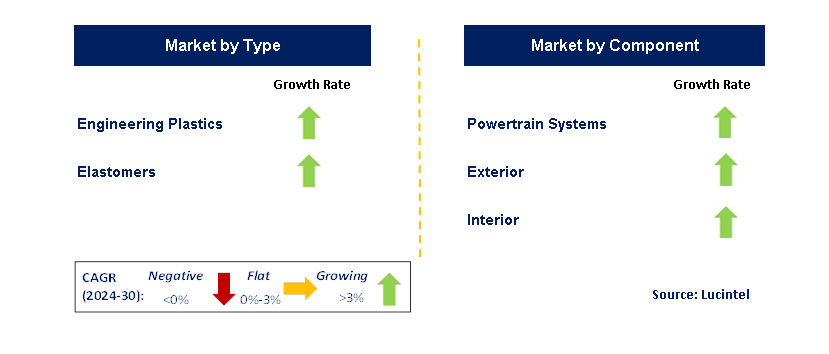
• Engineering Plastics
• Elastomers
• Powertrain Systems
• Exterior
• Interior
• North America
• Europe
• Asia Pacific
• The Rest of the World
• United States: The use of advanced lightweight polymers, particularly in battery housing and structural parts, is growing in the U.S. electric vehicle polymer market. Companies are increasing investments in research and development to enhance polymer performance in terms of durability and thermal stability. Automotive manufacturers and material suppliers are increasingly collaborating to develop high-performance polymers for specific EV applications. Energy efficiency improvements and the expansion of electric vehicle driving ranges depend on these innovations.
• China: China leads the electric vehicle polymer market, with substantial government support for the development of lightweight materials. Key manufacturers are rapidly adopting advanced polymers to enhance battery performance and aerodynamics. Recently, there has been a growing interest in developing renewable-source-based polymers aligned with the country's sustainability targets. Due to the sharp increase in demand for electric vehicles, the need for new polymer solutions has surged, positioning China as a strategic research and application hub for polymers in electric vehicles.
• Germany: The electric vehicle polymer market in Germany is characterized by excellence in engineering and sustainability. German automotive companies are utilizing high-performance polymers to reduce vehicle weight and enhance fuel efficiency. Innovations in polymer coatings further extend battery life and improve safety. Additionally, stringent environmental regulations in Germany are prompting companies to adopt greener, more eco-friendly polymers, solidifying the country's leadership in sustainable automotive technologies.
• India: The electric vehicle polymer market in India is evolving, focusing on affordability and accessibility. Local manufacturers are customizing low-cost polymer solutions to meet the diverse needs of the Indian market. Government investments in polymer research and production are accelerating electric mobility efforts. Moreover, greater adoption of lightweight polymers enhances vehicle performance while reducing costs, making electric vehicles more viable for average Indian consumers.
• Japan: Japan is advancing its electric vehicle polymer market by introducing new polymer materials into electric vehicle designs. Japanese companies are focusing on high-strength, lightweight polymers that optimize battery efficiency and enhance vehicle safety. The Japanese government is actively promoting research in advanced material science. Additionally, a commitment to sustainability has increased the use of recyclable polymers, positioning Japan as a key player in the global shift toward electric mobility.


• BASF
• DowDuPont
• Covestro
• Celanese
• SABIC
• Solvay
• LANXESS
• LG Chem
• Asahi Kasei
• Evonik Industries Q6. Which electric vehicle polymer market segment will be the largest in future? Answer: Lucintel forecasts that engineering plastic will remain the larger segment over the forecast period due to its flexibility, resistance to abrasion, and resistance to chemicals and oils. Q7. In electric vehicle polymer market, which region is expected to be the largest in next 5 years? Answer: APAC will remain the largest region over the forecast period due to growing concern for lowering carbon footprints and increasing focus on decreasing the overall weight of electric cars. Q.8 Do we receive customization in this report? Answer: Yes, Lucintel provides 10% customization without any additional cost.


Choose a license that fits your team. Instant PDF delivery.
Prices exclude taxes. Instant delivery. Custom licensing available on request.
Market Report · May 18, 2026
Market Report · May 18, 2026
Market Report · May 18, 2026
Trusted partner for strategic intelligence and business growth


Receive a complimentary market analysis tailored to your industry. Our analysts will identify key growth opportunities and competitive dynamics specific to your business.

Market size, growth rate, and key trend analysis for your specific sector.

Top competitor positioning and market share analysis.

Strategic recommendations backed by data-driven insights.
Get curated market intelligence and competitive moves straight to your inbox.
By subscribing, you agree to receive our monthly insights. Unsubscribe anytime.
Receive a complimentary market analysis tailored to your industry. Our analysts will identify key growth opportunities and competitive dynamics specific to your business.
Market size, growth rate, and key trend analysis for your specific sector.
Top competitor positioning and market share analysis.
Strategic recommendations backed by data-driven insights.
Get curated market intelligence, emerging trends, and competitive moves straight to your inbox each month.
By subscribing, you agree to receive our monthly insights. Unsubscribe anytime.
We'll send your sample report shortly.