
Market Report · May 18, 2026

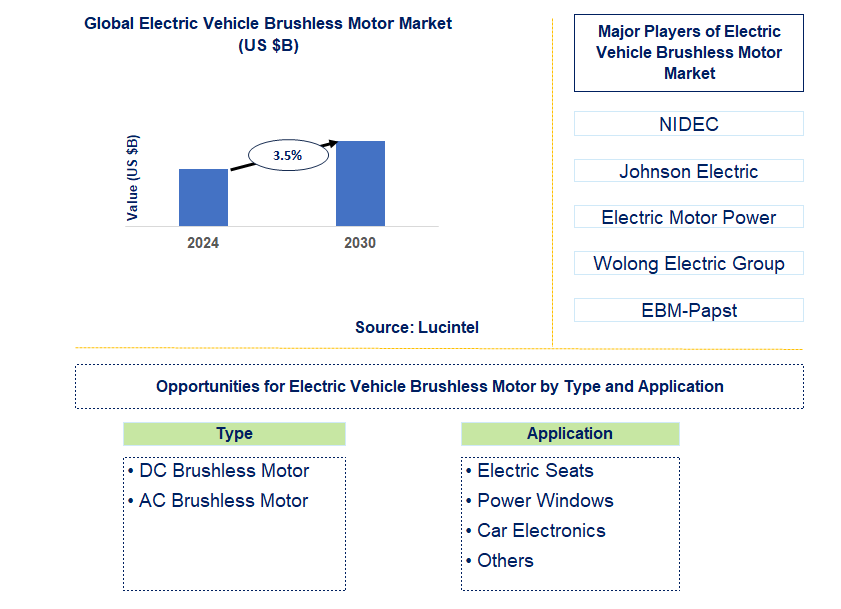
Key data points: The growth forecast = 16.3% annually for the next 6 years. Scroll below to get more insights. This market report covers trends, opportunities, and forecast in the global electric vehicle brushless motor market to 2030 by type (DC brushless motor and AC brushless motor), application (electric seats, power windows, car electronics, and others), and region (North America, Europe, Asia Pacific, and the Rest of the World)
We'll send your sample report shortly.
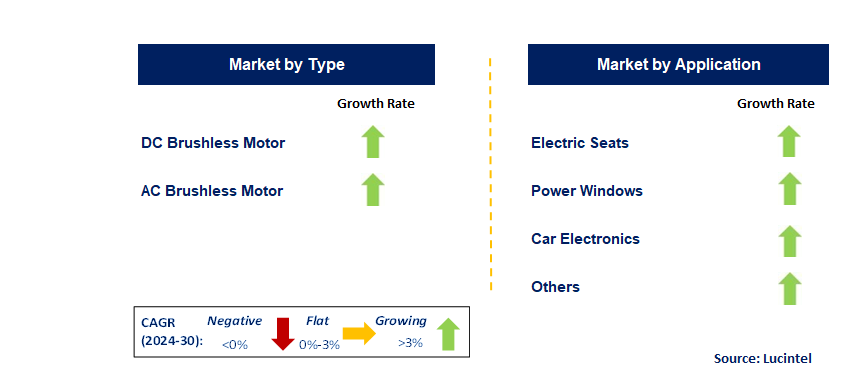
• Lucintel forecasts that, within the type category, DC brushless motor is expected to witness a higher growth over the forecast period.
• Within the application category, the electric seat is expected to witness the highest growth.
• In terms of regions, APAC is expected to witness the highest growth over the forecast period. A more than 150-page report is developed to help in your business decisions.
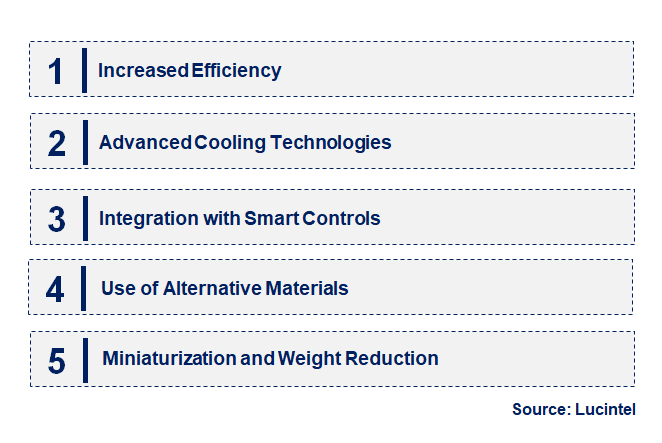
• Increased Efficiency: Ongoing advancements in motor design and materials have greatly improved the efficiency of brushless motors. This includes the utilization of better magnet materials alongside optimized winding techniques to minimize power losses and increase overall output.
• Advanced Cooling Technologies: To manage the heat generated by high-performance motors, new cooling technologies are being developed. These include liquid cooling systems and advanced thermal management materials that help maintain optimal operating temperatures and extend motor lifespan.
• Integration with Smart Controls: Brushless motors are increasingly being integrated with advanced electronic control systems. With smart controls, drivers can better manage their driving experience, including speed and torque, while also increasing fuel efficiency.
• Use of Alternative Materials: Researchers are exploring alternative materials to replace costly rare earth magnets. For example, advances in ferrite magnets and other composite materials aim to reduce dependence on rare earth elements, lower costs, and mitigate supply chain risks.
• Miniaturization and Weight Reduction: The industry is seeing a trend toward miniaturization, leading to the development of more compact and lighter brushless motors. This not only improves fuel efficiency but also contributes to better handling and overall performance. These emerging trends are driving significant changes in the electric vehicle brushless motor market. Developments in efficiency, cooling technologies, smart controls, alternative materials, and miniaturization are reshaping the landscape while enhancing overall vehicle performance.
• Improved Magnet Technology: Some of the latest innovations have seen the development of high-performance magnets that enhance motor efficiency and torque. To reduce costs associated with these components, scientists are exploring alternative materials that can replace rare earth magnets, mitigating supply chain issues.
• Enhanced Thermal Management: New cooling technologies, such as advanced liquid coolants and heat-dissipating materials, are being used to ensure effective temperature control of motors. These improvements help maintain motor performance under heavy demand conditions.
• Integration of Smart Electronics: Brushless motors are increasingly incorporating smart electronic control systems. These systems act as real-time operating systems for the motor, allowing continuous adjustments to motor functionality, which helps save energy and boost car handling and efficiency.
• Cost Reduction Initiatives: Process improvements and material substitution efforts are underway to reduce production costs. Manufacturers are focusing on streamlining production methods and finding cheaper raw materials, making brushless motors more affordable to consumers.
• Increased Localization of Production: There is a push to increase local production capabilities, which helps reduce lead times and transportation costs. This makes the supply chain more resilient and responsive to market needs. These recent developments have significant implications for the electric vehicle brushless motor market. Advancements in magnet technology, thermal management, smart electronics, cost reduction, and localization are driving improvements in performance, efficiency, and affordability.
• Expansion into Emerging Markets: As electric vehicle adoption grows globally, expanding into emerging markets presents a significant opportunity. Motor designs tailored to meet the specific needs and price points of these markets will help capture a larger portion of the growing demand.
• Advancements in Motor Efficiency: Investing in research and development to improve motor efficiency can give businesses an edge over competitors. Anticipated innovations in energy conversion and loss minimization will be crucial as performance expectations continue to rise within the electric vehicle sector.
• Development of Alternative Materials: Examining and integrating alternative materials, such as high-performance ferrites, offers opportunities for reducing costs and depending less on rare earth elements. This could lead to more sustainable and economically viable motor solutions.
• Integration with Autonomous Vehicle Technologies: Brushless motors could be developed to integrate seamlessly with autonomous driving technologies. Enhanced motor control and improved outputs will help meet the advanced requirements for self-driving vehicles.
• Focus on Lightweight and Compact Designs: Developing lightweight, compact brushless motors will enhance fuel efficiency while improving overall vehicle performance. This aligns with current automobile demands for agility and resourcefulness, calling for lightweight but powerful vehicles. The above strategic growth opportunities show potential for expansion and innovation in the electric vehicle brushless motor market. By concentrating on emerging markets, efficiency improvements, alternative materials, autonomous technologies, and compact designs, firms can stimulate growth and boost their market standing.
• Technological Advancements: Innovations in motor technology, such as advanced coolants and improved magnetic materials, are driving the production of more efficient and powerful brushless motors, which, in turn, boosts the demand for electric cars.
• Regulatory Support: The demand for brushless motors has increased due to government regulations and incentives that promote the use of electric vehicles. Policies aimed at reducing emissions and encouraging the adoption of clean energy technologies support the growth of the electric vehicle market.
• Growing Consumer Demand: Rising consumer preference for electric vehicles, driven by ecological concerns and the need to reduce operating expenses, is stimulating the demand for high-performance brushless motors. This has opened up new opportunities for market expansion and innovation.
• Cost Reduction Efforts: Cheaper substitute materials and improved processes have helped reduce the production costs of brushless motors, making them more affordable. Lower costs allow for greater market penetration, enhancing competitiveness.
• Advancements in Battery Technology: Improvements in battery technology are enhancing the performance and range of electric vehicles, driving demand for more efficient brushless motors. Better battery performance supports further growth within the all-electric automobile sector. Challenges in the electric vehicle brushless motor market include:
• High Initial Costs: The high cost of rare earth metals and specific manufacturing techniques may hinder large-scale adoption. Manufacturers face the challenge of balancing affordability with high-quality output to ensure long-term success.
• Complex Integration: Integrating brushless motors with advanced vehicle systems and electronic controls can be a complex process. Proper engineering and testing are required to ensure compatibility and reliability across different vehicle models.
• Supply Chain Risks: Reliance on rare earth materials and other essential components within a global supply chain poses risks. Fluctuations in the availability or price of materials directly affect production costs, impacting market stability. These factors, including technological development, regulatory support, consumer demand, cost considerations, and supply chain stability, shape the electric vehicle brushless motor market by influencing its drivers and challenges. For firms looking to venture into this area, these factors must be prioritized to ensure success.
• NIDEC
• Johnson Electric
• Electric Motor Power
• Wolong Electric Group
• EBM-Papst
• Lin Engineering
• Mitsuba
• Topband
• Allied Motion
• Jinlong Machinery and Electronics
• DC Brushless Motor
• AC Brushless Motor
• Electric Seats
• Power Windows
• Car Electronics
• Others
• North America
• Europe
• Asia Pacific
• The Rest of the World
• United States: In the US, developments focus on enhancing motor efficiency while decreasing prices. Advances include the integration of sophisticated control systems with enhanced thermal management solutions to improve motor operations. Furthermore, research is aimed at finding alternatives to or less costly materials than rare earth magnets, in order to alleviate supply chain issues and reduce costs.
• China: China is leading in mass production and cost reduction of brushless motors. Recent enhancements involve better manufacturing techniques designed to lower production and maintenance costs. Significant investments have been made in refurbishing motor technologies, including more powerful magnets and innovative cooling systems, which are shaping the Chinese market.
• Germany: Germany is at the forefront of high-performance brushless motor technology. For instance, it employs advanced materials and precision engineering, resulting in higher torque yields and improved efficiencies. In addition, German manufacturers are focusing on integrating motors with cutting-edge electronic control systems to achieve excellent performance in electric vehicles.
• India: India is focused on making affordable BLDC motors to cater to the growing EV market. Efforts include increasing local production capacities and improving motor designs to enhance efficiency while reducing costs. There is also a stronger emphasis on meeting international motor standards to improve performance and reliability.
• Japan: Japanese companies continue to advance brushless motor technologies, with a primary focus on compact and highly efficient designs. Innovations include the use of advanced materials and precision manufacturing aimed at improving performance. Additionally, Japanese firms are exploring how to integrate these motors into vehicle systems to achieve overall vehicle efficiency.


• NIDEC
• Johnson Electric
• Electric Motor Power
• Wolong Electric Group
• EBM-Papst
• Lin Engineering
• Mitsuba
• Topband
• Allied Motion
• Jinlong Machinery and Electronics Q5. Which electric vehicle brushless motor market segment will be the largest in the future? Answer: Lucintel forecasts that DC brushless motor is expected to witness a higher growth over the forecast period. Q6. In the electric vehicle brushless motor market, which region is expected to be the largest in the next 5 years? Answer: APAC is expected to witness the highest growth over the forecast period. Q7. Do we receive customization in this report? Answer: Yes, Lucintel provides 10% customization without any additional cost.


Choose a license that fits your team. Instant PDF delivery.
Prices exclude taxes. Instant delivery. Custom licensing available on request.
Market Report · May 18, 2026
Market Report · May 18, 2026
Market Report · May 18, 2026
Trusted partner for strategic intelligence and business growth


Receive a complimentary market analysis tailored to your industry. Our analysts will identify key growth opportunities and competitive dynamics specific to your business.

Market size, growth rate, and key trend analysis for your specific sector.

Top competitor positioning and market share analysis.

Strategic recommendations backed by data-driven insights.
Get curated market intelligence and competitive moves straight to your inbox.
By subscribing, you agree to receive our monthly insights. Unsubscribe anytime.
Receive a complimentary market analysis tailored to your industry. Our analysts will identify key growth opportunities and competitive dynamics specific to your business.
Market size, growth rate, and key trend analysis for your specific sector.
Top competitor positioning and market share analysis.
Strategic recommendations backed by data-driven insights.
Get curated market intelligence, emerging trends, and competitive moves straight to your inbox each month.
By subscribing, you agree to receive our monthly insights. Unsubscribe anytime.
We'll send your sample report shortly.