
Market Report · July 31, 2026

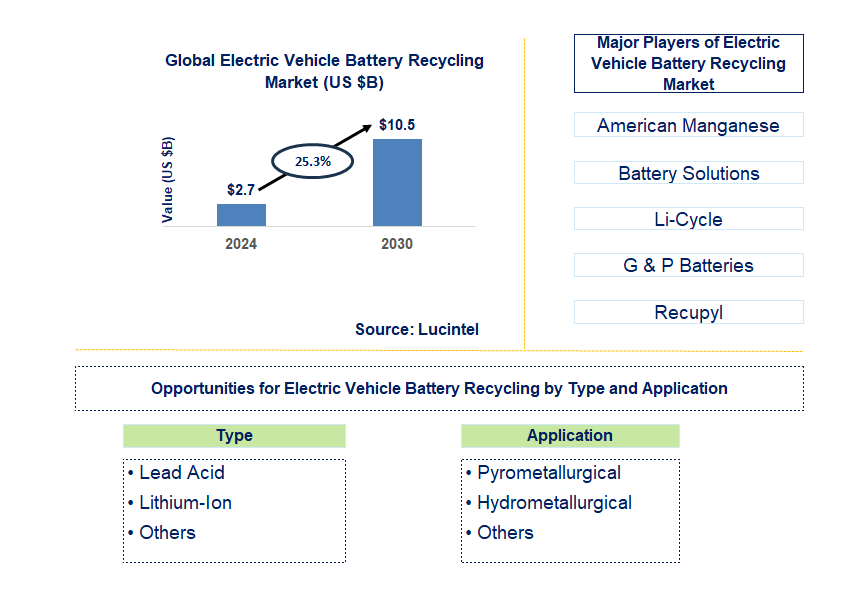
Key data points: The market size in 2030 = $10.5 billion, growth forecast = 25.3% annually for the next 6 years. Scroll below to get more insights. This market report covers trends, opportunities, and forecasts in the global electric vehicle battery recycling market to 2030 by type (lead acid, lithium-ion, and others), application (pyrometallurgical, hydrometallurgical, and others), and region (North America, Europe, Asia Pacific, and the Rest of the World)
We'll send your sample report shortly.
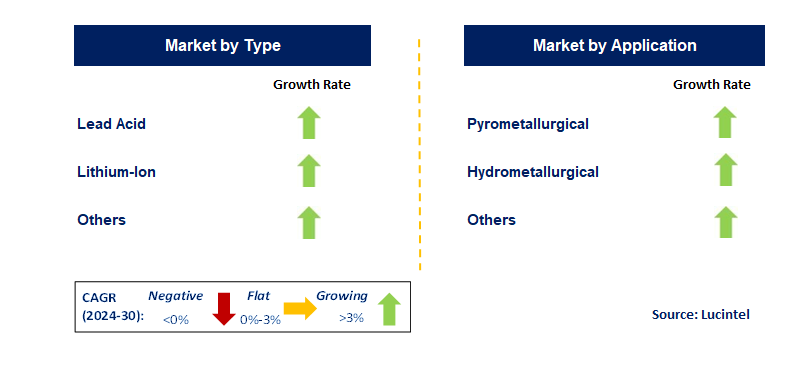
• Lucintel forecasts that, within the type category, lithium-ion will remain a larger segment over the forecast period due to increased need for high energy density and low self-discharge rate batteries for EVs, expanding need to recover precious materials from Li-ion batteries to lessen the requirement for new raw material mining and processing, and growing use of electric cars.
• In terms of region, APAC will remain the largest region over the forecast period due to growing use of lithium-ion batteries, rising volume of battery waste generated, and high adoption of electric mobility in the region. Gain valuable insights for your business decisions with our comprehensive 150+ page report.
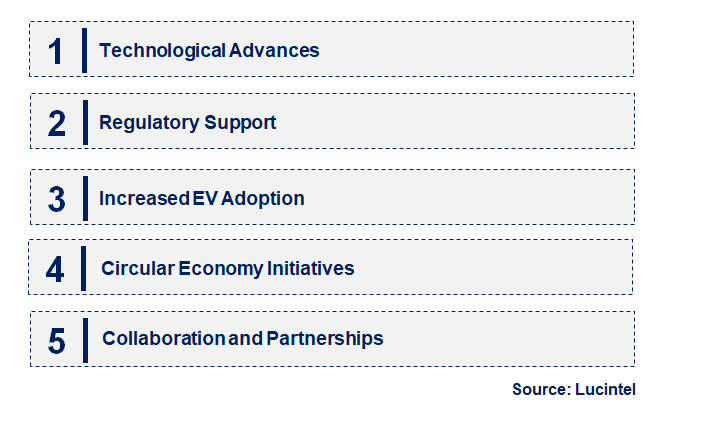
• Technological Advances: There have been improvements in material recovery systems, particularly in hydrometallurgical and pyrometallurgical recycling technologies. Utilization of such systems helps recover various metallic ores from spent batteries, thereby promoting environmental safety.
• Regulatory Support: Governments from different parts of the world are implementing more stringent rules and measures aimed at enhancing the recycling of EV batteries. Policies that discourage firms from dumping waste in landfills, as well as those that motivate companies to recycle, are leading to the growth of recycling facilities and technologies.
• Increased EV Adoption: The rise in the adoption of electric vehicles is creating a need for new methods of waste management and recycling. As the number of wastes whose life spans have been exhausted continues to increase, so does the demand for efficient recycling management systems to deal with these wastes and extract valuable materials.
• Circular Economy Initiatives: Changes toward a circular economy are also affecting the ways batteries are being recycled. Organizations are seeking to construct closed-loop systems in which used materials are recycled to make new batteries, thereby minimizing or eliminating the usage of virgin materials.
• Collaboration and Partnerships: More resources are being pooled from networks of automobile manufacturers, recycling corporations, and research centers that are increasingly collaborating. These partnerships aim to improve recycling technologies, best practices, and develop better recycling methods. These trends are profoundly influencing the Electric Vehicle Battery Recycling landscape in terms of technological advancement, regulatory support, and collaborative efforts in the region. Companies are responding to these changes in order to enhance their recycling systems and keep up with the shifting market.
• Technological Innovations: New recycling technologies, including advanced hydrometallurgical and pyrometallurgical methods, are enhancing material recovery from used EV batteries. These innovations improve efficiency and increase the recovery of critical metals, supporting sustainability in the EV industry.
• Regulatory Frameworks: Many governments around the world are implementing laws that prohibit lithium-ion battery waste and promote battery recycling. Policy objectives related to waste minimization and recycling are spurring the growth of recycling facilities and new innovations.
• Expansion of Recycling Facilities: Recycling facilities are increasing in response to the growing number of EV batteries reaching the end of life. New units are being constructed while old ones are being remodeled to enhance the processing and recovery of wasted battery materials.
• Sustainability Initiatives: Efforts are being made to develop closed-loop systems to address sustainability issues, such as environmental degradation caused by companies. There is a movement toward minimizing the use of virgin materials and improving the recycling of various battery components.
• Increased Investment: Considerable resources are being invested in the EV battery recycling sector, including funds for the development of new technologies, improvements of existing facilities, and the establishment of more operations for recycling. Such financial support is fostering growth and innovation in the economy. These factors are contributing to the growth of Electric Vehicle Battery Recycling by improving technologies, infrastructure, and advocating for sustainability. It is essential for these firms to keep pace with these changes to remain relevant in the industry.
• Automotive Industry: With the growth of the EV market, opportunities for more efficient battery recycling technologies specific to automotive batteries emerge. Companies aim different strategies toward recycling, such as improving recycling efficiency and forming partnerships with vehicle manufacturers to enhance recycling facilities.
• Consumer Electronics: Opportunities exist to extend recycling technologies for EV batteries to the consumer electronics industry due to the increasing use of lithium-ion batteries. Gaining more market share can be achieved by developing effective recycling processes for these types of batteries.
• Renewable Energy Storage: The expansion of renewable energy storage systems brings opportunities for battery recycling companies. There are opportunities to develop environmentally safe and effective recycling methods for large-scale storage batteries, corresponding to the growing need for efficient disposal and recovery.
• Research and Development: There are prospects for distinguishing companies by introducing modern types of recycling technologies through investment in R&D. Companies can maintain a competitive advantage in the market by innovating their operations for material recovery, recycling benefits, and environmental impact.
• Regulatory Compliance: There are growth opportunities that can be pursued through changing regulations and available incentives. Companies that comply with new regulations and address sustainability goals are well-positioned to obtain support from the government and meet market demand. These growth opportunities illustrate the broader scope of possible applications for EV battery recycling technologies and the potential for market growth. Companies can foster innovation and create new market spaces in many of these areas.
• Technological Advancements: Market growth is being propelled by technological innovations, such as the introduction of advanced recycling technologies with better extraction and efficiency methods. Such improvements enhance the retrieval of precious materials and reduce environmental degradation, thereby enhancing the viability of the EV sector.
• Regulatory Support: The expansion of investments in recycling activities is attributed to increased regulations and incentives for battery recycling. Many governments have enacted policies that seek to encourage recycling and minimize waste, which is advantageous to the market.
• Growing EV Adoption: With more people choosing to use electric vehicles, there is an increase in the quantity of end-of-life batteries, which raises the need for appropriate treatment techniques. This development is also beneficial for the advancement of recycling technologies and infrastructure.
• Sustainability Initiatives: Recycling is impacted by the transition to sustainable development and circularity. Businesses are working toward developing closed-loop solutions and eliminating the need for virgin resources, which in turn stimulates the growth of the recycling industry.
• Increased Investment: There is increasing investment in the EV battery recycling industry, which is further fueling the advancement of new technologies and the establishment of more recycling plants. Research funding, as well as funding for upgrading infrastructure, is propelling the growth of the market. Challenges in the electric vehicle battery recycling market are:
• Regulatory Exigency: Considering the myriad of regulatory requirements, including environmental compliance, which incurs substantial costs, recycling companies find it exhausting. These regulations have significant cost implications based on healthcare systems and waste management guidelines.
• Supply Chain Issues: The recycling industry has a long-standing problem managing and preventing supply chain disruptions, particularly regarding the timeliness and volume of recyclable materials supplied. Long-term global supply chain constraints affect both the quantity and price of the materials available for recycling.
• Technological Limitations: While there have been positive developments, many of these recycling technologies still operate with disadvantages, particularly in terms of cost and efficiency. This situation requires reforms through further innovations and development. The drivers and challenges detailed above influence the growth of the Electric Vehicle Battery Recycling market by creating opportunities or dictating strategic decisions. For a company and the industry to prosper, these aspects should be addressed in a targeted manner.
• American Manganese
• Battery Solutions
• Li-Cycle
• G & P Batteries
• Recupyl
• Lead Acid
• Lithium-Ion
• Others
• Pyrometallurgical
• Hydrometallurgical
• Others
• North America
• Europe
• Asia Pacific
• The Rest of the World
• United States: In recent times, the U.S. is advancing in the area of EV battery recycling, largely due to new policies aimed at enhancing the environmental sustainability of electric cars. Companies are also focused on bringing efficiency through new technologies to recover more materials. Partnerships between automotive manufacturers and waste management companies are strengthening to improve recovery and recycling capabilities.
• China: China’s EV battery recycling industry is improving rapidly due to government policies and the growth of the EV industry. Efforts are being made to concentrate on the high-efficiency recovery of important materials and to increase the coverage of recycling plants. There is also a movement to promote technology that helps improve the recovery of critical elements.
• Germany: Germany leads the world in EV battery recycling activities in Europe, with considerable contributions in technology adoption and infrastructural development. German firms are leading high-end processes and advanced systems, ensuring high recovery rates and minimal pollution. Regulations are facilitating these improvements.
• India: India has advanced its stance in EV battery recycling, which has become a key market. New and better recycling policies and incentives are being put in place to motivate recycling and minimize waste. Indian companies are investing in recycling facilities and upgrading methods for handling used batteries.
• Japan: In Japan, factors such as innovation and supportive regulations are enhancing the EV battery recycling market. New recycling technologies are being developed while systems for efficient collection and processing are being established. Companies in Japan are also venturing into offshore markets to enhance recycling efforts.


• American Manganese
• Battery Solutions
• Li-Cycle
• G & P Batteries
• Recupyl Q6. Which electric vehicle battery recycling market segment will be the largest in future? Answer: Lucintel forecasts that lithium-ion will remain the larger segment over the forecast period due to increased need for high energy density and low self-discharge rate batteries for EVs, expanding need to recover precious materials from Li-ion batteries to lessen the requirement for new raw material mining and processing, and growing use of electric cars. Q7. In electric vehicle battery recycling market, which region is expected to be the largest in next 5 years? Answer: APAC will remain the largest region over the forecast period due to growing use of lithium-ion batteries, rising volume of battery waste generated, and high adoption of electric mobility in the region. Q.8 Do we receive customization in this report? Answer: Yes, Lucintel provides 10% customization without any additional cost.


Choose a license that fits your team. Instant PDF delivery.
Prices exclude taxes. Instant delivery. Custom licensing available on request.
Market Report · July 31, 2026
Market Report · July 22, 2026
Market Report · July 17, 2026
Trusted partner for strategic intelligence and business growth


Receive a complimentary market analysis tailored to your industry. Our analysts will identify key growth opportunities and competitive dynamics specific to your business.

Market size, growth rate, and key trend analysis for your specific sector.

Top competitor positioning and market share analysis.

Strategic recommendations backed by data-driven insights.
Get curated market intelligence and competitive moves straight to your inbox.
By subscribing, you agree to receive our monthly insights. Unsubscribe anytime.
Receive a complimentary market analysis tailored to your industry. Our analysts will identify key growth opportunities and competitive dynamics specific to your business.
Market size, growth rate, and key trend analysis for your specific sector.
Top competitor positioning and market share analysis.
Strategic recommendations backed by data-driven insights.
Get curated market intelligence, emerging trends, and competitive moves straight to your inbox each month.
By subscribing, you agree to receive our monthly insights. Unsubscribe anytime.
We'll send your sample report shortly.