
Market Report · July 31, 2026

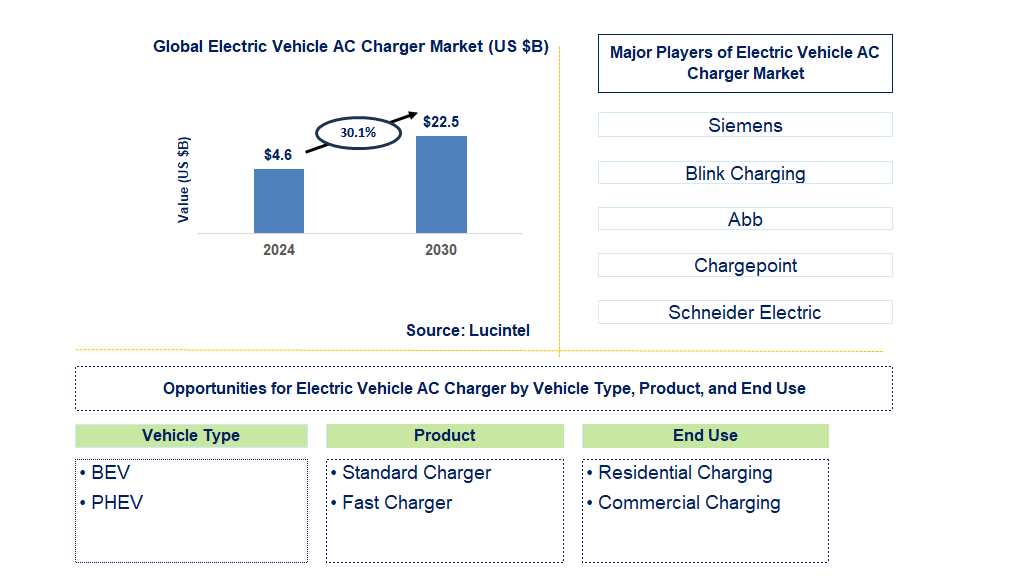
Key data points: The market size in 2030 = $22.5 billion, growth forecast = 30.1% annually next 6 years. Scroll below to get more insights. This market report covers trends, opportunities, and forecasts in the global electric vehicle ac charger market to 2030 by vehicle type (BEV and PHEV), product (standard charger and fast charger), end use (residential charging and commercial charging), and region (North America, Europe, Asia Pacific, and the Rest of the World)
We'll send your sample report shortly.
• APAC will remain the largest region over the forecast period due to growing demand for electric vehicle charging stations such as, China. Gain valuable insight for your business decisions with our comprehensive 150+ page report
• Increased Charging Infrastructure: As the demand for electric vehicles rises, governments and private entities are investing in expanding charging infrastructure. This includes the installation of more AC chargers in public spaces, workplaces, and residential areas.
• Smart Charging Solutions: Integration of smart technologies is becoming common. Smart chargers allow users to monitor and manage charging through mobile apps, offering features like scheduling, usage tracking, and remote control. This enhances user convenience and energy management.
• Faster Charging Technology: While AC chargers are generally slower than DC fast chargers, advancements are being made to reduce charging times. New technologies aim to increase the efficiency of AC charging, making it more competitive with fast charging options.
• Renewable Energy Integration: There is a growing trend to integrate renewable energy sources, such as solar power, with EV chargers. This not only promotes sustainability but also reduces operational costs for charging stations.
• Standardization and Compatibility: The push for standardization in charging connectors and protocols is gaining momentum. This will simplify the charging process for consumers and ensure compatibility across different EV models and charger types.
• Expansion of Level 2 Charging Infrastructure: The deployment of Level 2 AC chargers has significantly increased, with a focus on enhancing accessibility in public spaces, residential areas, and commercial locations. These chargers, which offer faster charging compared to standard Level 1 chargers, are becoming more common in urban areas, shopping centers, and workplace parking lots. This expansion aims to support the growing number of electric vehicles and reduce range anxiety by providing more convenient charging options. Increased investment in Level 2 infrastructure is crucial for meeting the rising demand and facilitating widespread electric vehicle adoption.
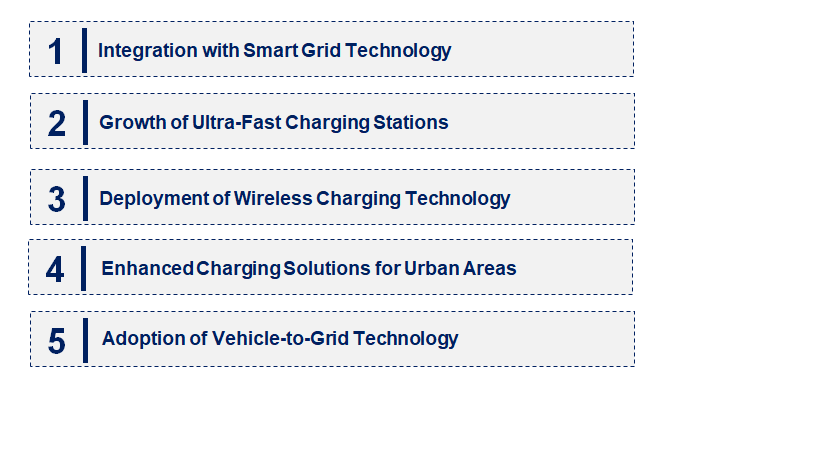
• Integration with Smart Grid Technology: Recent advancements include the integration of electric vehicle chargers with smart grid technology, allowing for more efficient energy management. Smart chargers can communicate with the grid to optimize charging times, manage energy loads, and incorporate renewable energy sources. This technology helps balance electricity demand and improves grid stability by shifting charging to off-peak times or using excess renewable energy. The integration supports energy efficiency and sustainability goals while providing electric vehicle owners with more flexible and cost-effective charging solutions.
• Development of Ultra-Fast Charging Stations: The rollout of ultra-fast charging stations is a major development aimed at drastically reducing charging times for electric vehicles. Ultra-fast chargers, capable of delivering power levels up to 350 kW or higher, can charge an electric vehicle to 80% in as little as 20–30 minutes. This advancement addresses one of the main barriers to electric vehicle adoption by enabling quicker charging during long trips and reducing downtime. The expansion of ultra-fast charging networks is essential for supporting the growth of long-range electric vehicles and enhancing the convenience of electric vehicle ownership.
• Emergence of Wireless (Inductive) Charging: Wireless charging technology is emerging as a convenient alternative to traditional plug-in methods. Inductive charging systems allow electric vehicles to charge by parking over a charging pad, eliminating the need for physical connectors. This development simplifies the charging process and can be integrated into various settings, including home garages and public parking areas. While still in the early stages of widespread adoption, wireless charging offers significant potential for enhancing user convenience and streamlining the overall charging experience as technology advances.
• Enhanced Charging Solutions for Urban Environments: Recent efforts to address urban charging challenges include the development of compact and versatile charging solutions tailored for densely populated areas. Innovations such as curbside charging stations, shared charging hubs, and multi-unit wall-mounted chargers are being deployed to accommodate the high density of vehicles and limited space in urban settings. These solutions aim to increase accessibility and convenience for urban electric vehicle owners, ensuring that the growing number of electric vehicles in cities has adequate and efficient charging options available. These recent developments highlight significant advancements in the electric vehicle AC charger market, focusing on expanding infrastructure, improving technology, and addressing specific challenges. The growth of Level 2 chargers, smart grid integration, ultra-fast charging, wireless technology, and urban solutions collectively contribute to a more efficient, accessible, and user-friendly charging ecosystem. These innovations are pivotal in supporting the widespread adoption of electric vehicles and advancing the transition to sustainable transportation.
• Residential Charging Solutions: The residential charging market represents a significant growth opportunity as more consumers adopt electric vehicles and seek convenient home charging solutions. Offering advanced Level 2 chargers that are easy to install, user-friendly, and compatible with smart home systems can attract homeowners looking for efficient and reliable charging options. Integrating features such as smart scheduling, energy usage monitoring, and home automation enhances the appeal of residential chargers. As electric vehicle adoption increases, providing tailored solutions for home charging will be crucial for capturing a large share of this growing market.
• Commercial Charging Installations: The commercial sector presents substantial growth potential for electric vehicle AC chargers, especially for businesses looking to support their electric fleets or provide charging options for employees and customers. Developing scalable and efficient charging solutions for commercial properties, including office buildings, retail centers, and parking facilities, can drive growth. Offering robust and high-capacity chargers, along with integration with fleet management systems and energy optimization tools, addresses the needs of commercial clients. This application supports the broader adoption of electric vehicles in business operations and enhances the convenience of electric mobility.
• Fleet Management Solutions: As businesses transition to electric fleets, there is a growing demand for specialized charging solutions that support fleet management and operational efficiency. Providing integrated charging solutions that include fleet management software, real-time monitoring, and energy management capabilities offers significant growth opportunities. These solutions help companies optimize charging schedules, manage energy consumption, and reduce operational costs. Tailoring charging infrastructure to meet the specific needs of various fleet types, such as delivery vans, taxis, and logistics vehicles, positions businesses to capitalize on the expanding market for electric fleet management.
• Public Charging Infrastructure: Expanding public charging infrastructure is crucial for supporting the widespread adoption of electric vehicles and reducing range anxiety. Investing in high-visibility, accessible charging stations in key locations, such as highways, urban centers, and transit hubs, offers significant growth potential. Providing ultra-fast chargers, improving user interfaces, and ensuring interoperability across different networks can enhance the appeal of public charging stations. Strategic partnerships with municipalities, property owners, and energy providers can facilitate the deployment of comprehensive public charging networks, addressing the growing demand for reliable and convenient electric vehicle charging options.
• Technological Advancements: Technological advancements are a key driver of the electric vehicle AC charger market. Innovations such as faster Level 2 chargers, smart grid integration, and wireless charging technology enhance the efficiency and convenience of electric vehicle charging. These advancements address consumer concerns about charging times and infrastructure accessibility, making electric vehicles more appealing. The continuous development of cutting-edge technologies, such as ultra-fast chargers and intelligent energy management systems, contributes to market growth by improving overall performance and user experience.
• Growing Adoption of Electric Vehicles: The increasing adoption of electric vehicles (EVs) drives the demand for electric vehicle AC chargers. As more consumers and businesses transition to electric mobility to reduce carbon footprints and benefit from lower operating costs, the need for reliable and widespread charging infrastructure intensifies. This trend is supported by a broader push for environmental sustainability and government incentives that promote EV purchases. The growing EV market creates robust demand for efficient charging solutions, driving expansion and innovation in the charging infrastructure sector.
• Supportive Government Policies and Incentives: Government policies and incentives play a crucial role in accelerating the growth of the electric vehicle AC charger market. Many governments offer subsidies, tax credits, and grants to promote the installation of electric vehicle chargers and support the adoption of electric vehicles. Additionally, regulations mandating the inclusion of electric vehicle charging infrastructure in new buildings and public spaces further drive market growth. These supportive measures create a favorable environment for investment and development in electric vehicle charging solutions, helping to expand infrastructure and reduce barriers to electric vehicle adoption.
• Economic Incentives for Renewable Energy Integration: Economic incentives for integrating renewable energy sources with electric vehicle charging infrastructure drive market growth. Policies and subsidies that support the use of solar panels, wind turbines, and other renewable energy technologies for charging stations promote sustainable energy solutions. These incentives reduce the overall cost of installation and operation, making it more attractive for businesses and consumers to adopt green energy solutions. By aligning electric vehicle charging with renewable energy goals, stakeholders can enhance the appeal of their offerings and contribute to a more sustainable energy ecosystem.
• Increased Investment in Charging Infrastructure: Investment in charging infrastructure is a significant driver for the electric vehicle AC charger market. Both public and private sector investments focus on expanding and upgrading charging networks to accommodate the growing number of electric vehicles. This includes funding for the installation of new charging stations, upgrades to existing infrastructure, and the development of advanced charging technologies. Increased investment supports the widespread availability of charging options, reduces range anxiety, and fosters market growth by ensuring that charging infrastructure meets the needs of an expanding electric vehicle market. Challenges in the electric vehicle AC charger market include:
• Regulatory and Standardization Issues: Regulatory and standardization issues pose challenges for the electric vehicle AC charger market. Different regions may have varying regulations and standards for charging infrastructure, complicating the development and deployment of universally compatible chargers. Ensuring compliance with diverse regulatory requirements and achieving interoperability among different charging networks and vehicle models can be complex and costly. This lack of uniformity may hinder market growth and create barriers for manufacturers and consumers seeking reliable and standardized charging solutions.
• High Initial Costs and Infrastructure Investment: The high initial costs of installing electric vehicle charging infrastructure present a significant challenge. Both public and private entities face substantial expenses related to the installation of charging stations, especially for advanced and ultra-fast chargers. Additionally, the need for upgrades to existing electrical systems and grid infrastructure can further increase costs. These financial barriers may deter investment, particularly in areas with lower EV adoption rates, and can slow the expansion of charging networks necessary to support widespread electric vehicle use.
• Technological Complexity and Integration: Technological complexity and integration issues can affect the deployment and efficiency of electric vehicle AC chargers. Advanced features such as smart charging, wireless technology, and integration with renewable energy systems require sophisticated technology and infrastructure. Ensuring compatibility and seamless operation across different systems and technologies can be challenging. Technical issues related to software, hardware, and system integration may impact performance and user experience, creating hurdles for market adoption and driving up the cost of developing and maintaining charging solutions. The electric vehicle AC charger market is driven by technological advancements, growing adoption of electric vehicles, supportive government policies, economic incentives for renewable energy, and increased investment in infrastructure. However, challenges such as regulatory issues, high initial costs, and technological complexity must be addressed to ensure continued market growth and widespread adoption. By understanding and navigating these drivers and challenges, stakeholders can effectively contribute to the development of a robust and efficient electric vehicle charging infrastructure.
• Siemens
• Blink Charging
• Abb
• Chargepoint
• Schneider Electric
• Robert Bosch
• Eaton
• Evbox
• Wallbox
• BEV
• PHEV
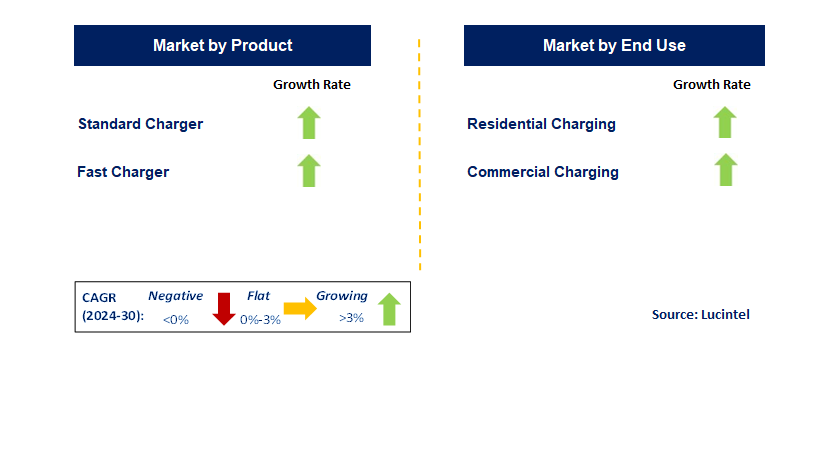
• Standard Charger
• Fast Charger
• Residential Charging
• Commercial Charging
• North America
• Europe
• Asia Pacific
• The Rest of the World
• Technological Advancements: Technological advancements are a key driver of the electric vehicle AC charger market. Innovations such as faster Level 2 chargers, smart grid integration, and wireless charging technology enhance the efficiency and convenience of electric vehicle charging. These advancements address consumer concerns about charging times and infrastructure accessibility, making electric vehicles more appealing. The continuous development of cutting-edge technologies, such as ultra-fast chargers and intelligent energy management systems, contributes to market growth by improving overall performance and user experience.
• Growing Adoption of Electric Vehicles: The increasing adoption of electric vehicles (EVs) drives the demand for electric vehicle AC chargers. As more consumers and businesses transition to electric mobility to reduce carbon footprints and benefit from lower operating costs, the need for reliable and widespread charging infrastructure intensifies. This trend is supported by a broader push for environmental sustainability and government incentives that promote EV purchases. The growing EV market creates robust demand for efficient charging solutions, driving expansion and innovation in the charging infrastructure sector.
• Supportive Government Policies and Incentives: Government policies and incentives play a crucial role in accelerating the growth of the electric vehicle AC charger market. Many governments offer subsidies, tax credits, and grants to promote the installation of electric vehicle chargers and support the adoption of electric vehicles. Additionally, regulations mandating the inclusion of electric vehicle charging infrastructure in new buildings and public spaces further drive market growth. These supportive measures create a favorable environment for investment and development in electric vehicle charging solutions, helping to expand infrastructure and reduce barriers to electric vehicle adoption.
• Economic Incentives for Renewable Energy Integration: Economic incentives for integrating renewable energy sources with electric vehicle charging infrastructure drive market growth. Policies and subsidies that support the use of solar panels, wind turbines, and other renewable energy technologies for charging stations promote sustainable energy solutions. These incentives reduce the overall cost of installation and operation, making it more attractive for businesses and consumers to adopt green energy solutions. By aligning electric vehicle charging with renewable energy goals, stakeholders can enhance the appeal of their offerings and contribute to a more sustainable energy ecosystem.
• Increased Investment in Charging Infrastructure: Investment in charging infrastructure is a significant driver for the electric vehicle AC charger market. Both public and private sector investments focus on expanding and upgrading charging networks to accommodate the growing number of electric vehicles. This includes funding for the installation of new charging stations, upgrades to existing infrastructure, and the development of advanced charging technologies. Increased investment supports the widespread availability of charging options, reduces range anxiety, and fosters market growth by ensuring that charging infrastructure meets the needs of an expanding electric vehicle market. Challenges in the electric vehicle AC charger market include:
• Regulatory and Standardization Issues: Regulatory and standardization issues pose challenges for the electric vehicle AC charger market. Different regions may have varying regulations and standards for charging infrastructure, complicating the development and deployment of universally compatible chargers. Ensuring compliance with diverse regulatory requirements and achieving interoperability among different charging networks and vehicle models can be complex and costly. This lack of uniformity may hinder market growth and create barriers for manufacturers and consumers seeking reliable and standardized charging solutions.
• High Initial Costs and Infrastructure Investment: The high initial costs of installing electric vehicle charging infrastructure present a significant challenge. Both public and private entities face substantial expenses related to the installation of charging stations, especially for advanced and ultra-fast chargers. Additionally, the need for upgrades to existing electrical systems and grid infrastructure can further increase costs. These financial barriers may deter investment, particularly in areas with lower EV adoption rates, and can slow the expansion of charging networks necessary to support widespread electric vehicle use.
• Technological Complexity and Integration: Technological complexity and integration issues can affect the deployment and efficiency of electric vehicle AC chargers. Advanced features such as smart charging, wireless technology, and integration with renewable energy systems require sophisticated technology and infrastructure. Ensuring compatibility and seamless operation across different systems and technologies can be challenging. Technical issues related to software, hardware, and system integration may impact performance and user experience, creating hurdles for market adoption and driving up the cost of developing and maintaining charging solutions. The electric vehicle AC charger market is driven by technological advancements, growing adoption of electric vehicles, supportive government policies, economic incentives for renewable energy, and increased investment in infrastructure. However, challenges such as regulatory issues, high initial costs, and technological complexity must be addressed to ensure continued market growth and widespread adoption. By understanding and navigating these drivers and challenges, stakeholders can effectively contribute to the development of a robust and efficient electric vehicle charging infrastructure.


• Siemens
• Blink Charging
• ABB
• ChargePoint
• Schneider Electric
• Robert Bosch
• Eaton
• EVBox
• Wallbox Q6. Which electric vehicle AC charger market segment will be the largest in future? Answer: Lucintel forecasts that standard charger will remain the larger segment over the forecast period due to presence of level 1 and 2 charging infrastructure in major countries, and the increasing sales of vehicles led to growing demand for power capacity ranging from 3 to 22kw, which in turn is driving the AC standard charger demand. Q7. In electric vehicle AC charger market, which region is expected to be the largest in next 5 years? Answer:
• APAC will remain the largest region over the forecast period due to growing demand for electric vehicle charging stations such as, China. Q.8 Do we receive customization in this report? Answer: Yes, Lucintel provides 10% customization without any additional cost.


Choose a license that fits your team. Instant PDF delivery.
Prices exclude taxes. Instant delivery. Custom licensing available on request.
Market Report · July 31, 2026
Market Report · July 22, 2026
Market Report · July 17, 2026
Trusted partner for strategic intelligence and business growth


Receive a complimentary market analysis tailored to your industry. Our analysts will identify key growth opportunities and competitive dynamics specific to your business.

Market size, growth rate, and key trend analysis for your specific sector.

Top competitor positioning and market share analysis.

Strategic recommendations backed by data-driven insights.
Get curated market intelligence and competitive moves straight to your inbox.
By subscribing, you agree to receive our monthly insights. Unsubscribe anytime.
Receive a complimentary market analysis tailored to your industry. Our analysts will identify key growth opportunities and competitive dynamics specific to your business.
Market size, growth rate, and key trend analysis for your specific sector.
Top competitor positioning and market share analysis.
Strategic recommendations backed by data-driven insights.
Get curated market intelligence, emerging trends, and competitive moves straight to your inbox each month.
By subscribing, you agree to receive our monthly insights. Unsubscribe anytime.
We'll send your sample report shortly.