
Market Report · May 18, 2026

Key data points: The market size in 2035 = $681 million, growth forecast = 7.1% annually for the next 8 years. Scroll below to get more insights. This market report covers trends, opportunities and forecasts in electric outboard motor market to 2035 by type (propulsion motor and trolling motor), power output (under 25 hp, 25hp-50 hp, and more than 50 hp), end use (municipal and commercial), and region (North America, Europe, Asia Pacific, and the Rest of the World)
We'll send your sample report shortly.
• Lucintel forecasts that, within the type category, trolling motor is expected to witness higher growth over the forecast period.
• Within the end use category, commercial is expected to witness higher growth.
• In terms of region, APAC is expected to witness the highest growth over the forecast period.
Gain valuable insights for your business decisions with our comprehensive 150+ page report. Sample figures with some insights are shown below.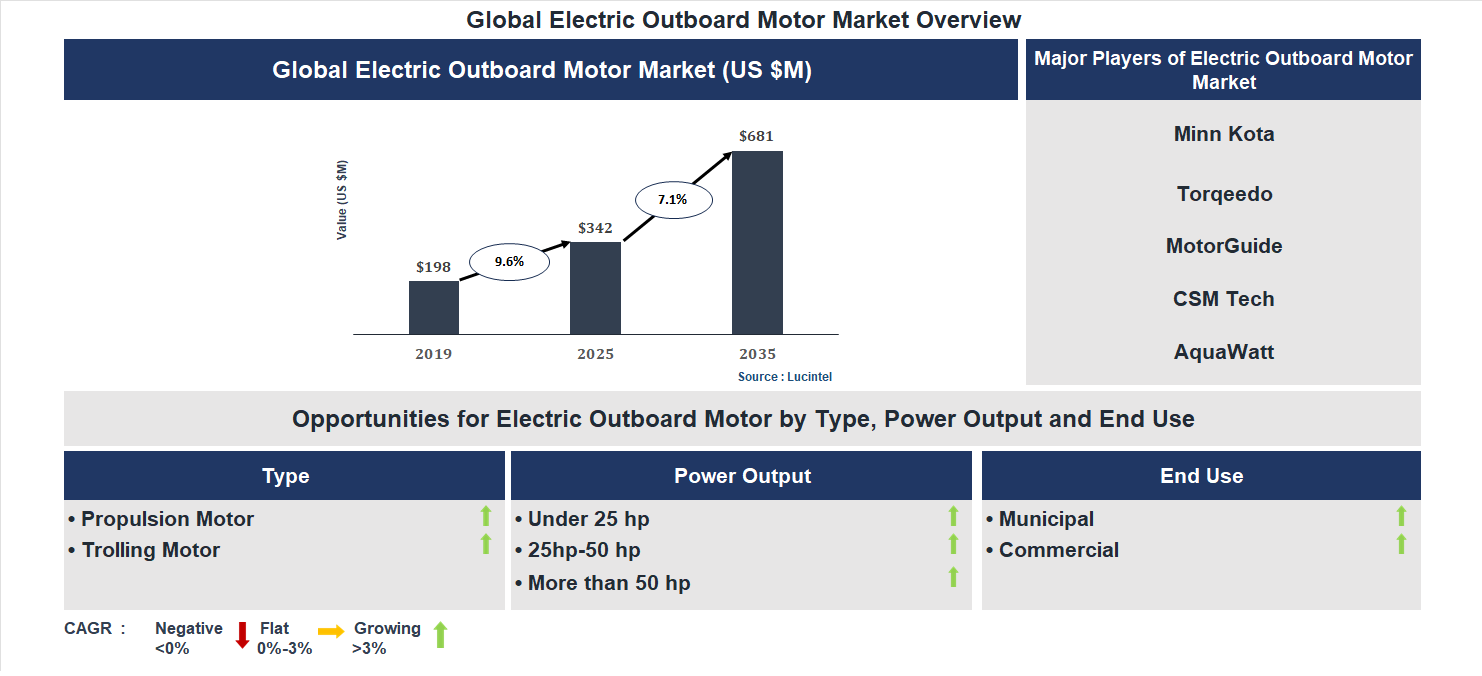
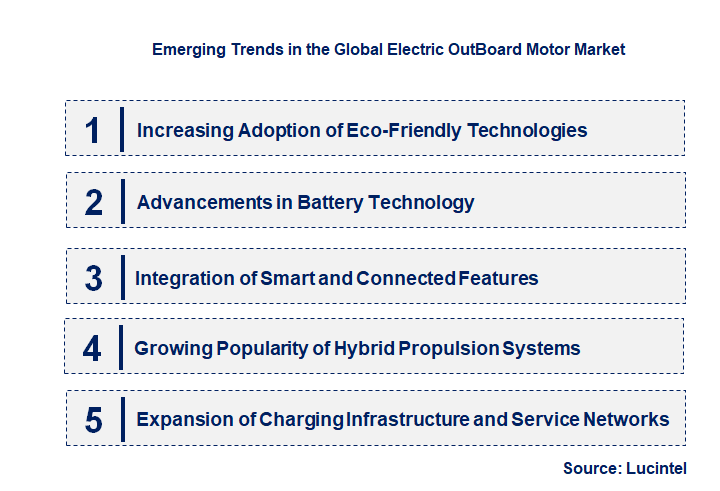
• Increasing Adoption of Eco-Friendly Technologies: The shift towards electric outboard motors is driven by rising environmental awareness and stricter regulations on emissions. Consumers prefer sustainable boating options that reduce carbon footprints and noise pollution. Manufacturers are investing in developing high-capacity batteries and efficient motors to meet these demands. This trend is expanding market reach, especially among environmentally conscious consumers and commercial operators seeking greener solutions. The adoption of eco-friendly technologies is also encouraging innovation in battery life, charging infrastructure, and motor performance, making electric outboards more competitive with traditional gasoline engines.
• Advancements in Battery Technology: Improvements in battery capacity, charging speed, and durability are significantly impacting the market. Lithium-ion batteries are becoming more affordable and efficient, enabling longer usage times and faster recharging. These technological advancements are reducing range anxiety and increasing the practicality of electric outboard motors for various applications, from recreational boating to commercial use. Enhanced battery technology also supports the development of portable and lightweight motors, broadening their usability. As battery technology continues to evolve, it will further drive market growth by making electric outboards more reliable and accessible to a wider customer base.
• Integration of Smart and Connected Features: The incorporation of IoT and smart technology into electric outboard motors is transforming user experience. Features such as remote monitoring, GPS tracking, and performance analytics allow boaters to optimize operation and maintenance. Connectivity enables real-time diagnostics, predictive maintenance, and enhanced safety features, making electric outboards more user-friendly and efficient. This trend is also fostering the development of integrated marine management systems, providing seamless control and data sharing. The adoption of smart features is attracting tech-savvy consumers and commercial operators seeking advanced, reliable, and easy-to-manage propulsion solutions.
• Growing Popularity of Hybrid Propulsion Systems: Hybrid systems combining electric and traditional engines are gaining traction as they offer flexibility and extended range. These systems allow boaters to switch between power sources based on conditions, reducing fuel consumption and emissions. Hybrid outboards are particularly appealing for commercial applications and long-distance cruising, where reliability and endurance are critical. The development of hybrid technology is encouraging manufacturers to innovate and offer versatile solutions that cater to diverse customer needs. This trend is expected to accelerate as hybrid systems become more affordable and efficient, bridging the gap between conventional and fully electric propulsion.
• Expansion of Charging Infrastructure and Service Networks: The growth of electric outboard motors necessitates a robust charging infrastructure and comprehensive service networks. Investment in charging stations at marinas, docks, and popular boating areas is increasing to support electric vessel operations. Service networks are also expanding to provide maintenance, repairs, and battery replacements, ensuring reliability and customer confidence. This infrastructure development is crucial for mainstream adoption, especially in remote or less-developed regions. As charging and service facilities improve, the market will become more accessible and convenient, encouraging more consumers and commercial operators to switch to electric propulsion.
• Growing Adoption of Electric Propulsion: The shift from traditional fuel engines to electric outboard motors is accelerating due to environmental regulations and consumer demand for eco-friendly options. This transition reduces emissions, noise pollution, and operational costs, making electric motors more attractive for recreational and commercial use. Market players are investing heavily in R&D to improve battery life and motor performance, which further fuels adoption. As a result, the market is expanding rapidly, with increased sales and new product launches across various regions.
• Advancements in Battery Technology: Innovations in lithium-ion and solid-state batteries are significantly enhancing the range and durability of electric outboard motors. These technological improvements enable longer boating trips and reduce charging times, addressing key consumer concerns. Enhanced battery safety and cost reductions are also making electric motors more accessible. The development of portable, high-capacity batteries is opening new opportunities for smaller vessels and remote applications, thereby broadening the market scope and encouraging wider adoption.
• Rising Government Incentives and Regulations: Governments worldwide are implementing policies to promote clean transportation, including subsidies, tax incentives, and stricter emission standards. These measures are compelling boat manufacturers and consumers to switch to electric outboard motors. Regulatory frameworks are also phasing out older, polluting engines, creating a market push for electric alternatives. Such policies are fostering a favorable environment for market growth, attracting investments, and accelerating the transition towards sustainable marine propulsion solutions.
• Expansion of Recreational Boating Market: The increasing popularity of boating as a leisure activity is driving demand for quieter, environmentally friendly engines. Electric outboard motors appeal to eco-conscious consumers seeking low-maintenance, silent operation, and cost savings. The growth of the recreational boating industry, especially in North America and Europe, is creating a substantial market for electric motors. Manufacturers are launching innovative, user-friendly products to meet this rising demand, further fueling market expansion and diversification.
• Integration of Smart Technology and Connectivity: The incorporation of IoT and smart features into electric outboard motors is transforming user experience. Features like remote monitoring, GPS integration, and performance analytics enhance safety, efficiency, and convenience. These technological integrations attract tech-savvy consumers and commercial operators seeking advanced control and maintenance capabilities. The trend is encouraging manufacturers to develop connected products, which are expected to boost sales, improve product differentiation, and accelerate market growth through enhanced customer engagement.
• Growing Demand for Eco-Friendly Boating Solutions: The increasing awareness of environmental issues is driving consumers to seek electric outboard motors as a cleaner alternative to traditional gasoline engines. Governments are also implementing regulations to reduce emissions, further boosting adoption. Manufacturers are focusing on developing high-performance, battery-efficient models that meet consumer expectations for power and range, positioning themselves to capitalize on this sustainable shift in the boating industry.
• Technological Innovations Enhancing Motor Performance: Advances in battery technology, motor design, and control systems are significantly improving the efficiency, power output, and reliability of electric outboard motors. These innovations enable longer operating times, faster speeds, and better maneuverability, making electric motors more competitive with traditional options. Companies investing in R&D are gaining a competitive edge by offering cutting-edge products that meet the evolving needs of recreational and commercial users.
• Expansion into Emerging Markets with Rising Watercraft Usage: Developing regions are witnessing increased watercraft usage due to rising disposable incomes and tourism development. Electric outboard motors offer a quiet, low-maintenance, and environmentally friendly option suitable for these markets. Local manufacturers and global players are forming strategic partnerships to introduce affordable, durable models tailored to regional needs, unlocking new revenue streams and expanding the market footprint.
• Integration of Smart Technology and Connectivity Features: Incorporating IoT and smart features into electric outboard motors enhances user experience through real-time monitoring, remote control, and maintenance alerts. These technological integrations appeal to tech-savvy consumers and commercial operators seeking efficiency and convenience. Companies that develop connected products can differentiate themselves, build brand loyalty, and create new revenue opportunities through software updates and data-driven services.
• Increasing Adoption in Commercial and Professional Applications: Electric outboard motors are gaining traction in commercial sectors such as fishing, patrol, and research vessels due to their low noise, zero emissions, and reduced operational costs. These benefits improve safety, compliance, and sustainability credentials. Market players are developing specialized models with higher durability and power to meet the rigorous demands of professional users, opening substantial growth avenues beyond recreational boating.
• Technological Innovation: The continuous development of high-capacity batteries and efficient motor designs enhances performance and reliability. Innovations such as lightweight materials and improved propulsion systems reduce weight and increase endurance, making electric outboards more competitive with traditional engines. These advancements lower operational costs and extend usage time, attracting both recreational and commercial users. As technology progresses, the market is expected to see increased adoption driven by improved product features and affordability.
• Environmental Regulations and Policies: Governments worldwide are implementing stricter emission standards and promoting eco-friendly boating solutions. Regulations that restrict the use of internal combustion engines in certain areas or during specific times incentivize consumers and operators to switch to electric alternatives. Subsidies, tax incentives, and grants further encourage adoption. These policies not only reduce environmental impact but also create a favorable regulatory environment that accelerates market growth and innovation.
• Rising Consumer Awareness and Preference for Sustainability: Increasing awareness about environmental issues and the benefits of electric propulsion influence consumer choices. Boaters are seeking sustainable options that minimize noise pollution and carbon emissions. The shift towards eco-conscious lifestyles and the desire for quieter, cleaner boating experiences drive demand for electric outboards. This trend is supported by marketing efforts and the growing availability of electric models across various boat sizes and types.
• Cost Savings and Operational Efficiency: Although the initial purchase price of electric outboards can be higher, lower operating and maintenance costs make them economically attractive over time. Electric motors have fewer moving parts, reducing maintenance needs and costs. Additionally, lower fuel expenses and tax benefits contribute to overall savings. These economic advantages appeal to commercial operators and recreational users seeking cost-effective, reliable propulsion solutions, thereby expanding market penetration.
• Market Expansion and Product Availability: The increasing availability of electric outboard motors across different regions and price points broadens market access. Manufacturers are expanding their product lines to include models suitable for various boat sizes and applications. Distribution channels are improving, and after-sales services are becoming more accessible. This expansion facilitates greater consumer adoption and stimulates market growth, especially in emerging markets where electric boating is gaining popularity.
• High Initial Costs: Despite decreasing prices, electric outboard motors still require a significant upfront investment compared to traditional gasoline engines. This cost barrier limits adoption among budget-conscious consumers and small-scale operators. The expense is primarily due to advanced battery technology and high manufacturing costs. Overcoming this challenge requires economies of scale, technological improvements, and financial incentives to make electric outboards more accessible and competitive.
• Limited Battery Range and Charging Infrastructure: The relatively limited range of electric motors and the scarcity of charging stations pose significant hurdles. Boaters often worry about running out of power during extended trips, which restricts usage and adoption. Developing high-capacity batteries and expanding charging networks are essential to address these concerns. Without reliable infrastructure, market growth remains constrained, especially in remote or less-developed regions.
• Regulatory Uncertainty and Standardization: The evolving regulatory landscape and lack of standardized policies create uncertainty for manufacturers and consumers. Variations in emission standards, safety regulations, and certification processes across regions complicate product development and market entry. This uncertainty can delay investments and hinder innovation. Clear, harmonized regulations and standards are necessary to foster confidence and facilitate widespread adoption of electric outboard motors.
• Minn Kota
• Torqeedo
• MotorGuide
• CSM Tech
• AquaWatt
• Haibo
• Propulsion Technology
• Suzhou Parsun Power Machine
• Elco Motor Yachts
• Krautler Elektromaschinen
• Propulsion Motor
• Trolling Motor
• Under 25 hp
• 25hp-50 hp
• More than 50 hp
• Municipal
• Commercial
• North America
• Europe
• Asia Pacific
• The Rest of the World
• United States: The US market has seen rapid adoption of electric outboard motors, driven by strong environmental regulations and consumer demand for sustainable boating options. Major manufacturers are launching innovative products with longer battery life and higher power output. The government’s incentives for clean energy and marine safety standards are also encouraging market growth. Additionally, the rise of electric boating communities and increased investment in marina infrastructure support market expansion. The US remains a leader in technological advancements, with startups and established companies collaborating to develop smarter, more efficient electric propulsion systems.
• China: China is experiencing rapid growth in the electric outboard motor market, fueled by government policies promoting green energy and domestic manufacturing capabilities. The country’s expanding boating industry and increasing urbanization are driving demand for eco-friendly recreational activities. Chinese companies are focusing on cost-effective production and local distribution networks to capture market share. Innovations in battery technology and motor design are improving product performance. The government’s support through subsidies and favorable regulations is further accelerating market development, positioning China as a key player in the global electric outboard motor industry.
• Germany: Germany’s market is characterized by a focus on high-quality, technologically advanced electric outboard motors. The country’s strong emphasis on sustainability and environmental standards influences product development, with many companies investing in research to improve efficiency and reduce emissions. The presence of leading engineering firms and marine technology specialists fosters innovation. Germany’s strategic location within Europe facilitates exports and integration into broader European markets. Consumer preferences for premium, reliable, and eco-friendly boating solutions are driving demand. Additionally, government initiatives supporting renewable energy and green transportation contribute to the market’s steady growth.
• India: The Indian electric outboard motor market is emerging, with increasing awareness of environmental issues and government initiatives promoting clean energy. The market is driven by the growth of small-scale fishing and recreational boating sectors. Local manufacturers are developing affordable, durable electric motors suitable for the Indian climate and water conditions. Infrastructure development, such as charging stations and marina facilities, is gradually improving. The government’s push for sustainable transportation and renewable energy projects is expected to further boost market prospects. As affordability and technological improvements continue, India is poised to become a significant player in the regional electric outboard motor industry.
• Japan: Japan’s market for electric outboard motors is characterized by advanced technology and a strong focus on sustainability. Japanese companies are leading in innovation, offering high-performance, energy-efficient motors with smart features. The country’s strict environmental regulations and consumer preference for eco-friendly products drive market growth. The boating industry in Japan is also supported by a well-developed infrastructure and a culture of marine recreation. Collaborations between technology firms and marine manufacturers are fostering new product development. Government policies promoting renewable energy and green transportation further support the expansion of the electric outboard motor market in Japan.


• Minn Kota
• Torqeedo
• MotorGuide
• CSM Tech
• AquaWatt
• Haibo
• Propulsion Technology
• Suzhou Parsun Power Machine
• Elco Motor Yachts
• Krautler Elektromaschinen
Q6. Which electric outboard motor market segment will be the largest in future?

Choose a license that fits your team. Instant PDF delivery.
Prices exclude taxes. Instant delivery. Custom licensing available on request.
Market Report · May 18, 2026
Market Report · May 18, 2026
Market Report · May 18, 2026
Trusted partner for strategic intelligence and business growth


Receive a complimentary market analysis tailored to your industry. Our analysts will identify key growth opportunities and competitive dynamics specific to your business.

Market size, growth rate, and key trend analysis for your specific sector.

Top competitor positioning and market share analysis.

Strategic recommendations backed by data-driven insights.
Get curated market intelligence and competitive moves straight to your inbox.
By subscribing, you agree to receive our monthly insights. Unsubscribe anytime.
Receive a complimentary market analysis tailored to your industry. Our analysts will identify key growth opportunities and competitive dynamics specific to your business.
Market size, growth rate, and key trend analysis for your specific sector.
Top competitor positioning and market share analysis.
Strategic recommendations backed by data-driven insights.
Get curated market intelligence, emerging trends, and competitive moves straight to your inbox each month.
By subscribing, you agree to receive our monthly insights. Unsubscribe anytime.
We'll send your sample report shortly.