
Market Report · May 18, 2026

This market report covers trends, opportunities, and forecasts in the global electric motor sales market to 2031 by technology (integral horsepower (ihp) output and fractional horsepower (fhp) output), application (automotive, hvac, medical equipment, industrial machinery, and home appliances), and region (North America, Europe, Asia Pacific, and the Rest of the World)
We'll send your sample report shortly.
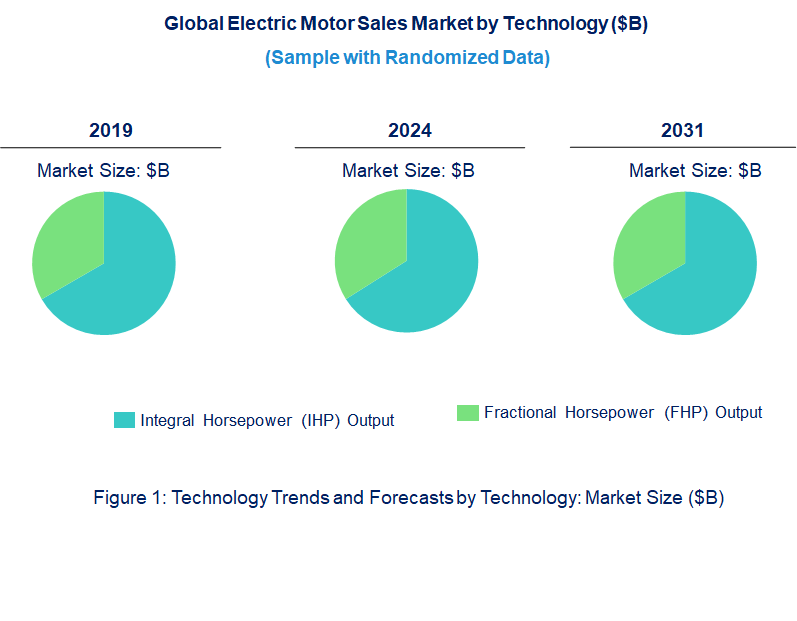
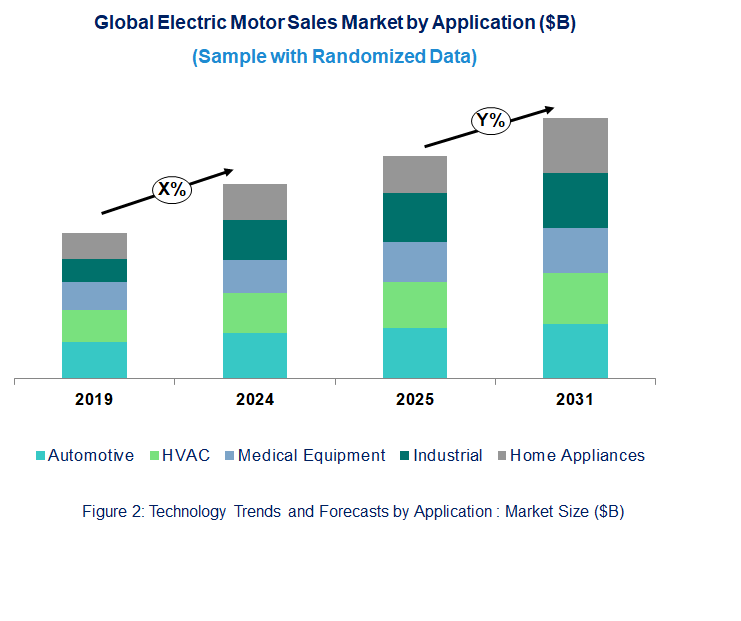
• Increase in Electric Vehicle (EV) Adoption: With the rising popularity of electric vehicles, there is an increasing demand for IHP motors that deliver higher performance, efficiency, and power density, enabling better energy utilization and longer battery life in EVs.
• Energy Efficiency Standards: The growing emphasis on sustainability has led to stricter energy efficiency regulations, boosting the demand for energy-efficient electric motors, particularly in industrial machinery and HVAC applications.
• Rise of IoT Integration: The integration of internet of things (IoT) technology into electric motors is enabling remote monitoring, predictive maintenance, and enhanced control, contributing to the development of smarter motor systems across all industries.
• Adoption of Variable Speed Drives (VSDs): VSDs are gaining traction in applications such as HVAC and home appliances, allowing for more precise control of motor speed, which improves efficiency and reduces operational costs.
• Miniaturization and Compact Designs: The demand for smaller, more compact motors in consumer electronics and home appliances is driving innovation in motor designs, particularly in FHP motors, which are being optimized for reduced size without sacrificing power or efficiency. These emerging trends are driving the shift towards more efficient, interconnected, and high-performance motors, which are reshaping how electric motors are utilized in key industries such as automotive, HVAC, medical equipment, and industrial machinery.
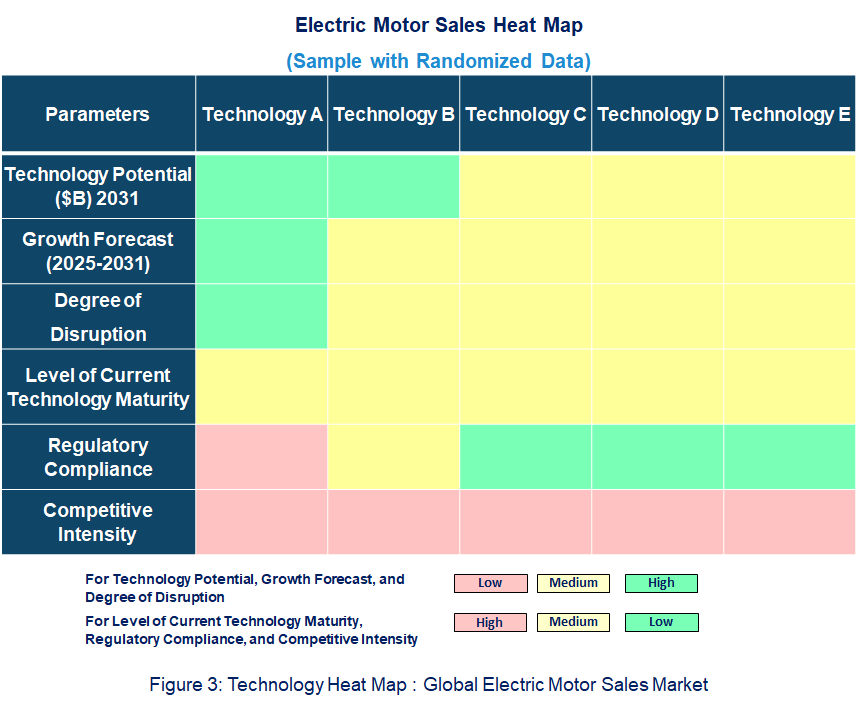
• Technology Potential: Electric motor technology holds strong potential across various industries due to its critical role in powering machines, appliances, electric vehicles (EVs), and industrial equipment. Advancements in motor efficiency, miniaturization, and integration with digital control systems are enabling significant energy savings and automation capabilities. The global push toward electrification and clean energy is driving innovation in high-efficiency motors such as brushless DC motors (BLDC), permanent magnet synchronous motors (PMSM), and switched reluctance motors (SRM). Integration with smart technologies like IoT and AI for predictive maintenance and performance optimization enhances operational value. With applications ranging from household appliances to high-performance electric mobility and renewable energy systems, electric motor technology continues to expand its influence across sectors.
• Degree of Disruption: Electric motors are at the heart of a disruptive shift toward electrification in automotive, industrial automation, and HVAC sectors. The transition from internal combustion engines to electric drive systems in transportation is one of the most disruptive trends globally. High-efficiency motors are also replacing traditional motors in factories and buildings to meet sustainability goals. Furthermore, innovations in motor control and integration with power electronics are streamlining system architectures, reducing emissions, and enabling next-generation robotics and smart manufacturing solutions.
• Level of Current Technology Maturity: Electric motor technology is mature, especially in conventional AC and DC motor applications. However, newer motor types like BLDC, PMSM, and SRM are still evolving, particularly in high-torque and high-efficiency applications. The supply chain for rare-earth materials and developments in alternative magnetic materials continue to shape innovation. While the foundational technologies are well-established, ongoing R&D focuses on improved thermal management, noise reduction, and digital control integration. EV traction motors and industrial-grade motors with smart capabilities represent a rapidly maturing subset within the broader market.
• Regulatory Compliance: Electric motor technologies are subject to stringent efficiency, safety, and environmental regulations globally. Regulatory standards such as the U.S. Department of Energy (DOE) motor efficiency rules, European Union’s Ecodesign directives, and IEC efficiency classes (IE2, IE3, IE4) mandate energy performance thresholds. Compliance with CE, UL, and RoHS is essential for electrical safety and environmental protection. In automotive applications, electric motors must meet ISO standards and functional safety requirements like ISO 26262. Adherence to these evolving regulations is essential for market access and consumer trust, especially as governments continue tightening energy efficiency and carbon emission policies.
• Nidec: Focuses on high-efficiency IHP motors for automotive applications, particularly in electric vehicles. Their advancements in motor technology are helping improve EV performance and reduce energy consumption.
• ABB: A leader in industrial motor technology, ABB has been driving the shift to IHP motors in industries such as HVAC, with an emphasis on energy efficiency and integration with smart grid systems.
• Siemens: Known for its contributions to both IHP and FHP motors, Siemens is innovating in renewable energy applications, particularly in wind power and solar, where high-efficiency motors play a critical role in system performance.
• WEG: Specializes in both industrial IHP and FHP motors, providing energy-efficient solutions for HVAC, home appliances, and automotive industries.
• Robert Bosch: A key player in IHP motors, Bosch is heavily invested in the electric vehicle market, particularly in high-efficiency motor systems that contribute to the energy performance of EVs. These players continue to shape the future of the electric motor sales market by introducing technologies that improve efficiency, reduce environmental impact, and meet the growing demand for smart, energy-efficient solutions.
• Rising Demand for Electric Vehicles (EVs) The global shift towards EVs to reduce carbon emissions is significantly boosting demand for high-efficiency electric motors. These motors are integral to propulsion systems, enabling performance, energy savings, and reduced environmental impact, driving sales across automotive OEMs and aftermarket sectors.
• Growth of Industrial Automation and Smart Manufacturing Automation in industries like automotive, electronics, and food processing relies heavily on electric motors for motion control. Increased adoption of robotics and smart machinery is fueling motor sales as manufacturers aim for improved precision and productivity.
• Government Regulations Promoting Energy Efficiency Policies and incentives aimed at reducing energy consumption have compelled industries to adopt high-efficiency electric motors. This regulatory push is spurring upgrades and replacements in existing infrastructure, thereby expanding the motor sales market.
• Technological Advancements in Motor Design Improvements in materials, digital control systems, and motor design (e.g., brushless DC motors) are enhancing performance and reducing maintenance. These innovations are attracting users across sectors, broadening the application scope and boosting adoption.
• Expansion of HVAC and Home Appliance Markets Rising global temperatures and increased urbanization have led to surging demand for air conditioning and appliances, all of which rely on electric motors. This consumer-driven trend is contributing to market growth in residential and commercial segments. Major Challenges
• High Initial Cost of Energy-Efficient Motors Although energy-efficient motors offer long-term savings, their upfront costs can be prohibitive, especially for small and medium enterprises. This cost sensitivity can deter widespread adoption, particularly in developing markets.
• Volatility in Raw Material Prices Electric motors require materials like copper and rare earth elements, which are subject to global price fluctuations. This volatility increases production costs and affects profit margins for manufacturers and suppliers.
• Complexities in Retrofitting and Integration Upgrading to modern electric motors often requires changes in control systems and infrastructure. Compatibility and integration issues with legacy systems pose technical challenges and can delay modernization efforts.
• Supply Chain Disruptions and Component Shortages Global supply chain disruptions, exacerbated by geopolitical tensions and pandemics, have impacted the availability of motor components such as semiconductors, leading to production delays and increased costs.
• Environmental Concerns Over Disposal and Recycling The disposal of electric motors, especially those containing hazardous materials, raises environmental concerns. Lack of robust recycling infrastructure in many regions hampers sustainable growth and complicates end-of-life management. The electric motor sales market is poised for significant growth driven by trends in electrification, automation, and energy efficiency. Although the market faces barriers such as cost and integration complexities, ongoing innovation and supportive regulations are creating fertile ground for expansion. These drivers are steadily transforming electric motors from legacy components into strategic enablers of global sustainability and industrial progress.
• Nidec
• Abb
• Siemens
• Weg
• Robert Bosch
• Technology Readiness and Applications: IHP motors are highly mature and widely used in industrial compressors, pumps, conveyors, HVAC systems, and electric vehicles where high torque is essential. FHP motors are also technologically mature and dominate in fans, mixers, washing machines, medical pumps, and personal care devices. IHP motors are increasingly integrated with variable frequency drives and smart sensors for predictive maintenance and performance optimization. FHP motors are now being tailored for ultra-compact, battery-operated, and IoT-enabled systems. Both motor types have reached high levels of readiness and reliability, enabling seamless integration into smart systems, boosting productivity, and supporting energy efficiency goals across industries.
• Disruption Potential: In the electric motor sales market, Integral Horsepower (IHP) motors have strong disruption potential in industrial automation, HVAC, and electric vehicles due to their capacity for high-power operations and energy efficiency. They are driving the shift toward electrification in manufacturing and transportation. Fractional Horsepower (FHP) motors, though smaller, are highly disruptive in consumer electronics, household appliances, medical devices, and robotics due to their compact size and adaptability to IoT integration. While IHP motors are revolutionizing large-scale industries, FHP motors are enabling smart, portable, and energy-efficient applications across everyday use cases, making both segments crucial in reshaping their respective sectors.
• Competitive Intensity and Regulatory Compliance: The IHP segment is highly competitive, with global players like Siemens, ABB, and WEG focusing on efficiency and smart motor technology. FHP motors see strong competition in consumer-focused sectors, with firms like Nidec and Johnson Electric leading innovations in miniaturization and noise reduction. Regulatory compliance is critical in both segments—IE2, IE3, and IE4 efficiency standards impact IHP motors significantly. For FHP, appliance safety and energy labeling regulations (like DOE and Ecodesign) govern market entry. Emphasis on eco-friendly motors and government mandates on energy consumption continue to increase compliance costs and innovation pressure across both IHP and FHP markets.
• Integral Horsepower (IHP) Output
• Fractional Horsepower (FHP) Output
• Automotive
• HVAC
• Medical Equipment
• Industrial Machinery
• Home Appliances
• North America
• Europe
• Asia Pacific
• The Rest of the World
• Latest Developments and Innovations in the Electric Motor Sales Technologies
• Companies / Ecosystems
• Strategic Opportunities by Technology Type


Choose a license that fits your team. Instant PDF delivery.
Prices exclude taxes. Instant delivery. Custom licensing available on request.
Market Report · May 18, 2026
Market Report · May 18, 2026
Market Report · May 18, 2026
Trusted partner for strategic intelligence and business growth


Receive a complimentary market analysis tailored to your industry. Our analysts will identify key growth opportunities and competitive dynamics specific to your business.

Market size, growth rate, and key trend analysis for your specific sector.

Top competitor positioning and market share analysis.

Strategic recommendations backed by data-driven insights.
Get curated market intelligence and competitive moves straight to your inbox.
By subscribing, you agree to receive our monthly insights. Unsubscribe anytime.
Receive a complimentary market analysis tailored to your industry. Our analysts will identify key growth opportunities and competitive dynamics specific to your business.
Market size, growth rate, and key trend analysis for your specific sector.
Top competitor positioning and market share analysis.
Strategic recommendations backed by data-driven insights.
Get curated market intelligence, emerging trends, and competitive moves straight to your inbox each month.
By subscribing, you agree to receive our monthly insights. Unsubscribe anytime.
We'll send your sample report shortly.