
Market Report · July 29, 2026

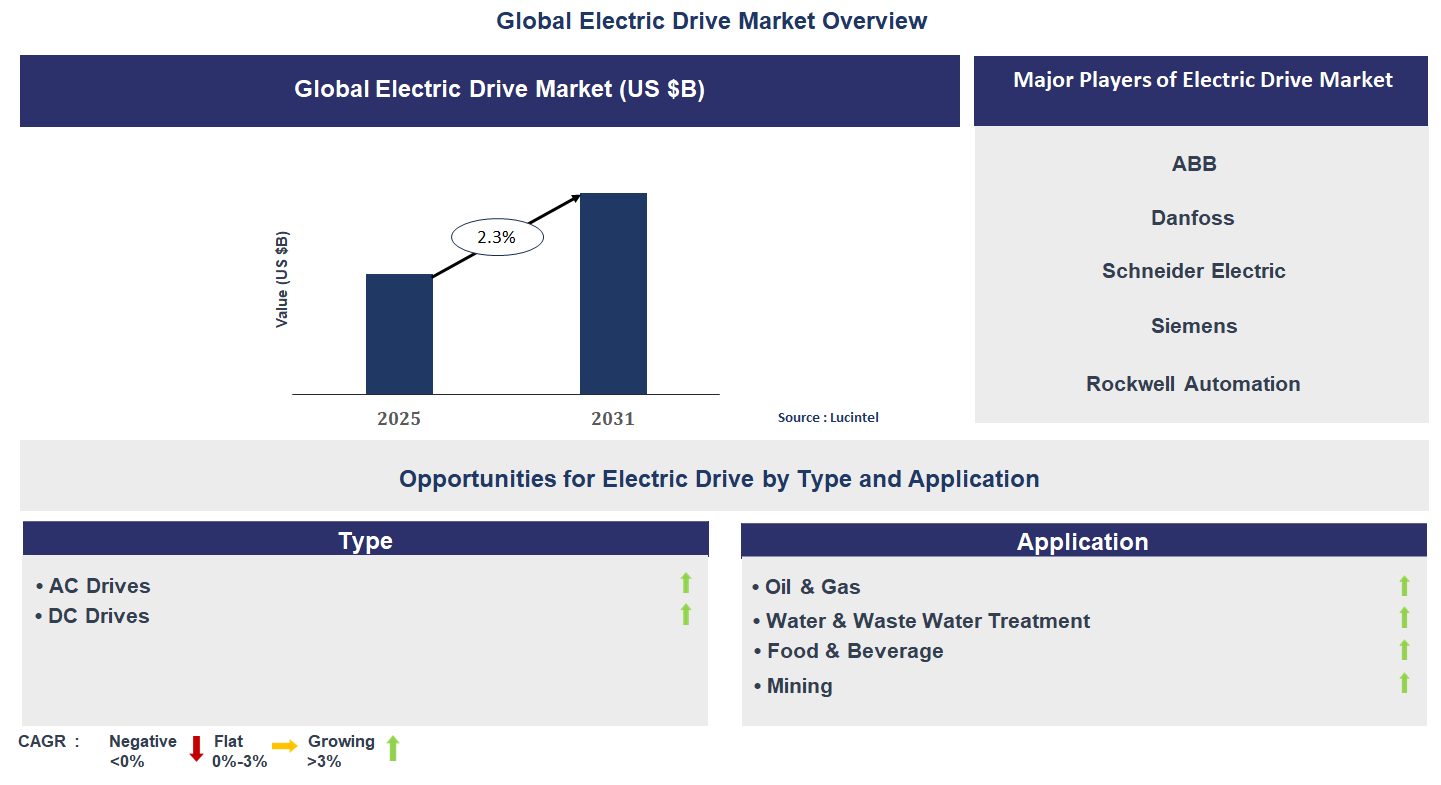
Key data points: The growth forecast = 2.3% annually for the next 7 years. Scroll below to get more insights. This market report covers trends, opportunities and forecasts in electric drive market to 2031 by type (AC drives and DC drives), application (oil & gas, water & waste water treatment, food & beverage, and mining), and region (North America, Europe, Asia Pacific, and the Rest of the World)
We'll send your sample report shortly.
• Lucintel forecasts that, within the type category, AC drive is expected to witness higher growth over the forecast period.
• Within the application category, oil & gas is expected to witness the highest growth.
• In terms of region, APAC is expected to witness the highest growth over the forecast period. Gain valuable insights for your business decisions with our comprehensive 150+ page report. Sample figures with some insights are shown below.
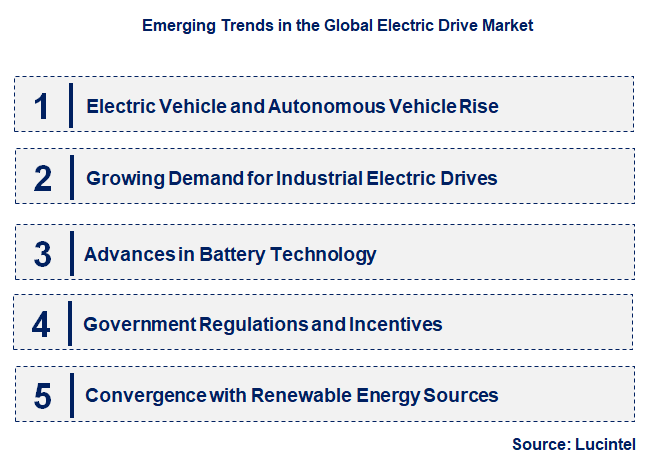
• Electric Vehicle and Autonomous Vehicle Rise: The growth of electric vehicles, combined with the emergence of autonomous driving technologies, is propelling electric drive growth at a rapid pace. Advances in battery technology, autonomous systems, and electric powertrains are all coming together to define the future of personal and commercial transportation. The trend towards cleaner, intelligent vehicles is creating new markets for electric drives, particularly within the automotive and transport industries. With increased acceptance of these vehicles into the mainstream, demand for sophisticated, efficient electric drives will become even more prominent.
• Growing Demand for Industrial Electric Drives: Outside automotive use, electric drives are increasing their applications in industrial applications, ranging from robotics to HVAC systems and automated manufacturing. Industrial automation and energy efficiency efforts are compelling the need for efficient electric drives that minimize power consumption while maximizing system reliability. Industries seek to lower their carbon footprint with cleaner, more efficient electric motors and drives. This movement toward electrification and automation will continue to propel industrial electric drive market growth.
• Advances in Battery Technology: With advances in battery technology, electric drives are being enhanced by higher energy densities, quicker charging times, and lower prices. Advances in solid-state batteries, lithium-sulfur, and other emerging technologies are enhancing the performance and cost-effectiveness of electric cars and energy storage. These enhancements are increasing the range of electric vehicles, decreasing the cost of ownership, and improving the viability of electric drives across applications. Sustained innovations in battery technologies will remain central to shaping forthcoming demand for electric drive systems.
• Government Regulations and Incentives: International regulatory policies, particularly in Europe, China, and the U.S., are increasingly tightening standards on carbon emissions and environmental footprint. Governments are promoting the use of electric vehicles and energy-efficient systems through subsidies, tax credits, and more stringent emission standards. These regulations are nudging both consumers and manufacturers towards electric drive technology. As the regulatory environment continues to tighten, more firms are likely to turn towards electric drives, bringing their offerings in line with global sustainability objectives.
• Convergence with Renewable Energy Sources: The efforts for green energy and the shift towards a sustainable energy environment are driving the convergence of electric drives and renewable energy sources. Electric drives, especially in industrial and EV applications, are increasingly being connected to solar, wind, and other renewable sources of energy for increased sustainability. Industries can reduce their carbon footprint further and optimize energy usage by powering electric drives using renewable energy. This development is putting electric drives at the center of the green energy revolution, enabling clean manufacturing and transportation. These trends illustrate the manner in which the electric drive market is changing and responding to a new environment driven by sustainability, technological advancement, and regulatory needs. As these trends pick up speed, they are opening up possibilities for new applications, increased efficiency, and reduced costs, reshaping the electric drive market into a vital building block of the global green economy.
• Improvements in Electric Motor Efficiency: Electric motor efficiency has improved dramatically due to advances in material, design, and manufacturing processes. These developments enable electric drives to deliver more power output on lower energy consumption. In the automotive sector, this results in enhanced vehicle performance and extended battery life, making electric vehicles a more attractive choice for consumers. The increase in efficiency is also paying dividends in industrial applications where electric drives are being used for motors in automation, conveyors, and HVAC applications. With increasing emphasis on energy efficiency, motor design is bound to see further development.
• Development of EV Charging Infrastructure: Electric vehicle charging infrastructure expansion has been the most substantial development in the electric drive business over the recent past. Private and public entities are making massive investments in the construction of fast-charging stations to enable increased numbers of electric cars. These networks lower range anxiety and increase the convenience of EVs for consumers, thereby pushing the adoption of electric drives in the automotive industry. With the expanding infrastructure, increasing numbers of areas will witness increased EV penetration, fueling additional innovation in electric powertrains and charging systems.
• Developments in Battery Technology: Advances in battery technology are an important driver for the development of the electric drive market. Advances like solid-state batteries and advanced lithium-ion batteries are providing larger energy densities, quicker charging, and more extended lifetimes. These advancements are not only making electric cars less expensive and convenient for consumers but also upgrading energy storage systems for use in renewable energy. The development of battery technology is closely connected to the capability of electric drives, and ongoing research in this field will be sure to spur further enhancements in electric mobility and power generation.
• Electric Drive Adoption in Industrial Markets: Industrial use of electric drives has grown, spurred by the growing need for automation, energy efficiency, and cost reductions. Manufacturing companies are increasingly using electric motors in place of conventional mechanical systems for enhancing energy efficiency and lowering maintenance expenses. Electric drives are also on the rise in industries like mining, agriculture, and logistics, where they are employed in robotics, conveyors, and automated material handling. Such applications not only minimize operating costs but also make manufacturing processes greener by lowering energy use.
• International Policy Support for Electrification: International policymakers are implementing more stringent environmental policies supporting the use of electric drives. Incentives for EVs, tax breaks for charging, and more stringent emission requirements are driving manufacturers and consumers to use electric powertrains. Governmental policies in the U.S., Europe, China, and other countries are driving the move towards electrification in transportation and industry. These policies are proving to be an integral part of lowering carbon emissions and encouraging sustainable development in the electric drive sector. These trends point towards an increasingly dynamic electric drive industry with technology advancements and policies on the part of governments spearheading uptake across different industries. As these important developments continue, they are shaping a greener and more energy-efficient world, rendering electric drives a key part of the worlds energy transformation.
• Electric Vehicle Growth: The EV market remains strong, fueled by government policy, customer interest in cleaner vehicles, and the development of EV infrastructure. As EVs gain more popularity, increasing demand exists for sophisticated electric drive systems offering improved efficiency, range, and performance. Companies are targeting electric motors, power electronics, and battery technologies to make EVs more attractive. The growth of EVs creates tremendous growth prospects for electric drives, especially in automotive production and charging infrastructure.
• Electric Drives in Renewable Energy Systems: The adoption of electric drives in renewable energy systems like wind power and solar power is a new growth opportunity. Electric drives are employed in wind turbines, solar trackers, and other renewable energy technologies to enhance energy efficiency and maximize performance. As the world continues to shift towards renewable energy, the market for electric drives capable of performance in these systems is likely to increase. Linking electric drives with renewable energy sources is key to meeting sustainability aspirations.
• Automation and Robotics: The sector for industrial automation has huge prospects for electric drives, with a focus on robotics and computerized manufacturing systems. With industries increasingly embracing automation technologies, demand for accurate, energy-efficient electric drives is on the rise. Electric drives are critical components of robotic arms, conveyors, and other automated equipment. The market for this segment is likely to develop quickly as industries attempt to enhance efficiency, minimize costs, and enhance productivity via automation.
• HVAC System Energy Efficiency: Electric drives are increasingly becoming a central part of heating, ventilation, and air conditioning (HVAC) systems, where energy efficiency is critical. The incorporation of variable-speed drives in HVAC systems makes precise control of airflow possible, minimizing energy use and enhancing system efficiency. With increasing energy prices and concerns over the environment, there is a higher demand for energy-efficient solutions for HVAC, creating a prime growth opportunity for electric drives in commercial and residential construction.
• Electric Drives in Agricultural Machinery: The farming industry is increasingly embracing electric drives for equipment, ranging from tractors to harvesters. Electric drives are more efficient, emit less, and cost less to maintain than conventional internal combustion engines. Electric drives become a major prospect in the agricultural machinery industry as interest in environmentally friendly farming and precision agriculture increases. This trend is likely to gain momentum as farmers look for more efficient, green alternatives to diesel-powered machinery. Growth prospects therein mirror the increasing application of electric drives in industries. With energy efficiency, automation, and sustainability demands escalating further, electric drives will be at the center of cleaner technologies revolution globally. Manufacturers and investors are set to reap benefits from these opportunities, driving the evolution of the electric drive market further.
• ABB
• Danfoss
• Schneider Electric
• Siemens
• Rockwell Automation
• Mitsubishi Electric
• Hitachi
• Fuji Electric
• Yaskawa Electric
• Emerson Electric
• AC Drives
• DC Drives
• Oil & Gas
• Water & Waste Water Treatment
• Food & Beverage
• Mining
• North America
• Europe
• Asia Pacific
• The Rest of the World
• United States: The electric drive market in the U.S. is propelled by robust government incentives and technological innovation in electric vehicle (EV) uptake. Major players such as Tesla, General Motors, and Ford are stepping up their EV manufacturing and infrastructure. The Biden administration has pledged to decrease carbon emissions, promoting cleaner modes of transportation, such as making substantial investments in charging infrastructure and production. The market also observes a rise in the use of electric drives in industrial applications, such as robotics and automation, to increase energy efficiency. These advancements are transforming the ecosystem for electric cars and green technology.
• China: China is dominating the world in electric car adoption, with a vast manufacturing capacity and a fast-expanding consumer base for electric vehicles. Incentives and policies by the government, including subsidies for consumers and manufacturers of EVs, have driven this shift. Chinas large auto manufacturers, such as BYD and NIO, are concentrating on mass production of electric drives for both passenger vehicles and commercial vehicles. In addition to this, the nations drive for clean energy solutions is extended beyond transportation, with some considerable investments going towards smart grids and electric drive systems for industrial use. This focus puts China on the global map of the electric drive market.
• Germany: Germany, which has car giants such as Volkswagen, BMW, and Daimler, is investing significantly in electric drive technology. Germanys car giants are adopting electric drives for cars and commercial vehicles alike in reaction to the EUs tough regulations on emissions and sustainability. In addition, Germanys manufacturing industry is taking up electric drives for automation and production processes, enhancing energy efficiency. The governments efforts to curb CO2 emissions, such as incentives for the adoption of green tech and electric mobility, further boost the markets growth, establishing it as a central figure in the European electric drive market.
• India: Indias electric drive market is yet to emerge, but the governments initiative for EV uptake and clean energy solutions is opening up robust growth prospects. With cities facing severe air pollution, there is increasing demand for electric vehicles, supported by government initiatives like FAME (Faster Adoption and Manufacturing of Hybrid and Electric Vehicles). The automotive industry is gradually shifting towards electric drives, with companies like Tata Motors and Mahindra & Mahindra leading the way. Besides this, electric drives are gaining foothold in Indias manufacturing sector, where energy-efficient solutions are emerging as an important priority for minimizing operating expenses and enhancing productivity.
• Japan: Japan has been a leader in electric vehicle technology for quite a while now, with heavyweights such as Toyota, Honda, and Nissan at the forefront. Japan is investing heavily in electric drive systems, both for automotive and industrial purposes. Japans embracement of carbon reduction via high-end electric drive technologies fits within its overall energy transition objectives. The Japanese market has been probing the adoption of electric drives into public transit systems, such as buses and trains, towards environmental ambitions in the nation. Government incentives for electric mobility and environmentally friendly industrial behavior are driving electric drive market growth.


• ABB
• Danfoss
• Schneider Electric
• Siemens
• Rockwell Automation
• Mitsubishi Electric
• Hitachi
• Fuji Electric
• Yaskawa Electric
• Emerson Electric Q5. Which electric drive market segment will be the largest in future? Answer: Lucintel forecasts that, within the type category, AC drive is expected to witness higher growth over the forecast period. Q6. In electric drive market, which region is expected to be the largest in next 5 years? Answer: In terms of region, APAC is expected to witness the highest growth over the forecast period. Q7. Do we receive customization in this report? Answer: Yes, Lucintel provides 10% customization without any additional cost.


Choose a license that fits your team. Instant PDF delivery.
Prices exclude taxes. Instant delivery. Custom licensing available on request.
Market Report · July 29, 2026
Market Report · July 20, 2026
Market Report · July 20, 2026
Trusted partner for strategic intelligence and business growth


Receive a complimentary market analysis tailored to your industry. Our analysts will identify key growth opportunities and competitive dynamics specific to your business.

Market size, growth rate, and key trend analysis for your specific sector.

Top competitor positioning and market share analysis.

Strategic recommendations backed by data-driven insights.
Get curated market intelligence and competitive moves straight to your inbox.
By subscribing, you agree to receive our monthly insights. Unsubscribe anytime.
Receive a complimentary market analysis tailored to your industry. Our analysts will identify key growth opportunities and competitive dynamics specific to your business.
Market size, growth rate, and key trend analysis for your specific sector.
Top competitor positioning and market share analysis.
Strategic recommendations backed by data-driven insights.
Get curated market intelligence, emerging trends, and competitive moves straight to your inbox each month.
By subscribing, you agree to receive our monthly insights. Unsubscribe anytime.
We'll send your sample report shortly.