
Market Report · May 18, 2026

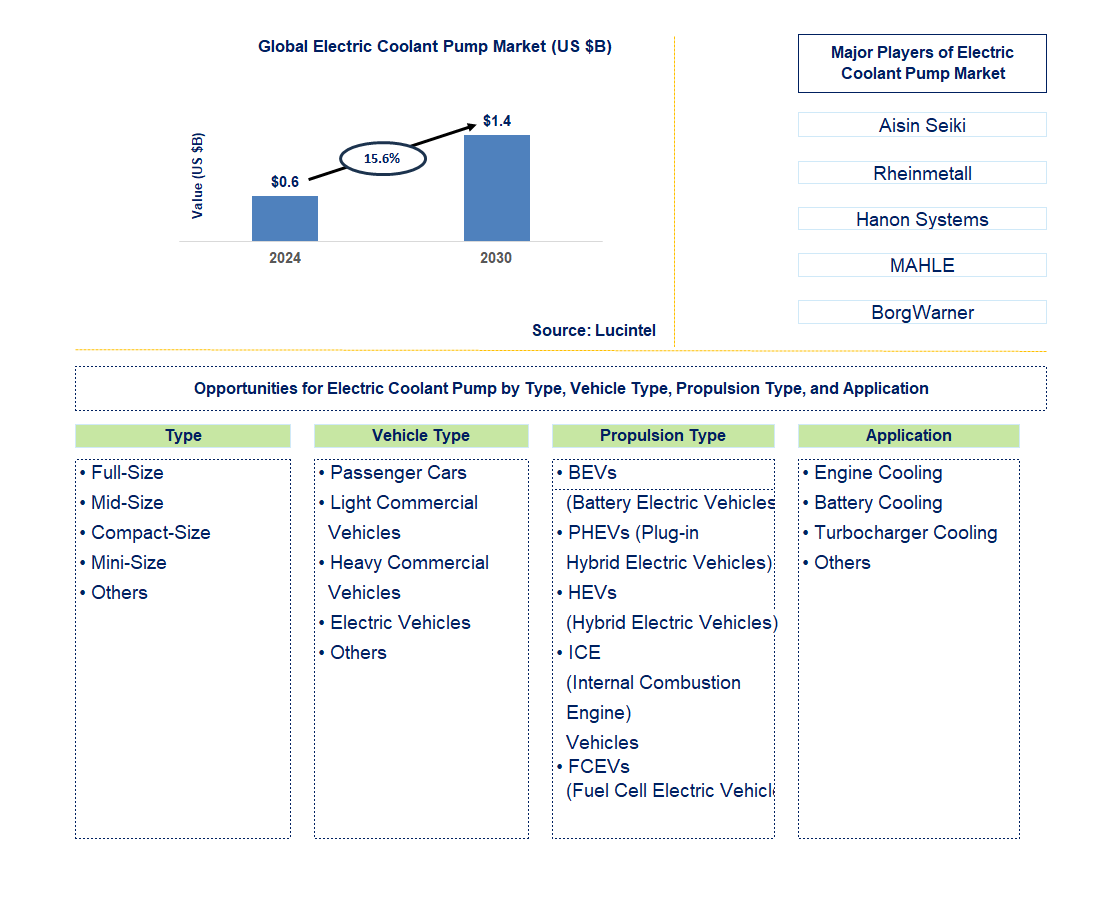
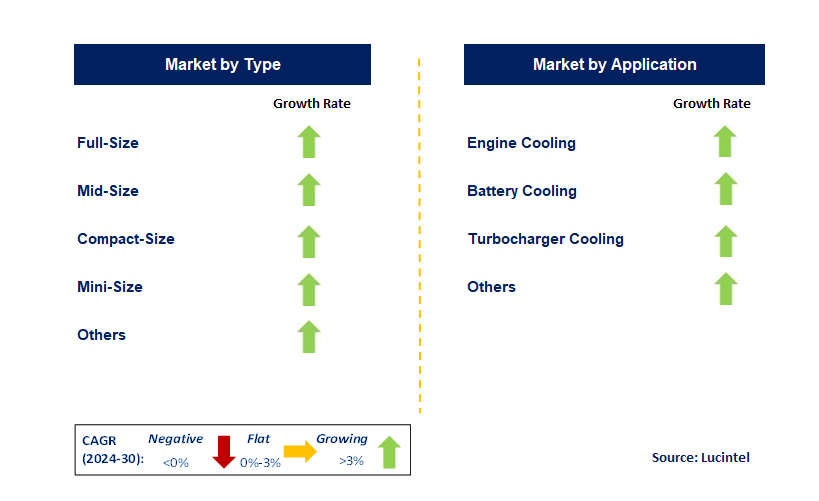
Key data points: The market size in 2030 = $1.4 billion, growth forecast = 15.6% annually for the next 6 years. Scroll below to get more insights. This market report covers trends, opportunities, and forecasts in the global electric coolant pump market to 2030 by type (full-size, mid-size, compact-size, mini-size, and others), vehicle type (passenger cars, light commercial vehicles, heavy commercial vehicles, electric vehicles, and others), propulsion type (BEVs, phevs, hevs, ICE vehicles, and FCEVs), application (engine cooling, battery cooling, turbocharger cooling, and others), and region (North America, Europe, Asia Pacific, and the Rest of the World)
We'll send your sample report shortly.
• Lucintel forecasts that, within the propulsion type category, BEVs will remain the largest segment over the forecast period.
• In terms of region, APAC will remain the largest region due to increasing preference for electric vehicles and presence of major manufacturers in the region. Gain valuable insights for your business decisions with our comprehensive 150+ page report.
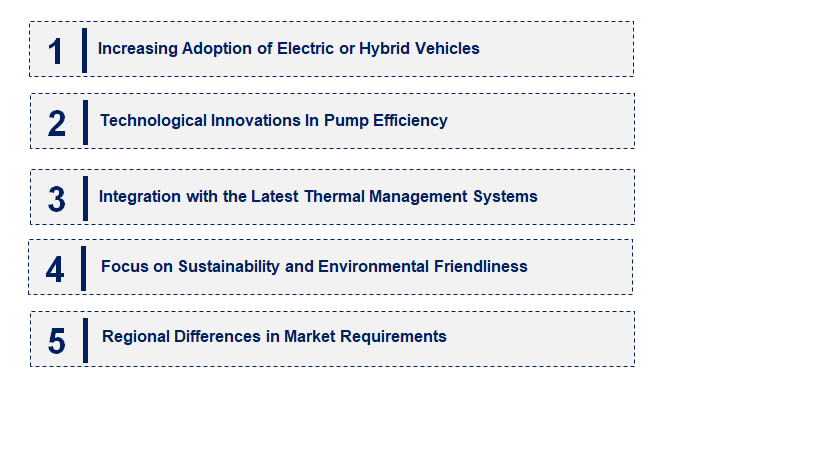
• Increasing Adoption of Electric or Hybrid Vehicles: The increased deployment of electric and hybrid vehicles is one of the drivers for electric coolant pumps. As automakers switch to these vehicles in response to strict emission regulations and consumer preference for eco-friendly alternatives, more sophisticated cooling systems become indispensable. Electric refrigerating pumps are a crucial part of thermal management systems for such vehicles, ensuring maximum performance and efficiency. This has led to pump technology innovations, such as those focused on creating more efficient and reliable products specifically designed for electric vehicles (EVs) or hybrids. Thus, the significant growth of the cooling pump market will be driven by the growing popularity of EVs and hybrids.
• Technological Innovations in Pump Efficiency: Continuous technological advancements are enhancing the efficiency and ease with which electric coolant pumps operate. There are now variable-speed pumps, high-tech digital controllers, and their integration with complex thermal management systems. These improvements allow for better control of cooling processes, resulting in improved vehicle performance and fuel efficiency. Moreover, advancements in materials used in pump manufacturing also contribute to greater durability and increased robustness. Furthermore, these innovations enable higher efficiency levels through modern pump designs that meet the demands of today's automobile systems, leading to their rapid adoption across the industry.
• Integration with the Latest Thermal Management Systems: A trend that is gaining momentum is the integration of electric coolant pumps with advanced thermal management systems. In contemporary automobiles, various components, such as engines, batteries, and power electronics, generate substantial heat that requires complex cooling solutions. Electric coolant pumps are increasingly being designed to operate seamlessly with these state-of-the-art systems, providing precise and efficient cooling. This trend is particularly pronounced in electric and hybrid vehicles, where effective thermal management is essential for improved performance and safety. The development of integrated cooling solutions will fuel demand for electric coolant pumps and boost their functionality.
• Focus on Sustainability and Environmental Friendliness: The market for electric coolant pumps is increasingly focused on eco-friendliness and sustainability. Pump manufacturers are responding to this demand by aligning their products with environmental regulations. This includes the use of eco-friendly materials during production, reduced energy consumption, and the elimination of waste during manufacturing processes. Furthermore, pump design innovations aim to reduce overall energy use and minimize the environmental impact of cooling systems. These changes toward a more sustainable approach are influencing market dynamics, creating a demand for environmentally friendly electric coolant pumps.
• Regional Differences in Market Requirements: The electric coolant pump industry is shaped by regional differences in market requirements. Different regions have unique regulatory frameworks, consumer preferences, and technological advancements that influence the demand for electric coolant pumps. For instance, in Europe, the push toward EVs has significantly impacted market growth, while in India, the focus on cost-effective solutions has also influenced market trends. Therefore, understanding these differences across regions is critical for manufacturers and suppliers seeking to navigate global markets or customize products to meet specific regional needs. These emerging trends are driving innovation in the electric coolant pump market. They are also leading to improvements in efficiency and addressing environmental concerns. As a result, electric coolant pumps are becoming increasingly important in supporting modern vehicles' performance and sustainability in the rapidly changing auto industry.
• Improvements in pump efficiency: This has significantly changed the market landscape as new efficiencies for electric pumps have emerged. Advances such as variable-speed pumps and cutting-edge electronic controls allow for more fine-tuning of cooling processes. Improved efficiency ensures better vehicle performance, fuel economy, and overall reliability. It also supports the increased demand for electric vehicles (EVs) and hybrids, where cooling is essential to their operation. Manufacturers are investing heavily in R&D to develop more efficient pumps that can support modern automotive systems, thus driving market expansion.
• Integration with electric vehicle (EV) systems: The integration of electric coolant pumps with electric vehicle (EV) systems is a remarkable development. As the use of EVs continues to rise, better cooling methods become increasingly important. Therefore, electric coolant pumps are designed to align perfectly with EV systems, such as battery cooling and power electronics. This integration allows for effective heat management, which in turn ensures optimal EV performance and safety. Consequently, there is a shift towards producing pumps that meet the specific requirements of EVs, driving innovation and growth in the electric coolant pump market by manufacturers.
• Adoption of advanced materials and designs: Another major development in electric coolant pumps is the adoption of advanced materials and designs. Manufacturers are discovering new materials that offer better durability, reliability, and performance. Additionally, advancements in sealing and lubrication systems through improved pump designs have led to longer service life expectancies for this category of pumps and better performance overall. Innovations in materials used for modern vehicles that can withstand high temperatures or variable operating conditions contribute positively to the quality and competitiveness of electric coolant pumps.
• Increased focus on sustainability: A growing focus on sustainability is occurring in the sector where electric coolant pumps operate. Producers are prioritizing eco-friendly material sourcing strategies and implementing sustainable production processes. Innovations focusing on energy conservation and waste minimization have become more widespread. This shift toward sustainability has led to the development of greener electric coolant pumps. These recent developments highlight the ongoing evolution of the electric coolant pump market. Enhanced integration with EV cooling systems, advancements in variable-speed technology, improved durability through advanced materials, integration with advanced thermal management systems, and a focus on sustainability are all shaping the industry. These changes reflect the market's response to growing demands for efficiency, performance, and environmental responsibility. As the automotive industry continues to innovate and adapt, these developments are positioning electric coolant pumps as critical components in modern vehicle design, contributing to overall improvements in vehicle performance and sustainability.
• Electric Vehicles (EVs): A significant opportunity for growth regarding electric coolant pumps arises from the rapid expansion of the electric vehicle (EV) market. Electric vehicles require advanced cooling systems that control heat produced by power electronics and batteries. Electric coolant pumps play an important role in this cooling system, ensuring optimal performance and safety. Government incentives promoting the adoption of EVs, alongside consumer demand for sustainable transport, are enhancing the requirement for energy-efficient electric coolant pumps. Manufacturers specializing in EVs will thus capture a considerable share of this rising market segment if they develop appropriate pumps.
• Hybrid Vehicles: Additionally, hybrid vehicles featuring internal combustion engines combined with electric propulsion offer another major growth opportunity in terms of sales volumes for electric coolant pumps. To manage temperatures for both engines and electric motors, these cars require complex cooling systems, which involve several parts, such as radiators and fans. Electric coolant pumps are vital in maintaining effective thermal management because hybrids often operate under differing conditions, necessitating accurate temperature regulation. Growing interest in hybrids as a transition technology towards full electrification creates a demand for new types of coolants specifically tailored to address issues associated with hybrid systems — thus stimulating a rise in the size of that market.
• Advanced Thermal Management Systems: The development of advanced thermal management systems for modern vehicles provides a sizable opportunity for expansion regarding electric coolant pumps. These systems include components such as variable-speed pumps and integrated cooling solutions aimed at enhancing overall vehicle performance and efficiency. Automotive manufacturers are trying to enhance thermal management for both conventional and electric vehicles, which means that the need for advanced electric coolant pumps that can seamlessly fit into these systems is inevitable. This trend opens up opportunities for companies that can invent high-performance electric water pumps to meet the demands of the evolving advanced thermal management systems.
• Increasing Demand for High-Performance Engines: To ensure optimal performance, high-performance engines in sports and luxury cars require sophisticated cooling solutions capable of handling higher operating temperatures efficiently. Due to their efficient and accurate cooling provision, electric coolant pumps become more important in these applications. The rising demand for luxury vehicles, as well as high-performance automobiles, calls on producers to develop specialized electric coolants tailored to meet their needs in the future, making room for specialized electric coolant pump manufacturing firms. Pump design and material innovations can address the high engine performance market needs through improved performance and reliability.
• Starting Up in Emerging Markets: Emerging markets, such as Asia-Pacific and Latin America, offer greater opportunities for electric coolant pumps. Demand for electric coolant pumps has been rising as vehicle ownership and industrialization have significantly increased in these areas. Local manufacturers, as well as global firms venturing into these markets, have the chance to capitalize on this growing demand for cooling efficiency products. Moreover, government incentives and infrastructure development supporting green technologies in these regions may drive the adoption of electric vehicles and hybrid systems, thus raising the need for electric coolants. These strategic growth opportunities highlight how much the structure of the electric coolant pump market is changing. Companies can reposition themselves to achieve impressive revenue growth by strategically targeting segments such as emerging markets, high-performance engines, advanced thermal management systems, or by focusing their efforts on innovations that will allow them to take over new applications or verticals.
• Vehicle Electrification: Electric coolant pump businesses are influenced by the electrification of vehicles because this sector requires significant investments to replace internal combustion engine (ICE) car units with battery-powered EVs. As automotive manufacturers transition toward electric and hybrid vehicles, the demand for advanced cooling systems increases. Electric coolant pumps are essential for managing the thermal needs of batteries and power electronics in EVs, making them critical components in these vehicles. The growth of the electric vehicle market, driven by environmental regulations and consumer demand for greener options, is boosting the need for high-performance electric coolant pumps. This trend is expected to drive sustained growth in the market.
• Strict Emission Regulations: Stricter emission regulations are a major driver of the electric coolant pump industry. Governments globally have been enacting stricter emission standards to reduce pollution and promote sustainability. These rules encourage automobile manufacturers to adopt innovations that enhance fuel efficiency while minimizing carbon emissions, such as advanced cooling systems. Electric coolant pumps contribute to this by enhancing the effectiveness of thermal management systems, thereby supporting the development of cleaner cars. The increasing tightening of regulations means that demand for electric coolant pumps that meet set benchmarks will continue rising.
• Technological Advancements in Cooling Systems: Technological advancements in cooling systems are driving the growth of the electric coolant pump market. Innovations such as variable-speed pumps, advanced electronic controls, and integration with sophisticated thermal management systems are enhancing performance and efficiency. Advanced technologies also ensure improved temperature control, minimizing breakdowns, especially in modern automotive sector applications. With each passing day, more materials and technological advances are being made, expanding the application areas of these devices across a wide range of vehicles.
• Growing Emphasis on Fuel Economy: The electric coolant pump market is driven by the increasing focus on fuel efficiency. To meet consumer demands and regulatory requirements aimed at improving fuel economy and reducing emissions, automotive manufacturers are compelled to respond accordingly. Electric coolant pumps enhance the performance of thermal management systems, leading to energy savings. The need for more fuel-efficient cars will prompt automakers to demand better electric coolant pumps in the future.
• Surging Consumer Awareness Regarding Environmental Problems: Rising consumer awareness of environmental issues is driving the demand for electric coolant pumps in vehicles. Consumers are becoming more concerned about the environmental impact of their cars and are seeking greener options. As a result, car manufacturers are being pushed to adopt technologies that reduce emissions and improve fuel efficiency, such as electric coolant pumps. It is anticipated that demand for electric coolant pumps, which contribute to cleaner and more efficient vehicles, will continue to rise. Challenges in the electric coolant pump market are:
• Excessive Development and Production Expenses: High development and production costs are major obstacles facing the electric coolant pump market. For instance, developing advanced technologies requires substantial investment in research and development, as well as high-quality materials and manufacturing processes. These expenses may become prohibitive for smaller companies, which could affect overall profitability in the production of electric coolant pump product lines. Thus, companies must balance innovation costs with competitive pricing.
• Market Rivalry and Price Pressures: Market competition and price pressures are challenges faced by companies in the electric coolant pump industry. A multitude of players have entered this market, making it highly competitive. This intense competition can drive prices down, affecting profit margins and making it difficult for companies to effectively differentiate their products. Manufacturers must focus on quality, cost-effectiveness, and innovation while navigating the pricing dynamics to remain competitive.
• Integrating New Technologies: A significant challenge for the electric coolant pump market is integrating new technologies. These pumps must adapt to new automotive technologies, such as advanced thermal management systems and electric drivetrains. It is essential that these technologies harmonize with one another, which may require ongoing research and development. Manufacturers must stay ahead of technological advances and ensure their products are compatible with emerging automotive technologies. The electric coolant pump market experiences various drivers and challenges that shape its growth and development. Key drivers include the electrification of vehicles, stricter emission controls, technological innovations, a focus on fuel efficiency, and increased consumer awareness about environmental issues. Market challenges include high R&D costs, competition among players, and the integration of emerging technologies. Understanding these factors will help stakeholders navigate the market, take advantage of existing opportunities for growth, and handle the challenges faced by the industry.
• Aisin Seiki
• Rheinmetall
• Hanon Systems
• MAHLE
• BorgWarner
• Robert Bosch
• GMB
• DaviesCraig
• Torishima Pump
• Modine
• Full-Size
• Mid-Size
• Compact-Size
• Mini-Size
• Others
• Passenger Cars
• Light Commercial Vehicles
• Heavy Commercial Vehicles
• Electric Vehicles
• Others
• BEVs (Battery Electric Vehicles )
• PHEVs (Plug-in Hybrid Electric Vehicles)
• HEVs (Hybrid Electric Vehicles)
• ICE (Internal Combustion Engine) Vehicles
• FCEVs (Fuel Cell Electric Vehicle)
• Engine Cooling
• Battery Cooling
• Turbocharger Cooling
• Others
• North America
• Europe
• Asia Pacific
• The Rest of the World
• United States: In the US, recent changes have been driven by strict emission regulations coupled with the increased uptake of EVs. The rise of electric or hybrid cars has significantly affected the demand for electric coolant pumps, which manage the thermal management systems of these vehicles. Current pump designs include those with higher efficiency and others designed to work well with advanced cooling mechanisms. Additionally, US automotive manufacturers are investing heavily in R&D for better pump performance and reliability. Furthermore, there has been a rising trend where OEMs are collaborating with suppliers to develop sophisticated electric coolant pump technologies. There is also an increasing focus on reducing carbon footprints while enhancing fuel efficiency in the market.
• China: The Chinese market for electric coolant pumps has grown rapidly, mainly due to the country’s push toward urban e-mobility (EV), which requires a transformation into a Green Technology-oriented society. These environmental regulations are backed up by government incentives toward EV adoption, thus driving the development of advanced electric coolant pumps among manufacturers. One notable trend is innovations aimed at energy-saving, particularly through enhanced pump design or integration into modern thermal management systems fitted into EVs, especially in China. To reduce dependence on foreign technology, Chinese auto firms today focus heavily on domestic production and research and development efforts. The market has also seen greater investment in the production capabilities for electrical water pumps, necessary for the rising number of EVs being developed. In addition, collaborations between local manufacturers and foreign companies have driven technological developments.
• Germany: Germany’s leading position in automotive engineering and development has placed it at the center of several new developments within the electric coolant pump industry. The country’s high environmental standards and move toward electrified mobility are driving progress in pump technology. The efficiency and overall performance of electric coolant pumps, as well as meeting regulatory requirements and customer demands, are the primary focus for German automakers. Recently, there has been a trend where integrated advanced electronic controls and intelligent cooling systems optimized for vehicle functioning are being adopted by many automakers. Moreover, Germany is providing a sustainable background that is fostering innovations in pump materials and designs. There have also been partnerships between large German automakers and technology developers, resulting in remarkable strides in electric coolant pump technology.
• India: In India, the cooling system market is growing as the car market shifts toward more energy-efficient and environmentally friendly technologies. Recent developments include the greater adoption of electric or hybrid vehicles, driven by government efforts to encourage green technologies. Indian manufacturers are seeking cost-effective ways to improve the efficiency and output of their electric coolant pumps. Innovations in pump design, as well as the introduction of new materials, are being deployed to address specific requirements in the Indian market. Further, there is an increased focus on production localization for cost and supply chain efficiency. The consumer awareness of electric cars and environmentalism is expected to expand the market.
• Japan: Japan’s cooling system market is characterized by high technology levels associated with the early adoption of electrics and hybrids. Recent developments include significant improvements in pump efficiency that can be widely integrated into advanced thermal management systems. Japanese automotive companies are leading the way in developing more powerful electric coolant pumps that meet the country’s stringent environmental regulations. There has been an increase in the use of variable-speed pumps and digital controls for such products. Additionally, Japan’s heavy investment in research and development has led to significant advancements, such as the use of new materials and better designs, which improve the longevity and performance of these pumps. Therefore, both domestic and international markets are experiencing increased investments in this sector.


• Aisin Seiki
• Rheinmetall
• Hanon Systems
• MAHLE
• BorgWarner
• Robert Bosch
• GMB
• DaviesCraig
• Torishima Pump
• Modine Q6. Which electric coolant pump market segment will be the largest in future? Answer: Lucintel forecasts that BEVs will remain the largest segment over the forecast period. Q7. In electric coolant pump market, which region is expected to be the largest in next 5 years? Answer: APAC will remain the largest region due to increasing preference for electric vehicles and presence of major manufacturers in the region. Q.8 Do we receive customization in this report? Answer: Yes, Lucintel provides 10% customization without any additional cost


Choose a license that fits your team. Instant PDF delivery.
Prices exclude taxes. Instant delivery. Custom licensing available on request.
Market Report · May 18, 2026
Market Report · May 18, 2026
Market Report · May 18, 2026
Trusted partner for strategic intelligence and business growth


Receive a complimentary market analysis tailored to your industry. Our analysts will identify key growth opportunities and competitive dynamics specific to your business.

Market size, growth rate, and key trend analysis for your specific sector.

Top competitor positioning and market share analysis.

Strategic recommendations backed by data-driven insights.
Get curated market intelligence and competitive moves straight to your inbox.
By subscribing, you agree to receive our monthly insights. Unsubscribe anytime.
Receive a complimentary market analysis tailored to your industry. Our analysts will identify key growth opportunities and competitive dynamics specific to your business.
Market size, growth rate, and key trend analysis for your specific sector.
Top competitor positioning and market share analysis.
Strategic recommendations backed by data-driven insights.
Get curated market intelligence, emerging trends, and competitive moves straight to your inbox each month.
By subscribing, you agree to receive our monthly insights. Unsubscribe anytime.
We'll send your sample report shortly.