
Market Report · July 31, 2026

Key data points: The growth forecast = 5.8% annually for the next 6 years. Scroll below to get more insights. This market report covers trends, opportunities, and forecasts in the global eisenmenger syndrome treatment market to 2030 by drug type (antiarrhythmic agents, blood thinning agents, endothelin receptor antagonist, and others), distribution channel (hospital pharmacies, online pharmacies, and retail pharmacies), and region (North America, Europe, Asia Pacific, and the Rest of the World)
We'll send your sample report shortly.
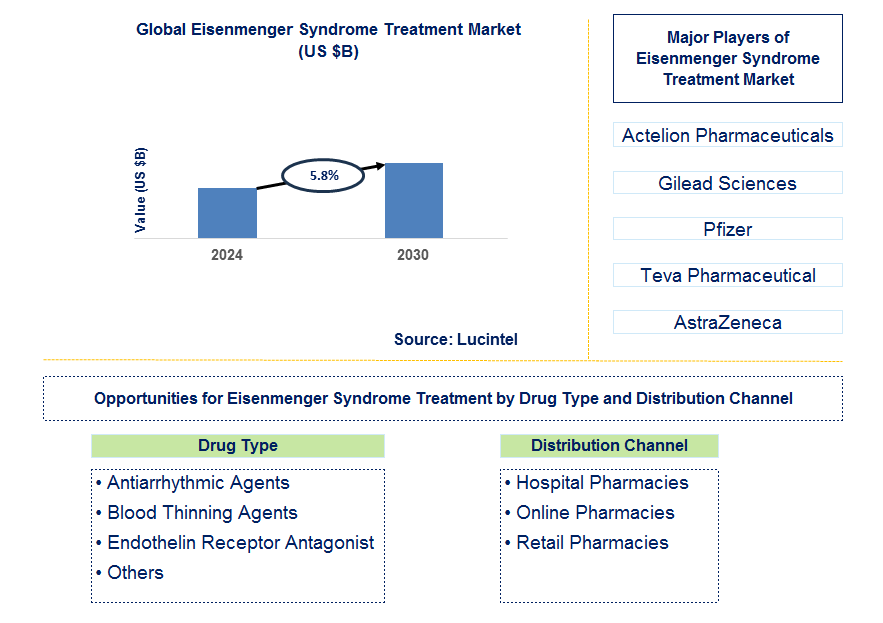
• United States: Recent advancements in the U.S. include the introduction of targeted therapies like phosphodiesterase-5 inhibitors, which improve pulmonary vascular function. Multidisciplinary care models are also being adopted, enhancing patient management and access to specialized treatment centers.
• China: In China, increasing research on the genetic underpinnings of eisenmenger syndrome has led to better diagnostic methods. New clinical trials are underway for novel drug therapies that aim to reverse pulmonary hypertension, thereby improving patient prognosis.
• Germany: Germany has seen significant improvements in surgical techniques for correcting congenital heart defects associated with eisenmenger syndrome. The use of hybrid procedures combining surgical and catheter-based interventions has shown promising outcomes, leading to enhanced quality of life for patients.
• India: In India, there is a growing emphasis on awareness and early diagnosis of eisenmenger syndrome. Recent efforts have been directed towards expanding access to advanced therapies and training healthcare professionals in specialized cardiac care.
• Japan: Japan is at the forefront of research into innovative therapies, including gene therapy and advanced imaging techniques for better diagnosis. The country is also focusing on creating patient registries to facilitate better data collection for future studies and treatment approaches.
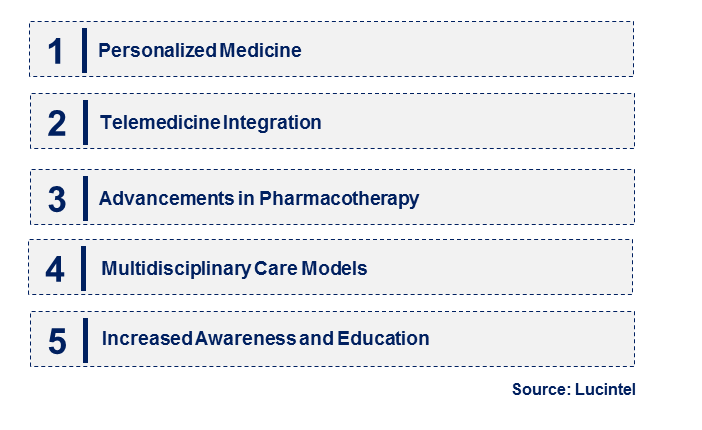
• Personalized Medicine: Tailoring treatment plans based on individual patient profiles is becoming increasingly prevalent. This approach enhances efficacy and reduces adverse effects, ultimately improving patient outcomes.
• Telemedicine Integration: The rise of telemedicine has improved access to specialist care for eisenmenger syndrome patients, especially in rural areas. This trend allows for continuous monitoring and timely interventions without the need for frequent hospital visits.
• Advancements in Pharmacotherapy: The development of new drug therapies, such as soluble guanylate cyclase stimulators and endothelin receptor antagonists, is enhancing the management of pulmonary arterial hypertension, a key aspect of eisenmenger syndrome treatment.
• Multidisciplinary Care Models: A growing recognition of the need for a comprehensive approach has led to the establishment of multidisciplinary teams, ensuring that all aspects of patient care, including cardiology, pulmonology, and nutrition, are addressed.
• Increased Awareness and Education: There is a concerted effort to raise awareness about eisenmenger syndrome among healthcare providers and the public. Enhanced education initiatives are crucial for early detection and timely treatment. These trends are collectively reshaping the eisenmenger syndrome treatment landscape, leading to better patient care and outcomes.
• Innovative drug therapies: Recent introductions of advanced pharmacological treatments, such as selexipag and macitentan, target pulmonary arterial hypertension, which is pivotal in eisenmenger syndrome management.
• Surgical innovations: Minimally invasive surgical techniques are gaining traction, allowing for safer and more effective treatment of congenital heart defects associated with eisenmenger syndrome, thus improving patient recovery times.
• Clinical trials expansion: The increase in clinical trials focused on novel therapies provides new hope for patients. These trials aim to validate new treatment protocols that could significantly enhance the quality of life for those affected.
• Improved diagnostic tools: Advancements in imaging technologies, including MRI and echocardiography, are enhancing diagnostic accuracy, enabling earlier detection and intervention in eisenmenger syndrome patients.
• Enhanced patient support programs: Healthcare providers are increasingly developing patient-centered support programs that include education, counseling, and community resources, facilitating comprehensive care and improving overall patient experiences. These developments significantly impact the eisenmenger syndrome treatment landscape, leading to enhanced management options and improved patient outcomes.
• Emerging Therapeutics: The development of novel drugs targeting pulmonary hypertension opens new avenues for treatment. These therapeutics not only improve symptoms but also enhance the quality of life for patients.
• Telehealth Services Expansion: Expanding telehealth services provides significant opportunities for remote patient monitoring and consultation, improving access to care for patients with eisenmenger syndrome.
• Research and Development Investment: Increased investments in R&D focused on understanding the pathophysiology of eisenmenger syndrome can lead to breakthroughs in treatment options and patient management strategies.
• Patient Education Initiatives: Developing comprehensive education programs for patients and healthcare providers can improve awareness, early diagnosis, and timely treatment, positively impacting patient outcomes.
• Global Collaborations: Collaborations between research institutions, healthcare providers, and pharmaceutical companies can facilitate the sharing of knowledge and resources, accelerating the development of effective treatments for eisenmenger syndrome. These growth opportunities significantly impact the eisenmenger syndrome treatment market by enhancing treatment accessibility and improving overall patient care.
• Advancements in Medical Technology: Continuous innovations in medical devices and treatment modalities enhance the efficacy of eisenmenger syndrome management.
• Rising Incidence of Congenital Heart Disease: The increasing prevalence of congenital heart defects necessitates improved treatment options for eisenmenger syndrome patients.
• Growing research Funding: Increased funding for research initiatives supports the development of novel therapies and enhances understanding of eisenmenger syndrome.
• Patient Advocacy Groups: Advocacy efforts are raising awareness about eisenmenger syndrome, promoting early diagnosis and timely treatment.
• Healthcare Infrastructure Improvements: Enhanced healthcare infrastructure facilitates better access to specialized care for patients with eisenmenger syndrome. Challenges in the eisenmenger syndrome treatment market are:
• High Treatment Costs: The expensive nature of new therapies and diagnostic tools can limit accessibility for some patients.
• Limited Awareness: A lack of awareness among healthcare providers regarding eisenmenger syndrome can lead to delayed diagnosis and treatment.
• Regulatory Hurdles: Navigating complex regulatory requirements can impede the development and approval of new treatment options. The interplay of these drivers and challenges shapes the eisenmenger syndrome treatment market, influencing its growth and development.
• Actelion Pharmaceuticals
• Gilead Sciences
• Pfizer
• Teva Pharmaceutical Industries
• AstraZeneca
• Novartis
• Merck & Co
• GlaxoSmithKline
• Mylan
• Bayer
• Antiarrhythmic Agents
• Blood Thinning Agents
• Endothelin Receptor Antagonist
• Others
• Hospital Pharmacies
• Online Pharmacies
• Retail Pharmacies
• North America
• Europe
• Asia Pacific
• The Rest of the World
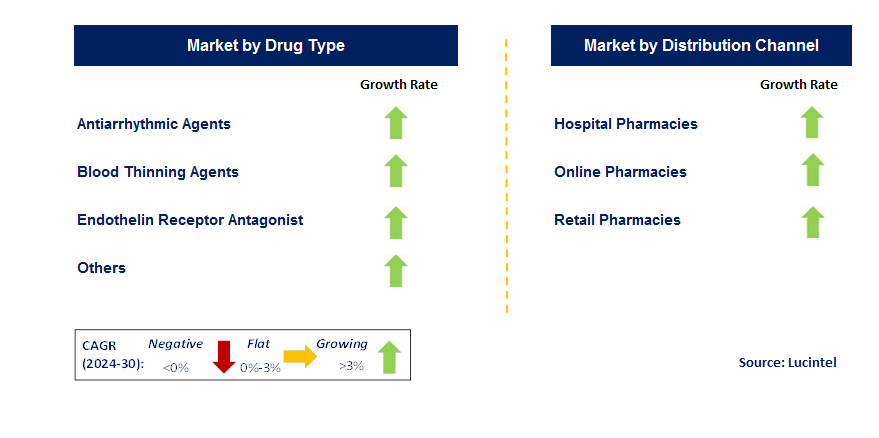
• Lucintel forecasts that, within the drug type category, endothelin receptor antagonist is expected to witness the highest growth over the forecast period due to their broader impact on managing various complications and potentially lower cost.
• Within the distribution channel category, hospital pharmacies are expected to witness the highest growth over the forecast period.
• In terms of regions, North America will remain the largest region over the forecast period due to increasing incidences of chronic diseases and a higher adoption rate of advanced medical technologies in the region.


• Actelion Pharmaceuticals
• Gilead Sciences
• Pfizer
• Teva Pharmaceutical Industries
• AstraZeneca
• Novartis
• Merck & Co
• GlaxoSmithKline
• Mylan
• Bayer Q5. Which eisenmenger syndrome treatment market segment will be the largest in future? Answer: Lucintel forecasts that endothelin receptor antagonist is expected to witness the highest growth over the forecast period due to their broader impact on managing various complications and potentially lower cost. Q6. In eisenmenger syndrome treatment market, which region is expected to be the largest in next 5 years? Answer: North America will remain the largest region over the forecast period due to increasing incidences of chronic diseases and a higher adoption rate of advanced medical technologies in the region. Q.7 Do we receive customization in this report? Answer: Yes, Lucintel provides 10% customization without any additional cost.


Choose a license that fits your team. Instant PDF delivery.
Prices exclude taxes. Instant delivery. Custom licensing available on request.
Market Report · July 31, 2026
Market Report · July 31, 2026
Market Report · July 31, 2026
Trusted partner for strategic intelligence and business growth


Receive a complimentary market analysis tailored to your industry. Our analysts will identify key growth opportunities and competitive dynamics specific to your business.

Market size, growth rate, and key trend analysis for your specific sector.

Top competitor positioning and market share analysis.

Strategic recommendations backed by data-driven insights.
Get curated market intelligence and competitive moves straight to your inbox.
By subscribing, you agree to receive our monthly insights. Unsubscribe anytime.
Receive a complimentary market analysis tailored to your industry. Our analysts will identify key growth opportunities and competitive dynamics specific to your business.
Market size, growth rate, and key trend analysis for your specific sector.
Top competitor positioning and market share analysis.
Strategic recommendations backed by data-driven insights.
Get curated market intelligence, emerging trends, and competitive moves straight to your inbox each month.
By subscribing, you agree to receive our monthly insights. Unsubscribe anytime.
We'll send your sample report shortly.