
Market Report · July 31, 2026

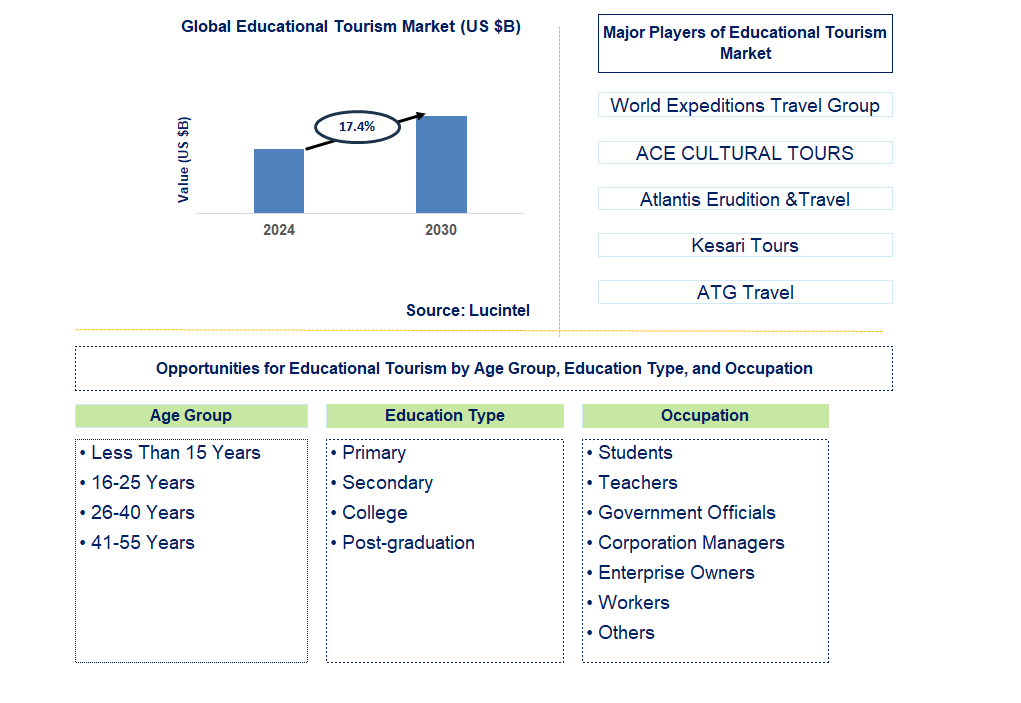
Key data points: The growth forecast = 17.4% annually for the next 6 years. Scroll below to get more insights. This market report covers trends, opportunities, and forecasts in the global educational tourism market to 2030 by age group (less than 15 years, 16-25 years, 26-40 years, and 41-55 years), education type (primary, secondary, college, and post-graduation), occupation (students, teachers, government officials, corporation managers, enterprise owners, workers, and others), and region (North America, Europe, Asia Pacific, and the Rest of the World)
We'll send your sample report shortly.
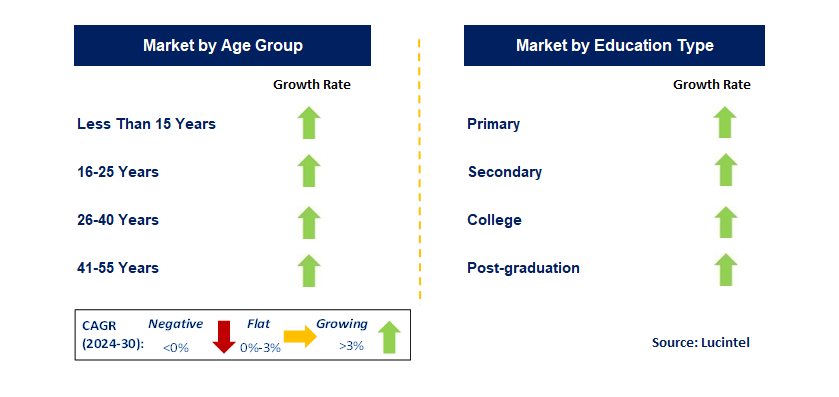
• Lucintel forecasts that, within the age group category, the 16-25 year segment will remain the largest segment over the forecast period.
• Within the education type category, college will remain the largest segment due to increasing emphasis on specialized degrees, adaptable immigration policies, and cost-effective college education.
• In terms of regions, APAC will remain the largest region over the forecast period due to growing efforts and initiatives by the government. Gain valuable insights for your business decisions with our comprehensive 150+ page report.
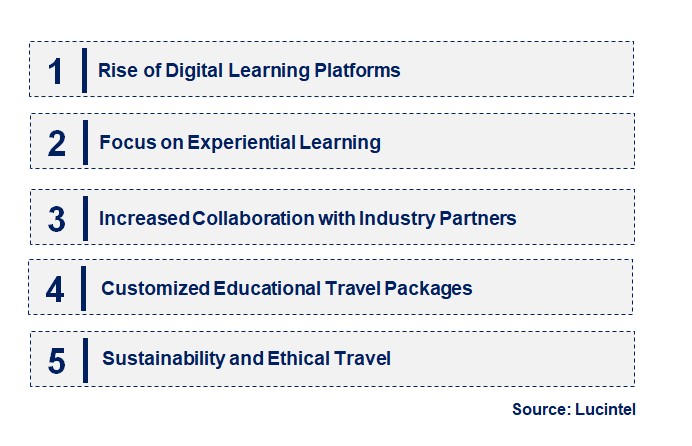
• Rise of digital learning platforms: Digital platforms are enabling remote and virtual educational experiences, making it easier for students to participate in international programs from their own countries. This trend increases accessibility and reduces the barriers associated with physical travel.
• Focus on experiential learning: There is a growing emphasis on experiential learning, where educational programs incorporate hands-on activities and real-world applications. This trend enhances the learning experience by providing practical knowledge and cultural immersion.
• Increased collaboration with industry partners: Educational institutions are forming partnerships with industry leaders to offer students practical experiences and career-oriented education. This collaboration helps bridge the gap between academic learning and real-world skills.
• Customized educational travel packages: Travel companies are offering customized educational travel packages tailored to specific interests and academic goals. These packages provide personalized learning experiences and cater to diverse educational needs.
• Sustainability and ethical travel: There is an increased focus on sustainable and ethical travel practices within educational tourism. Institutions and travel operators are emphasizing environmentally friendly practices and ethical considerations in their programs. These trends are transforming the educational tourism market by enhancing accessibility, personalization, and relevance of educational experiences. They reflect a shift towards integrating technology and cultural immersion into educational travel, creating new opportunities for both learners and providers.
• Integration of technology in education: The adoption of advanced technologies, such as virtual reality and online learning platforms, is revolutionizing educational tourism. These technologies enhance learning experiences and provide opportunities for virtual exchanges and remote participation in educational programs.
• Expansion of international partnerships: Educational institutions are forming new international partnerships to offer joint programs and study-abroad opportunities. This expansion increases the variety and quality of educational experiences available to students and promotes global academic collaboration.
• Growth in cultural exchange programs: There is a growing trend towards combining educational programs with cultural exchange activities. This development enriches students' learning experiences by providing them with immersive cultural experiences alongside their academic studies.
• Increased focus on personalized learning: Educational tourism providers are offering more personalized and tailored learning experiences. Customized programs cater to individual interests and academic goals, enhancing the relevance and effectiveness of educational travel.
• Government support for educational tourism: Many governments are introducing policies and incentives to promote educational tourism. This support includes funding for international collaborations, improvements in infrastructure, and marketing efforts to attract international students. These developments are reshaping the educational tourism market by enhancing the quality and diversity of educational experiences. They reflect a growing emphasis on technology, global collaboration, and personalized learning, driving the sector's growth and evolution.
• Development of online educational platforms: The growth of online educational platforms offers opportunities for expanding educational tourism beyond traditional borders. These platforms enable institutions to reach a global audience and provide virtual learning experiences.
• Creation of specialized study tours: There is potential for growth in specialized study tours focused on specific fields or interests. These tours offer targeted educational experiences and attract students seeking niche learning opportunities.
• Partnerships with industry leaders: Forming partnerships with industry leaders to offer practical and career-oriented educational programs presents growth opportunities. These collaborations enhance the relevance of educational tourism and provide students with valuable real-world experiences.
• Expansion into emerging markets: Targeting emerging markets for educational tourism can drive growth. Developing programs tailored to the needs and interests of students from these regions can open new avenues for expansion.
• Focus on sustainable and responsible tourism: Emphasizing sustainable and responsible tourism practices can attract environmentally conscious students and institutions. This focus aligns with global trends and enhances the appeal of educational tourism programs. These strategic growth opportunities are shaping the future of the educational tourism market. They highlight the potential for innovation, expansion, and increased relevance, driving the sector's evolution and attracting new participants.
• Technological advancements: The integration of digital technologies, such as virtual reality and online learning platforms, drives the growth of educational tourism by enhancing accessibility and learning experiences.
• Globalization of education: The increasing globalization of education fosters international collaborations and student exchanges, expanding opportunities for educational tourism and enriching academic programs.
• Growing demand for experiential learning: There is a rising demand for experiential learning opportunities that combine education with cultural experiences. This demand drives the development of educational tourism programs that offer immersive and practical learning.
• Increased funding for educational programs: Government and private sector funding for educational programs supports the growth of educational tourism by providing resources for international partnerships, infrastructure improvements, and program development.
• Rising interest in cultural exchange: The growing interest in cultural exchange among students and institutions fuels the development of educational tourism programs that offer unique cultural experiences alongside academic learning. Challenges in the educational tourism market are:
• Regulatory barriers: Regulatory challenges, such as visa restrictions and varying educational standards, can hinder the growth of educational tourism by creating obstacles for international students and institutions.
• Economic uncertainty: Economic downturns and fluctuating exchange rates can impact the affordability and attractiveness of educational tourism programs, affecting participation and revenue.
• Technological barriers: Not all regions have access to advanced technologies, which can limit the effectiveness and reach of digital educational programs and hinder market growth.
• Cultural and language differences: Cultural and language differences can pose challenges in delivering effective educational programs and ensuring successful intercultural interactions, impacting the overall experience.
• Safety and security concerns: Safety and security concerns, including political instability and health risks, can affect the attractiveness and feasibility of educational tourism programs for both students and providers. The drivers and challenges facing the educational tourism market reflect a complex landscape influenced by technological, economic, and regulatory factors. Addressing these challenges while
• World Expeditions Travel Group
• ACE CULTURAL TOURS
• Atlantis Erudition &Travel Services
• Kesari Tours
• ATG Travel
• Global Educational Travel
• Educational Tours
• Less Than 15 Years
• 16-25 Years
• 26-40 Years
• 41-55 Years
• Primary
• Secondary
• College
• Post-graduation
• Students
• Teachers
• Government Officials
• Corporation Managers
• Enterprise Owners
• Workers
• North America
• Europe
• Asia Pacific
• The Rest of the World
• United States: The U.S. has seen a rise in educational travel programs incorporating immersive technologies, such as virtual reality, to enhance learning experiences. Institutions are increasingly offering study-abroad programs combined with cultural excursions, leveraging digital tools to engage students in global education.
• China: China is investing heavily in educational tourism, with a focus on expanding international partnerships and creating world-class educational facilities. New policies are encouraging student exchanges and global collaborations, while efforts are underway to attract international students through specialized programs and high-quality infrastructure.
• Germany: Germany has enhanced its educational tourism sector by integrating experiential learning opportunities with traditional academic programs. Universities are promoting short-term study programs and cultural tours, which cater to a growing interest in combining education with travel and cultural exchange.
• India: India is developing its educational tourism by promoting its rich cultural heritage alongside academic learning. The government and educational institutions are focusing on creating packages that offer both educational content and cultural experiences, aiming to attract international students and researchers.
• Japan: Japan is expanding its educational tourism by offering unique cultural and academic experiences. The focus is on blending traditional Japanese culture with modern education, promoting programs that offer immersive learning experiences and cultural exchanges, and increasing global student enrollments.


• World Expeditions Travel Group
• ACE CULTURAL TOURS
• Atlantis Erudition &Travel Services
• Kesari Tours
• ATG Travel
• Global Educational Travel
• Educational Tours Q5. Which educational tourism market segment will be the largest in future? Answer: Lucintel forecasts that 16-25 year segment will remain the largest segment over the forecast period. Q6. In educational tourism market, which region is expected to be the largest in next 5 years? Answer: APAC will remain the largest region over the forecast period due to growing efforts and initiatives by the government. Q.7 Do we receive customization in this report? Answer: Yes, Lucintel provides 10% customization without any additional cost.


Choose a license that fits your team. Instant PDF delivery.
Prices exclude taxes. Instant delivery. Custom licensing available on request.
Market Report · July 31, 2026
Market Report · July 31, 2026
Market Report · July 31, 2026
Trusted partner for strategic intelligence and business growth


Receive a complimentary market analysis tailored to your industry. Our analysts will identify key growth opportunities and competitive dynamics specific to your business.

Market size, growth rate, and key trend analysis for your specific sector.

Top competitor positioning and market share analysis.

Strategic recommendations backed by data-driven insights.
Get curated market intelligence and competitive moves straight to your inbox.
By subscribing, you agree to receive our monthly insights. Unsubscribe anytime.
Receive a complimentary market analysis tailored to your industry. Our analysts will identify key growth opportunities and competitive dynamics specific to your business.
Market size, growth rate, and key trend analysis for your specific sector.
Top competitor positioning and market share analysis.
Strategic recommendations backed by data-driven insights.
Get curated market intelligence, emerging trends, and competitive moves straight to your inbox each month.
By subscribing, you agree to receive our monthly insights. Unsubscribe anytime.
We'll send your sample report shortly.