
Market Report · May 18, 2026

This market report covers trends, opportunities, and forecasts in the global education marketing services market to 2031 by technology (single-mode couplers and multi-mode couplers), end use industry (telecommunications and test equipment), and region (North America, Europe, Asia Pacific, and the Rest of the World)
We'll send your sample report shortly.
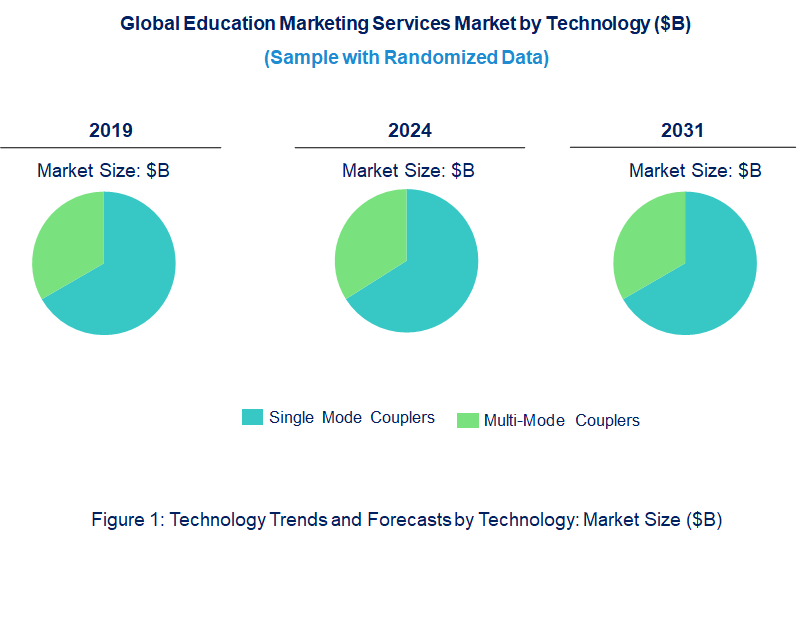
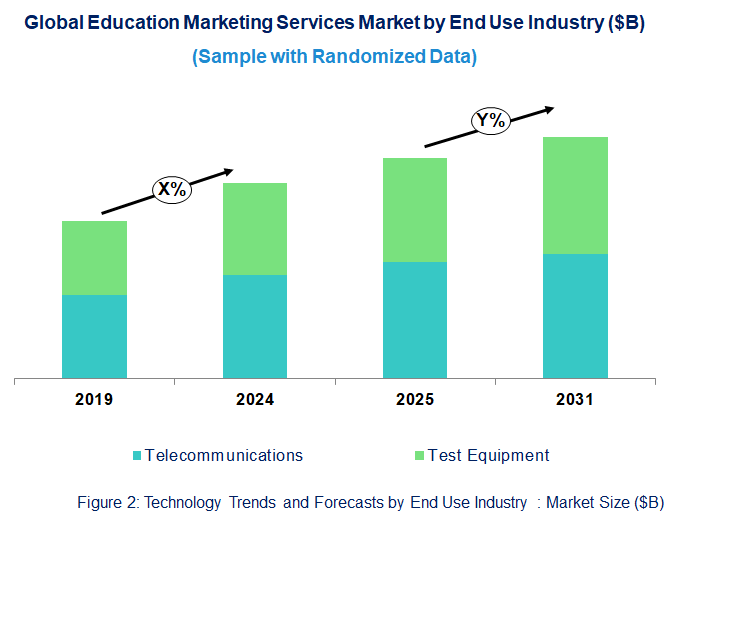
• Integration of Advanced Coupler Technologies: The use of advanced single-mode and multi-mode couplers is becoming more widespread, driven by the demand for faster and more efficient data transmission in telecommunications.
• Increased Adoption of Cloud-Based Solutions: Cloud-based solutions are being implemented to facilitate scalable and flexible marketing strategies, offering more customization for educational institutions.
• Focus on Real-Time Analytics: Real-time data analytics is gaining traction, allowing educational marketers to track campaigns, personalize content, and improve targeting efforts.
• Growth of Interactive Content: The rise of interactive content such as virtual classrooms, webinars, and online workshops is shifting marketing strategies towards more immersive digital experiences for students.
• Automation and AI in Marketing: The use of artificial intelligence (AI) and marketing automation tools is transforming how education marketing campaigns are executed, optimizing performance, and targeting specific audience segments. These trends are enhancing the education marketing services market by enabling more personalized, data-driven, and scalable marketing strategies that can meet the evolving demands of the education sector.
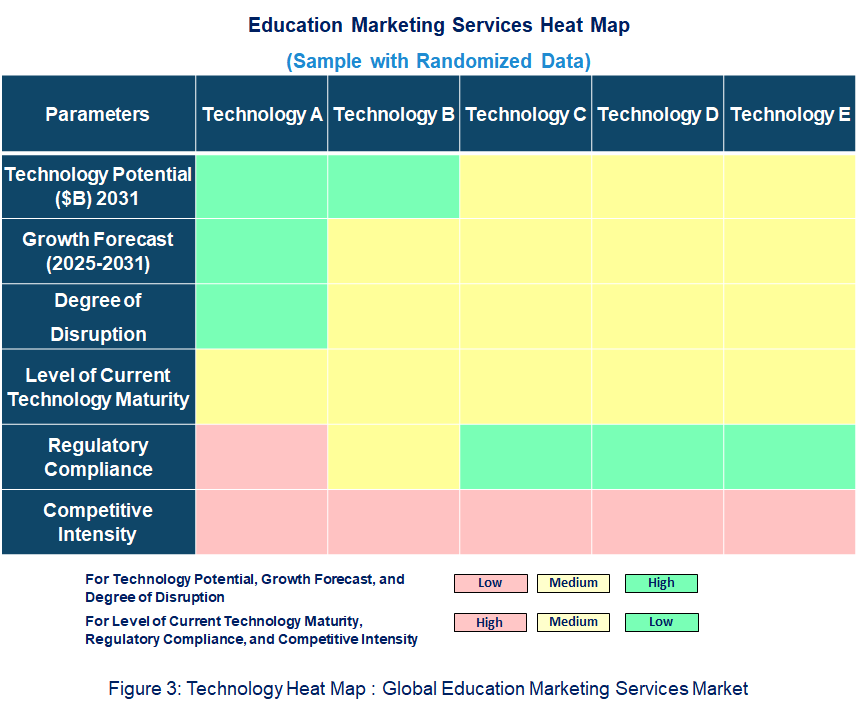
• Technology Potential: Technology in the education marketing services market has vast potential to revolutionize how educational institutions attract, engage, and retain students. With the rise of AI, big data analytics, CRM systems, and digital marketing platforms, institutions can now deliver highly targeted and personalized campaigns. Marketing automation tools streamline outreach, while social listening tools and predictive analytics help institutions understand student behavior and preferences. Chatbots, virtual assistants, and immersive content formats like AR/VR are enhancing digital engagement. These technologies enable data-driven strategies that improve conversion rates and optimize marketing spend, making them crucial for institutions operating in a competitive, globalized education landscape.
• Degree of Disruption: The degree of disruption from education marketing technologies is high, particularly as traditional outreach methods (e.g., print and broadcast ads) are replaced by personalized, multi-channel digital campaigns. These tools are disrupting how institutions connect with prospects, turning marketing into a measurable, ROI-driven function. Moreover, automation and AI reduce human effort, enabling lean marketing teams to achieve greater outreach and effectiveness. The increased use of predictive modeling to identify high-potential applicants is transforming enrollment strategies. Overall, these innovations are reshaping the admissions funnel, increasing pressure on institutions to adopt technology-driven marketing to stay competitive.
• Level of Current Technology Maturity: The maturity level of technologies in the education marketing services sector is advanced, especially in CRM, email marketing automation, SEO/SEM tools, and social media analytics. Platforms like Salesforce Education Cloud, HubSpot, and Slate are widely adopted by universities. AI-driven personalization and data analytics tools are increasingly mainstream, while emerging technologies like AR/VR for virtual campus tours or blockchain for verified credentials are gaining traction. However, the integration of these technologies across fragmented education systems is still a work in progress. Small and mid-sized institutions often face challenges in full-scale adoption due to cost and skill gaps, but cloud-based solutions are improving accessibility.
• Regulatory Compliance: Regulatory compliance in education marketing technologies is centered around data privacy, consent, and transparency. With institutions collecting vast amounts of student data, compliance with regulations like the general data protection regulation (GDPR) in Europe and the Family Educational Rights and Privacy Act (FERPA) in the U.S. is essential. Marketers must obtain explicit consent before contacting prospective students, and platforms must ensure secure data handling and storage. Moreover, algorithmic transparency and ethical use of AI are gaining attention, as institutions must avoid bias or misinformation in automated campaigns. Non-compliance can lead to reputational damage, fines, and student distrust, making robust data governance a top priority.
• G&H: G&H introduced new fiber optic solutions for educational institutions, enhancing data transmission capabilities and providing more efficient marketing platforms for educational services.
• Fujikura: Fujikura has developed cutting-edge fiber optic couplers with improved bandwidth and signal reliability, driving more efficient telecommunications for educational marketing purposes.
• Laser Components: Laser Components has focused on improving optical coupler technologies, allowing for more precise and high-performance educational marketing tools, especially in terms of real-time analytics.
• Thorlabs: Thorlabs has expanded its offerings of advanced couplers, which improve signal quality for education-focused telecom networks, enhancing online education services and digital marketing tools.
• Furukawa Electric: Furukawa Electric introduced new multi-mode couplers that are more cost-effective, allowing educational institutions to expand their digital marketing efforts while maintaining efficient network infrastructures. These developments underscore the growing importance of telecommunications infrastructure and high-performance technology in the Education Marketing Services Market.
• Rise of Online and Distance Learning Programs The expansion of online education has created a demand for digital marketing services to target specific learner demographics, increasing the need for personalized and scalable marketing solutions.
• Growing Competition Among Educational Institutions Institutions are investing in marketing to differentiate themselves, enhance brand visibility, and reach prospective students across geographies, boosting demand for specialized education marketing services.
• Increased Student Mobility and Globalization As more students consider studying abroad, institutions rely on targeted international marketing strategies, including multilingual campaigns and region-specific platforms, to attract global applicants.
• Digital Transformation of the Education Sector With the education sector embracing digital tools, there’s a rising need for integrated marketing solutions that span social media, search, content, and analytics to optimize recruitment and engagement. Key Challenges
• Budget Constraints in Smaller Institutions Many institutions, especially in developing regions, face financial limitations, making it difficult to invest in advanced or outsourced marketing services.
• Privacy and Data Protection Regulations Strict compliance requirements such as GDPR and FERPA limit the scope of digital marketing campaigns and require secure handling of student data.
• Difficulty in Measuring ROI Educational marketing often faces challenges in linking marketing spend directly to enrollment outcomes, especially with long student decision-making cycles.
• Fragmented Marketing Ecosystem Institutions often use a mix of disconnected platforms and vendors, leading to inconsistent messaging, poor data flow, and inefficiencies in campaign execution. The Education Marketing Services Market is rapidly evolving in response to digitalization, global student flows, and rising competition. While budget constraints and regulatory compliance remain key challenges, the adoption of AI, automation, and personalized outreach strategies is unlocking significant growth potential. These opportunities are redefining how institutions attract and engage future learners globally.
• G&H
• Fujikura
• Laser Components
• Thorlabs
• Furukawa Electric
• Technology Readiness & Key Applications: Both single mode and multi-mode couplers are highly mature technologies used widely in telecommunications and institutional networking. In the education space, single mode couplers support long-haul campus network backbones, essential for unified marketing platforms, centralized CRM systems, and analytics. Multi-mode couplers are typically used within single buildings or smaller campuses, facilitating data flow for localized digital signage, student outreach, and content management systems. While they are not front-facing marketing tools, their readiness and reliability underpin the infrastructure needed for robust, real-time education marketing services and digital communication strategies
• Disruption Potential: In the context of the education marketing services market, single mode couplers and multi-mode couplers have limited direct disruption potential, as these are primarily optical networking components used in data transmission rather than marketing solutions. However, their indirect impact can be noted in supporting high-speed data infrastructure for cloud-based education platforms, virtual classrooms, and real-time analytics tools. Single mode couplers, with their long-distance high-bandwidth capabilities, are more disruptive in enabling seamless connectivity across distributed campuses. Multi-Mode Couplers, though more cost-effective for short-distance communication, offer moderate support in localized data environments such as on-campus marketing operations.
• Competitive Intensity & Regulatory Compliance: The competitive intensity for single mode and multi-mode couplers in the education sector is relatively low, as their deployment is more infrastructure-based than service-focused. However, competition exists among fiber optic component manufacturers offering products tailored to educational institutions’ IT needs. Regulatory compliance primarily involves telecommunications and data security standards, including ISO/IEC and national data transmission regulations, especially where education platforms handle large volumes of student information. While not directly regulated by education-specific policies, their role in maintaining secure and stable data transfer environments is critical for compliance with broader digital education standards.
• Single-Mode Couplers
• Multi-Mode Couplers
• Telecommunications
• Test Equipment
• North America
• Europe
• Asia Pacific
• The Rest of the World
• Latest Developments and Innovations in the Education Marketing Services Technologies
• Companies / Ecosystems
• Strategic Opportunities by Technology Type


Choose a license that fits your team. Instant PDF delivery.
Prices exclude taxes. Instant delivery. Custom licensing available on request.
Market Report · May 18, 2026
Market Report · May 18, 2026
Market Report · May 18, 2026
Trusted partner for strategic intelligence and business growth


Receive a complimentary market analysis tailored to your industry. Our analysts will identify key growth opportunities and competitive dynamics specific to your business.

Market size, growth rate, and key trend analysis for your specific sector.

Top competitor positioning and market share analysis.

Strategic recommendations backed by data-driven insights.
Get curated market intelligence and competitive moves straight to your inbox.
By subscribing, you agree to receive our monthly insights. Unsubscribe anytime.
Receive a complimentary market analysis tailored to your industry. Our analysts will identify key growth opportunities and competitive dynamics specific to your business.
Market size, growth rate, and key trend analysis for your specific sector.
Top competitor positioning and market share analysis.
Strategic recommendations backed by data-driven insights.
Get curated market intelligence, emerging trends, and competitive moves straight to your inbox each month.
By subscribing, you agree to receive our monthly insights. Unsubscribe anytime.
We'll send your sample report shortly.