
Report Feature
E-Prescribing System Market Trends and Forecast
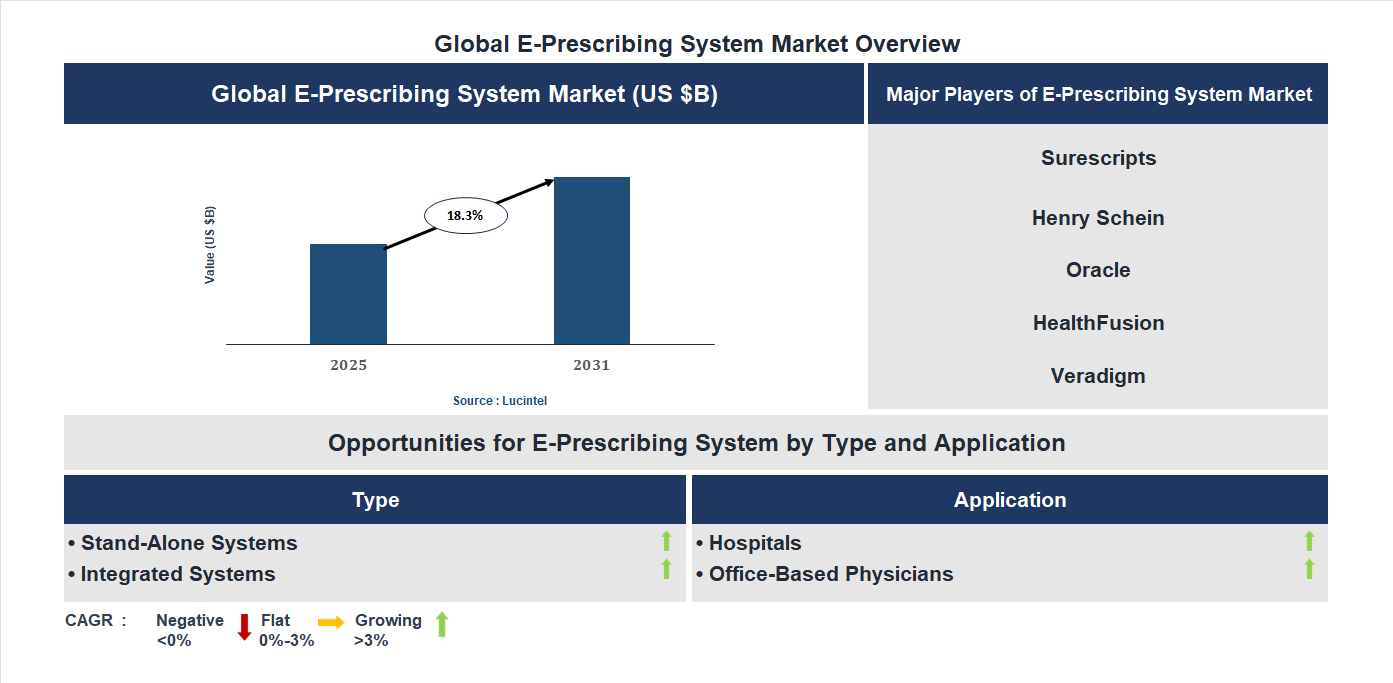
The future of the global e-prescribing system market looks promising with opportunities in the hospital and office-based physician markets. The global e-prescribing system market is expected to grow with a CAGR of 18.3% from 2025 to 2031. The major drivers for this market are the increasing focus on reducing medication errors, the rising adoption of digital healthcare systems, and the growing demand for efficient clinical workflows.• Lucintel forecasts that, within the type category, integrated system is expected to witness higher growth over the forecast period.
• Within the application category, office-based physician is expected to witness higher growth.
• In terms of region, APAC is expected to witness the highest growth over the forecast period. Gain valuable insights for your business decisions with our comprehensive 150+ page report. Sample figures with some insights are shown below.
Emerging Trends in the E-Prescribing System Market
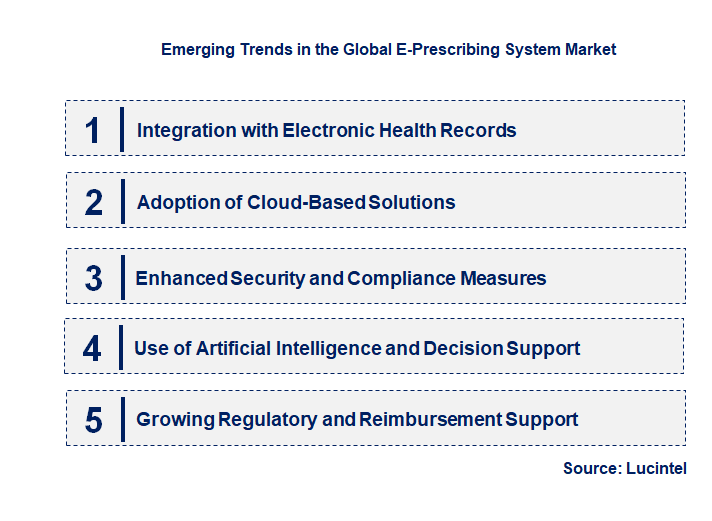
The E-prescribing system market is experiencing rapid growth driven by technological advancements, regulatory changes, and increasing demand for efficient healthcare solutions. As healthcare providers seek to improve accuracy, reduce errors, and streamline workflows, the market is evolving with innovative features and integrations. These developments are transforming how prescriptions are created, transmitted, and managed, ultimately enhancing patient safety and operational efficiency. The following key trends highlight the major shifts shaping this market, reflecting its dynamic nature and future potential.• Integration with Electronic Health Records: Seamless connectivity : E-prescribing systems are increasingly integrated with EHR platforms, enabling healthcare providers to access comprehensive patient data instantly. This integration improves decision-making, reduces duplicate tests, and enhances overall care quality. It also streamlines workflows by allowing prescriptions to be generated directly from patient records, minimizing manual entry errors and saving time. As interoperability becomes a priority, this trend is expected to expand, fostering more cohesive healthcare delivery.
• Adoption of Cloud-Based Solutions: Flexibility and scalability : Cloud-based e-prescribing systems offer significant advantages over traditional on-premises solutions. They provide healthcare providers with real-time access to prescription data from any location, facilitating remote consultations and telehealth services. Cloud platforms also enable easier updates, lower maintenance costs, and enhanced data security. This trend supports the growing need for scalable, cost-effective solutions that can adapt to the evolving demands of healthcare organizations, especially in rural or resource-limited settings.
• Enhanced Security and Compliance Measures: Data protection focus : With increasing concerns over patient data privacy and regulatory compliance, e-prescribing systems are incorporating advanced security features. These include encryption, multi-factor authentication, and audit trails to prevent unauthorized access and ensure data integrity. Compliance with standards such as HIPAA is now a fundamental requirement. This trend not only safeguards sensitive information but also builds trust among users, encouraging wider adoption of digital prescribing solutions.
• Use of Artificial Intelligence (AI) and Decision Support: Smarter prescribing : AI-driven features are being integrated into e-prescribing systems to assist clinicians in making safer, more effective decisions. These include drug interaction alerts, allergy checks, and dosage recommendations based on patient-specific data. AI enhances the accuracy of prescriptions, reduces adverse drug events, and supports personalized medicine. As AI technology advances, its role in predictive analytics and clinical decision support is expected to grow, further optimizing prescribing practices.
• Growing Regulatory and Reimbursement Support: Policy-driven growth : Governments and regulatory bodies are increasingly promoting e-prescribing adoption through policies, incentives, and reimbursement programs. These initiatives aim to improve medication safety, reduce fraud, and streamline healthcare processes. For example, mandates for electronic prescribing in certain regions are accelerating market growth. This supportive regulatory environment encourages healthcare providers to transition from traditional paper-based methods to digital systems, ensuring wider market penetration and standardization. In summary, these emerging trends are collectively reshaping the E-prescribing system market by enhancing interoperability, security, and intelligence, while also making solutions more accessible and compliant. They are driving a shift towards more integrated, secure, and intelligent prescribing practices, ultimately improving healthcare outcomes and operational efficiency across the industry.
Recent Development in the E-Prescribing System Market
The E-prescribing system market has experienced significant growth driven by technological advancements, regulatory changes, and increasing adoption of digital health solutions. As healthcare providers seek to improve efficiency, reduce errors, and enhance patient safety, the market continues to evolve rapidly. Recent developments reflect a shift towards more integrated, user-friendly, and secure e-prescribing platforms. These innovations are transforming how prescriptions are managed, leading to better healthcare outcomes and operational efficiencies. The following key developments highlight the current trajectory of the market and its future potential.• Integration with Electronic Health Records: Enhanced interoperability between e-prescribing systems and EHR platforms has improved data sharing, streamlined workflows, and reduced manual entry errors, resulting in faster, more accurate prescriptions and better patient care.
• Adoption of Cloud-Based Solutions: Cloud technology has enabled scalable, cost-effective, and accessible e-prescribing platforms, allowing healthcare providers to access systems remotely, improve collaboration, and ensure real-time updates, thus increasing market penetration.
• Implementation of Advanced Security Measures: With rising concerns over data breaches, new security protocols such as encryption, multi-factor authentication, and compliance with HIPAA regulations have strengthened data protection, fostering greater trust among users and stakeholders.
• Regulatory Reforms and Incentives: Governments and regulatory bodies have introduced policies and incentives promoting digital prescribing, including mandates for electronic prescriptions and reimbursement policies, which have accelerated adoption across healthcare settings.
• Integration of Artificial Intelligence (AI) and Decision Support: AI-powered features now assist prescribers with drug interaction alerts, dosage recommendations, and patient-specific insights, reducing errors and enhancing clinical decision-making, thereby increasing system utility and safety. These developments are collectively transforming the E-prescribing system market by improving system interoperability, security, accessibility, and clinical support. As a result, adoption rates are rising, and the market is poised for sustained growth, ultimately leading to safer, more efficient healthcare delivery worldwide.
Strategic Growth Opportunities in the E-Prescribing System Market
The E-prescribing system market is experiencing rapid growth driven by technological advancements, increasing healthcare digitization, and the need for efficient medication management. As healthcare providers seek to improve patient safety and streamline workflows, the adoption of electronic prescribing solutions is expanding across various applications. This evolution presents multiple strategic growth opportunities that can significantly influence market dynamics. Understanding these opportunities helps stakeholders capitalize on emerging trends, enhance service offerings, and gain competitive advantages in a transforming healthcare landscape.• Healthcare Providers: Enhanced Patient Safety and Efficiency : E-prescribing systems reduce medication errors, improve accuracy, and streamline prescription workflows, leading to better patient outcomes and increased provider productivity. Adoption is driven by the need for safer, faster, and more reliable prescribing processes.
• Pharmacies: Improved Medication Management and Inventory Control : Integration of e-prescribing with pharmacy management systems enables real-time medication tracking, reduces errors, and optimizes inventory levels. This enhances operational efficiency and customer satisfaction, fostering growth in pharmacy sectors.
• Pharmaceutical Companies: Data-Driven Insights and Compliance : Electronic prescriptions generate valuable data for pharmaceutical companies, aiding in market analysis, drug safety monitoring, and regulatory compliance. Leveraging this data supports targeted marketing and product development strategies.
• Healthcare IT Providers: Innovative Software Solutions and Integration Services : The demand for advanced, interoperable e-prescribing platforms creates opportunities for IT firms to develop innovative solutions, enhance system integration, and offer value-added services, expanding their market share.
• Regulatory Bodies and Policymakers: Standardization and Incentives for Adoption : Governments and regulatory agencies can promote growth by establishing standards, providing incentives, and encouraging adoption of e-prescribing systems, ensuring widespread implementation and improved healthcare quality. In summary, these growth opportunities across key applications are significantly shaping the E-prescribing system market. They drive technological innovation, improve healthcare delivery, and foster collaboration among stakeholders, ultimately leading to a more efficient, safe, and data-driven healthcare environment.
E-Prescribing System Market Driver and Challenges
The E-prescribing system market is influenced by a variety of technological, economic, and regulatory factors that shape its growth and development. Advances in healthcare technology, increasing demand for efficient medical workflows, and evolving regulatory standards are key drivers. Simultaneously, challenges such as data security concerns, high implementation costs, and regulatory compliance issues pose significant hurdles. Understanding these drivers and challenges is essential for stakeholders aiming to capitalize on market opportunities and navigate potential risks effectively. The dynamic interplay of these factors determines the pace and direction of market expansion, impacting healthcare providers, technology vendors, and patients alike. The factors responsible for driving the E-prescribing system market include:• Technological Innovation: The rapid development of digital health technologies, including cloud computing, AI, and interoperability standards, has revolutionized e-prescribing. These innovations enable seamless integration with electronic health records (EHRs), improve accuracy, and streamline workflows. As technology becomes more sophisticated and user-friendly, healthcare providers are increasingly adopting e-prescribing solutions to enhance patient safety and operational efficiency. The continuous evolution of these tools fosters a more connected and efficient healthcare ecosystem, encouraging widespread adoption and market growth.
• Regulatory Support and Incentives: Governments and regulatory bodies worldwide are actively promoting e-prescribing to improve healthcare quality and safety. Policies mandating electronic prescriptions, coupled with incentives such as Medicare and Medicaid reimbursements in the U.S., encourage providers to transition from traditional paper-based methods. These regulations reduce medication errors, enhance traceability, and ensure compliance with legal standards. Such supportive regulatory frameworks create a conducive environment for market expansion, attracting investments and fostering innovation within the industry.
• Growing Healthcare Digitization: The global shift towards digitized healthcare systems is a significant driver. Hospitals, clinics, and pharmacies are increasingly adopting electronic health records and digital prescribing tools to improve efficiency and patient outcomes. The digitization trend reduces paperwork, minimizes errors, and accelerates prescription processing. As healthcare organizations recognize the benefits of digital transformation, the demand for reliable e-prescribing systems continues to rise, fueling market growth across regions.
• Rising Prevalence of Chronic Diseases: The increasing incidence of chronic conditions such as diabetes, hypertension, and cardiovascular diseases necessitates ongoing medication management. E-prescribing systems facilitate accurate, timely, and efficient prescription management, reducing errors and improving adherence. This growing patient population demands scalable and secure prescribing solutions, which in turn drives market expansion. The ability to support complex medication regimens and monitor patient compliance makes e-prescribing an essential component of modern healthcare.
• Cost Reduction and Efficiency Gains: Healthcare providers are under pressure to reduce operational costs while maintaining high-quality care. E-prescribing systems help achieve these goals by decreasing medication errors, reducing paper usage, and streamlining communication between providers and pharmacies. The automation of prescription workflows minimizes delays and administrative burdens, leading to faster patient service and cost savings. As economic pressures intensify, the adoption of e-prescribing solutions becomes a strategic move for healthcare organizations seeking to optimize resource utilization. The challenges facing this E-prescribing system market include:
• Data Security and Privacy Concerns: The digital nature of e-prescribing systems makes them vulnerable to cyber threats and data breaches. Protecting sensitive patient information is paramount, and any security lapses can lead to legal penalties, loss of trust, and compromised patient safety. Ensuring robust cybersecurity measures and compliance with data protection regulations such as HIPAA is complex and costly. These concerns can hinder adoption, especially among smaller healthcare providers lacking advanced security infrastructure.
• High Implementation and Maintenance Costs: Transitioning from traditional prescribing methods to electronic systems involves significant upfront investments in hardware, software, and staff training. Ongoing maintenance, updates, and technical support add to the financial burden. For many healthcare providers, especially in resource-constrained settings, these costs can be prohibitive, slowing down adoption rates. The financial barrier remains a critical challenge in expanding the market, particularly in developing regions.
• Regulatory and Legal Challenges: Navigating the complex landscape of healthcare regulations across different jurisdictions poses a significant obstacle. Variations in legal standards, licensing requirements, and compliance protocols can delay implementation and increase costs. Additionally, evolving regulations require continuous system updates, which can be resource-intensive. Uncertainty regarding future regulatory changes may also deter investment and innovation, impacting overall market growth. In summary, the E-prescribing system market is driven by technological advancements, supportive regulations, healthcare digitization, rising chronic disease prevalence, and cost efficiency needs. However, challenges such as data security, high costs, and regulatory complexities must be addressed to sustain growth. Overcoming these hurdles will require collaborative efforts among stakeholders to develop secure, affordable, and compliant solutions. The markets future depends on balancing innovation with risk management, ensuring broader adoption and improved healthcare outcomes worldwide.
List of E-Prescribing System Companies
Companies in the market compete on the basis of product quality offered. Major players in this market focus on expanding their manufacturing facilities, R&D investments, infrastructural development, and leverage integration opportunities across the value chain. With these strategies e-prescribing system companies cater increasing demand, ensure competitive effectiveness, develop innovative products & technologies, reduce production costs, and expand their customer base. Some of the e-prescribing system companies profiled in this report include-• Surescripts
• Henry Schein
• Oracle
• HealthFusion
• Veradigm
• Athenahealth
• Bizmatics
• EClinicalWorks
• EM Systems
• iCoreConnect
E-Prescribing System Market by Segment
The study includes a forecast for the global e-prescribing system market by type, application, and region.E-Prescribing System Market by Type [Value from 2019 to 2031]:
• Stand-Alone Systems
• Integrated Systems
E-Prescribing System Market by Application [Value from 2019 to 2031]:
• Hospitals
• Office-Based Physicians
E-Prescribing System Market by Region [Value from 2019 to 2031]:
• North America
• Europe
• Asia Pacific
• The Rest of the World
Country Wise Outlook for the E-Prescribing System Market
The E-prescribing system market has experienced significant growth driven by technological advancements, regulatory changes, and increasing adoption of digital health solutions worldwide. As healthcare providers seek to improve efficiency, reduce errors, and enhance patient safety, countries are investing in innovative e-prescribing technologies. The markets evolution reflects a shift towards integrated healthcare systems, telemedicine, and data security enhancements. Each country’s unique healthcare infrastructure and policy environment influence the pace and nature of these developments, shaping the global landscape of e-prescribing solutions.• United States: The US market has seen rapid adoption of e-prescribing systems, driven by federal incentives and regulations such as the Medicare Modernization Act. Major players are integrating AI and decision support tools to improve accuracy and reduce medication errors. The adoption of cloud-based solutions is increasing, alongside efforts to enhance interoperability among healthcare providers. The COVID-19 pandemic accelerated digital health adoption, further boosting market growth. Additionally, stricter data security regulations are prompting vendors to enhance cybersecurity features within their platforms.
• China: China’s e-prescribing market is expanding due to government initiatives promoting digital health and smart healthcare infrastructure. The country is focusing on integrating e-prescribing with electronic health records (EHRs) and telemedicine platforms. Local companies are innovating with AI-driven prescription management and mobile app-based solutions to reach rural populations. Regulatory frameworks are evolving to ensure data privacy and security, encouraging more widespread adoption. The rapid growth of healthcare IT infrastructure and increasing smartphone penetration are key factors supporting market expansion.
• Germany: Germany’s market is characterized by stringent data protection laws and a focus on interoperability within its healthcare system. The country is adopting e-prescribing solutions that comply with the EU’s GDPR regulations, emphasizing data security and patient privacy. The integration of e-prescribing with electronic health records and pharmacy systems is advancing, supported by government initiatives to digitize healthcare. The market is also witnessing increased collaboration between healthcare providers and technology vendors to develop secure, user-friendly platforms. The COVID-19 pandemic has further accelerated the digital transformation in German healthcare.
• India: India’s e-prescribing market is rapidly growing, driven by government programs like Ayushman Bharat and Digital India. The focus is on expanding access to digital health services in rural and underserved areas. Mobile-based e-prescribing solutions are gaining popularity due to widespread smartphone use. The government is promoting the adoption of electronic health records and telemedicine, which complement e-prescribing systems. Challenges such as infrastructure gaps and data security concerns are being addressed through policy reforms and technological innovations. The market is expected to continue expanding as healthcare digitization becomes a national priority.
• Japan: Japan’s e-prescribing market is evolving with a focus on aging population needs and healthcare efficiency. The government is encouraging the integration of e-prescribing with electronic health records and pharmacy management systems. Japan is investing in AI and data analytics to improve medication management and reduce errors. The adoption of cloud-based solutions is increasing, supported by strong regulatory frameworks ensuring data security. The COVID-19 pandemic has accelerated digital health initiatives, with a focus on remote healthcare and telemedicine. Overall, Japan’s market is characterized by technological innovation and a focus on patient safety.

Features of the Global E-Prescribing System Market
Market Size Estimates: E-prescribing system market size estimation in terms of value ($B). Trend and Forecast Analysis: Market trends (2019 to 2024) and forecast (2025 to 2031) by various segments and regions. Segmentation Analysis: E-prescribing system market size by type, application, and region in terms of value ($B). Regional Analysis: E-prescribing system market breakdown by North America, Europe, Asia Pacific, and Rest of the World. Growth Opportunities: Analysis of growth opportunities in different types, applications, and regions for the e-prescribing system market. Strategic Analysis: This includes M&A, new product development, and competitive landscape of the e-prescribing system market. Analysis of competitive intensity of the industry based on Porter’s Five Forces model.
FAQ
Q1. What is the growth forecast for e-prescribing system market? Answer: The global e-prescribing system market is expected to grow with a CAGR of 18.3% from 2025 to 2031. Q2. What are the major drivers influencing the growth of the e-prescribing system market? Answer: The major drivers for this market are the increasing focus on reducing medication errors, the rising adoption of digital healthcare systems, and the growing demand for efficient clinical workflows. Q3. What are the major segments for e-prescribing system market? Answer: The future of the e-prescribing system market looks promising with opportunities in the hospital and office-based physician markets. Q4. Who are the key e-prescribing system market companies? Answer: Some of the key e-prescribing system companies are as follows:• Surescripts
• Henry Schein
• Oracle
• HealthFusion
• Veradigm
• Athenahealth
• Bizmatics
• EClinicalWorks
• EM Systems
• iCoreConnect Q5. Which e-prescribing system market segment will be the largest in future? Answer: Lucintel forecasts that, within the type category, integrated system is expected to witness higher growth over the forecast period. Q6. In e-prescribing system market, which region is expected to be the largest in next 5 years? Answer: In terms of region, APAC is expected to witness the highest growth over the forecast period. Q7. Do we receive customization in this report? Answer: Yes, Lucintel provides 10% customization without any additional cost.
Table of Contents
List of Figures
List of Tables
Methodology
- In-depth interviews of the major players in this market
- Detailed secondary research from competitors’ financial statements and published data
- Extensive searches of published works, market, and database information pertaining to industry news, company press releases, and customer intentions
- A compilation of the experiences, judgments, and insights of Lucintel’s professionals, who have analyzed and tracked this market over the years.


Buy Now
Choose a license that fits your team. Instant PDF delivery.
Prices exclude taxes. Instant delivery. Custom licensing available on request.
Key Questions
- • What are some of the most promising, high-growth opportunities for the e-prescribing system market by type (stand-alone systems and integrated systems), application (hospitals and office-based physicians), and region (North America, Europe, Asia Pacific, and the Rest of the World)?
- • Which segments will grow at a faster pace and why?
- • Which region will grow at a faster pace and why?
- • What are the key factors affecting market dynamics? What are the key challenges and business risks in this market?
- • What are the business risks and competitive threats in this market?
- • What are the emerging trends in this market and the reasons behind them?
- • What are some of the changing demands of customers in the market?
- • What are the new developments in the market? Which companies are leading these developments?
- • Who are the major players in this market? What strategic initiatives are key players pursuing for business growth?
- • What are some of the competing products in this market and how big of a threat do they pose for loss of market share by material or product substitution?
- • What M&A activity has occurred in the last 5 years and what has its impact been on the industry? For any questions related to E-Prescribing System Market, E-Prescribing System Market Size, E-Prescribing System Market Growth, E-Prescribing System Market Analysis, E-Prescribing System Market Report, E-Prescribing System Market Share, E-Prescribing System Market Trends, E-Prescribing System Market Forecast, E-Prescribing System Companies, write Lucintel analyst at email: helpdesk@lucintel.com. We will be glad to get back to you soon.


