
Market Report · July 15, 2026

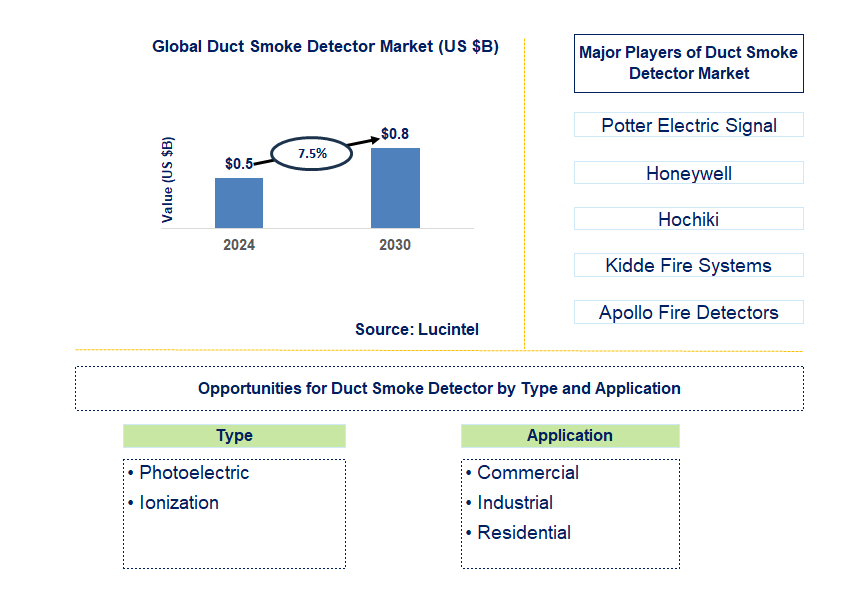
Key data points: The market size in 2030 = $0.8 billion, growth forecast = 7.5% annually for the next 6 years. Scroll below to get more insights. This market report covers trends, opportunities, and forecasts in the global duct smoke detector market to 2030 by type (photoelectric and ionization), application (commercial, industrial, and residential), and region (North America, Europe, Asia Pacific, and the Rest of the World)
We'll send your sample report shortly.
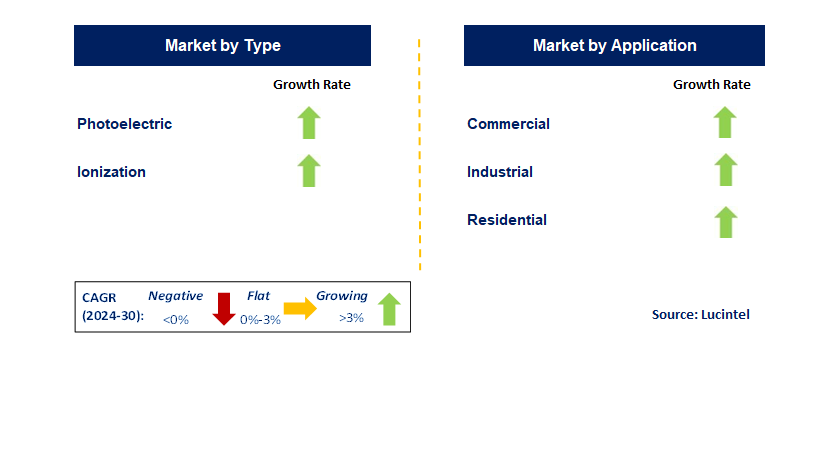
• Lucintel forecasts that, within the type category, photoelectric is expected to witness a higher growth over the forecast period due to its feature like more sensitive than ionization detectors.
• In terms of regions, North America is expected to witness the highest growth over the forecast period due to rising adoption of smoke detectors with building automation systems in the region. Gain valuable insights for your business decisions with our comprehensive 150+ page report.
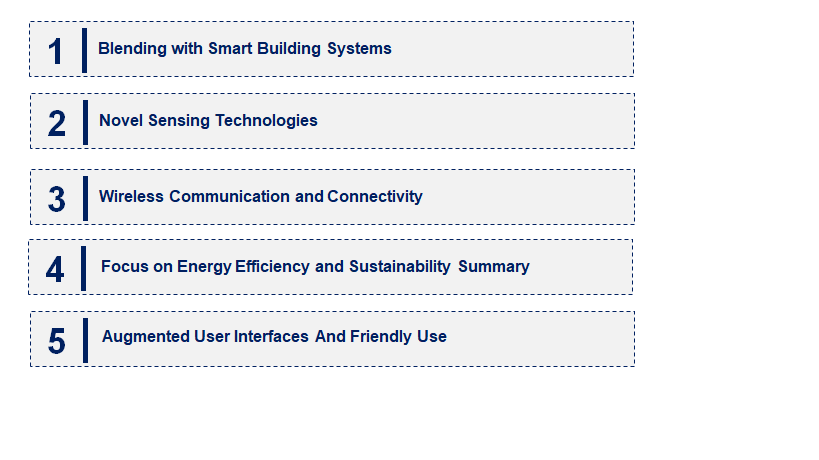
• Blending with Smart Building Systems: The integration of air duct smoke detectors into smart building systems is one of the significant trends. Modern sensors are being designed to expressly interface with Building Management Systems (BMS) and Internet of Things (IoT) platforms, thus enabling real-time monitoring, automated acting upon alerts, as well as data analytics. This unification enhances fire safety system functionality by offering a comprehensive supervision thereby allowing for proactive response towards potential threats. Also, smart integration aids in predictive maintenance that lowers operational costs through efficient system management.
• Novel Sensing Technologies: Advanced sensing technologies are revolutionizing the market for duct smoke detectors. Innovations like laser-based smoke detection, multi-sensor systems and adaptive algorithms enhance accuracy while reducing false alarms and improving overall performance. For instance, these technologies enable detectors to be more effective at different types of smokes as well as environmental conditions. The emphasis on advanced sensing signifies the increasing demand for precise fire detection within intricate and diverse building environments.
• Wireless Communication and Connectivity: The importance of wireless communication and connectivity in the duct smoke detector market is increasing. Wireless-enabled detectors, which include Bluetooth and Wi-Fi among others, can be integrated with digital platforms and monitored remotely. This movement supports system management improvements, instant notifications as well as better access to information. Moreover, it should be noted that wire-free based system integration also permits simplified installation and maintenance procedures thereby eroding extensive wiring needs for more adaptable setup options.
• Focus on Energy Efficiency and Sustainability Summary: The drive towards energy efficiency and sustainability has impacted on how duct smoke detectors are being designed. Manufacturers have developed detectors that consume less electricity power while making use of environmentally friendly materials. It is consistent with the general trend of green building practices in construction industry, combined with other energy-efficient technologies. In addition to saving money, such designs allow businesses to meet regulatory requirements aimed at environmental conservationists by reducing the cost of running fire detection systems (Mansour et al., 2016).
• Augmented User Interfaces And Friendly Use: The market for duct smoke detectors is characterized by the tendency towards more enhanced user interface and usability. Modern devices are coming up with a user-friendly design, intuitive controls, clear displays and other features that make them easy to operate and maintain. Therefore, users can configure, monitor and manage their fire detection systems without any problem. The enlargement of usability has been driven by the development of more advanced kinds of products that could improve people’s experience when using them as well as reduce the risk of operational errors. The duct smoke detector market is being transformed through emerging trends like smart building system integration, cutting edge sensing techniques, wireless communication links, energy efficiency emphasis as well as improved user interfaces. This shift indicates the desire for higher precision levels, high level interactivity on top of being sustainable in nature within industry circles. These tendencies will become even more pronounced in the years ahead as technology evolves thus leading to new breakthroughs in developing intelligent fire alarms which are simple to use.
• Multi-Sensor Detection Systems: An Introduction: The growth of duct smoke detectors is also marked by the emergence of multiple sensor detection systems. These include optical, ionization and heat sensors to enable accurate and reduce false alarms. Smoke detection can be ensured more effectively through multi-sensor systems that incorporate several fire detection techniques at once. This is a development aimed at improving fire detecting solutions in complicated environments.
• Wireless Integration with IoT: The entry of wireless and internet of things (IoT) technologies has been a game changer in the duct smoke detector market. Modern smoke detectors come with wireless capabilities which allow for remote inspection, real time alerts and they can be integrated within smart buildings. This advancement offers greater functionality for fire protection systems as well as efficient management and maintenance support services. It also enables predictive maintenance and data analytics due to the adoption of IoT technologies, thus improving system performance altogether.
• Advancement in Detection Algorithms: Within the duct smoke detector market, advances in detection algorithms is one of the major developments. The improved algorithms make it possible for detectors to detect or differentiate smoke from other environmental factors more accurately hence reducing false alarms and improving response times. This has led to more reliable fire detection systems that operate better in different conditions. The industry’s focus on enhancing detection algorithms reflects its commitment towards offering high-precision fire safety solutions.
• Compliance with Updated Safety Standards: Innovation in the duct smoke detector market is driven by compliance with updated safety standards. These regulations include those set by the National Fire Protection Association (NFPA) as well as other international bodies that influence product development and markets. Manufacturers are developing detectors that meet these updated standards, ensuring greater reliability and safety. This development goes hand-in-hand with the increasing importance of regulatory compliance and quality fire detection solutions.
• Emphasis on Energy Efficiency and Eco-Friendly Designs: The duct smoke detector market has experienced a notable development with the emphasis on energy efficiency and eco-friendly designs in the recent years. Manufacturers are coming up with products that consume less energy and incorporate sustainable materials. This trend resonates well with the overall move toward sustainability in building technologies as well as regulatory demands for energy-efficient products. Therefore, through concentrating on eco-friendly designs a corporation can attract ecologically aware customers while minimizing their product’s environmental effects. The duct smoke detector market has significantly been influenced by recent developments like introduction of multi-sensor systems, wireless and IoT technology integration, improvement of detection algorithms, conformity to revised safety standards, and focus on energy efficiency. These advances have resulted in innovations, better product performance and meet changing industry needs as well as regulator demands.
• Expansion into Emerging Markets: This article shows how moving into emerging markets can help manufacturers of duct smoke detectors achieve significant growth. India and China for example are rapidly urbanizing with increased demand for advanced fire safety systems. Therefore, by penetrating these countries firms can attract new customers from different segments and benefit from construction boom and infrastructure development. Product customization in line with local regulations and market requirements that enable penetration will aid this company’s expansion within such regions.
• Advancing multi-sensor detectors: The development of advanced multi-sensor detectors presents a key growth opportunity. These sensors combine several technologies (like optics and ionization) in order to ensure improved accuracy and reduced false alarms. A thriving market for high-performance fire detection systems in complex environments necessitates these types of products. Therefore, investing in R&D that produces innovative multi-sensor detectors is likely to help attract consumers who require reliable and efficient fire safety solutions.
• Inclusion into Smart Building Technologies: An integration with smart building technologies is an important strategic opportunity. With the spread of smart buildings, duct smoke detectors that integrate well with building management systems and IoT platforms are becoming increasingly important. Real-time monitoring through this integration provides automated alerts, extended system management, etc. Hence, firms that produce connectivity-enabled detectors meet requirements of modern building infrastructures and improve their prospects on the market.
• Focusing on Energy Efficiency and Sustainability: The drive for energy efficiency and sustainability is causing the market growth in duct smoke detectors. For these reasons, manufacturers need to come up with environmentally friendly products that consume less power and still meet the requirements of the law. It also makes sense for a company designing sustainable products to be included in the wider move towards green building practices and energy-efficient technology. By doing this, a firm can separate its product from others as well as capture an expanding number of eco-sensitive customers.
• Customization for Specific Industry Applications: Customizing for specific industry applications represents a worth-while growth opportunity. Different industries such as healthcare, manufacturing, commercial real estate have their unique fire safety requirements. Making smoke detectors for air conditioning tailored to these peculiarities helps addressing niche markets enhancing relevance of products within them. Also, providing tailored offerings that are congruent to regulatory bodies governing different sectors of the economy also helps increase market coverage while focusing on specialized areas foster growth. The duct smoke detector industry is future-oriented by several possibilities for strategic growth, among them being expansion into emerging markets, development of advanced multi-sensor detectors, integration with smart technologies, focus on energy efficiency, and customization for specific applications. Technology can be leveraged to innovate new products and meet the changing needs of consumers playing a vital role in the market growth.
• Technological Advancements: Technological advancements are a major driver of the duct smoke detector market. Multi-sensor detection systems, advanced algorithms and wireless communication features are some of the innovations that enhance smoke detectors’ accuracy, reliability and functions. These developments keep pace with increased demand for sophisticated fire safety solutions in complex buildings. Manufacturers must embrace new technologies to develop high-performance products that meet modern fire safety standards
• Increasing Regulatory Requirements: Increasing regulatory requirements have spurred the development and use of sophisticated duct smoke detectors. Harsher fire safety standards and building regulations require manufacturers to come up with products that are in line with updated rules. This guarantees higher dependability and safety for fire detection systems. The drive towards regulatory compliance also influences product design and market dynamics, with firms having to meet stringent safety and performance standards.
• Growing Demand for Smart Building Solutions: Duct Smoke Detector Market growth is significantly driven by the increasing demand for smart building solutions. As buildings become more integrated into smart technologies, there is a need for fire detection systems that can interface with Building Management Systems (BMS) as well as IoT platforms. Therefore, detector makers have made it possible to be connected through advanced connectivity and integration capabilities. Thus, the demand for smart building solutions leads to innovative thinking and adoption of sophisticated fire safety technologies.
• Enhanced Safety and Reliability Focus Summary: Growth in the market for duct smoke detectors is being driven by a focus on enhanced safety and reliability. As concerns about fire safety become increasingly important in building design and management, there is a need for detection systems that are more reliable and efficient. Duct smoke detectors’ manufacturers are investing in research and development to improve their performance qualities and accuracy. In fact, this particular emphasis on safety and security enhances the uptake of state-of-the-art technologies as well as high-quality products.
• Increased Awareness about Fire Safety: An increased awareness among owners of buildings as well as managers about fire safety is one of the main factors driving the market for duct smoke detector. The installation of dependable fire detecting systems has been given higher priority due to rise in awareness about the risks of fires and precautions to be taken. Consequently, this creates demand for advanced duct smoke detectors that have improved capabilities with respect to performance while conforming to safety standards. Fire-safety concern encourages growth of the market and adoption rates. Challenges in the duct smoke detector market are:
• Exorbitant costs of advanced technologies: The duct smoke detector market is challenged by the high costs associated with sophisticated technology. Developing and implementing innovations such as multi-sensor systems, wireless communication and advanced algorithms may be costly. Recapitulating the cost of technology vis-a-vis what the customer can afford in the market and still remain competitive is a big challenge. These organizations must reduce development expenses whilst providing goods that satisfy client requirements and cost expectations.
• Complexity of Regulatory Compliance: For duct smoke detectors, regulatory complexity presents a key stumbling block. Fire safety laws and product certifications are different from one locality to another across the globe. It is expensive as well as demanding to meet these intricate demands. Entities should keep themselves updated about any changes in regulation while investing in compliance to be able to conform to set guidelines for entry into markets.
• Integration with Existing Building Systems: Duct smoke detectors can be problematic when it comes to integrating them with already existing building systems. Traditional fire detection technologies may not be compatible with old buildings which have got their own types of building management systems. Modifying new sensors to work with the past infrastructure requires a lot of careful planning and implementation stages. A major challenge for makers and fixers alike remains how best they can ensure that there’s no interruption when they do repairs or upgrades that involve installation process replacing older models in use today which will then integrate seamlessly into each other without disrupting anything at all during refurbishments or redesigns of premises Drivers of the duct smoke detector market include increasing regulatory requirements, technological advancements, growing demand for smart solutions, focus on safety and reliability, and increased fire safety awareness. The growing industry is shaped by several factors such as increased fire safety awareness, growing demand for smart solutions; focus on safety and reliability, technological advancements, and rising regulatory requirements. On the other hand, there are certain difficulties that affect the market such as integration with existing systems, high costs, complex regulatory compliance among others. With this knowledge in mind, stakeholders can effectively navigate the market and take advantage of growth prospects.
• Potter Electric Signal
• Honeywell
• Hochiki
• Kidde Fire Systems
• Apollo Fire Detectors
• Cofem
• Ampac Pty
• Photoelectric
• Ionization
• Commercial
• Industrial
• Residential
• North America
• Europe
• Asia Pacific
• The Rest of the World
• United States: The duct smoke detector market in America has been growing rapidly due to rising concern for fire safety regulations and advancements in technology. Recent improvements include use of advanced detection sensors such as photoelectric and ionization sensing technology which enables the smoke detectors to be more sensitive and accurate. Moreover, there is an increasing trend towards wireless communication features that facilitate monitoring from a distance and integration with smart building systems. Introduction of enhanced National Fire Protection Association (NFPA) standards is one of the regulatory changes responsible for increased demand for more sophisticated and reliable duct smoke detectors. On their part, key players like Honeywell and Siemens have introduced new models that guarantee better performance, simplified installation procedures and easy connection to building management systems.
• China: The Chinese market for duct smoke detectors is in a period of rapid change as the country’s construction industry flourishes and safety standards increase. Developments include the adoption of more sophisticated detection technologies and improved product designs so that they meet strict national and global requirements. Zhongji and Hikvision, local manufacturers, are focusing more on high performance fire alarms with advanced smoke sensing technologies and smart integration capabilities. Also, the government’s need to improve building safety regulations and enhance fire prevention measures has resulted into deployment of reliable and effective duct smoke detectors. The trend is further supported by smart cities’ growth alongside fire detection systems being integrated into wider building automation frameworks.
• Germany: The duct smoke detection market in Germany is known by its stickler to strict safety regulations and technical advancement. Modern developments here encompass the launch of sophisticated devices that use laser technology for smoke detection as well as smart algorithms that improve their sensitivity while reducing instances of false alarms. Companies such as Bosch and Siemens are at the front line come up with these technologies, which include products that can be easily connected to building management systems and monitor real time changes or alert users on what is happening within the buildings. At the same time, the presence of rigorous European standards tends to demand higher levels of quality and reliability in detectors developed for this market. The focus on energy efficiency, smart buildings has also facilitated uptake of complex duct smoke detection solutions.
• India: In India, the market for duct smoke detectors is growing due to fast urbanization and rising fire safety consciousness. Among these include cheaper yet sophisticated detectors that serve both domestic and commercial buildings. Honeywell and Greaves Cotton are among those companies that have been coming up with products fitted with characteristics such as advanced capabilities in sensing smoke and integration with building management systems. Furthermore, the Indian government’s focus on improving fire safety standards and regulations has increased demand for dependable duct smoke detectors. The use of smart technologies and wireless communication features has risen to improve functionality as well as efficiency of smoke detection systems in the market.
• Japan: The Japanese duct smoke detector market is characterized by advanced technology and high safety standards. The latest advancements include the introduction of modern smoke detection technologies such as multi-sensor detectors combining optical and heat sensing for higher precision and reliability. Japanese brands like Panasonic and NEC lead in the industry with inventive products that have better performance as well as integration with smart building systems. Moreover, there are also duct smoke detector developments aimed at functioning effectively under challenging situations caused by earthquakes for example. Besides, Japan strict rules regime, as well as its emphasis on technological progressions, continues to shape the production of robust fire alarms.


• Potter Electric Signal
• Honeywell
• Hochiki
• Kidde Fire Systems
• Apollo Fire Detectors
• Cofem
• Ampac Pty Q6. Which duct smoke detector market segment will be the largest in future? Answer: Lucintel forecasts that photoelectric is expected to witness a higher growth over the forecast period due to its feature like more sensitive than ionization detectors. Q7. In duct smoke detector market, which region is expected to be the largest in next 5 years? Answer: North America is expected to witness the highest growth over the forecast period due to rising adoption of smoke detectors with building automation systems in the region. Q.8 Do we receive customization in this report? Answer: Yes, Lucintel provides 10% customization without any additional cost.


Choose a license that fits your team. Instant PDF delivery.
Prices exclude taxes. Instant delivery. Custom licensing available on request.
Market Report · July 15, 2026
Market Report · July 13, 2026
Market Report · July 13, 2026
Trusted partner for strategic intelligence and business growth


Receive a complimentary market analysis tailored to your industry. Our analysts will identify key growth opportunities and competitive dynamics specific to your business.

Market size, growth rate, and key trend analysis for your specific sector.

Top competitor positioning and market share analysis.

Strategic recommendations backed by data-driven insights.
Get curated market intelligence and competitive moves straight to your inbox.
By subscribing, you agree to receive our monthly insights. Unsubscribe anytime.
Receive a complimentary market analysis tailored to your industry. Our analysts will identify key growth opportunities and competitive dynamics specific to your business.
Market size, growth rate, and key trend analysis for your specific sector.
Top competitor positioning and market share analysis.
Strategic recommendations backed by data-driven insights.
Get curated market intelligence, emerging trends, and competitive moves straight to your inbox each month.
By subscribing, you agree to receive our monthly insights. Unsubscribe anytime.
We'll send your sample report shortly.