
Market Report · July 15, 2026

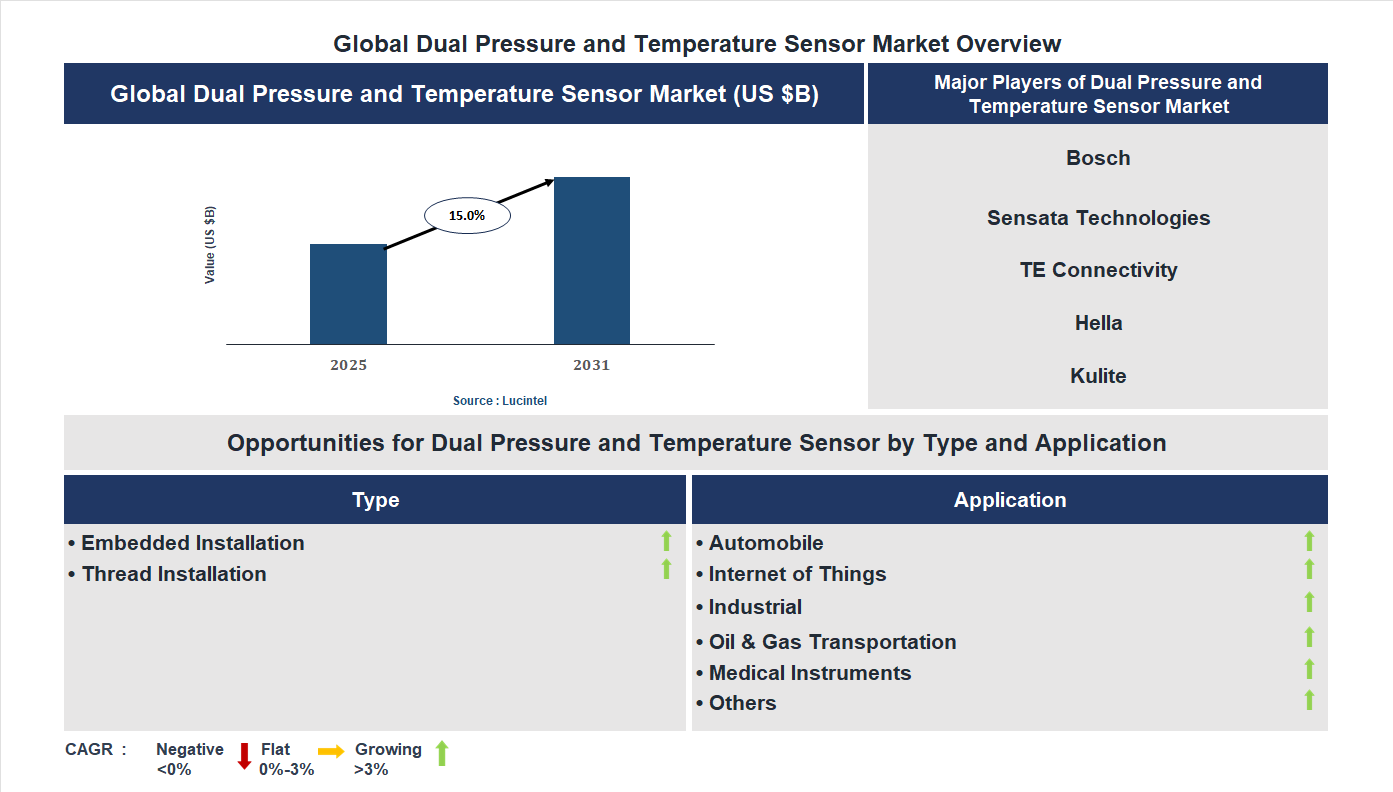
Key data points: The growth forecast = 15.0% annually for the next 7 years. Scroll below to get more insights. This market report covers trends, opportunities and forecasts in dual pressure and temperature sensor market to 2031 by type (embedded installation and thread installation), application (automobile, internet of things, industrial, oil & gas transportation, medical instruments, and others), and region (North America, Europe, Asia Pacific, and the Rest of the World)
We'll send your sample report shortly.
• Lucintel forecasts that, within the type category, thread installation is expected to witness higher growth over the forecast period.
• Within the application category, automobile is expected to witness the highest growth.
• In terms of region, APAC is expected to witness the highest growth over the forecast period. Gain valuable insights for your business decisions with our comprehensive 150+ page report. Sample figures with some insights are shown below.
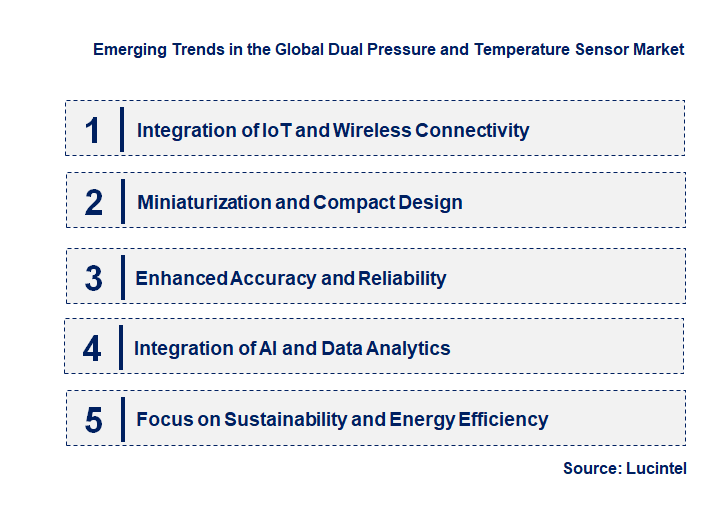
• Integration of IoT and Wireless Connectivity: The market is witnessing a surge in sensors equipped with IoT capabilities, enabling real-time data transmission and remote monitoring. Wireless sensors reduce wiring complexity and facilitate easier installation in diverse environments. This connectivity enhances data accuracy, allows predictive maintenance, and improves operational efficiency. Industries such as manufacturing and healthcare benefit from seamless integration with existing digital infrastructure, leading to smarter, more responsive systems. As IoT adoption accelerates, the demand for intelligent sensors with wireless features is expected to grow significantly, transforming traditional sensing approaches into interconnected ecosystems.
• Miniaturization and Compact Design: Advances in microfabrication technologies are enabling the development of smaller, more compact sensors without compromising performance. Miniaturized sensors are ideal for applications with space constraints, such as wearable devices, aerospace, and embedded systems. This trend allows for more versatile deployment and integration into complex systems, expanding the scope of sensor applications. The reduced size also contributes to lower power consumption and increased portability. As industries demand more discreet and efficient sensing solutions, miniaturization is becoming a key driver in the market, fostering innovation and expanding market reach.
• Enhanced Accuracy and Reliability: The push for higher precision in measurement is leading to the development of sensors with improved accuracy, stability, and durability. Advanced materials and calibration techniques are being employed to minimize errors and ensure consistent performance over time. Reliable sensors are critical in safety-critical applications like aerospace, medical devices, and industrial automation. This trend boosts confidence in sensor data, enabling better decision-making and reducing operational risks. As the need for precise environmental monitoring grows, manufacturers are investing heavily in R&D to deliver sensors that meet stringent accuracy standards, thereby elevating overall market quality.
• Integration of AI and Data Analytics: Incorporating artificial intelligence and advanced data analytics into sensor systems is transforming raw data into actionable insights. AI algorithms enable predictive analytics, anomaly detection, and adaptive calibration, enhancing sensor functionality. This integration allows for smarter systems that can anticipate issues before they occur, optimize processes, and improve maintenance schedules. Industries benefit from reduced downtime and increased efficiency. The convergence of sensors with AI is creating new opportunities for automation and intelligent decision-making, making these sensors indispensable in modern digital ecosystems and significantly impacting market growth.
• Focus on Sustainability and Energy Efficiency: Growing environmental concerns are driving the development of energy-efficient sensors that consume less power and have longer lifespans. Sustainable materials and low-power electronics are being prioritized to reduce environmental impact. These sensors are crucial for applications in renewable energy, smart grids, and environmental monitoring. The emphasis on sustainability aligns with global efforts to reduce carbon footprints and promote eco-friendly practices. As regulations tighten and consumer awareness increases, the market is shifting towards greener sensing solutions, fostering innovation in energy-efficient technologies and expanding the scope of environmentally conscious applications. In summary, these emerging trends—IoT integration, miniaturization, enhanced accuracy, AI incorporation, and sustainability—are collectively reshaping the dual pressure and temperature sensor market. They are driving innovation, expanding application possibilities, and enabling smarter, more efficient systems across industries. This evolution is positioning the market for sustained growth and increased relevance in a digitally connected, environmentally conscious world.
• Integration of IoT Technology: The incorporation of Internet of Things (IoT) capabilities into dual sensors has enabled real-time data collection and remote monitoring, significantly improving operational efficiency and predictive maintenance. This development allows industries to reduce downtime, optimize processes, and enhance safety protocols, thereby expanding the market scope and increasing demand for smart sensor solutions.
• Miniaturization and Compact Design: Advances in microfabrication have led to smaller, more compact sensors without compromising performance. These miniaturized sensors are ideal for applications with space constraints, such as wearable devices and embedded systems in automotive and aerospace industries. The trend boosts adoption in emerging sectors and broadens the sensor application landscape.
• Enhanced Accuracy and Reliability: Innovations in sensor materials and calibration techniques have improved measurement precision and stability under harsh conditions. This development is crucial for critical applications like aerospace and medical devices, where accuracy directly impacts safety and performance. It fosters trust in sensor technology and encourages wider industry adoption.
• Expansion into New Industries: Dual sensors are increasingly being adopted in sectors such as renewable energy, agriculture, and environmental monitoring. Their ability to simultaneously measure pressure and temperature makes them versatile tools for complex process control and environmental assessments, opening new revenue streams and market segments.
• Development of Wireless and Battery-Powered Sensors: The shift towards wireless, battery-operated sensors has facilitated easier installation and maintenance, especially in remote or inaccessible locations. This innovation reduces infrastructure costs and enhances scalability, making sensor deployment more flexible and cost-effective across various industries. In summary, these recent developments are significantly transforming the dual pressure and temperature sensor market by enhancing functionality, expanding application areas, and improving cost-efficiency. The integration of IoT, miniaturization, improved accuracy, industry diversification, and wireless technology are collectively driving growth, fostering innovation, and positioning the market for sustained expansion in the coming years.
• Industrial Automation: Enhanced process control and safety : The integration of dual sensors in automation systems improves operational efficiency, reduces downtime, and ensures safety compliance, leading to increased adoption across manufacturing plants and process industries.
• Automotive Industry: Advanced vehicle safety and performance : Dual sensors enable precise monitoring of engine and environmental conditions, supporting the development of smarter, safer vehicles with features like adaptive cruise control and climate management.
• Healthcare Sector: Improved patient monitoring : These sensors facilitate accurate measurement of vital signs and environmental conditions in medical devices, improving diagnostic accuracy and patient safety, thus expanding their use in healthcare settings.
• Aerospace and Defense: Enhanced environmental monitoring : Dual sensors provide reliable data for aircraft systems and defense equipment, ensuring operational safety and performance in extreme conditions, which drives their adoption in aerospace applications.
• Energy and Power: Optimized energy management : In renewable energy plants and power generation facilities, dual sensors help monitor critical parameters, improving system efficiency, predictive maintenance, and safety protocols. In summary, these growth opportunities are significantly impacting the dual pressure and temperature sensor market by expanding its application scope, driving technological innovation, and increasing demand across diverse sectors. This evolution is fostering market resilience and positioning it for sustained expansion in the future.
• Technological Innovation: The continuous development of more accurate, reliable, and miniaturized sensors fuels market growth. Innovations such as wireless sensors and IoT integration enable real-time data collection and remote monitoring, which are critical for industries like aerospace, automotive, and industrial automation. These advancements improve operational efficiency, safety, and predictive maintenance, making sensors indispensable. As technology evolves, the market benefits from increased adoption of smart sensors, expanding applications and driving demand further.
• Growing Industrial Automation: The surge in automation across manufacturing, oil & gas, and process industries is a major driver. Automated systems require precise pressure and temperature measurements to ensure safety, efficiency, and compliance. The adoption of Industry 4.0 principles emphasizes smart sensors for real-time monitoring and control, reducing downtime and operational costs. This trend is expected to continue, with increasing investments in automation infrastructure globally, thereby expanding the market for dual sensors.
• Rising Demand in Aerospace and Defense: The aerospace and defense sectors demand high-performance sensors for critical applications such as engine monitoring, environmental control, and safety systems. The need for sensors that can operate reliably under extreme conditions drives innovation and sales. As these industries expand, especially with the growth of commercial space travel and defense modernization programs, the market for dual pressure and temperature sensors is poised for significant growth.
• Environmental Regulations and Safety Standards: Stringent government regulations aimed at environmental protection and workplace safety compel industries to adopt advanced sensors. These sensors help monitor emissions, ensure compliance with safety protocols, and optimize resource utilization. The increasing focus on reducing environmental impact and enhancing safety standards across sectors like manufacturing, automotive, and energy accelerates sensor adoption, thereby boosting market growth. The challenges facing this dual pressure and temperature sensor market include:
• High Development and Manufacturing Costs: Developing advanced dual sensors involves significant R&D investment, sophisticated manufacturing processes, and quality assurance measures. These high costs can limit market entry for smaller players and increase overall product prices, potentially hindering widespread adoption. Additionally, maintaining consistent quality and reliability under diverse operating conditions adds to manufacturing complexities and expenses.
• Integration and Compatibility Issues: Incorporating dual sensors into existing systems can be complex due to compatibility issues with legacy equipment and varying communication protocols. Ensuring seamless integration requires specialized expertise and customization, which can delay deployment and increase costs. These challenges can restrict market growth, especially in industries with long equipment lifecycles and strict standards.
• Regulatory Compliance and Certification: Navigating the complex landscape of regulatory standards across different regions poses a significant challenge. Achieving necessary certifications for safety, environmental impact, and electromagnetic compatibility can be time-consuming and costly. Non-compliance risks product recalls, legal penalties, and reputational damage, which can impede market expansion and innovation. In summary, the dual pressure and temperature sensor market is driven by technological advancements, industrial automation, aerospace demands, and regulatory pressures. However, high development costs, integration challenges, and regulatory hurdles present notable obstacles. These factors collectively influence market dynamics, requiring stakeholders to innovate continuously and adapt to evolving standards. The interplay of drivers and challenges will shape the future growth trajectory, emphasizing the need for strategic investments and regulatory navigation to capitalize on emerging opportunities.
• Bosch
• Sensata Technologies
• TE Connectivity
• Hella
• Kulite
• Shenzhen Ampron Technology
• Gems Sensors
• Variohm
• Stellar Technology
• KA Sensors Ltd
• Embedded Installation
• Thread Installation
• Automobile
• Internet of Things
• Industrial
• Oil & Gas Transportation
• Medical Instruments
• Others
• North America
• Europe
• Asia Pacific
• The Rest of the World
• United States: The U.S. market is witnessing significant advancements in sensor technology, with major companies focusing on integrating IoT capabilities for real-time data analysis. The adoption of smart sensors in manufacturing, aerospace, and healthcare sectors is accelerating, driven by government initiatives supporting Industry 4.0. Innovations in miniaturization and energy efficiency are also prominent, enhancing sensor deployment in compact and remote applications. Additionally, increased R&D investments are fostering the development of highly accurate and durable dual sensors suitable for harsh environments.
• China: China is rapidly expanding its dual pressure and temperature sensor market, supported by strong government policies promoting industrial automation and smart manufacturing. Domestic companies are investing heavily in research to develop cost-effective, high-performance sensors to serve the automotive, electronics, and energy sectors. The integration of sensors with AI and big data analytics is gaining momentum, enabling smarter industrial processes. Moreover, China’s focus on export-oriented growth is encouraging the development of globally competitive sensor solutions, with a notable emphasis on quality and innovation.
• Germany: Germany remains a leader in sensor technology, emphasizing high precision and reliability for industrial applications. The market is driven by the automotive and manufacturing sectors, where advanced sensors improve process control and safety. German companies are pioneering in the development of robust sensors capable of operating under extreme conditions, such as high pressure and temperature environments. The focus on sustainable and energy-efficient solutions is also prominent, aligning with Europe’s broader environmental goals. Collaborations between academia and industry are fostering innovative sensor designs and applications.
• India: The Indian market is experiencing rapid growth due to increasing industrial automation and infrastructure development. Local manufacturers are focusing on affordable, reliable dual sensors to cater to the expanding automotive, oil & gas, and water management sectors. Government initiatives promoting Make in India and Digital India are boosting sensor adoption across various industries. There is a rising trend of integrating sensors with IoT platforms for smarter monitoring and control. Additionally, startups and SMEs are actively involved in developing innovative sensor solutions tailored to regional needs, fostering a vibrant ecosystem of technological innovation.
• Japan: Japan continues to lead in sensor innovation, emphasizing high accuracy, durability, and integration with robotics and automation systems. The market benefits from strong R&D capabilities and a focus on advanced manufacturing sectors such as automotive, electronics, and aerospace. Japanese companies are developing sensors with enhanced sensitivity and resistance to extreme conditions, supporting applications in harsh environments. The adoption of AI and IoT technologies is further driving the evolution of dual sensors. Japan’s emphasis on quality and precision ensures that its sensors remain competitive globally, with ongoing investments in next-generation sensor technologies.


• Bosch
• Sensata Technologies
• TE Connectivity
• Hella
• Kulite
• Shenzhen Ampron Technology
• Gems Sensors
• Variohm
• Stellar Technology
• KA Sensors Ltd Q5. Which dual pressure and temperature sensor market segment will be the largest in future? Answer: Lucintel forecasts that, within the type category, thread installation is expected to witness higher growth over the forecast period. Q6. In dual pressure and temperature sensor market, which region is expected to be the largest in next 5 years? Answer: In terms of region, APAC is expected to witness the highest growth over the forecast period. Q7. Do we receive customization in this report? Answer: Yes, Lucintel provides 10% customization without any additional cost.


Choose a license that fits your team. Instant PDF delivery.
Prices exclude taxes. Instant delivery. Custom licensing available on request.
Market Report · July 15, 2026
Market Report · July 13, 2026
Market Report · July 13, 2026
Trusted partner for strategic intelligence and business growth


Receive a complimentary market analysis tailored to your industry. Our analysts will identify key growth opportunities and competitive dynamics specific to your business.

Market size, growth rate, and key trend analysis for your specific sector.

Top competitor positioning and market share analysis.

Strategic recommendations backed by data-driven insights.
Get curated market intelligence and competitive moves straight to your inbox.
By subscribing, you agree to receive our monthly insights. Unsubscribe anytime.
Receive a complimentary market analysis tailored to your industry. Our analysts will identify key growth opportunities and competitive dynamics specific to your business.
Market size, growth rate, and key trend analysis for your specific sector.
Top competitor positioning and market share analysis.
Strategic recommendations backed by data-driven insights.
Get curated market intelligence, emerging trends, and competitive moves straight to your inbox each month.
By subscribing, you agree to receive our monthly insights. Unsubscribe anytime.
We'll send your sample report shortly.