
Market Report · July 31, 2026

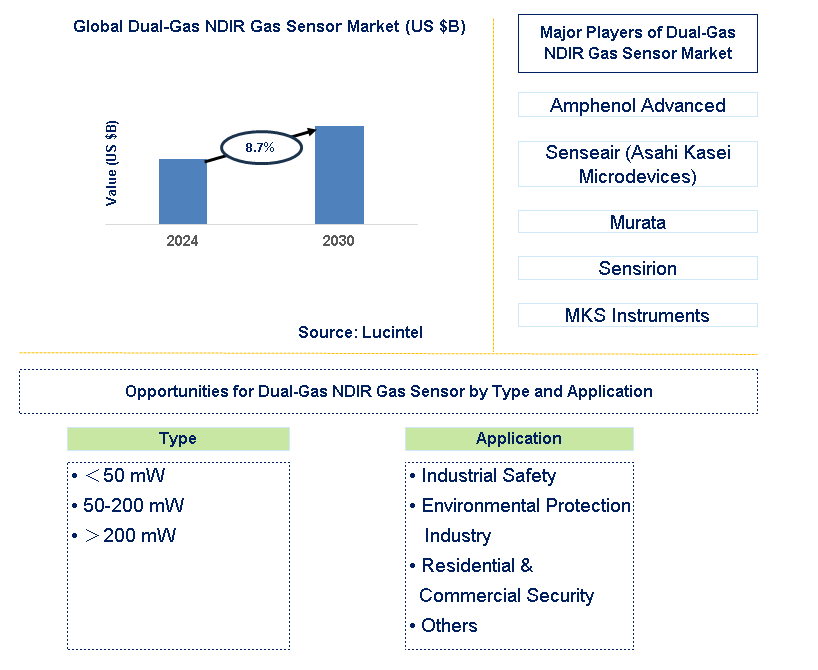
Key data points: The growth forecast = 8.7% annually for the next 6 years. Scroll below to get more insights. This market report covers trends, opportunities, and forecasts in the global dual-gas NDIR gas sensor market to 2030 by type (<50 mw, 50-200 mw, and >200 mw), application (industrial safety, environmental protection industry, residential & commercial security, and others), and region (North America, Europe, Asia Pacific, and the Rest of the World)
We'll send your sample report shortly.
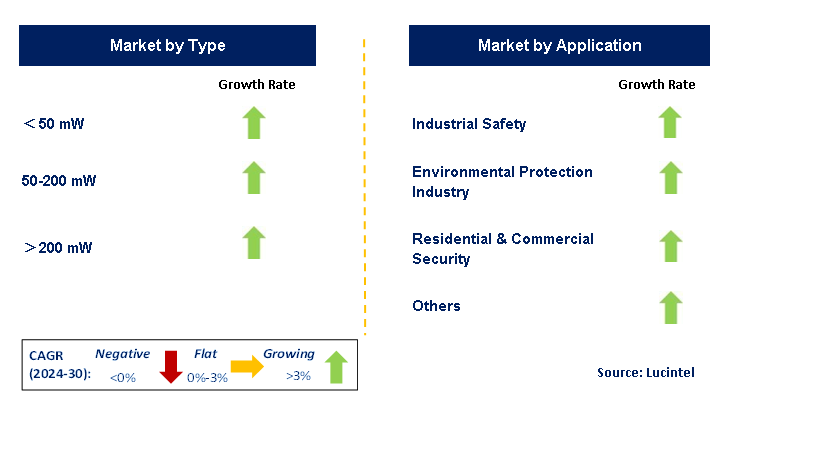
• Lucintel forecasts that, within the type category, <50 MW is expected to witness the highest growth over the forecast period.
• Within the application category, industrial safety is expected to witness the highest growth.
• In terms of regions, APAC is expected to witness the highest growth over the forecast period. Gain valuable insight for your business decisions with our comprehensive 150+ page report.
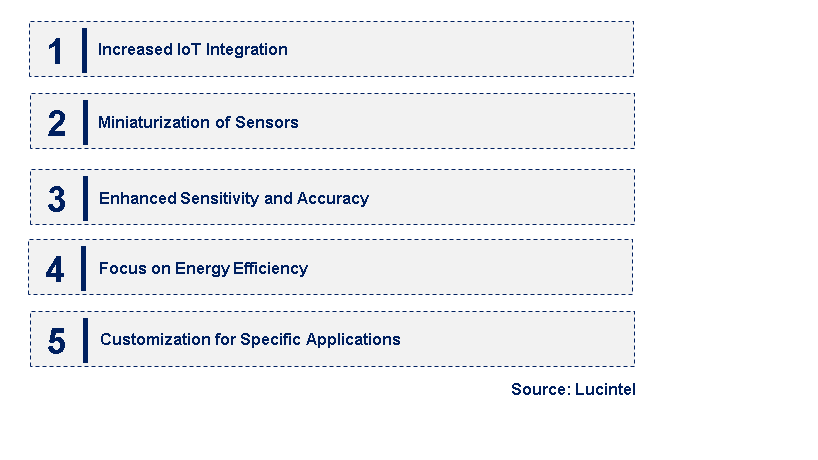
• Increased IoT Integration: The integration of IoT technology into dual-gas NDIR sensors is enhancing real-time monitoring capabilities. This trend allows for remote data access and predictive maintenance, enabling businesses to optimize operations and respond quickly to gas detection events.
• Miniaturization of Sensors: The demand for smaller and more compact gas sensors is rising. Miniaturization enables easier integration into various applications, including portable devices and automotive systems, making gas detection more accessible in diverse environments.
• Enhanced Sensitivity and Accuracy: Advances in materials and design are leading to sensors with improved sensitivity and accuracy. This trend is critical for applications requiring precise measurements, such as industrial safety and environmental monitoring.
• Focus on Energy Efficiency: There is a growing emphasis on energy-efficient sensors that consume less power. This trend aligns with global sustainability goals and is particularly relevant for battery-operated devices used in remote monitoring applications.
• Customization for Specific Applications: Manufacturers are increasingly offering customizable dual-gas NDIR sensors tailored to specific industries or applications. This trend enables users to select sensors that best meet their operational needs, enhancing user satisfaction. These emerging trends are reshaping the dual-gas NDIR gas sensor market by fostering innovation, improving user experiences, and aligning products with market demands. As these trends continue to evolve, they will significantly influence the future of gas detection technologies.
• Launch of Advanced Dual-gas Sensors: Several companies have recently launched advanced dual-gas NDIR sensors with enhanced detection capabilities for specific gas combinations. These sensors provide higher accuracy and faster response times, making them suitable for various industrial applications.
• Collaboration with Tech Firms: Partnerships between sensor manufacturers and technology firms are becoming more common. These collaborations focus on integrating AI and machine learning into gas sensors, enhancing data analytics and predictive maintenance features.
• Development of Portable Sensors: The introduction of portable dual-gas NDIR sensors is gaining traction, catering to the needs of field professionals in environmental monitoring. These lightweight, battery-operated devices offer convenience and reliability for on-site measurements.
• Regulatory Compliance Innovations: Recent developments include sensors designed to meet stringent environmental regulations. Manufacturers are focusing on compliance features that ensure their products align with local and international standards for emissions monitoring.
• Expansion into Emerging Markets: Companies are increasingly targeting emerging markets for growth opportunities. By developing cost-effective dual-gas NDIR sensors tailored to specific regional requirements, manufacturers are expanding their global reach. These recent developments are significantly impacting the dual-gas NDIR gas sensor market by enhancing product offerings and expanding market presence. As manufacturers innovate and adapt to new demands, the market is poised for sustained growth.
• Environmental Monitoring: The growing need for environmental monitoring solutions creates substantial opportunities for dual-gas NDIR sensors. These sensors can effectively measure pollutants, supporting initiatives aimed at improving air quality and compliance with environmental regulations.
• Industrial Safety Applications: There is significant demand for gas sensors in industrial settings to ensure workplace safety. Dual-gas NDIR sensors can detect hazardous gases, helping businesses maintain safe operational environments and comply with safety standards.
• Automotive Emission Control: As automotive manufacturers focus on reducing emissions, dual-gas NDIR sensors are becoming integral to emission control systems. These sensors enable real-time monitoring of exhaust gases, aiding in compliance with stringent emissions regulations.
• Smart Building Technologies: The rise of smart building solutions presents opportunities for integrating dual-gas NDIR sensors in HVAC systems. These sensors can optimize air quality and energy efficiency, contributing to healthier indoor environments.
• Portable Detection Devices: The demand for portable gas detection devices is increasing, particularly in field applications. Dual-gas NDIR sensors can be integrated into portable units for on-the-go monitoring, catering to professionals in environmental and safety sectors. These strategic growth opportunities are shaping the dual-gas NDIR gas sensor market by expanding its applications and enhancing product relevance. Companies that effectively capitalize on these opportunities are likely to see significant market success.
• Rising Environmental Concerns: Increasing awareness of air pollution and its effects on health is a major driver for the dual-gas NDIR sensor market. Governments and industries are investing in technologies that monitor and control emissions, boosting demand for gas sensors.
• Technological Innovations: Advances in sensor technology, including improved materials and designs, are driving market growth. Enhanced sensitivity, accuracy, and response times make dual-gas NDIR sensors more attractive for a variety of applications.
• Regulatory Pressure: Stricter environmental regulations are compelling industries to adopt reliable gas detection solutions. Compliance with these regulations is a significant driver for the adoption of dual-gas NDIR sensors across various sectors.
• Growing Industrial Applications: The expansion of industrial activities, particularly in emerging markets, is creating demand for gas sensors to ensure workplace safety and environmental compliance. Industries are increasingly adopting dual-gas NDIR sensors for monitoring hazardous gases.
• Increased Focus on Smart Technologies: The integration of gas sensors with IoT and smart technologies is driving innovation and adoption. Consumers are seeking advanced monitoring solutions that offer real-time data and analytics. Challenges in the dual-gas NDIR gas sensor market are:
• High Initial Costs: The initial investment required for advanced dual-gas NDIR sensors can be a barrier for some consumers, particularly in price-sensitive markets. Companies must find ways to offer more affordable solutions.
• Market Competition: The dual-gas NDIR sensor market is highly competitive, with numerous players offering similar products. Differentiating through innovation and quality is essential for manufacturers to maintain market share.
• Consumer Awareness and Education: Despite the benefits of dual-gas NDIR sensors, some consumers may lack awareness of their importance. Education and marketing efforts are needed to inform potential customers about available solutions and their advantages. The interplay of these drivers and challenges significantly impacts the dual-gas NDIR gas sensor market. By understanding these factors, stakeholders can develop strategies to leverage opportunities and mitigate potential risks, ensuring sustained growth in this evolving market.
• Amphenol Advanced Sensors
• Senseair (Asahi Kasei Microdevices)
• Murata
• Sensirion
• MKS Instruments
• Vaisala
• Teledyne Api
• Honeywell
• ELT Sensor
• E+E
• <50 mW
• 50-200 mW
• >200 mW
• Industrial Safety
• Environmental Protection Industry
• Residential & Commercial Security
• Others
• North America
• Europe
• Asia Pacific
• The Rest of the World
• United States: In the U.S., recent developments in dual-gas NDIR sensors focus on enhancing sensitivity and selectivity for specific gases like CO2 and CH4. Major manufacturers are integrating advanced algorithms for real-time data analysis and improving sensor miniaturization for compact applications. Furthermore, the push towards cleaner technologies is driving investments in gas sensors for emissions monitoring in both industrial and automotive sectors.
• China: China is rapidly advancing in dual-gas NDIR sensor technology, driven by the government's focus on air quality monitoring and pollution control. Recent innovations include sensors with improved detection ranges and response times, catering to urban air quality management. Additionally, local manufacturers are collaborating with tech firms to integrate IoT capabilities, enabling smarter city initiatives and real-time environmental monitoring.
• Germany: Germany continues to lead in the dual-gas NDIR sensor market, emphasizing precision and reliability. Recent advancements involve the development of sensors that can operate effectively in harsh environments. The focus on Industry 4.0 is also influencing sensor design, with an increasing number of sensors being integrated into automation systems for industrial applications, enhancing operational efficiency and safety.
• India: In India, the dual-gas NDIR sensor market is gaining traction due to rising awareness of environmental pollution and stricter regulations. Local companies are innovating affordable dual-gas sensors tailored to specific regional needs, such as monitoring industrial emissions. Government initiatives promoting clean air technologies are further driving demand, fostering growth in the sensor manufacturing sector.
• Japan: Japan is enhancing its dual-gas NDIR sensor technologies with a focus on precision and energy efficiency. Recent developments include sensors equipped with advanced features like self-calibration and long-term stability. The integration of these sensors in automotive applications for emission control and in smart buildings for air quality management is also on the rise, reflecting Japan's commitment to sustainability.


• Amphenol Advanced Sensors
• Senseair (Asahi Kasei Microdevices)
• Murata
• Sensirion
• MKS Instruments
• Vaisala
• Teledyne Api
• Honeywell
• ELT Sensor
• E+E Q5. Which dual-gas NDIR gas sensor market segment will be the largest in future? Answer: Lucintel forecasts that <50 mw is expected to witness the highest growth over the forecast period. Q6. In dual-gas NDIR gas sensor market, which region is expected to be the largest in next 5 years? Answer: In terms of regions, APAC is expected to witness the highest growth over the forecast period. Q7. Do we receive customization in this report? Answer: Yes, Lucintel provides 10% customization without any additional cost.


Choose a license that fits your team. Instant PDF delivery.
Prices exclude taxes. Instant delivery. Custom licensing available on request.
Market Report · July 31, 2026
Market Report · July 31, 2026
Market Report · July 31, 2026
Trusted partner for strategic intelligence and business growth


Receive a complimentary market analysis tailored to your industry. Our analysts will identify key growth opportunities and competitive dynamics specific to your business.

Market size, growth rate, and key trend analysis for your specific sector.

Top competitor positioning and market share analysis.

Strategic recommendations backed by data-driven insights.
Get curated market intelligence and competitive moves straight to your inbox.
By subscribing, you agree to receive our monthly insights. Unsubscribe anytime.
Receive a complimentary market analysis tailored to your industry. Our analysts will identify key growth opportunities and competitive dynamics specific to your business.
Market size, growth rate, and key trend analysis for your specific sector.
Top competitor positioning and market share analysis.
Strategic recommendations backed by data-driven insights.
Get curated market intelligence, emerging trends, and competitive moves straight to your inbox each month.
By subscribing, you agree to receive our monthly insights. Unsubscribe anytime.
We'll send your sample report shortly.