
Market Report · July 22, 2026

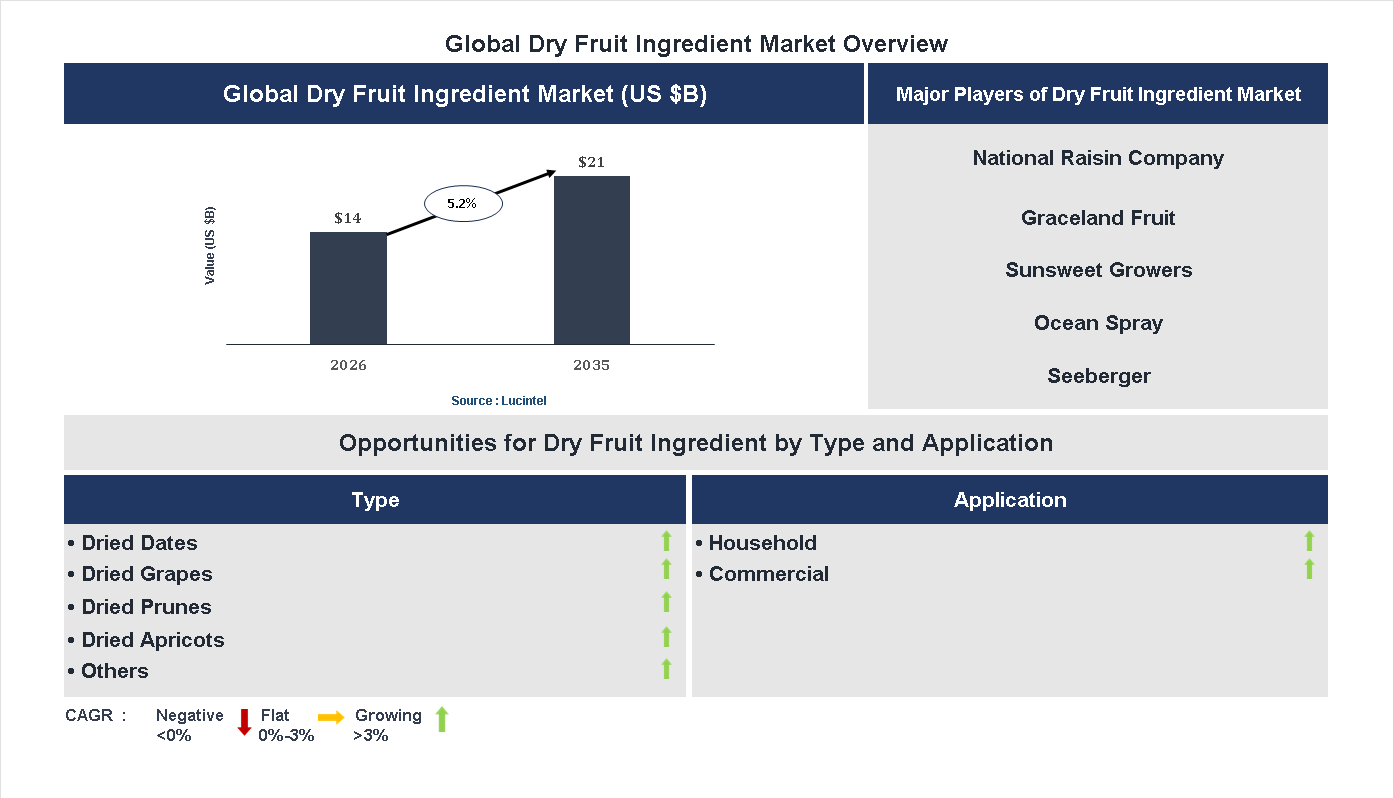
Key data points: The market size in 2035 = $21 billion, growth forecast = 5.2% annually for the next 8 years. Scroll below to get more insights. This market report covers trends, opportunities and forecasts in dry fruit ingredient market to 2035 by type (dried dates, dried grapes, dried prunes, dried apricots, and others), application (household and commercial), and region (North America, Europe, Asia Pacific, and the Rest of the World)
We'll send your sample report shortly.
• Lucintel forecasts that, within the type category, dried date is expected to witness the highest growth over the forecast period.
• Within the application category, household is expected to witness higher growth.
• In terms of region, APAC is expected to witness the highest growth over the forecast period. Gain valuable insights for your business decisions with our comprehensive 150+ page report. Sample figures with some insights are shown below.
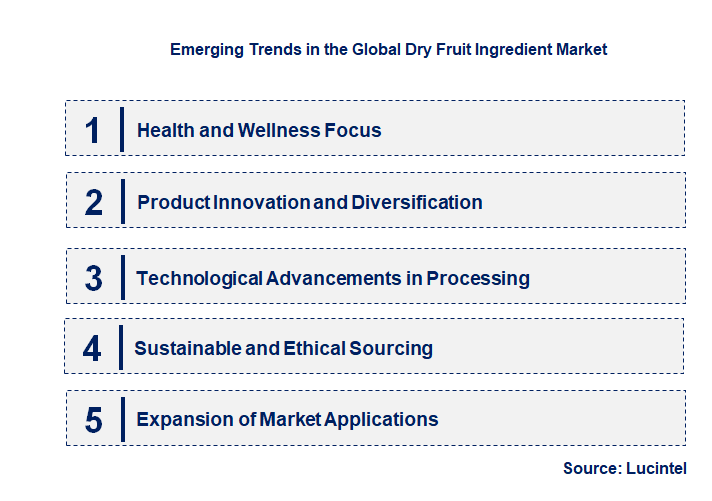
• Health and Wellness Focus: Consumers are increasingly seeking nutritious, natural ingredients to improve their health. Dry fruits are rich in essential nutrients, antioxidants, and healthy fats, making them popular in health-conscious diets. This trend encourages manufacturers to promote the health benefits of dry fruit ingredients, leading to product innovation and increased demand in functional foods, snacks, and dietary supplements. The focus on wellness is driving market growth and encouraging sustainable sourcing practices.
• Product Innovation and Diversification: Companies are developing new dry fruit-based products such as flavored mixes, snack bars, and dairy alternatives to cater to diverse consumer preferences. Innovations include organic, non-GMO, and allergen-free options, expanding the market reach. This diversification helps brands differentiate themselves and tap into niche markets, boosting sales and consumer engagement. The trend also promotes the use of dry fruits in innovative culinary applications, enhancing product appeal.
• Technological Advancements in Processing: Modern processing techniques like freeze-drying, vacuum drying, and advanced packaging are improving the quality, shelf life, and safety of dry fruit ingredients. These innovations reduce nutrient loss and contamination risks, ensuring premium product standards. Enhanced processing also allows for the development of convenient, ready-to-use ingredients, meeting the demand for quick and easy food solutions. This technological progress is crucial for expanding global distribution and maintaining product freshness.
• Sustainable and Ethical Sourcing: Growing awareness of environmental and social issues is prompting companies to adopt sustainable sourcing practices for dry fruits. Certifications such as Fair Trade and Organic are gaining importance, appealing to ethically conscious consumers. Sustainable practices include water conservation, waste reduction, and fair labor conditions, which enhance brand reputation and consumer trust. This trend encourages responsible production and supports the long-term viability of the supply chain.
• Expansion of Market Applications: Dry fruit ingredients are increasingly used beyond traditional snacks and baking, including in beverages, dairy products, and plant-based foods. This expansion opens new revenue streams and caters to the rising demand for plant-based and functional foods. The versatility of dry fruits enhances product formulations, providing natural sweetness, texture, and nutritional value. As applications diversify, the market is becoming more integrated into various food sectors, driving overall growth and innovation. These trends are transforming the dry fruit ingredient market by emphasizing health, innovation, sustainability, and versatility. They are fostering a more competitive environment, encouraging product development, and expanding market reach. As these developments continue, the market is poised for sustained growth, driven by evolving consumer preferences and technological progress.
• Growing demand for healthy snacks: The increasing consumer focus on health and wellness has boosted the popularity of dry fruit ingredients as nutritious snack options, leading to expanded product lines and higher sales across retail and foodservice sectors.
• Innovation in processing techniques: Advanced processing methods, such as freeze-drying and coating, improve product shelf life, texture, and flavor, enabling manufacturers to offer premium, convenient, and versatile dry fruit ingredients suitable for diverse culinary applications.
• Expansion into new markets: Emerging economies present significant growth opportunities as rising disposable incomes and urbanization increase demand for premium, natural ingredients, encouraging companies to penetrate these markets with tailored products.
• Strategic partnerships and acquisitions: Collaborations between ingredient suppliers and food manufacturers facilitate innovation, improve supply chain efficiency, and expand distribution networks, thereby strengthening market presence and accelerating growth.
• Focus on organic and clean-label products: The rising consumer preference for organic, non-GMO, and clean-label dry fruit ingredients is prompting producers to adopt sustainable sourcing and transparent labeling, which enhances brand trust and opens new premium market segments. The recent developments in processing, market expansion, strategic collaborations, and consumer preferences are collectively transforming the dry fruit ingredient market. These trends are driving innovation, increasing market penetration, and elevating product standards, ultimately fostering a more competitive and resilient industry poised for sustained growth.
• Growing demand for healthy snacks and functional foods: The increasing consumer focus on health and wellness is boosting the demand for dry fruit ingredients in snacks, cereals, and health bars. Consumers seek natural, nutrient-rich options, prompting manufacturers to incorporate dry fruits like almonds, walnuts, and apricots into their products. This trend encourages product innovation, expands market reach, and drives sales in both retail and foodservice channels, making dry fruit ingredients a key component in the health food industry.
• Expansion of bakery and confectionery applications: Dry fruits are increasingly used in bakery and confectionery products to enhance flavor, texture, and nutritional value. The rising popularity of premium baked goods, cookies, and chocolates with added dry fruits offers growth opportunities for ingredient suppliers. Innovations in processing techniques allow for better integration of dry fruits, catering to consumer preferences for natural ingredients and indulgent yet healthy treats, thereby expanding the application scope and market size.
• Technological advancements in processing and packaging: Innovations in drying, coating, and packaging technologies improve the quality, shelf life, and convenience of dry fruit ingredients. Advanced packaging solutions like resealable pouches and modified atmosphere packaging help maintain freshness and prevent spoilage. These technological improvements enable longer shelf life, reduce waste, and facilitate global distribution, opening new markets and increasing consumer accessibility, which collectively drive market growth and competitiveness.
• Rising popularity of plant-based and vegan products: The shift towards plant-based diets is increasing demand for dry fruits as natural, protein-rich, and allergen-free ingredients. Dry fruits serve as essential components in vegan recipes, dairy alternatives, and meat substitutes, offering flavor and nutritional benefits. This trend encourages manufacturers to develop innovative plant-based products, expanding the application of dry fruit ingredients in new food categories and boosting overall market growth.
• Strategic collaborations and product innovation to meet consumer preferences: Companies are forming partnerships and investing in R&D to develop new dry fruit-based products tailored to evolving consumer tastes. Focus areas include organic, non-GMO, and sustainably sourced ingredients, as well as flavor innovations. These strategies help differentiate products, expand consumer base, and capture emerging market segments, ultimately fostering market expansion and reinforcing the dry fruit ingredient sector’s growth trajectory. The overall impact of these opportunities is a robust, dynamic market characterized by innovation, diversification, and increased consumer engagement. As companies leverage these growth avenues, the dry fruit ingredient market is poised for sustained expansion, driven by health trends, technological progress, and strategic collaborations. This evolution will likely lead to broader product offerings, enhanced consumer experiences, and stronger global market presence.
• Increasing Health Consciousness: Consumers are increasingly aware of the health benefits associated with dry fruits, such as high fiber, antioxidants, and essential nutrients. This awareness has led to a surge in demand for natural, healthy ingredients in various food products, including baked goods, snacks, and confectionery. Manufacturers are capitalizing on this trend by expanding their dry fruit ingredient offerings, which boosts market growth. Moreover, the rising prevalence of health issues like obesity and cardiovascular diseases encourages consumers to opt for nutritious ingredients, further fueling demand. This trend is expected to continue as health consciousness becomes more ingrained in consumer lifestyles globally.
• Technological Advancements in Processing: Innovations in drying, packaging, and preservation technologies have significantly improved the quality, shelf life, and safety of dry fruit ingredients. Techniques such as vacuum drying, freeze-drying, and advanced packaging materials help retain nutrients and flavor while preventing spoilage. These advancements enable producers to offer a wider variety of dry fruit ingredients with consistent quality, catering to diverse applications in the food industry. Enhanced processing methods also reduce waste and energy consumption, making production more sustainable and cost-effective. As technology continues to evolve, the market is poised for increased efficiency and product innovation.
• Growing Demand from Food and Beverage Industry: The food and beverage sector is a major consumer of dry fruit ingredients, using them in products like cereals, energy bars, dairy products, and confectionery. The trend toward clean-label and natural ingredients has further boosted demand, as dry fruits are perceived as wholesome and minimally processed. Additionally, the increasing popularity of plant-based and gluten-free products incorporates dry fruits as key ingredients, expanding their application scope. The expansion of the foodservice industry and the rise of premium, health-oriented products are expected to sustain high demand for dry fruit ingredients, supporting market growth across regions.
• Expansion of E-commerce and Retail Channels: The proliferation of online retail platforms has made dry fruit ingredients more accessible to consumers worldwide. E-commerce offers a wide variety of products, detailed information, and convenient purchasing options, which attract health-conscious and convenience-seeking consumers. Retail chains and specialty stores are also increasing their shelf space for dry fruits, emphasizing organic and premium options. This expansion enhances market reach, especially in emerging markets where traditional distribution channels may be limited. The growth of digital marketing and direct-to-consumer sales strategies further accelerates market penetration, fostering increased consumption and brand awareness.
• Rising Investment in Product Innovation and Organic Offerings: Companies are investing heavily in developing innovative dry fruit ingredient products, such as flavored, roasted, or coated varieties, to meet evolving consumer preferences. There is also a significant shift toward organic and sustainably sourced dry fruits, driven by consumer demand for transparency and environmental responsibility. These innovations help differentiate products in a competitive market and cater to niche segments. Investment in R&D enables the development of functional ingredients with added health benefits, such as fortified dry fruits with vitamins or antioxidants. This focus on innovation and organic offerings is expected to propel market growth and expand consumer base. The challenges facing the dry fruit ingredient market include:-
• Supply Chain Disruptions: The dry fruit ingredient market heavily relies on global supply chains for sourcing raw materials, which are vulnerable to disruptions caused by weather events, geopolitical tensions, and logistical issues. Such disruptions can lead to shortages, increased costs, and delays in production and distribution. For instance, adverse weather conditions in key producing regions can reduce harvest yields, impacting supply stability. Additionally, transportation bottlenecks and trade restrictions can hinder timely delivery, affecting product availability and pricing. These uncertainties pose significant risks to manufacturers and retailers, necessitating strategic planning and diversification of sourcing to mitigate impacts.
• Regulatory and Quality Standards: Stringent food safety regulations and quality standards across different regions pose compliance challenges for market players. Variations in labeling, certification, and permissible additives require companies to adapt their processes and documentation, increasing operational costs. Non-compliance can result in product recalls, legal penalties, and damage to brand reputation. Moreover, evolving standards related to organic certification, pesticide residues, and allergen labeling demand continuous monitoring and certification efforts. Navigating these complex regulatory landscapes is crucial for market participants to maintain market access and consumer trust.
• Price Volatility of Raw Materials: The prices of dry fruits are subject to fluctuations due to factors such as crop yields, weather conditions, and global demand-supply dynamics. Price volatility can significantly impact profit margins and pricing strategies for manufacturers. Sudden increases in raw material costs may force companies to raise product prices, potentially reducing competitiveness and consumer demand. Conversely, low prices can lead to overstocking and financial strain. Managing raw material costs through strategic procurement, inventory management, and diversification is essential to sustain profitability and market stability amid fluctuating raw material prices. The dry fruit ingredient market is shaped by a combination of positive drivers like health awareness, technological progress, and expanding distribution channels, which foster growth and innovation. However, challenges such as supply chain disruptions, regulatory complexities, and raw material price volatility pose risks that require strategic management. Overall, the markets future depends on how effectively stakeholders navigate these drivers and challenges, balancing innovation with resilience to capitalize on emerging opportunities and sustain long-term growth.
• National Raisin Company
• Graceland Fruit
• Sunsweet Growers
• Ocean Spray
• Seeberger
• Kluth
• Heinrich Bruning GmbH
• Three Squirrel
• Haoxiangni
• KBB NUTS
• Dried Dates
• Dried Grapes
• Dried Prunes
• Dried Apricots
• Others
• Household
• Commercial
• North America
• Europe
• Asia Pacific
• The Rest of the World
• United States: The US market has seen a surge in demand for organic and non-GMO dry fruit ingredients, driven by health-conscious consumers. Major players are investing in innovative packaging solutions to extend shelf life and preserve freshness. The rise of plant-based diets has increased the use of dry fruits in snacks, cereals, and dairy alternatives. E-commerce platforms are expanding access to premium and specialty products, boosting sales. Additionally, regulatory standards for food safety and quality are becoming more stringent, prompting companies to adopt advanced processing techniques. Overall, the US market is characterized by product innovation and a focus on sustainability.
• China: China’s dry fruit ingredient market is rapidly expanding due to increasing urbanization and rising disposable incomes. Consumers are showing a preference for premium and imported dry fruits, especially in urban centers. Local manufacturers are investing in quality control and processing technology to meet international standards. The demand for dry fruits in traditional medicine and health supplements is also growing. E-commerce sales channels are significantly contributing to market growth, with online platforms offering a wide variety of products. The government’s support for agricultural modernization and export promotion further boosts the industry’s development. Overall, China is becoming a key player in the global dry fruit ingredient market.
• Germany: Germany’s market emphasizes high-quality, organic, and sustainably sourced dry fruit ingredients. Consumer awareness about health and environmental impact influences purchasing decisions. The country is witnessing increased demand for gluten-free and allergen-free products containing dry fruits. Food manufacturers are incorporating dry fruits into bakery, confectionery, and snack products to meet consumer preferences. Innovations in packaging and preservation techniques are enhancing product shelf life. Germany’s strict food safety regulations ensure high standards, encouraging companies to adopt advanced processing methods. The market is also driven by a growing trend toward clean-label and minimally processed ingredients, aligning with European health trends.
• India: India’s dry fruit ingredient market is experiencing robust growth due to rising health awareness and traditional consumption patterns. The increasing popularity of dry fruits in festive and daily diets is boosting demand. Local producers are expanding their product portfolios to include organic and premium varieties. The government’s initiatives to promote horticulture and export of dry fruits are supporting industry growth. The rise of organized retail and e-commerce platforms is making dry fruits more accessible to consumers across urban and rural areas. Additionally, innovations in packaging and processing are improving product quality and shelf life. Overall, India is emerging as a significant market for dry fruit ingredients.
• Japan: Japan’s dry fruit ingredient market is characterized by a focus on health, quality, and innovation. Consumers prefer premium, organic, and minimally processed dry fruits. The market is driven by aging populations seeking nutritious snack options and functional foods. Japanese companies are investing in advanced processing technologies to enhance flavor and preserve nutrients. The demand for dry fruits in traditional and modern confectionery, as well as health supplements, is increasing. Sustainability and eco-friendly packaging are also gaining importance among consumers. The market’s growth is supported by strict quality standards and a strong emphasis on food safety, positioning Japan as a sophisticated market for dry fruit ingredients.


• National Raisin Company
• Graceland Fruit
• Sunsweet Growers
• Ocean Spray
• Seeberger
• Kluth
• Heinrich Bruning GmbH
• Three Squirrel
• Haoxiangni
• KBB NUTS Q6. Which dry fruit ingredient market segment will be the largest in future? Answer: Lucintel forecasts that, within the type category, dried date is expected to witness the highest growth over the forecast period. Q7. In dry fruit ingredient market, which region is expected to be the largest in next 5 years? Answer: In terms of region, APAC is expected to witness the highest growth over the forecast period. Q8. Do we receive customization in this report? Answer: Yes, Lucintel provides 10% customization without any additional cost.


Choose a license that fits your team. Instant PDF delivery.
Prices exclude taxes. Instant delivery. Custom licensing available on request.
Market Report · July 22, 2026
Market Report · July 22, 2026
Market Report · July 22, 2026
Trusted partner for strategic intelligence and business growth


Receive a complimentary market analysis tailored to your industry. Our analysts will identify key growth opportunities and competitive dynamics specific to your business.

Market size, growth rate, and key trend analysis for your specific sector.

Top competitor positioning and market share analysis.

Strategic recommendations backed by data-driven insights.
Get curated market intelligence and competitive moves straight to your inbox.
By subscribing, you agree to receive our monthly insights. Unsubscribe anytime.
Receive a complimentary market analysis tailored to your industry. Our analysts will identify key growth opportunities and competitive dynamics specific to your business.
Market size, growth rate, and key trend analysis for your specific sector.
Top competitor positioning and market share analysis.
Strategic recommendations backed by data-driven insights.
Get curated market intelligence, emerging trends, and competitive moves straight to your inbox each month.
By subscribing, you agree to receive our monthly insights. Unsubscribe anytime.
We'll send your sample report shortly.