
Report Feature
Drug Desensitization Market Trends and Forecast
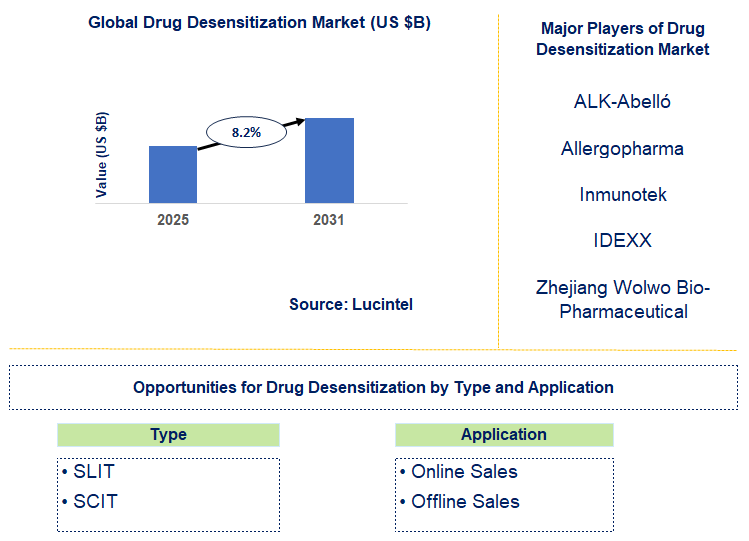
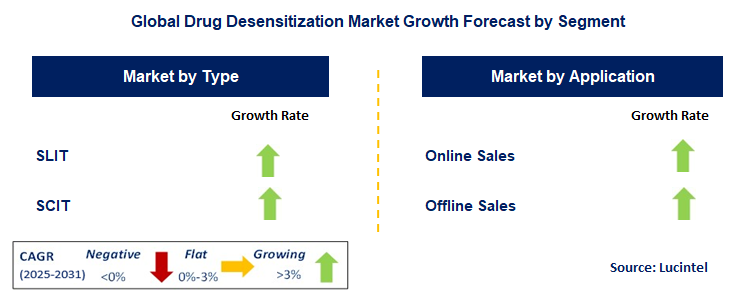
The future of the global drug desensitization market looks promising with opportunities in the online sale and offline sale markets. The global drug desensitization market is expected to grow with a CAGR of 8.2% from 2025 to 2031. The major drivers for this market are the increasing prevalence of allergies, the rising demand for personalized treatments, and the growing focus on immunotherapy options.• Lucintel forecasts that, within the type category, SLIT is expected to witness higher growth over the forecast period.
• Within the application category, online sale is expected to witness higher growth.
• In terms of region, APAC is expected to witness the highest growth over the forecast period. Gain valuable insights for your business decisions with our comprehensive 150+ page report. Sample figures with some insights are shown below.
Emerging Trends in the Drug Desensitization Market
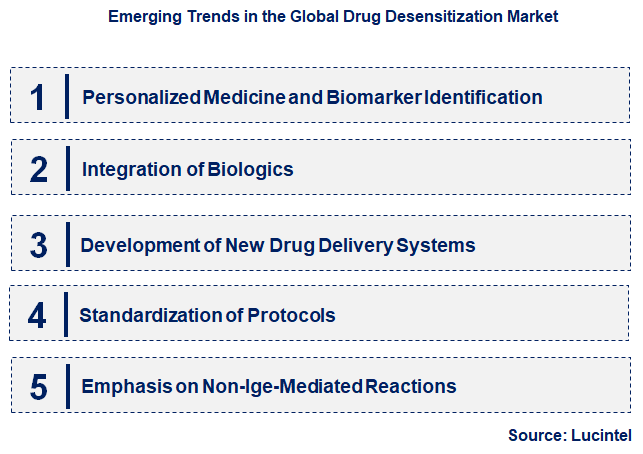
The drug desensitization market is experiencing a revolutionary change, shifting from a reactive to a proactive and individualized strategy. This is propelled by an increased understanding of immunological principles and technological advances. The emerging trends are aimed at rendering desensitization more effective, safer, and flexible for application across a wider patient population and a wider variety of drugs. These advances are not only enhancing clinical outcomes but also generating new market possibilities for drug companies and medical care providers.• Personalized Medicine and Biomarker Identification: The movement toward personalized medicine is significantly affecting the drug desensitization market. Researchers are developing biomarkers that can forecast a patient's outcome to therapy and enhance patient selection. This enables customized treatment protocols depending on an individual patient's genetic and immunologic profile, which enhances efficacy and safety of desensitization regimens. The effect is a more accurate and efficient treatment strategy with less adverse effects and enhanced patient adherence.
• Integration of Biologics: Biologic medicines, including monoclonal antibodies, are increasingly being employed as add-ons to desensitization regimens to prevent allergic responses. These treatments are able to control the immune response during desensitization and render it safer and more effective. This is especially true for complicated allergies and for patients with complicated histories of severe allergic reactions. The use of biologics is extending the scope of patients who can be safely desensitized.
• Development of New Drug Delivery Systems: There is increasing interest in the development of new drug delivery systems to make desensitization more convenient and effective. These involve sublingual immunotherapy (SLIT), which can be given at home, and patch-based percutaneous immunotherapy (EPIT). These devices are becoming popular because they are easy to use and have fewer side effects than the conventional subcutaneous route. The effect of this trend is higher patient acceptability and compliance with long-term treatment regimens.
• Standardization of Protocols: With increased utilization of drug desensitization, there is an increasing demand for standardized evidence-based protocols. Organizations and researchers are coming together to develop guidelines that guarantee safety and uniformity across various healthcare settings. This standardization is important in the case of a high-risk procedure where allergenic drugs are being reintroduced to highly sensitized individuals. The effect is enhanced patient safety and a broader and more confident utilization of desensitization as a standard of care.
• Emphasis on Non-Ige-Mediated Reactions: Although desensitization has historically emphasized Ige-mediated immediate hypersensitivity, it is becoming more common to apply these methods to non-Ige-mediated and delayed T-cell mediated reactions. This encompasses severe cutaneous adverse reactions. Research in these new indications is broadening the realm of desensitization and holding promise for patients with a broader spectrum of drug hypersensitivity problems. The effect is wider use of desensitization, treating previously intractable drug allergies. These nascent trends are actually restructuring the drug desensitization market by transitioning it to a more advanced and patient-oriented system. The transition to personal medicine, the incorporation of innovative biologics, and the creation of easy delivery systems are all geared towards enhancing treatment effectiveness and quality of life among patients. The protocols' standardization and the move into non-Ige-mediated responses are expanding the market's scope and making it a key area of contemporary medicine. The development is allowing the market to cater to a larger number of unmet medical needs.
Recent Development in the Drug Desensitization Market
The drug desensitization market is characterized by a number of significant trends that are increasing its clinical usefulness as well as broadening its uses. These trends are being propelled by the necessity to allow patients with hypersensitivity reactions to receive critical medications in a safe manner. The advances are directed towards enhancing the accuracy, safety, and accessibility of desensitization regimens to ensure patients with life-threatening diseases such as cancer or severe infections continue to receive their first-line therapy without danger. The advancements are revolutionizing patient care and shaping a more vibrant market.• FDA Approval of New Immunotherapy Drugs: The regulatory approval of new immunotherapy drugs is a key advancement. Examples include the FDA's approval of therapies for peanut allergies and off-label expansion of biologics such as Xolair for food allergies. These approvals legitimize desensitization as a mainstream therapy and create new opportunities for both patients and pharmaceutical firms. This move is increasing the market by offering new, approved means for treating a broad spectrum of allergies.
• Advances in Rapid Desensitization Protocols: Scientists are constantly improving rapid desensitization protocols to render them safer and more successful. The new protocols entail carefully timed, incremental amounts of the offending drug that enable the immune system to get accustomed without provoking an extreme reaction. The development of evidence-based, standardized protocols has resulted in a precipitous rise in the success rate of these procedures, enabling patients to remain on their most effective medications.
• Expanded Research on Non-Ige Mediated Hypersensitivity: As classic desensitization addressed immediate, Ige-mediated hypersensitivity, recent advances involve expanding research on desensitization for non-Ige-mediated hypersensitivity. This is especially important in the case of delayed cutaneous hypersensitivity reactions against drugs such as chemotherapy. This research is finding new protocols and a better understanding of the involved mechanisms. This advances the market to a new group of patients for a need that was once unmet.
• Use of Predictive Biomarkers: The application of predictive biomarkers is becoming a significant advancement. Scientists are discovering particular genetic and immunological markers that have the ability to predict which patients will undergo successful desensitization. This enables more individualized treatment, decreasing the possibility of negative reactions and improving the prospect of a successful procedure. This advancement is improving patient safety and the general success of the procedure.
• Multidisciplinary Care of Patients: There is a trend that has been increasing towards multidisciplinary care of drug desensitization. This refers to teamwork involving allergists, oncologists, nurses, and pharmacists in addressing patient care. This is an all-around approach in that it selects the patients meticulously, observes them, and provides them with comprehensive support during the desensitization process. This advancement improves the safety and efficacy of the procedure as well as patient outcomes. These developments are immensely influencing the drug desensitization market. Approval of new drugs and optimization of desensitization procedures are justifying the practice and increasing its uses. Emphasis on non-Ige mediated reactions and employment of predictive biomarkers are increasing the accuracy and safety of therapies. In addition, acceptance of the multidisciplinary approach is enhancing patient care. These advances are coming together to transform the market as a whole from a specialized, last-line procedure into a more available and advanced treatment modality for a larger number of patients.
Strategic Growth Opportunities in the Drug Desensitization Market
The drug desensitization market presents substantial strategic growth opportunities in many key applications. These opportunities are based on the need to offer safe and effective treatments for patients who have become hypersensitive to necessary medications. By targeting these specific areas, firms can satisfy key unmet needs and gain new share. The following growth opportunities discuss how innovation and specialization in various applications are transforming the future of the drug desensitization market, making it ready for sustainable growth.• Oncology and Chemotherapy: Huge growth potential exists in drug desensitization among oncology patients. There are numerous chemotherapy drugs, most notably the platinum-based chemotherapeutics, that commonly induce hypersensitivity reactions. Desensitization enables cancer patients to continue being treated with their first-line, life-saving regimens, which is sometimes vital to their survival. Creating standardized, safe, and efficient protocols for many different chemotherapies is a significant area of growth.
• Infectious Diseases and Antibiotics: The increasing threat of antibiotic resistance and the growing incidence of antibiotic allergy represent a compelling growth opportunity. Most patients become hypersensitive to essential antibiotics, reducing their treatment choices. Desensitization regimens for essential antibiotics, including beta-lactams, can allow patients to receive the most effective drug safely. This is a big opportunity to enhance patient outcomes and public health.
• Biologics and Monoclonal Antibodies: As the use of biologics and monoclonal antibodies continues to grow as a therapeutic strategy for many conditions, including autoimmune disease and cancer, so too is the rate of hypersensitivity reactions to these medications. This creates an important growth potential for desensitization protocols specifically for these complex molecules. Specialized protocols for a new generation of biologics will be needed to address the needs of this expanding patient group.
• Food Allergy: The food allergy sector, especially for severe forms such as peanut and tree nut, is a significant growth opportunity. The recent FDA approval of oral immunotherapies underlines the potential in this sector. There is a high chance of creating and marketing safe and effective desensitization procedures and products for a broad array of food allergies. This sector has a large and increasing number of patients with high unmet need.
• Diagnostic Tools and Predictive Biomarkers: A major opportunity lies in creating improved diagnostic tools and predictive biomarkers for assisting with desensitization. These diagnostic tools will enable practitioners to identify accurately which patients can be desensitized and provide a prediction of treatment success. Companies can contribute importantly to improving the safety and efficacy of the procedure by providing diagnostic kits and services, generating a complementary market to that of the therapies themselves. Such strategic expansion opportunities are significantly influencing the drug desensitization industry by fueling specialization and innovation. By concentrating on high-need indications such as oncology and infectious diseases, and emerging treatments such as biologics, the industry is trending toward a more advanced and clinically significant position. Establishment of new diagnostic tools and protocols for food allergies is also broadening the industry's scope. This strategic emphasis guarantees that the market is both pertinent and vital, generating life-saving choices for patients and offering sustainable industry growth.
Drug Desensitization Market Driver and Challenges
The drug desensitization market is affected by a set of key drivers that drive its expansion and numerous challenges that limit its growth. The market is largely driven by the growing demand for safely treating drug hypersensitive patients with vital medications. Nevertheless, it is also hindered by issues such as expensive treatment and poor standardized procedures in some areas. These drivers and restraints are important to understand in order for stakeholders to devise successful strategies, eliminate risks, and take advantage of the potential in this niche area of the medical industry. The factors responsible for driving the drug desensitization market include: 1. Increasing Incidence of Drug Hypersensitivity Reactions: The growing rate of drug hypersensitivity reactions, especially to a newer generation of more sophisticated drugs such as biologics and targeted therapies, is a key driver. With an increased number of patients being treated with these potent but possibly allergenic drugs, the demand for desensitization procedures increases. This driver creates a consistent demand for desensitization products and services. 2. Advances in Immunological Science: A greater understanding of the immunological basis of drug hypersensitivity and desensitization are a major motivator. This science is contributing to the creation of more efficient and safer regimens and biologics as adjuncts. These advances in science are improving the validity and reliability of desensitization, promoting its greater use among clinicians. 3. Lack of Therapeutic Alternatives: In many life-threatening diseases, the first-line drug is usually the best. When a patient becomes allergic to this drug, no equally good therapeutic alternative may be available. This presents a strong incentive for desensitization, as it is usually the only means by which the patient can be given the best treatment. 4. Increased Utilization of Biologics and Chemotherapy: The increasing utilization of biologics for autoimmune conditions and chemotherapy for cancer is a prime driver. These classes of drugs have a greater frequency of hypersensitivity reactions, generating a unique and expanding patient population that will require desensitization. This trend guarantees that the oncology and rheumatology desensitization market will continue to grow. 5. Increasing Awareness Among Clinicians and Patients: Growing awareness among clinicians and patients regarding the availability and success of drug desensitization is an essential driver. As more clinicians learn about it and more case reports are submitted, the process is becoming a standard of care instead of a last option. Increasing awareness is crucial for stimulating market adoption and patient referral. Challenges in the drug desensitization market are: 1. High Cost and Reimbursement Problems: One of the biggest problems is the high cost of desensitization treatments, which may be prohibitively expensive for most patients. Specialized personnel, equipment, and much clinical time are needed for the procedure. Moreover, reimbursement policies are very diverse and, in some cases, the treatment might not be fully reimbursed by insurance. 2. Risk of Adverse Reactions: While desensitization is usually safe, it is a risky procedure with the reintroduction of an allergen to a sensitized patient. There is always a risk of severe allergic reaction, such as anaphylaxis. This entails procedures needing to be done in a controlled setting with specialized personnel, and this incurs additional complexity and expense. 3. Lack of Standardized Protocols: Although attempts are being made to standardize protocols, there still remains a shortage of uniformity in a few areas and for some drugs. Failure of having proper, globally accepted guidelines may result in differences in practice, which in turn may impact the efficacy and safety of the procedure. The combined effect of these drivers and challenges is building a dynamic yet sophisticated market for drug desensitization. The market is being driven forward by the irrefutable clinical demand and backed by scientific progress, which is making the procedures safer and more effective. Nevertheless, the exorbitant expenses, inherent dangers, and absence of universal standardization present daunting challenges. The industry is counter-responding with specialization, with more emphasis on high-value uses such as oncology and biologics, so that it can remain a strong and expanding part of the healthcare sector.List of Drug Desensitization Companies
Companies in the market compete on the basis of product quality offered. Major players in this market focus on expanding their manufacturing facilities, R&D investments, infrastructural development, and leverage integration opportunities across the value chain. With these strategies drug desensitization companies cater increasing demand, ensure competitive effectiveness, develop innovative products & technologies, reduce production costs, and expand their customer base. Some of the drug desensitization companies profiled in this report include-• ALK-Abelló
• Allergopharma
• Inmunotek
• IDEXX
• Zhejiang Wolwo Bio-Pharmaceutical
Drug Desensitization Market by Segment
The study includes a forecast for the global drug desensitization market by type, application, and region.Drug Desensitization Market by Type [Value from 2019 to 2031]:
• SLIT
• SCIT
Drug Desensitization Market by Application [Value from 2019 to 2031]:
• Online Sales
• Offline Sales
Drug Desensitization Market by Region [Value from 2019 to 2031]:
• North America
• Europe
• Asia Pacific
• The Rest of the World
Country Wise Outlook for the Drug Desensitization Market
The drug desensitization industry is presently witnessing unprecedented growth and innovation, with the growing burden of drug hypersensitivity reactions and demand for individualized therapy. Current trends are aimed at enhancing the safety and efficacy of desensitization protocols, broadening the spectrum of treatable drug allergies, and embracing newer technologies such as biologics and precision medicine. This movement enables patients who have had adverse reactions to essential drugs to receive their first-line treatments safely. Not only are these innovations enhancing patient outcomes, but also they are expanding the market by filling unmet medical needs in many disease areas, such as oncology and infections.• United States: The US market is a drug desensitization market leader with a solid emphasis on research and development. The approval of new treatments by the FDA, including oral immunotherapies for food allergy and the expanded application of biologics, has contributed greatly to market growth. High allergy prevalence and a strong healthcare infrastructure in the US facilitate the use of innovative, though frequently expensive, treatments. Research partnerships and regulatory encouragement for new therapies are pushing next-generation treatments at an accelerated rate, building a more efficient system for managing allergies.
• China: China's pharma sector is developing fast, keeping in mind the reduction of the gap with global drug approval leaders. Although its drug desensitization market is yet to come, there is a significant emphasis on local research and development. The government is taking steps to speed up drug approval time, which could result in quicker access to desensitization protocols. The emphasis is on enhancing the availability of and access to these therapies for its large number of people, especially in therapeutic categories such as oncology and infectious diseases.
• Germany: The German market is dominated by a solid, established healthcare system and a high level of medical quality. The drug desensitization market is well-established and stable with evidence-based protocols and high-quality approved treatments. There is a strong focus on patient safety and standardized procedures, frequently through dedicated allergy centers. The market is led by the demand for successful treatments of complicated drug allergies, and well-researched, trustworthy therapies are preferred.
• India: India's drug desensitization market is developing and price-sensitive. Although the incidence of drug allergies is a problem, the exorbitant cost of treatments and restricted access to specialist care are deterring factors. Nonetheless, the awareness of and demand for desensitization treatments are increasing, especially in the urban regions and for life-saving drugs such as chemotherapy. The market should expand with an expansion of healthcare infrastructure and rising public awareness.
• Japan: The Japanese drug desensitization market is a center of technically sophisticated medical treatments and precision focus. In the face of an historic "drug lag" in approvals, government moves in recent times are focused on making the regulatory system more streamlined to hasten the introduction of new drugs. The market is sustained by a demand for advanced therapies and an excellent health system. Studies aim to enhance desensitization protocols, with a specific interest in biologics and personalized medicine.

Features of the Global Drug Desensitization Market
Market Size Estimates: Drug desensitization market size estimation in terms of value ($B). Trend and Forecast Analysis: Market trends (2019 to 2024) and forecast (2025 to 2031) by various segments and regions. Segmentation Analysis: Drug desensitization market size by type, application, and region in terms of value ($B). Regional Analysis: Drug desensitization market breakdown by North America, Europe, Asia Pacific, and Rest of the World. Growth Opportunities: Analysis of growth opportunities in different types, applications, and regions for the drug desensitization market. Strategic Analysis: This includes M&A, new product development, and competitive landscape of the drug desensitization market. Analysis of competitive intensity of the industry based on Porter’s Five Forces model.
FAQ
Q1. What is the growth forecast for drug desensitization market? Answer: The global drug desensitization market is expected to grow with a CAGR of 8.2% from 2025 to 2031. Q2. What are the major drivers influencing the growth of the drug desensitization market? Answer: The major drivers for this market are the increasing prevalence of allergies, the rising demand for personalized treatments, and the growing focus on immunotherapy options. Q3. What are the major segments for drug desensitization market? Answer: The future of the drug desensitization market looks promising with opportunities in the online sale and offline sale markets. Q4. Who are the key drug desensitization market companies? Answer: Some of the key drug desensitization companies are as follows:• ALK-Abelló
• Allergopharma
• Inmunotek
• IDEXX
• Zhejiang Wolwo Bio-Pharmaceutical Q5. Which drug desensitization market segment will be the largest in future? Answer: Lucintel forecasts that, within the type category, SLIT is expected to witness higher growth over the forecast period. Q6. In drug desensitization market, which region is expected to be the largest in next 5 years? Answer: In terms of region, APAC is expected to witness the highest growth over the forecast period. Q7. Do we receive customization in this report? Answer: Yes, Lucintel provides 10% customization without any additional cost.
Table of Contents
Methodology
- In-depth interviews of the major players in this market
- Detailed secondary research from competitors’ financial statements and published data
- Extensive searches of published works, market, and database information pertaining to industry news, company press releases, and customer intentions
- A compilation of the experiences, judgments, and insights of Lucintel’s professionals, who have analyzed and tracked this market over the years.


Buy Now
Choose a license that fits your team. Instant PDF delivery.
Prices exclude taxes. Instant delivery. Custom licensing available on request.
Key Questions
- • What are some of the most promising, high-growth opportunities for the drug desensitization market by type (SLIT and SCIT), application (online sales and offline sales), and region (North America, Europe, Asia Pacific, and the Rest of the World)?
- • Which segments will grow at a faster pace and why?
- • Which region will grow at a faster pace and why?
- • What are the key factors affecting market dynamics? What are the key challenges and business risks in this market?
- • What are the business risks and competitive threats in this market?
- • What are the emerging trends in this market and the reasons behind them?
- • What are some of the changing demands of customers in the market?
- • What are the new developments in the market? Which companies are leading these developments?
- • Who are the major players in this market? What strategic initiatives are key players pursuing for business growth?
- • What are some of the competing products in this market and how big of a threat do they pose for loss of market share by material or product substitution?
- • What M&A activity has occurred in the last 5 years and what has its impact been on the industry? For any questions related to Drug Desensitization Market, Drug Desensitization Market Size, Drug Desensitization Market Growth, Drug Desensitization Market Analysis, Drug Desensitization Market Report, Drug Desensitization Market Share, Drug Desensitization Market Trends, Drug Desensitization Market Forecast, Drug Desensitization Companies, write Lucintel analyst at email: helpdesk@lucintel.com. We will be glad to get back to you soon.


