
Market Report · May 18, 2026

This market report covers trends, opportunities, and forecasts in the global drone jammer market to 2031 by technology (ground-based, hand-held, and uav-based), application (civil and military), and region (North America, Europe, Asia Pacific, and the Rest of the World)
We'll send your sample report shortly.
• UAV-Based Jammers: The use of UAV-based jammers will be enhanced due to the advantage of covering a larger area with flexible and mobile solutions. These systems are in high demand in military applications, especially where mobility and speedy deployment are critical to enabling effective countermeasures.
• AI-Powered Jamming Solutions: Artificial intelligence and machine learning are being integrated into drone jamming systems for precise targeting and decision-making. These technologies allow jammers to better identify drone threats, and their jamming frequencies adjust according to the type of drone being countered.
• Multi-Spectrum Jamming Focus: Drone jammers are evolving from simple RF jamming to multi-spectrum jamming, which involves the disruption of GPS and communication signals. This enables jammers to block a wider range of frequencies, making them more effective against a diverse range of drone models.
• Integration with Surveillance and Detection Systems: Modern drone jammers are being integrated with detection and surveillance technologies, such as radar and acoustic sensors. This integration provides a more comprehensive security solution, allowing for early detection, tracking, and neutralization of drones before they can pose a threat.
• Miniaturization of Handheld Jammers: The trend toward miniaturization in handheld drone jammers is making them more portable and user-friendly, with increased deployment potential in urban environments and smaller-scale security operations. This development enables law enforcement and security teams to respond quickly to drone threats in various settings. These technology trends are reshaping the drone jammer market by improving the effectiveness, versatility, and mobility of solutions used against drones, making it possible to have more precise, adaptable, and scalable responses to emerging drone threats in various sectors.
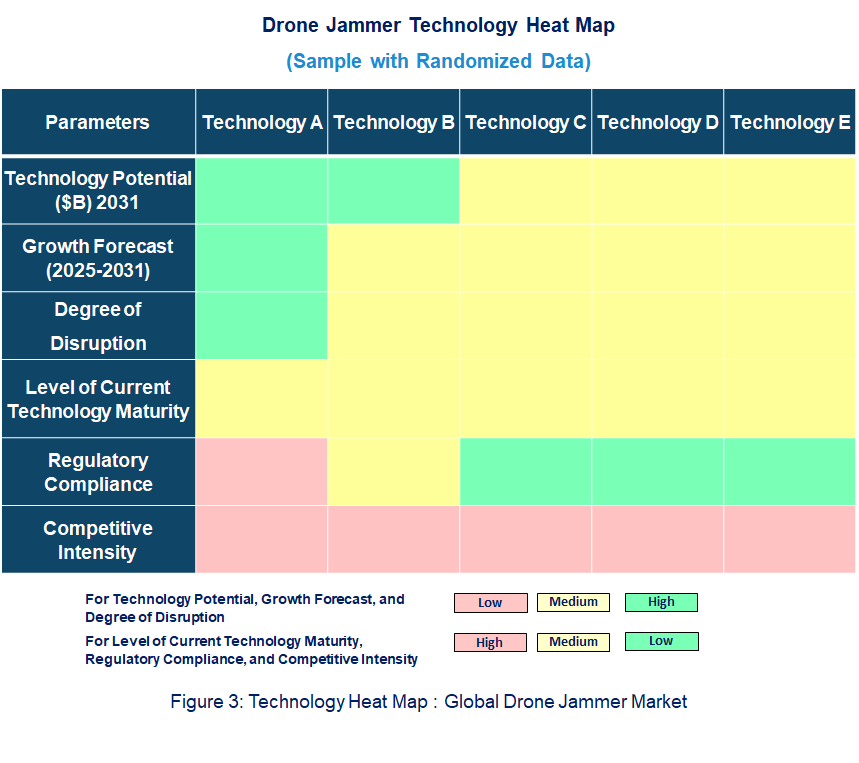
• Technology Potential: The technology for drone jamming holds great promise, especially with the increased security threat of drones. With the advancement in the use of drones, there is a greater need to develop effective countermeasures. Advanced jamming systems are under development, such as directional jammers, GPS spoofing, and RF disruption technologies, to provide more accurate and efficient solutions. Additionally, AI and machine learning integration may provide the capabilities for smarter, real-time detection and neutralization of drones, increasing the precision and effectiveness of jamming systems.
• Degree of Disruption: Drone jammers will undoubtedly disrupt many sectors, such as security, military, and infrastructure. Organizations may use these devices to dramatically change the ways they manage their airspace and counter the threats posed by drones to government buildings, airports, and prisons, among other structures.
• Current Technology Maturity: While drone jamming technology is relatively mature, continued innovation is necessary to maintain an advantage over the evolving capabilities of drones. Existing systems can defeat many commercial drones but struggle to confront more advanced or encrypted communication systems.
• Regulatory Compliance: Drone jamming technology should comply with local and international regulations, as it may interfere with legal communications and aviation systems. The deployment of drone jammers is controlled in most countries and reserved for entities that have permission, such as the military and law enforcement, with close monitoring.
• Avnon HLS (SKYLOCK): Avnon has introduced UAV-based jammer systems with improved mobility and coverage compared to ground-based jammers. Its SKYLOCK series offers real-time detection and countermeasures of drones, enabling them to be swiftly deployed in dynamic environments, especially in military and critical infrastructure security applications.
• Raytheon: Raytheon has been working on multi-spectrum counter-drone systems with jamming capabilities that not only target radio frequencies but also GPS signals, creating a more robust solution that can neutralize a wider range of drones. Their technology is used in defense applications for both tactical and strategic defense against drone threats.
• DroneShield: DroneShield’s drone jamming systems are becoming more integrated with AI and radar technologies, allowing for more precise and effective neutralization of drone threats. Their products, such as the DroneGun and DroneSentry, combine detection, identification, and jamming into a unified solution, enhancing security at critical sites.
• Blighter Surveillance: Blighter has developed advanced radar-based drone detection systems that operate in conjunction with their jamming devices. Their Blighter RADAR and jamming solutions are now more compact and capable of covering a larger area with integrated counter-drone defense for military and commercial applications.
• HP Marketing & Consulting (Dedrone): Dedrone has incorporated machine learning algorithms into their jamming systems to improve detection and classification accuracy. Their solutions offer a modular, scalable approach to drone defense, allowing for customized setups for various industries, including airports and public events.
• Israel Aerospace Industries (IAI): IAI has developed Drone Jamming technology by integrating sophisticated electronic warfare capabilities to jam multiple communication channels of drones simultaneously. Their multi-layered defense approach is particularly useful for military installations and other high-security environments.
• Mctech Technology: Mctech has developed lightweight UAV-based jammers that are suitable for mobile security teams. These jammers increase coverage and accuracy, with the capability to interfere with both civilian and military-grade drones. Their systems have been incorporated into law enforcement and military operations.
• Stratign: Stratign has designed hand-portable jamming systems with a wider range that allows blocking of signals for drones at longer distances. Such systems are lightweight and can be easily deployed to block signals. They are appropriate for security forces deployed to crowd-filled public areas or events.
• Digital RF: Digital RF has achieved significant success in developing high-power, wide-spectrum jamming solutions that target civilian and military communication channels used by drones. Their systems have been applied in various military operations to provide real-time protection against drone-based surveillance and attack threats.
• SRC Inc.: SRC’s counter-drone solutions focus on using both RF jamming and kinetic methods to neutralize drones. SRC’s systems are designed for military applications where multi-layered defense and precise, coordinated countermeasures are needed to address the full spectrum of drone threats. Such innovations reflect how key players in the market are advancing the use of technologies like AI, radar, and multi-spectrum jamming in their products, providing improved defense systems for both military and civil applications.
• Drone threats are increasing, as military and drug traffickers use them for spying, smuggling, and even attacks, making it more necessary to have a good counter-drone system. This growing threat is driving the development of anti-drone jammers for military, airports, and public security applications.
• Technological advancements in drone detection and jamming: Advances in multi-spectrum jamming, AI-driven targeting, and UAV-based jammer systems will significantly enhance the effectiveness and versatility of counter-drone solutions. These innovations are making it possible to pinpoint drone threats more accurately, quickly, and reliably, further amplifying demand in the market.
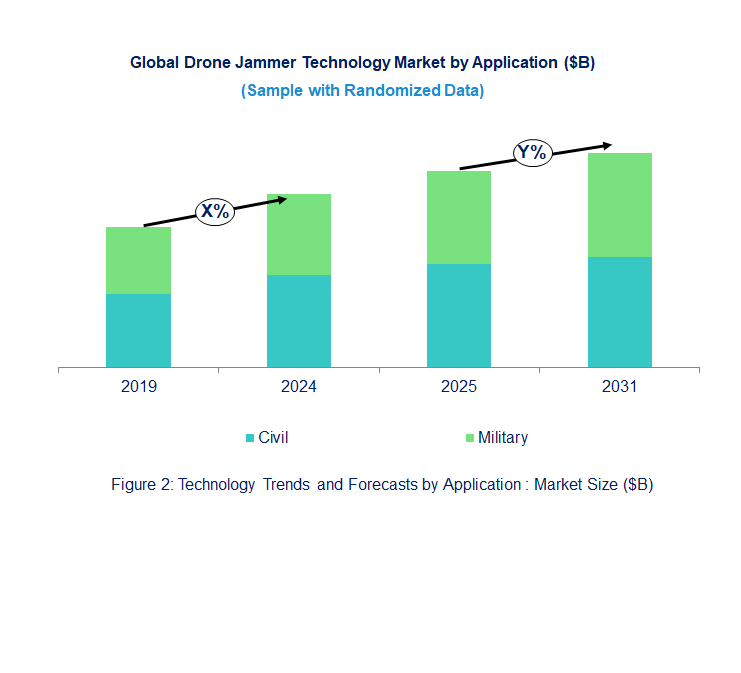
• Increasing military expenditure on anti-drone technologies: Due to the rising drone menace, militaries and defense institutions worldwide are increasingly investing in advanced anti-drone technologies. This expenditure has been a significant growth opportunity for manufacturers of drone jammers.
• Increased use of drones in civilian industries: With the increasing use of drones in civil industries, such as construction, agriculture, and transportation, the need for a strong security system to protect critical infrastructure and sensitive areas is growing. This demand for drone defense systems is expanding the market for drone jammers. Challenges in the drone jammer market include:
• Regulatory and legal restrictions: Many countries have strict regulations on the use of jammers, especially in civilian environments. These regulatory environments could pose limitations for the deployment of drone jammers and further slow down market growth, especially in regions where such technologies are restricted or require special permits.
• Advanced drone jamming system cost and complexity: The investment cost is high for advanced drone jamming systems, and the technology is complex. This may be a barrier to entry for some potential buyers, especially small-scale operators or law enforcement agencies with more restricted budgets to afford or maintain these technologies.
• Challenges with interoperability with existing systems: Introducing drone jammers into existing security and surveillance systems poses a challenge. Compatibility issues may arise, especially when older infrastructure meets new counter-drone technologies, delaying adoption and increasing operational costs. While the drone jammer market is driven by increasing security threats, technological innovations, and growing military spending, challenges related to regulatory restrictions, high costs, and integration complexities need to be addressed to ensure the widespread adoption and effectiveness of counter-drone technologies.
• Avnon HLS(SKYLOCK)
• Raytheon
• DroneShield
• Blighter Surveillance
• HP Marketing & Consulting(Dedrone)
• Israel Aerospace Industries
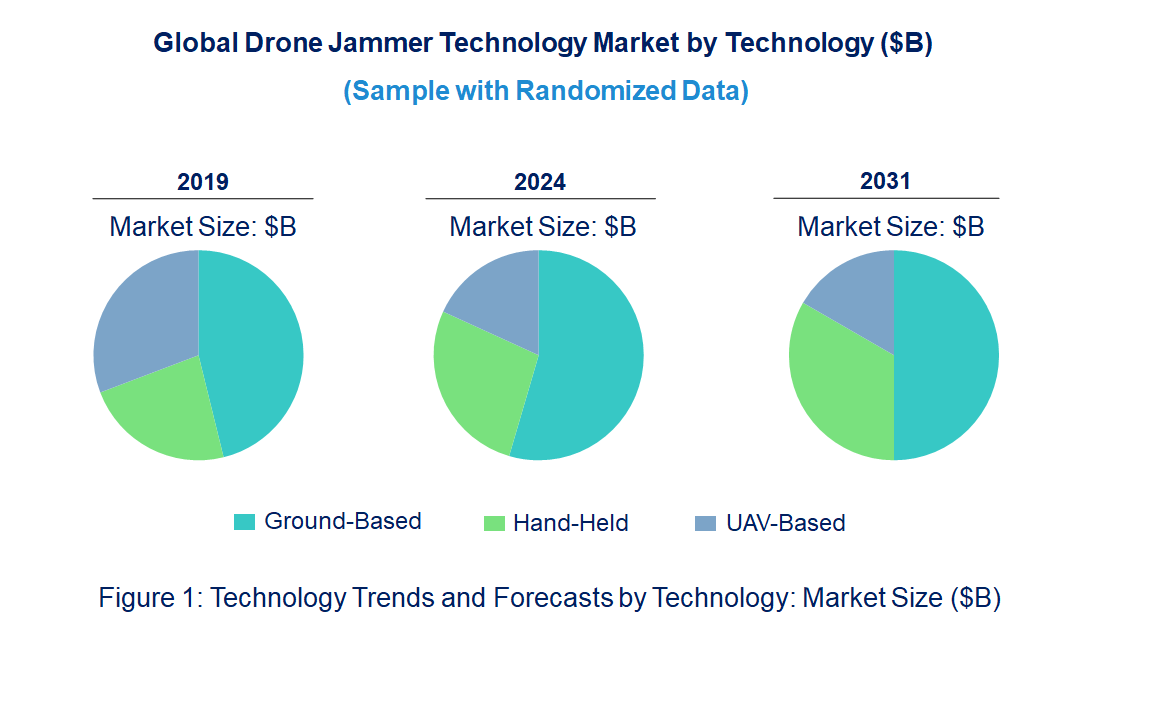
• Technology Readiness by Type for Drone Jammer Market: Ground-based drone jammers are highly mature since they are reliable, powerful devices capable of interfering over large areas and are widely used in military, security, and critical infrastructure applications. Hand-held jammers are also relatively well-developed, offering portable solutions for specific tasks, such as law enforcement and VIP protection, although they are limited in terms of range and power. UAV-based jammers are emerging but are becoming more sophisticated, offering the ability to be airborne with dynamic, flexible defense capabilities against drones. These systems will grow rapidly, especially in security and defense applications, given their mobility and adaptability. The competitive landscape is shifting towards UAV-based jammers, where companies have innovated to offer more compact and effective solutions. In many cases, ground-based jammers are more heavily regulated than hand-held and UAV-based jammers, as the latter also have to comply with both aviation and communication standards. All these technologies need to balance performance and mobility with legal constraints to succeed in the market.
• Competitive Intensity and Regulatory Compliance of Different Technologies for Drone Jammer Market: The competitive intensity in the drone jammer market is rising as the demand for effective counter-drone systems increases. Ground-based jammers lead the market with established companies offering robust, long-range solutions for large-scale protection. Hand-held jammers face growing competition from portable, easy-to-deploy devices, favored by law enforcement and security services for localized use. New UAV-based jammers are emerging, but these traditional systems are competing with manufacturers trying to develop more compact and efficient solutions. Regulatory compliance for these technologies is crucial, as countries have strict rules regarding the use of jamming devices due to concerns about interference with communication systems. Ground-based jammers are more heavily regulated, while hand-held and UAV-based devices are governed by country-specific aviation and communications laws. This means companies must comply with these legal regulations.
• Disruption Potential of Various Technologies for Drone Jammer Market: Each type of drone jammer has its unique disruption power in the market. Ground-based jammers are most often used in fixed installations because they provide strong and reliable interference over large areas. This makes them suitable for military, critical infrastructure, and large-scale event protection. Hand-held jammers are flexible and portable for tactical operations, law enforcement, and personal security to disrupt drones in localized environments. UAV-based jammers are a disruptive innovation, offering mobility and flexibility to intercept drones while in motion. As the market evolves, UAV-based jammers have the potential to revolutionize the drone defense industry by extending coverage and offering dynamic, adaptable solutions. The growing demand for drone protection across defense, law enforcement, and public safety sectors drives innovation and adoption of these disruptive technologies.
• Ground-Based
• Hand-Held
• UAV-Based
• Civil
• Military
• North America
• Europe
• Asia Pacific
• The Rest of the World
• Latest Developments and Innovations in the Drone Jammer Technologies
• Companies / Ecosystems
• Strategic Opportunities by Technology Type


Choose a license that fits your team. Instant PDF delivery.
Prices exclude taxes. Instant delivery. Custom licensing available on request.
Market Report · May 18, 2026
Market Report · May 18, 2026
Market Report · May 18, 2026
Trusted partner for strategic intelligence and business growth


Receive a complimentary market analysis tailored to your industry. Our analysts will identify key growth opportunities and competitive dynamics specific to your business.

Market size, growth rate, and key trend analysis for your specific sector.

Top competitor positioning and market share analysis.

Strategic recommendations backed by data-driven insights.
Get curated market intelligence and competitive moves straight to your inbox.
By subscribing, you agree to receive our monthly insights. Unsubscribe anytime.
Receive a complimentary market analysis tailored to your industry. Our analysts will identify key growth opportunities and competitive dynamics specific to your business.
Market size, growth rate, and key trend analysis for your specific sector.
Top competitor positioning and market share analysis.
Strategic recommendations backed by data-driven insights.
Get curated market intelligence, emerging trends, and competitive moves straight to your inbox each month.
By subscribing, you agree to receive our monthly insights. Unsubscribe anytime.
We'll send your sample report shortly.