
Market Report · July 31, 2026

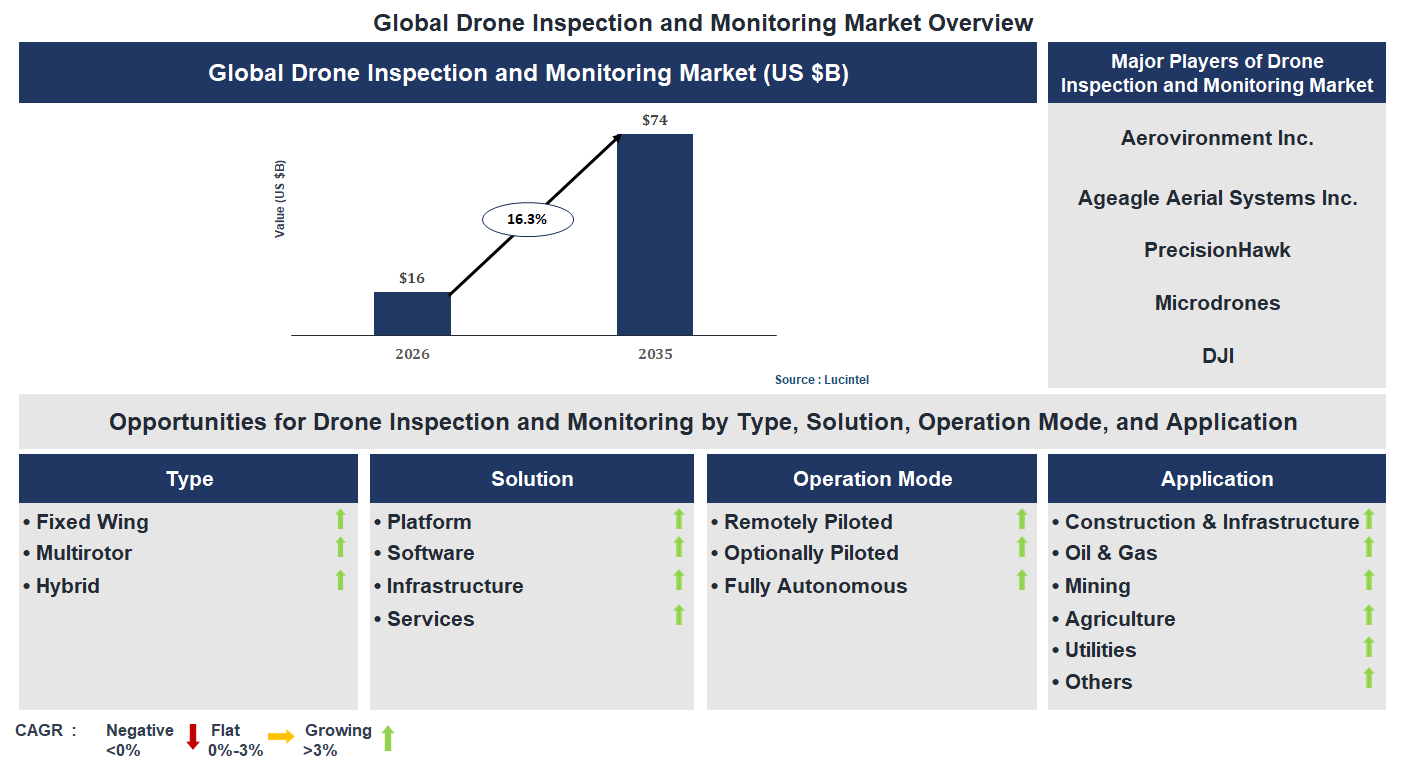
Key data points: The market size in 2035 = $74 billion, growth forecast = 16.3% annually for the next 8 years. Scroll below to get more insights. This market report covers trends, opportunities and forecasts in drone inspection and monitoring market to 2035 by type (fixed wing, multirotor, and hybrid), solution (platform, software, infrastructure, and services), operation mode (remotely piloted, optionally piloted, and fully autonomous), application (construction & infrastructure, oil & gas, mining, agriculture, utilities, and others), and region (North America, Europe, Asia Pacific, and the Rest of the World)
We'll send your sample report shortly.
• Lucintel forecasts that, within the type category, hybrid is expected to witness the highest growth over the forecast period.
• Within the application category, construction & infrastructure is expected to witness the highest growth.
• In terms of region, APAC is expected to witness the highest growth over the forecast period. Gain valuable insights for your business decisions with our comprehensive 150+ page report. Sample figures with some insights are shown below.
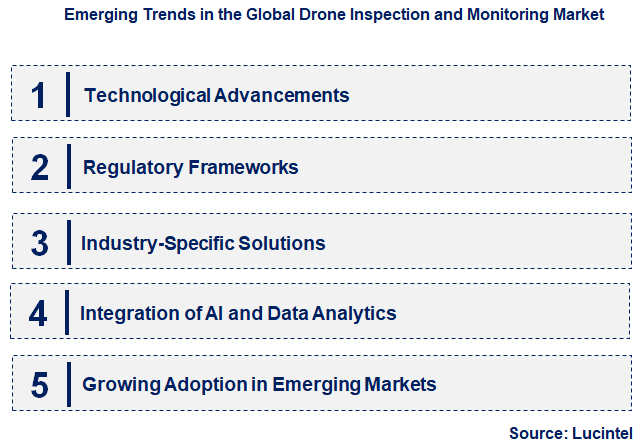
• Technological Advancements: Rapid innovation in drone hardware and software is transforming inspection capabilities. High-resolution cameras, thermal imaging, and AI-powered analytics enable detailed, real-time data collection. These improvements increase accuracy, reduce inspection times, and expand application scope, making drone solutions more reliable and versatile across sectors like infrastructure, agriculture, and energy.
• Regulatory Frameworks: Governments and regulatory bodies are establishing clearer guidelines for drone operations. Evolving policies focus on safety, privacy, and airspace management, facilitating wider adoption. Streamlined regulations help reduce operational barriers, encourage industry growth, and foster innovation while ensuring compliance and safety standards are maintained.
• Industry-Specific Solutions: Customized drone inspection services are emerging for specific sectors such as oil and gas, power transmission, and construction. These tailored solutions address unique industry challenges, improve maintenance schedules, and enhance safety protocols. Industry-specific adaptations increase market penetration and demonstrate the versatility of drone technology.
• Integration of AI and Data Analytics: The incorporation of artificial intelligence and advanced data analytics is revolutionizing how inspection data is processed. Automated image analysis, predictive maintenance, and anomaly detection enable proactive decision-making. This integration enhances efficiency, reduces human error, and provides actionable insights, thereby increasing the value proposition of drone inspection services.
• Growing Adoption in Emerging Markets: Developing regions are increasingly adopting drone inspection solutions to overcome infrastructure and safety challenges. Cost-effective and scalable, drones are being used for infrastructure monitoring, disaster management, and agriculture. This trend broadens market reach, accelerates digital transformation, and opens new revenue streams in emerging economies. These trends are collectively reshaping the drone inspection and monitoring market by enhancing technological capabilities, streamlining regulations, customizing solutions for diverse industries, leveraging AI-driven insights, and expanding into emerging markets. This evolution is driving increased efficiency, safety, and cost savings, positioning drones as indispensable tools across multiple sectors and paving the way for sustained market growth.
• Growing Adoption in Infrastructure Inspection: The use of drones for inspecting bridges, power lines, and pipelines is expanding rapidly. Drones provide safer, faster, and more accurate assessments compared to traditional methods, reducing downtime and operational costs. This growth is driven by technological improvements in drone endurance, camera quality, and data processing. As infrastructure ages and safety standards tighten, demand for drone-based inspections is expected to surge, transforming maintenance practices across sectors.
• Advancements in Drone Technology and Payloads: Recent innovations include longer flight times, enhanced stability, and sophisticated sensors such as LiDAR and thermal cameras. These advancements enable detailed 3D mapping, precise thermal imaging, and real-time data collection. Such capabilities improve inspection accuracy and operational efficiency, opening new opportunities in sectors like agriculture, construction, and environmental monitoring. The continuous evolution of drone hardware and software is making these tools more accessible and versatile for diverse inspection needs.
• Increasing Regulatory Support and Frameworks: Governments and regulatory bodies are establishing clearer guidelines for drone operations, facilitating wider commercial use. Streamlined approval processes, safety standards, and licensing procedures are encouraging industry players to deploy drones at scale. This regulatory evolution reduces barriers to entry, enhances operational safety, and fosters innovation. As regulations become more supportive, market growth accelerates, enabling broader adoption across sectors that require routine inspection and monitoring services.
• Integration of Artificial Intelligence and Data Analytics: The incorporation of AI and advanced analytics into drone systems is revolutionizing data processing. Automated image recognition, predictive maintenance, and real-time analytics enable faster decision-making and actionable insights. This integration enhances inspection accuracy, reduces manual effort, and improves predictive capabilities. As AI-driven solutions mature, they are becoming essential for managing large datasets, optimizing inspection workflows, and delivering comprehensive monitoring solutions, thereby expanding market potential.
• Rising Demand for Environmental and Agricultural Monitoring: Drones are increasingly used for environmental assessments, wildlife monitoring, and precision agriculture. They provide high-resolution data for crop health, soil analysis, and ecological studies, supporting sustainable practices. The ability to access hard-to-reach areas and gather real-time data makes drones invaluable for environmental conservation and agricultural productivity. Growing awareness of environmental issues and the need for sustainable resource management are driving investments and innovations in this sector. The overall impact of these developments is significantly transforming the drone inspection and monitoring market by enhancing efficiency, safety, and data accuracy. Increased adoption, technological innovations, and supportive regulations are expanding market opportunities, making drone-based inspection services more accessible and reliable across industries. This evolution is positioning drones as essential tools for future infrastructure maintenance, environmental management, and industrial monitoring, fostering sustainable growth and innovation in the sector.
• Expansion into Renewable Energy Sector: Drone inspection and monitoring are increasingly vital for renewable energy assets like wind turbines and solar panels. Drones enable quick, safe, and detailed inspections, reducing downtime and maintenance costs. As renewable energy projects grow globally, demand for specialized drone services will surge, offering new revenue streams. Companies investing in tailored drone solutions can capitalize on this expanding market, improving asset management and operational efficiency.
• Adoption of AI and Data Analytics for Enhanced Insights: Integrating AI and advanced data analytics with drone technology offers significant growth opportunities. These tools enable automated image processing, defect detection, and predictive maintenance, increasing accuracy and reducing manual effort. Industries seek smarter inspection solutions to optimize operations. Developing AI-powered drone platforms can provide competitive advantages, attract clients, and open new markets focused on data-driven decision-making and operational excellence.
• Growth in Infrastructure Inspection and Maintenance: Drones are transforming infrastructure monitoring, including bridges, railways, and pipelines. They provide high-resolution imagery and real-time data, enabling early detection of structural issues and reducing inspection costs. Governments and private entities are investing heavily in infrastructure upgrades, creating a sustained demand for drone-based inspection services. Companies offering reliable, compliant, and scalable drone solutions will benefit from this ongoing infrastructure modernization.
• Increasing Use in Agriculture for Precision Monitoring: The agriculture sector is adopting drone technology for crop health assessment, irrigation management, and pest control. Drones facilitate precise, timely data collection, leading to increased yields and reduced resource use. As farmers and agribusinesses seek sustainable practices, the demand for specialized agricultural drones will grow. Developing tailored solutions for crop monitoring and integrating with farm management systems presents significant growth potential.
• Rising Regulatory Support and Standardization: Governments worldwide are establishing regulations and standards for drone operations, fostering a safer and more predictable market environment. Regulatory clarity encourages industry investment and innovation, enabling broader commercial applications. Companies that actively engage with policymakers and develop compliant, certified drone solutions will gain competitive advantages. This supportive regulatory landscape is crucial for scaling operations and expanding into new markets. The overall impact of these opportunities will significantly accelerate market growth, foster innovation, and diversify application areas. Stakeholders who strategically leverage technological advancements, regulatory developments, and industry-specific needs will position themselves for sustained success. As the market matures, these growth avenues will shape a more efficient, safe, and versatile drone inspection and monitoring industry.
• Technological Innovation: The continuous development of lightweight, high-capacity batteries, improved sensors, and autonomous flight capabilities has significantly enhanced drone performance. These innovations enable more precise, faster, and cost-effective inspection and monitoring processes across sectors like infrastructure, agriculture, and energy. As technology becomes more accessible and affordable, adoption rates increase, fueling market growth. Additionally, integration with AI and data analytics allows for real-time insights, further expanding application possibilities and efficiency, making drones indispensable tools for inspection and monitoring tasks.
• Increasing Industry Adoption: Sectors such as oil and gas, power generation, construction, and agriculture are increasingly adopting drone technology for inspection and monitoring purposes. Drones offer safer, quicker, and more detailed assessments compared to traditional methods, reducing downtime and operational costs. The rising need for regular infrastructure inspections, environmental monitoring, and disaster assessment drives demand. As industries recognize the benefits of drone-based solutions, investments in drone fleets and related infrastructure are expanding, contributing to sustained market growth and diversification of applications.
• Regulatory Support and Policy Frameworks: Governments worldwide are establishing regulations that facilitate safe drone operations, including airspace management, licensing, and safety standards. Supportive policies encourage industry players to innovate and expand their services without excessive legal hurdles. For example, some countries have introduced drone corridors and relaxed restrictions for commercial use, fostering a conducive environment for market expansion. Regulatory clarity reduces operational risks and enhances stakeholder confidence, thereby accelerating adoption and investment in drone inspection and monitoring solutions.
• Cost Efficiency and ROI: The decreasing costs of drone hardware and operational expenses make drone inspection and monitoring more economically viable for businesses. Compared to traditional inspection methods, drones reduce labor costs, minimize downtime, and improve data accuracy, leading to higher return on investment. As organizations seek cost-effective solutions amid economic pressures, the appeal of drones as a tool for routine inspections and monitoring continues to grow. This cost advantage encourages small and large enterprises alike to incorporate drone technology into their operational workflows, further propelling market expansion.
• Growing Focus on Safety and Environmental Sustainability: Drones enable remote inspection of hazardous or hard-to-reach areas, significantly reducing risks to human workers. This focus on safety aligns with regulatory and corporate sustainability goals. Additionally, drones facilitate environmental monitoring, helping organizations track ecological changes, detect leaks, and assess disaster impacts with minimal environmental footprint. The emphasis on safety and sustainability not only enhances operational efficiency but also aligns with global efforts to reduce carbon emissions and promote responsible practices, thereby supporting the long-term growth of the market. The challenges facing the drone inspection and monitoring market include:-
• Regulatory Restrictions and Airspace Limitations: Despite supportive policies in some regions, many countries still impose strict regulations on drone operations, including restrictions on flight altitude, no-fly zones, and licensing requirements. These limitations hinder widespread adoption and operational flexibility, especially in densely populated or sensitive areas. Navigating complex regulatory landscapes can delay deployment and increase compliance costs. Additionally, inconsistent international regulations create barriers for global market expansion, requiring companies to adapt their operations to diverse legal frameworks, which can be resource-intensive and impede rapid growth.
• High Operational and Maintenance Costs: Although drone hardware costs are decreasing, operational expenses such as maintenance, training, and regulatory compliance remain significant. Skilled pilots and technical staff are required to operate and maintain drone fleets, adding to overall costs. Furthermore, battery replacements, software updates, and repair services contribute to ongoing expenses. These costs can be prohibitive for small and medium-sized enterprises, limiting market penetration. High operational costs also impact profitability and scalability, posing a challenge to widespread adoption, especially in price-sensitive markets.
• Data Security and Privacy Concerns: The extensive data collected by drones during inspection and monitoring activities raises concerns over data security and privacy. Unauthorized access, hacking, or data breaches could compromise sensitive information related to critical infrastructure or corporate operations. Regulatory frameworks around data protection are evolving, but uncertainties remain, creating apprehension among potential users. These concerns may lead to reluctance in adopting drone solutions or necessitate additional investments in cybersecurity measures, which can increase costs and complicate deployment, thereby hindering market growth. The drone inspection and monitoring market is driven by technological innovations, expanding industry adoption, supportive regulations, cost efficiencies, and sustainability initiatives. However, regulatory restrictions, operational costs, and data security issues present significant hurdles. These factors collectively influence the pace and scope of market growth, requiring stakeholders to strategically navigate challenges while leveraging opportunities. The markets future will depend on balancing technological progress and regulatory evolution with addressing operational and security concerns, ultimately shaping a resilient and innovative industry landscape.
• Aerovironment Inc.
• Ageagle Aerial Systems Inc.
• PrecisionHawk
• Microdrones
• DJI
• American Robotics
• Trimble Inc.
• Yamaha Motor Corp.
• Parrot Drones
• Israel Aerospace Industries
• Fixed Wing
• Multirotor
• Hybrid
• Platform
• Software
• Infrastructure
• Services
• Remotely Piloted
• Optionally Piloted
• Fully Autonomous
• Construction & Infrastructure
• Oil & Gas
• Mining
• Agriculture
• Utilities
• Others
• North America
• Europe
• Asia Pacific
• The Rest of the World
• United States: The US market has seen significant growth due to technological innovation and regulatory support. Major companies are developing advanced autonomous drones for infrastructure inspection, agriculture, and security. The Federal Aviation Administration (FAA) has introduced new regulations facilitating commercial drone operations, boosting industry confidence. Investment in R&D is high, with startups and established firms exploring AI integration and long-endurance drones. The US also leads in deploying drone solutions for disaster management and public safety, fostering a robust ecosystem for market expansion.
• China: China is rapidly advancing in drone manufacturing and application deployment. The government promotes drone technology for agriculture, urban planning, and surveillance, with substantial investments in R&D. Leading Chinese firms are producing cost-effective, high-performance drones for various sectors, including logistics and environmental monitoring. Regulatory frameworks are evolving to support commercial use, and collaborations between tech giants and startups are accelerating innovation. China’s focus on integrating drones with AI and big data analytics is positioning it as a global leader in drone inspection and monitoring solutions.
• Germany: Germany emphasizes precision engineering and regulatory compliance in the drone market. The country is leveraging its strong industrial base to develop specialized inspection drones for infrastructure, energy, and manufacturing sectors. The Federal Aviation Office (Luftfahrt-Bundesstaat) has implemented clear guidelines to facilitate safe drone operations. German companies are investing in drone automation, sensor technology, and data analytics to enhance inspection accuracy. The focus on sustainability and safety standards is driving innovation, making Germany a key player in European drone inspection markets.
• India: India’s drone market is witnessing rapid growth driven by government initiatives like the Digital Sky Platform and the Drone Rules 2021, which aim to streamline regulations. The country is focusing on agricultural monitoring, disaster management, and infrastructure inspection. Startups and local manufacturers are developing affordable, lightweight drones tailored for diverse applications. The government’s push for drone-based solutions in rural areas and smart city projects is expanding market opportunities. Increased investment in R&D and collaborations with international firms are further accelerating technological advancements in India’s drone inspection sector.
• Japan: Japan is advancing its drone inspection capabilities through technological innovation and strict safety standards. The country’s focus is on infrastructure inspection, disaster response, and environmental monitoring, supported by government initiatives and industry partnerships. Japanese firms are developing high-precision, weather-resistant drones equipped with advanced sensors and AI. Regulatory reforms are easing drone operations in urban areas, fostering innovation. Japan’s emphasis on integrating drones with IoT and big data analytics is enhancing inspection efficiency and accuracy, positioning it as a leader in high-tech drone applications within the Asia-Pacific region.


• Aerovironment Inc.
• Ageagle Aerial Systems Inc.
• PrecisionHawk
• Microdrones
• DJI
• American Robotics
• Trimble Inc.
• Yamaha Motor Corp.
• Parrot Drones
• Israel Aerospace Industries Q6. Which drone inspection and monitoring market segment will be the largest in future? Answer: Lucintel forecasts that, within the type category, hybrid is expected to witness the highest growth over the forecast period. Q7. In drone inspection and monitoring market, which region is expected to be the largest in next 8 years? Answer: In terms of region, APAC is expected to witness the highest growth over the forecast period. Q8. Do we receive customization in this report? Answer: Yes, Lucintel provides 10% customization without any additional cost.


Choose a license that fits your team. Instant PDF delivery.
Prices exclude taxes. Instant delivery. Custom licensing available on request.
Market Report · July 31, 2026
Market Report · July 31, 2026
Market Report · July 31, 2026
Trusted partner for strategic intelligence and business growth


Receive a complimentary market analysis tailored to your industry. Our analysts will identify key growth opportunities and competitive dynamics specific to your business.

Market size, growth rate, and key trend analysis for your specific sector.

Top competitor positioning and market share analysis.

Strategic recommendations backed by data-driven insights.
Get curated market intelligence and competitive moves straight to your inbox.
By subscribing, you agree to receive our monthly insights. Unsubscribe anytime.
Receive a complimentary market analysis tailored to your industry. Our analysts will identify key growth opportunities and competitive dynamics specific to your business.
Market size, growth rate, and key trend analysis for your specific sector.
Top competitor positioning and market share analysis.
Strategic recommendations backed by data-driven insights.
Get curated market intelligence, emerging trends, and competitive moves straight to your inbox each month.
By subscribing, you agree to receive our monthly insights. Unsubscribe anytime.
We'll send your sample report shortly.