
Market Report · July 31, 2026

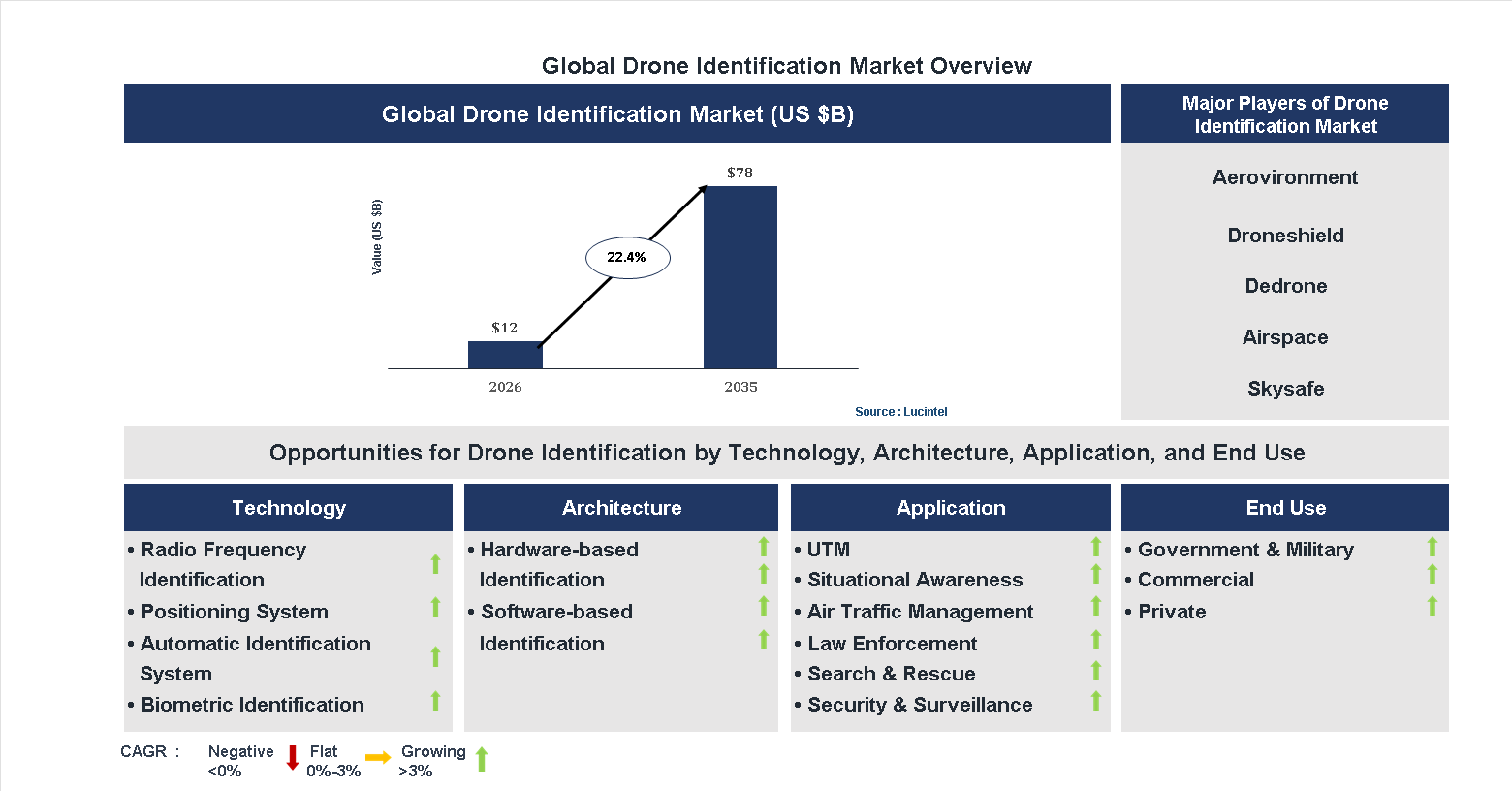
Key data points: The growth forecast = 22.4% annually for the next 8 years. Scroll below to get more insights. This market report covers trends, opportunities and forecasts in drone identification market to 2035 by technology (radio frequency identification, positioning system, automatic identification system, and biometric identification), architecture (hardware-based identification and software-based identification), application (UTM, situational awareness, air traffic management, law enforcement, search & rescue, and security & surveillance), end use (government & military, commercial, and private), and region (North America, Europe, Asia Pacific, and the Rest of the World)
We'll send your sample report shortly.
• Lucintel forecasts that, within the technology category, radio frequency identification is expected to witness the highest growth over the forecast period.
• Within the end use category, government & military is expected to witness the highest growth.
• In terms of region, APAC is expected to witness the highest growth over the forecast period. Gain valuable insights for your business decisions with our comprehensive 150+ page report. Sample figures with some insights are shown below.
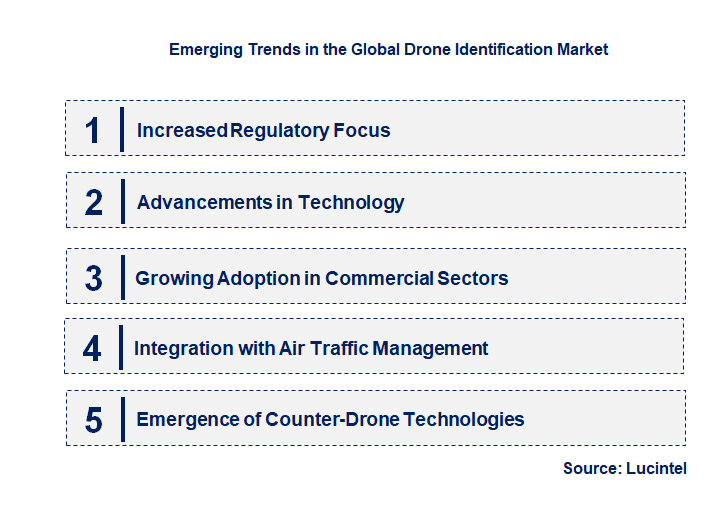
• Increased Regulatory Focus: Governments worldwide are implementing stricter drone identification regulations to ensure safety and security. This trend is driven by concerns over unauthorized drone use, privacy issues, and airspace management. Regulatory bodies are mandating real-time identification systems, which require manufacturers to develop compliant solutions. This shift is fostering innovation in secure, reliable identification technologies and encouraging industry standards. As a result, the market is witnessing a surge in demand for integrated identification modules that can be embedded into various drone types, from consumer to commercial models.
• Advancements in Technology: The integration of AI, machine learning, and IoT into drone identification systems is revolutionizing the market. These technologies enable real-time tracking, enhanced data analytics, and improved security features. AI-powered identification systems can automatically detect and classify drones, reducing false alarms and increasing efficiency. IoT connectivity allows seamless data sharing between drones and ground stations, facilitating better airspace management. These technological advancements are expanding the capabilities of identification systems, making them more robust, scalable, and adaptable to different operational environments, thus broadening market applications.
• Growing Adoption in Commercial Sectors: Industries such as agriculture, logistics, construction, and media are increasingly adopting drone identification solutions for operational efficiency and safety. For example, in agriculture, identification systems help monitor drone activity for crop surveillance, while in logistics, they ensure secure delivery operations. This trend is driven by the need for regulatory compliance, safety assurance, and operational transparency. As commercial drone usage expands, the demand for sophisticated identification systems that can support large fleets and diverse applications is rising, creating new revenue streams and market segments.
• Integration with Air Traffic Management (ATM): The integration of drone identification systems with existing air traffic management infrastructure is a key trend. This integration aims to create a unified airspace management system that can accommodate both manned and unmanned aircraft safely. It involves developing standardized communication protocols and data sharing platforms. This trend enhances situational awareness, reduces collision risks, and facilitates the safe coexistence of drones with traditional aircraft. It is also paving the way for urban air mobility solutions, thereby expanding the scope of drone identification markets into smart city initiatives and future urban transportation networks.
• Emergence of Counter-Drone Technologies: As drone usage proliferates, so does the need for counter-drone solutions to mitigate security threats. The market is witnessing the development of identification systems that can detect, identify, and neutralize unauthorized or malicious drones. These systems are crucial for protecting critical infrastructure, public events, and sensitive areas. The rise of counter-drone technologies is driving innovation in detection sensors, jamming devices, and autonomous response systems. This trend underscores the importance of comprehensive drone security ecosystems, which are becoming integral to national security and corporate safety strategies. These trends are collectively transforming the drone identification market by fostering innovation, enhancing safety and security, and expanding application horizons. Regulatory developments are driving technological advancements, while integration with broader airspace management systems and the rise of counter-drone solutions are creating a more sophisticated and secure drone ecosystem. These changes are positioning the market for sustained growth and diversification across multiple sectors.
• Regulatory Compliance: Growing regulations worldwide are mandating drone identification systems, creating a substantial market opportunity. Governments are implementing stricter rules for drone registration and identification, prompting manufacturers to develop compliant solutions. This trend ensures safer airspace management and reduces unauthorized drone activities. Companies investing in compliant identification technologies are positioned to benefit from increased demand, fostering market growth and encouraging innovation in secure, scalable identification systems.
• Advancements in Technology: Innovations such as AI, machine learning, and IoT are revolutionizing drone identification. These technologies enable real-time tracking, enhanced security, and improved data accuracy. The integration of biometric and facial recognition further enhances identification reliability. As technology advances, the market will see more sophisticated, efficient, and cost-effective solutions, expanding applications in commercial, military, and public safety sectors. This progress boosts confidence in drone operations and encourages broader adoption.
• Increasing Security Concerns: Rising security threats and unauthorized drone activities are driving demand for robust identification systems. Governments and organizations seek reliable solutions to monitor, identify, and mitigate potential risks posed by rogue drones. Enhanced identification capabilities help prevent illegal surveillance, smuggling, and malicious attacks. This focus on security is prompting investments in high-performance identification systems, which are crucial for safeguarding critical infrastructure, public events, and sensitive areas, thereby expanding the market scope.
• Growing Commercial Applications: The expanding use of drones in agriculture, delivery, photography, and infrastructure inspection is fueling the need for effective identification solutions. Commercial operators require systems that ensure compliance, safety, and operational efficiency. Identification technology facilitates fleet management, airspace regulation adherence, and accident prevention. As commercial drone applications proliferate, the market for identification solutions will grow, driven by demand for scalable, user-friendly, and integrated identification systems tailored to diverse industry needs.
• Market Expansion in Emerging Regions: Developing regions are increasingly adopting drone technology, creating new opportunities for identification systems. Governments and private sectors are investing in infrastructure, regulatory frameworks, and technological adoption. This expansion enhances market reach and diversifies application areas. The rising adoption in Asia-Pacific, Africa, and Latin America is expected to significantly boost global market growth, driven by increasing drone usage in agriculture, surveillance, and logistics, and the need for effective identification solutions in these regions. These developments are significantly transforming the drone identification market by fostering innovation, ensuring regulatory compliance, and enhancing security. The integration of advanced technologies and expanding applications across sectors are driving market growth. As emerging regions adopt drone technology, the market is poised for substantial expansion, creating new opportunities for stakeholders. Overall, these trends are shaping a safer, more efficient, and more regulated drone ecosystem worldwide.
• Regulatory Compliance and Security Enhancement: The increasing need for regulatory compliance and security measures is driving demand for drone identification solutions. Governments worldwide are implementing stricter regulations requiring real-time drone tracking and identification to prevent unauthorized or malicious activities. This creates opportunities for companies to develop advanced identification systems, such as remote ID technology, that ensure safe airspace management, support law enforcement, and facilitate air traffic control, thereby fostering safer drone operations.
• Integration of AI and IoT for Real-Time Tracking: The integration of artificial intelligence (AI) and Internet of Things (IoT) technologies into drone identification systems offers significant growth potential. These innovations enable real-time data collection, analysis, and automated decision-making, improving accuracy and response times. Sub-segments like smart identification tags, connected drone networks, and predictive analytics can enhance operational efficiency, support fleet management, and enable proactive security measures, opening avenues for tech providers and system integrators.
• Expansion in Commercial and Industrial Applications: The adoption of drone identification solutions in commercial sectors such as agriculture, construction, logistics, and media is expanding rapidly. These industries require reliable identification systems for fleet management, safety compliance, and operational oversight. Opportunities exist in developing industry-specific identification tools, such as ruggedized tags for harsh environments or integrated systems for autonomous drone operations, to meet diverse application needs and improve overall productivity.
• Development of Standardized Protocols and Interoperability: The need for standardized identification protocols and interoperability among different drone systems is a key growth driver. Establishing common standards facilitates seamless communication between drones, authorities, and service providers, reducing operational complexities. Companies investing in open-source platforms, universal identification formats, and cross-industry collaborations can capitalize on this trend, enabling broader adoption and integration of drone identification solutions across various regions and sectors.
• Growing Market for Counter-Drone Technologies: The rise in drone usage has also increased concerns over security threats, prompting growth in counter-drone technologies that rely on effective identification systems. Opportunities exist in developing detection, jamming, and neutralization solutions that integrate drone identification data to assess threats accurately. This segment supports national security, event security, and critical infrastructure protection, creating a lucrative niche for innovative firms specializing in secure, reliable drone identification and mitigation strategies. The drone identification market is poised for substantial growth driven by regulatory demands, technological innovations, and expanding applications across industries. These opportunities enable stakeholders to develop advanced, integrated, and standardized solutions that enhance safety, security, and operational efficiency. As the market evolves, strategic investments and collaborations will be crucial for capturing emerging trends and establishing a competitive edge in this dynamic landscape.
• Technological Advancements: The rapid development of drone technology, including improved sensors, AI integration, and communication systems, has enhanced drone capabilities and safety features. These innovations facilitate real-time identification and tracking, making drone operations more secure and manageable. As technology continues to evolve, the market is expected to expand, driven by increased adoption across commercial, military, and recreational sectors. The integration of advanced identification systems also supports regulatory compliance and airspace management, further fueling market growth.
• Regulatory Frameworks and Government Initiatives: Governments worldwide are establishing regulations to ensure safe drone operations, including mandatory identification and tracking systems. These policies aim to prevent unauthorized drone activities, enhance security, and integrate drones into existing air traffic management systems. Supportive initiatives, such as funding for research and development and pilot programs, encourage industry players to innovate and adopt identification solutions, thereby propelling market expansion.
• Growing Security and Safety Concerns: The rising use of drones for surveillance, delivery, and other commercial purposes has heightened concerns over security breaches, privacy violations, and unauthorized use. To mitigate these risks, authorities are implementing drone identification systems that enable real-time monitoring and control. This demand for security solutions is a significant driver, prompting manufacturers to develop reliable identification technologies that can be deployed at scale, thus expanding the market.
• Increasing Commercial and Military Applications: The expanding use of drones in sectors such as agriculture, logistics, filmmaking, and defense necessitates robust identification systems for operational safety and regulatory compliance. Military applications, in particular, require secure identification to prevent hostile use and ensure controlled operations. The growing adoption across diverse industries drives demand for sophisticated identification solutions, fostering market growth through increased investments and technological innovation.
• Rising Public and Industry Awareness: Awareness about the importance of drone identification for safety, security, and privacy is increasing among industry stakeholders and the general public. Educational campaigns, industry standards, and media coverage highlight the benefits of effective identification systems. This heightened awareness encourages adoption and supports regulatory mandates, thereby stimulating market development and encouraging new technological solutions. The challenges in the drone identification market are:
• Regulatory Complexities and Lack of Standardization: The evolving regulatory landscape varies across regions, creating complexities for manufacturers and operators. Lack of standardized protocols for drone identification hampers interoperability and widespread adoption. Navigating diverse legal requirements can delay deployment and increase costs, posing a significant challenge for market growth. Harmonizing regulations and establishing universal standards are critical to overcoming these barriers and enabling seamless integration of identification systems.
• Privacy and Ethical Concerns: The deployment of drone identification systems raises privacy issues related to data collection, storage, and surveillance. Public apprehension about constant monitoring and potential misuse of data can hinder acceptance and adoption. Addressing these concerns requires transparent policies, robust data protection measures, and stakeholder engagement to build trust and ensure ethical use of identification technologies.
• Technological Limitations and Cost: Developing reliable, real-time identification systems that operate effectively in diverse environments remains challenging. Technical issues such as signal interference, system compatibility, and cybersecurity vulnerabilities can compromise system performance. Additionally, high costs associated with advanced identification solutions may limit adoption, especially among small and medium-sized operators. Overcoming these technological and financial barriers is essential for broader market penetration and sustainable growth. The drone identification market is shaped by significant technological innovations, regulatory developments, and increasing security needs. While these drivers foster growth and innovation, challenges such as regulatory inconsistencies, privacy issues, and technological limitations pose hurdles. Addressing these challenges through standardization, ethical frameworks, and technological advancements will be crucial for sustainable market expansion. Overall, the markets future depends on balancing innovation with regulation and privacy considerations, ensuring safe, secure, and efficient drone operations worldwide.
• Aerovironment
• Droneshield
• Dedrone
• Airspace
• Skysafe
• Fortem Technologies
• Unifly
• Radio Frequency Identification
• Positioning System
• Automatic Identification System
• Biometric Identification
• Hardware-based Identification
• Software-based Identification
• UTM
• Situational Awareness
• Air Traffic Management
• Law Enforcement
• Search & Rescue
• Security & Surveillance
• Government & Military
• Commercial
• Private
• North America
• Europe
• Asia Pacific
• The Rest of the World
• United States: The US market has seen significant advancements with the FAA implementing new drone identification regulations, promoting safer airspace integration. Major tech firms are developing sophisticated remote identification systems, and industry collaborations are fostering innovation. The adoption of drone identification is accelerating in commercial sectors such as delivery, agriculture, and public safety, supported by government initiatives and private investments. Regulatory frameworks are evolving to accommodate emerging technologies, ensuring secure and compliant drone operations nationwide.
• China: China is rapidly expanding its drone identification infrastructure, focusing on national security and commercial applications. The government has introduced strict regulations requiring drone registration and real-time identification, especially for urban air mobility. Domestic companies are investing heavily in developing integrated identification solutions compatible with urban air traffic management systems. The market is also driven by the growth of drone delivery services and surveillance applications, with a focus on enhancing safety and operational efficiency through advanced identification technologies.
• Germany: Germanys drone identification market is characterized by stringent regulatory standards aligned with European Union directives. The country is emphasizing secure identification systems to facilitate safe integration of drones into civil airspace. Innovations include the deployment of digital identification platforms and interoperability with EU-wide systems. The focus is on privacy protection, data security, and seamless communication between drones and air traffic control. Germanys industry is also collaborating with European partners to develop standardized identification protocols supporting cross-border drone operations.
• India: India is witnessing rapid adoption of drone identification systems driven by government initiatives like the Digital Sky platform. Regulations now mandate drone registration and real-time identification to ensure safety and security. The market is expanding with local startups and global players developing cost-effective identification solutions tailored for diverse applications such as agriculture, surveillance, and delivery. The government’s push for drone ecosystem development is fostering innovation in identification technologies, with an emphasis on enabling scalable, secure, and compliant drone operations across the country.
• Japan: Japan is advancing its drone identification infrastructure to support urban air mobility and disaster management. The government has introduced regulations requiring drone registration and real-time identification, focusing on safety and privacy. Industry players are developing integrated identification systems compatible with Japan’s air traffic management framework. The market is also driven by research into secure communication protocols and data security measures. Japan’s emphasis on technological innovation and regulatory compliance is positioning it as a leader in secure drone identification solutions within the Asia-Pacific region.


• Aerovironment
• Droneshield
• Dedrone
• Airspace
• Skysafe
• Fortem Technologies
• Unifly Q5. Which drone identification market segment will be the largest in future? Answer: Lucintel forecasts that, within the technology category, radio frequency identification is expected to witness the highest growth over the forecast period. Q6. In drone identification market, which region is expected to be the largest in next 8 years? Answer: In terms of region, APAC is expected to witness the highest growth over the forecast period. Q7. Do we receive customization in this report? Answer: Yes, Lucintel provides 10% customization without any additional cost.


Choose a license that fits your team. Instant PDF delivery.
Prices exclude taxes. Instant delivery. Custom licensing available on request.
Market Report · July 31, 2026
Market Report · July 31, 2026
Market Report · July 31, 2026
Trusted partner for strategic intelligence and business growth


Receive a complimentary market analysis tailored to your industry. Our analysts will identify key growth opportunities and competitive dynamics specific to your business.

Market size, growth rate, and key trend analysis for your specific sector.

Top competitor positioning and market share analysis.

Strategic recommendations backed by data-driven insights.
Get curated market intelligence and competitive moves straight to your inbox.
By subscribing, you agree to receive our monthly insights. Unsubscribe anytime.
Receive a complimentary market analysis tailored to your industry. Our analysts will identify key growth opportunities and competitive dynamics specific to your business.
Market size, growth rate, and key trend analysis for your specific sector.
Top competitor positioning and market share analysis.
Strategic recommendations backed by data-driven insights.
Get curated market intelligence, emerging trends, and competitive moves straight to your inbox each month.
By subscribing, you agree to receive our monthly insights. Unsubscribe anytime.
We'll send your sample report shortly.