
Market Report · July 31, 2026

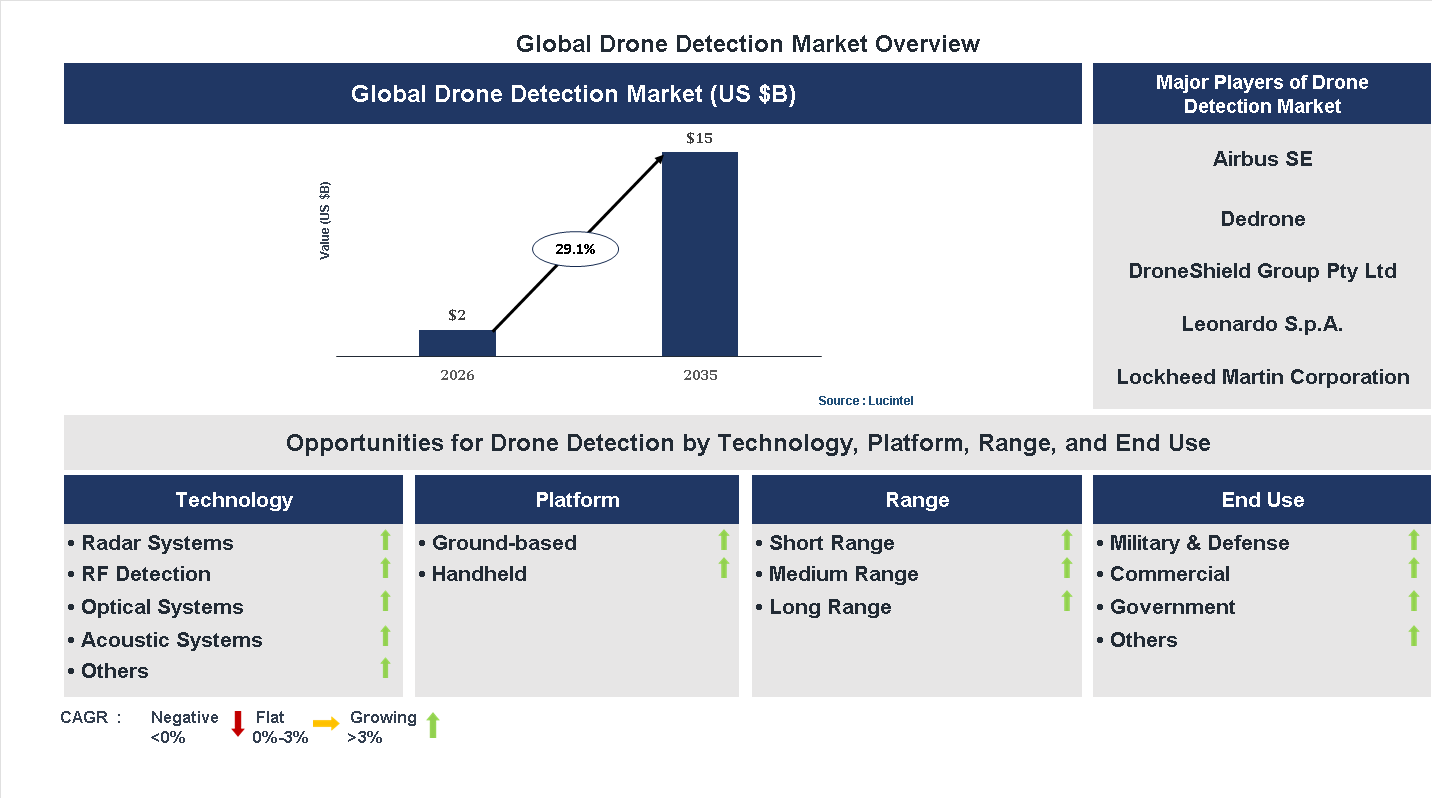
Key data points: The market size in 2035 = $15 billion, growth forecast = 29.1% annually for the next 8 years. Scroll below to get more insights. This market report covers trends, opportunities and forecasts in drone detection market to 2035 by technology (radar systems, RF detection, optical systems, acoustic systems, and others), platform (ground-based and handheld), range (short range, medium range, and long range), end use (military & defense, commercial, government, and others), and region (North America, Europe, Asia Pacific, and the Rest of the World)
We'll send your sample report shortly.
• Lucintel forecasts that, within the technology category, radar system is expected to witness the highest growth over the forecast period.
• Within the end use category, military & defense is expected to witness the highest growth.
• In terms of region, North America is expected to witness the highest growth over the forecast period. Gain valuable insights for your business decisions with our comprehensive 150+ page report. Sample figures with some insights are shown below.
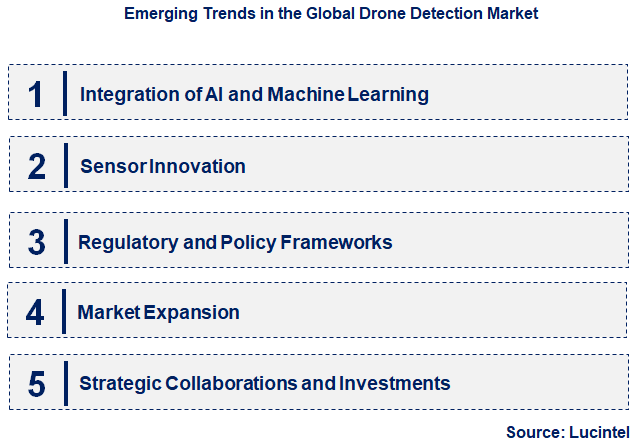
• Integration of AI and Machine Learning: The use of AI and machine learning algorithms enhances drone detection accuracy by enabling real-time analysis of signals and behaviors. These technologies improve the identification of various drone types and differentiate between benign and malicious activities, reducing false alarms. As AI capabilities expand, detection systems become more adaptive and efficient, supporting complex environments like urban areas and critical infrastructure. This trend is crucial for developing smarter, more reliable detection solutions that can keep pace with evolving drone technologies.
• Sensor Innovation: The market is witnessing a shift towards multi-sensor detection systems that combine RF, acoustic, optical, and radar technologies. This multi-layered approach improves detection reliability across different environments and drone types. For example, RF sensors detect communication signals, while optical sensors provide visual confirmation. Acoustic sensors identify drone noise, and radar offers long-range detection. The integration of these sensors results in comprehensive coverage, reducing blind spots and false positives, thereby enhancing overall security and operational efficiency.
• Regulatory and Policy Frameworks: Governments worldwide are establishing stricter regulations and policies for drone operations, including registration, no-fly zones, and operational limits. These regulations drive the demand for advanced detection systems to enforce compliance and ensure safety. Market players are collaborating with authorities to develop standardized solutions that support regulatory requirements. The evolving legal landscape encourages innovation in detection technologies and promotes the adoption of integrated security solutions, fostering a safer drone ecosystem.
• Market Expansion: The drone detection market is expanding beyond security agencies to include commercial sectors such as airports, critical infrastructure, event management, and private enterprises. This diversification increases demand for tailored detection solutions that address specific industry needs. For instance, airports require high-precision systems to prevent drone incursions, while event organizers seek portable solutions for crowd safety. The broadening application base accelerates market growth and encourages innovation in detection technologies to meet diverse operational challenges.
• Strategic Collaborations and Investments: Companies are forming strategic alliances with technology providers, defense agencies, and research institutions to accelerate innovation. Increased investments in R&D are leading to the development of more sophisticated detection systems. These collaborations facilitate knowledge sharing, technology transfer, and faster deployment of advanced solutions. As the market matures, such partnerships are vital for staying competitive and addressing emerging threats effectively, ultimately driving the evolution of the drone detection industry. These trends are collectively reshaping the drone detection market by fostering technological innovation, expanding application areas, and strengthening regulatory compliance. The integration of AI, multi-sensor systems, and strategic collaborations is creating more robust, accurate, and versatile detection solutions. As a result, the market is moving towards a more secure, efficient, and comprehensive drone management ecosystem, supporting the safe integration of drones into various sectors while mitigating associated risks.
• Enhanced Sensor Technologies: Improving Detection Accuracy and Range: Recent advancements in sensor technology, including RF, radar, and optical sensors, have significantly increased detection accuracy and range. These improvements enable real-time identification of diverse drone types, even in complex environments. Enhanced sensors reduce false alarms and improve response times, making drone detection systems more reliable. This development is crucial for security applications, airports, and critical infrastructure, where precise detection is vital for safety and operational continuity.
• Integration of Artificial Intelligence (AI): Smarter Detection and Response Capabilities: The integration of AI into drone detection systems has revolutionized the market by enabling smarter, more adaptive solutions. AI algorithms analyze vast data streams to distinguish between benign and malicious drones, reducing false positives. Machine learning models improve over time, enhancing detection accuracy. AI-powered systems facilitate rapid response, automated threat assessment, and better situational awareness, which are essential for security agencies and commercial operators to mitigate risks effectively.
• Expansion into Commercial and Public Sectors: Broadening Market Applications: The drone detection market is expanding beyond security into commercial and public sectors, including event management, urban air mobility, and agriculture. These sectors require reliable detection to ensure safety, compliance, and operational efficiency. The development of cost-effective, scalable solutions has made it feasible for non-security entities to adopt drone detection technology. This diversification broadens market opportunities, encouraging innovation and increasing overall demand for advanced detection systems.
• Regulatory and Policy Developments: Creating a Framework for Market Growth: Governments and regulatory bodies worldwide are establishing policies to govern drone operations and detection. These regulations promote the deployment of detection systems by setting standards and compliance requirements. Clear legal frameworks facilitate market growth by encouraging investment and innovation. They also address privacy and safety concerns, fostering public trust. As regulations evolve, they will shape the development and adoption of drone detection solutions, ensuring safer integration of drones into airspace.
• Advancements in Counter-Drone Technologies: Enhancing Security Measures: Recent developments in counter-drone technologies, such as jamming, hacking, and physical interception, complement detection systems. These technologies provide comprehensive security solutions by neutralizing threats once detected. Innovations focus on minimizing collateral damage and ensuring legal compliance. The integration of detection and mitigation technologies creates a robust defense mechanism for sensitive sites, airports, and military zones. This holistic approach enhances overall security, making drone detection a critical component of modern threat management strategies. These recent developments are significantly transforming the drone detection market by improving detection accuracy, expanding application areas, and strengthening security measures. The integration of AI, advanced sensors, and counter-drone technologies is creating more reliable, scalable, and effective solutions. Regulatory frameworks are fostering growth and innovation, ensuring safer drone operations. Collectively, these advancements are driving market expansion, increasing adoption across sectors, and establishing a more secure aerial environment for the future.
• Growing Adoption of Drones in Commercial Sectors: The increasing use of drones in agriculture, logistics, media, and infrastructure inspection presents a significant opportunity for drone detection solutions. As commercial drone deployment rises, so does the need for robust detection systems to prevent unauthorized access, ensure safety, and comply with regulations. This trend drives demand for advanced detection technologies capable of identifying various drone types in complex environments, fostering market growth.
• Increasing Security Concerns and Threats: The rising threat of malicious drone activities, including espionage, smuggling, and terrorist attacks, underscores the importance of effective detection systems. Governments and organizations are investing in sophisticated solutions to monitor and neutralize unauthorized drone operations. This heightened security focus accelerates market expansion, prompting development of multi-layered detection methods that can operate in diverse scenarios and counter evolving threats.
• Technological Advancements in Detection Capabilities: Innovations such as AI-powered sensors, RF detection, and acoustic sensors enhance the accuracy and range of drone detection systems. Integration of machine learning algorithms improves threat identification and response times. These technological improvements enable detection solutions to operate in complex environments, increasing their reliability and appeal. As technology advances, the market is poised for rapid growth driven by more effective and versatile detection options.
• Regulatory Frameworks and Government Initiatives: Governments worldwide are establishing regulations and standards for drone operations, emphasizing the need for detection and mitigation systems. Initiatives include mandatory registration, no-fly zones, and security protocols, which create a demand for compliant detection solutions. Regulatory support encourages market players to innovate and expand their offerings, fostering a conducive environment for growth and adoption of drone detection technologies.
• Integration of Drone Detection with Broader Security Systems: Combining drone detection with existing security infrastructure, such as CCTV, access control, and alarm systems, offers comprehensive protection. This integration enhances situational awareness and response capabilities, especially in sensitive areas like airports, military bases, and critical infrastructure. The trend toward integrated security solutions drives market growth by providing scalable, multi-layered defense mechanisms that address diverse threat scenarios. The overall impact of these opportunities is a robust expansion of the drone detection market, driven by technological innovation, regulatory support, and increasing security needs. As stakeholders capitalize on these growth avenues, the market is expected to see accelerated adoption, improved detection accuracy, and broader application across sectors, ensuring safer and more secure environments in an increasingly drone-dependent world.
• Technological Advancements: The continuous development of sophisticated detection systems, including radar, radio frequency, and optical sensors, enhances the ability to identify and track drones accurately. These innovations improve detection range, accuracy, and response times, making drone detection more reliable across various environments. As technology evolves, integration with AI and machine learning further boosts efficiency, encouraging adoption across security, military, and commercial sectors. The rapid pace of innovation ensures the market remains dynamic, with new solutions addressing existing limitations and expanding application scope.
• Increasing Security Concerns: The rising threat of unauthorized drone activities, including espionage, smuggling, and potential terrorist attacks, has heightened security awareness globally. Governments and private organizations are investing heavily in drone detection systems to safeguard critical infrastructure, airports, and public events. The need for real-time threat assessment and mitigation has driven demand for advanced detection solutions that can operate effectively in complex environments. This heightened security focus is expected to sustain market growth, as stakeholders prioritize safety and risk management in an increasingly drone-pervasive world.
• Regulatory Frameworks and Policies: Governments worldwide are establishing regulations governing drone operations, which directly impact the drone detection market. Clear policies and standards facilitate the deployment of detection systems by providing legal clarity and operational guidelines. Regulatory developments also encourage innovation and investment in detection technologies to ensure compliance and security. As regulations evolve to address emerging threats and technological capabilities, the market benefits from increased adoption and integration of detection solutions into national security and civil aviation frameworks.
• Growing Commercial and Civil Drone Usage: The expanding use of drones in agriculture, logistics, media, and entertainment sectors drives the need for effective detection systems. Commercial drone proliferation necessitates robust detection to prevent accidents, protect privacy, and ensure safety. As industries adopt drones for various applications, the demand for integrated detection solutions increases, fostering market growth. This trend also encourages the development of tailored detection systems suited for specific environments, further broadening market opportunities and technological innovation.
• Strategic Collaborations and Investments: Partnerships between technology providers, government agencies, and defense organizations accelerate the development and deployment of drone detection solutions. Increased funding and strategic alliances facilitate research, product innovation, and market expansion. These collaborations help overcome technical challenges, reduce costs, and enhance system capabilities, making detection solutions more accessible and effective. Such investments are crucial for keeping pace with the rapidly evolving drone landscape and ensuring comprehensive security coverage. The challenges facing the drone detection market include:-
• High Implementation Costs: Deploying advanced drone detection systems involves significant capital expenditure, including hardware, software, and maintenance costs. For many organizations, especially smaller entities and developing nations, these expenses can be prohibitive, limiting widespread adoption. Additionally, integrating detection systems into existing security infrastructure requires substantial investment in training and operational adjustments. The high costs may slow market growth and restrict deployment to high-value or critical sites, creating a barrier for broader market penetration.
• Technological Limitations: Despite advancements, current detection technologies face limitations such as false alarms, limited detection range, and difficulty in identifying small or low-flying drones. Environmental factors like weather conditions and electromagnetic interference can impair system performance. Moreover, the rapid evolution of drone technology, including counter-detection measures, challenges existing systems effectiveness. These technological gaps hinder comprehensive coverage and reliability, necessitating ongoing research and development to address these issues and improve detection accuracy.
• Regulatory Uncertainty: The lack of standardized regulations and policies across different regions creates ambiguity for market participants. Unclear legal frameworks regarding drone detection and countermeasures can delay deployment and increase compliance costs. Regulatory uncertainties also pose risks related to privacy, airspace management, and liability issues. As governments continue to develop and update policies, market players face challenges in planning long-term investments and ensuring compliance, which can impede market growth and innovation. The drone detection market is shaped by rapid technological progress, increasing security needs, evolving regulations, expanding commercial drone use, and strategic collaborations. However, high costs, technological limitations, and regulatory uncertainties present significant challenges. These factors collectively influence market dynamics, requiring stakeholders to innovate continuously, adapt to regulatory changes, and address cost barriers. Overall, the markets growth prospects remain promising, driven by the increasing importance of drone security and technological advancements, provided these challenges are effectively managed.
• Airbus SE
• Dedrone
• DroneShield Group Pty Ltd
• Leonardo S.p.A.
• Lockheed Martin Corporation
• Raytheon Company
• Saab AB
• Thales Group
• Azur Drones
• Skyfend-Europe
• Radar Systems
• RF Detection
• Optical Systems
• Acoustic Systems
• Others
• Ground-based
• Handheld
• Short Range
• Medium Range
• Long Range
• Military & Defense
• Commercial
• Government
• Others
• North America
• Europe
• Asia Pacific
• The Rest of the World
• United States: The US has seen significant advancements with the deployment of integrated drone detection systems at airports, military bases, and public events. Regulatory agencies like the FAA are collaborating with private firms to develop counter-drone technologies, including RF jamming and drone tracking. Recent legislation emphasizes drone security, prompting increased investment in detection infrastructure. The market is also witnessing the adoption of AI-powered systems for real-time threat assessment and response.
• China: China has accelerated its drone detection capabilities, focusing on urban security and critical infrastructure protection. The government has invested in radar and optical detection systems, integrating them with AI for improved accuracy. Domestic companies are developing comprehensive counter-drone solutions, including drone jamming and interception devices. China’s emphasis on technological self-reliance has led to innovations in detection hardware and software, expanding its domestic market.
• Germany: Germany has prioritized the integration of drone detection within its national security framework, especially around airports and government buildings. Recent developments include the deployment of multi-sensor detection systems combining radar, radio frequency, and optical sensors. The country is also working on harmonizing regulations across the European Union to facilitate cross-border drone management. German firms are focusing on developing portable and scalable detection solutions suitable for various environments.
• India: India has rapidly expanded its drone detection infrastructure amid rising drone activity along its borders and in urban areas. The government has launched initiatives to deploy radar and radio frequency sensors at strategic locations. Recent collaborations with international firms aim to develop indigenous detection systems capable of countering both commercial and malicious drones. The focus is on creating cost-effective, scalable solutions to enhance national security and border management.
• Japan: Japan has advanced its drone detection capabilities primarily for airport security and disaster management. The country has integrated radar, optical, and acoustic sensors into comprehensive detection networks. Recent developments include deploying AI-driven analytics for faster threat identification and response. Japan is also working on regulatory frameworks to manage drone operations safely, encouraging technological innovation in detection and countermeasure systems to protect critical infrastructure and public safety.


• Airbus SE
• Dedrone
• DroneShield Group Pty Ltd
• Leonardo S.p.A.
• Lockheed Martin Corporation
• Raytheon Company
• Saab AB
• Thales Group
• Azur Drones
• Skyfend-Europe Q6. Which drone detection market segment will be the largest in future? Answer: Lucintel forecasts that, within the technology category, radar system is expected to witness the highest growth over the forecast period. Q7. In drone detection market, which region is expected to be the largest in next 8 years? Answer: In terms of region, North America is expected to witness the highest growth over the forecast period. Q8. Do we receive customization in this report? Answer: Yes, Lucintel provides 10% customization without any additional cost.


Choose a license that fits your team. Instant PDF delivery.
Prices exclude taxes. Instant delivery. Custom licensing available on request.
Market Report · July 31, 2026
Market Report · July 31, 2026
Market Report · July 31, 2026
Trusted partner for strategic intelligence and business growth


Receive a complimentary market analysis tailored to your industry. Our analysts will identify key growth opportunities and competitive dynamics specific to your business.

Market size, growth rate, and key trend analysis for your specific sector.

Top competitor positioning and market share analysis.

Strategic recommendations backed by data-driven insights.
Get curated market intelligence and competitive moves straight to your inbox.
By subscribing, you agree to receive our monthly insights. Unsubscribe anytime.
Receive a complimentary market analysis tailored to your industry. Our analysts will identify key growth opportunities and competitive dynamics specific to your business.
Market size, growth rate, and key trend analysis for your specific sector.
Top competitor positioning and market share analysis.
Strategic recommendations backed by data-driven insights.
Get curated market intelligence, emerging trends, and competitive moves straight to your inbox each month.
By subscribing, you agree to receive our monthly insights. Unsubscribe anytime.
We'll send your sample report shortly.